← All Of It with Alison Stewart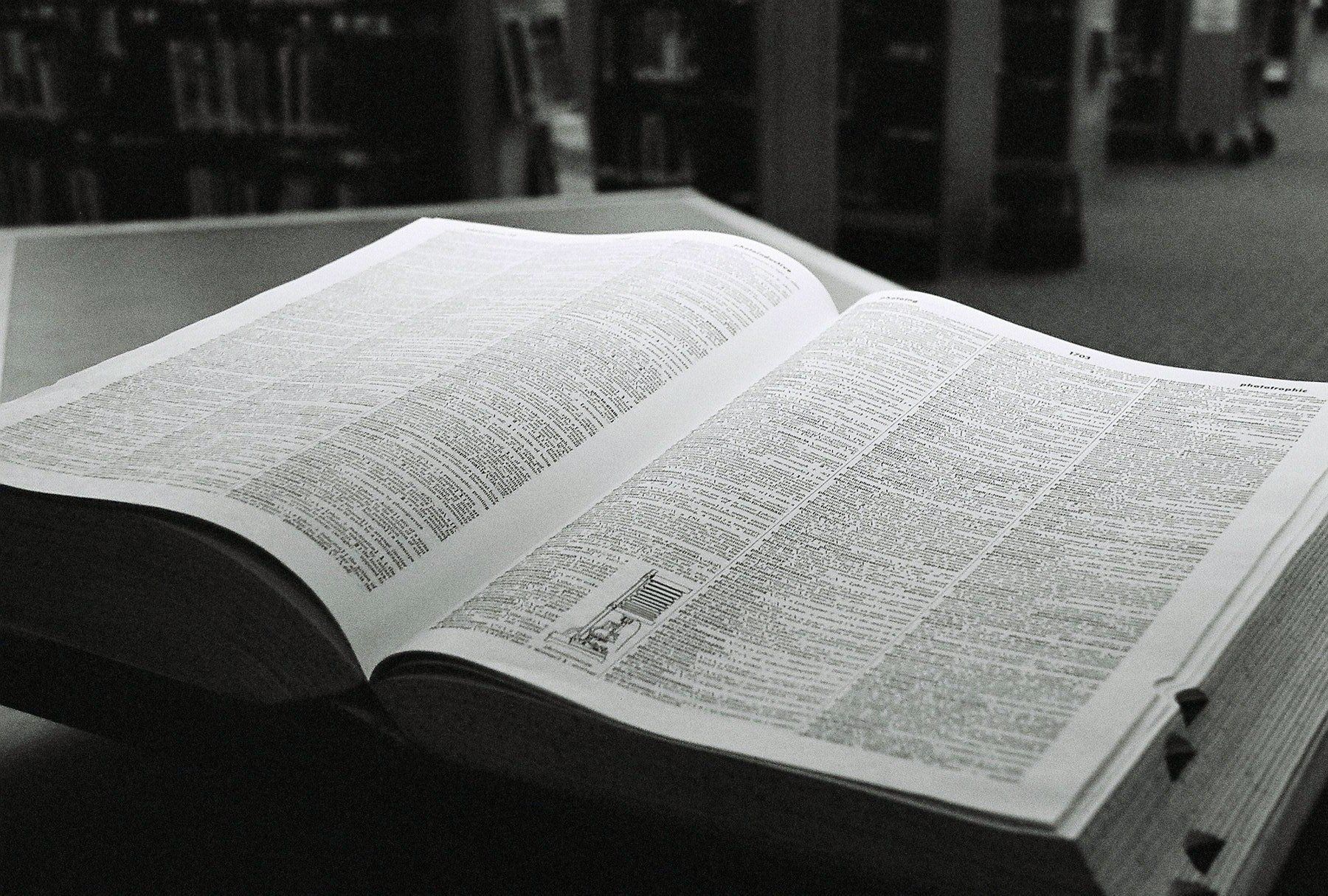
All Of It with Alison Stewart
Merriam-Webster’s Word of 2023
00:28:06
The Merriam-Webster Dictionary's 'Word of the Year' is "authentic." We find out why. Also: what words mattered to you this year?
Loading summary
Transcript57 lines
- [00:01]
A
It's not rocket science. Grayscale has been educating investors on crypto for over a decade. Grayscale Invest in your share of the future. Investing involves risk and possible loss of principle. Visit grayscale.com for more information. Listener support WNYC Studios.
- [00:32]
B
That is all of it. I'm Alison Stewart live from the WNYC studios in soho. Thank you for spending part of your day with us. I'm really grateful you're here. On today's show, we're going to talk about war reporting then. And now we'll talk about The Frontline documentary 20 Days and Mariupol. And we'll speak with the author of a new biography about war correspondent Maggie Higgins. Plus, John Turturro and Ariel Levy will join me to discuss their stage adaptation of the Philip Roth novel Sarah Sabbath Theater. That's the plan. So let's get this started with something we love around here. Language. Specifically, a word that may define 2023. What word captures 2023, a year that witnessed the explosion of AI, including chat, GBT union striking from auto workers to actors continuing and starting, and two female musicians bolstering an entire economy, Ms. Swift and Queen Bey. In its annual announcement of words that have been added to the dictionary, Merriam Webston Webster also announces the word that seems to encapsulate the year. This year, the word of the year for 2023 is authentic. Authenticity was one of the most looked up words in the more than 500,000 Merriam Webster entries. But once they accounted for the spike in five letter word searches this year because of wordle, now, authentic was already in the dictionary and now it has some company. 650 new words have been added, including jorts, grammable and riz. If you have a teenager, you know what the last one means. Joining us now is Peter Sokolowski, Merriam Webster's editor at large. He'll tell us how they choose the word of the year, what it tells us about this moment, some words that maybe didn't make the cut but still help define 2023. Peter welcome back to all of it.
- [02:29]
A
It's great to be with you listeners.
- [02:31]
B
We want to hear from you. What is your pick for the word that describes 2023 that encapsulates 2023 this past year? And tell us why Our phone lines are open. You can join us on air. Give us a call, 2124-3396-9221-2433 wnyc. You can also text to us at that number if that's More convenient. But we do like chatting with you on Air as well. 212-433-9692 or maybe you want to tell us a word that you'd like to see added to the dictionary. We'd like to hear from you. 212-433-WNYC. Also, our social media is available at all of it wnyc. So, Peter, in the press release announcing the word of the year, you and your colleagues wrote, although clearly a desirable quality, authentic is hard to define and subject to debate. Two reasons it sends many people to the dictionary. Let's start at the beginning. What is the Merriam Webster's definition of authentic? And why do you think it is a difficult concept to define?
- [03:37]
A
Well, exactly, I think, well, it's an abstract word. It's a quality that we value. And it reminds me of one of our earlier words of the year, which was the word integrity. And that's a word that we see looked up quite frequently, all the time. And in a sense, I have a colleague who said, everybody who's writing a cover letter you uses the word integrity. And it may be something as simple as that that sends people to the dictionary. But abstract ideas are harder to define than concrete words. You know, for a definition for chair or table is interesting, but when you're talking about ideas, it gets a little bit more complicated. However, our definitions, the two that count for authentic, are refreshingly simple. Sense one of authentic is not false or imitation a synonym of the words real and actual and sense two very important to this year's Word of the year, true to one's own personality, spirit or character. So nice short definitions for a word that really encapsulates a big idea.
- [04:40]
B
Do we know much about the what I should say, what can we glean from the root of the word, from the etymology of the word?
- [04:46]
A
Well, this is, you know, this is a classic word that comes from French and Latin. People don't realize that, you know, etymology sometimes is lost in the mists of time. We don't always know exactly. And the thing about England in the Middle Ages is that the Norman conquerors who spoke French, who were giving their laws and their nobility and their bureaucracy to England, they used French as the bureaucratic language. But of course, Latin was the lingua franca of the Church and of Europe and of science. And so there are words like authentic for which we simply don't know. Whether the first English users of this word took it from French or took it from Latin, we just don't know. So effectively, the word meant the Same thing. It meant the original or the genuine document in Latin.
- [05:35]
B
What does the process look like for selecting the word of the year?
- [05:39]
A
It's a statistical measure for Merriam Webster. And this comes from the fact that once we put the Dictionary online in 1996, we could see kind of for the first time which words sent people to the dictionary. We could see for the first time which words were being looked up. And of course, we could also see when they were being looked up. And that had been basically 400 years of English language dictionaries before that moment. And initially we saw a list of kind of static words, looked like an SAT list. Words like integrity and paradigm, ubiquitous conundrum, and even authentic words like democracy and fascism were also kind of looked up every day, regardless of the news. But then something happened and it changed the way. Review our data. In 1997, the first news event that was widely shared online was the death of Princess Diana. And we saw the lookups change dramatically. We saw initially the word paparazzi, which was of course associated with her death. And it's a hard word to spell. Are there two Rs? Are there two Z's? You know, what's the singular? There are all kinds of questions. But then the second most looked up word was the word princess. And that shows us two different models of what sends people to the dictionary. The word princess is obviously a common word. It's not particularly hard to spell or pronounce. And yet I think people were seeking a lot of information about that word that I would categorize as encyclopedic. So if wondering if there are two Rs in paparazzi, that's a lexical question that's about the mechanics of the word. But if you want to know about princess, are you born a princess? Does a princess automatically become a queen? Is a princess higher than a duch? Those are what I would call encyclopedic questions. In other words, they're about the use of the word in the culture and not the word itself. And I think that's what sent people to the dictionary in the case of princess. So we have these two kinds of models. And authentic is really kind of the former. It's more of a general term of ideas. And it simply rose to the top of our data. We have 100 million page views per month@merriam webster.com in the online dictionary. And although this word is not associated with a single story in the way that the word vaccine was, for example, in 2021, we do see that several stories Connected to it, pushed it up. Kind of like the tide rising. All boats.
- [08:02]
B
ChatGPT. AI, I have to imagine.
- [08:06]
A
Absolutely. I mean, AI has been in the, in the news every single week of 2023. It's been a huge story. And as you know, just, I believe yesterday was the anniversary of the launch of ChatGPT. So it makes sense. It came out at the very end of 2022. It was absorbed and the number of think pieces and the sort of shock to the academic world and the ideas about plagiarism and copyright, and to say nothing of the SAG AFTRA concerns of AI replacing actors or their images. And so this has been a big story and authentic has become the sort of counterpoint to AI.
- [08:43]
B
My guest is Peter Sokolowski, Merriam Webster's editor at large. We're talking about the word of the year as well as some of the words that have been added to the dictionary. Listeners are calling in. I feel like I have to say this. I didn't think I had to. There's certain words we can't say on the radio. Everybody just, just want to say that out loud. Let's see, we've got a text that says sweet spot, superpower secret sauce, AI gifting, leaning in like, let's talk to Catherine from Neurochelle. Hi, Catherine, thanks for calling all of it.
- [09:13]
C
Hi, Alison. I am in the season of Tween. So for me, my word of the year is slay.
- [09:20]
B
Slay. Could you use it in a sentence as your tweens do?
- [09:24]
C
Oh, you know, Taylor Swift slays.
- [09:29]
B
Well done. Thank you for calling in. We actually had someone text to us, Peter, that said, I don't know if it's already in the dictionary, but the word of the year should be swifty.
- [09:38]
A
Well, you know, it's, it's one of those words that will probably become an entry and. Absolutely. I mean, if a. You. If a word is used frequently by many people, then it goes into the dictionary. We, we're not here to judge the language. We're not the. We're not the police. We're not. We're not. We're not the Supreme Court of language. We're here to report on the language. It's better to think of the job of a lexicographer as a journalist or historian. And, and so what's interesting is we have swiftie, in which, of course refers to the works of Jonathan Swift. So we have now swifty, which is a likely entry for the, for the future. And I think that that makes perfect.
- [10:18]
B
Sense along those Lines, you know, are there any words that you've noticed being used differently in the wild than the dictionary description? I mean, I think about the word nonplussed, which is often used incorrectly, but I noticed the dictionary because it's been used incorrectly. It has an informal use now. So if you're nonplussed, you're actually kind of upset about something, but people think it means that you don't care. But that is now considered an informal, I guess, definition. How does that come about?
- [10:49]
A
Well, it's absolutely true that if a lot of people use a word to mean a specific thing, then that's simply what the word means. And that does bend some of the language. It really does. I mean, think of the use of the word literally to mean figuratively. Right? And that's something that also people complain about, and that's also added to the dictionary, that sense. If you say, I literally died laughing, what you're using literally for there is emphasis, right? It's no longer literally meaning literally. And a lot of people have trouble with that because it seems to, you know, connect the word, the word's own meaning, to sort of its opposite, but with nonplussed. That's a, that's a classic example of a word that was a little, little bit slippery in its, in its usage. And finally, of course, with so much evidence of that unbothered usage rather than confused or perplexed, which is the original and classic use of that word. And some people, like myself, to be honest, I consider that word skunked, which is to say that if I use, if I see it in an article, I'm not really sure what is meant by the author anymore because this word is so frequently encountered in two different ways. And that happens. I mean, language is a very flexible thing.
- [12:05]
B
My guest is Peter Sokolowski. He is Merriam Webster's editor in charge. We're talking about editor at large. Excuse me, and in charge. Large and in charge. Why not? And we're talking about the word of the year, which is authentic, as well as some words that have been added to the dictionary. We'd love to get you on, on this conversation. What is your pick for the word of the year for 2023? Maybe it's the word of the year in your life you can tell us about. Maybe you'd like to see a word of the year added to the dictionary. Our number is 212433, WNYC 213. You can join us on air, have a conversation with us, or you can text to us at that number. Our social media is available as well at Olivet. Wnyc. Charlotte is calling in from Larchmont. Hi, Charlotte. Nice to talk to you again.
- [12:49]
C
Yes, nice to talk to you too, Alison. So I was trying to think about what I would say for my word of the year. And what kept coming up is that so many different things have happened this year, like high, like the highest of highs, the lowest of lows. So the word that came to mind was diametric or divergent. Just that, you know, we could go from a year where there were so many wins in terms of, yes, Taylor Swift, Beyonce, these amazing emotional highs, these successes for unions, and then there's the whole, like, the horrible realities of the wars that we're living through and the conflicts and the political climate. So I feel like we're living in a very diametric time.
- [13:30]
B
Charlotte, thank you for calling in. When we think about the word authentic, Peter, and this is a little bit of the chicken and the egg, which came first. Can you try to be authentic, or does trying to be authentic negate being authentic?
- [13:46]
A
No, I mean, that's another big piece of this, which is that we're living in a kind of crisis of authenticity, and that comes from recent years. We have fake news and alternative facts, and we question what we see with our own eyes, terms of AI. So we're living in a kind of crisis of a certain kind. But we're also living in a kind of age of identity. We're so focused on identity in terms of language. Think of pronouns, and think of all kinds of new terms entered in the dictionary. And some of the words most closely associated with authentic have to do with identity. Could be cultural identity, authentic cuisine, or personal identity. Taylor Swift mentioned her authentic self or the authentic voice. Or Elon Musk, who said he prefers social media posts that are, quote, authentic. And so whatever that means, I think it kind of means without intermediary, you know, in other words, something that is honest and true. However, we also know that the new gold standard for advertising online, the influencers are valued by corporations for their appearance of authenticity, that this looks like a person who would actually use this product or has something to say about it or is the correct demographic. That's very different from the commercials of the 1950s of, you know, Betty Crocker cooking in the in the kitchen kind of thing. There's a kind of meta quality. And that means we're seeing a performance of authenticity that is absolutely contingent with social media. Right. The way that we present ourselves often as kind of being happier than we are or more attractive than we are or, you know, traveling more frequently or whatever. Whatever kind of image we set forth into the world is often a little bit mediated and a little bit curated. And that raises the question exactly of what is authentic? What looks authentic? Is it a flannel shirt if you're in the woods?
- [15:36]
B
My guest is Peter Sokolowski, Merriam Webster's editor at large. We're talking about the word of the year. Our phone lines are filling up. We'll get to some of your calls about what word is your word of the year for 2023. We'll also hear about some of the runners up to authentic, as well as a few of the new words added this year. This is all of it. This is all of it on wnyc. I'm Alison Stewart. My guest is Peter Sokolowski, Merriam Webster's editor at large. We're talking about the word of the year for 2023 as well as some words that have been added to the dictionary. So some of your favorite words that were added this year, Peter, are food words. Tell us about the food related words that you are very happier now in the dictionary.
- [16:28]
A
Yeah. You know, it's a case of noticing that in the last 20 years or so, the foreign language borrowings into English have been overwhelmingly terms of cuisine and food. And the fact is, English, of course, is this kind of mutt of a language that has borrowed words from all over the world for its entire history. But, you know, linguists always say borrowed, but of course, we never give these words back. And it's funny to see the cuisines change because if you look around the turn of the century, there's lots of terms of Italian cuisine like fettuccine and types of cheese that are Italian that entered at the same moment as a lot of Italian immigrants came to America. And now in more recent years, we see words from more exotic cuisines. As the world becomes smaller, our palates become larger, and we have restaurants in the city that are Turkish and Indonesian and Ethiopian. And so you start to see different words. And what's interesting to me is that we borrowed, we just added a few Italian terms. Lardo, which is a kind of bacon, and indujo, which is a variation on andouille, kind of sausage, and guanciale, which comes from the Italian word for cheek, meaning kind of the cheek or the part of the pig that provides meat from the cheek of the animal. And those are all kinds of what's interesting to me is that those also kind of represent a sort of authenticity. That is to say we're no longer talking about lasagna and spaghetti and bolognese, all of which have been in the dictionary for 100 years, but now the sort of specific terms of the marketplace or really the country cuisine, not the city cuisine. And I just find that interesting that we dig, we kind of drill down and dig deeper into cultures and into cuisines and those words ultimately come into the Dictionary.
- [18:26]
B
Someone has DMed us at Instagram. I think the word of the year is agency. Let's take some more calls. We have online for Richard from Jersey City. Hi, Richard, thanks for calling all of it.
- [18:38]
A
Hi, how are you?
- [18:39]
B
I'm doing well. You're.
- [18:43]
C
Not my favorite word of the year. It's a word I actually have begun to hate, is curated.
- [18:51]
A
A curator is someone who organizes, for example, a museum exhibition.
- [18:55]
C
They deal with people about what goes in it.
- [18:58]
A
There's a lot more work than picking things out.
- [19:01]
C
One of the ads that appears on.
- [19:04]
A
Your air, for example, talks about a.
- [19:06]
C
Hand curated playlist, which is physically impossible.
- [19:12]
B
Richard, thank you for calling in. And calling us out. Is curated. Does that fall in the category of words that have become used in such a way, way that they change meaning?
- [19:23]
A
PETER oh, absolutely. I mean, he, he speaks to a, a classic concern, and it's one that I've noticed as well. You know, language changes just fast enough that we notice. But the problem is we almost as a corollary to that, which is we nearly always hate the changes that we notice. And that's because, you know, you grew up and language becomes a habit. Language is a system, language is organized. And the fact is, there's no question that Richard is correct that we do not yet have this new meaning of curate, which simply means to, you know, to organize in an idiosyncratic way, to organize, you know, in a personal way. And yet that is that term is used so frequently in that meaning, partly I think, as a consequence of the world that we live in, which is a new use of the word content, right, that we hear content. I mean, there's one of the public radio funding announcements where they say public radio content. And I realize, wow, audio news, audio programs are now content. And that was not true 20 years ago. So we're seeing those two words shift in meaning partly because of the abstraction or the digitization of a lot of these usage. And the fact is, Richard, he's got his finger on the pulse. The language is changing. Now, here's the thing that does not mean you have to use that word in that way. And you can always hold the line for yourself. I mean, I always say that one of the words that people notice is, is, is access, which was never a verb until, until WI fi, essentially, until online connectivity came. And so used to be corrected if you ever used access as a verb. But today we use it five times a day. So that's an example of how frequency may breeds content in the words of David Crystal, the British linguist. The frequency. The more frequently you hear a particular usage, the more comfortable you become with it. And this is one of those that will always probably stick in Richard's craw. And he's not alone.
- [21:16]
B
We have a question about what about peruse. I always thought it meant to read closely, but people seem to use it to mean just the opposite, right?
- [21:23]
A
And I mean, this is a classic Janus word. You know, I grew up with the understanding that peruse meant to read very quickly or to skim, but in fact, you know, etymologically and its history, it actually meant to, you know, to deal with in a serious or sequential way. And it meant to examine carefully. And those are two opposite meanings. So this is, this is what we call a Janus word. Janus, the Roman God with two faces. And it's simply a word that now has two meanings. And it's a little bit skunked in, in a way that, that we see with other terms as well.
- [21:58]
B
I'm very curious about slang because I have a 15 year old and I, I think I understood what he and his friends were saying after their game yesterday. I understand some of the language, but there's one word in the, that's that I just love and I love the creativity behind it.
- [22:16]
A
Riz R I Z It's a terrific word. It's not a word that I use myself, you know, and there's something important about informal language and slang, which is to say that dictionaries have a legacy of recording words that have evidence, and the evidence comes in printed and published form. So the fact is, the gold standard for dictionaries for 400 years was, was it used in print? Did Shakespear use it? Was it used in the New York Times? Was it. You know, it's because we can use that print, that published evidence as our reference and as our research. But now, of course, it's true that a lot of informal language is actually texted or written or put on Facebook or Twitter before anyone even hears it spoken out loud, whereas slang used to be only spoken and not written. And so we are entering this phase of informal language which is now much more recorded and easier for us to represent. So Riz is now in the dictionary the definition romantic appeal or charm. And the word has a little bit of a rhyme with charisma, and it's used a little bit in that meaning. And that's the way I think of it.
- [23:23]
B
That's the way it was just. It was explained to me that it's Riz is the Riz of charisma.
- [23:29]
A
Yeah. And it's an interesting thing about English is that we have in English syllabic stress. So like charisma, the stress is on the second syllable. And like a name like Mississippi. And I noticed recently Morgan Freeman was on a talk show with a baseball cap that had SIP S I P. Because the stressed syllable is the one we remember, right. Mississippi and charisma. And English has that wonderful kind of poetic tonic, stress, syllabic stress that adds meaning to those syllables.
- [24:01]
B
What were some of the runners up to authentic as the word of the year?
- [24:07]
A
Well, connected to authentic is, of course, the word deep fake itself. Right. Which is something that is a new idea and has a new name. I mean, this is a new word that just came into the dictionary a few years ago. But this idea that we may not be seeing with our own eyes something that actually took place or hearing something that someone actually said. So we needed a name for this deep kind of deception. So deepfake is one of them. And another one, again, connected to authentic is the word dystopian. Dystopian connected to a few different stories. One of them is absolutely AI and a future in which robots might be able to think for themselves, but also in which careers and jobs would be taken away by AI. But also dystopian, of course, connects to climate change. We had the fires in Canada and in Hawaii. And the third reason for dystopian, it's an unusual word that is so serious in these contexts, but it's also a category of entertainment. And we had the Last of Us, for example, which was always described as a dystopian series. And so this is a term that has a great amount of flexibility, and it was used in those three enormous stories that were published a lot this year.
- [25:16]
B
Let's talk to Carol, calling in from Paramus, who has a question. Carol, thank you for calling all of it.
- [25:22]
C
Oh, sure. Glad to be here. I keep seeing on social media and hearing everyone's saying something is transformative when they mean transformational. What is with that?
- [25:37]
A
Yeah, absolutely. I mean, it's another way we bend the language. And that's the thing about English. English is bizarrely flexible and that we can make any noun in English can become a verb, which is not true in other languages. And of course we have these adjectives that used to be in their lanes and then they cross their lanes. And initially that might sound more, more technical or specific or even scientific. And then what happens is it enters the general discourse. And I think that's exactly what you're, what you're hearing here. And that's the, that's the bottom line. It's something. If you work with words, you always come back to this fact, which is that language never stays still. It's always changing. Now, at the same time, there are standards. There is such a thing as standard English. You know, there are standards that if you want to function academically and professionally, you have to kind of know the rules before you break them.
- [26:26]
B
This is really interesting. A Texas said, I would say plethora a lot of events happen this year, whether good or bad.
- [26:34]
A
Great word. It's a great word.
- [26:36]
B
I like plethora a lot. Are there any other words that you wanted to shout out to us that you think are particularly interesting or illuminating or might some. Somebody off in the day with something to think about?
- [26:46]
A
Well, we had a couple words from the news. The word implode from the submersible that was exploring the titanic wreckage and the word coronation, which had huge spike on the day where the first king of England was crowned in 86 years. So the fact is the dictionary is a measure of the news, but it's really, truly a measure of the language. And what we can do with our data is kind of recognize which moments are captured by specific word. And that's something that I find is ceaselessly interesting.
- [27:17]
B
And also, language has to change, doesn't it? It needs to change or it's. It's going to change whether we like it or not, right?
- [27:25]
A
No, absolutely. And the thing is, the terms that are absorbed without controversy are new terms. A word like blog and a word like deepfake, for example. These are just simply terms. We needed names for new things. But what's interesting to me is we will always hear complaints about terms like transformative or curate or literally. And so what you recognize is language is always kind of the encounter of the old with the new. And I also find that fun and interesting to observe. And I basically think that we can curate our own vocabulary and pay attention to the kinds of language we use. What this tells me is that words matter and that people do pay attention. They pay attention to us as individuals, but also as a culture. So I think this is all a continuing story and the language continues to evolve.
- [28:19]
B
I always enjoy talking to you this time of year. Peter Sokolowski, Merriam Webster's Editor at Large thank you so much for joining us and taking our listeners calls and for this conversation.
- [28:28]
A
Great to be with you.
- [28:30]
B
NYC now delivers breaking news, top headlines and in depth coverage from WNYC and Gothamist every morning, midday and evening. By sponsoring our programming, you'll reach a community of passionate listeners in an uncluttered audio experience. Visit sponsorship.wnyc.org to learn more.