← All Of It with Alison Stewart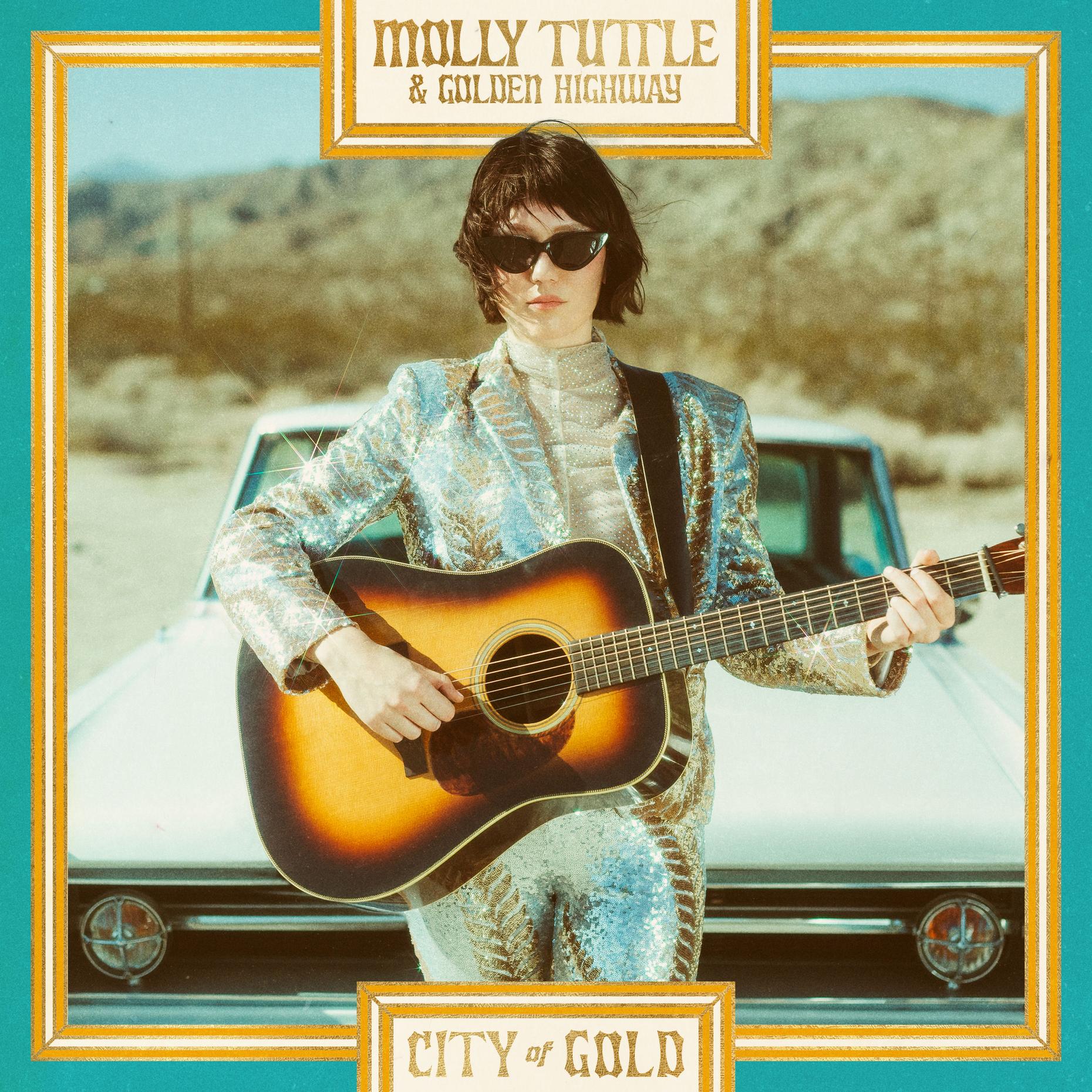
All Of It with Alison Stewart
Molly Tuttle: City of Gold (Grammy Listening Party)
00:18:39
At the 2023 Grammy awards, bluegrass singer-songwriter Molly Tuttle was nominated for Best New Artist and took home the award for Best Bluegrass Album.
Loading summary
Transcript92 lines
- [00:04]
Narrator/Host
Listener support WNYC Studios.
- [00:18]
Alison Stewart
This is all of it on wnyc. I'm Alison Stewart. Music is our jam here at all of It. So we pay attention to the Grammy Awards which are happening this Sunday. Now, intellectually and spiritually, we know there's not the best when it comes to but it is an opportunity to use the awards ceremony as a way to recognize some great work. Since the nominations were announced, we've been speaking to many of the nominees, including blues singer Betty Lavette, the folk duo the Milk Carton Kids, and R and B singer Emily King. Coming up on the show tomorrow, we'll hear from Brandi Clark and Noah Khan. And today my grammy nominated guest is Molly Tuttle. This year she's up for best bluegrass album, a category she won last year. This time she's up for her fourth solo studio album called City on of Gold. Let's take a listen to Molly and her band Golden Highway. This is Next Rodeo.
- [01:10]
Singer/Musician (Molly Tuttle or Band Member)
This ain't my first rodeo.
- [01:12]
Narrator/Host
Been staring down the barrel since I left home through the highs and lows and the hurts like hell still reaching.
- [01:19]
Singer/Musician (Molly Tuttle or Band Member)
For the ring on the carousel I.
- [01:21]
Narrator/Host
Bent down this trail a time or two Knocked out, fenced in but I.
- [01:26]
Singer/Musician (Molly Tuttle or Band Member)
Broke through Life ain't fair, you can't.
- [01:29]
Narrator/Host
Fight it so take it by the.
- [01:30]
Singer/Musician (Molly Tuttle or Band Member)
Horns and ride it Whoa, whoa, whoa.
- [01:35]
Narrator/Host
Gotta giddy up and go Cause there's a cowboy just like you Waiting at the end of every road. Oh, ain't got time to dosey dough Gotta get onto my next rodeo.
- [01:53]
Alison Stewart
A review and American Songwriter said Tuttle et al capture the energy and spirit of the traditional genre just to thread in their own imaginative narratives and tongue in cheek tales. Molly Tuttle joins us today to talk about City of Golden. Molly, welcome to the show.
- [02:08]
Molly Tuttle
Hi. Thanks for having me.
- [02:10]
Alison Stewart
So your first two albums, I suggest people go check them out. They're sort of more in the singer, songwriter esque category. If we have to talk about categories, the last two albums of yours, solidly bluegrass. So what felt different about working on a bluegrass album this time as compared to the previous one?
- [02:29]
Molly Tuttle
So this time was different because I had been touring with my band golden highway for a solid year. We did over 100 shows after we released Crooked Tree. And so I feel like we really developed this unique sound as a band that we didn't have before because when I recorded my previous record, Crooked Tree, I didn't really have a solid band set up. I knew I wanted to record all these bluegrass songs that I'd been writing during the pandemic And I had this band name in my head, golden highway. And this idea for kind of a project that really paid tribute to the music I grew up playing and grew up with. And my family. My grandfather was a banjo player. My dad plays bluegrass music. So it really felt like this genre is part of who I am and part of my upbringing. But after putting out that record, I felt like this special energy with my bandmates, and we had kind of cultivated this community around us, and I knew I wanted to go back into the studio and record songs that were kind of inspired by our year out on the road together.
- [03:29]
Interviewer/Host
The first song on the album is.
- [03:31]
Alison Stewart
El dorado, referencing the city of gold.
- [03:34]
Interviewer/Host
And you've talked about how you took.
- [03:35]
Alison Stewart
A field trip as a kid to.
- [03:36]
Interviewer/Host
Coloma, california, to learn about the gold rush.
- [03:39]
Alison Stewart
What is it about that trip that stayed with you?
- [03:42]
Molly Tuttle
Well, I remember that trip so vividly. It was just one of those times as a kid where I remember panning for gold. I remember this old kind of miner type guy, and he was wearing this gold nugget around his neck on a chain, and he was teaching us to pan for gold. And it felt like we were just transported into this other world. So a lot of bluegrass songs that I grew up with deal with the history of the american south. And I felt like I wanted to dive into the history that I grew up with out in california and out in the west and see if I could kind of write my own california bluegrass song. Because most people associate this genre with kentucky and tennessee, and I live in tennessee now, But I love coming back to my home state.
- [04:27]
Alison Stewart
Let's take a listen to el dorado from molly tuttle.
- [04:37]
Singer/Musician (Molly Tuttle or Band Member)
I'm gold rush kate from the golden state. With a nugget around my neck I keep the red lights burning bright from here to helen back I've ducked for silver and for gold from boulder up to hayes When I hit coloma boys I made my final claim Cross the high sierras in the spring of 48 man with shoveling pan has stumbled through my gates behind these doors whiskey pours.
- [05:03]
Narrator/Host
And loving floats like wine Mine's bows.
- [05:07]
Singer/Musician (Molly Tuttle or Band Member)
To mother lo they'll dig or else I try el dorado they come from far and wide to quell the fever in their souls and haunts the brain They've gone insane for the glimmer of a gold Must have struggled here down.
- [05:32]
Narrator/Host
One way path Cause when you won't.
- [05:35]
Singer/Musician (Molly Tuttle or Band Member)
Coloma boys you never make it back there's love with billy can trinkets fill so can john rover matluck Davis in his grave his gold dust days are.
- [05:45]
Narrator/Host
Over they fill their pans with bloodless sand Call to God upstairs but in.
- [05:51]
Singer/Musician (Molly Tuttle or Band Member)
The golden country boys the lord won't hear your prayers.
- [05:55]
Narrator/Host
El Dorado.
- [05:57]
Alison Stewart
That's El dorado from Molly Tuttle. She's nominated for best bluegrass album the Sunday's grammy awards. Okay, so we have El dorado. There's a song, San Joaquin, Yosemite. You've mentioned you're from California. What does being a Californian mean to you?
- [06:16]
Molly Tuttle
I think it's like california as a state to me is. It feels like a place where people come to, you know, searching for something. And that kind of went into the title of the album, city of gold. City of gold to me is like. It's this dream that you have, and you're trying to strike it rich in one way or another. And for me, music has always been my city of gold, something that I've chased after and dreamed about. But I feel like when you go back and read books about California, it's always this land of promise that people come to looking for something.
- [06:50]
Interviewer/Host
So when you think about it, you mentioned that bluegrass music is in your family, but you grew up in Palo alto, California. How did bluegrass music come to be a thing in the tunnel family?
- [07:02]
Molly Tuttle
Yeah, so my grandfather was a farmer. He lived in Illinois in this really rural town called yorkville, Illinois. It's only like, 45 minutes from Chicago, but it feels like you're in a totally different universe. It's just cornfields as far as the eye can see. And he was actually in the air force and stationed down south and heard Hank Williams and then got into listening to the grand ole opry, and through that, discovered bluegrass music. Loved flattened scruggs and bill Monroe, and he started playing the banjo. And so when my dad was growing up, they had, like, a tuttle family band out on the farm, and my dad learned to play the guitar and the fiddle, and so they would go to bluegrass festivals throughout Illinois. And then when my dad was a little older, he decided to move out to California after he graduated college and just kind of ended up in Palo alto because, you know, people don't really think of silicon valley as a hub for bluegrass music. But at the time, there was a lot of great music. Tony rice was living out in California in the bay area, and he's one of the big guitar heroes in bluegrass music, and there's this really happening scene. So it kind of drew my dad out there, and he ended up teaching bluegrass music full time, and he still does that in Palo Alto. He's been teaching since the 80s, so he taught me how to play guitar growing up, and we used to go to bluegrass festivals in Northern California, and my two younger brothers also play music. So, yeah, just grew up with it. But it is kind of. I get asked that a lot. Like, how did you find this type of music growing up in the heart of Silicon Valley? It's a little unexpected, but if you kind of look into it, there is some great bluegrass music that's come out of California.
- [08:44]
Alison Stewart
Let's listen to another track from City of Gold. We'll stay with the California theme. This is San Joaquin. Tell us a little bit about the story you're telling us in this song.
- [08:53]
Molly Tuttle
Yeah, so I wrote this. I wrote the whole album with Catch Secor. And we were looking at these train lines going through California, and we discovered this one called the San Joaquin that kind of goes through the San Joaquin Valley. And we decided to write a train song, like a California train song, about smuggling some illicit substances down through the state. Not illicit anymore, but maybe in the time where this song came from.
- [09:24]
Alison Stewart
Let's take a listen.
- [09:28]
Narrator/Host
Riding on the sandwa king Bringing in.
- [09:32]
Singer/Musician (Molly Tuttle or Band Member)
Some humble green Watch out for the.
- [09:35]
Narrator/Host
Bleed Pick your pockets clean top spend to hatch a bean Putting it to Richmond I'll be gold as soon as.
- [09:43]
Singer/Musician (Molly Tuttle or Band Member)
The suitcase is sold Building a mowing down line Just looking for the next.
- [09:48]
Narrator/Host
Hard time Ride along the San Joaquin well, San Joaquin's mighty good lion There's.
- [09:54]
Singer/Musician (Molly Tuttle or Band Member)
A good chance you'll blow your mind.
- [09:56]
Narrator/Host
Each time through that whistle blow I'm smuggling in another love Riding on the sandwalking Bringing in some humble green I'm just floating down the line Looking for the next high time Riding on the sandwalking.
- [10:25]
Interviewer/Host
So, Molly, I have to ask you about the pace. How do you keep up that pace live in concert?
- [10:33]
Molly Tuttle
Oh, my gosh. It's. That one was. It was a struggle, like, in the studio, we were just like, we know we need to make this one a barn burner. Like, we just want to show what we've got, play it as fast as humanly possible. And, yeah, when we play it live, it's like it almost sometimes gets too fast. Like, it'll speed up at times, and we have to, you know, kind of rein it in. Because once it's like a train, once you get on it, it's hard to get off. And so I think that's just part of this music where there's an aspect to it that it's just, you know, you're Kind of just showing what you got. And it's definitely. It definitely can. It definitely can become a Runway train at times.
- [11:21]
Interviewer/Host
My guest is Molly Tuttle. She is Grammy nominated for the album city of gold in best bluegrass album category. So you said you've been playing as the kid your dad teaches. You did go to Berkeley College of Music in Boston, which is a fantastic, fantastic school. What's an assignment you remember still to this day?
- [11:42]
Molly Tuttle
Ooh, yeah. I had one that I'll always remember. I was studying guitar mainly. That was my primary instrument. And I had this wonderful teacher, Dave Tronzo. And I remember one lesson, he kept trying to get me to play over this interesting chord progression he picked out. But he wanted me to play specific notes that for any music theory nerds out there, he wanted me to play a half step away from the root note of the chord, which sounded to me really dissonant and just. I didn't. Like, I would cringe every time I played this note or, like, played the scale he was trying to get me to play. And he really dug into it and was like, why don't you like the sound of that note over this chord? And I said, you know, it just sounds weird to me. I'm not used to it. And he kind of dug deeper and was like, why does it sound weird to you? And I think it was just. It was something that I hadn't. My ears hadn't adjusted to. And he was like, that feeling of discomfort is the root of all, you know, prejudice in the world. Like, we don't. We're uncomfortable with things that we haven't really encountered before. And you need to really work on kind of getting rid of that feeling and embracing all types of music. So that really opened my mind to. I think I came into Berkeley just feeling like, this is what I do. This is the kind of music I play. And part of me was a little bit closed off to new experiences.
- [13:05]
Alison Stewart
Let's listen to another song from the album, city of gold. I love this one. This is Alice in the bluegrass. This is a reimagining of Alice in Wonderland, right?
- [13:16]
Molly Tuttle
Yeah. Yeah, totally. And kind of combines two things that I loved as a kid, Alice in wonderland and bluegrass. It's like if Lewis Carroll was from Kentucky.
- [13:27]
Alison Stewart
Let's listen to Alice in the bluegrass.
- [13:42]
Singer/Musician (Molly Tuttle or Band Member)
Come Gabriel, folks, and a story I'll tell about a girl who tripped through the bottom of the well Woke up in a dream with a curious habit.
- [13:52]
Narrator/Host
Chasing a little white rabbit Rushing with.
- [13:58]
Singer/Musician (Molly Tuttle or Band Member)
A flub out the field mouse door Said this don't look like Kentucky anymore Knocked three times and her mind swung open Alice sat, woke in.
- [14:12]
Narrator/Host
So she danced all night with a bottle in her hand Lost in a wonderland toadstool fiddling a cigarette bowl Where'd you come from, Alice? Why'd you go?
- [14:26]
Singer/Musician (Molly Tuttle or Band Member)
Then the old snapper turtle peeked out of his shell Said, little girl, you.
- [14:29]
Narrator/Host
Don'T look too well Take a little.
- [14:33]
Singer/Musician (Molly Tuttle or Band Member)
Swig and a little bitty swallow you'll.
- [14:36]
Narrator/Host
Feel three times smaller Then the glow.
- [14:42]
Singer/Musician (Molly Tuttle or Band Member)
Sitting on a Caterpillar tractor gave her smoke some strange tobacco the doodlebug said there can't go back there, you'll be ours forever after.
- [14:53]
Interviewer/Host
There are so many things to love.
- [14:55]
Alison Stewart
About that song, not to mention sort.
- [14:56]
Interviewer/Host
Of the audio Callback to Jefferson Airplane.
- [15:00]
Molly Tuttle
Yes. Yeah. We started covering White Rabbit, and I had already written that Alice in the bluegrass song, and I was like, I think we need to start teasing this by playing White Rabbit. And it became like one of our favorites to do in the set. So now we kind of medley those two, go from one to the next, have this whole little Alice in Wonderland segment.
- [15:19]
Alison Stewart
Molly.
- [15:19]
Interviewer/Host
It's such a fantastical story and such great imagery, and I don't know if people who don't know your story. Your last album dealt with a lot of personal stuff about being a woman living with alopecia your whole life.
- [15:30]
Molly Tuttle
Yeah.
- [15:33]
Interviewer/Host
What was that experience like, playing those songs and talking about it at every interview? I'm sorry.
- [15:42]
Molly Tuttle
It's been really great for me. I mean, it was something that, as like, a young adult and as a teenager, I just felt like I had this block where it was so hard for me to talk about. It was so hard for me to take off my wig in front of people and really be open. And, you know, the more I started doing it, the easier it became. And it was really healing for me. And I think it ultimately, I just wanted to help other people feel more comfortable in their skin. I wanted to connect with people with alopecia, but also anyone who has something similar. But then I quickly realized that it was also really helping me feel more comfortable in my skin as well. So my song Crooked Tree is still really special to me. And that's when we still play live all the time. And sometimes I'll take off my wig before playing it, and it's just become this special moment that I love to have with the people who come to our shows.
- [16:32]
Alison Stewart
I'm sure there's so many people. It means so much, too. So thank you also for answering that question. I know you've had to Answer it.
- [16:37]
Molly Tuttle
About bunch of dumb talking about it.
- [16:40]
Alison Stewart
We're gonna go out on the song where did all the wild Things Go? From your Grammy nominated album, City of Gold. Tell us a little bit about this song.
- [16:51]
Molly Tuttle
Yeah, so this one is kind of inspired by these funny scenes that I've experienced going out to music festivals. And I go to so many festivals where I play over the summer and some of them get pretty wild. But this one's kind of asking a question like, what happened? Why are we all settling down now? I think entering my 30s especially, it feels like everyone's kind of giving up the wild ways that we had in our early 20s. So this is one that I wrote to try to rile up the audiences at our shows, basically.
- [17:29]
Alison Stewart
My guest has been Molly Tuttle. She is nominated for best bluegrass album for City of Gold. Molly, thank you for the time. Have a great weekend.
- [17:36]
Molly Tuttle
Yeah, yeah. Thanks so much for having me. It was great talking with you.
- [17:39]
Alison Stewart
This is. Where did all the wild things go?
- [17:53]
Singer/Musician (Molly Tuttle or Band Member)
Do you like to get down low with the dog house?
- [17:55]
Narrator/Host
Or high on the hog?
- [17:56]
Singer/Musician (Molly Tuttle or Band Member)
When the Friday night lights go down? Can you howl like a great cow?
- [18:03]
Narrator/Host
Do you like greens? And I don't mean collards? Hollowed, swallowed, Loan your last dollar dawn.
- [18:09]
Singer/Musician (Molly Tuttle or Band Member)
And do you like to tie one on? Now the street's full of suits with.
- [18:14]
Narrator/Host
Hundred dollar haircuts I used to cut loose now it's uptight, airbrushed, scratching my head? Cause I really, really want to know where did all the wild things go?
- [18:26]
Alison Stewart
Molly Tuttle is nominated for best best bluegrass album for the Sunday's Grammy Awards. There's more, all of it on the way.
- [18:33]
Interviewer/Host
I'll meet you right back here after.
- [18:34]
Alison Stewart
The news.
- [18:50]
IKEA Advertiser
Department of rejected dreams. If you had a dream, rejected IKEA can make it possible.
- [18:54]
So I always dreamed of having a man cave, but the wife doesn't like it. What if I called it a woman cave?
- [19:00]
Okay, so let's not do that, but add some relaxing lighting and a comfy IKEA hofburg ottoman. And now it's a cozy retreat.
- [19:06]
Molly Tuttle
Nice.
- [19:07]
IKEA Advertiser
A cozy retreat, man. Cozy retreat, sir.
- [19:11]
Okay. Find your big dreams, small dreams, and cozy retreat dreams in store online at ikea.us dream the possibilities.
- [19:18]
Sustain Pro Advertiser
Suffering from dry, tired, irritated eyes. Don't let dry eyes win. Use Sustain Pro. It hydrates, restores, and protects dry eyes for up to 12 hours. Sustain Pro triple action Dry eye relief.