← All Of It with Alison Stewart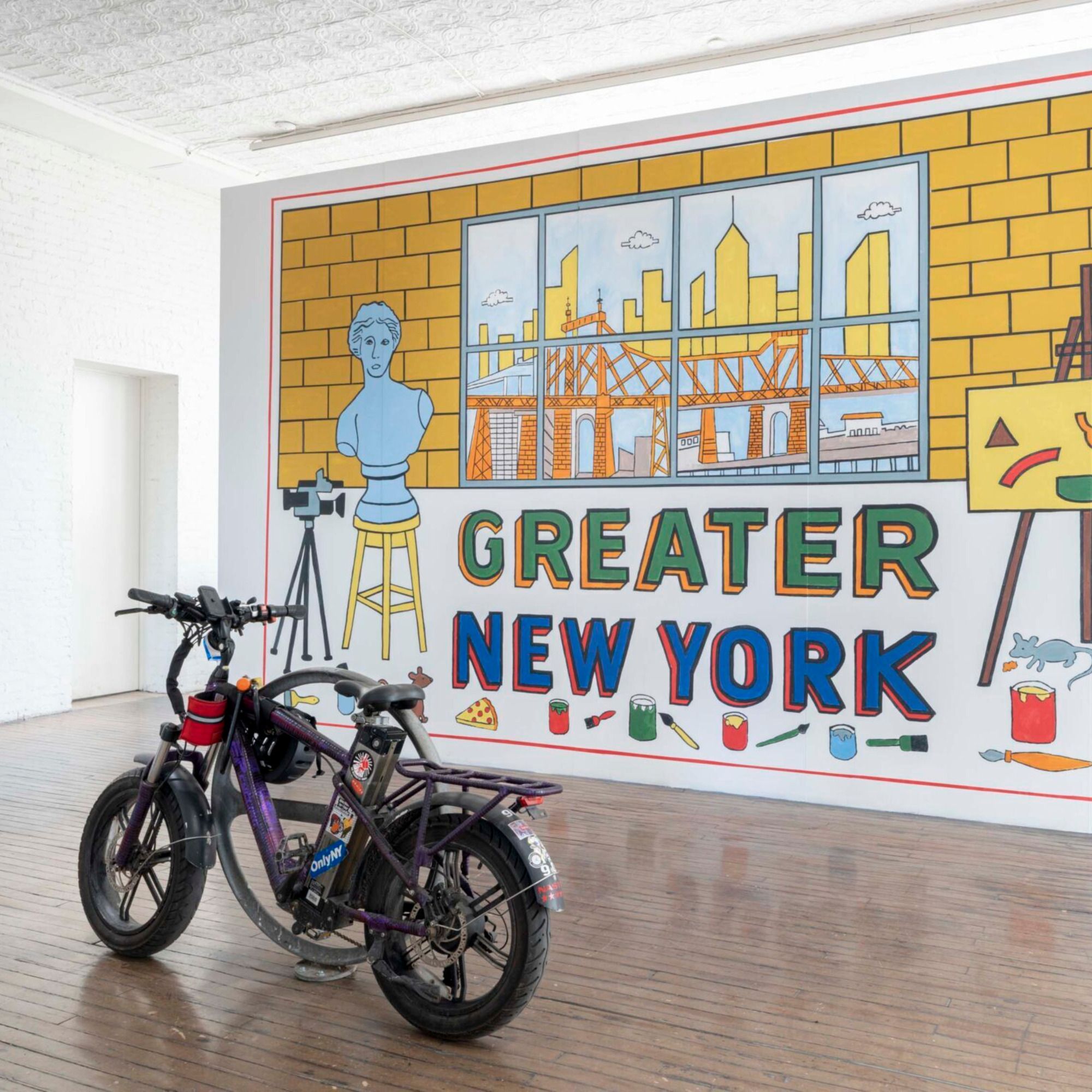
Loading summary
Transcript55 lines
- [00:00]
A
WNYC Studios is supported by Odoo. When you buy business software from lots of vendors, the costs add up and it gets complicated and confusing. Odoo solves this. It's a single company that sells a suite of enterprise apps that handles everything from accounting to inventory to sales. Odoo is all connected on a single platform in a simple and affordable way. You can save money without missing out on the features you need. Check out Odoo at O D O o dot com. That's O d O o dot com.
- [00:40]
B
This is all of it on WNYC. I'm Alison Stewart. 50 years ago, a new museum opened in an old public school building in Queens with a vision to shake up the New York art world. It was called the PS1 Contemporary Art Center. Founded by curator Alana Heiss, PS1 was part of a 1970s alternative movement, repurposed old or abandoned buildings for art spaces, and in 2000 formed a partnership with MoMA. Now MoMA PS1 is commemorating its 50th anniversary with another round of its Greater New York series every five years. The exhibit features artists who live and work in the New York area. This year, there are 53 included in the show. Greater New York is on view now at MoMA PS1 in Long Island City through August 17th. The museum is free admission. That's new this year. Join me with me now is Connie Butler, Director. Connie Butler, hi, Connie.
- [01:33]
C
Hi.
- [01:33]
B
And with me is Ruba Katrib, chief curator and Director of Curatorial Affair. Ruba, nice to meet you as well.
- [01:39]
D
Nice to see you.
- [01:40]
B
So when we say artists from the Greater New York area, Ruba, what do we mean?
- [01:43]
D
Literally, artists working in the five boroughs, but also in the Tri State area. We have some artists who are in. One artist is in New Jersey, one in Connecticut, but spend a lot of time in New York and are critical to the New York City City art scene.
- [01:57]
B
The first Greater New York exhibit was organized in 2000. Connie, what was the original intention of the first show?
- [02:04]
C
It was really to take the temperature and survey what was going on creatively in New York City and to bring contemporary art to the platform of PS1 and with the partnership also to MoMA.
- [02:16]
B
How has that changed or remained the same?
- [02:18]
D
Ruba the show has really taken on a life of its own. I think in New York and even internationally, audiences rely on the show coming every five years to take a temperature of art in the city. And I think it's really a powerful moment in which to see what's going on and learn about new generations of artists see new work. And.
- [02:45]
E
Yeah, Connie, when we're considering the 50th anniversary, why was the museum created in Queensland roll back 50 years?
- [02:53]
C
Well, 50 years ago, the real estate situation was quite different, and Alana Heiss was looking for a place to make a platform for artists, A place where they could really experiment and do a takeover, in a sense. And our 19th century school building was, at the time derelict. And so the museum opened in 1976 with a show called rooms, and literally, artists just came in and did a takeover of the building. And really, we like to say that artists have been sort of owning and comfortable in and working in our building ever since.
- [03:26]
E
How has it evolved since then?
- [03:29]
C
Well, at the time, as you know, and some people will remember, Long island city was also very different. It was largely a place of just, you know, factories and warehouses and not nearly as much residential population as there is today. So at the time, it was really an outpost again, founded for artists and with artists as its audience. I think what is really different today is that we have a very diverse, very interesting audience that comes not only from the local population of families and often children, but, you know, Queens, north Brooklyn, and really all five boroughs. So it's changed a great deal in that we really think about our audience, and we are really making a huge effort to welcome people in like never before. And they are coming, which is very exciting, while still keeping contemporary art at the core of our program.
- [04:20]
E
Looking at what's happening this year in the greater New York exhibit, there were 53 artists represented. Ruba, what was your curatorial process like?
- [04:30]
D
The entire curatorial team worked on this show. We're about 7, and we all brought artists to the table. We go out and see shows. We head out into studios. We visited over 100 studios. We thought about, discuss, and look the work of hundreds of artists. And we had a lot of dialogue and debate and eventually started inviting artists. And as they were responding to the show and the context and telling us what they wanted to do, we kept on inviting artists until we reached that number. And that number is representing the amount of artists that we could comfortably fit within the space. You know, there could be more, there could be less, but it was also like setting up a really important dialogue between works, Making sure we had a broad range of disciplines and ideas covered. And also, we supported most of the artists in making new work. So it was really an opportunity for artists to create, to do something new, to respond to the context.
- [05:26]
B
It's sort of interesting, Connie, because I read and I didn't know this. Over half the artists in the show have no gallery representation. Why is it important to give these kind of these artists this opportunity?
- [05:39]
C
I'm glad you asked. I was just thinking about the word discovery, because I think there really is an aspect to the show that is about discovering emerging artists and that can be emerging at many different points at one's career. Right. I mean, we have some emerging artists. The oldest in the show are the Ceballos brothers, who are in their 80s. So it's really about surfacing practices that people may not necessarily know about, and artists that haven't been seen in the commercial sector or necessarily at other institutions in New York. For most of them, this is their first museum presentation in New York City.
- [06:13]
B
This year is the 50th birthday of MoMA PS1. The museum is commemorating the anniversary with the exhibit Greater New York, a survey of 50 artists living and working in the New York City area. It's on view through August 17th. My guests are Connie Butler, MoMA PS1 Director, and Reba Khatrib, its chief curator. You mentioned the. Is it the Savalas brothers?
- [06:36]
D
Savallas brothers.
- [06:37]
B
Thank you so much for that. You told us a little bit about who they are, but explain to the people, like, what they meant to the community.
- [06:45]
D
The Ceballos brothers are two brothers who have been making signs in New York for decades now. They're from. Originally from Ecuador, and they have a huge presence in Queens also. So they're really a part of the visual landscape of the city of Queens, which is the borough that we're located in. And in recent years, they've been discovered, rediscovered by a lot of younger generations of artists who have really lifted them up. And so they certainly came to our attention many years ago, and we were really eager in the survey to. To work with them. And so they made a new. A new mural for us. And then they also were showing archival images of their signs across the city, as well as original posters and materials that they've made.
- [07:30]
E
Connie, why do you think they belong in this show?
- [07:33]
C
I think there's a very interesting through line in this particular exhibition that has to do with the vernacular of New York, whether it's the signage or there's a thread of people using found materials and objects, which I think is always a strong practice that's going on in New York because there is just so much stuff all around us because of the manufacturing, because of the trash, because of what's just in and around the city. So I think that vernacular, kind of real feeling of this place is very important and they certainly represent that.
- [08:05]
E
Yeah. Along those lines, Fields Harrington is an artist who recently focused on delivery bikes and drivers. How does Harrington incorporate delivery bikes in his work? And what's on view at the show? Connie or Ruba? Either one.
- [08:20]
D
I can take it. Fields and actually a couple artists in the show are really interested. And the changing system landscape of labor in the city, particularly with new digital technologies, app services. There's a work that Kenneth Tam made about medallion taxi drivers in the show, and Fields has worked with a delivery driver who's riding an E bike around the city. And periodically he will lock it up at PS1. And when it's on view at PS1, we're paying him the average rate, the minimum wage that he would get as a delivery driver. So he gets this built in brake. And then there's also photographs that Field has taken of those bikes around the city, noting again how this. This new form of labor has transformed the. The landscape of the city and the nature of work within it.
- [09:15]
E
You mentioned Kenneth Tam, Connie. Could you explain how he uses cab drivers?
- [09:22]
C
Yeah, he's done this very interesting collaboration with. With medallion taxi drivers. He's from. Ken is. And I think, again, as Ruba says, he's one of the artists who's really interested in labor and how the whole controversy around medallion taxi drivers and many of them investing so many thousands of dollars into that and the precarity of that also certainly how ride sharing apps have come in and changed the role and the way the taxi drivers function in the city and the way their labor is valued, let's say it's become hard and harder. So, Ken, it's really a collaboration with these two taxi drivers and they appear in the video that's in the exhibition. And there's a kind of beautiful choreography that they. That's in the video that I. To me, my reading of it is that it. It very much foregrounds also their bodies and the way that, you know, that labor is sitting in the taxi, drive the taxi itself all day long. What that does to the body, what being sort of a slave to the algorithms does also to the body and to labor. And so I think he's interested in foregrounding all of those things in the video. And it's a very poignant piece, actually, where you really see the humanity of the taxi drivers themselves.
- [10:41]
B
We are talking about the 50th birthday of MoMA PS1. The museum is commemorating the anniversary with its exhibit Greater New York, a survey of 50 artists living and working in the New York City area. It's on View through August 17th. My guests are Connie Butler, MoMA PS1 Director, and Ruba Khatrib, chief curator. When you think about Queens, it's such a diverse area. How do you think about or why is it important for PS1 to reflect the immigrant experience?
- [11:13]
D
We're really lucky to be in Queens. And as Connie mentioned, the neighborhood that we're in, Long Island City, has transformed over. Over the years, the decades. I've worked in the neighborhood for 15 years now, and I've seen a lot of transition in that time, but I think the museum is really rising to the borough, and the borough is certainly on the rise, but I think being recognized for how incredible it is, how diverse it is, all the languages spoken, all the food you can find, all the culture, community, it's where we are. And it's been exciting over the last several years to not only reach out into the community, but bring the community into the museum. And. And we just had this huge block party where we had many, many attendees. And we work with a lot of community partners who are based in Queens who do a lot of grassroots work that we collaborate with. And so it's really where we are, and it's who we are.
- [12:08]
E
It's such a great space, too.
- [12:09]
B
I mean, it's free now.
- [12:12]
A
Connie?
- [12:13]
C
Yes.
- [12:14]
B
Why was this such an important step
- [12:15]
E
for the museum to take?
- [12:19]
C
Well, as a cig, which is a cultural institutions group, we're part of a group of museums throughout the city who've always been for New Yorkers, but it's not been free for other kinds of visitors, both nationally and internationally. And I personally have always found that confusing, perhaps often visiting as a non New Yorker before I actually moved here. And so it was a goal of mine since I came to PS1, to see if we could find a way to get free admission underwritten and taken care of so that we could really extend this message of welcome to everybody and really say 100%, we are free for everyone. So not long ago, through a conversation with a really wonderful philanthropist named Sonia Yu, we. She agreed and came forward and has underwritten free admission for three years. And then beyond that, we'll find someone else to do it, because it's certainly the gift that keeps on giving. But what it's really enabled us to do again is to kind of extend this welcome in a very genuine way. And we've seen our attendance already increased by 20% since we went free on January 1st. So it's super exciting, and it proves that when you actually Extend that welcome. New Yorkers show up and it's great.
- [13:36]
E
Before I let you go, there are going to be extra talks and extra performances at the museum. Ruben, you want to share a few?
- [13:43]
D
There's a really exciting performance program associated with the show. We have a performance on May 30 and then one on June 27. We also have a series of talks with the show. And then our warmup, our annual music series kicks off end of July. So everyone should stay tuned for that because it's really fun. We have an incredible lineup. We'll announce it in the coming weeks and make sure to get your tickets because they sell out fast. And it's just a great way to spend Fridays in New York in the summer listening to incredible musicians.
- [14:13]
E
It's a lot of fun.
- [14:14]
D
Yes.
- [14:15]
E
The name of the exhibit is Greater New York. It's at MoMA PS1 until August 17th. My guests are Connie Butler and Rebecca Khatib.
- [14:23]
B
Thank.
- [14:24]
E
Thank you for coming to the studio.
- [14:25]
D
Thank you.
- [14:25]
C
Thank you so much.
- [14:27]
F
The new LinkedIn Hiring Pro can't undo your last hire the empty seat, who is actually just that, an empty chair in your office because you couldn't find someone to fill it, so it just sat there, costing you money with all its fancy ergonomic features. But LinkedIn Hiring Pro can make it easy to fill that seat with the right candidate. With nearly 60% of businesses finding someone to interview in the first week alone, hire right the first time with LinkedIn hiring pro post a free job today@LinkedIn.com Pandora
- [14:59]
G
and Doug, there's nowhere I wouldn't go to help someone customize and save on car insurance with Liberty Mutual, even if it means sitting front row at a comedy show.
- [15:09]
C
Hey, everyone, Check out this guy and his bird.
- [15:11]
D
What is this, your first date?
- [15:12]
G
Oh, no. We help people customize and save on car insurance with Liberty Mutual together. We're married. Me to a human, him to a bird.
- [15:19]
D
Yeah, the bird looks out of your league.
- [15:21]
G
Anyways, get a quote@libertymutual.com or with your local agent.
- [15:24]
D
Liberty. Liberty. Liberty. Liberty.