← All Of It with Alison Stewart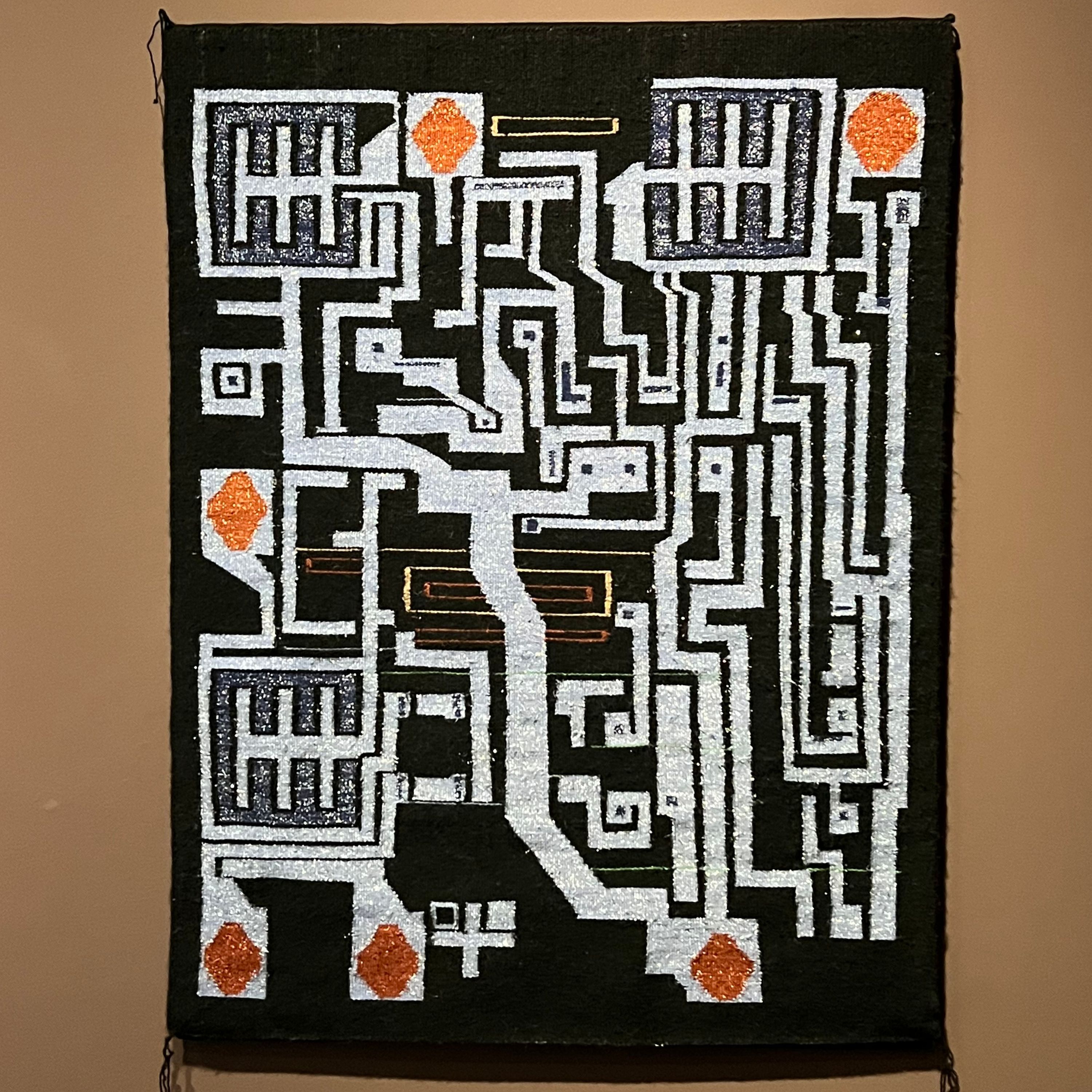
Loading summary
Transcript40 lines
- [00:00]
A
WNYC Studios is supported by Progressive Insurance. Did you ever think about switching insurance companies to see if you could save some cash? Progressive makes it easy to see if you could save when you bundle your home and auto policies. Try it@progressive.com Progressive Casualty Insurance Company and affiliates. Potential savings will vary. Not available in all states. All of it is supported by Memorial Sloan Kettering Cancer center in a small, groundbreaking clinical trial where 100% of participants with a specific type of rectal cancer saw their tumors disappear using immunotherapy alone. Researchers at MSK are now studying this approach in cancers of the stomach, liver and more, and a majority of tumors are disappearing. For MSK Giving day, all gifts will be tripled. Learn more@msk.org all of it when it comes to what your family eats and drinks, you know your choices matter. You're the expert because you know what fits your life. And getting getting it right starts with good information. That's why America's beverage companies are sharing more information about our ingredients@goodtonowfacts.org no spin, no judgments. Just the facts straight from the experts. For more than 140 beverage ingredients, visit goodtonofacts.org.
- [01:26]
B
This IS all of It. I'm Alison Stewart, live from the WNYC studios in soho. Thank you for sharing part of your day with us. I'm really grateful that you are here. Coming up on today's show, we'll take a radio tour of some art exhibits you can visit outside the city. If you'd like to see some of the art that we're talking about, go to our Instagram Stories llnyc, including a survey of the work of groundbreaking ceramicist Kathy Butterley and the late painter Alan Rohan Kreit. And then later in the show, we'll learn about the lives of some legends, legendary directors who got their start right here in New York, Martin Scorsese, Mel Brooks, and the late Rob Reiner. That's our plan. So let's get this started with art. Acclaimed Navajo weaver Marilu Schultz has a new exhibit titled Replica of a Chip the Weaving Technology of Mary Louis Schulz. Weaving is one of the Navajo Nation's oldest practices, a significant expression of identity. It represents the knowledge transfer and heritage of Navajo voices throughout generations, but it also involves an unrecognized history. In this exhibit, Schulz's work points to the role of Navajo women who have played and played an early role in microchip manufacturing. The retrospective brings forth the idea that Navajo weaving is not just about tradition, but innovation the exhibit's curator, Candace Hopkins, collected work from Schulz's 65 year career, which bridges weaving with digital technologies. It's now on view at the Hessle Museum of Art at Bard College in Annandale in the Hudson. We're joined now by artist Mary Lou Schultz. It's nice to meet you, Mary Lou.
- [03:18]
C
Nice to be here today. Thank you.
- [03:21]
B
As well as curator Candace Hopkins. Hi, Candice.
- [03:25]
D
Hi.
- [03:26]
B
So this exhibit takes its name from Mary Lou's very first microchip weaving replica of a chip, which became a turning point for her artistic practice when intel asked Mary Lou to make a work using a chip as a model. Mary Lou, when you think about it, what are the similarities between weaving and microchips? What was apparent to you?
- [03:48]
C
I think the weaving of computer chip is really all the intricate designs and the chip and the weaving and all the colors that I didn't realize were in a chip I could find that I come across today. I can make those same colors out of wool. So a lot of similarities in that case. And then the other thing that really stands out is that somebody had to put those chips together, assemble them. And it's the same way with Navajo weaving. I'm able to weave them. And any weaver, we still use our hands using the over under method to make the weaving. And those are the similarities that I find in the chip. And there are certain images that stand out to me in the chip themselves with the design that I utilize as well. So those are some similarities that I have come across with the chip and the weaving.
- [04:51]
B
Candice, when did you first discover Mary Lou's work?
- [04:54]
D
Yeah, that's a great question. It was in 2014 or 2015. I was doing research into the relationship between computer chips and digital technology and Navajo weaving. And I came across that first chip that intel commissioned from Marylou in 1994, and then one in 2008 by the Nerman Museum. And it was a kind of watershed moment for me, honestly, because I didn't know that anyone was weaving computer chips. But then I also didn't know about this. Almost like a hidden history. And that was the computer chip factory that Fairchild semiconductor operated between 1965 and 1975 in Shiprock on Navajo Nation that in its early years deliberately employed Navajo women weavers. So there was not only this relationship through the weaving that Mary Lou was doing, but this relationship between the women who actually made computer chips that that in fact helped with the first NASA moon landing.
- [05:57]
B
Mary Lou, did you know about this history?
- [06:00]
C
I didn't know about the History until I started reading more about the chip. And then also through my connection with Candace, I was able to learn a lot more.
- [06:14]
B
Candace, why were Navajo women sought to work at this manufacturing plant?
- [06:20]
D
Yeah. The company Fairchild, which made the first planar semiconductor, saw an analogous relationship between the kind of formal qualities of those initial computer chips and their circuits and with the technology of weaving itself. Technology is also first and foremost a weaving. It's also a binary technology. It's, as Mary Lee already shared, it's sort of moving the wool over the warp, between the warp. And they also saw a relationship between the kind of dexterity needed to create weavings and the dexterity needed to create computer chips. And, in fact, the women, there was always 75% women who worked in that factory. That was the factory with the least amount of errors of any factory that Fairchild was operating at the time, including the one in Silicon Valley.
- [07:20]
B
That's amazing. We're discussing a new exhibit at the Hessle Museum of Art in upstate New York. My guests are artist Mary Lou Schultz and curator Candace Hopkins. The exhibit is called Replica of a the Weaving Technology of Mary Lou Schultz. It's on view now through November. Candice, use the word technology in the title. How do you feel about its definition in the world of art and with relationship to this exhibit?
- [07:49]
D
Yeah. So when I was looking deeper into your work, Mary Lou, I realized that everything that you were doing, from the first storm blanket weavings all the way through to now, what you call your wedge weaves were all a way of kind of pushing the technology of weaving. And when I think of the technology of weaving, it's not just the. The tools and the techniques, but the invention and innovation in the medium itself. So Mary Lou's also invented curvilinear looms to make her wedge weaves. She's pushed the dyeing mechanisms. She's pushed the formal qualities, but also the conceptual qualities, which is, I think, a kind of technology in and of itself. Like it is a technological medium. I think of Mary Lou's weaving in particular as almost like a code to which we can kind of understand the world that we live in. And I think, in particular, the computer chip weavings, Marilu, that Marilu's doing now, and the ones that are also engaged with the relationships between Navajo ideas and the technological age.
- [08:59]
B
Mary Lou, would you explain wedge weaving to us?
- [09:05]
C
Wedge weave is a technique, like, for weaving, there's the basic weave, which is just over under. Wedge weave is still over under. But the difference was it was used long time ago in the 1800s to make diagonals. And those diagonals would be. Would have make symmetry designs. And most weavers stay with the symmetry designs, with the zigzag designs. So what I've done is I've altered the technique. I still use the wedge weave, which is slightly skipping every other warp. So you're only moving the warp, the design weft to the right or to the left by the. The either the pull heddle or the. The alternate heddle. So when you skip one, it moves. It shifts the warp sideways and you're weaving from an angle. So you start from one corner and go at an angle. So what I did was that I didn't want symmetry. I said, okay, let' warp is going to do. So I created the shift where it wasn't. It didn't have symmetry. And then after I did that, I altered the frame. So that's what a wedge weave is. It's an old technique where you shift the weft, skip every other string.
- [10:31]
B
It's sort of interesting. People hearing you talk will sound. They won't be surprised when we find out that you are a math teacher at one point and you look at designs in a mathematical way. What are the intersections between math and weaving?
- [10:48]
C
Well, it's, to me, I've always seen weaving as math because when you count the strings, you're still counting. It's basic counting. So I've learned to count by threes at an early age. Like just my mom would count her strings in Navajo in naval numbers, and I translated that to English. So then you look at a design, and I look at it mathematically, like if one design either like all the math, or symmetry asymmetrical and proportions. So I take a design and take the image and transfer it visually and proportionately to my work. So that's how I do that as the do the calculations in proportions. So a lot of it is in proportions, and I look at the angles of shapes, and so it's all math.
- [11:48]
B
It's all math. Candice, in this exhibit, we learn from Mary Lou's mother and her grandmother. They're included in the exhibit as well. Tell us a little bit about why you wanted to include her relatives. Her female relatives.
- [12:08]
D
Yeah, and also her niece, Melissa Cody. It was really important to me because weaving is first taught often by people in your family. Mary Lou speaks about how she was learning from her grandmother and also found that sound of her grandmother weaving to be extremely comforting and was allowed to, as a child, even three and five years old, to kind of play on the loom. And because Navajo weaving is taught, you don't go to art school. It's taught through a mentorship model. It's taught intergenerationally. So it was a way for folks who visit the exhibition to kind of understand that, but also to see that Mary Lou is from a family of innovators. So you can kind of see where the genealogy comes through the warp and the weft of her family members.
- [13:03]
B
We're talking about a new exhibit at the Hessel Museum of Art in upstate New York. It is called Replica of a the Weaving Technology of Mary Lou Schulz. It's on view through November. I'm talking to his curator, Candace Hopkins, as well as artist Mary Lou Schultz. Mary Lou, how do you decide on the right colors for your pieces?
- [13:27]
C
As far as the colors, a lot of times I'll have a theme, like for the wedge weave. If it's all nature and the environment is important to me because I was raised on Navajo land and pay attention to my surroundings, the colors. And so I usually come up with a theme. If it's all indigo, then I'll go with water because water is important to me, to us, that we need water to survive. Then there's the land. I use a lot of the natural colors if I'm going to have a theme for earth or land. So that's how a lot of my colors come about. As far as the computer chip, a lot of those I see color in certain designs, and sometimes I'll modify the colors just to create a certain theme as well. But all the wool that I use are hand dyed, so I use both chemical natural dyes and use special dyeing techniques to get the special effects and the weavings.
- [14:30]
B
I wanted to ask you about the wool that you use, Mary Lou, because you use wool in your pieces and you use aluminum in your pieces as well. One's organic, one's industrial. Why might that tension play an important part of this exhibit?
- [14:47]
C
I think I want. I started using metallic first, started using that on a wearing blanket, and wearing blankets for us is. Were made to be worn. So when I first used metallic, it was actually to, you know, send a message that if fashion can change, why can't the old wearing blankets, you know, change with time? So that's when I added the metallics to give it a sparkly effect. So from the computer chip, I found out that some computer chips had aluminum and copper wiring. So then I since I knew about the. The metallic threads, I went back to those and started incorporating those where I could, you know, where they're shown in the image, and I know that they're there in the real image of the chips.
- [15:47]
B
We just got a call from someone who said they took a class with you. Take the call. Hi. Thank you so much for calling all of it. Is your name Rona?
- [15:58]
E
Yes. Hi, Rona.
- [15:59]
B
You're on the air.
- [16:01]
E
Oh, great. I pulled off the highway to call into this show because when Brian Lehrer announced what was coming up on the on your show, and he said something about Navajo weaving in the digital world is like, oh, I know exactly who he's talking about. I was so excited. Mary Lou, I took a workshop with you at the omega Institute exactly 30 years ago. And I know that it was 30 years ago because my mom was turning 60 that summer and she's about to turn 90. And I still have the it was at the Omega Institute up in Phoenicia, New York. And I still have my rug, my beautiful rug that I made, a small one compared to your. I don't know if people have any sense of the scale of the rugs that Mary Lou makes. They're huge. But in a week, I knew I wanted to make something small that I could finish. And I still have the loom, although I have to admit that I've never tried to reconstruct it. And the funny thing is that kind of the contrary, I also come from, like, an engineering and math background. But when I do artwork, I don't want to think about counting and numbers and complicated patterns and whatever. I want to be free from that. And so I made my rug not a traditional Navajo weaving design. It was very free form, kind of like sand art. Like when you drop sand in the glass and it just kind of creates those little waves back and forth. That sort of the design that I went with and just chose colors that I liked, it was such a fabulous experience. I've never forgotten it. And I haven't forgotten you, Mary Lou. And thank you so much for bringing that to all of us.
- [17:32]
B
Oh, thank you so much for calling, Rhona.
- [17:35]
C
Yes, thank you.
- [17:36]
B
Mary Lou, when you hear about a former student of yours being a former educator, what does that do for you? When you hear about that, aside from your artwork and aside from your practice, what does that do for you?
- [17:51]
C
I mean, I think it from my weaving classes, it's mainly if students don't, you know, continue the weaving, the main thing that I, I guess, want to get across is that at least there's some appreciation of Navajo weaving, because a lot of times when you look at the weaving it seems like people don't understand the time and everything else that's involved in that piece. If nothing else, just the appreciation and know that it's one of a kind that are made and on a loom, a traditional loom that's been passed down by our and by our ancestors. And the tools that those are basically the same thing that our ancestors use and we still use those tools today.
- [18:42]
B
Candace, for someone who comes to see the exhibit, what's a piece that you'd like to spend an extra 10 seconds in front of?
- [18:50]
D
Well, there's many, but there's a room that's dedicated to Mary Lou's Wedgweaves that honestly, because of the light in there, there's a lot of natural light. It feels like a chapel. And I think that it's a phenomenal experience to be surrounded by all of Mary Lou's weavings in the round and you can get that sense of the scale that the caller was speaking about. But how weaving is a constantly evolving medium.
- [19:24]
B
The exhibit is called Replica of a the Weaving Technology of Mary Lou Schultz. It's on view now through November at the Hessle Museum of Art in Upstate New York. Thanks so much to Mary Lou Schultz and curator Candace Hopkins. Thanks so much for your time.
- [19:42]
D
Thank you.
- [19:43]
C
Thank you.
- [19:44]
F
Whether you're rushing out the door or eating on the way to work, conquer morning chaos with Belvita Baked with whole grains, Belvita Breakfast Biscuits go great with coffee and are a part of a balanced breakfast when paired with low fat dairy and fruit. And when you're looking for a post breakfast snack to tide you over till lunchtime, try Belvita Energy Snack Bites. They're a good source of fiber and come in delicious flavors like Banana Dark Chocolate with Sunflower Seeds. Find Boveda at your local store today.
- [20:14]
G
Finding ways to be financially savvy is a smart move. And knowing you could be saving money for the things you really want, like that dream home or new ride, is a great feeling. That's why the State Farm Personal Price Plan can help you save when you choose to bundle home in auto bundling. Just another way to save with a personal price plan. Head to statefarm.com to get a quote. Prices are based on rating plans that vary by state. Coverage options are selected by the customer. Availability, amount of discounts and savings and eligibility vary by state.