← All Of It with Alison Stewart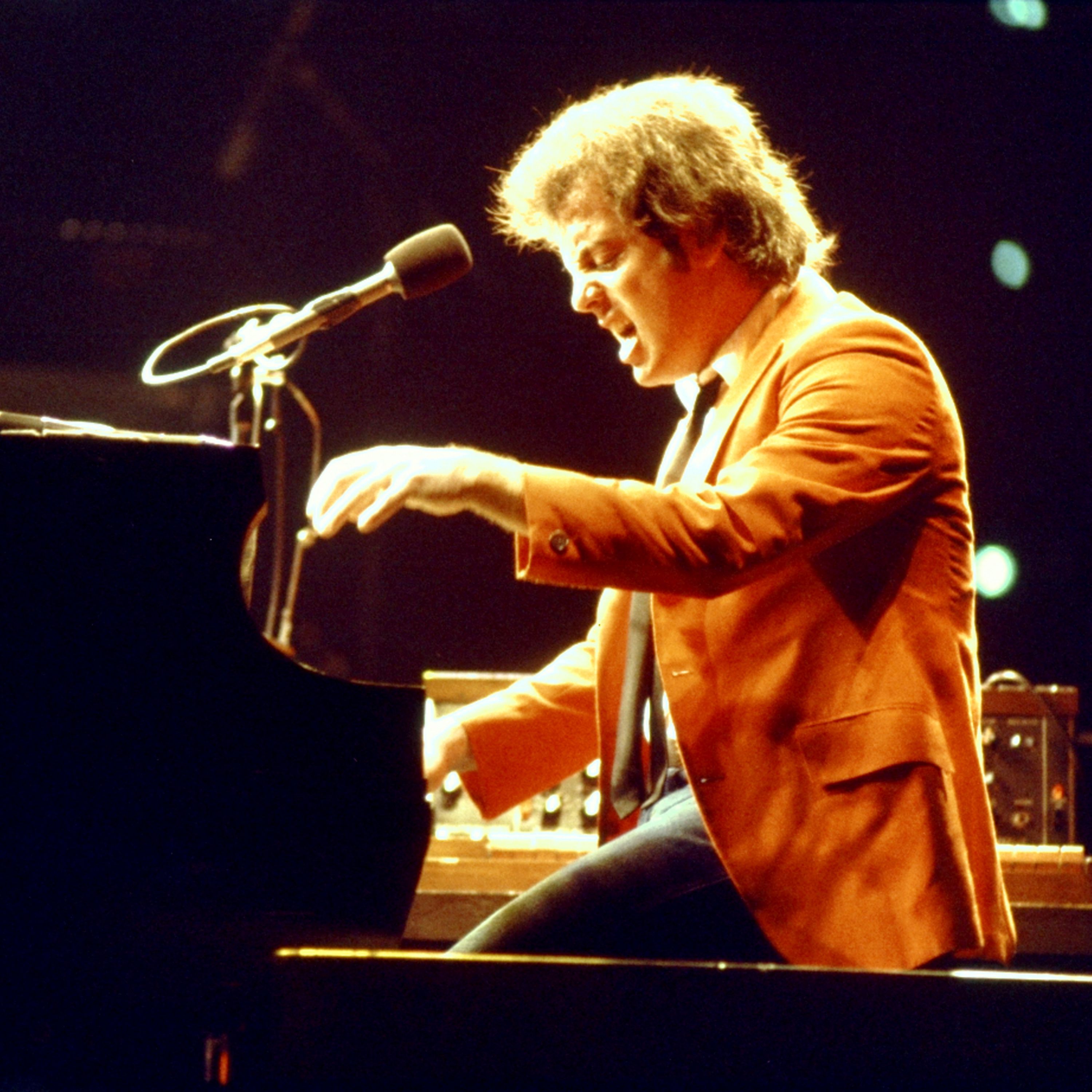
Loading summary
Transcript31 lines
- [00:01]
Discount Tire Announcer
We've been the trusted experts since 1960 because nobody knows tires better than we do. And with over 90 tire brands, we have an abundance of options in stock for your vehicle. Buy and Drive today@discounttire.com. let's get you taken care of.
- [00:23]
Alison Stewart
I'm Alison Stewart. This is all of it on wnyc. And today we are talking about documentaries. Let's get in the mood with a little Vienna.
- [00:33]
Billy Joel (singing)
Slow down, you crazy child. You're so ambitious for a juvenile. But then if you're so smart, tell me why are you still so afraid? Where's the fire? What's the hurry about? You better cool it off before you burn it out. You got so much to do and only so many hours in a day. But you know that when the truth is told that you can get what you want or you can just get old, you're gonna kick off before you even get halfway through. Ooh, when will you realize Vienna waits for you?
- [01:24]
Alison Stewart
That is, of course, a Billy Joel classic. We are playing it because we are diving into the life and career of the piano man himself. Billy Joel is a local legend, raised in Hicksville, Long island, spent a decade in residence at Madison Square Garden and has sold more than 150 million records. In the two part HBO film, Joel gets candid about mental health, struggles with alcohol and his complicated relationship with his father, a German immigrant, and his mother, a lover of music who was sometimes unstable. And of course, the film looks into Joel's music and creative process. The movie is titled Billy Joel and so it goes. It is streaming now on HBO Max. It was directed by Jessica Levin and Susan Lacey. Susan is a legend in her own right and has made a lot of documentaries over the course of her career. So I wanted to know what made her want to take a look at Billy Joel.
- [02:24]
Susan Lacey
For me, it was an incredible journey of discovery. I knew his hits, I did not know his catalog in any kind of deep way, but I did begin to discover how incredibly, inextricably connected his life is to his music and his lyrics. It is a. It's a rip from the page, you know, of his life autobiographical journey. His lyrics spell out what was happening in his life. His loves, his loss, his betrayals, his struggles with alcohol, his financial woes. It is literally all documented in the lyrics of his, of his songs. And that was a real surprise to me. The other thing that was a surprise to me, which I didn't know, was that he's an incredibly gifted classical musician and he studied classical piano for 14 years. He had A huge. A wide range of influences of music he was listening to as a child. His father was a classical pianist who didn't think he was very good, but Billy thought he was pretty good. But I don't think he learn very much from his father. His father was tough on him, was tough. But his mother was a believer and she made sure he had those piano lessons. She knew Billy was going to become something one day. And so he had a lot of influences besides classical music. He listened to Broadway, listened to jazz very much, the American songbook, Tin Pan Alley, rock and roll, of course. But all of this found its way compositionally into his music.
- [03:48]
Interviewer/Host
And it's interesting in the first part of the film, the rest of the film, it becomes more. More documentary like. But the first part is almost memoir, ish in the way he's talking initially. Why did you want to open the film that way?
- [04:01]
Susan Lacey
Well, we don't actually begin with his childhood. We don't. I mean, I waited until. I waited until you cared about his childhood, to bring his childhood in. The film actually starts with, you know, he was in a band since he was 14 years old. You know, music has been. And he didn't go. He didn't graduate from high school. And I thought all those early years, I mean, the lost souls, the hassles, a lot of people don't know all of that. And the fact that we had, you know, recordings from some of that stuff and, you know, his first song, you know, Every Step I Take, which was a kind of bad Beatles song, as he calls it, I thought it would be fun for people to know where he came from. But musically, that he was in a band that he started up, he thought he wanted to be Led Zeppelin, wasn't very good at it. And he did this band called Attila, which he says one of the worst bands ever, and it actually wasn't very good. And, you know, and then finding out about his relationship with the woman who became his wife and manager, who had been married to his best friend.
- [05:06]
Interviewer/Host
I really love the way that you portrayed Elizabeth Webber in the series. It was really a beautiful tribute to them, to them as individuals, to them as a couple, to them creating this early part in his career. She was his wife, she was his muse, she was manager, she was responsible, she was the general, I think she
- [05:29]
Alison Stewart
called herself in the film.
- [05:34]
Susan Lacey
What do you.
- [05:35]
Interviewer/Host
I mean, this is a big picture, but what do you see as her role in Billy Joel? The artist, the early artist.
- [05:43]
Susan Lacey
Well, it's such a. It's a very long and complex story. But what you should know is that when she left him, she didn't speak about Billy for 40 years. She did not mention his name. Her son, who was in Billy's life for the first 16 years of his life, had girlfriends who didn't even know he ever had a relationship with Billy Joel. Oh, wow, that's interesting. That's the three to which the separation took place. So it was not that easy to convince her to be a part of this film. And it took a while. And the reason I think she finally did is that I assured her that I felt that she had been misrepresented in social media, that her story wasn't known, the degree of her influence and her smarts in guiding Billy's career, that the songs were written for her and about her and that her story was going to be told and that she should be a part of helping to tell it. And that convinced her. And then we did four interviews. Her role is incalculable. You know, she knew that he was something. I don't think Billy had the same ambition. In a certain way, I think he became ambitious, but I don't think. I think at first Billy was really. Because he came from a real hardscrabble background. All he wanted to do was be able to pay the bills. But she saw something in that and she guided that. And she saw what all the other managers, the bad ones that he had, a series of bad ones, she saw how they were screwing up and she said they were interested more in what Billy could do for them than what they could do for Billy. And Billy said, nobody knows me better than that, so why don't you? You can't do worse than those guys. Why don't you become my manager? Then of course, he turned down a couple of pretty prominent music producers, including George Martin, who was the Beatles genius music producer.
- [07:34]
Interviewer/Host
Well, he wanted to get rid of his band.
- [07:35]
Alison Stewart
Billy was like, hey, me or the band? That's right, we come together.
- [07:39]
Susan Lacey
Yeah, love me, love my band. Which is what I was saying earlier. He was very connected to his band. His band. And then Elizabeth said, he's going to do a concert at Carnegie Hall. I'm going to invite Phil Ramone, who at the time was also a music producing legend, who'd been worked with Frank Sinatra and Barbra Streisand and Paul Simon and everybody. And he saw that the strength in Billy's was to capture the live feeling, to capture the feeling of the live performance on stage, which was electric. And that was exactly what Billy wanted. But how smart Was she to invite Phil Ramone to come to Carnegie hall and hear Billy? Because this was before Billy had really become a big recording artist. I mean, he wasn't a big recording artist at that point. His. He built an audience and a following. Excuse me, through his live performance, because he was such an electric performer. His records weren't selling because he didn't have good distribution. His producers weren't doing the job. So Elizabeth would send people, when they would go to perform someplace, she would send people ahead to the record stores to make sure the albums were in the. She would go to the convention center where Columbia executives were having a meeting when Billy was doing a concert later, practically right next door, and say, why aren't you at that concert? And she would pick up and drag them over to the concert. You have an artist here you need to pay attention to. She was amazing. And she was his muse, too. I mean, it's a very emotional and very tragic, in a way, end, you know, of their relationship. Oh, so loving. Very loving. I mean, he says, she says one day, it was so touchy when she told me this, I did all four interviews with her. She said, I told him at the end, she said, you know, they're going to write about us one day, and I hope they write about what we did. And he said, I wish they could write that we went all the way. It was very touching. It makes me cry even to think about right now.
- [09:37]
Alison Stewart
There's so much in the documentary. It's two and a half hours, two different sections, and it's worth every minute, I have to say. Five hours total, right? Two and a half. Two and a half. Billy Joel opens up about his mental health.
- [09:51]
Interviewer/Host
He talks about taking his own life. He talks about being in a motorcycle accident. He talks about alcohol.
- [10:01]
Alison Stewart
What were the rules? Was this an independent production? How did that conversation come up?
- [10:08]
Susan Lacey
Well, it was a totally independent production because that's the hallmark of my films and my company, that we. We make films about very famous people and they don't have anything to say about what the film is. I did ask Billy at the beginning if there were any sensitivities. Not that I would necessarily stay away from them, but I wanted to know what they were. And you know what he said to me? Tell the truth. That's all I ask. Tell the truth, Susan. And he went that distance as well. He told the truth. There was nothing he wouldn't talk about. We covered all of it. We covered his suicide attempts. We covered his struggles with alcohol and rehab. We covered the fact that he played with his own physical being, with riding motorcycles in the rain, et cetera. And we know that song. And he opened up about his music and he opened up about his love affairs. Not a lot. I think those were probably still the most difficult things for him to talk about. The breakups of his marriages. And that was. Sometimes we left that with a song, the song that he wrote about it. And he opened up about his craft. There was nothing and it was. And he didn't see the film till it was finished.
- [11:24]
Alison Stewart
Oh, wow.
- [11:25]
Interviewer/Host
Really?
- [11:25]
Susan Lacey
And he wrote me something which is kind of private. But in the end he said, thank you for so masterfully connecting the dots of my life. I now know what I did and why I did it, why I did what I did, which was I was recovering from knee surgery and it practically had me on the floor.
- [11:44]
Interviewer/Host
Wow.
- [11:45]
Susan Lacey
Yeah.
- [11:46]
Alison Stewart
Billy Joel is a New York guy. Spent a good deal of time in la, had tough times in la, but he came back east to New York.
- [11:55]
Susan Lacey
That's where he found his voice. He found his voice in New York. He was a New Yorker. But I just want to say that I don't think Billy ever had ambitions to be a rock star. I mean, he always said I don't look like a rock star, I look like the guy who makes pizza. But I think that. And I also think that, you know, the fact that he didn't have all these rock and rolly elements, as Bruce Springsteen says in the film, created a problem for him with the critics because they did not know what to do with Billy. I mean, there were aspects of jazz, aspects of classical, aspects of the American songbook. He was incorporating all these musical genres into his music and they couldn't pigeonhole him. And so, you know, he was accused of being derivative and not original for quite a long time. I mean, Rolling Stone wouldn't give him a good review and he used to tear up the reviews on stage. Cause it would really piss him off. But I think, I'm sorry, I'm allowed to say that I think he came around to recognizing that he was baiting the press a lot. And he said once you don't pick fights with people who buy ink by the barrel. So yeah, so he. But I can't remember what the original question was. Oh, he. I don't think being a rock star was. Was his aim. I think he. I think he's a true full blooded musician and that's what he was cared about. And he. And he wrote music all the time. It came to him fairly easily. What didn't come to him easily were lyrics. He struggled over lyrics. And I think it might be one of the reasons he stopped writing pop songs. He just. He was. The tyranny of the rhyme had gotten to him. And I think he felt that the song cycle had kind of run its course. And that's when he turned exclusively to classical music.
- [13:39]
Interviewer/Host
Before we end, there's a really interesting part of the documentary, and I don't expect you to go all the way into it, but it really gets into his ancestors and the Joel family that was from Nuremberg, Germany, and about his father. How did learning his history. People will learn about it when they watch the documentary. How did it help him understand himself a little better?
- [14:08]
Susan Lacey
Well, I think a lot of it came as a surprise to him. He didn't find most of this out until he went to find his father, who had left him when he was 7. He never heard a word from me. He didn't know if he was dead or alive. He went to find him and he found him in Vienna. And I think I used the Vienna had variations made of the melody to sound very Jewish or very Viennese to tell that story. And it's so connected to his father that I think the search for his father, it took him a long time to be able to admit that Vienna probably was about his father. But Howard Stern, I interviewed him and I didn't even. I kind of knew in my heart that the abandonment of his father was a really big thing that he hadn't kind of faced. And Howard Stern, without even being prompt, and he said, I think Billy's story is way deeper psychologically than Billy wants to know. And he said, I really think that Billy's drive has been trying to connect with his father through music. So I don't know that it answered your question, but I think it's a huge part of Billy's being.
- [15:16]
Alison Stewart
That was Susan Lacey, one half of the directorial team behind the documentary Billy Joel. And so it goes. It's now streaming on HBO Max. And that is all of it for today. I'm Alison Stewart. I appreciate you listening and I appreciate you. I'll meet you back here next time.
- [15:32]
Modelo Especial Announcer
This is Modelo Especial, a full flavored golden lager, crisp and refreshing from start to finish, brewed with time, effort and determination to get the balance right. Modelo Especial, the model for everyday beer. Drink responsibly. Beer reported by Crown Report, Chicago, Illinois.
- [15:48]
Progressive Insurance Announcer
Every day as a small business owner feels like solving a puzzle. One moment you're cruising along and the next there's a shipping snag that has you scrambling. But here's a surprise you will like with Progressive Small business owners save 10% or more on their commercial auto insurance when they pay in full. So go ahead, surprise yourself. Get a quote in as little as 8 minutes@progressivecommercial.com Progressive Casualty Insurance Company and affiliates discounts not available in all states or situations.