← All Of It with Alison Stewart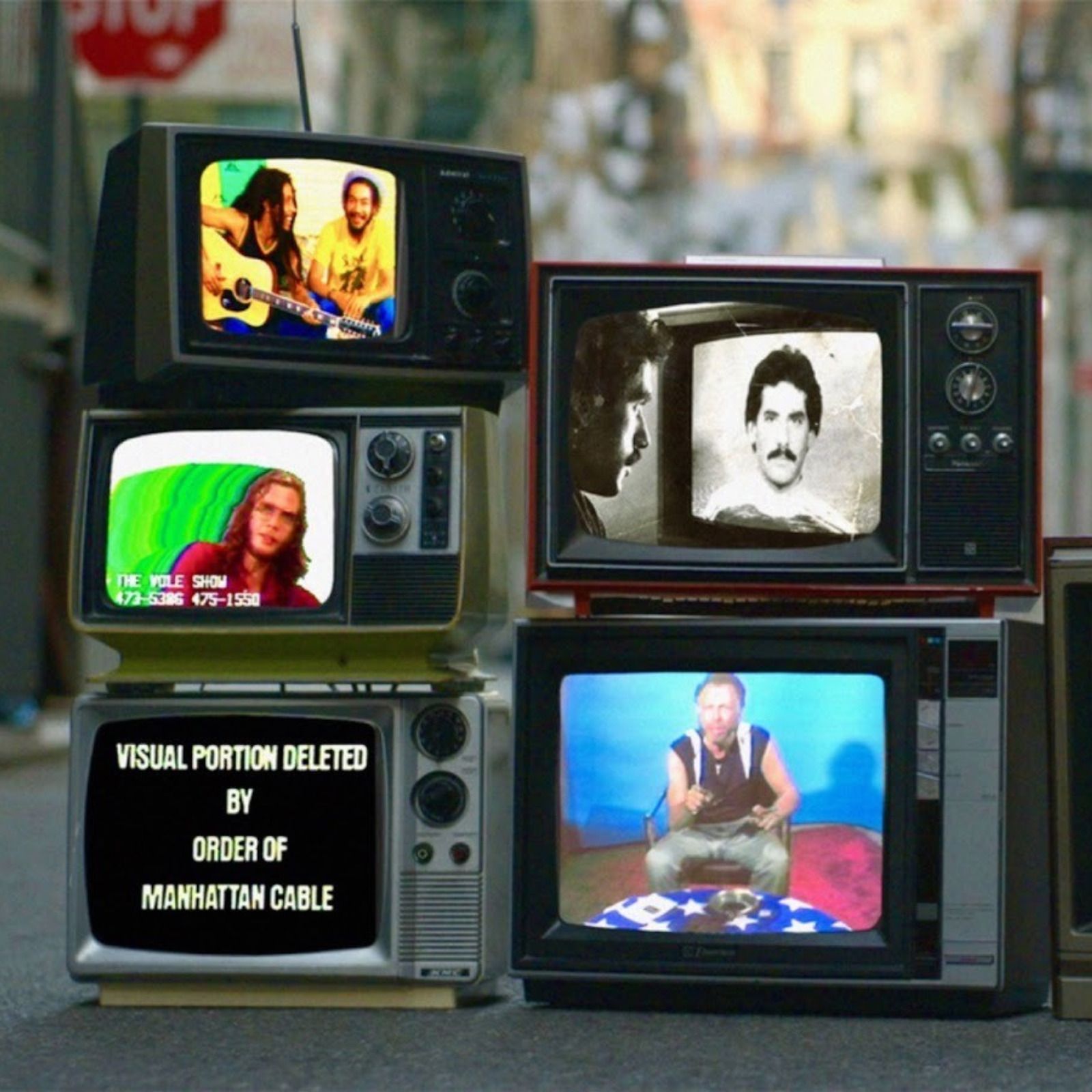
All Of It with Alison Stewart
New Doc Celebrates NYC's Weird and Wild Public Access TV Experiment
00:25:38
Loading summary
Transcript67 lines
- [00:00]
David Shadrock Smith
Foreign.
- [00:09]
Alison Stewart
This is all of it on wnyc. I'm Alison Stewart. And now we'll talk about a grand experiment in media and free speech. In the early 1970s, when Time War made a deal to put cable TV infrastructure in the city required that some channels be allocated for public access. A new documentary called Public Access traces the history of Manhattan cable television. One such channel which became an eclectic collage of homegrown content. This include niche call in shows, countercultural cultural music coverage, personal soapboxes and community interviews, as well as your experiences with the modern Internet might suggest an open forum like the one we've invited, an open forum that invited a lot of pornography. Free speech advocates found themselves in a mix with some characters. And there's more connective tissue than that between public access TVs open platform and today's social media content creators. So let's get into it with the documentary's director, David Shadrock Smith. David, welcome to all of it.
- [01:09]
David Shadrock Smith
Thank you.
- [01:09]
Alison Stewart
I got mixed up in the intro there, but you know what I'm talking about.
- [01:12]
David Shadrock Smith
Yeah, I know the story.
- [01:15]
Alison Stewart
Why were there public access requirements built into the implementation of New York City's cable television infrastructure?
- [01:22]
David Shadrock Smith
Let me take you back to a great time in the world. You know, it really kind of grew out of, you know, civil rights movement and anti Vietnam War protests and the whole kind of sense of like maybe the media isn't telling us the whole story and there's a lot more out there and maybe we need to be more inclusive. And there were a group of pretty, pretty leftist thinkers that came out of the alternative Media center in New York and they were activists and they said, why don't we treat media like a civil right and everyone should have access, should be able to tell their story. That's what will make our democracy better. So they went and somehow they advocated for channels on this new thing called cable to be available to anybody on a first come, first serve basis, totally free. And I think that was the very idealistic beginnings. And from there the story unfolds.
- [02:26]
Alison Stewart
How did the new technologies at the time make it possible for this to become a thing?
- [02:32]
David Shadrock Smith
Yeah, I mean, I love the parallels not only to today, but sort of every time a new technology comes online and it opens up spaces and people rush in. And in that time it was really two technologies. It was coaxial cable which was being laid down literally digging up the streets of New York and in other places around the country, New York, they did it because the antennas on your, the rabbit ears on your TV were Very unreliable with all the skyscrapers. So they were laying these cables direct into your homes. And then there was the video camera. And this was a true revolution, the idea of a sort of personal, portable video camera. In that case, it was the Sony Portapac was the first one. And it was a revolution. And you see the way so many artists, so many activists, so many people embrace this new technology. And I think that was really, you know, a media moment where it became possible for anybody to have the means of production.
- [03:49]
Alison Stewart
Listeners, if you remember watching some of New York's public access programming in the 70s and 80s, we want to hear from you. Were you loyal to any of their programs like TV Party or Emerald City or Rocker TV Squirt tv? Call in and share your public access memories. The number is 2124-3396-9221-2433 wnyc with one of the people that you interviewed, David, at Manhattan Cable Television. He said that he described them as incorrigible kids and that the CA was like the parents. Could you explain how the kids ran this operation?
- [04:25]
David Shadrock Smith
Yeah, the kids just took over. You know, they were. A lot of them came out of that alternative media center and others just sort of straggled in to be behind the scenes at the studio. And yeah, they were punk kids. They were very, very engaged in the idea of the whole thing. Right. Like they wanted media to be available to all. They were. They were activists very often, but they were also like 20 something in New York in the 70s. And, you know, that was the vibe, right? It was very underground, very kind of pirate radio feeling as far as we've heard. And. Yeah, and then. And then it was sort of under this umbrella of the cable company, who looked down. They were literally on the first floor and the cable company was somewhere up on the 10th floor, I think. And they were like, what is going on down there? You know, please don't smoke pot in the building. Right. So there were. There was a kind of uncomfortable relationship between the corporate parents and this sort of freewheeling space that they had to do. They were mandated as part of their charter, their license to run cable in New York. So, yeah, it was very much like a generational and also a kind of vibe gap.
- [05:59]
Alison Stewart
How did the suits view cable television? We know how sort of the alternative kids did. But how do the suits view it?
- [06:05]
David Shadrock Smith
Public access, specifically? Yeah, I think. I think they. Well, you know, Charlotte Schiff Jones was, who we interviewed in our documentary, was a vice president at Time Warner, and I think she really believed in it. Right. She was and is a free speech advocate. And the whole concept of opening up these channels was very much in line with her ideals. Right. I think she also had been very active in the civil rights movement. So she was sort of sitting between the suits who really did look at this thing like a runaway experiment that they had no control over. And they were kind of scared of it in a way, I think. Right. They did try at various points to sort of shut it down or control it or try to put some guardrails around the content. And whenever they did try that, someone would sue them, usually Al Goldstein, a notorious Times Square screw magazine, Midnight Blue. He's a whole story unto himself. You know, they would fight back and they would earn the right to be back on the air. So it was this. It was this kind of dance of like, well, all right, there are going to be no rules. How do we control it? And that is so much, I think, the world we live in now too. So I think it's very, very parallel.
- [07:47]
Alison Stewart
We're talking about the new documentary Public Access, about the rise of community based cable tv. My guest is director David Shadrock Smith. Hey, if you want to get in the conversation, if you remember New York's public Access programming in the 70s or 80s, we want to hear from you. 2124-3396-9221-2433 w NYC.
- [08:08]
Caller Host/Producer
By the way, your document, it's a really good document.
- [08:10]
Alison Stewart
I did want to say, let's talk
- [08:12]
Caller Host/Producer
to Karen in Brooklyn Heights.
- [08:13]
Alison Stewart
Hi, Karen, thanks for calling all of it.
- [08:16]
Norma (Caller)
Hey, Allison.
- [08:18]
Karen (Caller)
I, in the late 80s called in to the metro astrologer who was on very late at night. I would say like 11:30 maybe at night. And I wanted to know something about my next relationship. I was between relationships at the time. And she predicted that it would have a domicile quality and that those were the words she used. Lo and behold, I met my husband
- [08:44]
in the building that we were both
- [08:46]
living in at the time. So she was quite accurate.
- [08:50]
Alison Stewart
Karen, thank you so much.
- [08:52]
David Shadrock Smith
Hey, astrologers, I love sitting here with phone calls coming in and thinking about that was another revolutionary part of public access was the call in show, the live call in show. Like, when could you talk to your tv? That was not a thing prior to, I mean, sort of radio space, but it was on tv. And there are just so many great stories of, you know, first of all, like kids like myself and many others I've talked to would. It was sort of like entertainment to call in these shows and Prank them and.
- [09:26]
Alison Stewart
But don't do that.
- [09:27]
David Shadrock Smith
Yeah, no, no, no pranking. Times have changed. But, you know, there's a story we tell in the film about Groobtube, which was a great, great call in show, one of my favorites. And he put out a call me if you're single and you're looking for a match. And sure enough, Adrian. Later, Adrian Gruberg called in and they were married for the rest of his life.
- [09:58]
Caller Host/Producer
So we're getting a lot of calls about Robin Byrd. Yes, we got. I was a brand New Yorker when one of my roommates who had grown up in Manhattan introduced me to the one and only Robin Bird. Her show became regular viewing in our apartment. Let's talk to Jane and Carol Gardens. Hi, Jane. Thanks for calling, all of it.
- [10:17]
David Shadrock Smith
Hey, there.
- [10:17]
Karen (Caller)
Thanks for having me on. Yes, I was, or am, a native New Yorker. And our sex ed education was definitely all about having one hand on the remote control, watching Robin Bird, and just hoping that our parents didn't walk in the room. And if they did, that's why we were holding the remote. I think baby, let me bang your box was sort of the jingle that we all came to school singing for years to come.
- [10:46]
Alison Stewart
Thanks for calling.
- [10:49]
Caller Host/Producer
Let's talk about Robin Byrd while we're here.
- [10:51]
David Shadrock Smith
Sure.
- [10:53]
Caller Host/Producer
First of all, what was Channel J? She was on Channel J. Yeah.
- [10:55]
David Shadrock Smith
Yeah. Let's start there. And, you know, like your caller. I mean, I grew up in Brooklyn as well, actually. Probably not far away. Interestingly, we didn't have cable, so I would have to watch it at my grandmother's, who was on the Upper west side. And I would get sent there on Friday nights. And so I would sneak into. When they were asleep, into the library and watch, you know, all the shows. There were tons of the, you know, 1, 800, call me sort of escort ads and Midnight Blue, which is. We feature a lot in our film. And of course, Robin Byrd, who I think is probably the best known personality to emerge from public access. And, yeah, it was to take you back to that time. You couldn't see that stuff anywhere else. It just was not on your phone. Or maybe it was under someone's mattress, or you had to go to Times Square, which was pretty scary and dangerous. But as a kid, like so many kids, that kind of first shock of stumbling on Channel J, which you asked about. Channel J was an offshoot of Channel C, which was the original public access channel. And it was their effort to. It was hard to make public access Right. Like you. You had to be really committed and that wasn't everybody's cup of tea. And there were some costs involved. Right. Either you had to rent the studio or, you know, buy videotapes and things like that. So they wanted to try to make it more sustainable for producers. And they opened Channel J, which could be ad supported, so you could sell ads against your show. And that really is where the sex shows went wild. Right. And the advertising revenue was substantial. Like, I think people made a lot of money. Robin Byrd, Al Goldstein certainly did pretty, pretty well. And yeah, it was sort of an uncomfortable fit again, or an evolution of this medium, which was supposed to be open and free. But like so many things, money comes in and, you know, takes over the. And changes it just a little bit. And the sex shows really figured out this advertising model. They would buy blocks and blocks of TV and they would just re air things and run lots of ads and. Yeah, but, you know, for a kid growing up, it was like, okay, this is a really window into another world. And it was definitely an education.
- [13:59]
Alison Stewart
The name of the documentary is Public Access. I'm speaking to its director, David Shadrach Smith. We'll take more of your calls and we'll have more with David after a quick break.
- [14:07]
This is all of It. You're listening to all of it on wnyc. I'm Alison Stewart. My guest is director David Shadrach Smith. He is talking about his new documentary, Public Access, about the rise of community based cable tv. Let's talk to Norma on line five calling in from Manhattan. Hey, Norma, thanks for calling all of It. You're on the air.
- [14:39]
Norma (Caller)
Hi. Hi. I was a Public Access producer with QPTV in Queens. And I got involved because as an artist, I was really interested in the technology. And they offered to train us free. Just, you know, come in and learn how to use the equipment. And I thought, wow, this is a real opportunity. And so I did, I learned it, I became a producer, I got my certification, and I made a documentary called Round and Round the Muller Carousel. And it was so interesting to do that because I learned so much about the history of old carousels. This is a. Actually it's a carousel that I believe is still in operation in Forest Park, Queens. And the documentary was about the restoration of the horses.
- [15:38]
Alison Stewart
Norma, thank you so much for calling in. That's kind of interesting that she learned about television by just showing up.
- [15:44]
David Shadrock Smith
Totally. I mean, that was part of the mission was to make cameras available to train people, to teach them about this new technology. And I really think it's beautiful when you Think back on it. That people rushed in, they found it, they wanted to express themselves, make documentaries about things that were of local community interest for their communities. And that sort of birth of accessibility and returning that gift by doing something that meant something to your community, I think was kind of the beauty of it. And, you know, we talk a lot about the sex. We talk a lot about the crazy stuff. But there were so many great people, artists, musicians, just, you know, true believers in just community, local community interfacing communication that had shows. So I really do think it sort of like lived up to that promise along with all the other stuff that happened. So thank you, Norma. I never dared have a show myself.
- [16:53]
Alison Stewart
Early on, MCTV aired footage that photographer
- [16:56]
Caller Host/Producer
Bob Gruen took of his child's birth.
- [16:59]
Alison Stewart
Let's listen to him talk a little bit about why he was excited to
- [17:02]
Caller Host/Producer
share this deeply intimate moment on tv. This is from Public Access.
- [17:15]
Bob Gruen
A funny thing about the video machine is that it's somehow sensitive to emotions. When things get exciting, the machine gets excited. And as the baby came out, the doctor holds the baby up. And then the video glitched. To me, it was the most amazing thing I'd ever seen. I had no problem putting that on the cable tv, because this was the meaning of life. People were shocked. Oh, my God, it's horrible. This guy, all his blood and everything. Some people thought that was, you know, obscene or wrong. And I'm like, why not? That's where you come from.
- [18:14]
Alison Stewart
How do the ideas about what's personal and private versus what's shareable and human
- [18:20]
factor into what Public Access was?
- [18:22]
David Shadrock Smith
Yeah, I love that story so much. And it was one that, you know, we didn't look for it. We were talking to Bob Gruen, interviewing Bob Gruen, mostly about his rock and roll photography and the show that he had on Public Access that was really just filming bands and putting them on tv. And we'd heard rumors that someone had filmed a live birth on Public Access. That's interesting. That's new territory. And sure enough, it was Bob Gruen. And he generously shared the story and the footage, which he'd kept, thank goodness. And it was one of those moments where you stumble on things when you're doing primary archival research and talking to the producers that we hadn't expected. So, yeah, I think thinking back on your last call or two, it's hard to imagine now we all have a camera in our pocket and we're all sharing ourselves constantly. Or some of us are, some of the more bold of us are. But that was very new. And I think this combination of a technology that felt more intimate and closer to you and this idea that, you know, you could express yourself did start to turn toward the self in an interesting way, which I think artists embraced. I think lots of people just wanted to see themselves on tv. This was very. That you could see yourself and you had that technology. So I do think it was sort of like that missing link between mainstream TV and the world we live in now, the selfie world we live in now. And people just wanted to express themselves and show their lives.
- [20:14]
Alison Stewart
Gay tv, LGBTQ tv, took huge leaps with public access. You had Emerald City was for the gay community. And also it really, when the AIDS crisis hit, people were able to get information. Let's listen to another bit from the documentary Public Access. This is Richard Berkowitz. Let's listen to him talk about how he got involved with public public access. And we can talk about it on the other side.
- [20:42]
Richard Berkowitz
At the dawn of age, Michael Callan and I wrote the landmark pamphlet, how to have Sex in an Epidemic. We had to get the word out to the community about safe sex. So I said to myself, call them a letter. I bet this big slut like to talk about safe sex.
- [21:05]
Interviewer with Berkowitz
Tonight, Berkowitz and Callan's new book, Lou,
- [21:10]
Richard Berkowitz
was the perfect outlet to try to wake gay man up.
- [21:13]
Interviewer with Berkowitz
You go into several avenues and areas of sex here. You talk about FIST and all the rest of these wonderful things that we all hold near and dear to our heart. Tell us how you would engage in these things differently now to how you did it before.
- [21:34]
Richard Berkowitz
It's the avoiding the exchange. It's avoiding the exchange.
- [21:36]
Alison Stewart
It's interesting. What did Berkowitz's work demonstrate about the
- [21:40]
Caller Host/Producer
value of public access?
- [21:42]
David Shadrock Smith
Yeah, to me, this is the heart of the story to me, like the sort of proof of the experiment, you know, why it was so valuable at its time and, you know, on from there. So gay TV was brand new thing. Emerald City was the first gay show in the world that could speak from gays to gays. And that was amazing. And growing out of that, Lou Maletta took it. He was a sort of leather daddy who had an advertising business. And he took it a little further and kind of got more into the porny territory. But he had a vision of what gay television could be and really wanted to build a kind of network. Right. So that's all going along. And then AIDS comes into the world, and he, you know, to his credit, he really recognizes the platform. He has to speak directly to the community that needed to hear this information. And Richard Berkowitz was a young activist, and they'd written a book about a pamphlet that was very important at the time, how to have Sex in an Epidemic. And it was a great marriage of I have the platform and you have the information. And this is a life and death story. And the power of that medium, I think, really comes out in that story, you know, that you could save lives. And they did.
- [23:26]
Caller Host/Producer
We got a text here that says, Glenn o' Brien's TV Party. What was special about TV Party?
- [23:32]
David Shadrock Smith
Oh, man, TV Party. That's one of my favorite shows. So TV Party. And I was a little too young to see it, so for me, I'm living it through the archives. But that was the underground, you know, that was downtown New York. Comes into your living room in the best possible way. And it's like that kind of cool New York that we all, you know, if you were lucky enough to live through it, great. Otherwise, it sort of lives in our epic imaginations. But, you know. So Glenn o' Brien was a downtown impresario and a writer, and he teamed up with Chris Stein from Blondie, and they were co hosts on a show called TV Party. And they had everybody cool came through there. Debbie Harry bouncing on a pogo stick. You have Jean Michel Basquiat working the Chiron machine in the back room typing poetry live on tv. It's just like what was going on. And it was directed by a just recently deceased Amos Poe, who was a no wave director, downtown director. So it was like all the cool kids in one place and they just like, let it fly. It was chaos. Like, watching a whole show was hard, but we've chosen some moments for you, so you get the feeling. But it was truly, I think, one of the perfect archives of the New York in our imagination.
- [25:11]
Alison Stewart
There's so much more to discuss. You should go see the documentary Public Access about the rise of community based cable tv. My guest has been director David Shadrach Smith. Thank you so much for making this film.
- [25:22]
David Shadrock Smith
Oh, it's amazing to be here. I mean, hometown local radio. It's like, this is. This is.
- [25:27]
Karen (Caller)
Is just great.
- [25:28]
David Shadrock Smith
Thanks for having me.
- [25:29]
Alison Stewart
And that's all of it. I'm Alison Stewart. I appreciate you listening and I appreciate you. I'll meet you back here tomorrow.
- [25:39]
Chase Bank Advertiser
That feeling when you check your bank account and your paycheck's days away, and of course, your calendar's all good news with Chase Secure Banking, your direct deposit hits your bank account up to two days faster. So when your friends are like and your bills go, you have the peace your deposit brings. And the best part? There's no monthly service fee for 17 to 24 year olds, thanks to Chase Secure Banking.
- [26:02]
For Chase Secure Checking, only eligible direct deposits may be credited up to two business days early, depending on when the payer submits the transaction.
- [26:07]
McDonald's Advertiser
Member FDIC now at McDonald's a McDouble is $2.50, so you can get your gym gains on or just get lunch for only $2.50. Get more value on the under $3 menu.
- [26:19]
Richard Berkowitz
Limited time only. Prices and participation may vary. Prices may be higher for delivery.