← All Of It with Alison Stewart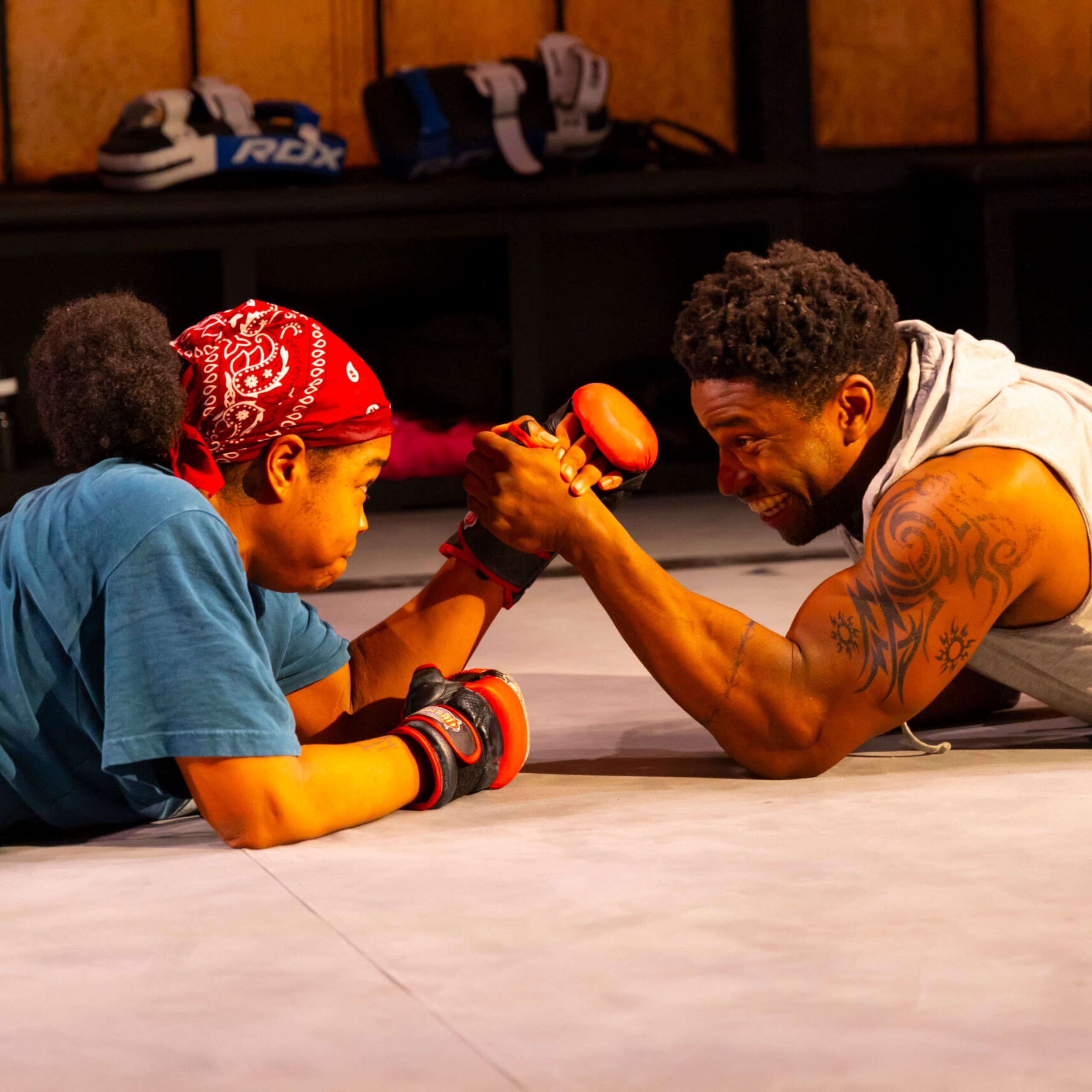
All Of It with Alison Stewart
New Play 'Monsters' Shows Siblings Growing Together Through MMA
00:20:22
Loading summary
Transcript93 lines
- [00:00]
Progressive Insurance/Fidelity Ad Narrator
All of it is supported by Progressive Insurance. You chose to hit play on this podcast today. Smart Choice make another smart choice with Auto Quote Explorer to compare rates for multiple car insurance companies all at once. Try it@progressive.com Progressive Casualty Insurance Company and affiliates. Not available in all states or situations. Prices vary based on how you buy, what should you invest in and how often. Making investing decisions is easier with Fidelity. With their step by step experience, you can find investments based on your goals and comfort level. And if you'd like, you can decide how much and how often to invest with recurring investments that happen automatically. Ready to make your next investing decision? Head to fidelity.com trading Investing involves risk, including risk of loss. Fidelity Brokerage Services llc. Member NYSE SIPC there's an SUV that
- [00:53]
Nissan Pathfinder Ad Narrator
turns the unthinkable into the unforgettable. The new Nissan Pathfinder. Built for big adventures and all that family chaos. It's powered by a strong V6 engine with a nine speed automatic transmission. Inside, it's rugged and capable, but still premium and tech forward with room for up to eight passengers. It's also available with seven passenger seating and second row captain's chairs with massive hauling capability. Now you can bring all the gear you and your family need for unforgettable Adventures. The new V6 Nissan Pathfinder. Power your adventure.
- [01:31]
Interviewer Alison Stewart
This is all of it on wnyc. I'm Alison Stewart. Two siblings on stage. One is a winning mixed martial arts fighter. The other is his kid sister who comes to find him after 16 years. Well, she's not a kid anymore. She works at Applebee's and maybe likes booze a little too much. Her brother had the same habit and is in recovery. It might be something they both got from their shared father. It isn't all they took from their family. Now she wants to get in the ring and he offers to train her as they venture into the world of MMA fighting. What it takes to win, what it takes to get hurt. When do you give in? You realize the fighting is a metaphor for a lot in their relationship. But don't be fooled. There is a lot of fighting in the show. Sometimes it's balletic, sometimes it's fierce. The play is called the Monsters and it's playing at City center on 55th street as part of the Manhattan Theater Club. The New York Times called it a critics pick and said the two leads are hypnotic. Did you hear that? You're hypnotic. Joining us now is. Okay, I'm gonna try. Ready? Akurete Anatuan. Yeah, I was close.
- [02:39]
Anya Mizel
Yeah, that was Close enough.
- [02:41]
Interviewer Alison Stewart
Nice to meet you.
- [02:42]
Oak Anodowan
Nice to meet you.
- [02:42]
Interviewer Alison Stewart
And also joining us is Anya Mizel. Nice to meet you as well.
- [02:45]
Anya Mizel
Nice to meet you.
- [02:46]
Interviewer Alison Stewart
All right, so the characters are Big and Lil Oak. What's up with Big?
- [02:50]
Oak Anodowan
When we meet him, when you meet him at the top, he's just finished defending his championship. He's won, and he's about to continue on with his life. As he's mature, meticulously constructed, he created a nice little comfortable bubble. He has his routine, he does what he does. He's not overly happy, but he's not drowning in alcohol, so it's a win all around.
- [03:11]
Interviewer Alison Stewart
Do you think he's a good MMA fighter?
- [03:12]
Oak Anodowan
I think he's a good MMA fighter.
- [03:14]
Interviewer Alison Stewart
Could he be a great one?
- [03:15]
Oak Anodowan
I think if he was 10 years younger, he could be a great one. He just started kind of late, so for his age, he's kind of phenomenal. But because of that, there's kind of like a ceiling. Now that he's reached, what does MMA
- [03:28]
Interviewer Alison Stewart
mean for him in his life?
- [03:31]
Oak Anodowan
Structure. It's his structure. It's his motivation. It's his carrot, per se. You know, every time he wins a fight, I gotta win today. You know, am I on top of the world? Can I go back and change whatever demons that haunt me? No. But moving forward, I can get ready, I can train, and then when I win, I see the result of my hard work and training. It's very, very visceral and very immediate.
- [03:54]
Interviewer Alison Stewart
Anya, what's up with Lil? When we meet her?
- [03:57]
Anya Mizel
Yeah, she's just lost her mom not too long ago, and the last family member she has is her brother. So she sets up a wild plan to somehow live next to him or seek shelter near him or find some type of housing nearby so that she could catch him after one of the fights and rekindle their relationship. That has been estranged for 16 years.
- [04:22]
Interviewer Alison Stewart
Yeah, it's interesting. She's kept up with him. She knows his fights, she knows his wins, she knows his weaknesses. Why has she kept up with her brother even though it's been 16 years since he saw her?
- [04:33]
Anya Mizel
I mean, I think Big is Lil's superhero. I think because he left when she was still kind of young. Young enough to have this version of him, this imagined, fantastical big brother superhero that saves the day all the time. I think she locked that image and held onto it for herself to honestly sustain her, something to hold onto in all the absence. I think she created a version of him in her head and held it close through life as life came at
- [05:03]
Interviewer Alison Stewart
Her Oak, what did you think of Big when you read this script?
- [05:08]
Oak Anodowan
I wanted to see him come to life. I also felt that Big represented a lot of young black men and the way that Ngozi wrote him in a very honest way, where sometimes in theater you have a kind of person that's kind of. You see the theater version, they're overly articulate. They're expressing everything. They somehow know exactly how to say what, and they're overly poetic. One thing I loved about him is I really felt the essence of a human that's like, I don't really talk that much. I don't really like speaking that much. And I keep to myself, and I relate to that very much so. And I really felt that in this piece. And he was a fighter, you know, I've trained myself, and I wanted the opportunity to continue to do that, to get paid to do that. Hoora. But really, it's just the really solitary nature of him, but that he feels so much and doesn't know what to do with that, which I think a lot of people, male or female, can relate to.
- [06:05]
Interviewer Alison Stewart
Lil, what did. Lil, what did you think when you first read Lil? Lil?
- [06:11]
Anya Mizel
Oh, I thought she was a gift. I thought she was a gift to many young people growing up in their bodies, whatever, however you identify, to grow up in a body, for it to change on you, to learn what protection is, to figure out who you are through a crazy, loud, scary household, et cetera, et cetera, et cetera. I thought that the story was a gift to people who are maybe just trying to figure it out and figure out how to keep trying. And I think Lil is her own version of superhero. To be abandoned and then to arrive at the thesis of I'm going to protect myself is something that I think a lot of. I think a lot of young people today who are growing up in such a fast time are learning that so early. You learn so early that you only have you sometimes. Or it can feel like that sometimes.
- [07:10]
Interviewer Alison Stewart
When Big meets Lil, he's not so sure about her Oak. He's very wary of her initially, as adults. Why is he so unsure of his sister?
- [07:21]
Oak Anodowan
I think it has more to do with him than her. Yeah, I think he's not necessarily. He doesn't want to deal. He's been running away from his past and how he left things. So when he sees her, I feel like it's like, are we going there? Like, what do you want? Are you gonna ask me about that? Are you mad about that? Like, I can't. I'm not trying to go back there. So if you're trying to say why, where were you? I moved on with your life. Good luck with everything. Like, I left you in good hands, so on and so forth. So I really think that moment is really more about him being afraid of having to confront his past and how he left things, which you'll find out in the show. But he's not too proud of how he left things.
- [08:04]
Interviewer Alison Stewart
Let's listen to a clip from the Monsters where Lil is asking questions of Big and he asks her, like, how he knows he's going to win. Let's listen.
- [08:14]
Oak Anodowan
Nothing. I'm ready. I'm ready. And I take one look at him and I know.
- [08:20]
Anya Mizel
Know what?
- [08:21]
Oak Anodowan
I know when I'm gonna win. I know I got him. How you know he ain't got that look in his eye?
- [08:30]
Anya Mizel
Well, look.
- [08:31]
Oak Anodowan
A look that says. He ain't hungry. Not like me. He ain't starving.
- [08:45]
Anya Mizel
What you starving for?
- [08:50]
Oak Anodowan
Everything.
- [08:54]
Interviewer Alison Stewart
Everything that's from the Monsters. Lil is extra. She's ready to go at all times. Why is she in such a hurry to get wherever she's going?
- [09:11]
Anya Mizel
Yeah. I think Lil's version of urgency is through levity and energy. I think it's a defense mechanism. I think it's anxiety. I think it's like the rush to nowhere. But it all feels like it's crashing down right now. So we have to solve it right now. Who are you and who have you been for the last 16 years? Go. I think she's just like, tell me everything right now, because I need to know right now. I need to know that you're not going anywhere right now. That we're starting our new life as brother and sister forever and always. Right now. I think it's that urgent for her.
- [09:45]
Interviewer Alison Stewart
After they meet up, Oak Big offers to drive her home after hearing she took a bus from another great part of town. In that moment, are we supposed to experience a sense of love he has for her, or is he just worried about her? What is that sort of signaling to us that he wants to at least drive her home?
- [10:08]
Oak Anodowan
That exactly what you expressed is exactly what it should. It's signaling. It's. We don't know yet. Yes. At least for me. Like, I want it to be how many Oftentimes in real life, that's the one thing about theater that sometimes where it's like, I think what makes this piece different and pieces like this that I love is you shouldn't always know what's going on. Cause that's what makes it feel like Life. If I watch an interaction, I was like, what are. I'm like, what are they thinking? If you're on the subway and you see a couple talking, you're like, I wonder. I wonder, I wonder. And that's the beauty of that moment, is we don't really know yet. He knows. For Big, it very much so is, I have younger siblings. And you go back to, are you good? I have so many years where I was looking out for you. So it's like he just gets, what are you doing in that neighbor? You shouldn't find. Let me just get you there. But it's all of those things. And the audience is supposed to wonder, what is that? Is it love? Is it guilt? Is it a sense of responsibility? I think it's all of those things as well. That at the end of the day, it's like, that's the beauty. I think of Big in that moment, that first scene. No matter what, there still is that instinct of, I want you to be okay.
- [11:21]
Interviewer Alison Stewart
We're talking about a play called the Monsters, about a pair of siblings, their relationship over time. We're speaking with actors Agnes Mizel and Oak Anodowan. We meet these two sort of in the middle of their life. We get to see them in the future, but we also get to see them in the past when they're kids, what that relationship was like. Oak, what do you do with your body to let us know that this is you as a young. That this is Big as a younger man? Because he's kind of a soft guy, actually.
- [11:52]
Oak Anodowan
Yeah. Throughout the course of the play, you kind of see some events that caused the hardening. And with Big to showcase the difference, it can get very, very technical just in terms of where I place my voice. And there's just kind of a weight that older Big just kind of has that younger Big doesn't. You know, his shoulders aren't as dropped and. Or hunched over. As a fighter, you kind of create the shell when you're fighting. And he's not there yet, so he moves slightly differently. He's a little lighter on his feet. There's a classic. His chest is up a little bit, just like he hasn't been hit to cause him to, like, close and protect himself. And those are the things that I think different differentiate between Big when he's older and Big when he's younger. Really, how he moves, how open his chest is and how he moves through the space versus when he's. You kind of see the wear and tear. He's tired. He's Fighting. He's training. Yeah.
- [12:49]
Interviewer Alison Stewart
Anya, you play sort of an innocent. Or do you think is she innocent when she's younger?
- [12:56]
Anya Mizel
In some ways. You know, in some ways. She doesn't have the language for everything yet. But I do think that. I do think that she's a more. I think she's aware. I think it's weird around here. I think it's loud around here. I think it's scary around here as a little person. But I have fun with my brother. But I know that when we're in this room, when I'm in the small version of her is like, I know that when I'm in this room with this guy, I can be imaginative and free and fun.
- [13:25]
Interviewer Alison Stewart
Let's listen to you from Monsters. This is you as your younger selves. This is little and big.
- [13:32]
Anya Mizel
Big him up, Brady.
- [13:33]
Interviewer Alison Stewart
No.
- [13:36]
Anya Mizel
No.
- [13:38]
Nissan Pathfinder Ad Narrator
You're beautiful.
- [13:40]
Anya Mizel
I thought so. But Billy said. Billy said I was ugly.
- [13:45]
Oak Anodowan
Well, Billy's a dumb.
- [13:46]
Anya Mizel
Yeah, I think so too.
- [13:49]
Oak Anodowan
You want me to kill him?
- [13:52]
Anya Mizel
No. Big. That would be crazy.
- [13:56]
Oak Anodowan
Just doing my due diligence.
- [13:58]
Anya Mizel
Can you.
- [14:01]
Oak Anodowan
Do you like Village?
- [14:02]
Anya Mizel
Ew, No. I like Yasmine. Yeah, she's. She has these long braids with the barrettinum and she's so pretty and she's so cool.
- [14:23]
Interviewer Alison Stewart
Yeah.
- [14:25]
Anya Mizel
Is that okay? Yeah.
- [14:30]
Oak Anodowan
Boys are trash.
- [14:33]
Interviewer Alison Stewart
That's from the monsters. Had you ever been in a two hander before?
- [14:37]
Anya Mizel
No.
- [14:38]
Interviewer Alison Stewart
Ooh. What do you know about a two hander in the ring that you didn't know before?
- [14:42]
Anya Mizel
Well, you. Once the train starts, it doesn't stop. And you are the conductor and the rider in the train have an amazing scene partner to, like, be on the ride with. And it's so fun to transfer who's driving, who's steering, who's. Who's, you know, like, who's in charge of the direction. It's fun to have that exchange. It's also a lot of energy. It's also, go, go, go. And you can't hide. You can't hide. It's not like, oh, we're gonna do our princess track and show up in our one scene at the end of the play and then head out. Once it starts, it's all you and it's all the connection that you see on stage. And you have to keep fighting
- [15:29]
Interviewer Alison Stewart
the
- [15:29]
Anya Mizel
play and move it to the end. Like, it's. It's the fight, and you fight from the beginning to the very end.
- [15:34]
Interviewer Alison Stewart
Oak, what do you like about being in a two hander?
- [15:37]
Oak Anodowan
Um, I like that there are less variables, so. Because there are Just two artists on stage. It really is. Once you're locked in, you're locked in. You know, if we're on the same page, we're good. There's not a new energy coming in. I also like being active. I like doing this. So I like that once we start, we start and we go, there is no break. There is no step off. There is no way of getting out of the moment. It's just going like life. It's just next moment, next moment, next moment, next moment. And another thing is that I think it really creates a different kind of a relationship with the audience, because it's not like there's another person you come and see. You're just with us. You know, it's like watching a series where it's just focusing on one character. You see every step where we go. So for that time, it's really all of us together for that whole time, which I think is beautiful.
- [16:25]
Interviewer Alison Stewart
It's so interesting. The audience gets really involved. And the show I went to see, somebody yelled out an answer to a question that you asked.
- [16:34]
Oak Anodowan
Oh, you had that.
- [16:35]
Anya Mizel
Yeah, I know exactly what show you're talking about.
- [16:39]
Interviewer Alison Stewart
Does the audience get super into it? Have you noticed? Can you notice from that stage? Yeah.
- [16:44]
Oak Anodowan
Oh. Oh, yeah. It's a really intimate space, and it's one of those spaces where we hear everything. So anything you're doing, we hear it. Even if it's rummaging for your bag for something or whispering. There's no such thing as whispering in that space. But, yeah, we do get a lot of that.
- [16:58]
Anya Mizel
Or even having catharsis. Like, we can hear when the sniffles increase. We can hear when people are like, oh, my God. Like, we can hear when people are trying to get it together because they're choked up. It's really. Yeah, the list goes on. And we can hear when people are excited to, like, be on the ride and respond to the show as well.
- [17:19]
Interviewer Alison Stewart
You had to have so many different movement specialists in this production. What was something. One thing that they told you that has stuck with you for each show? Whether it was your fight choreographer. You're the choreographer. Choreographer. What was something they told you which was really important to you?
- [17:40]
Oak Anodowan
Hmm. That's a good question. Keep. Keep the. Keep. For me, it was just keep the energy up. Like, there is no Wednesday matinees. Just kind of like. Especially Ricky, he's just kind of like, when we would go back and do it again, he really kept his foot on the. On the gas. And then I consciously hear him saying, like, commit, commit, commit. Just giving 110% physically. And the greatest response I've been getting for both of us is they're exhausted because we don't stop. You know, you could tell when someone's kind of marking. Like, there is no marking. And Ricky was teaching us and going through stuff when he had hip surgery. But I'd still see him get up, stretch every day, work on it with a bad hip, go through the motions. And that really inspired me. I was like, well, if he's still getting it, I have no excuse.
- [18:34]
Interviewer Alison Stewart
How about for you? What was a piece of information that one of the choreographers or the fight trainers gave you that's important to you every night?
- [18:45]
Anya Mizel
They all. They all are such a huge part of what I. What I replay before doing this show. Just having Sarge Eubanks in the room is a big deal for me. Like, she's. She's one of two black women who hold the title that she holds. And just to have her there, being like, you're doing a good job.
- [19:08]
Interviewer Alison Stewart
She's the fight consultant.
- [19:09]
Anya Mizel
Yeah, she's the fight. Yeah. Hi, everybody. She's the fight consultant. And just for her to be present just felt like motivation for me. It felt like history was in the room and therefore I'm a part of something really big and important and that is motivation. And just. Yeah, yeah. I think the presence of our team was just enough and they were all invested into making sure we could do this and we could do it safely and that we do it full out. Yeah.
- [19:39]
Interviewer Alison Stewart
I think it was a talk back that I went to. They had kids there. It was like a family show and the kids could stay after and they could ask you questions. Were you there that day?
- [19:48]
Anya Mizel
I wasn't there.
- [19:50]
Interviewer Alison Stewart
You were there. Yeah. Right. What did they want to know? What did the kids want to know?
- [19:54]
Oak Anodowan
Well, it's fascinating. From what I remember, they were just like, how do you physically do all that stuff? And then they were like, emotionally, that was a big thing for them. They're like, how do you emotionally do that? And, like, I don't understand, like, how do you get into that character? How do you get, like, you know, they felt it so much so they're just wondering, like, how do you just feel that? How do you feel like all those years of whatever, what have you. That's not what they specifically said, but they focused on those high emotional moments and they're like, how do you. How do you do. Like, how do you get it in you so that I can feel it, too? Was it was the main question that they asked, which I was really happy about. That means they were affected. They were really affected emotionally. You know, normally when you do a student matinee, you'll hear fidgeting or talking or something and. And you know, like at that age, there's so many distractions now more than ever. But I was so focused that when it was quiet, they were just really, really locked in. And emotionally I felt like that's the thing, the emotionality that they were really compelled by. Like, how did you guys do that?
- [20:57]
Anya Mizel
They asked a similar set of questions in two reverse. The high school students, they were similarly like, are y' all okay? And oh, how much? Yeah, like how much of this is really who you are and how much of it is who you're playing and how do you safely go in between the two? I was like, oh, you got me. That is the question.
- [21:22]
Interviewer Alison Stewart
So the play is called the Monsters. It's produced by Manhattan Theater Clubs, pre performed at City center through March 22. My guests have been Anya Mizel and Oak Anodawan. Thank you for being with us.
- [21:37]
Oak Anodowan
Thank you so much for having us. Greatly appreciate it.
- [21:39]
Anya Mizel
This is wonderful. Thanks for coming to see it.
- [21:41]
Oak Anodowan
Yeah. Truly supporting Off Broadway. Let's go.
- [21:44]
Nissan Pathfinder Ad Narrator
There's an SUV that turns the unthinkable into the unforgettable. The new Nissan Pathfinder. Built for big adventures and all that family chaos. It's powered by a strong V6 engine with a nine speed automatic transmission. Inside, it's rugged and capable, but still premium and tech forward with room for up to eight passengers. It's also available with seven passenger seating and second row captain's chairs. With massive hauling capability. Now you can bring all the gear you and your family need for unforgettable adventures. The new V6 Nissan Pathfinder power your adventure.
- [22:14]
Progressive Insurance/Fidelity Ad Narrator
Try angel stuff for your tushy. It's made by Angels.
- [22:20]
Anya Mizel
Soft and strong. Budget friendly.
- [22:22]
Progressive Insurance/Fidelity Ad Narrator
The choice is simple.
- [22:25]
Anya Mizel
Pick up a pack today. Angel soft. Soft and strong.