Loading summary
Transcript69 lines
- [00:00]
Maurice Bernstein
Foreign.
- [00:09]
Alison Stewart
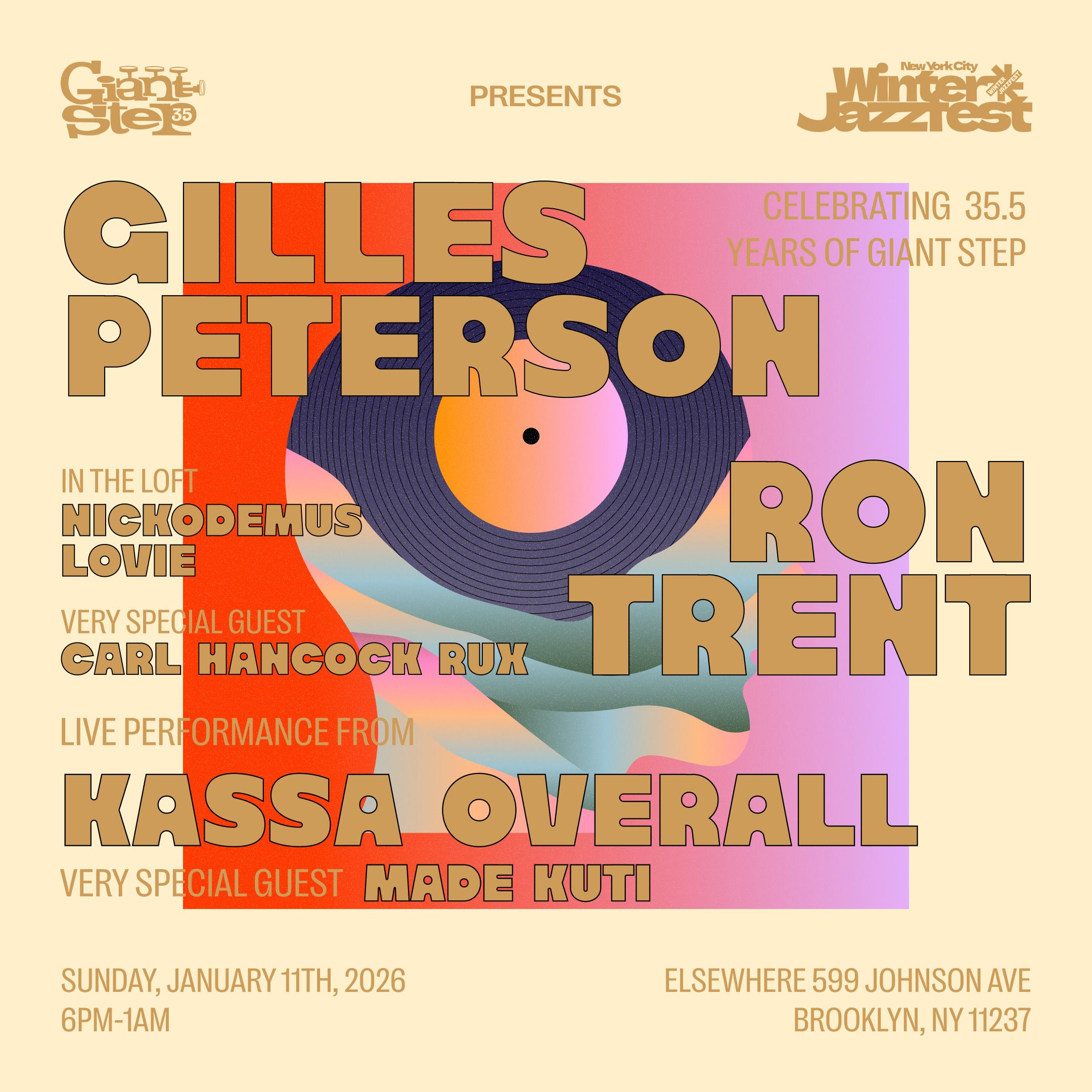
This is all of it on wnyc. I'm Alison Stewart. We continue our conversation about Winter Jazz fest with a 35 and a half anniversary celebration of the groundbreaking Giant Stepped. Named after John Coltrane's 1959 album. Giant Step made a name for itself in the 1990s with a concert series called the Groove Academy and weekly parties featuring D DJs and live musicians. You might remember them from their parties at SOB I know I did. Giant Step was the incubator for groups like the Roots, Digable Planets and Massive Attack and was instrumental in bringing London's rare groove sensibility to the States. The company eventually created a label which released the Nyrican soul projects. The 35th anniversary celebration spans two days, kicking off with a special night of performances at elsewhere in Brooklyn this Sunday from 6pm to midnight. Events continue Tuesday at Roulette on Atlantic Avenue in Brooklyn. Joining us to discuss is my next guest, Giant Step co founder and CEO Maurice Bernstein. Nice to meet you.
- [01:11]
Maurice Bernstein
Nice to meet you too. A longtime listener by the way, first time guest.
- [01:16]
Alison Stewart
Also joining us is former Giant Step resident DJ Nicodemus who will be at the event on Sunday. Welcome as well.
- [01:22]
DJ Nicodemus
Thank you.
- [01:23]
Alison Stewart
Hello listeners, we want to hear from you. Do you remember the Groove Academy concert series back in the 1990s? Have you ever been to a Giant Step event at sobs or maybe one of their Monday night parties at the Hudson Hotel? Number is 2124-339692-22433. WNYC. What you remember about that time? Are there DJs or music artists you follow today who you first saw perform at a giant step event? 2124-339692-21243 wnyc Before I read our first question, we got a text in already that says thank you so much for giving Giant Step some long due attention and love. I was 17 when Giant Step came to York City and they gave me an amazing education in music and instilled in me and my friends a love for the variety of artists and DJs to this day.
- [02:19]
DJ Nicodemus
Wow, that could be my text.
- [02:24]
Alison Stewart
Why was it so important to you at the time to introduce the youth to the kind of artists that were being sampled by these artists?
- [02:32]
Maurice Bernstein
Well, the Groove Academy was really about giving some light to artists who were heavily sampled and a lot of them were not working at the time. So honestly it was purely selfish because it was the music I loved and it wasn't happening here. Obviously I'm English so we I think had more of A reverence for that type of music in England. And coming to New York just wanted to see the same thing. So it was just, if it isn't happening, make it happen. That's the New York way, right?
- [03:04]
Interviewer/Host
That is the New York way. Why do you think it was so important for DJs and to know about the history of the music, the samples that they are choosing from? When you think about the big picture.
- [03:15]
DJ Nicodemus
I think that, you know, we grew up with a certain sound when, you know, when we were kids. And just knowing the roots and the culture gave us such a groundwork for exploring more music and finding out more about the other artists that they work with on. You know, you read the back of the COVID and it just took us on a journey that, you know, maybe we wouldn't have gotten unless we heard the sample first, you know, in whether it was hip hop culture or disco or house music.
- [03:47]
Interviewer/Host
Do you remember any samples that you. That you really were specific and that you wanted people to know about at the time?
- [03:54]
Maurice Bernstein
Well, I think the one that really sort of like hit me was when was Rob Bason did It Takes Two? And it was like, that's. That's Lyn Collins. It's like, you know, like who? You know, it's like, right, okay, we need to change that.
- [04:11]
Interviewer/Host
We wanted to listen to one of those artists. We want to listen to Bootsy Collins.
- [04:14]
Maurice Bernstein
Oh, yes.
- [04:14]
Interviewer/Host
Listen to a little clip of him saying, I'd rather be with you and we can talk about it on the other side.
- [04:22]
Maurice Bernstein
Great cheer, by the way.
- [04:32]
Alison Stewart
I'd rather be with you Poo.
- [04:34]
Guest Singer
Yeah.
- [04:38]
Alison Stewart
Yeah I'd rather be with you I'd rather be with you Pooh. Yeah, yeah I'd rather be with you.
- [04:54]
Guest Singer
I'd rather be with you Until I'm.
- [04:56]
Maurice Bernstein
Through oh, yes, I do I'd rather be with you until that day we'll fly away I just love that.
- [05:07]
Alison Stewart
Maurice, there's a story that you said actually look in the phone book and call up artists.
- [05:13]
Maurice Bernstein
Yeah.
- [05:13]
Alison Stewart
Is that true?
- [05:14]
Maurice Bernstein
That's very true. This is. This is pre Internet. So it was. If a lot of these artists didn't have agents anymore, so you literally would look their numbers up in a phone book. And I actually ended up getting Bootsy's number from Bobby Bird, who was with James Brown, the Famous Flames and et cetera, et cetera. And after gaining his trust, I said, can I have Bootsy's phone number? He goes, sure. Bootsy was living at home at that point with his mum, and his mum answered the phone. And when I Called Ohio.
- [05:49]
Alison Stewart
Yeah.
- [05:49]
Maurice Bernstein
And I said, is Bootsy there? She goes.
- [05:51]
Alison Stewart
William.
- [05:53]
Maurice Bernstein
There's a guy with a strange British accent on the phone. And he gets. Gets on the phone, you know. So, yeah, I mean, these. It was, you know, Gil Scott Heron, the Ohio Players, Jimmy Caster, Maceo Parker, Fred Wesley. I mean, these are legends, and it was an honor and a pleasure to work with them.
- [06:15]
Alison Stewart
When did it sort of turn into a scene?
- [06:18]
Maurice Bernstein
Giant Step?
- [06:19]
Alison Stewart
Yeah.
- [06:20]
Maurice Bernstein
Well, we started, as you quite rightly said, on a Monday night at sobs, and nobody came because we were trying to do something so different. And it really wasn't until we moved to a Thursday at a small place called the Metropolis Cafe in Union Square, that just doing it for long enough, eventually enough kindred spirits come and find. Find you. And it just burgeoned into this scene. And, you know, it was the same time when in Britain you had a massive attack in Jim Iroquois and the Brand New Heavies. And in the States, obviously there was Tribe Called Quest, de La Soul, Gangstar, and then sort of young artists like Digable Planets, the Roots would come down. So it was a lot of kindred spirits all coming together. It wasn't just one thing.
- [07:16]
Alison Stewart
Nicodemus, you were a DJ at Giant Step from 1995 to 1999, is that right?
- [07:23]
DJ Nicodemus
Yeah, more or less.
- [07:24]
Alison Stewart
All right, more or less. How did you develop your skills at that time? How did you develop your skills?
- [07:32]
DJ Nicodemus
A lot of practice in the bedroom, just doing what hip hop DJs did back then and just, you know, practicing loops and loops and loops and digging in records. Luckily, I had my dad's record collection, so I was able to kind of see where some of those samples were coming from that I loved in hip hop. Earth, Wind and Fire, my new Dabango, and, you know, you name it Creative Source. And I guess like, you know, developing skills also came with just going out and listening and. And to tie it into Giant Step. I mean, I was out record shopping every weekend and to see those flyers was like, really. I mean, it was frustrating because I knew I had to be there. I was like, this is where I need to be. This is. This is it.
- [08:23]
Interviewer/Host
Yeah.
- [08:23]
DJ Nicodemus
I couldn't get, you know, I was too young and. And I just was like, you know what? I'm going to give it a shot. Because, like, we were going to hip hop shows at the Ritz when we were like, 15.
- [08:34]
Alison Stewart
Yeah.
- [08:35]
DJ Nicodemus
Because, you know, they didn't care. They just let anybody in. We had the fake ID from Jersey, whatever. But this Giant Step thing was a little Older and a little more, you know, tough to get in with the door. And it was the cool spot to be. I was nervous. I looked like 15. Yeah. And you know, just with, with luck, you know. Finally they did a daytime event in, in Washington Square park. And I came rolling up with that, that, that mixtape and, and you know, and I was like, hey guys, I need to get in your party somehow. Can I get in this way? And to go see those DJs play seamlessly smash, Chill Freeze and Jazzy Nice with musicians rocking over. It was such an education like that. That was like I was watching a whole groove happening seamless. And it wasn't a show, it was a party. It was like you on a dance floor rocking. You weren't like, you know, watching a concert. So that was a huge education.
- [09:47]
Interviewer/Host
This Sunday at Winter Jazz Fest, we are seeing Giant step celebrating its 35th and a half interview anniversary, tracing its roots back to its concert series. I'm talking to co founder and CEO Maurice Bernste and Giant Step DJ Nicodemus. So part of the reason Giant Step set itself apart was this sort of jazz hip hop crossover. How were artists experimenting with all of these different sounds at the time? We have to put, put on your, your Wayback Machine.
- [10:20]
Maurice Bernstein
When you first started out, how were artists experimenting with jazz and hip hop? Well, I mean the, you've just got to listen to like the Tribe records and what Gangstar was doing. DJ Premier and Q Tip, they were all digging those, those samples and, and putting them into, putting them into their music in very smart and clever ways. And I think with the DJs back then, it was like, who could have that magic sample, you know, like who had the, that groove, that. And if you actually just trace where some of those tracks come from, it's like they are, it's geni the way they do it because they're picking like just this moment from an obscure track that, and turning it into it. It's, you know, incredible.
- [11:07]
Alison Stewart
Let's listen to Digable Planets. They sampled Art Blakey and the Jazz Messenger's 1978 song Stretching. Let's listen to Art Blakey. I almost want to sing cool like that. So let's listen to Digimon Planets.
- [11:45]
Guest Singer
We like the breeze floats straight out of our lids. Them they got boo bodies, Harvard Brooklyn kids, us Floor Rush when they DJ booming classics you dig the crew on the fattest hip hop record he tucks the kinks and sinks into the sounds she frequents deep fatter joints called undergrounds Our funk zooms like Hitler Mary Jane they flock to booms, man boogie had to change who freaks the clips with madam mouth percussion where kinky hair goes the unthought of dimensions why is it so fly? Cause hip hop kept some drama When Butterfly rocked the light blue suede Pumas what about a cut? We push it off the corner how was the buzz? Entire hip hop era was fresh and fact since they started saying Ally cuz phones made fat from right beneath my hood the pooba of the styles like miles and like 60 funky worms with waves and perms Just sending junky rhythms right down your block we beat to rap what key beat to lock But I'm cool like that I'm cool like that I'm cool like that I'm cool.
- [12:38]
Interviewer/Host
Like that It's a good day at work when you can play just a couple Planets. Nicky Dumas. What was one of your favorite combos of jazz and hip hop that you like to mix?
- [12:48]
DJ Nicodemus
You know, the Tropical Quest, Digable Planets, Gangstar Pete Rock and Seal, Smooth. All that stuff was. Was just perfect. It was. It was just. Just the right place and the right time. After all, the funk had been in hip hop for so many years. It just came at the right time. And those were the artists that. And it was a lot of underground artists doing stuff that followed that trend because once it hit, you know, like with Cool like that and Tropical Quest, whole second album, Low End Theory, that's. I mean, it just opened up such a great moment in hip hop, as far as I was concerned. And going to Giant Step, you would hear a lot of those rare groove and B sides that they weren't on the radio or didn't make it through the gatekeepers of the major labels, but there was a lot of stuff happening.
- [13:44]
Interviewer/Host
You grew up in Northern England.
- [13:45]
Alison Stewart
Yeah. What parallels.
- [13:47]
Maurice Bernstein
Manchester.
- [13:48]
Interviewer/Host
Manchester. What parallels did you see between what was happening on the music scene in New York and what was happening back home?
- [13:55]
Alison Stewart
Well.
- [13:58]
Maurice Bernstein
The jazz scene was more in London, the dance jazz scene. And people like Giles Peterson and I used to go to those parties. They had Ding Walls, they had the Wag Club, and they just didn't have it in New York, surprisingly enough. When I, when I first came here and I went to a jazz club, was sitting down and listening to music, and I was like, this is strange. You're supposed to dance to this music. So again, you know, I think America is the home of all this music, but I don't know if we always appreciate what we have.
- [14:33]
Interviewer/Host
Was this supposed to be your job growing up?
- [14:37]
Maurice Bernstein
No, I went to I did a degree in Islamic law.
- [14:41]
Alison Stewart
So.
- [14:44]
Maurice Bernstein
Yes, it wasn't supposed to be my job, but I'm just so passionate about music and the fact that I've been able to. We're 35 and a half years old and still going, and the company has developed and grown and we do things globally and we're, you know, we do a lot of creative work for different companies. It's just, it's just an honor to be able to, you know, work with your passion.
- [15:12]
Alison Stewart
What projects are the most are you the most proud of?
- [15:15]
Maurice Bernstein
That's a very hard question, but if I have to answer one, I would say Nuyori Console. Just being a part of that record. Cause it's just one of the greatest records of all time. And I mean, the producers Kenny Dope Gonzalez and Louis Vega take all the bows for it. But just being a part of that was just an absolute honor.
- [15:38]
Alison Stewart
This text says shout out to Maurice and Jonathan. Back in the day, I was just a young club goer, totally caught up in the New York scene. I became fascinated with the New York nightlife and Giant Step in the late 80s, hitting spots like Mars and the Choice for those real house nights. We always found our way to Giant Step events where live bands made the place come alive. Let's talk about this weekend. What can we expect?
- [16:06]
Maurice Bernstein
Well, we've got Giles Peterson coming over from London. It's his only New York show so far this year. It's a short year, but it's an exclusive, so we're very excited about that. And we also have Ron Trent. And Ron was the resident of Giant step from about 1999 to about 2001, but it was a very short period. But Ron also produced a lot of the music that we put out on our label. So Ron will be playing as well. We have Carl Hancock Rucks, who's going to perform Lamentations, which was to track him. And Ron produced for Giant Step Records back in the day. We also have a live performance from Cassa overall Cassa's album Cream, where he does jazz versions of a lot of these classic hip hop tracks. Cool like that Ain't Nothing but a G thing. Maddie Couture is going to be a guest on that too. And then in the loft we have a very special guest, DJ Nicodemus, who's sitting next to me here and also DJ Lovey as well. So it's just going to be great music and great people and that, you know, it was always about the music.
- [17:16]
Alison Stewart
And the people I've been speaking with co founder and CEO of Giant Step, Maurice Bernstein and DJ Nicodemus. Thanks for coming into the studio.
- [17:27]
DJ Nicodemus
Thanks for having us.
- [17:28]
Maurice Bernstein
Thank you for having us. I also want to give a shout out to Winter Jazz, who we're doing this with. So thank you, Winter Jazz, and congratulations on 22 years.
- [17:39]
Alison Stewart
Let's go out on Cast her overall.
- [17:52]
Maurice Bernstein
Sam. Sa.
- [18:48]
Alison Stewart
Sam.
- [19:38]
Interviewer/Host
NYC now delivers breaking news, top headlines and in depth coverage from WNYC and Gothamist every morning, midday and evening. By sponsoring our programming, you'll reach a community of passionate listeners in an uncluttered audio experience. Visit sponsorship.wnyc.org to learn more.