← All Of It with Alison Stewart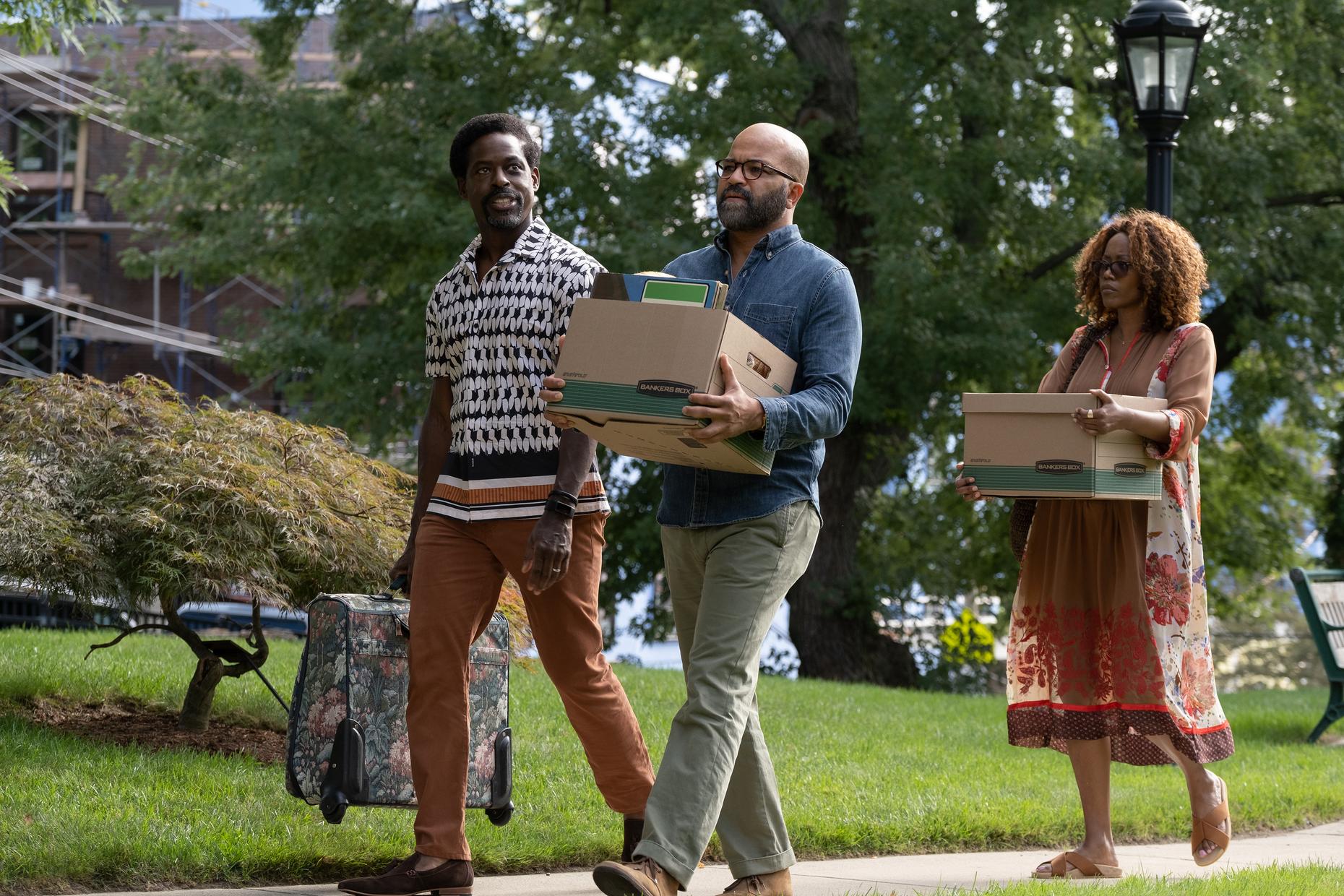
All Of It with Alison Stewart
Oscar Nominee Jeffrey Wright on 'American Fiction'
00:18:58
Jeffrey Wright stars in "American Fiction," as a well-respected but commercially unsuccessful novelist who decides to write a book full of stereotypical tropes.
Loading summary
Transcript40 lines
- [00:00]
Jeffrey Wright
I' ma put you on, nephew. All right, unc.
- [00:02]
Alison Stewart
Welcome to McDonald's. Can I take your order, miss?
- [00:04]
Jeffrey Wright
I've been hitting up McDonald's for years. Now it's back. We need snack wraps. What's a snack wrap? It's the return of something great. Snack wrap is back.
- [00:15]
Alison Stewart
For 140 years, MultiCare has been in Washington prioritizing long term solutions, partnering with local communities and expanding access to care. Together, we're building a healthier future. Learn more at multicare.org@rxbar they believe in simple nutrition without the BS. That's why they said no to artificial ingredients and yes to deliver intentional transparent nutrition. Try their original 12 gram protein bar, the nut butter and oat bar or Minis. Rxbar, the proud sponsor of no BS. Use code RXBAR on RXBAR.com for 25% off, subject to full terms and conditions and to change. Valid until September 30, 2025 and may not be combined with other offer. See rxbar.com for full details and limitations.
- [01:06]
Jeffrey Wright
Listener supported WNYC Studios.
- [01:15]
Kushan Avadar
This is all of it. I'm Kushan Avadar in for Alison Stewart. And welcome back to our Oscars preview show featuring conversations we've had here on all of it with the people behind some of the nominated films. Now we'll turn to American Fiction, which is up for best picture, Best Original score, Best adapted screenplay and best Supporting actor for Sterling K. Brown's performance. Best actor nominee Jeffrey Wright spoke with Allison about the film when it first came out. Let's listen.
- [01:51]
Alison Stewart
This is all of it on wnyc. I'm Alison Stewart. The new film American Fiction plays with expectations around race, family, media, as well as what we want for ourselves, despite what the world tells us are our limitations. Thelonious Ellison, nicknamed Monk, is an erudite crank, a talented misanthrope, a professor who doesn't publish a whole heck of a lot. And when he does, let's say the books do not fly off the shelves. He is more than a little envious of his peers, especially writers who are having huge success with what Monk believes are kind of junk food novels, ones that feed stereotypes. Specifically, he is tweaked by a runaway bestseller titled We Lives in the Ghetto, written by a poised Oberlin graduate played by Issa Rae. Here's a little bit of the trailer as Monk walks in on a book event with that author and ultimately decides, if you can't beat him, join him.
- [02:45]
Jeffrey Wright
How did you come to write this book?
- [02:47]
Alison Stewart
What really struck me was that Too few books were about my people. Where are our stories? Where's our representation? Would you give us the pleasure of reading an excerpt? Yo, Sharonda girl, you be pregnant again. If I is Ray. Ray is gonna be a real father this time around. Thank you.
- [03:17]
Jeffrey Wright
Monk. Your books are good, but they're not popular editors. They want a black book. They have a black book. I'm black and it's my black. You know what I mean? Look at what they publish. Look at what they expect us to write. I just want to rub their noses lit. I be standing outside in the night. Deadbeat dads, rappers crack. You said you wanted black stuff. That's black, right?
- [03:48]
Alison Stewart
I see what you're doing as a goof. Monk writes a book called My Pathology using a pen name Stag R. Lee, and it becomes a hit. Much to his dismay. The publishing industry just laps it up. Meanwhile, his family is in crisis, facing death, Alzheimer's, divorce, and long buried secrets. American fiction is a hit with a 92% positive critic rating and a 97% audience rating on Rotten Tomatoes. Starring in the role of Monk is my guest, Jeffrey Wright. As the New Republic Review mentions, he offers up, quote, perhaps the most fully rounded performance of his storied career. And the Chicago Sun Times said Wright is accorded the relatively rare opportunity to take the lead. And he delivers a richly lay performance that reminds us he is one of the best actors of his generation. Is a joy to watch. Jeffrey Wright is an Emmy and Tony Award winning actor and he joins us now. Hi, Jeffrey.
- [04:38]
Jeffrey Wright
Hi, Alison. Thanks for having me.
- [04:40]
Alison Stewart
What does a film script need to have and need to be for you to be interested at this point?
- [04:46]
Jeffrey Wright
Good words. Pretty simple. Good words strung together well around interesting things. Cord Jefferson adapted this script from a novel by Percival Everett called Erasure. I hadn't read the novel prior to the script, but from the first scene that I read of chord script, the. The hook sank into my. Into my mouth. It's a conversation around race and language and history and context that he's having in a classroom. He's professor as well as a writer. And it was a conversation that I had been having with friends of mine and inside my head as we observe the discourse today. It's a conversation that's happening around college campuses, but it's a conversation that we don't necessarily have. Well, in our country where identity and race and history of all of that is so much a part of all of us. But in some ways we lack a fluency in. In. In trying to discuss it. And therefore we have unproductive conversations or we kind of just fight with one another. So. But this. This was. This was so well drawn. That's what. That's the type of stuff that. That I. I look for. It's just smart writing around subjects that are interesting to me and in this case, handled with. With a good deal of humor as well.
- [06:24]
Alison Stewart
I was going to ask you. This is very. It's very, very funny. It's. It's got snort out loud laughs in this movie. Why do you think humor is. Is a good delivery system for discussing difficult topics like race, Specifically race.
- [06:37]
Jeffrey Wright
Well, you know, spoonful of medicine and there's a lot of rather spoonful of sugar helps the medicine go down. Sorry. But, yeah, there's a lot of good sugar in. In this and, you know, some. Some good nutrients too. But I view the comedy in this as kind of tragedy in disguise. It's. There's a good deal of. Of emotion that runs through this. And Monk is a guy who is. Who is. Is confronting a fair amount of inner turmoil and. And frustration that relates to his family, to his father. He is, in some ways, you know, a bit shut off. So there's a nice. For me, there's a nice thread of kind of, you know, emotional depth that I could play that was in juxtaposition to the absurdity and the, you know, and the humor that we find as he's faced with, you know, playing this dual role and playing this.
- [07:50]
Alison Stewart
This.
- [07:50]
Jeffrey Wright
This caricature in public, this Stagger Lee character that he has created as the author of this book that he writes.
- [08:01]
Alison Stewart
I want to play a clip from early on the film when Monk goes into a bookstore to look for his book, which is called the Haas Conundrum. And what is that book about? Just before you play this clip, that.
- [08:12]
Jeffrey Wright
Book, I believe, was one that we made up.
- [08:15]
Alison Stewart
Okay.
- [08:16]
Jeffrey Wright
That cord made up. So that book can be about anything that you desire. Ye.
- [08:22]
Alison Stewart
And Monk is not happy with where it has been placed in the bookstore. Let's listen. This is from American Fiction.
- [08:29]
Jeffrey Wright
Excuse me, Ned, do you have any books by the writer Thelonious Ellison? Yeah. This way. Here you go. Right? Yeah. Wait a minute. Why are these books here? I'm not sure. I would imagine that this author Ellison is black. That's me. Ellison? Yeah, he is me and he and I are black. Oh, bingo. No bingo. Ned. These books have nothing to do with African American studies. They're just literature. The blackest thing about this one is the ink. I don't decide what sections the books go in. And no One here does. That's how chain stores work, right, Ned? You don't make the rules. I'm just gonna put them back after you leave. Don't you dare, Ned. Do not you dare.
- [09:34]
Alison Stewart
It's a monk's running with the books to put them over in another section. The line in there that really sticks out to me, aside from the way you say, Ned, is that's way chain stores work. So it's coming from the corporate level, right? So we just put everybody in one bucket. Everybody goes over to this side. That's where the black people's books go. And I think it's just. It was interesting and it made me think. And you don't have to answer where you can just nod at me. Is that something you've seen in your career as an actor as well?
- [10:06]
Jeffrey Wright
You know, I've managed to be pretty flexible in. In the way that I work and in the projects that I work on. I range across genres and. And films in terms of their scale. I go back to the theater. I. I keep myself pretty busy. I've always admired actors who were able to create character, like Dustin Hoffman, Gary Oldman, guys like that were influences on me early on. I love the way they were able to be one man and one film and another in. In the next film. And so that's allowed me to slot myself into, you know, a number of different types of narratives and projects. And so I've tried to kind of, you know, get work my way around whatever limitations were. Were expected or. Or presented or, you know, placed upon me potentially. And they were some. But I've, you know, a good friend of mine used to say, if you can't beat them, confuse them. And I kind of use that as a bit of a. As a bit of a mantra in the way that I work. There are people who have, you know, who've seen me in one film and didn't even realize that they were looking at the same guy in the. In the next film that they were. Watch. I've, you know, I've been reasonably successful in this little, you know, field that I'm a part of. So I'm. I, you know, I can't complain.
- [11:44]
Alison Stewart
It's a good workaround, my guess.
- [11:48]
Jeffrey Wright
I mean, I don't. I don't really like to complain too much. It doesn't really do me any good. You know, my mother in this film is played by Leslie Uggams. Leslie Uggams is. I mean, she's so beautiful. She's just so giving. She was so generous and so Passionate about being a part of this. And I've been a fan of hers since her variety show in 1969, when I was a little, you know, tyke looking up and going, wow, who is that? But Leslie Uggams began her career at the Apollo Theater when she was eight years old, winning the talent show. She says her career has spanned that many decades. She is of that generation of performers and artists who came before me and Tracee Ellis Ross and Sterling K. Brown and Issa Rae, who made it all possible for us. Our freedom, our agency that we enjoy now, was won by the generations that are represented by Leslie Uggams and Ossie.
- [13:01]
Alison Stewart
Davis and Ruby D. And Ozzie Davis.
- [13:04]
Jeffrey Wright
Ruby D. Sidney Poitier, of course. I mean, you know, Gloria Foster. I mean, they're. And they did it with such grace and such supreme talent. So I've got a lot of momentum behind me that I didn't have to earn myself. And despite the limitations, there's, you know, and I've, you know, I did angel after. When I did Basquiat, for example, I couldn't get an agent after I won the Tony with Angel in America. But, you know, okay, whatever. You know, what I can control. Back to your question is the quality of my work. And even though at many times the industry tried to place limitations or me or didn't necessarily see potential that they were willing to invest in, there were always artists that did. There were always directors that did. Ang Lee, Sidney Lumet, of course, George C. Wolf. You know, I've worked with Mike Nichols. I've worked lately with Wes Anderson and Lisa Joy and Jonah Nolan at Westworld. I've. I've worked with. With. With people who took an interest in me, and they took an interest in my work. Wes Anderson said, you know, I've seen every play that you did on Broadway and. And in New York. I had no idea. I said, you never came backstage. Say hello. But, you know, the. It's so. So despite, you know, these kind of misperceptions of me, I guess from, you know, the executive side, always on the creative side, there's been support. And so, yeah, I've, for the most part. For the most part, had a pretty good run. And I've enjoyed the stories that I've been able to tell, and more particularly, I've increasingly enjoyed the people that I've had the opportunity to work with.
- [15:03]
Alison Stewart
So in this film, Monk writes this book using the pen name Stagger Lee, which I think is a take on the Staggerly, the badass pimp in that song.
- [15:14]
Jeffrey Wright
Yeah. 19th century pimp caricature. Yeah.
- [15:18]
Alison Stewart
So in these first moments when Monk is writing this book, what is he getting out of this exercise of writing this book full of stereotypes?
- [15:28]
Jeffrey Wright
He's getting what he thinks is a bit of vengeance. He's expressing his moral outrage through his pen or his laptop. But I, I think there is something else that he's getting out as well. It's interesting. It's a send up, it's a mockery. He's doing it. He hopes to shine a light on the hypocrisy of the publishing world. But at the same time, something very forceful happens too. He has this conflicted relationship with his father. What he writes is a conversation between a son and his father, or son who's disappointed, a son who feels abandoned. So at the same time that he's, you know, he's being dismissive, there could also be something a bit deeper, a bit more psychological and maybe Freudian that kind of, you know, slips into it perhaps without him even, even being conscious of it. When we, when we shot that scene, Keith David and, and, and, and Oak. I'm gonna butcher his last name. Who. The two actors who, who just perform so beautifully in that scene. When they did that scene on the day, it was so powerful and so intentional, despite it being broad and caricature. But there was such a force behind what they did that I immediately, I said, wow, that's going to legitimize the entire film. Because I think, yes, it's funny, but there's also layers of emotion there. For them, but mainly for Monk, that lended a kind of contradiction or self contradiction and kind of runs in parallel to Issa Rae's character who has written this book. We lives in the ghetto and Monk has a conversation with her at the end of the film that is in many ways a type of thesis argument for our movie. But the thesis exists somewhere on the table between the two of them. Neither one of them is really the most reliable narrator, I think. And so those two scenes together, I think, just lend a wonderful credibility to the film. It's owing to the writing, but it's also owing to the performances of the actors.
- [18:06]
Alison Stewart
There are several we're not giving away. But what did you think when you realized this film, the end is going to mean different things to individuals?
- [18:18]
Jeffrey Wright
I think that's great. I think people have found their ways inside this film. People from across backgrounds. And they found their ways inside it in myriad ways. Whether it be through the professional frustration, the creative frustrations, not solely about being misperceived as a black man or whether they've just related to Monk as a caretaker or related to the family dynamics, to family like any other. It puts the fun in dysfunction. You know, it just happens to be populated by us. So they've found themselves in myriad ways and found themselves inside of it in multiple ways. But they also will, as you say, interpret our. Our multiple paths at the end in different ways. I've been reading stuff online that audiences are having a great time experiencing this in, you know, packed theater. And there's a curious dynamic where it's like, well, what are you laughing at? I'm laughing at this. Do I have permission to laugh at this? And. And are you laughing at the right thing in the right way? I think it's wonderful. I. I think it's wonderful that it's open to interpretation and that it's making people comfortable and uncomfortable at the same time. There's a little bit of give the people what they want, you know, at the end there.
- [19:42]
Kushan Avadar
That was Alison's conversation with Jeffrey Wright about the Oscar nominated film American Fiction. Jeffrey Wright is up for best actor for his performance. And that is all of it for this hour. Stay tuned because next hour will continue to bring you conversations about some of the films being recognized at this weekend's Oscars. Coming up, we're going to talk about the Korean American film Past Lives and the movie musical adaptation of the Color Purple that's on the way. This is all of it.
- [20:09]
Jeffrey Wright
I'm gonna put you on nephew. All right, unc.
- [20:11]
Alison Stewart
Welcome to McDonald's. Can I take your order, miss?
- [20:13]
Jeffrey Wright
I've been hitting up McDonald's for years. Now it's back. We need snack wraps. What's a snack wrap? It's the return of something great. Snack wrap is.