← All Of It with Alison Stewart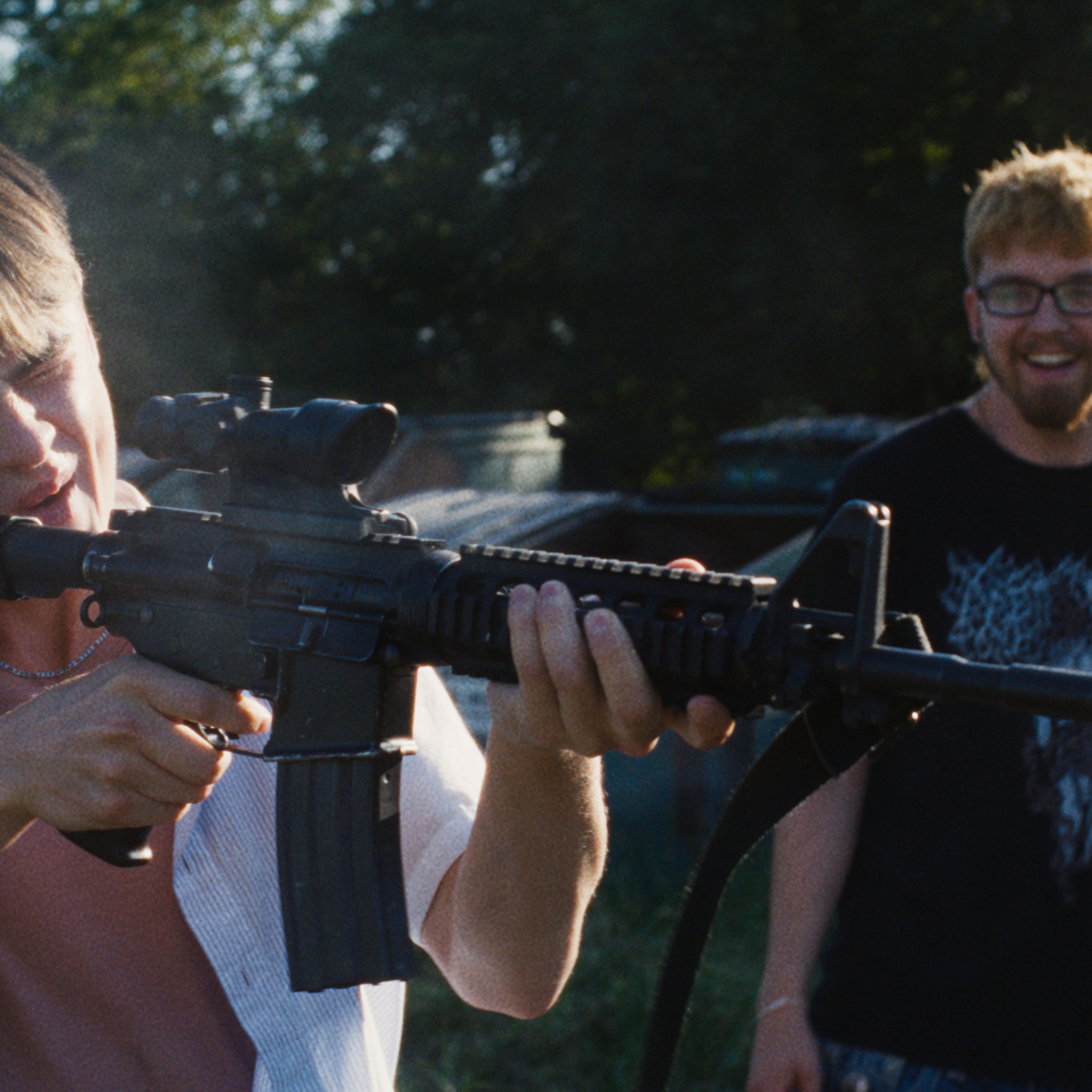
All Of It with Alison Stewart
Our Hero, Balthazar' Explores the Dangers of Living a Life Online
00:27:02
Loading summary
Transcript121 lines
- [00:00]
Progressive Insurance Announcer
All of it is supported by Progressive Insurance. Do you ever think about switching insurance companies to see if you could save some cash? Progressive makes it easy to see if you could save when you bundle your home and auto policies. Try it@progressive.com Progressive Casualty Insurance Company and affiliates. Potential savings will vary. Not available in all states. There's a difference between liking a house and actually getting it. Redfin is built to close that gap. Redfin agents close twice as many deals as other agents, so when you find a home you love, you're not a step behind when it's time to make an offer. That means less watching great homes disappear and more zeroing in on the one you'll actually end up calling home. Redfin helps turn saved listings into real addresses. Get started@redfin.com own the dream planning a wedding shouldn't feel overwhelming. The Knot brings everything together in one place. Vendors who get your vibe, a custom planning checklist, guest list tools, and a free wedding website that syncs with it all. So instead of juggling a dozen apps and spreadsheets, you can actually enjoy getting married. Get started@theknot.com audio the knot let's plan your wedding together.
- [01:25]
Alison Stewart
This is all of it from wnyc. I'm Alison Stewart. In a new film, teens live in a world. Tragedy becomes content. And sometimes the calls for change are not always authentic. It's called Our Hero Balthazar. Balthazar, who goes by Balti, is a lonely, wealthy New York kid who is sometimes performative online. He does this version of fighting for stricter gun laws because that's what the girl he likes is into. He even trains himself to cry on command. However, when she calls him out, he panics. He sees an opportunity when he sees a troubled teen person who has been posting violent threats online. The two of them form an unlikely bond born from isolation and misunderstanding. But this newfound relationship pulls them both towards the edge of disaster. A review and Deadline said the superb acting of Jayden Martell and a transformative Asa Butterfield simply will not allow you to look away. Both are here today. Hey, Asa.
- [02:25]
Asa Butterfield
Hey guys.
- [02:26]
Alison Stewart
And Jaden, it's nice to meet you.
- [02:27]
Jayden Martell
Nice to meet you.
- [02:28]
Alison Stewart
And also joining us is the co host and the director of our hero, Balthazar, Oscar Boydsen. Hi Oscar.
- [02:32]
Oscar Boynson
Hey, how are you?
- [02:33]
Alison Stewart
I'm doing well. So this when did you first start writing this script?
- [02:37]
Oscar Boynson
We started writing in late 2022 and what was the impetus for was actually something we read in the FBI coverage of the Uvalde shooter about that shooter, who was one of those guys that would go on social media and say extreme things to anybody and everyone. And to the point where even on the day that he did that shooting, he had messaged. I've talked to people who have. Who were messaging with him, and he was messaging things like, I just shot my grandma in the face. To people who, of course, are not. They don't know who he is. They're people in Europe. They're people who are responding, if responding at all. Girls.
- [03:16]
Alison Stewart
Germany, right?
- [03:17]
Oscar Boynson
Yeah. And she said, cool. And you can't really blame her because we all see bad stuff on the Internet and probably wish we could do something about it, but half of it's fake. Most of it's fake.
- [03:28]
Alison Stewart
Jaden, where's Balti when we meet him? What's going on with him?
- [03:34]
Jayden Martell
He's figuring himself out. He's a little private school guy in New York City. He seems to have all the resources in the world. But I think in the same way, you can't blame him for everything because he doesn't have the resources of. Of love. He doesn't have his. His. His mom's distant. His dad lives somewhere else. So his. His voice is. Or his life is very lavish, but he. It's unfulfilled and empty.
- [04:05]
Alison Stewart
Asa Solomon's in Texas. What's going on with Solomon? What does he want for his life?
- [04:11]
Asa Butterfield
I mean, similarly to Balthazar, he is. He's left to his own devices. And unlike Balthazar, he has nothing to really going for him. He lives with his grandma in a trailer park. She's the only person who ever has pretty much ever shown him any kind of affection. He's desperately seeking his dad's validation, to which his dad responds by selling him testosterone pills and taking his money. And he's, you know, he's. He's lonely and he's. He's craving something and he's not getting it. And that. Yeah, the only way he seems to get any attention is by posting things online and where he has this power and this ability to connect with people, which is what brings these two guys together.
- [04:56]
Alison Stewart
Oscar. So this film is largely about. The first half of it is about how teens respond to each other online. How is that culture of the Internet different than what you grew up with?
- [05:07]
Oscar Boynson
Sure. I mean, I grew up in a small town in Maine where I spent a lot of time outside and playing with my friends, running around. You know, I'm. I'm. I'm Mark Zuckerberg's age. So when we got Facebook in college, it was cool. Our parents didn't have it. It felt like, something authentic to my generation. And it's just gotten worse and worse and worse and worse as it's, you know, revealed that all that really matters, all that really is there for is to make money, especially at the expense of the young people who are getting hooked on it very early.
- [05:42]
Alison Stewart
How does that new world shape the characters that you've written for screen?
- [05:48]
Oscar Boynson
I think I feel really bad for these kids. You know, I have a small social media following. It's been more active at certain points than others, but certainly enough people who I don't know who are messaging me, and a lot of them, and especially, like, during the pandemic where I really felt for these kids who are having their 12th or 13th birthday inside alone. Right. It's tragic. And people who would young kids send me messages like, hey, would you watch my video? What am I doing wrong? Why aren't I getting more followers? And that, like, expectation that you're gonna be a brand by the time you're 12 is so screwed up. And that kind of kid I was really interested in trying to make an authentic character from.
- [06:36]
Alison Stewart
Yeah, Jaden, that's what your character's about. He can cry on command. He's kind of made an online Persona out of it.
- [06:44]
Jayden Martell
Yeah.
- [06:44]
Alison Stewart
Why does he do that?
- [06:48]
Jayden Martell
I think it's an op. It's sort of the only option to present yourself with all these. What we're sent into these. The flashing lights of selling yourself.
- [07:01]
Alison Stewart
Yeah.
- [07:01]
Jayden Martell
I mean, the marketing and it has to do with masculinity as well and being sort of. He's got the same haircut as everybody else, and he's got the same style as everybody else, and he's always mimicking, mimicking as we do, as is human nature. But with infinite options on a platform like social media, that makes it harder to find yourself. So you're trying everything out. This is one phase of many for him, I think.
- [07:33]
Alison Stewart
Asa, you went through a transformation in this film. You looked so different. You had this crazy blonde hair and, like, these big, saggy jeans. How did that help you get into your character?
- [07:45]
Asa Butterfield
Well, the hair was a. Was a stroke of genius by Oscar. Probably only 10 days before we started shooting. Really messaging me, like, how do you feel about dyeing your hair? At first I was like, oh, I don't know, because I've seen people dye their hair in movies, and it never look. It always looks a bit fake. And. But we got to Texas, I was like, you know what? Let's do it. And the moment I had it, and I looked at myself in the mirror, it was such a. It was such a. Just. It was so alien and it was so helpful to just separate myself from me and anything else I'd done before actually shooting in Texas. I've been spending the previous few months sort of learning a Texan accent, trying to find something that felt authentic and not character and felt modern and youthful and inspired by online culture and the. The jeans and the costume and being surrounded by real Texans all helped me really. I know, find and understand this really troubled young man. And not just surrounded by. A lot of the people in the movie were real authentic Texans who were just. Who were just around on set, either in the trailer park or in the pawn shop. And it gives the movie such a grounded energy which. Which is what it needs to be because it needs to be authentic. It needs to be truthful to these kids lives and what's going on right now.
- [09:12]
Alison Stewart
What's the secret to an important. A good Texas accent?
- [09:16]
Asa Butterfield
Oh, what is the secret? It's very. It's very relaxed. The whole mouth can kind of sag a bit and it's got this kind of a bit of a drawl, you know.
- [09:29]
Alison Stewart
There you go.
- [09:30]
Oscar Boynson
I feel like the haircut has kind of taken on some. It's become trendy since then too. It has music.
- [09:38]
Asa Butterfield
I kind of almost got it myself. I've kind of got the mullet. Solomon's just looks like, you know, he did it himself in his bathroom mirror.
- [09:46]
Alison Stewart
Yeah, he definitely did it himself. The new film follows a wealthy New York teenager who travels to Texas to befriend a troubled teen posting violent threats online. But their unlikely bond pulls them towards the edge of disaster. It's called Our Hero Balthazar. It stars Asa Butterfly and Jayton Martel. We're here in studio with its co writer and director, Oscar Boynton Boysen. Excuse me. To discuss the film. And producer. And producer. Oh, that's a lot of hats.
- [10:13]
Oscar Boynson
It's true.
- [10:16]
Alison Stewart
Did you fight with yourself?
- [10:17]
Oscar Boynson
A little bit. You kind of. But you also surround yourselves with the best people that you can find, and I think that's the most important thing.
- [10:30]
Alison Stewart
These two, your two characters, they meet online on Balthazar's page. Help us understand, as a writer, as a co writer, what you wanted to explore in the relationship as they start to go back and forth, as they text initially back and forth.
- [10:47]
Oscar Boynson
I mean, I think that again, like part of you asked me earlier, how did you grow up different from the way that these guys are growing up? And I think that when I was a teenager in the 90s, you know, and Every teenager goes through that thing where you're trying to figure out who you are, right? And for me, a lot of it was about the movies that I loved. It was about going to the record store and buying records and the bands that I loved and sort of forming an identity through my taste in music and books and movies. And all those things felt very authentic then. And I feel like when you're a teenager, you're looking for authenticity. But it's really hard when everything on social media feels performed. Right? Whether that's an ideology or an identity. How is it possible to process anything as authentic when it all feels fake or performed? So I thought that if both of these guys are kind of performing something, it would be so interesting if the masks actually come off when they start to share space together. And. And. And. And because they. They have their similarities in spite of their. The. Their difference in background that, you know, to show that. That a. Something approaching healthiness was possible between them would be really exciting and tender. And I love. I love the performances by both of these guys. They've surprised me in all those moments, especially the quiet ones where it's not just like, action, action, action.
- [12:25]
Alison Stewart
Well, let's listen to a clip from our hero, Balthazar. This is where Balti decides he's going to Texas. He's a little bit manic. He's going to visit Asa, and he decides to fly. It's near his birthday, and his life coach shows up at his house. Let's listen.
- [12:45]
Oscar Boynson
What's his name again?
- [12:46]
Asa Butterfield
Baltazar.
- [12:47]
Oscar Boynson
It's his birthday.
- [12:48]
Asa Butterfield
Yo.
- [12:49]
Jayden Martell
Surprise.
- [12:51]
Asa Butterfield
Happy birthday, buddy.
- [12:54]
Oscar Boynson
Hey, where you going, buddy? You're gonna miss your party.
- [12:56]
Jayden Martell
It's not my birthday till Friday, Anthony.
- [12:58]
Asa Butterfield
Yeah, I know. Hey, listen, I'm sorry.
- [12:59]
Oscar Boynson
Friday's really busy for me and my other clients.
- [13:01]
Asa Butterfield
Your mother said you didn't have any plans. By the way, what are you all packed up for?
- [13:05]
Oscar Boynson
Whoa.
- [13:05]
Asa Butterfield
Hey, Balti, you know, I still submit
- [13:07]
Oscar Boynson
reports to your father, okay, so then
- [13:08]
Jayden Martell
submit your stupid little report and tell Robert that I'm fine. You need his money just as bad as mom does, don't you?
- [13:14]
Alison Stewart
Okay.
- [13:15]
Oscar Boynson
All right.
- [13:15]
Asa Butterfield
Listen, who the are these idiots?
- [13:18]
Jayden Martell
Who are these people? Hey.
- [13:20]
Asa Butterfield
Hey, it's Chris.
- [13:21]
Oscar Boynson
Devin.
- [13:21]
Asa Butterfield
Rebecca, you know John. That's John.
- [13:23]
Jayden Martell
John from Safe Landing.
- [13:24]
Asa Butterfield
John.
- [13:25]
Jayden Martell
Oh.
- [13:26]
Asa Butterfield
How about this?
- [13:26]
Jayden Martell
How about you just tell me where you're going? What would that do for the kids, huh?
- [13:30]
Oscar Boynson
Kids? What do you mean kids?
- [13:31]
Asa Butterfield
The kids. The kids.
- [13:33]
Oscar Boynson
Anthony, you're coming off really manic right
- [13:38]
Alison Stewart
now, and he goes way over the edge. We'll just say that for the rest of that scene, I love the way you say, Robert, you go down and you make meet Solomon and you're catfishing him a little bit. But do you think. Does your character think he could be my friend? Does Balti want something from Solomon?
- [14:01]
Jayden Martell
I don't know how much to say here because I don't want to give away too much, but this was a part of my struggle as an actor playing this guy was figuring out his true motivations. And they're sort of left ambiguous. Not left ambiguous, but they begin pretty mixed and muddled and not very clear. I think Mace's character is. And I was sort of jealous at this. As an actor, he's a little bit more open to companionship, and that's the thing that he wants and needs. And I sort of have this coolness to.
- [14:42]
Alison Stewart
It's sort of interesting because he keeps saying, this is my friend from New York. Like, what does it mean for your character to say, this is my friend from New York?
- [14:49]
Asa Butterfield
I mean, he's never. He's never had a friend before, let alone from the big city. So this is, you know. Yeah. You have that scene where he introduces him to his grandma. All the while he's sort of posturing as this thing that he's not. And he's trying to keep him around because this is so new to him. And he's. Yeah, he's just. He's so excited to have someone to. To just hang out in his car and show the music he listens to and show all of these kind of weird parts of his life. And there are a lot of people like Solomon in the world who don't. Who don't have that. And it's. It's sort of tragic how this. How this. He's put all of this faith in this guy who he shouldn't be putting his faith into. And, you know, when you watch the movie, you have this sort of sense of this. This can't end.
- [15:40]
Jayden Martell
Yeah.
- [15:40]
Asa Butterfield
This can't end the way you want it to.
- [15:43]
Alison Stewart
We're talking about the film Our Hero, Balthazar. We'll have more after a quick break. This is all of It. You're listening to all of it on wnyc. I'm Alison Stewart. We're talking about the movie our. Her Balthazar. It stars Asa Butterfield and Jayden Martell. They're here with us alongside with co writer, director and producer Oscar Poison. Oscar. The film takes place mostly in New York and Texas. How long did you shoot?
- [16:16]
Oscar Boynson
We shot 22 days, 15 in Texas to seven in New York.
- [16:20]
Alison Stewart
And what did you like about that schedule?
- [16:23]
Oscar Boynson
Well, I've had an experience producing a few other movies, so I won't just say none of it. It's. It's a. It's pretty compressed, but I feel pretty confident about, like, speaking up for what I need, knowing that we don't have much to offer. So the, it was, it was just enough time and we made every day count, aside from some hours in Dallas when the lightning strikes and the storm season bore its head.
- [16:55]
Alison Stewart
What did you both like about that particular schedule of shooting this film? What do you think, Asa?
- [17:03]
Asa Butterfield
I think. I mean, I've said this before. When you're doing an indie movie and you're all on such a kind of tightrope of time and getting everything in the day, everyone just has to come with their A game. The actors, the crew and everyone had such belief in this project and in this story. It really felt like a team game, which is, which goes a long way, you know, and we had some really hectic, crazy days. And you get to the end of it, you're like, that was. That was mad. You almost don't remember it because you've done so much,
- [17:40]
Oscar Boynson
but it's really saved the best for last.
- [17:43]
Alison Stewart
What do you think, Jaden, about shooting on a compressed schedule like that?
- [17:46]
Jayden Martell
Well, we had some valuable prep time as well, and lots of, lots of dates with Oscar going to the movies and talking about this guy, which was so vital.
- [17:57]
Alison Stewart
That's cool.
- [17:57]
Jayden Martell
Yes, because we both live in New York. But there is something about shooting in that kind of schedule. It's a testament to these guys setting the tone early. Asa being our actor, especially when it comes to an actor, and they sort of. A director will always be on it, but an actor like Asa coming in and being so strong and being so on it is unbelievable. That sets the tone for everyone and they work so much harder.
- [18:28]
Alison Stewart
What movies did you take them to see?
- [18:30]
Oscar Boynson
We saw Greg Araki's Nowhere.
- [18:32]
Jayden Martell
That was the first one.
- [18:33]
Oscar Boynson
Yeah, Yeah. A lot of Greg Araki inspiration, at least. Those are the movies that in the 90s, you know, made you feel kind of angry, but also let you channel your feelings through them.
- [18:45]
Jayden Martell
Yeah. And for performance, being like, don't pull
- [18:48]
Alison Stewart
any punches, basically, you know, directors, the biggest thing they have to do is make decisions on. On the film. First of all, what was a decision that you made, which was a no brainer, and what was one that you struggled with?
- [19:02]
Oscar Boynson
I mean, no brainer, saying yes to both of these guys once they said they wanted to do it, What Did I struggle with. I think probably there's, there's a little bit of a struggle when people who you're showing the script to are telling you that it's too topical or it's too provocative. And you're like, I didn't write something provocative. And what's wrong with topical? And are school shootings topical? And they've been happening for 30 years. I think that it took a little bit of a struggle to find that, like, hey, nobody wants to give me money for this movie. That's a reason that I have to make it, you know, because it's gonna stand out and it's gonna hit the landscape unlike anything. If it's this hard to get people on board with it at the script
- [19:54]
Alison Stewart
stage, how did you decide to stay with it?
- [19:57]
Oscar Boynson
Well, you share it with all these incredible actors. And in addition to these two guys, we have Chris Bauer and Jennifer Ely and Noah Centineo, Avan Jogia, Becky Ann Baker, Anna Baryshnikov, Pippin Knowles, Danny McCarthy. Like so many great actors who as soon as they say, oh, I love this, I can find this character, it humanizes it, right? And something that somebody with like, you know, like executive mentality might say, oh, this is too provocative because they're just looking at a word, right? Whereas these guys, the actors, they look at a word and they make it human. And suddenly it's like, this is what I'm talking about, right? This is. And that absolutely inspires you to push on because then you see it and you get, you leave all those notes from more like executive brained AI type people. Ye. We start making human drama together.
- [20:54]
Alison Stewart
Jaden, what attracted you to the role? Hearing him talk like that?
- [20:58]
Jayden Martell
Yeah, that's really sweet. Well, I think the first thing you look at is sort of, can this character challenge me in some way? That's how I like to look at it for a lot of reasons, but some of it being ego of an actor wanting to expand yourself. Otherwise you're idle or complacent or something. Na would just be a blast to play this sort of teetering in between guy. Is he. Sometimes you wonder, maybe he's psychopathic, which is always a dream. I think when you're an actor to be sort of a near villain. But then it's confidence from talking to a guy like Oscar and Ricky Camilleri, the writer, their, their tone and their approach to the movie. The thing, this, this, this because it's top core, people see it as provocative. It could have been done by somebody who. That's their Intention, but they had more delicate and true wise intentions. And that's what I hung onto.
- [22:06]
Alison Stewart
How about for you, Asa? What drew you to the role?
- [22:10]
Asa Butterfield
I mean, similarly to Jaden? Just having a character which I knew was gonna. Was gonna push me and I knew I hadn't done before and hadn't kind of accessed that part of sort of emotion and feeling and background and as things I'd struggled with previously as an actor and auditions and going up for roles and not never quite being able to. To access those parts of me because they're not parts of me that come very naturally. And Solomon felt very far away from me as a person. And that is really kind of thrilling. So that just the, the script, the writing, the way it juggled the, the sort of darkness and, and reality of what's happening with the humor of this kind of mad buddy comedy adventure they go on felt really just a really. It never felt heavy handed with what it was trying to say. And it undercut everything by keeping it grounded and keeping it real and keeping these two weird young men who find something in each other and this friendship. And that was really exciting for me.
- [23:19]
Alison Stewart
One of the things that I found very interesting the film is how important family is. Even though it's not really stated and there's only sort of one family member who shows true love for one person in the film. I think you mentioned it. But what does family mean to Balti?
- [23:36]
Jayden Martell
It a function probably standard. The roles, what they have to offer, money. It's not, it's not personal with him, which is unfortunate.
- [23:56]
Alison Stewart
Yeah.
- [23:57]
Jayden Martell
That's how I see it might not be true for everybody to one day see him. I'm sure there's some love in him somewhere, but it's hard to find, I think for Solomon.
- [24:09]
Alison Stewart
What does family mean?
- [24:12]
Asa Butterfield
I think it's a dream of something he might have had once and is now kind of searching for or doesn't think he deserves or can have. He has his grandma and that's kind of it.
- [24:28]
Alison Stewart
She seems to really love him.
- [24:29]
Asa Butterfield
They do. That is the. It's the sweetest. It's. It's the heart of Solomon's journey. And it's, you know, that's. That's the only person he really, really cares about. I mean, he cares about his dad, but it's sort of misplaced and, and it's more like he thinks he should care about his dad. His grandma's the only one who truly sees him and loves him. And it's. I mean, Becky's amazing.
- [24:57]
Alison Stewart
I've seen some Writers refer to it as a black comedy. Do you agree with that?
- [25:02]
Oscar Boynson
I think it's. That's always, like, a tough term. But I did want to say, like, the. When you were asking what helped you push through, there's something about. It's the kind of movie I like, which is a movie that maybe lays out a diagnosis but doesn't necessarily give you the solution. And there's something really cathartic. Cathartic about laying out all these things that are not going right in our country and experiencing that kind of diagnosis in a movie theater with people and they're laughing because it's funny as much as it is said. And the movie, I think it's hilarious. It's the kind of movie that I love to go to.
- [25:41]
Alison Stewart
How much did you consider Tone as you were making and thinking about the film?
- [25:46]
Oscar Boynson
A lot, you know, but we. We try to create a space where we're. Where we're. Where we're all comfortable taking risks and trusting. Trusting each other and knowing that we went so far that. That we have to pull it back. Right. I think the worst feeling, as some. As a filmmaker is when you think that you're kind of pushing it and then you are editing and you're like, oh, God, we could have gone a little farther. And both of these guys were down for the journey. You know, so much of Tone is. Is who you cast in these characters.
- [26:17]
Alison Stewart
What is a good piece of advice that your director gave you, Asa?
- [26:22]
Asa Butterfield
I mean, kind of similarly to what he was just saying. Having. Having the. The faith in me. So this is less advice, more just the sort of trust in me to take it to that edge and push Solomon further than I maybe initially read or felt. Not that I felt comfortable doing, but just kind of finding. Finding that limit and finding those sort of weird, heightened moments in this character's journey and. And having him having the faith in me to, one, create this character in the first place, but to kind of push it to where we needed it to go. And I think that's something which I will continue to take with me in my career. Just having that, okay, I can do this. And this is. I have the access to this, whatever this is in the future.
- [27:15]
Alison Stewart
Jaden, what advice did you get from Oscar that will be useful for you?
- [27:19]
Jayden Martell
I'm thinking a lot about this pretty similar concept of pushing it, of essentially overriding and then always being able to peel back and edit and sort of doing the most. I think you're so spiritually, it might sound wrong, but strategic. And it's to gather all resources. I think you have your eye on everything. It's really admirable.
- [27:53]
Alison Stewart
The film is called Our Hero Balthazar. It is out now. I've been speaking with. It stars Asa Butterfield and Jayden Martel alongside its co writer, director and producer Oscar Boynson. Thank you so much for coming into the studio.
- [28:07]
Oscar Boynson
Thanks for having us, Allison.
- [28:08]
Jayden Martell
Thank you so much.
- [28:09]
Alison Stewart
Appreciate it. That's all of it for today. I'm Alison Stewart. I appreciate you listening and I appreciate you. I will meet you back here next time.
- [28:18]
Asa Butterfield
Your new home is now ready. Dr. Horton, America's Builder has new homes that are ready today with new construction communities in Ellensburg and throughout the Greater Seattle area. Dr. Horton has the right home for you at Dr. Horton. We're still building with flexible living spaces, smart homes, home technology and two and three car garages. More communities and more homes available every day. Find your new home in Ellensburg now ready@drhorton.com Dr. Horton, America's builder and equal
- [28:47]
Progressive Insurance Announcer
Housing Opportunity Builder Planning a wedding shouldn't feel overwhelming. The Knot brings everything together in one place. Vendors who get your vibe, a custom planning checklist, guest list tools, and a free wedding website that syncs with it all. So instead of juggling a dozen apps and spreadsheets, you can actually enjoy getting married. Get started@thenot.com audio the Knot let's plan your wedding together.