← All Of It with Alison Stewart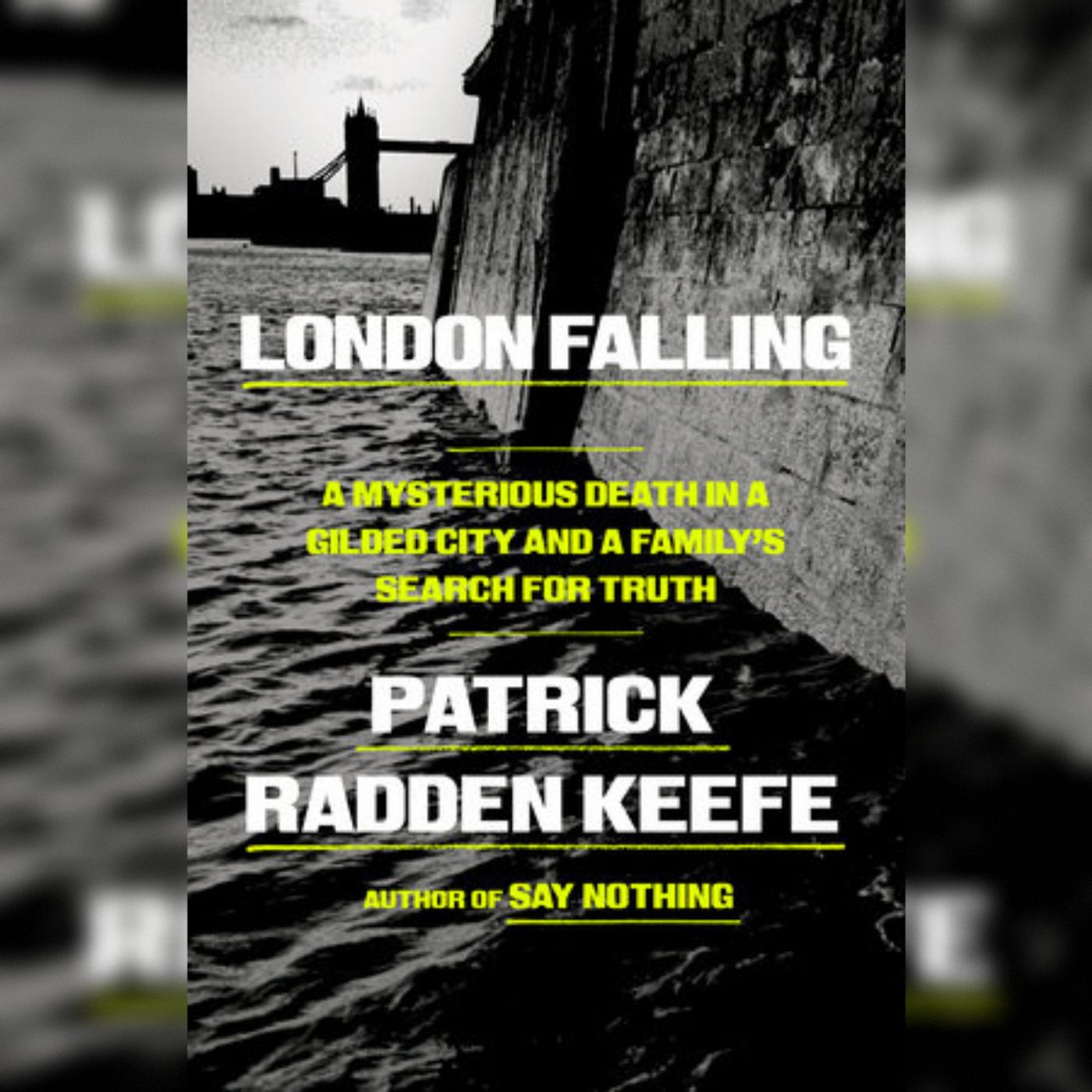
Loading summary
Transcript41 lines
- [00:00]
A
WNYC Studios is supported by Progressive Insurance. Did you ever think about switching insurance companies to see if you could save some cash? Progressive makes it easy to see if you could save when you bundle your home and auto policies. Try it@progressive.com Progressive Casualty Insurance Company and affiliates. Potential savings will vary. Not available in all states. This is all of it on wnyc. I'm Alison Stewart. Welcome back. This hour we're going to be looking at a pair of nonfiction books that both involve a good deal of investigative work into some difficult topics. Later on, we'll hear about the book Daughters of the Bamboo Grove, which explores China's one child policy and how some children were forcibly taken from their birth parents. Journalist Barbara Demick takes a close look at the experiences of a pair of twin girls. One was raised with her parents in China. The other was forcibly taken by the government and adopted out to a white Christian family in Texas. The book explores some of the myths of the one child policy, but also the emotional strain that the truth of the matter can have on families both in China and the US that is coming up in a bit. But first, a book about the mysterious death of of a young man in London. On November 29, 2019. In that period between late night and early morning, a young man named Zach Brettler jumped to his death from the balcony of a London high rise. Though Zach's death initially appeared to be a suicide, it became clear that he had become involved with dangerous forces in London's underworld. Journalist Patrick Radden Keefe decided to investigate what happened in his book London Falling, a mysterious death in a gilded city and a family search for the truth. Through his reporting, Keefe learns that Zach had been lying, claiming to be the son of a very wealthy Russian oligarch when really he was born and raised in London, the son of Rachel Brettler, a journalist, and Matthew Brettler, a finance executive. Zach's lies got him in over his head, ensnared with dangerous criminals who wouldn't flinch before committing violence to get what they want, which was money. So did Zach jump to end his life or did he jump to escape a murderer? I started by asking Patrick Raden Keefe how he first heard about this story.
- [02:41]
B
So I was living in London in the summer of 2023, working on a TV series based on my book say Nothing. I was producing the show and I was on set one and I got to chatting with a stranger guy. I didn't know he was a visitor to the set, but I have a tendency to talk to strangers. I'm always striking up conversations with people I don't know, because you never know where a good story will come from. And when he found out that I write for the New Yorker and I write investigative stories, he said, I might have a story for you. And he said, I know this family. I'm very close with them. They had this terrible tragedy. They lost their teenage son, Zach. And after he died, his parents, Matthew and Rochelle, made this incredible discovery, which is that he had been living a secret life, unbeknownst to them, as a teenager, moving around London pretending that he was the son of a Russian oligarch. And he had said about that much. And I knew, if these people will talk to me, I gotta write this
- [03:36]
A
story that's so interesting because it's a personal story, this family's tragedy and a boy's death. But beyond a family's tragedy, why did you know it was a bigger story than that?
- [03:47]
B
Well, I had been really interested is I had actually written an essay for the New Yorker after Russia's invasion of Ukraine about something that I had noticed, which is that London, this city that I really love for decades, has been a really kind of hospitable place for dirty foreign money and particularly for Russian oligarchs, people with billions of dollars who are linked closely with Putin and with the Kremlin. And London really kind of rolled out the red carpet for these people. They came, they bought expensive properties, they sent kids to fancy schools. You know, in the case of this guy, Roman Abramovich, he bought Chelsea Football Club, one of the most famous English soccer teams. And so I'd written an essay about that for the New Yorker. That was an issue I was interested in the kind of awkward situation that London found itself in after the invasion of Ukraine. But when I do the longer pieces for the New Yorker, and certainly the books, I don't tend to want to tell a story from 30,000ft. I want to tell it from the ground level as a drama about real people, about human beings. I need characters. And so this felt like a way into these larger issues about the way in which money can corrupt a city, but through the lens of the very intimate story of this one family.
- [05:03]
A
I was going to ask you about your approach because you're obviously a journalist, but you're a father as well. This is an emotional story about parents losing a child. I can't think of anything more emotional than that. What was your approach to the Brettlers? Am I saying their name right?
- [05:17]
B
Yeah, you are.
- [05:18]
A
What was your approach to the Brettlers? These Grieving parents who are also important sources for your book.
- [05:25]
B
Yeah, I mean, I think as I, you know, I've been doing this 20 years now and one thing that I am getting better at and have been learning over the years is it's really important as a journalist to be incredibly transparent with people right from the get. And so in this case, what that meant is I told the brothers through their friend, I said, I'd love to meet, I'd love to tell this story, but, you know, initially I'm not even going to bring a notebook. We'll just sit down at a coffee shop, tell me your story and I'll tell you about me and you guys have a think about whether you want to go on the record. It would be a big decision for you to do this because it had been a very private tragedy up to that point. In fact, when I first heard the story, I googled Zach Brettler. Did he die? You know, did he die in the Thames, in the river in London? Couldn't find anything. They had kept it very quiet, deliberately. And so we met a few times in London and I think they kind of got the cut of my jib. You know, they sort of got a sense of the way in which I would approach a story like this. And eventually they said, all right, we're ready, we'll tell the story, we want to go public. And that was the beginning of a pretty intense relationship in which we spent, you know, we talked for hundreds of hours over the course of several years leading up to today. We're launching the book tonight at the 92nd Street Wine. They have actually flown from London to be here in New York and they're going to be there tonight.
- [06:44]
A
In this book you write, there is also a book about parental love. And while working on it, I often thought about my own adolescent sons. How fiercely I love them, how desperately I want to protect them from this world and prepare them for this, for it. How did your role as a father play into the process of reporting the story?
- [07:06]
B
Well, this is a story where in the opening pages you see this 19 year old kid go off of a balcony. He sort of does a swan dive into the Thames and he dies. So there's no spoilers here, you know, from the opening pages, that this boy dies. Then what happens is you're very kind of intimately following the Brettlers, these parents, as they make this discovery. And then they have to kind of become detectives. They want to figure out, how did our son die, why did he die? Who was he with on the night that he died, what had he gotten mixed up in? But also, in a strange way, they have to try and understand him better in death than they ever did when he was alive. And on the one hand, this is a very specific story in the sense that Zach Brettler was kind of a remarkable kid. He was a fabulous. He had had all these sort of inventions, and it's a very specific story about London. On the other hand, there were elements of this that I related to as a parent. I think that you have done the same thing. Well, I mean, I think that. That adolescence is a tricky thing. I think that you. You. You as a parent of a young child, you sort of feel like they're clay and you can mold them and you can turn them into whoever you want them to be. And then adolescence comes along.
- [08:17]
A
We were talking before this started about
- [08:19]
B
our kids, and you start getting surprised, and you start sort of wondering, God, where did that come from? And you realize that there's all these sort of stimuli that you can't control. And then on top of that, if the kid has a phone, it's a completely different thing where they're sitting there on the couch right across from you. You think you got your eye on them, but actually they're miles away, and they're with people that you don't know. This book is not. You know, I wouldn't say that this book is a. It's not a moral panic book about phones and social media, but Zach Brettler was born in the year 2000. It would be impossible to tell the story of his life and not think about the role that social media had in kind of, you know, for. For a kid who had a little trouble drawing the line between reality and fantasy. If you're on Instagram all day, it doesn't help.
- [09:01]
A
My guest is journalist Patrick Radden Keefe. His new book is titled London Falling. A Mysterious Death in a Gilded City and A Family Search for the Truth. How did members of Zach's family describe what he was like?
- [09:14]
B
So, as a young child, starting really young, he was kind of. He was quirky, he was exuberant, he was unpredictable. He had a way with repartee. So there's a funny story that a cousin told me about being at some family party when Zach was about 5 years old, and there was some older girl, and she had some piece of reading material, and she passed it to him, and she said, zach, can you read this? And without skipping a beat, he said, no, I don't have my glasses. And the thing is, he didn't wear glasses, and he couldn't read. But he had that kind of jokey, sort of improvisational, almost jazzy approach to conversation, which made him really fun to be around, but also meant that people at times would sort of grow skeptical. They would wonder what they could trust in terms of what he said. And I think in a way that his parents and his family, big brother Joe, didn't appreciate really until after his death. I learned that he was telling lies from a really early age. Like, he showed up at this new school when he was 13 and would tell people that his mother had died. And I think the reason for that, you know, when you think about it, you can probably relate to it. You're a kid at a new school. I think what he realized is if you tell people that your mother's died, they will open their hearts to you. It's a shortcut to affection and intimacy. But I think he became a kind of a pretty versatile liar from an early age. And eventually this blossoms into the. The big lie, which is he assumes this false identity as not Zach Brettler, you know, upper middle class, nice Jewish boy from West London who goes to private school, but Zach Ismailov, son of a Russian oligarch.
- [10:52]
A
Well, it's sort of interesting because people lie to protect themselves. It's the reason we. We learn to lie when we're babies. People lie to get money. They lie for a lot of different reasons. And Zach was lying to very powerful people pretending to be the son of a Russian oligarch. What lessons did Zach learn about sort of fake it till you make it?
- [11:14]
B
Well, you have to remember the backdrop in which this is happening. I mean, he's doing this in an environment, and I think this is as true here in New York as it is in London, in which the fake it till you make it culture is kind of on the rise, right? Zach's favorite movie was the Wolf of Wall Street. He loved stories about hustlers on the makeup. He loved the idea of, you know, the kind of get rich quick scheme. People who want it all and they want it now. And I have to say, it's not totally crazy to think that as a child of this century in one of these big global capitals, he thought this is the way to get ahead. There are all kinds of role models or, you know, people you could look at who've achieved great success in this country. And that one through basically lying and being kind of con artists, right? They actually make it work for them.
- [12:11]
A
When did his parents realize that perhaps something was going on with Zach?
- [12:18]
B
Well, they knew that there were issues. By the time he was 16, 17 years old, like I said, this was a comfortable family. His father worked in finance, mother's a freelance journalist. They lived in a nice big apartment in a very well off part of London. He went to private school. He didn't want for much. It was a loving family. He had every conceivable opportunity, but he felt like it wasn't enough. He was surrounded by the kind of glitz of the new London. And so he wanted to know, why don't we drive a nicer car? Why don't we live in a bigger house? And he had that kind of anxiety. So initially they noticed that, but they really didn't know the half of it. And so after he dies, there's this kind of crazy moment where Rachelle, his mother, is at home alone. She doesn't know he's dead. He's just been gone for a night. And a guy knocks on the door and asks where Zach is. And she says, he's not here. And the guy says, who are you? And she says, I'm his mother. And the guy's got another guy on the phone on speakerphone, and she hears the person say, that can't be his mother. His mother's in Dubai. Now, Rachelle had never been to Dubai. She had no idea what this guy was talking about. And with that, the guy gets into a cart and drives off. And so that's what starts this kind of astonishing process of discovery that these parents have where they learn just how far off track Zach had gotten.
- [13:43]
A
We're talking with journalist Patrick Radden Keefe. His new book is titled London Falling. A Mysterious Death in a Gilded City and a Family search for the truth. A big part of the story involves the intricacies of London, the politics, the culture, the economics. And there's a good bit of history in this book. I like history. Some people's eyes glaze over. I love it. How do you keep history from being boring as a writer?
- [14:09]
B
Well, in this case, what I wanted to do was not have a situation in which you have the Zach story, which is kind of compelling and intimate, and then you turn the page and suddenly you get 20 pages of history. When I'm doing that kind of thing, ideally, I want to sort of slip it into the text so that you hardly even notice, so that it's all kind of threaded. The weave is pretty tight, and the history is kind of fascinating, I have to say. I mean, if you look at London in 1950, it basically looks sort of roughly the way it has for a century, in the sense that it's a big port city, first of all, and it's also a big manufacturing town. There's a similar story you could tell in New York. I mean, we walk around and you can see the kind of ghosts of these old piers from when Lower Manhattan, you know, was a big shipping center, and now all of that's gone. So London, basically, in the 60s, 70s, 80s, has to reinvent itself when the shipping all goes away and the factories all closed down. And it reinvents itself as a destination for wealthy people from around the world and for their money. And that's part of the story that I wanted to tell. I don't think it's possible to understand Zach's life and death unless you understand that backdrop. And then the even more interesting thing is it turns out Zach had these two grandfathers who were Holocaust survivors, both of whom fled the Holocaust when they were in their teens, had lost virtually their whole families. So they arrive in England alone in their teens and have to reinvent themselves. And so it becomes this kind of story of these echoing reinventions. Zach Brettler reinventing himself as the son of a Russian oligarch. London reinventing itself as a financial capital. Zach's grandfathers reinventing themselves in the 1940s as these young English men who've managed to escape the Holocaust, but in the process have lost their whole families.
- [16:03]
A
A lot of your writing deals with how money can corrupt people. Empire of Pain, this book. Why do you think the influence of money and wealth is something that you're interested in?
- [16:17]
B
I just think it's so much a part of the air we breathe now in this country. And, you know, I was born in 1976. I'm about to turn 50, and I feel as though it has accelerated over the last couple of decades. So to some extent, there's always been a strain like this in American life. But there's a moment I always think about my younger son, when he was about six years old, came home from school, and he said something about Elon Musk. And I just had this moment where I thought, how do you even know who that. You're six. Like, how do you know who that is? You shouldn't know who that is.
- [16:48]
A
You should not know who that is.
- [16:48]
B
I don't want you to know who that is. If you had talked to me when I was six in 1982, I couldn't have told you who the richest people in the country were. And I just think it is part of our culture now. And so I'm interested in that just anthropologically and I'm interested in the things that it drives people to do.
- [17:09]
A
The book is called London Falling, A Mysterious Death in a Gilded City and a Family Search for Truth. We'll have more with journalist Patrick Raden Keefe after a quick break. This is all of it. This is all of it on wnyc. I'm Alison Stewart. We return to our conversation with journalist Patrick Radden Keefe. His new book is called London Falling, A Mysterious Death in a Gilded City and a Family Search for Truth. It's about the death of a young man named Zach who lied about his identity to get in with a group of members from London's underworld. So let's get back into it. Zach died falling from a high rise balcony. I asked Patrick Radenkief to explain how that building itself was an important piece of the puzzle.
- [18:05]
B
When you start getting all of this money coming into London in a really significant way, starting in the 1990s with these Russian oligarchs coming in and a golden visa program, it's funny, you know, now the Trump administration is introducing a golden visa program here. So London did that decades ago. And this is part of how we get here. All these people come in, they want to buy real estate in London. You get these kind of glossy buildings that go up along side the Thames. But one of the bizarre things is that a lot of these foreigners who buy these places don't then live in them. So you have this kind of strange thing in London where in these really nice neighborhoods after dark, all of the buildings are dark because nobody's actually staying there. This is one of those buildings. It's a building that goes up in 2016. It's called Riverwalk. It's a kind of luxury apartment tower overlooking the river. It's directly opposite MI6. And Zach Brettler ends up befriending a guy. What his parents knew about this guy was that his name was Virinder Sharma. They believed that he was a rubber tycoon. Zach said, oh, he works at Pirelli Rubber and he lives in this luxury apartment. And I'm gonna go. He went to stay there with him for a couple of months over one summer. And that building becomes really significant because it is from that balcony that Zach ends up dying. And in fact, that guy, Varinder Sharma, was in the apartment along with another guy with him on the night that he died.
- [19:30]
A
Vrinda Sharma turned out to be a fairly dangerous man.
- [19:34]
B
He wasn't a rubber tycoon, it turns out. So After Zach's death, Matthew and Rochelle end up talking to Vrinder Sharma. And initially, he kind of held himself out as this mentor figure. He said they didn't know he was dead at that point. He just said Zach had come and stayed with me. And then he went missing. He must have left in the night. They didn't know he'd gone off the balcony. And. And he said, we're going to try and get him. And they thought, oh, what a nice guy. Trying to help out. And then gradually, as they delved into it, what they learned is that he was no rubber tycoon. He actually was a fairly notorious gangster and extortionist who had a kind of a gangland nickname in London. He was better known, not Vrinder Sharma, not by the name Varinder Sharma, but as Indian Dave.
- [20:16]
A
And then there's another man. We don't give away too much, but there's a man who goes by the name Akbar Shamja. How did he. Shamji?
- [20:23]
B
Yep.
- [20:24]
A
How did he present himself to Zak?
- [20:26]
B
So actually, the way Zach met Vrindra Sharma was through Akbar Shamji. The first guy that he meets is this guy Akbar Shamji, who was this kind of glamorous. He was an older guy. He's in his 40s. He had gone to Cambridge University. He'd grown up in a wealthy family. He lived in Mayfair, which is a very kind of posh area in London. And in fact, he lived on Mount street, which is like the Rodeo Drive of Mayfair. It's just extremely, almost ridiculously fancy place to live. And he kind of seemed like an international playboy businessman. And he and Zach became friends because he believed that Zach was the son of a Russian oligarch who was about to inherit hundreds of millions of dollars and wanted to maybe invest in his projects. So this is a kind of an interesting story in the sense that Zach is a fabulous. He's pretending to be something he's not, but so are these two other guys. Akbar Shamji turns out not to be who he seemed. And Varinder Sharma is the same.
- [21:23]
A
I went on LinkedIn yesterday to look up Akbar Shamji. He's still there, is he?
- [21:28]
B
As of this conversation?
- [21:29]
A
This conversation as of your book coming out. You originally wrote this as a story for the New Yorker. Have you heard from him?
- [21:36]
B
I communicated quite a lot with him as I was working on the New Yorker story. He wouldn't meet with me. He wouldn't talk with me on the phone. He wouldn't even tell me what country he was in. He's A very evasive guy. But we did email a lot when I was working on that story and, and then he hired a lawyer and you know, towards the end of the magazine article process and then after the piece came out, never spoke to me again. Wouldn't talk to me, wouldn't respond to fact checking queries. So I don't know where in the world he is. But we did give him really ample opportunity to respond to everything that's in the book and he chose not to.
- [22:13]
A
When you're investigating a story like this, is it difficult to get people to talk to you?
- [22:17]
B
Yeah, I mean that's, that's a kind of pretty standard feature of the work I've done over the years. Often I'm writing about, you know, in some cases people who are dead or people who aren't able to talk to me for one reason or another. Sometimes people are in prison, sometimes people who could talk to me really don't want to or, you know, as with the Sackler family who are threatening to sue me. So the fact that Akbar Shamji wouldn't talk to me, you know, it didn't, didn't mean I wasn't going to write the book. I was going to keep going and obviously I always give people the opportunity. I'd love to talk to anybody who will talk with me, but what I tell people is, you know, the train is leaving the station. Real value shows up in reliability. You don't have to second guess. Like a set of Firestone all season tires. They're designed to deliver confidence inspiring wet weather traction and a quieter ride, no matter the road, season after season. Firestone all season tires for durability you can count on, just like people count on you. Firestone always dependable since 1900.
- [23:23]
A
Crisp, refreshing and unmistakably tasty.
- [23:27]
B
Ice cold Coke, zero sugar.
- [23:29]
A
It's the only drink with real Coca Cola taste and zero sugar.