Loading summary
Transcript104 lines
- [00:00]
Memorial Sloan Kettering Cancer Center Announcer
All of it is supported by Memorial Sloan Kettering Cancer Center. In a small, groundbreaking clinical trial, 100% of participants with a specific type of rectal cancer saw their tumors disappear using immunotherapy alone. Researchers at MSK are now studying this approach in cancers of the stomach, liver and more, and a majority of tumors are disappearing. For MSK Giving Day, all gifts will be tripled. Learn more@msk.org all of it please.
- [00:36]
Alison Stewart
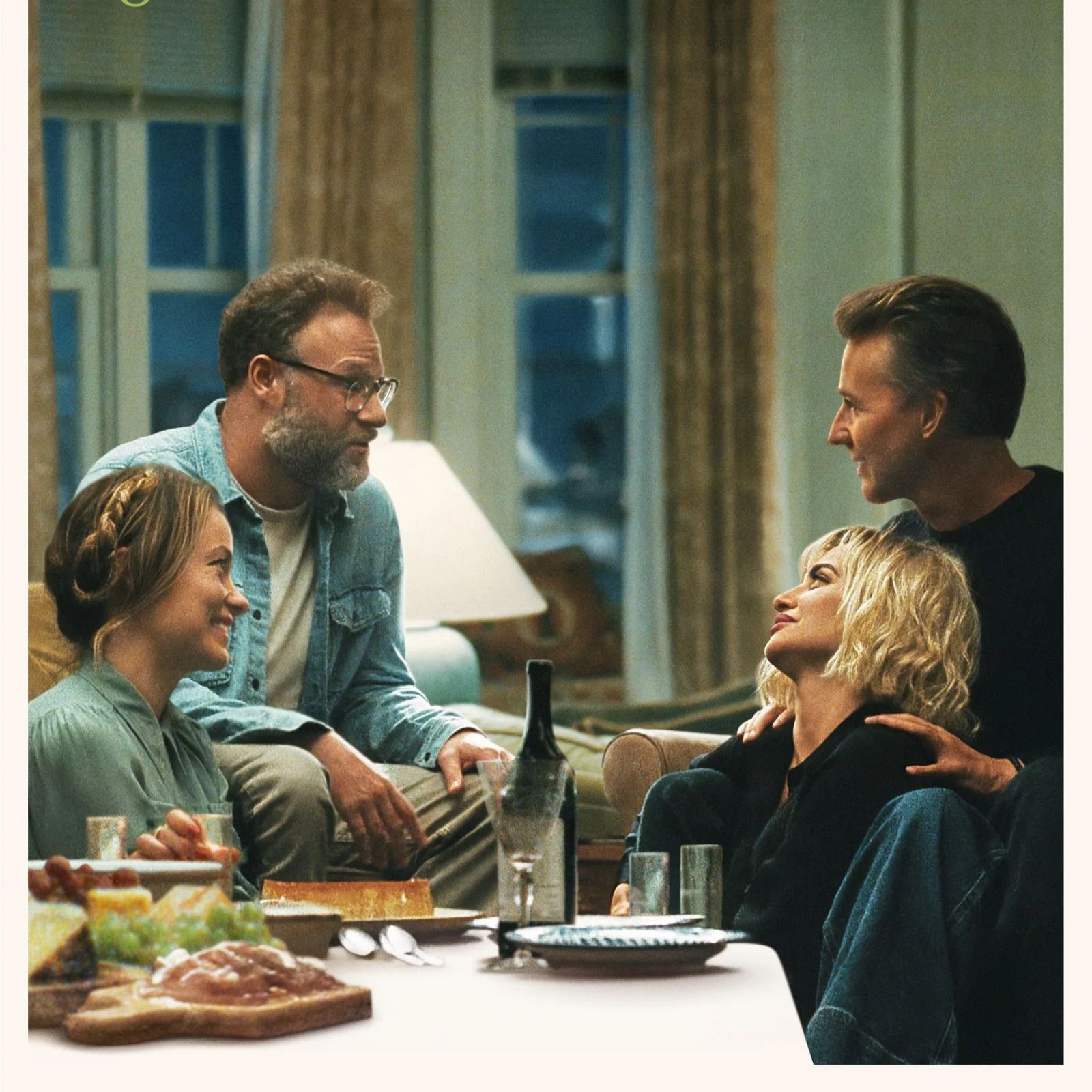
This is all of It. I'm Alison Stewart live from the WNYC studios in soho. Thank you for sharing part of your day with us. I'm really grateful that you're here. Coming up on the show today, Brendan Fraser stars as an actor pretending to be a father in real life in the movie rental family. We'll hear from Frasier and director Hikari. We'll also talk to the author about the history of lesbian bars. And we'll dig into the prevalence of Nigeria Nigerian romance scams. That's all coming up. But let's get things started with the Invite. Imagine inviting a couple over for a get together and realizing that they want more than conversation that they want to get together. The film the Invite was written by our next guests, Rashida Jones and Will McCormick. It's based on a play turned movie by the Spanish director Seskay. The Invite is set in San Francisco and features Edward Norton and Penelope Cruz as a sexually evolved couple, Hawk and Peanut and Seth Rogen and Olivia Wilde as a married couple stuck in a bickering rut. Wilde's character Angela is desperate to impress Hawk and Pina Rogan's Joe is curmudgeonly and sardonic. He actually never agreed to the get together. But the evening seems to have taken a new shape when they realize that Peanut and Hawk came over for more than just dinner. Over the course of the film, Angela and Jo reveal deep seated resentment, exciting sexual dilemmas and a killer apartment. Rashida Jones and Will McCormick, who co wrote the Invite, have been creative partners for over a decade and they're with me now in studio to talk about the film which is set to open on June 26th. Welcome.
- [02:18]
Rashida Jones
Thank you so much. Thank you so much for having us here.
- [02:21]
Alison Stewart
So the movie opens with Oscar Wilde quote that says one should always be in love. The reason one should never marry. How does that set up the film? Rashida
- [02:32]
Rashida Jones
the film is definitely an exploration of modern relationship and is it possible to have a meaningful, healthy and long marriage? And I think there's some irony about that quote because there are things that are excavated throughout the night that I think without the sort of like this big, kind of explosive, chaotic evening may not have come out. And I'm not gonna ruin the movie. Cause I want people to see it. But I think for us, the message of the movie was that, you know, honesty and forgiveness are the things that will bring you forward and can maybe save you.
- [03:18]
Alison Stewart
Yeah, it's kind of interesting because part of the film is about sort of the unraveling of a relationship, Will. But it isn't the result of cheating or lying or huge big incident that happened that sort of is a lot subtler than that. Angela and Jo, they have a lot going on for a long period of time. What challenges did you face as a writer about driving the story forward without relying on one single event?
- [03:42]
Will McCormack
That's a great question. I mean, the movie really is about sort of the glacial disconnect between Jo and Angela and just the sort of daily grind of being parents and trying to stay connected and trying to evolve in a relationship and just dealing with the vicissitudes of life. So while you have this like, slow moving tanker of a relationship, then you're sort of peppering it with all these twists and turns. And thank God for Edward Norton and Philippe Cruz coming down from downstairs because that's when the party really gets started. But that was sort of the fun of. It was sort of having this relationship that had been so taxing and so hard over time, completely get upended in one night. And that just was so fun to write.
- [04:30]
Alison Stewart
Rashida, aside from a short sequence at the beginning of the film, it takes place in the apartment period. How did you manage to keep it narratively dynamic, keeping it in one space?
- [04:42]
Rashida Jones
Well, as you mentioned, we had really great source material, which always helps. The Spanish film is so great and it's very culturally specific in a way that we felt we could drop into and kind of, you know, bring it, bring our own flavor to it. And also kind of like, what's this sort of American version of that, you know? And also Will and I have a lot to say about relationships. And I think it's about, you know, the big turns. Like we always had our eye on the big turns. That being the uncovering of a secret. The invite. The second invite.
- [05:26]
Alison Stewart
Invite Squared.
- [05:27]
Rashida Jones
The Invite squared.
- [05:29]
Will McCormack
That's a sequel.
- [05:30]
Rashida Jones
That's a sequel, yes.
- [05:31]
Alison Stewart
And then.
- [05:31]
Rashida Jones
And, and, and, and unexpressed emotions and, and also like, you know, Will was saying the sort of like the, the. The heartbreak of like being in a long term relationship plus seeing yourself as you are now in opposition to the person you were when you first met the person you were, you're with. And that. That sort of, like, unraveling through the course of an evening. Like, that's. That is emotional tension, you know, like, it's never going to be. It's not a jump scare movie, but it has this, like, really. This sort of, like, bubbling tension because you're like, are they gonna make it? Also, are. Are they. Are they gonna make it? And also, are they gonna make it squared?
- [06:13]
Alison Stewart
Why did you decide on San Francisco, Will?
- [06:15]
Will McCormack
You know, we had lived up in the Bay. We worked at Pixar for a couple years, and these people needed to live in apartments because of the structure of the story, which you will find out when you go to the movies, hopefully. But we just love that part of the world. And the characters felt very San Fran to us. It just felt like the right spot for Joe and Angela. And I just love seeing Seth climb that hill on the top of the movie. You know, his life is just really so sad.
- [06:45]
Alison Stewart
I'm speaking with Rashida Jones and Will McCormack, who wrote the new movie the Invite, about a struggling married couple hosting their cool upstairs neighbors over for dinner. It comes out on June 26. Okay, Rashida. The film starts with Joe and Angela, played by Olivia Wilde, who also directed the film. We'll talk about that in a minute. What's going on with Joe and Angela's marriage when we first meet them?
- [07:07]
Rashida Jones
Well, you get a sense that it's a literal climb. It's a challenge to get home. And Jo's evening is really about not having to talk to anybody and maybe just lay on the floor for a long time. But basically there's this sort of, like, energy. Angela's bringing this energy to their night. And he's unclear what it is, but you get a sense very quickly that this is a couple, that they're very different from each other. And there's maybe some stuff they haven't talked about. But their love language at this point, if you could even call it a love language, is to bicker. They bicker. They kind of come for each other in small ways. And then there's this sort of, like, acknowledgment that she's done something without him, that she made a decision without him. That's exactly the opposite of how he wants to spend his evening.
- [07:59]
Alison Stewart
What do their neighbors, Pina and Hawk, what do they represent to Angela and Joe, Will?
- [08:05]
Will McCormack
They represent possibility, opportunity, a chance to turn the page. There's mystique, there's romance, there's passion, but they also don't have kids, and they are newly together. And so I think Joe and Angela's relationship has really been tested. They've been through the grind, and they, you know, their relationships have been difficult. But I think the movie sort of posits that if your choice is to be in a relationship, that if you work for it, it's worth it.
- [08:43]
Alison Stewart
Rashida, how are Peanut and Hawk described
- [08:48]
Rashida Jones
in the script? Yeah, you know, it's funny because there was many iterations of this film, and there was, like, a different cast, a whole different version of it. And so when Edward and Penelope stepped into these roles, I mean, it completely changed everything, you know, everything. In the original movie, she's a bit younger, that character's a bit younger, and she's with an older guy. And, you know, any opportunity to do anything that Penelope Cruz touches is, like, literally a gift for us that we never, ever, ever thought would even be possible. So however the characters were described changed a lot when those two came on board, because it has to utilize all of their incredibly V talents. And, you know, he was sort of described as like, a brawny fireman. You know, Ed has a bit of intellectualism to him, so we had to really, like, represent that more and the dialogue and stuff. And Penelope is, you know, she's got. She already has mystique and sensuality and intelligence. And she really wanted to make sure, which I loved, is that she didn't seem too, like, too wise, that she couldn't be in conversation with real people, and that she had her own problems and issues and, like, maybe, like, insanities that, you know, could be revealed throughout the night?
- [10:12]
Alison Stewart
Well, it's interesting because she's blonde in the film.
- [10:14]
Rashida Jones
Yeah.
- [10:14]
Alison Stewart
And that's sort of. You think you're not blonde
- [10:21]
Rashida Jones
tonight? She is. Exactly.
- [10:24]
Alison Stewart
Olivia Wilde directed the film. Will, what's a decision that she made that you weren't quite sure was gonna work out, but ultimately did?
- [10:31]
Will McCormack
Oh, my gosh. Well, you know, the thing that Olivia brought to this entire project was that she completely made the whole experience propulsive. She brought so much energy and passion and movement. The whole thing felt kinetic. There's a speech in the film about energy that's making me laugh right now, but she just made the whole thing come alive. Who's Afraid of Virginia Woolf? Was a really big influence to her and to us. And the screenplay just came alive in her presence. She just motivated it, energized it in a way. I was. I didn't know if it was going to work, but it certainly did. It made the movie just feel electric in a way that, you know, four people in a room talking can feel, maybe stayed. And it can feel like a play. And she made it feel like a film, and that was just an incredible to watch.
- [11:25]
Alison Stewart
What decision did she make that you thought that was spot on?
- [11:31]
Rashida Jones
I mean, there's so many. But, you know, the ending we talked about forever, from the beginning till it was filmed. And she really wanted a quiet ending that felt like, you know, just the heaviness, the weight of the moment that they just sat in. The weight of the moment. And, you know, again, I don't want to spoil it for anybody, but it's very. It's very still and it's very emotional, and it really lands.
- [12:04]
Alison Stewart
We're talking about the film the Invite, with its co writers Rashida Jones and Will McCormack. We'll have more after a quick break. This is all of it. You're listening to all of it on wnyc. I'm Alison Stewart. I'm speaking with Rashida Jones and Will McCormack, who wrote the new movie the about a struggling married couple hosting their cool upstairs neighbors over for dinner and more. It comes out on June 26th. You said, let's come out of the clip. Let's come out of the break with a clip. So we're gonna do it. The tone is interesting because it's really funny. It's also sort of suspenseful, and this clip gives our listeners a chance to understand it. This is when Peanut and Hawk first come over for dinner, right as Angela and Joe are in the middle of the. Of an argument. This is from the invite.
- [13:00]
Edward Norton
It took you a while to come to the door, and it sounded like you were arguing.
- [13:06]
Rashida Jones
No filter.
- [13:06]
Edward Norton
No. I just want to be honest. We were. We were. We were at the door before we rang, and we could hear you were fighting.
- [13:12]
Rashida Jones
Oh, we were talking.
- [13:13]
Will McCormack
We were.
- [13:15]
Seth Rogen
We were fighting.
- [13:16]
Will McCormack
We were fighting.
- [13:16]
Edward Norton
Yeah. Bit of a contentious environment in here, so I understand if that's repellent to you. No hard feelings. You know what I mean? Completely understand. You know, we love a contentious environment. We love it. Well, really, it's fine. You hit the jackpot then, my friend. You're in for a treat.
- [13:37]
Alison Stewart
So I love when she says no filter.
- [13:39]
Edward Norton
No filter.
- [13:40]
Alison Stewart
No filter. It's so interesting. I already. I saw the movie, but now hearing that clip again for the third time, I realized I could watch it again and see a different movie.
- [13:50]
Seth Rogen
Oh, cool.
- [13:51]
Alison Stewart
You know what I mean? Because it means something different, what Edward Norton says in that particular film, once you realize, oh, they're over for more than just dinner.
- [13:58]
Will McCormack
Right.
- [13:59]
Rashida Jones
Cause now you can kind of front load all of your knowledge.
- [14:02]
Alison Stewart
It's sort of interesting. Yeah. I was interested in the music that was behind that. Was that written into the script? Was that put in later? Because that's sort of what creates the suspense.
- [14:11]
Rashida Jones
Yeah. No, I think Olivia had a very clear vision of this sort of, like, horror. Like a bit of a horror take on this evening, you know? And, you know, it's funny because Will came up with the great name, the invite. We talked about it for a long time. We're like, does it sound like a horror film? We're like, yeah, but I think that's okay. There's some interesting horror elements about it in a way. But, you know, the brilliant Dev Hynes did composed the music, and I think the directive was like, yeah, just to have this, like, spare and, like, emotional and intense score.
- [14:51]
Alison Stewart
Cello, what were some of the other titles for the film?
- [14:54]
Will McCormack
Oh, my gosh. We went through so many.
- [14:58]
Rashida Jones
Well, it was originally called. The Spanish version is called Sentimentale or the People Upstairs. And that really sounded like a horror film. So we were off that.
- [15:08]
Alison Stewart
But I feel like you came up
- [15:09]
Rashida Jones
with that really early.
- [15:10]
Edward Norton
Yeah.
- [15:10]
Will McCormack
And it just stuck.
- [15:11]
Rashida Jones
Yeah.
- [15:12]
Will McCormack
Yeah, that was our favorite.
- [15:14]
Alison Stewart
How much from the original film did, you know you wanted to keep? And how much did you want to put your own imprint on Will?
- [15:20]
Will McCormack
You know, when we watched the original film, I think we were both so excited because we thought, oh, my goodness, we love this. And then, of course, you know, inexorably, as a screenwriter or a storyteller, when you're watching something, you're like, oh, I wish that we could go down that road. And then, as fate would have it, we got the job and we were able to go down that road. But a lot of it. I mean, the structure of Seth's story is so sound, and there's so many riveting turns. I think the thing that we were really excited to dig into was the ending. And our ending is different. And that was something that I think from the jump, we thought, let's dig in there. And also, I think this version is. It's a bit rowdier.
- [16:07]
Rashida Jones
Yeah. Dirtier. It's definitely dirtier.
- [16:10]
Commercial Narrator
Yes.
- [16:11]
Rashida Jones
And we were very excited to go down that road.
- [16:13]
Commercial Narrator
Very.
- [16:14]
Rashida Jones
Because we were very immature.
- [16:19]
Alison Stewart
Well, I was actually gonna ask you because, you know, you treat sort of polyamory. It's funny, but you're not dismissive of it, which is interesting. The couple upstairs have this Open relationship. And you're cool with that? How are you interested, Rashida, between balancing them with not flattening them into characters, but not being too woo woo about it?
- [16:39]
Rashida Jones
Yeah, well, the actors were very instrumental in that. We had this kind of like, really, like, intense, fast, like, workshop session before we started shooting, and the actors kind of, like, downloaded all of their great ideas, great and fun ideas on, you know, with us, and we got to talk through a lot of stuff. And I think it was really important to all these actors because they are great actors and they always play kind of complex characters that they. That these things are not flattened and that, you know, it's not just like this sort of, you know, stereotypical, like, swingers or whatever. And I think, yeah, we wanted to really make sure that the lifestyle that they were a part of felt true to them. That, you know, like, you could actually picture them doing whatever they were doing and not just as, like, a joke. You know, I think in the original movie, they're very. They're extremely scandalized. And in talking to the actors, you know, Olivia and Seth wanted to be kind of really, you know, into it and know more. And, like, that was. That's a great choice. And that really helped us with our writing, because then they just keep asking questions, and we can keep developing it until they, you know, reach an impasse.
- [17:54]
Alison Stewart
At a moment. Pina says that group sex is, quote, forces total clarity of communication. And this seems to be something that Angela and Jo are lacking in Will, how does witnessing Pina and Hawkins relationship make them think differently about their own?
- [18:11]
Will McCormack
You know, I think it's just a way to experience the world differently. And, you know, their marriage is in a crisis. And I think that they're at a moment in their relationship where they're willing to explore anything, which I think is also beautiful because it means that they still love each other, they're still fighting for something. I don't think that they know what they're fighting for. So I think that they're more open to this visit from the neighbors than maybe at other moments in their life, because they need it more than ever. And it's a real crisis point in the relationship.
- [18:45]
Rashida Jones
Also, let's be honest, they're not having sex. And so to hear somebody's stories is like. Is just like. It's like somebody that visited Mars and came back and are telling them about it.
- [18:58]
Will McCormack
Yeah, I think it's titillating for them. I mean, I think it's exciting.
- [19:02]
Alison Stewart
It's sort of interesting. Joe and Angela, particularly, they kind of fall into gender roles in a certain way. How does the gender dynamic color their relationship? What do you think, Rashida?
- [19:17]
Rashida Jones
I mean, I think, you know, I think Joe has this sort of, like, idea of who he was supposed to be in the world, which I do think sometimes falls on the male. The male of the species, where his entire self is wrapped up in his external identity and he feels like a failure. It doesn't matter that even if he's a good teacher or his students love him, or he's got a beautiful home and a beautiful family, he is obsessed with the fact that he did not make it.
- [19:47]
Alison Stewart
He was in a rock band.
- [19:48]
Rashida Jones
He was in a rock band. They had one hit, and they didn't make it. And he can't get over it. And because he can't get over it, he's like. He's sort of sworn off music as a creative outlet for him and particularly his piano. And I think for Angela, I think the feeling. And I understand this, but the feeling, like, you want to make this beautiful home. You want to really, really, like, put every. Every piece of passion into your home and, like, make it perfect for your family. You sort of. You stop seeing the person that you're living with. And it's. And it's a distraction, but it's also a way to, like, bolster yourself and your mood because you're like, the relationship's toxic and dysfunctional. But my home can't talk back to me. I can just retile the bathroom, and nobody's gonna be mad at me. I'm gonna make myself feel better that way because I don't have to argue about it.
- [20:41]
Alison Stewart
Yeah, it's interesting because Angela's really into stuff. Really into pillows, really into tile. Why is that so significant? What is that significant? What does the stuff mean to her, Will?
- [20:54]
Will McCormack
You know, I all think we're just trying to plug the hole, right? Like, we're trying to stop the geyser of grief. And some people do it through drugs and alcohol. Some people do it through, you know, social media. Some people do it through shopping. And Angela's definitely trying to run from the pain. And I think that that's a really exciting thing about this movie is people get really honest with each other and say some hard things, but there's also real tenderness to it.
- [21:27]
Alison Stewart
You guys have been a working relationship in a working relationship for a long time. What's your system for writing together?
- [21:35]
Rashida Jones
It's evolved over the years. You know, there was a. When we first started, I think we both felt maybe like we like, we weren't writers. Like, we were secret writers, and we wanted to be writers so badly. We weren't actually writers. So we just, like, kind of doula ed each other into, like, being professionals, essentially. Like, the first time we wrote, we were just side by side, like, just, like, you know, cheerleading for each other, which is, like, the nice thing about being friends for so long. And now we've written so much together. We've written so much apart. We've lived so much life that we, you know, we can write together, we can write apart. It's always more fun together, though. Like this movie. We wrote side by side because we wanted to be together. And it's.
- [22:17]
Alison Stewart
It's fun.
- [22:17]
Rashida Jones
Cause then we get to talk in between and, like, talk about life, you
- [22:20]
Will McCormack
know, Before I met Rashida, I just used to write about wanting to be a writer. That's what I mainly wrote about.
- [22:26]
Rashida Jones
Yeah, that's not. I don't. I mean, I guess that's a good subject.
- [22:29]
Alison Stewart
I have to ask you. Your production company is called La Train Train. Why is it called that? I feel like I should know, but I don't know.
- [22:35]
Rashida Jones
We know. You should know.
- [22:37]
Alison Stewart
Okay, good.
- [22:37]
Will McCormack
We were having crisis.
- [22:39]
Rashida Jones
We were having a bit of, like, a mid-30s crisis. And we went to a French immersion program in the south of France for a month. It was like, eight hours a day with, like, us and retired Australian people. And like, we. You know, you have to do those, like, like, fake conversations where you're like, ah, bonjour, sava bien. And one of the phrases was le train train, which means, like, the daily grind. Like, not much, just on the train.
- [23:07]
Will McCormack
It felt like a chic world word for what Hollywood actually is.
- [23:11]
Rashida Jones
Yeah, the daily grind.
- [23:15]
Alison Stewart
Yeah.
- [23:15]
Will McCormack
Yeah.
- [23:16]
Alison Stewart
Learn something new every day. It's so interesting to see what you've worked on together. From Celeste and Jesse to the other black girl. What are you looking for when you want to work on a project?
- [23:28]
Rashida Jones
You know, again, our mandates sort of change. But there. But the fundamental thing is always, like, humanity. It's always like, where is the. Where is the humor in the pain? What are the realest moments in life? Like, the awkward, most realist moments that if you drill down a little further into that would be funny and relatable and universal. I mean, that's sort of. That's kind of it. And complex characters, like, people who are not just heroes. We're looking for sort of people to change. Like, we always talk about, like, we want our characters to change, like, just a tiny bit by the end, not like a big big, like a big thing happens and then it changes you a little bit because that's what life's
- [24:13]
Alison Stewart
like when somebody sees this movie. You don't want to give the end away. But what do you, what do you want them to think about when they're having coffee, when they're having a drink?
- [24:23]
Will McCormack
I want them to think about
- [24:27]
Commercial Narrator
how
- [24:29]
Alison Stewart
proud, how proud they are of me.
- [24:35]
Will McCormack
I want them to know that we see them and it is very hard to be in a relationship. You have to grow and you have to evolve and you have to fall in love over and over and over again. And we see you and it's a triumph and it's a miracle when two people, it's so improbable, right, that two people meet and fall in love and decide to spend the rest of their lives with each other. It's so romantic and insane, but it's also kind of like what makes the world go around. So I don't want you to know that we see you.
- [25:10]
Alison Stewart
The name of the movie is the Invite. Rashida Jones and Wilmer Kumermak. Thanks for joining us.
- [25:14]
Rashida Jones
Thank you, Allison.
- [25:15]
Will McCormack
Thank you so much.
- [25:16]
Commercial Narrator
Are you looking for the best deal on a new home? Discover the Dr. Horton home of the Week. With new construction homes now selling in ellensburg from the mid-3002, Dr. Horton has the right home at the best value for you, offering one and two story homes near Central Washington University. Your new home is within reach. So what are you waiting for? Learn more about the Dr. Horton Home of the Week, visit drhorton.com and schedule a tour today. Dr. Horton, America's builder and equal Housing Opportunity Builder.
- [25:46]
Seth Rogen
For a small business owner, every day is full of surprises. Some great, some not so great, like when a client cancels their order at the last minute. But here's a surprise you will like. Progressive provides small business owners with 30 customizable coverage options to help keep their business going strong. So go ahead, surprise yourself. Get a quote in as little as 8 minutes@progressivecommercial.com Progressive Casualty Insurance Company and affiliates and third party insurers. Coverage is not available in all states or for all vehicles. And coverage selections.