← All Of It with Alison Stewart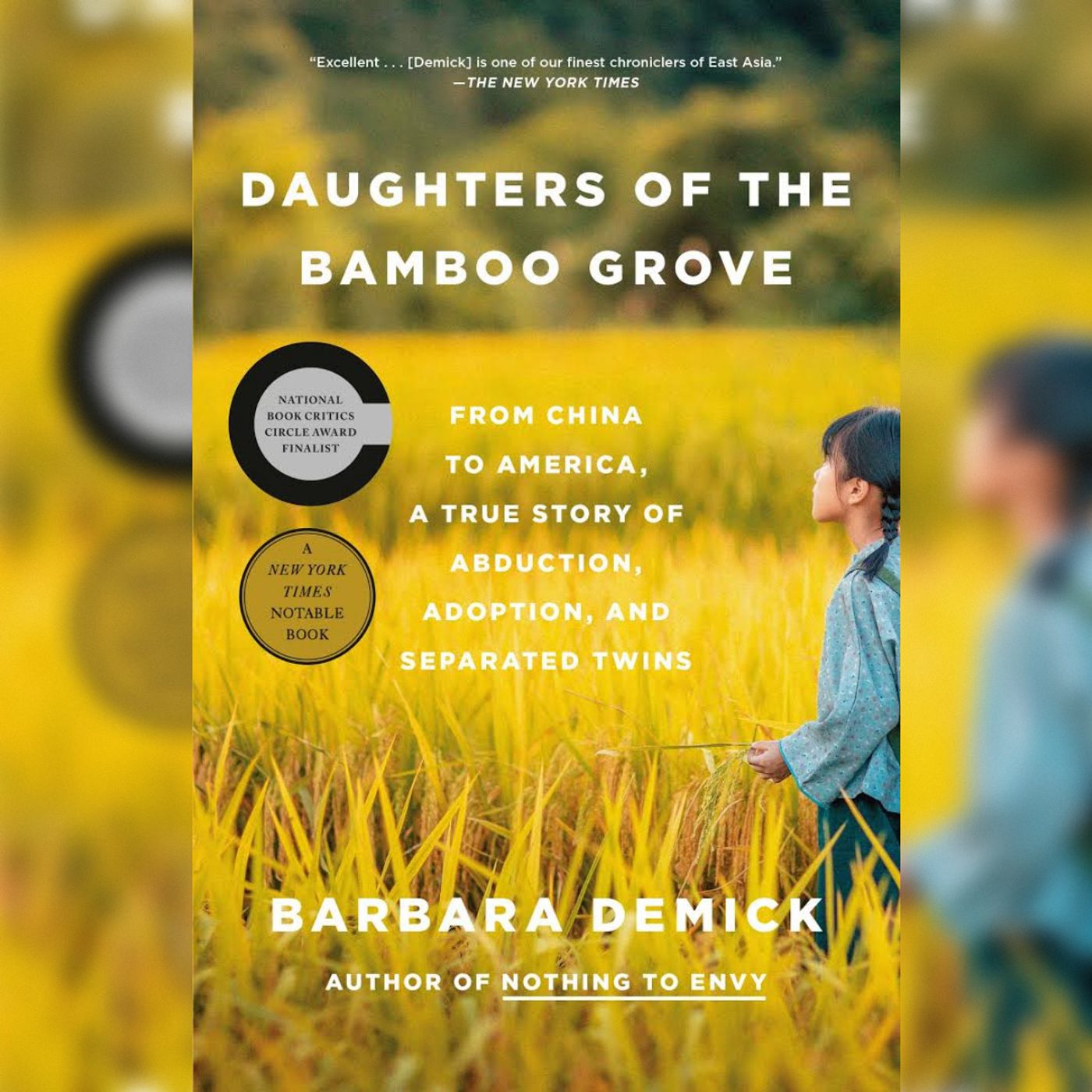
Loading summary
Transcript50 lines
- [00:00]
Progressive Insurance Announcer
WNYC Studios is brought to you by Progressive Insurance. Insurance isn't one size fits all. That's why drivers have enjoyed Progressive's Name your Price Tool for years. Now. With the Name youe Price Tool, you tell them what you want to pay and they'll show you options that fit your budget. So whether you're picking out your first policy or just looking for something that works better for you and your family, they make it easy to see your options. Visit progressive.com, find a rate that works for you with the name your price tool. Progressive Casualty Insurance Company and affiliates Price and coverage match limited by state law.
- [00:41]
Allison Stewart
This is all of it on WNYC. I'm Alison Stewart. In 1992, China officially opened its doors to international adoptions. Many of those adopted children ended up right here in New York City. The New York Times Magazine even ran a cover story about it in 1993. American parents were told that these babies were unwanted girls, a result of China's one child policy. Often Chinese families might abandon their daughters in favor of trying for a son. One of those adoptive American parents was told that her daughter Esther was once called Fang. Fang was one of these discarded girls. Journalist Barbara Demick soon uncovered that Esther was actually abducted from her birth family. She was taken as a toddler by the Chinese State Family Planning Commission, brought to an orphanage, and eventually adopted. Her parents, two older siblings, and a twin sister remained in China. Esther is far from the only adopted child who was taken by the government. In Barbara Demick's new book, she tells the story of Esther, her birth family, and the underside of adoption from China. It's titled Daughters of the Bamboo Grove From China to America, A True story of abduction, adoption and separated twins. When Barbara joined us on all of it, I started by asking her to share the background of China's one child policy, why it was implemented, and how it worked.
- [02:17]
Barbara Demick
Well, this was an idea that started in the 60s. You remember there was a book, maybe you're too young, called the Population Bomb. And it was millions of people are going to starve to death. And as a friend of mine who's written about this has said, this was like bell bottoms and sideburns. This was a craze. Too many people and various governments, like in India, they had tried to do, you know, limit births and forcible vasectomies. But China was the perfect laboratory because they were in a rush to get rich fast. And, you know, there was no religious precepts against abortion or birth control. And it was, you know, a totalitarian regime. So they had this very, very strict policy. People who didn't follow the rules could have their, you know, houses torn down, their, their property taken away, their animals confiscated. And then they started confiscating babies. And this was, you know, because of international adoption, which was very lucrative.
- [03:31]
Allison Stewart
The family that you follow is deep in the countryside where you might not think the government would be as strong or would reach as far. But that wasn't true when it came to the one child policy. Why not?
- [03:42]
Barbara Demick
Well, you know, the government was everywhere. There were Chinese Communist Party monitors in every village. And the people in the countryside, they were the powerless, without voices, without any political clout, you know, not that you would have political clout in a country like this. And they were vulnerable. And these family planning officials would sneak into, you know, very, very remote villages and they would look for baby clothes on clotheslines or they would talk to nosy neighbors. And the villages where these children were taken were all very remote. You know, one of them, we had to hike up a goat path, the one where the twins came from. We had to, you know, walk along a little log bridge and there's a picture of it in the book, you know, but it was, they were very remote and very vulnerable.
- [04:37]
Allison Stewart
What did the family, the Zhang family that you write about, what do they think of the one child policy?
- [04:44]
Barbara Demick
Well, this is a funny thing. They're very loyal, patriotic Chinese. They really love the Chinese Communist Party. They feel like it lifted them out of poverty. And so they respected the one child policy. They believed in the policy. They just, that didn't mean that they were actually going to follow the policy. And I think it's like us, I believe in taxes. I'm not really happy about paying them. I do. And they had had, you know, the typical young rural couple, they had had two daughters when they, very early in their pregnancy, they had already been punished for having the second daughter. And the paternal grandfather was really pushing them to try for a son. This is the son carries on the family name and conducts rituals at the cemetery, blah, blah, blah. So they push them and push them and push them. The mom, young mom at the time, hid out actually in a bamboo grove, that's where this comes from. To give birth secretly. So nobody would see she was pregnant. People could be, you know, pregnant women were often picked up and forcibly aborted, you know, up to eight, nine months. You know, very brutal, unsanitary conditions. So she went to have her long awaited son and boom, two more daughters.
- [06:08]
Allison Stewart
Twins.
- [06:09]
Barbara Demick
Twins, yeah.
- [06:10]
Allison Stewart
They said she wasn't looking like she felt so well, they were like, something's wrong with this pregnancy. And it turns out to be twins.
- [06:15]
Barbara Demick
Yeah, yeah, she gave birth to one. And then she's like, something is still moving inside. So they were, and you would have thought they'd be horrified. But the father, who's really kind of an unusual rural Chinese man, loved girls.
- [06:28]
Allison Stewart
He could have been a stay at home dad.
- [06:30]
Barbara Demick
That's why you're right. If he lived in Scandinavia, he probably would have been, I'll stay at home and take care of him. He loved girls. He was, is very gentle, soft spoken, doesn't smoke. And they really wanted to keep the girls. And he was actually kind of pleased. It was a little bit of a comeuppance to his patriarchal father. And they tried to hide the girls in this kind of awkward ruse. They left one with an aunt and uncle and that's when these family planning officials actually came in, immobilized the aunt. There were like 10 people who broke into the house and they took the baby.
- [07:13]
Allison Stewart
How did you first get involved with the Zeng family?
- [07:17]
Barbara Demick
I was a reporter in China from 2007 to 2014, which was actually a relatively open period for journalists. And I was like traipsing through rural China writing this story. And I'm not an adoptive parent myself, but I had a lot of friends who adopted. Usually women like myself who are professionals didn't get pregnant when they were, you know, early in life. They were building their careers. So I was very interested in this. And I had heard these rumors that babies were being snatched. And, you know, I went and I interviewed. I had heard from various Chinese journalists about this village. Chinese journalists were way ahead of me, but they weren't able to report.
- [08:04]
Allison Stewart
Oh, interesting.
- [08:05]
Barbara Demick
Because of censorship. And then I found, you know, I heard about this family. I crossed the Little River Bridge and I interviewed the mom and the remaining nine year old girl and they told me the whole story about how they had twins and one was taken and the little nine year old girl who was adorable, said, I miss my twin sister, I want to play with her, blah, blah, blah, blah. I made a video and, you know, when I was leaving, the mom said, thanks for visiting, come back and bring our daughter. Oh, anyway, wait a minute.
- [08:39]
Allison Stewart
What did that do to you emotionally when she said that to you? I mean, I know you're there as a journalist, but when someone says that
- [08:45]
Barbara Demick
to you, I was like, you know, I didn't think that was possible. I was like, okay, yeah, thanks, I'll try, you know, but anyway, I Got back to my office in Beijing and I mean, I have to like admit something here. I was like kind of procrastinating, like just messing around on the computer. And things were much more open on social media at that time. This was 2009. And I found these different forums on Yahoo actually for parents who had adopted. And they always posted pictures of their kids, you know, you know, dancing the nutcracker, riding ponies, building, you know, enjoying American life. They were very proud of these ridiculously adorable kids. And one family I found had, you know, seemed to have adopted around the same time, the same area. This girl was taken when she was almost 2. So she was older than other adoptees and I knew what she looked like because I had met her identical twin sister. And it's complicated what happened next. But I started trying to find the family and they completely freaked out. They cut me off through an intermediary, said, we can't deal with this. They were evangelical Christians in Texas. They had in fact started a little NGO because, you know, there was a big movement among evangelicals. Adopt the world, you know, save the babies. And you know, that was, that was it. I really couldn't write anything. I couldn't out a nine year old as being a stolen child. And I, you know, I sent what I had to the family in Texas. I contacted the family in China and said, look, your daughter is safe, she's been adopted and I just don't think you can contact her now. And they were actually understanding, they were happy she was alive. And then that was it till 2017.
- [10:56]
Allison Stewart
Once a child is abducted, did the parents have any recourse on getting the child back?
- [11:05]
Barbara Demick
No, no. I mean, these people are, you know, not connected. They have no money. They're usually often illiterate or semi literate. You know, often family planning officials. Family planning is a euphemism for the enforcement agency would, you know, ask for money. But they were ridiculous sums that the family couldn't afford. These were very poor people.
- [11:33]
Allison Stewart
So family planning, I mean, they couldn't take the child, but they could take the child.
- [11:38]
Barbara Demick
It wasn't legal. It wasn't legal, but it was like, don't ask, don't tell. They needed the money. And how it was split between the family planning and the orphanage, I don't know. They had to place ads in newspapers saying we found a baby so and so. But most of that information was fabricated. And these people were, you know, rural villagers. They didn't read these newspapers. Some of them were like legal newspapers. And they generally moved them on about six months later I wanted to ask
- [12:15]
Allison Stewart
about the preference for boys. What are some of the cultural and economic explanations for why Chinese family might place such emphasis on having a boy?
- [12:27]
Barbara Demick
I think the main one has to do with retirement. The tradition is that the boys take of the parents in their old age and that the girls marry out. It's a common, it had been a very common cultural thing. So the girl goes to another village, marries and takes care of her in laws. So they were like spilled water. But something that's really very important to say here, this was changing. And since there's adoptive parents no doubt listening and adoptees during the 80s and 90s there really were a lot of abandoned babies. But by about 2000 there's not Zach cut off. Chinese were getting a lot richer and the attitudes towards girls were changing. The girls were starting to work in the factories in southern China. They were making money, they were sending the money back to their parents and people didn't want to give up their daughters. And there was just such a change in China over that decade and that's when these babies got abducted. You know, the earlier adoptions I think really were abandoned.
- [13:41]
Allison Stewart
What messages were American adoptive parents given about the children?
- [13:47]
Barbara Demick
Well, it was a very, you know, convenient lie is you know, you're rescuing a baby from the trash keep of China. And it was very comforting to the adoptive parents. I think it was very destructive narrative for the adoptees, many of whom still have deep psychological issues about abandonment and something else. Sorry, I'm talking like a broken record here. I'm saying abandonment but it's really relinquishment because some kids were taken violently like this twin. But some were given up under great duress and there was just a continuum of duress. And I think very few of those girls would have been relinquished if not for the one child policy.
- [14:40]
Allison Stewart
Esther's adopted mom is from Texas. What did she tell you about why she decided to adopt and why she decided to adopt from China?
- [14:52]
Barbara Demick
She was Esther's mother, who is a wonderful person as I've come to know, wanted to be a missionary as a child. She was very motivated by humanitarian concerns. And she was older, she already had an adult son. Her husband had adult children from a previous marriage. And you know, she heard a program about babies being thrown out. One in particular about a girl who was thrown down a well because her family wanted a boy and she just soft hearted and so she decided, you know, to save the babies.
- [15:30]
Allison Stewart
It was altruistic on the way.
- [15:31]
Barbara Demick
It was altruistic and she it was an extension of her desire to be a missionary. And so she adopted two girls from China, one a little bit older, and then Fang Fang, who became Esther.
- [15:45]
Allison Stewart
And Esther had a little bit of a harder time, sort of melding into the family a little bit.
- [15:51]
Barbara Demick
That's right, because she was almost two when she was taken. She was two and a half when she was adopted, and she could already, you know, speak very coherently and walk, and, you know, she was a very precocious kid. And Marcia's husband, who has unfortunately since passed away, said, you know, it almost seems like she had another family.
- [16:15]
Allison Stewart
It's interesting because Esther's Chinese family, as you described, they grew up in rural poverty. They're doing better now, but. But she grew up middle class in America.
- [16:26]
Barbara Demick
Struggling middle class.
- [16:27]
Allison Stewart
Struggling middle class.
- [16:28]
Barbara Demick
They were. I think this is a very typical American story of people who were falling out of the middle class. Her husband got cancer. He had to leave his job. She was taking care of young kids. She retired early. It was just typical. Not quite enough health insurance, not quite enough pension.
- [16:48]
Allison Stewart
Gosh, that's interesting. I think about that for a minute. But as you said, when she turned 17, things changed. They were able to. You were able, not. You were able to. She was able to meet with her twin.
- [17:03]
Barbara Demick
Yeah.
- [17:06]
Allison Stewart
That must have been an incredibly hard decision for her to make.
- [17:11]
Barbara Demick
It was. And, you know, at first, she found out about this whole thing when she was nine years old, and she was horrified. Like, you know, I have to go back to China. But as she became a teenager, you know, she saw that she looked different from other people. She grew up in a very, very white community in rural Texas, and she started following Chinese fashion bloggers. And at that point, that's when somebody in her family contacted me and said, can you help?
- [17:40]
Allison Stewart
How did you feel about being contacted? Can you help?
- [17:45]
Barbara Demick
It was really out of the blue. This was 2017. It was right after Trump's inauguration. We were, you know, it was full of protests in New York and at the airports. It was kind of a crazy time, but I was like, wow, I never forgot this story. I didn't think I'd write about it, but, you know, of course I couldn't not help. And as I got sucked into it, I shouldn't say sucked into it, because I put myself into it. You know, I realized how much trauma I had caused the family, in a way, and I felt obliged to help.
- [18:16]
Allison Stewart
Did you feel like you caused the trauma?
- [18:18]
Barbara Demick
I did.
- [18:18]
Allison Stewart
Why?
- [18:19]
Barbara Demick
I felt like I was writing these stories as a journalist and that I Had not thought enough about the psychological implications. I mean, I was trying to help the Chinese family, but I was also trying to see if I could. I wasn't even trying to write a story at that point. I was just trying to see if I could find her. I like to fool around on the Internet, and, I don't know, I just got more and more involved. I found I started sending letters between them. Then it was like text messages. I set up a video chat, and, you know, finally we all went to China together.
- [18:58]
Allison Stewart
How are you feeling about it now in 2025?
- [19:02]
Barbara Demick
I mean, I feel very good about it. It's not. It's not a fairy tale. I think people want to look at this as, oh, separated, transunited. It's a fairy tale. There's tensions there and issues. We had really hoped that Shuang Jack could come to the US the following year. And then that was Covid 2020. And, you know, we've talked about it, but it's very difficult for a Chinese person that age to get a visa to the U.S. she doesn't. Yeah. Because of the political situation. She doesn't have a passport. And, I mean, the twins have found it hard to keep up the intimacy because they don't speak the same language. You know, they're texting. And for all the wonders of technology and the AI interpreters, it's difficult.
- [19:54]
Allison Stewart
That was my conversation with journalist Barbara Demick. Her book is called Daughters of the Bamboo From China to A True Story of Abduction, Adoption, and Separated Twins. And that is all of it for today. All that is produced by Kate Hines, Jordan Loff, Simon Close, Zach Goddard Cohen, El Malik Anderson, Luke Green, and Sasha Lindon Cohen. Our interns are Emma Lee and Joey Jerva. Megan Ryan is the head of Live Radio. Our engineers are Juliana Fonda, Jason Isaac, and Amber Bruce. Luscious Jackson does our music. If you missed any segments this week, catch up by listening to our podcast, available on your podcast platform of choice. If you like what you hear, please leave us a great rating. It helps people find the show. I'm Allison Stewart. I appreciate you listening and I appreciate you. I'll meet you back here next time.