← All Of It with Alison Stewart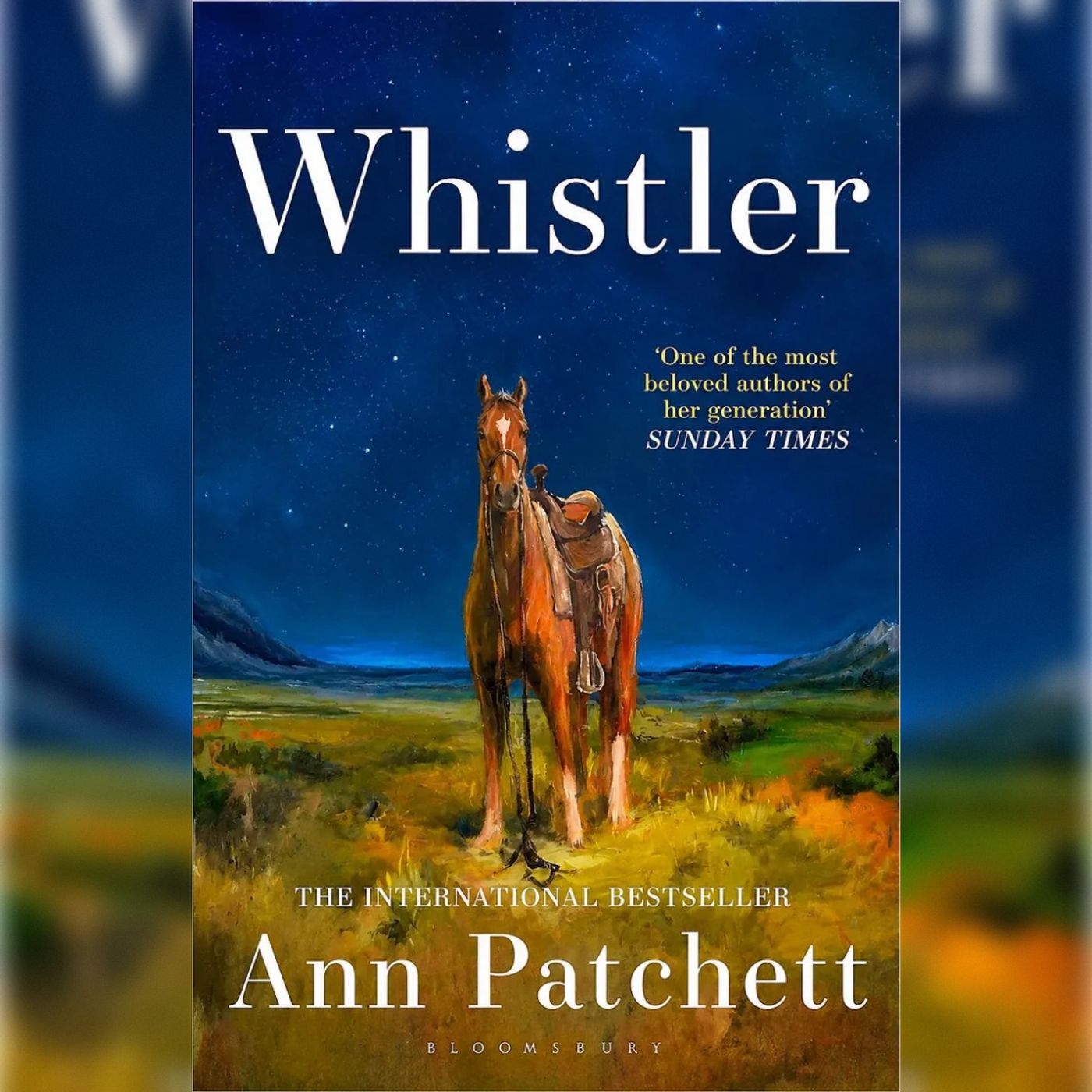
Loading summary
Transcript49 lines
- [00:07]
A
Welcome back to ALL of it on wnyc. I'm Alison Stewart. Thank you for spending your afternoon with us. Let's continue our day with books. This hour. We'll be hearing from three novelists about their recent releases. If you are signed up for the summer reading challenge and looking for a book that fits the criteria, this hour has you covered. Acclaimed British Irish author Maggie o' Farrell will talk about her latest novel, Land, which combines historical fiction and Irish folklore to tell the story of a mapmaker and his family. It's a New York Times bestseller. We'll also be hearing from Xochil Gonzalez, who wrote Last Night in Brooklyn, which
- [00:44]
B
revisits Fort Greene 20 years ago as a young woman named Alicia navigates some
- [00:49]
A
big questions about her future, her relationships and the American dream.
- [00:58]
B
The novel Whistler isn't named after a place or a person. Whistler is a horse hero in a story that a dad tells his kid about during a difficult time. Actually, it's a stepfather who tells this story to his precocious stepdaughter. It's the late 1970s. Eddie and Daphne were thick as thieves for two years. She was nine and he was married to her mom for a short period of time. She was bookish. He was in publishing. They understood one another. It was a magical time for Eddie and Daphne. Until it wasn't. After a bad accident involving Daphne, her mother, Abigail banished Eddie from their life. Ultimately, Abigail took up with a third spouse. Flash forward And Daphne is 53 years old and Eddie appears in her life again, older, charming, wise and full of answers to a time in her life which she's put in a box. Ann Patchett is the author of the best selling novels Tom Lake and the Dutch House, which was a finalist for the Pulitzer Prize. I began our conversation by asking Ann about the opening scene of the book, the Metropolitan Museum of Art, and what our main character, Daphne is doing there.
- [02:10]
C
Daphne is taking the day off with her husband, Jonathan. She's a schoolteacher. Her semester's over. He's getting ready to take a trip. They live in Bronxville in Westchester. And so they just decided to take a day in the city, go to the museum. And Jonathan notices that someone is following
- [02:26]
A
them, but she thinks, you know, they have a running joke. Daphne once told him, old guys are really into me.
- [02:32]
C
Yes.
- [02:34]
A
Are they or is she into older guys?
- [02:36]
C
No, I think older guys are really into her. It's been very interesting, that whole concept, because I've had a couple of older guys who have interviewed me said, oh, yeah, I know women like This. I know women who just can never find anybody their own age because they're so intimidating, and so they wind up being a magnet for older guys.
- [03:00]
A
So right off the bat, Eddie Triplett enters the story. What did you observe about the qualities a gentleman would have that Eddie would have?
- [03:11]
C
He has on a pink shirt and gray slacks, and he's trying to make himself invisible. There's absolutely nothing aggressive about the way he's following them. And as soon as he sees them seeing him, he immediately runs into another room. So there's just. You can tell right away he's going to be a sweet guy.
- [03:37]
A
Daphne passes a Charles Ray sculpture, Two Horses, right before they meet. What do the horses come to represent in the story?
- [03:45]
C
Well, of course, there is a horse on the COVID and so she's not thinking about Eddie or her past, but when she sees the Charles Ray sculpture Two Horses, she's just mesmerized by it, which anybody would be mesmerized by it because it's a great piece of art. But it sets the scene for Eddie coming back because all those years ago when they were in a car accident, he tells her a story about a horse.
- [04:15]
A
Eddie is instantly charming. A classic New York gentleman. He works in publishing, not really thinking about quitting so much. He knows how to live life well.
- [04:24]
C
Yes.
- [04:25]
A
What do you think Eddie is missing in his life?
- [04:29]
C
Well, maybe he's missing Daphne. I mean, it's not that he's missing connection because he has a ton of friends. And, you know, it could be that Eddie isn't missing anything, that Eddie just loves her and is so happy to include her. I don't think that he's trying to fill a space in his life, nor do I think she's trying to fill a space in her life. But they are crazy about each other, and they feel like this is an incredible second chance. This is a really, really romantic novel about two people who are not having a romantic relationship, but they love each other.
- [05:10]
A
It's interesting, just in the first couple of pages, we're not quite sure about Eddie.
- [05:14]
C
Sure, right.
- [05:14]
A
This guy's, like, lurking, lurking around, like, what's going on?
- [05:17]
B
Lurking.
- [05:18]
C
Stepfather.
- [05:19]
A
What did you want the initially. The reader to initially think about Eddie or to consider about Eddie before we recognize he's a wonderful guy. He's a mensch.
- [05:28]
C
Yeah, well, you know, Jonathan says, look, there's somebody following you. Don't you want to know? Aren't you interested? And Daphne's like, I'm not interested in a man who's staring at me or following me. And I think that women, women in the city, you've all had that moment where you think, oh, I'm clocking this person, but I'm not gonna let it bother me. And so she's making a decision that this is not gonna be a creepy situation. She's just gonna ignore it. But basically, anytime there is a man following you and staring at you, it is de facto a creepy situation. Therefore, you think, well, then Eddie must be a creepy guy. And once you find out it's her stepfather, all the creepy bells and whistles go off. Because we've all read Lolita and we're triggered by the notion of a long, absent stepfather. But that's not what what it is at all.
- [06:30]
B
My guest is Ann Patchett.
- [06:31]
A
Her new novel is called Whistler, about
- [06:33]
B
a woman and her stepfather who must reconcile their past. In the book, we discover Daphne has incredible fond memories of Eddie, and she's about nine years old. Why did you choose nine?
- [06:45]
C
I just think that nine is a great age. Nine, you have some autonomy. You're allowed to make your own choices when you're nine, not all of the choices, but you're trusted. If you have earned that trust and you have a personality and you could go off and have an adventure. Twelve, you know, you're getting into the attitude zone. Seven, you just don't have any autonomy at all. So nine is nice.
- [07:16]
B
Daphne is surprised by Eddie's being there. It's a really welcome surprise in her life. Why is she so welcoming to a man who was essentially erased from her life? Her mother exiled her from the family,
- [07:33]
C
but she didn't, and that's a really important thing. She didn't make a choice. She didn't get to make that choice. She loved Eddie. When she finds out that her mother is divorcing Eddie and her mother says, I'm divorcing him because he wrecked the car and you were in the car and he could have hurt you. That turns out to not be the case. But. But she says, no, no, no, no, no, you can't get rid of Eddie. But she doesn't have a say, and she doesn't have a voice in what is the most important relationship in her life. So that's a really, really hard thing to deal with. And people say to her in the book, her husband says later, why didn't you ever try to find him? And I think the reader thinks, why didn't you try to find him later? But we didn't have the Internet back then. We didn't have any way of Finding somebody. If your mother said, this person is gone, you didn't have a clue how you were going to find him. And you didn't think, well, when I'm older, I will find him. You just had to take your mother's word for it.
- [08:40]
B
There was an interesting passage. After Abigail tells Eddie to hit the road because of this accident, she packs up all his belongings and she has them mailed to his friends.
- [08:52]
C
Yeah.
- [08:53]
B
And in the book, Daphne says, that's aggressive. But the other thing that should be said is, oh, my poor mother.
- [08:59]
C
Yeah.
- [09:01]
B
In that moment, what does she realize about her mom?
- [09:05]
C
One of the arcs of this story is that Daphne, at 53, kind of got frozen in time with her mother. At 9, her mother did something that made her mad, and she's been mad at her mother ever since. And over the course of the novel, she starts to see her mother as an adult and she starts to realize that her mother had some really hard choices and tough situations that she had to navigate on her own with two kids. And Daphne never cut her any slack. So when she says, oh, my poor mother, it's the opening up of her heart to her mother and finally thinking, oh, this couldn't have been easy. Daphne's birth father left because he was a fisherman and he just wanted to be on the boat all the time and never come home and be with the family. And so Abigail basically loses her first husband to the sea and then she loses her second husband. And Daphne's like, wow, that was really tough.
- [10:10]
A
Daphne's sister Leda is a therapist, a well known one, and she's the first person she tells about her encounter with Eddie at the museum.
- [10:18]
C
That's right.
- [10:20]
A
Why does Daphne tell her sister Lita rather than truly call her mom?
- [10:24]
C
Yeah, it just doesn't even occur to her to call her mom. She wants to go straight to her sister because her sister is her family. She's her confidant and kind of her true love. I mean, the two sisters have a great, beautiful relationship, but Leda is great at explaining things. And one of the things that I have been thinking about so much lately with my own sister Heather is that we are each other's memory. And so if something happens and I'm trying to remember something from the past, I immediately go to my sister and say, okay, wait, when we lived in that house, what year did we move into that house? Wait, what year did that thing happen that happened to us? And we each have half of the story. So, you know, when you're writing a novel, you take aspects of your life, and you give it to your characters. And so that relationship between those two sisters in which they each remember part of something. And at one point, Lida says, you want to hear something crazy? You never told me about the car accident. And Daphne said, of course I did. And she said, yeah, but I was 7. And we never talked about it again.
- [11:44]
A
My guest is Anne Patchett. She has a new novel out called Whistler, about a woman and her stepfather who must reconcile their past. All right, we get to the date January 18, 1980. That's when the accident happens. Is there anything special about that date?
- [12:02]
C
No, but I looked it up on the calendar because it had to be a certain day of the week because it had to do with school being out and all of these different things that were happening. And so I wanted it to be cold and snowy and a Friday.
- [12:20]
A
The accident happens. And to keep Daphne calm, Eddie tells her the story about a woman and her horse, Whistler. The horse is on the COVID of the book and how they essentially save one another. And it's a story within a story of your story. How did you come to the idea of a story within the story?
- [12:37]
C
Okay, so I don't have children. And one of the things that always trips me up is I can never remember the milestones or when things can happen. Like, I don't remember when a child speaks or when they walk or if somebody says, my kid's in the third grade. I'm not really sure, you know. So the idea of Eddie telling Daphne a story which winds up being really inappropriate story, he should not be telling her this story. But he doesn't know. Like, he wants to comfort her and entertain her and take her mind off the problems. And he just read this book proposal in his office that day, and he's like, I'll tell her that story. And then he starts it, and it's a disastrous story to be telling a nine year old in a car accident. But she doesn't want him to stop because she has to find out. So that's how it started. Like, I want a story in which Eddie is in over his head and yet he has to keep going. And it does turn out to be the right story, but it makes such a huge impression on Daphne that she really carries this story with her for the rest of her life.
- [13:56]
A
Why did you want to make retirement an issue? Is that something you think about? Yes.
- [13:59]
C
Yes, I think about it constantly because my husband talks about retiring, or I should say, my husband used to talk about retiring for 15 years. All we talked about was whether or not he was going to retire. And then he retired for three weeks and he was miserable and he got a different job. He's a doctor and he went back to teach medical residents. And he's so happy now because he did retire and he got it behind him. But one of the sub themes in this book is when do you retire? How do you feel about it? What do you do when you retire? And it comes up a lot and it becomes kind of a metaphor for death.
- [14:46]
A
From this point on, we learn about Daphne's life, Eddie's life, Abigail's life, even her other two husbands lives. And the thing is, no one's a bad guy in this book. They have flaws, but nobody's really evil. What's the challenge of writing a book where there's like, there's not someone to gang up on?
- [15:04]
C
Well, it's funny, I think about this a lot in terms of my own life. There's a lot of sadness and suffering, terrible things going on in the world. But in my own life, everybody's nice in the bookstore. Everybody's nice. My family, my friends, walking the dog, going to the grocery store. I'm kind of amazed at how people help one another and are kind to one another. And I want to see that represented in literary fiction because I feel like there are some of the greatest minds in literature writing about people being horrible to one another. And that's covered. That's good, that's good. They've done a great job. But the other part of it isn't covered. So, yeah, it's a. That is a challenge. How do you write a picnic about a sunny day? Really easy to write a picnic in which the river rises and the lightning strikes and the fire starts and whatever, you're trampled by ants. But it's harder to write a book about a lovely picnic. And I also think it's what we need. It's what we need right now. We need some representation of people being loving and kind to one another because it's out there.
- [16:25]
A
That was writer Ann patchett on her 10th novel, Whistler, which came out this past June, about a woman and her stepfather who come together and reconcile the past. Up next, Maggie o' Farrell discusses her new book, Land. It is, coincidentally, also O' Farrell's 10th novel, and Kirkus has described the book as steeped in Irish history and folklore, alive with a sense of wonder. That's next.