Loading summary
Transcript62 lines
- [00:00]
Alison Stewart
All of it is supported by Memorial Sloan Kettering Cancer Center. In a small groundbreaking clinical trial, 100% of participants with a specific type of rectal cancer saw their tumors disappear using immunotherapy alone. Researchers at MSK are now studying this approach in cancers of the stomach, liver and more, and a majority of tumors are disappearing. For MSK Giving Day, all gifts will be tripled. Learn more@msk.org all of it.
- [00:33]
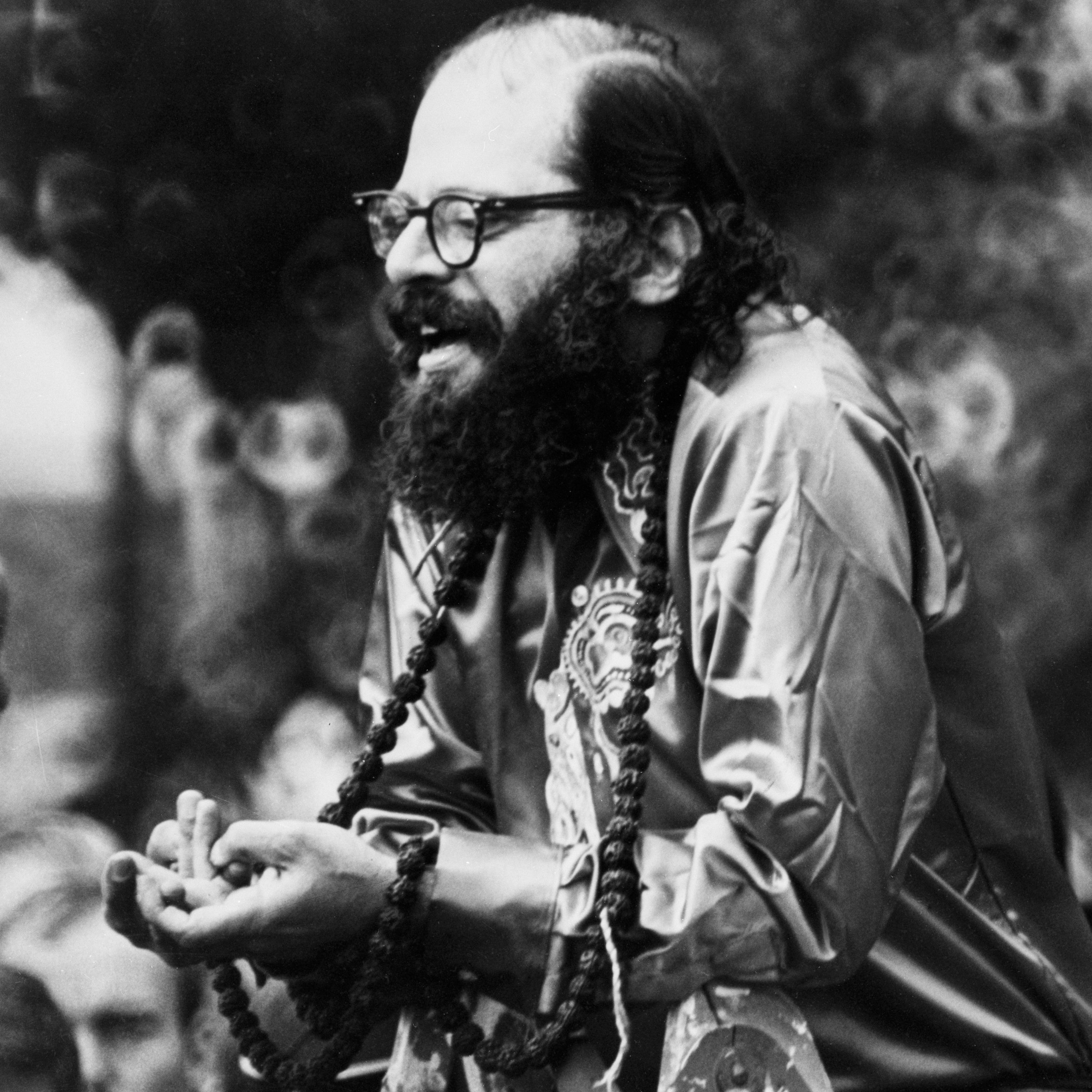
The iconic poet Allen Ginsberg would have turned 100 years old this month. He was part of the Beat movement, one of those early anti establishment artists whose friend group included Jack Kerouac and William S. Burroughs. Ginsburg first book, Howl and Other Poems, was published in 1956, and it established him as a hugely influential voice for young Americans disillusioned by the middle class fantasy that was being promoted after the Second World War. Ginsburg was one of those people who was starting to question authority, capitalism, American imperialism. Part of the reason the poem, that poem, Howl, skyrocketed him to fame is because it became the subject of a landmark obscenity lawsuit. The verdict supported the First Amendment and marked a major win in the fight against creative censorship. But Ginsburg faced detractors for the groups he would support in terms of free speech. Allen Ginsberg was a gay man who came out more than a decade before the Stonewall Uprising. Iris Silverberg is a literary agent and editor who's been a student of the Beat Generation for a long time. And he actually came to know Ginsburg personally in the 1980s. He has a piece in Rolling Stone called Allen Ginsberg, the Queer Poet who Changed America. And he's here with me now. It is nice to speak with you.
- [01:46]
Ira Silverberg
Thanks for having me.
- [01:47]
Alison Stewart
And I think I misspoken there, but you get my drift. Listeners, do you have a favorite line from Howell that you want to shout out? What about his work really spoke to you? And why do you think it has stood the test of time? We are taking your calls at 212-433-969-2212. Ginsburg was born in 1926 and he grew up in Newark, New Jersey.
- [02:11]
Ira Silverberg
Patterson.
- [02:12]
Alison Stewart
Patterson, thank you. He was in his teens when World War II unfolded. How did witnessing the war over the course of his early teenage years inform his artistic sensibility?
- [02:25]
Ira Silverberg
That's a really good question. I think for a lot of Jews who were here in the States, it was a very complicated time. The marginalization that took place was not healthy. For a lot of people. They were other and continue to be other. And I think Alan's family being socialist, communist, also were othered in a capitalist environment. So the war is viewed as specious, as kind of an imperial or capitalistic endeavor. And Alan was one of these people who did not think in the same terms that the rest of the people thought about. He wasn't thinking about boundaries, he wasn't thinking about. He just. He was born of a kind of different spirit and thought of things in much broader terms. And I think politics was really, really important to him. But he saw through politics and, you know, if Ellen were alive today, I think he would love what's going on because it's havoc. And from havoc beauty is found. And he. I mean, he was never really an anarchist, but there's a kind of very anarchic spirit to his essence.
- [03:31]
Caller Host
His mother dealt with mental health struggles.
- [03:34]
Alison Stewart
Do we see that in his work?
- [03:35]
Mendel
Oh, well.
- [03:36]
Ira Silverberg
Well, Kaddish is all about Naomi and Naomi's death and Naomi's going to the sanitarium, in and out and in and out. And it is, you know, looking back, it's kind of a landmark book in terms of talking about mental health. Something that has been taboo, stigmatized for so long. And also, especially for Jews, it was like before Philip Roth. We had Allen Ginsberg talking about something that Jewish families did not want to talk about. And he was beautifully blatant in terms of the portrayal of her pain and her insanity, you know, and it was, it's. It's a really poignant book. I mean, it happens to be poetic, but it's also a beautiful portrait of a family dealing with something that is not written about enough.
- [04:22]
Caller Host
Ginsburg took issue with mainstream culture Post World War II and became one of the early figures of the beat movement. Tell me about that moment in cultural history.
- [04:33]
Alison Stewart
What were they pushing back against?
- [04:36]
Ira Silverberg
We'll look at New York. People left the city, they left the boroughs to go to Nassau County. They eventually went to Suffolk county, or they went from Westchester to Putnam. They had this idea that they could get out of this tight urban environment and find something. Freedom, land, work. It didn't quite work out that way exactly. The money is still concentrated in one place. The middle class didn't do so well. They got pushed out. Urban environments were really, really rough. This notion of an American dream, of a house in the suburbs with two kids, white picket fence, White picket fence, white people. Let's go there. I mean, it was a very racist kind of setup. And I mean, just even zoning in those days, you know, there was all kinds of redlining. And Alan kind of looked around and said, what the hell is this? You know, because it was all about money and it was not about spirit. And I think what we saw was the marginalization of already marginalized groups. And it just. Everyone went to the fringes. There was a kind of domestic core of an upper middle class Christian society that knew better than everyone else. And that's an old. You know, it's the same as today, really. It's exactly the same as today. And the work seems more prophetic than ever. Because what you're looking at is Alan understood that power existed with a certain kind of moral core. And that doesn't cut it when you're living on the outside of that power. And he was really just kind of, in his own way, I mean, somewhat of a libertarian, but a kind of. How shall I rephrase this? His spirituality is something that was greater than politics. And I think Alan had faith in humanity and that humanity could come together and solve problems. I mean, in 1968, at the Chicago Democratic Convention, he owned. Which is brilliant because it's about bringing people together. It's about the vibration. And we're getting back to that place again. You know, that harmonic convergence that took place between then and now. It seems fairly relevant.
- [06:38]
Caller Host
You said that he sort of operated outside of politics.
- [06:43]
Ira Silverberg
Yeah, he responded to things. I mean, he was not actively political in so far as he was not getting involved in local. I mean, here in New York it's very easy to get involved in local politics. And we've just had a very exciting time in the city. So it's. That wasn't his thing. He was more responsive and reactive, but he understood inherent issues. He understood who was being cut out and why. And he just. There were no boundaries for him. Black. I mean, he didn't care what color someone was, what sexuality they were. He was a humanist and saw people for the value they had in terms of their souls and really cared about people and was kind of a great guy.
- [07:21]
Caller Host
Let's talk to Steven, who's calling in from Brooklyn. Hi, Stephen. Thank you so much for taking the time to call. All of it.
- [07:28]
Stephen Taylor
Oh, thanks, Allison. Hi, Ira. This is Stephen Taylor. I work with Allen Ginsburg for.
- [07:32]
Claudia
Hi.
- [07:33]
Stephen Taylor
Good points. I agreed on all points. I worked with Alan for 20 years, and tonight I will be presenting at Anthology film archives at Second Avenue and Second street at 8:45 a video that Alan and I made in 1988, which is all shot in his tenement kitchen, the comings and goings of the. The high and mighty and the famous and the local poets and the punk rockers and just in and out. Sony had given, had given out a bunch of video cameras and he made a half hour movie. He and I made a half hour movie. So that will be shown at Anthology Film archives tonight at 8:45, along with Colin Still's BBC documentary, no More to say and Nothing to Weep for, which is the final interviews, perhaps with Alan. You'll see him on his deathbed. It's a striking, wonderful thing that Colin still produced for the BBC. My piece is a 35 minute Household Affairs. And the Collins still docu is about 50 minutes. 8:45 Anthology Film Archives, 2nd Avenue, 2nd Street. And you can go to anthologyfilmarchives.org for information.
- [08:36]
Caller Host
Thanks for the shout out. Let's talk to Mendel from West Hartford. Hi, Mendel. Thank you so much for calling, all of it.
- [08:44]
Mendel
Hey, thank you, Allison. And I'm so glad that you've recovered from your whatever was going on. I was really.
- [08:53]
Caller Host
Thank you so much.
- [08:54]
Mendel
I was just really nervous about you the whole time. I was too glad that you made it back. I bet you were. So in 1994, I was living in Boulder, Colorado, and my friend Kent Henriksen, who is a popular artist in New York and around the world, we bought him tickets to Fallen Angels. And it was the Beat Poets. And Allen Ginsberg was there. And Kent would sit there and play Allen Ginsberg forever and like had a little record there where he scratched and he was painting and it was magical and beautiful. And what I told your screener was that the best line I ever heard Allen Ginsberg say was America, when can I go into a supermarket and buy groceries with my good looks alone?
- [09:49]
Alison Stewart
That's a great quote. Thank you so much for calling. Do you have a favorite Allen Ginsberg quote?
- [09:55]
Ira Silverberg
Are you asking?
- [09:55]
Alison Stewart
I am asking you, Ira.
- [09:57]
Ira Silverberg
Oh, you know, when I was writing the piece for Rolling Stone, I was listening to some of the Philip Glass collaborations and there was one with, I forget, Michael Brubracker, I think, did it with Alan. It's from Wichita, Vortex Sutra. And there's this moment when it seemed very appropriate. I lift my voice aloud, make mantra of American language. Now I here declare the end of the war, ancient days illusion, and pronounce words beginning my own millennium. So rather than the centenary, I think, you know, it becomes for me the Allen Ginsberg millennium.
- [10:39]
Alison Stewart
I'm talking about the life and legacy of legendary American poet Allen Ginsberg, who would have turned 100 years old despite month. My guest today is Ivra Silverberg, a literary agent and editor who studied the Beat movement and actually knew Allen Ginsberg back in the 80s. Folks, do you have a favorite line that you want to shout out from Allen Ginsberg? What about his work really spoke to you? Our number is 2124-3396-9221-2433 wnyc. After the break, we'll hear a little bit of Allen Ginsberg speaking. You're listening to all of it on wnyc. I'm Alison Stewart. My guest in studio is Ira Silverberg. He's a literary agent and editor who studied the Beat movement. We're talking about the life and legacy of American poet Allen Ginsberg, who would have turned 100 years old this month. Let's play a short clip of Ginsburg reading the very beginning of Howell. Here he is reading at reed College in 1956.
- [11:44]
Allen Ginsberg
Howl for Carl. I saw the best minds of my generation destroyed by madness. Starving hysterical, naked, dragging themselves through the negro streets at dawn looking for an angry fix. Angel headed hipsters burning for the ancient heavenly connection to the starry dynamo and the machinery of night, who poverty and tatters and hollow eyed and high, sat up smoking in the supernatural darkness of cold water flats floating across the tops of cities contemplating jazz.
- [12:24]
Alison Stewart
The first line there says, I saw the best minds of my generation destroyed by madness. It's so famous at this point, but take us back before it became sort of well known. First of all, what's your reading of those lines?
- [12:41]
Ira Silverberg
It's Alan's vision of the world. Yeah, people's minds are being destroyed by just circumstance, by poverty, by the circumstances of drug addiction taking over, killing the pain for people by getting further and further away from themselves and getting lost in systems that didn't support them. I mean, Alan really understood he could look at someone and know that there was pain, that there was something of an outsider. And I think he's, you know, he's kind of, he rallies the troops, he brings everyone together. And that's the beauty of, of the work. But before then, you know, I mean, Alan was, he grew up in Patterson, New Jersey. His father was a poet. His mother was very challenged by mental illness. He thought he would be a labor lawyer as a good socialist would, would want to be. And he wound up at Columbia following someone he had a crush on and went into the English department. And it changed everything for him. And he became a writer. He met Kerouac there, he met Lucien Carr there. He eventually met Burroughs there. And up in Morningside Heights, this kind of group of kind of stoned and drunk Guys. Well, Bill was down in the Village at that point. He moved up. Later they started thinking about what literature could do, the vision. And there was something really, really dreamy about them that, that, that holds up. It's the embrace of the outsider, which was not exactly popular in American literature. The embrace of. Of non formal work. The embrace of imagining a future that. That is other than what is prescribed by the. The powers that be. So there is this kind of beautiful movement in literature. And that's why you see all the obscenity cases are, are there. It was them. You know, it was Burroughs, Ginsburg, Henry Miller, you know, Vladimir Nabokov. Anything that was challenging societal norms was getting stopped for pornography. And there were a lot of famous suits that were all one. And things went on. But the chilling effect was very real. It was also a great sales effect too.
- [14:51]
Caller Host
He says the poem is for Carl Solomon. Who's Carl Solomon?
- [14:56]
Ira Silverberg
Carl Solomon was a friend of Alan's. And I don't have the whole history and I'm not even gonna go there because I'm not the historian. But Carl was behind the scenes and very helpful in terms of getting Burroughs published his first book. Junkie. And, you know, there's a lot of history there.
- [15:13]
Caller Host
Let's talk to Tom from upper Manhattan. Hey, Tom, thank you so much for taking the time to call. All of it. You're on the air.
- [15:20]
Tom
Hi. You asked for my favorite part of Owl. This is the beginning of part two where he turns his attention to the enemy. That is what is crushing him and his generation. What sphinx of cement and aluminum bashed open their skulls and ate up their brains and imagination? Malak. Solitude. Filth. Ugliness. Ash can and unattainable dollars. Children screaming under the stairways. Boys sobbing in armies. Old men weeping in the parks. Moloch, Moloch. Nightmare of Moloch. Moloch the loveless mental. Moloch, Moloch the heavy judger of men.
- [16:14]
Caller Host
Thank you so much for calling in. You actually came to know Ginsburg. How did you meet?
- [16:23]
Ira Silverberg
I was living with Burroughs Amenuens as his manager. And it's just all extended family. It's machetunim, as we would say in Yiddish. So Alan was, you know, kind of. That was the other branch of the family. And Alan. I lived out in Kansas for a couple years and would go out to Kansas regularly after I moved back for events, you know, when. When there were things going on and Alan would stay with William and I. So I got to know Alan here and there. And I went to Naropa for a couple of summers when William would teach there. So I saw him in action. I saw him in action at first, when I was 19, the first summer I was at Naropa, and It was the 25th anniversary of the publication of on the Road. And it was amazing. These people came out of the woodwork who, you know, people like Edie Kerouac, who was one of the early girlfriends of Jack back in the 40s uptown surfaced, and a lot of people surfaced. It was kind of fascinating. Leary was there and Ram Dass was there. I mean, it was a harmonic convergence in many ways. And you saw that was Alan's power, was to bring people together to celebrate a moment in literature and make it bigger than just Jack Kerouac, because he brought in the women who had slept with and written about Kerouac. Because, you know, Kerouac was seen as very macho. And Alan wanted to balance everything out. So, yeah, I saw him in action, which was great. And he was shrewd and honest at once and available. I also, you know, I have friends who studied with him at Brooklyn College. He taught there for many years. Sapphire and Paul Beatty, both were.
- [17:54]
Alison Stewart
I love Paul Beatty.
- [17:55]
Mendel
Yeah.
- [17:55]
Ira Silverberg
Were with Allen Ginsberg when they were doing their MFAs. And at some point, I asked Sapphire, I'm like, how is he? She said, no, he's great. Because, you know, the two. They're both really tough people in some ways, and very. I mean, she's got her way of presenting, he has his. And they. They were great. Paul had a good time with Alan. He. It was wonderful to know that he was available in a certain way, and it was great that he was teaching at a public university.
- [18:18]
Caller Host
He lived life. Have lived life as a gay man. Before Stonewall. What was the shape of his life? What was his life like that he could live with such openness?
- [18:28]
Ira Silverberg
It started that way. I mean, Alan was kind of rubbing up against his father's leg. Much of his father's discomfort as a young man. I mean, he understood that. He understood his body was attracted to other male bodies. And he wasn't ashamed in quite the usual way. He just went with it and owned it and was, you know, he didn't have sex, I think, until he was probably, you know, late teens. But he. He knew who he was and just accepted that this is who I am. And it was, you know, kind of really a natural transition into, I'm just Allen Ginsberg. It doesn't matter if I'm gay or I'm straight. This is who I AM let's talk
- [19:07]
Caller Host
to Claudia, who's calling us from Putnam Valley. Hi, Claudia, thanks for calling all of it.
- [19:12]
Claudia
Oh, hello. I love listening to your program. I was simply calling because I knew Alan briefly. My husband knew him better than I, but Alan was utterly fascinating and he was on the Rolling Thunder Review with Bob Dylan. And I had occasion to tell Alan that I would teach him how to do the jitterbug. There is a film of the Rolling Thunder Review of Alan and myself very briefly doing, beginning to try to figure out the jitterbug. He was not interested in that and decided instead to do interpretive dancing.
- [19:59]
Ira Silverberg
That sounds very Allen Ginsberg.
- [20:01]
Mendel
Right.
- [20:01]
Caller Host
That's very interesting because we were listening to Hal and there are certain parts which seem sort of humorous. The subject matter is obviously heavy. But how do you think he used humor?
- [20:15]
Ira Silverberg
Bluntly? I mean, I don't think Alan was a writer of satire the way Burroughs was. I think Alan just called it as he saw it. And if something was funny or off, it was just there. I think I don't see him as a humorist, but I just see him as a kind of truth teller.
- [20:32]
Alison Stewart
One of the more controversial parts of his legacy is he was associated with NAMBLA and he said he was supporting the group's right to free speech. That association complicates his legacy for some people. What was the public response to it then or now or it's deep gay history.
- [20:48]
Ira Silverberg
The whole NAMBLA thing is one of these things that needs to be just chucked out the window, period. Because it. It. NAMBLA was an organization that, that was founded. Granted they had a pedophile agenda. They wanted to get rid of consent laws. But founded when the Boston police took down a pedophile ring who were gay. So gay equals. Pedophilia was seized upon by Anita Bryant, who's one of the early anti gay champions. This is, you know, late 70s. And Pat Califio, who's a major lesbian activist, and Harry Hay, who's really kind of the founder of gay rights, and Camille Paglia all became members of NAMBLA to support the freedom of expression issues. Because if you shut them down, you're shutting down a conversation about, about gay rights and homosexuality and, and that, you know, so the NAMBLA association becomes this bugaboo. Alan didn't like children. You know, that, that's the thing. I mean, I, you know, when I was 19, yeah, he hit on me. But you know, I mean, I was sleeping with men who were of age when I was 15 and 16 going out in New York, you know, I mean, it's. The whole thing is he wasn't a pedophile.
- [21:48]
Caller Host
Right.
- [21:49]
Alison Stewart
That's why I said association.
- [21:50]
Ira Silverberg
Yeah. People like to. It's. Exactly. And his politics, you know, there got in the way. And I think he really. He explained it to people. You can't take down a sub section without taking everyone down with it. And I think he was very clean about that.
- [22:06]
Alison Stewart
In our last moments. When you look at the literary work that's coming out today, where do we see his influence?
- [22:13]
Ira Silverberg
Everywhere. There's a certain forthrightness in literature that is directly a result of what the beat writers did. Literature is very buttoned up. I mean, Peyton plays. There's. We can look back. There wasn't a lot of controversy. There wasn't a lot of representation of people living on the fringes. That was kind of like an After School Special, but not a novel. Alan was able to open up the world. Alan and William and Kerouac for whatever one may think of the work, you know, individually, they. They opened up a conversation around otherness, around pain, around living a life that is not mainstream. So I think it's felt each and every day.
- [22:59]
Alison Stewart
Ira Silverberg has been my guest. We've been discussing the legendary American poet Allen Ginsberg, who would have turned 100 years old this month. Thank you for sharing your stories.
- [23:10]
Ira Silverberg
Thank you for having Alan.
- [23:14]
Alison Stewart
From furniture to tableware, the best for outdoor living is at Perrigold, the destination for luxury home. Elevate how you go al fresco with quality pieces in every style from design's best brands. Shop in store and online at Paragould.
- [23:28]
Drew Ski
What up? It's Drew Ski.
- [23:29]
Ira Silverberg
I told BET if I'm hosting, we're gonna do this my way.
- [23:32]
Drew Ski
Sunday, June 28th at 8, 7 Central. Let them know. BET Awards 2026 got a monster lineup with must see performances. Plus, we're honoring the Living legend icon Ms. Lauryn Hill with the tribute Fit for a Queen. It's culture's biggest night, hosted by your boy, Drew Ski. Oh, y' all already know it's finna get crazy. BET Awards 2026 live, Sunday, June 28 at 8, 7 Central. Visit BET.com for more info.