Loading summary
Transcript58 lines
- [00:00]
Bridget Bergen
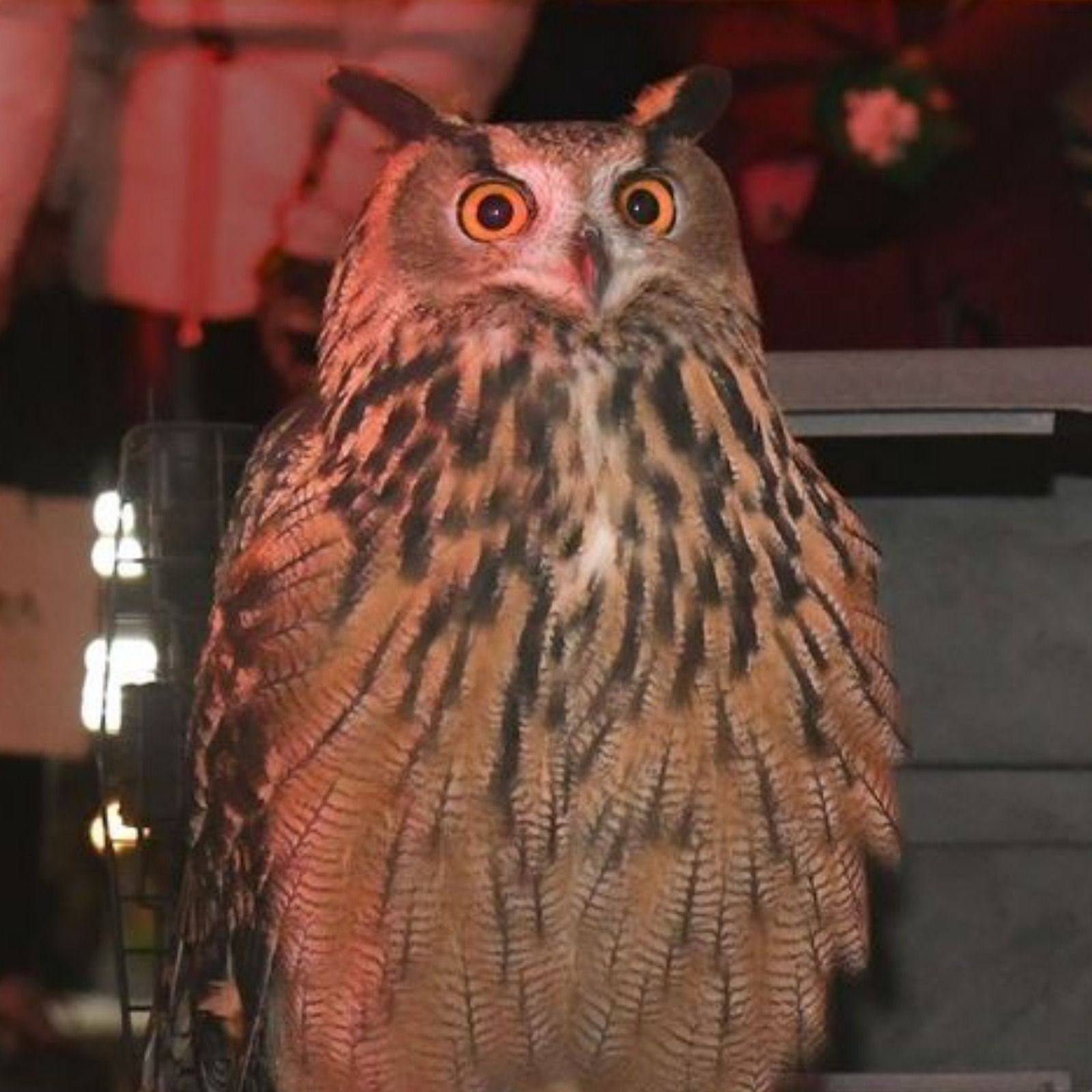
All of it is supported by Memorial Sloan Kettering Cancer Center. In a small groundbreaking clinical trial, 100% of participants with a specific type of rectal cancer saw their tumors disappear using immunotherapy alone. Researchers at MSK are now studying this approach in cancers of the stomach, liver and more. And a majority of tumors are disappearing. For MSK Giving Day, all gifts will be tripled. Learn more@msk.org all of it. This is ALL of it. I'm Bridget Bergen in for Alison Stewart. Thanks for spending part of your day with us. Coming up on today's show, Grammy Award winning, winning singer and songwriter Brandi Clark is here to perform live in studio ahead of her concert at the 92nd Street Y. This Friday. We'll hear from Patrick Radden Keefe, the author of the new book London Falling, A Mysterious Death in a Gilded City and a Family's Search for Truth. And journalist Barbara Demick joins us to talk about her book Daughters of the Bamboo Grove From China to America, a true story of abduction, abdoption and separated twins. That's the plan. So let's get started with Flaco. Three years ago, a male Eurasian eagle owl captured the hearts of New Yorkers after escaping his enclosure at the Central Park Zoo. His name was Flaco. Now his remarkable story and short lived freedom is the subject of a new documentary titled Wild Inside. The film opens with the orange eyed owl standing on a Manhattan sidewalk as people gather around him and officials try to bring him to safety. But Flaco had other plans. The documentary follows his journey as he learned to hunt, perched atop construction cranes and even peeked into the windows of New Yorkers homes, transforming from a captive zoo animal into one of the city's most unexpected celebrities. Wild Inside had its world has its world premiere tonight at 8:30pm in Central Park's Great Hill before opening in theaters this Friday, July 31st. Joining us now is director Penny Lane. You may know her from her documentary Hannah Happy and you'd know it about the art business of children's music. She also served as the executive producer of the HBO documentary time bomb. Y2K. Penny, welcome back to all of it.
- [02:33]
Penny Lane
Thank you. Always happy to be here.
- [02:35]
Bridget Bergen
And listeners, did you follow Flaco's journey across New York City? Were you one of the many New Yorkers who spotted the Eurasian eagle owl soaring through the parks? Maybe perched on a fire escape or maybe even hunting in your neighborhood? What did Flaco come to symbolize for you? We would love to hear your stories and your calls. You can text us or call us at 212-433-9692. That's 212433, WNYC. Or you can reach out on social media. Llofit, WNYC. So, Penny, remembering Flaco. Back in February 2023, you know, Flaco, this enormous 13 year old Eurasian eagle owl, famously broke out of the Central Park Zoo after an unknown vandal damaged the mesh enclosure. Reports called it, forgive me, listeners, a who done it. So when did you first hear of the news of Flaco's escape and what was your reaction?
- [03:36]
Penny Lane
Oh, I was almost the first one to know about Flaco because it was my dear friend Jeremy Workman who came upon Flaco first in the sidewalk. He's the first person you hear from in my film. And he, you know, happened upon this owl pretty much alone, quietly alone on the sidewalk on 5th Ave. And he took some pictures and texted them to me, as people do when they see funny things in New York City. And he knew that I was a bird person, so he thought I might be interested. And I was like, what? Like, you know, and there's something about that image that was so immediately intriguing, you know, like, who is this owl? What is he doing here? Does he need help? And I knew because I'm a birder, that it was not even the native species. So I knew immediately this was like, not. This was a story. And I was calling the police and calling the Wild Bird Fund, which is a wildlife rehab center, to try to get him help. So I was immediately involved in the story.
- [04:30]
Bridget Bergen
Yeah, you also participated in memorializing Flaco a year after his escape, following his tragic death. What meaning did you ascribe to his life?
- [04:42]
Penny Lane
I mean, I think it was just so incredible to see, as you said in your introduction, this zoo animal transform into a wild animal. I mean, I just never seen anything like that. No one's ever seen anything like this, and certainly not in midtown Manhattan or in Central Park. And so there was just something about, you know, the way that Flaco challenged me in my mind to kind of look at the distinctions between these different types of animals that we think we have. Like, we have zoo animals over here and wild animals over here, there, and they're not the same thing. But then suddenly there was this one animal that was the same thing. The other weird distinction with Flaco was that he was a wild owl. In many ways, he behaved just the same as other wild owls that I've observed, you know, passing through New York. But he also was particularly used to being around people.
- [05:32]
Caller (Barbara/Kathleen)
Yeah.
- [05:32]
Penny Lane
So as you mentioned before, he Was sort of closer to us than most wild owls would be. So he gave us so much time with him. It was such a gift to be able to observe him day in, day out and just follow his adventures. He was making choices on his own for the first time in his life. And so the whole story would change when Flaco decided it would change. He would decide, oh, I'm now gonna go to the Lower east side, or I'm now gonna check out Upper east side or whatever. And we were just captivated, following along.
- [06:02]
Bridget Bergen
It was also fascinating because his Flaco story intersects with the story of so many different wild animals in New York City. And it was such an interesting way to tell the story of how we relate to, you know, rats in the city, to pigeons in the city and all of that. You know, was that an important part of the storytelling to you, to make sure that this wasn't just simply a story of a singular bird, but of really of wildlife across New York City?
- [06:33]
Penny Lane
Yes, absolutely. I knew the film would be a total failure if all we did was say, hey, look at this cool celebrity bird. Let's tell him his story and admire him because he's got an incredible story and he's very admirable. But for me, it was super important to place him inside the ecology of New York and to show that as much as we saw ourselves in Flaco, in his wildness and his struggle for existence, you know, hey, there are other birds here. There are other hawks and owls and eagles and magnificent creatures. There's about 300 different species of bird you could see in Central park any given year. There's coyotes, flying foxes, you know, rats, pigeons. You know, there are some. Many creatures here that make their. Make their lives alongside us. And I wanted the film to be a tribute to all of those non human New Yorkers as well.
- [07:21]
Bridget Bergen
The documentary uses clips from local and national and even some international news outlets that all followed Flaco's journey. Why do you think the story received so much attention across the world?
- [07:33]
Penny Lane
Well, it didn't hurt that he was so beautiful. It really didn't hurt. I mean, the story. The story might have evolved a little differently if he'd been like a bald headed vulture or something or. Or in a different species of owl. I think all owlers are beautiful, but many owls are kind of creepy looking. They have, like black eyes. They look sort of alien. So it didn't hurt that he was beautiful, but also it was the narrative. Let's be real. It's the story of this kind of outlaw owl who like, you know, everyone said he was going to die, that he wouldn't make it on his own and he kind of did, you know, and even though again, it's not really a spoiler for your listeners, we're in New York. So I'll say even though, yes, he died a year after he was released from that zoo, you know, being able to sort of observe him in the wild for that year was, it was truly one of the most magnificent years of my life. He made New York better for me. I, I miss him every day and, and I'm so excited to be able to share his story with a bigger audience listeners.
- [08:29]
Bridget Bergen
If you're just joining us, we're talking about a new documentary that follows the remarkable story of Flaco, the Eurasian eagle owl who captured New Yorkers hearts after escaping his enclosure at the Central Park Zoo. And I'm speaking with the director of that documentary, Penny Lane. The film's world premiere is tonight at 8:30pm in Central Park. And then Wild Inside the documentary opens in theaters on Friday. And we know so many of you out there listening have stories of Flaco. I had two colleagues who worked here at WNYC that got Flaco tattoos.
- [09:02]
Penny Lane
Incredible.
- [09:03]
Bridget Bergen
So we want to hear your Flaco stories. Were you one of the many people who spotted the Eurasian eagle owl? How did you follow Flaco's journey? And give us a call at 212-433-9692. That's 212-433-WNYC or on social media, llofit, WNYC. So Penny, one of the things that feels sort of like a mystery still in the documentary is this idea of how Flaco actually was released. And as a documentarian, what questions do you still have about Flaco's life at the Central Park Zoo, his escape and you know, how they attempted to what extent to rescue him?
- [09:45]
Penny Lane
Yeah. Well, first I'm going to promise you it was not me. I promise. I know it sounds very suspicious, but. Yeah, no, it's still a great mystery. We have no idea what the intentions were of whomever did this. You know, someone broke in. They must have planned ahead because you would have had to have brought pretty serious bolt cutters to open up that enclosure. But I don't know what their intentions were. I don't know if they were trying to steal the owl and sell them on the black market or keep them as a pet or set them free. None of us know anything really about their intentions. I did reach out to the Central Park Zoo several times, of course, during the making of the film to try to get comment or film an interview with somebody there. And some of the questions that I think the public had and probably still has have to do with, you know, what his life was like there. You know, there's a perception that he lived in a pretty small enclosure, you know, about the size of a bus stop for most of that all that time that he was there. And I guess people are curious, you know, did he ever get out of that cage? Did he ever have flight exercise? Were there enrichment activities? And of course, you know, I would have liked to have included the perspectives of the people who I'm sure loved and cared for him every day, day in, day out, and what it was like for them to see him out, you know, in the dangerous, the dangers of New York City. I wish I could have included that, but, yeah, so I think it would have been. People still have questions about what his life was really like day in and day out there.
- [11:10]
Bridget Bergen
So there were different public reactions to his initial escape. Some people thought, this is, you know, Flaco's liberation. He deserves to be free. But then there were animal rescuers and zookeepers who thought, how do we get him back to the zoo?
- [11:25]
Penny Lane
Yes.
- [11:26]
Bridget Bergen
What concerns did advocates for Flaco's safety and well being initially express?
- [11:32]
Penny Lane
Oh, I think, to be honest, you know, maybe some members of the general public who didn't know a lot about birds or the dangers that birds face in New York might have been like, hey, free Flacco.
- [11:41]
Daniel from World Bird Sanctuary
Cool.
- [11:41]
Penny Lane
But anyone who really knew what was going on, the birders, the active, you know, the advocates, we all were very worried about him. I mean, I thought he was going to die immediately. I thought, you know, this story will end one of two ways. He'll get recaptured to go back to the zoo and be safe, or he's gonna get hit by a car or starve to death. Because he couldn't even. He could barely fly, much less hunt in the early days. So it really was only after he sort of started transforming and like, evolving to take care of himself that the debate became more intense. Because even then, some people would say, well, look, he's going to be fine. Let him be free. And other people would say, and I think these are all totally valid points of view, by the way. No, we're responsible for him. He doesn't belong here. He's not even a native species. You know, like, you know, human beings bred him for zoos. Human beings put him in the Central Park Zoo. Some other human beings set him free. And, you know, it's Our responsibility to take care of him the same way you might think like your pet, you know, you wouldn't want them to get loose and be free, would you? Because you'd be responsible for them. So I think there were really strong feelings, and there still are very strong feelings about what was best for Flocko. And it was truly that philosophical debate that urged me to make the film, in addition to just seeing how he would was evolving on his own.
- [13:01]
Bridget Bergen
Well, not surprisingly, we have some Flaco stories and callers. Let's start with Barbara in Manhattan. Barbara, you're on all of it. Thanks for calling.
- [13:12]
Caller (Barbara/Kathleen)
Hi. I have some wonderful memories of Flaco, or I should say singular memory in particular. I had known about him, of course, since he escaped from the zoo. And I was walking across the park from my son and daughter in law's apartment on the Upper west side where I had celebrated my birthday for lunch. And all of a sudden I noticed Flaco up in a nearby tree and it was just lovely to be able to see him. But as we walked by the tree, Flaco flew right over our heads and towards this avenue and, and I just felt it was a lovely, lovely way to celebrate my birthday to have that special sighting of Flaco.
- [14:00]
Bridget Bergen
Barbara, are you a birder by any chance?
- [14:03]
Caller (Barbara/Kathleen)
I'm not. I appreciate birds, but I can't describe myself as a birder.
- [14:07]
Penny Lane
That's great.
- [14:08]
Bridget Bergen
I love the story. I mean, part of what is so remarkable about Flaco, Penny is the size, that wingspan. To see a bird of that size flying through New York City, it's, I mean, you're just not going to see anything else like that.
- [14:22]
Penny Lane
Yeah, six foot wingspan. I mean, it was magnificent. And of course, owls have these incredible wing feathers that allow them to fly completely silently. So when they do fly, you expect a lot of noise from those giant wings, but they're totally silent and it's almost eerie and magical. They're so special.
- [14:40]
Bridget Bergen
I want to bring in council member Gail Brewer from the Upper west side who is, I believe, the host of tonight's screening councilmember. Welcome to all of it.
- [14:51]
Council Member Gail Brewer
Thank you.
- [14:52]
Bridget Bergen
Can you tell us a little bit about the event tonight and why you wanted to be involved with hosting the screening of Wild Inside.
- [15:00]
Council Member Gail Brewer
Yes, we're very excited because Wild Inside, much thanks to Penny and many others, is her story of Flacco, as you know. And it's tonight, Wednesday, July 29th, it's going to be in Central park at the Great Hill, which you can enter at 106 Street, Central Park West. And it starts at 8:30pm but the lawn opens at 7:30pm Bring a blanket, no chairs. And we're really excited to have this premiere.
- [15:29]
Bridget Bergen
Is there a rain plan? Because, you know, the forecast has been a little dicey these past few days.
- [15:34]
Council Member Gail Brewer
There's a rain plan for tomorrow night, but we're going ahead with tonight because I think tonight's going to be better than tomorrow night. And so far we have a good forecast for tonight.
- [15:43]
Bridget Bergen
That's great. We'll keep our fingers crossed. And just before we let you go, Council member, do you have a Flaco memory yourself?
- [15:50]
Council Member Gail Brewer
I do. The issue for me, I don't know that I saw Flaco, but I saw hundreds of people watching Flaco with their binoculars. And then I saw really good relationships build because folks had seen him, followed him, and they became friends. So I have friends who are friends because of their relationship with Flacco. Flaco had inspiration Flacco had beyond his amazing escape and being in the Central park, which is why we're having this movie in the park is because he was in the park. But it has a whole other ramifications that are so positive about our city. People loving wildlife, people excited about his inspiration and the fact that he stayed alive when he wasn't supposed to. It's really special.
- [16:38]
Bridget Bergen
That's wonderful. Well, we want to thank you, council member, for joining us. We're going to take a short break. Many more of your stories about Flaco and a conversation with director Penny Lane about her new documentary, Wild Inside, coming up. Stick around. You're listening to all of it on wnyc. I'm Bridget Bergen in for Allison Street. My guest is director Penny Lane and we're talking about her new documentary, Wild Inside, about the story of the remarkable Eurasian eagle owl, Flaco. Penny, one of the things that I think is so interesting about the film is it doesn't leave you with. It's not making an argument. It's not saying that Flaco's escape is good or bad or that zoos are good or bad. It's. It's really nuanced and complicated. And how did you approach that balance between the advocates and those who were responsible for taking care of the animals?
- [17:43]
Penny Lane
Yeah. Thank you for saying that. I really appreciate it because it was a huge effort to try to find people who are willing to be in the film who could represent this range of views that I thought was so important to bring forward. And like I said, it was why I wanted to make the film was I thought these debates were so interesting. There's scientific debates but also philosophical debates, some of them just are not resolvable. How do you answer? Ultimately, you know, the relative value you'd place on freedom and all the risks associated with freedom and self determination versus safety and comfort, you know, those are not answerable, these questions ultimately. So people feel very strongly about Flaco's story because it, it brings some of these very important questions to light. And a lot of people get very kind of almost angry and like, want to fight about it. I certainly wasn't trying to fight with anyone. I was just trying to find a way to bring those voices into conversation.
- [18:41]
Bridget Bergen
So let's listen to a clip. This is Daniel from the World bird sanctuary in St. Louis, Missouri, who expresses empathy for the Central Park Zookeepers.
- [18:53]
Penny Lane
There's a science to caring for animals. And so what a lot of people don't understand is what goes into determining what is and what is not good welfare. The bird could have the biggest, most lush rainforest aviary on the face of the earth, but it could be absolutely stressed. So what I would caution people against is judging that aviary at the Central Park Zoo based on what they don't know.
- [19:26]
Bridget Bergen
And Penny, we have a caller, Kathleen, from Norwalk, Connecticut, who was a wildlife guide at the Central Park Zoo. Kathleen, thanks so much for calling. You're on all of it with wnyc.
- [19:38]
Caller (Barbara/Kathleen)
Thank you for taking my call. I was mesmerized by Flaco. I worked every other Sunday, so I didn't see him that much. But I would always make sure that during my rounds I would go by and they had him prominently displayed in an enclosure that obviously wasn't all the time. He had to stretch his wings and stuff. But I was so drawn to him. And I just wanted to say that there was a day when I stopped in front of him and was looking at him and he flew toward me and it wasn't a long flight, believe me, but I felt like I just connected with a being, that he's magnificent. And he chose to let me look at him. And to this day, when he did escape, that was a long time after I was at the zoo. But I was rooting for him every last minute. And he just, there was something about him, his eyes. He drew you in. So that's my soul moment with Flaco.
- [20:56]
Bridget Bergen
Kathleen, thank you so much for that story. I mean, in both of those, the clip from your documentary, you hear this real sort of heartfelt sense that there's a responsibility that these caretakers had for these animals in their care. And that connection from Kathleen being on the ground With Flaco. I mean, how much of that did you encounter in making the documentary? Both with the caretakers, but also the people who became sort of the obsessed
- [21:25]
Penny Lane
observers, so many obsessed observers. The question I kept asking myself is, what is it that we see when we look at a wild animal? There's part of it where we can't help as humans doing a little projection. We can't help it. And it's easy to anthropomorphize Flaco because he's so cute and he has these big eyes and he has this great story. But, you know, there's another part of it that is mystery, isn't it? I mean, you're like, what is it like to be you? And so much of the film was formed around my attempt to ask, what is it like to be Flaco? What is it like to be an owl? What would it like to. What would it be like to be an owl who lived in a small enclosure for 13 years and then suddenly find herself in Manhattan, of all places? What is it like for him to encounter the seasons for the first time? The other animals in the park, the people walking by. What does he think of us all staring up at him all day? You know? And that mystery, I think, is absolutely captivating to humans as much as it is about our projection. We also are drawn to use our imaginations to try to empathize with a non human neighbor. And I just think that's a beautiful, powerful thing.
- [22:34]
Bridget Bergen
Let's go to Dan in Passaic, New Jersey, who I think has a bit of a counterpoint from what we've heard so far from our callers. Dan, you're on all of it.
- [22:44]
Council Member Gail Brewer
Hi. Yes.
- [22:45]
Daniel from World Bird Sanctuary
I mean, when I heard the story, I sympathized with the people that. I've always had issue with that word escape. It's not like he was trying to get out, but I understand what they were trying to do. I mean, they had the best of intentions for the. For the bird. And if I had heard the story of him flying, you know, in Westchester county or the Cloisters or the Poconos hunting, I would had a more impression of it. It's almost like he's another New York story on the other side. It's like he was taken from his home, and now he had to survive on the streets. I mean, and he died way too young. I mean, he may have maybe not the greatest life in the thing, but you never know. He wouldn't know. Again, like you were saying, we project onto. We do it to our pets. We do it to wild animals. We project onto them. All he knew was the Central Park Zoo, so we took him away from that. And I understand where we're going here with the story that he was for New Yorkers. I used to live back there back in those days, but. And it was inspiring. But then when you think about it, it's like, I almost feel sorry for him. I understand he lived free for a while, but did he know that?
- [24:04]
Bridget Bergen
Dan, thanks so much for that call. I mean, Tenny, Dan raises so much of the tension that runs through your documentary, because as we see these majestic images of Flaco on the water tower, sort of the Batman comparison, there are also these moments when we learn about what he needed to do to survive. And then really poignantly, when he was found in the courtyard, what they discovered when they performed the autopsy on him. I mean, can you talk a little bit about the end of Flaco's life?
- [24:42]
Penny Lane
Yeah, I mean, it's a horrible ending. And I just want to say, you know, it's completely. Dan's point of view is totally valid. Like, you know, again, the film makes space for that as well. I want to be clear that we're not just here to be like, yay, Free Flocko. You know, that's a hashtag, not a movie. You know, it's a complicated story, but, yeah. When Flaco died on the Upper west side in a courtyard, what was discovered was that he had four different types of rat poison in his system, as well as a herpes virus that he'd picked up from eating pigeons. And while the cause of death was either a collision or from falling to the ground, it was a brute impact. The reason for that was that he was sick from all these things that were in his system. And the thing that's so important for me to say is that.
- [25:28]
Bridget Bergen
But he didn't.
- [25:29]
Penny Lane
I mean, there's nothing about the way he died that was. Was about the fact that he had been a zoo animal, if that makes sense. He didn't die, like, because he didn't know how to survive in New York. He pretty much figured out how to survive in New York as well as any other owl could. And to be clear, New York is a tough place for owls. So the way that Flaco died was as a wild bird. He died the way that birds of prey die in this city. Every day, the Wild Bird Fund can tell you horror stories about, you know, the red tailed hawks, the bald eagles, the great horned owls, other creatures that are native, died the same way as Flaco. So to me, the way he died has really nothing to do with the beginning of the story. It's not, like, proof one way or the other about whether he ever should have gone free. And to be clear, whoever broke into that enclosure and set him free did a very irresponsible thing. The most likely outcome from that would have been immediate death. You know, there are other Eurasian eagle owls that have gotten loose at zoos in the United States. They've all died pretty much immediately from getting hit by cars or things like that. So this is not a Yay, let's all break into the zoos and set the animals free story. Like, again, anyone who knew anything at the very beginning assumed he would die. That's why we were so obsessed with him when he didn't, because he proved all of us wrong. And it's hard to not root for that underdog.
- [26:51]
Caller (Barbara/Kathleen)
Yeah.
- [26:53]
Bridget Bergen
Penny, as we wrap up, how did making this documentary change the way you think about zoos and, you know, conservation efforts more broadly?
- [27:04]
Penny Lane
Yeah, I didn't go into this with a very strong background about zoo. I didn't really have a strong opinion. I definitely have grown to question some of the language that's used. Like, even calling the breeding program that FLACA was. Was part of a conservation breeding program is a little misleading because it sounds, that sounds to the public like, oh, these are animals that are being bred to be released back into the wild. It's not really that. It's really, they're being bred to be shown in zoos. And, you know, if the worst were to ever happen and Eurasian eagle owls were to go extinct in the wild, of course it would be good to have a genetically diverse, healthy population in zoos. So I do understand that, but I just want to be clear that to call it a conservation breeding program, you have to understand, like, what that actually means. I was surprised that his enclosure was so, frankly, small. It didn't, in my read of the AZA guidelines, meet those standards. That was another question I had for the Central Park Zoo. And I hope they would be. They'll be drawn to answer that question. Did it meet AZA standards? And if not, what is the point of AZA standards if you don't have to meet them? I know the AZA says that you should have two owls together. There was certainly not that. And his enclosure was smaller than their rules. So I still am confused about what that means in terms of accreditation. And that's not, again, to bash all zoos or anything. I'm just asking about this one particular case. But really, the way the film changed me was to think about urban wildlife. To be honest, I used to not really think much about rat poison. And even as a birder, I just didn't really think about it that much. And now I'm like, wait, why is this how we're dealing with rats? I understand that we have a, quote, rat problem, if you see it that way. And I know many New Yorkers do do. But even if you hate rats, do you want them to die a horrible, painful death? I mean, when I learned how that rat poison works upon the creature's body, I was beyond horrified. So to me, it really has. Maybe. So I should just say briefly that there was a law passed in the wake of Flaco's death called Flaco's Law, and it had several things in it, but one of them was a pilot program to try a contraception for rats instead of this horrible poison that makes them literally bleed out from the inside, which I thought was really great, you know, so even if we all argue about the meaning of Flaco's life, ultimately his legacy will live on through Flaco's law and through the awareness that he brought to so many people, even me, a birder, to better understand how to coexist with the the other New Yorkers that live here. Even if you don't always want them in your home, they are just struggling to survive, just like we are.
- [29:50]
Bridget Bergen
I want to thank my guest, Penny Lane. Her new documentary, Wild Inside, has its world premiere tonight, 7:30pm in Central park, before opening in theaters this Friday, July 31st. Penny, thank you so much for joining me and telling Flaco's story.
- [30:08]
Penny Lane
Oh, my gosh. Thank you. It was an honor. Are your ad campaigns lighting up the dashboard but not the pipeline? That's bullspend and marketers are calling it out in dashboard confessions. My boss asked for results, so I opened my dashboard for the only positive sounding metric I had. Impressions. Cut the bullspend. See revenue, not just reach. LinkedIn delivers the highest return on ad spend of major ad NETWORKS. Advertise on LinkedIn. Spend $250 on your first campaign and get a $250 credit. Go to LinkedIn.com campaign terms and conditions apply.
- [30:41]
Bridget Bergen
Having the right people in your corner for life's biggest milestones makes all the difference. Like a friend who's there when you're house hunting or checking out a new ride, State Farm is there too, helping you choose the coverage you need. With a State Farm agent, you know someone is there to help you along the way. And with so many coverage options, it's nice knowing you have helped help choosing a plan that fits your needs so you can continue celebrating all of life's milestones. Head to statefarm.com to get a quote like a good neighbor. State Farm is there.