Loading summary
Transcript50 lines
- [00:00]
A
WNYC Studios is supported by Wise Wise the smart way to manage the currencies you need around the world. With a Wise account, you can send, spend and receive in up to 40 currencies with only a few simple taps. Be smart, Get Wise. Download the Wise app today. Terms and conditions apply. WNYC Studios is supported by Odoo. When you buy business software from lots of vendors, the costs add up and it gets complicated and confusing. Odoo solves this. It's a single company that sells a suite of enterprise apps that handles everything from accounting to inventory to sales. Odoo is all connected on a single platform in a simple and affordable way. You can save money without missing out on the features you need. Check out Odoo at o d o o.com that's o d o o.com.
- [00:56]
B
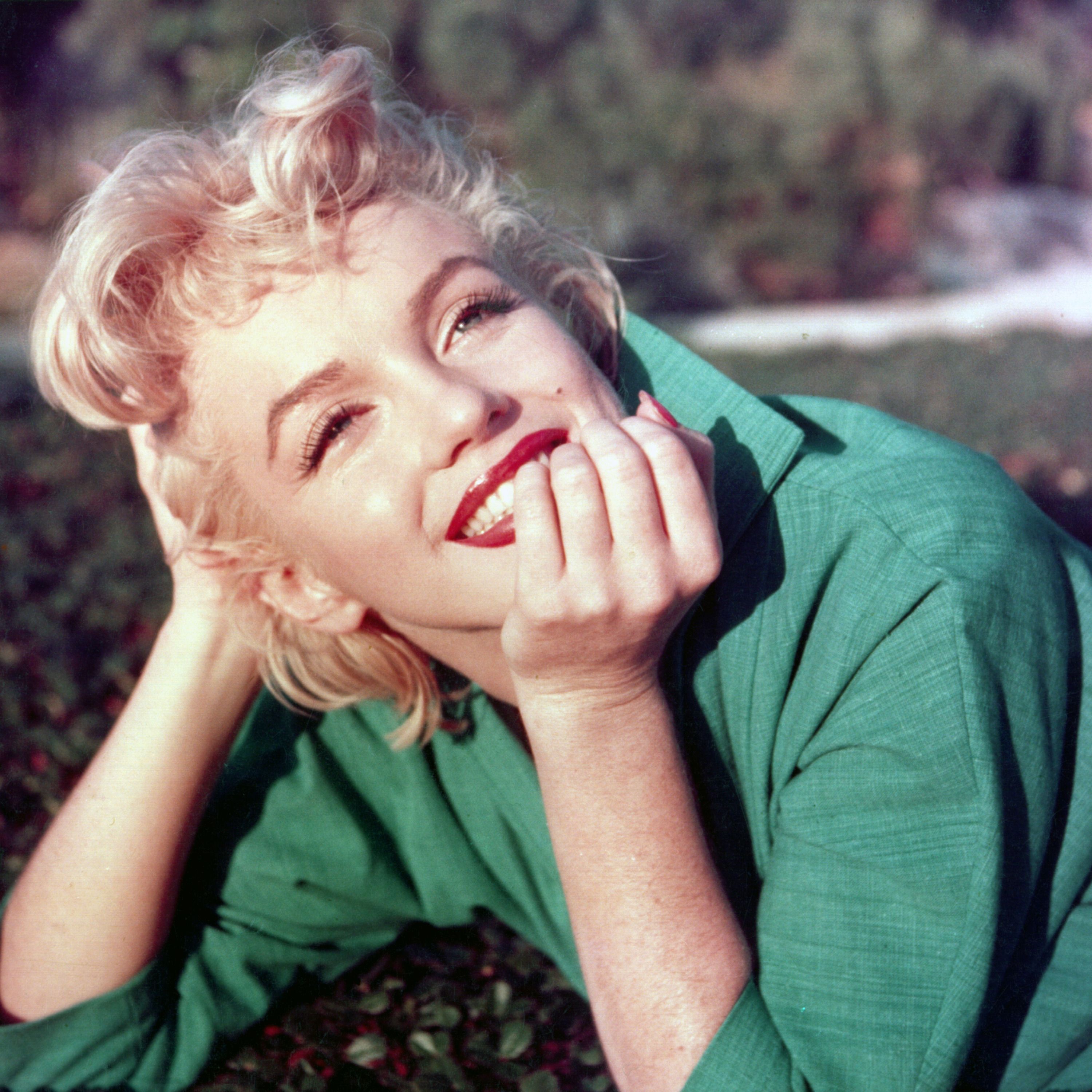
This is all of it. I'm Alison Stewart live live from the WNYC Studios in soho. Thanks for sharing part of your day with us. I'm really grateful that you're here. On today's show, we'll celebrate the start of Pride Month with a conversation about some must read books. And we'll hear selections from our recent get lit with all of it book club event with author Tom Prada and the band they Might Be Giants. That's the plan. So let's get this started with a birthday celebration for For a Hollywood icon. On this day 100 years ago, Marilyn Monroe was born. The story of how a little girl named Norma Jean Baker transformed from a poor foster child into a Hollywood bombshell seemed like the ultimate example of the American dream. Of course, we know that came with a dark side. Monroe died at 36 of what police called a quote, self administered overdose of sedative drugs. A new book titled I Want to be Loved by you, Marilyn Monroe a Life in 100 takes by Andrew Wilson draws on an extensive archives of interviews and documents to explore every aspect of Marilyn Monroe's life and career. Through 100 quick chapters, the book tells the story of Monroe's ambition, her constant desire for self improvement, and her dash dreams of becoming a mom. So on this day, which would have been Marilyn Monroe's 100th birthday, we're gonna spend some time learning more about her life with author Andrew Wilson. I Wanna Be Loved by you will be published tomorrow. Andrew, thanks for joining us.
- [02:39]
C
Hi there listeners.
- [02:40]
B
We'd like to get you in on this conversation. What is your favorite Marilyn Monroe performance? What memories do you have of her, of her movies? Maybe you have a question about Marilyn for biographer Andrew Wilson. We are talking about Marilyn Monroe on her 100th birthday. Our phone is 2124-3396-9221-2433-WNYC. You can call in and join the conversation or you can text that number as well. When was the first time you became aware of Marilyn Monroe?
- [03:10]
C
Probably like many people, you know, being a bit bored, a bit lonely as a child, switching on the TV and seeing this, this extraordinary actor light up the screen. And I just looked at her and I thought, this is such an unusual actor. And I just wanted to know more about her. Little did I know then that I would go on to write a biography about her.
- [03:34]
B
A lot has been written about Marilyn Monroe throughout her life, some of it false. What is a question you still had about her that you wanted to investigate in this book?
- [03:45]
C
Well, there's been so many myths, as you say, so many falsehoods. And what's happened over the years is the fact that people have repeated the same story. So I wanted to get to the bottom of these conspiracy theories because basically that's what they are. And I devote the last fifth of the book trying to uncover the true circumstances around her death. And I trace the conspiracy, conspiracy theories back to 1964 with the publication of a pamphlet called the Strange Death of Marilyn Monroe. And in that, Frank Capel, the author of this pamphlet, he tried to link the death of Marilyn Monroe with Robert Kennedy. And because this is repeated and repeated to the point where it's basically become fact for so many people, I mean, if you ask lots of people how did Marilyn die, they will say, wasn't she killed by the Kennedys? So that's one of the central questions I wanted to ask. And basically I sort of found and traced the source of this conspiracy theory back to a group of, of sort of right wing, right wing cabal who tried to smear Robert Kennedy so he would not become the next President of the United States.
- [05:08]
B
Yeah, you had access to all kinds of documents and recorded interview, thanks to Marilyn Monroe's biographer, Anthony Summers. Some of the things that you came across weren't, weren't published yet. What surprised you in these documents and tapes?
- [05:26]
C
Well, just listening to these voices, these kind of ghostly voices, because as you say, Anthony Summers interviewed something like 650 people in the 1980s. And the vast majority of these tapes had never been published before. So he gave me sort of unprecedented access to this treasure trove of material. So listening to people like James Russell and Billy Wilder talk about in this way, listening to this kind of crackle and this sizzle of the tape. And they talk about her. Obviously, they knew her incredibly well, and she was an incredibly complex person. And that's the thing I really wanted to uncover, because I think people have either seen her as a victim or a feminist heroine. And I think there's so many shades of ambiguity and subtlety in between.
- [06:15]
B
Is it true that Marilyn Rowe wrote her own autobiography?
- [06:19]
C
She did. So this was back in the 50s, and she was talking about subjects such as sexual abuse and mental illness. Now, you've got to remember this is decades before the MeToo movement, decades before Epstein scandal, when people did not talk about these subjects openly. She was a Hollywood star controlled by the Hollywood studio system. So when she talked about these subjects, it was an incredibly radical, subversive thing to do. And I think that's one of the reasons why she remains so popular today is because she strikes a chord with sort of a modern sensibility.
- [07:00]
B
She could be elastic, we'll say, with the truth a little bit.
- [07:04]
C
She could well be, yes. So that was also one of the challenges, to try to sift between some of the stories that Marilyn spun for herself. We know that she had a very difficult childhood. She never had a stable home. And one of the things people told me is the fact that nobody read her stories as a child, so she had to come up with her own. So she often lived in a fantasy world as a child, took herself off to the movie theater, and spent hours dreaming about becoming a star.
- [07:36]
B
Today would have been the 100th birthday of Marilyn Monroe. We're talking about her life and career with Andrew Wilson, author of the new book I Want to Be Loved by Marilyn Monroe, a Life in 100 takes. The book will be out tomorrow. Listeners, what questions or memories do you have about Marilyn Monroe, her favorite performance? Give us a call, 2124-3396-9221-2433. WNYC. Let's talk to Steve, who's calling from Airmont. Hi, Steve. Thanks for calling, all of it. You're on the air.
- [08:07]
D
Hey, Allison, you are awesome. And I love when they say what a great question. You. Anyway, the movie. And I'm just curious, maybe it's. It's. You cover it in the book. Sir. Don't bother to knock. All right. And not. It's not a lot of. Doesn't get a lot of attention, but it is one of the archetypal. I think it's the archetype for all the nanny movies, you know, the deranged nanny movies that have been made since. And it's a hotel movie. Anne Bancroft, a young Anne Bancroft, has a supporting role as Richard Widmark's girlfriend, the lounge singer. And it's just. It's a hotel movie. It's a deranged nanny movie. And it was just awesome. And it. You don't hear a lot of people talk about it when they discuss her. It was a dramatic role, and I thought she was great.
- [09:09]
B
Thanks so much for calling. I believe it's on page 80. You write about that, Andrew?
- [09:13]
C
Yes, I do. I think it's a wonderful film and it really shows the potential Marilyn had as a dramatic actress, because obviously we sort of more or less sort of think of her as a, you know, a wonderful comedic actress, but her range was incredibly broad, I would say. And also it's interesting that she drew on her own experiences of suffering from mental health difficulties with that role, because obviously, as Steve says, she plays the role of a mentally unstable babysitter, and she kind of thought about back to some of her own experiences to make that performance incredibly realistic.
- [09:54]
B
This says, amidst all her glamour and Hollywood sparkle, please remember that Marilyn Monroe challenged systemic inequality through her fight for equal pay, her support for civil rights and racial integration, and her efforts to subvert the patriarchal Hollywood structures.
- [10:12]
E
Phil sent that in to us.
- [10:13]
B
Is this what you found as well?
- [10:15]
C
That's interesting, isn't it? Because I think she did in a very quietly subversive way. You know, she was friends with Ella Fitzgerald. She supported her when, you know, Ella was finding it difficult to, you know, fill houses or perform in what I should say are white only spaces. She sent her support. And also she was, she was a great civil rights supporter and also a supporter of LGBT rights. You know, many, many of her close friends were gay. So she, she, she was across the spectrum. And she was very interested in left wing politics as well.
- [10:54]
B
It's interesting, your book, for people who don't know, it's. It's a hundred different takes on Marilyn Rowe, hence the name, a life in 100 takes. It's a hundred chapters. Some of them are very short, and they tackle quick subjects like her blonde hair or her relationship with. Why did you want to structure the book this way?
- [11:14]
C
So in addition to the unpublished archival material, which gives the book its meat, if you like, I wanted the reader to experience Marilyn's life in a new way because we've had so many biographies, traditional biographies, and I wanted her life story to be told in a way, a series of sort of takes you'd get from a film. So this is a Kind of kaleidoscopic structure. So with each turn of the kaleidoscope, we might see a different aspect of Marilyn's very complex character.
- [11:47]
B
It's interesting we got this text and I know you can answer this question. It says, so curious about Marilyn's sexuality since she was abused as a young girl. I'm curious how that impacted her intimate relationships. You write that at 8 years old, she suffered sexual abuse and a man she calls Mr. Kimmel. It's been debated in biographies for decades. How did some form, some form of childhood trauma inform Marilyn's relationships?
- [12:18]
C
Yes, it's very difficult subject, but a key one for Marilyn's psychology. And of course, you know, she wasn't believed about this at the time, and many, particularly men, dismissed this as a fabrication. But I completely believe this happened. She wrote about it with great sensitivity and feeling, and I think she thought, thought and certain her psychiatrists and analysts thought that she was always trying to sort of find a way out of this abusive cycle. And it's very difficult to sort of understand the complexity of, of her psychology. But I think she was always sort of seeking an ideal partner, not finding one, searching for, you know, the pinnacle of. Of masculinity. I'm not saying this always happens with people who've suffered abuse, but she often would call her husband's daddy or pa. So, you know, it's a very kind of unsettling difficulty that Marilyn had, but I think it's something that haunted her even towards the end of her life. She was talking to strangers about this issue, and she was always thought that she'd survived this much. You know, she had. She knew something like this could drive other people, in her words, psychotic. And she, she was a real survivor.
- [13:45]
B
When did Norma Jean become Marilyn Monroe?
- [13:49]
C
So it's a gradual process, I think, but basically she transformed herself first of all through modeling. And then she was named, of course, you know, she. She was obviously never born Marilyn Monroe, but here's a sort of a New York connection when the person who came up with her name at the studio, he was sort of looking for a name, and he was called Ben Lyon, who was the head of casting at 20th Century Fox. And he was sort of like thinking about her first name and he, he named her after the Broadway star Marilyn Miller. So that's kind of one of the New York connections. There's lots of other ones, obviously, because she lived in New York and loved New York. But, you know, she, she was definitely fascinated by this process of transformation, and it was a self consciously complex Transformation from Norma Jean to Marilyn. And it was an image constructed with the use of acting techniques. You know, she studied physiognomy, the, the muscles in the body, you know, the sexy walk. We think of as typically Marilyn was rehearsed and rehearsed and rehearsed. The, the color of her hair was changed. You know, she sought out the colorist who colored Jean Harlow's hair, you know, cause she wanted that kind of white, platinum blonde look. So it was a process that went on for a number of years until she thought she'd perfected it.
- [15:17]
E
You write in your book she may have been shy, particularly early in her career, but Marilyn could also be determined, ambitious and at time ruthless. When was she ruthless?
- [15:31]
C
Well, she would have what we now call agency, I think. So, you know, she wanted to, you know, she wanted to. To matter. She wanted to be valued. So for instance, there's one quite funny story that when she was in Some Like It Hot and I think one of the girls in the band, you know, the jazz band, she saw, she spotted this, this woman dyeing her hair in a similar kind of shade of blond. She had her dismissed or you know, had her put to one side because as Marilyn said, she was the blonde, the only blonde.
- [16:08]
E
We are talking about a new book. It's called I want to be loved by you, Marilyn Monroe. A life in one undertakes. Today would have been Marilyn Monroe's 100th birthday. We'll continue. There's more, all of it and more. Marilyn Monroe after the break.
- [16:32]
B
You're listening to all of it on WNYC. I'm Alison Stewart. Today would have been the 100 birthday of Hollywood star Marilyn Monroe. We're talking about her life and career with Andrew Wilson, author of the new book I Want to be Loved by you, Marilyn Monroe. A Life in 100 takes. And listeners, what questions or memories do you have about the life of Marilyn Monroe? Give us a call at 2124-3396-9221-2433. WNYC. You can call in or you can text us. As a child, I first saw her on TV and Gentlemen Prefer Blondes and loved it. As an adult, Some Like It Hot is still hilarious. But when I was little, I stood over subway grids trying to recreate the scene in the Seven Year Itch. This text says the movie channel has some of our movies in regular rotation. I vote for Niagara. Andrew. 1953 was a huge year for her career. We gentlemen for prefer Blondes. Niagara, how to Marry a Millionaire. How did this year Change the future of her career.
- [17:34]
C
Yes. As you say, 1953 was her breakthrough year. So before then, she'd had a number of good but minor parts. You know, she'd been in All About Eve, Asphalt jungle, but suddenly, 1953, three huge blockbuster films, and, you know, she was on the front cover of Life magazine, and people began to associate her mostly with sex. So you can imagine in 1950, 1953, post war America is still a very conventional atmosphere, conventional place. You know, it's the boom of consumerism. But people were still very, very uptight about sex. It's a very, very different age. So Marilyn comes in. You know, just watch that kind of scene in. In Niagara where she's walking in that sexy way from the courthouse to the bell tower, which was then considered to be the longest walking movie history. Swinging her hips. Extraordinary kind of presence. She was sizzling, she was dazzling, she was sparkling. And she was quite dangerous, I think, for lots of people. So some people loved her, but then some people were kind of morally outraged by her presence. But she was a star from that moment onwards.
- [18:52]
E
Let's hear a clip from Gentlemen Prefer Blondes. This is Marilyn Rowe as Lorelai trying on a tiara, except she doesn't know
- [18:59]
B
what a tiara is.
- [19:02]
F
You might be interested in my tiara. I always carry it with me. Afraid to leave it in the stateroom. And you're not afraid to show it to Lorelei? Now, stop. Lady Beakman won't know you're teasing. Did you ever. Anywhere, anything like it? All blue stones. Cozy little job, what? May I just hold it for a minute? Of course. How do you put it around your neck? You don't love it. It goes on your head. You must think I was born yesterday. Well, sometimes there's just no other possible explanation. No, no, my dear, she's quite right. Like so. It's a tiara. You do wear it on your head. I just love finding new places to wear diamonds.
- [19:52]
E
You know, Marilyn Monroe, she signed a kind of represented, occasionally an archetype, and it was a source of real insecurity for her. She wanted to improve her education and to prove her intelligence. What did the people who knew her have to say about her intellect?
- [20:10]
C
Well, of course, she was, you know, she was a high school dropout. She left school at 16, and she felt that very keenly because she, you know, she always sort of felt slightly ignorant in company with other people who were sort of of well read. But she did not let that stand in her way. So when she was becoming an actor, she Also took herself off to, you know, ucla, where she went to high, went to night school to learn about literature. And she started to read voraciously. You know, she was 21 when she read Freud's the Interpretation of Dreams. And when she died, she left behind a huge collection of books, classics, literature, philosophy, plays, texts that you'd think, oh, why would Marilyn Monroe have these? And, you know, she was sort of written off when, you know, there's that famous photo of by Eve Arnold with Marilyn reading Ulysses. And at the time, people dismissed it and thought it was a publicity stunt. What's this dumb blonde reading this difficult text? How can she. But, you know, she really, really engaged with literature and philosophy. And of course, I think that's one of the reasons why she ended up marrying. Marrying Arthur Miller.
- [21:24]
B
Let's take a call. This is Heather calling from the Upper west side. Hi, Heather. Thanks for taking the time to call, all of it. We want to hear about your relationship with Marilyn Monroe.
- [21:35]
G
Yes, well, unfortunately, I never met her, but I was obsessed with her as a child. And I've called you before. My husband was Tony Randall, and he made the movie let's Make Love with her in 1960. She was still married to Arthur Miller. So, of course, I asked him many questions. He valued people being professional very, very highly. And she would show up routinely eight and nine hours late to the set. And he would get extremely frustrated. He would threaten to come in at 5pm when she came in, and they said, if you do that, you'll be fired. And so his frustration was really intense. She couldn't come out of the trailer, and she would have so much trouble on set. But he had a really interesting theory that I like to go with, because to your earlier point, it gives her agency. If this was correct, his theory was that when she was a young starlet, she was being paid $100 a month on contract. And even when she became a megastar, she was still on that contract. And they would sell her to other studios and pocket the money. And so his theory was that she was giving it back to them, that she was screwing them for all the years that they'd screwed her. And I like that. Rather than say she was a drug addict or mentally ill, because that gives her agency. So that's pretty much what he said. He didn't have a lot to do with her other than directly on set.
- [23:07]
B
Thank you so much for calling, Heather.
- [23:08]
F
We.
- [23:09]
B
We appreciate this. Does this make sense to you, Andrew?
- [23:12]
C
I think it's interesting, isn't it? I think by that Point, I think she did feel a certain level of bitterness. Other people were being paid huge amounts of money and she was still on a relatively low contract. I think that's the reasons why in 1955, she formed Marilyn Monroe Productions. You know, only the second woman in Hollywood to form her own production company to give her greater power within this patriarchal industry controlled by men. So I think she always felt, you know, the economic uncertainty and differences very, very keenly. But of course, you know, by that in her life, she was getting involved in taking more and more prescription drugs, barbiturates, and you know, finding it difficult to sleep, in which case, you know, she would have then something in the morning which would affect her mood. So she was in a very kind of vicious, difficult, vicious circle when it came to prescription medication.
- [24:10]
E
Yeah, she had endometriosis, is that right?
- [24:12]
C
She did. And I think in my book, I talk about how, I think that was probably the origin story for these drugs, these prescription drugs, because she was in a huge amount of pain and she started to take them as painkillers and as sleeping pills because, you know, back in the 90s, 30s, 40s, 50s, the treatment for endometriosis was basically non existent. It was not like it is today. And even today there were problems with it. So she was suffering from this condition, finding it very difficult. And I think that also sometimes would affect her mood and affect her ability to turn up on set, on time.
- [24:54]
E
We've talked a little bit about her death, but what was going on in her life right before she died?
- [25:02]
C
Right before she died. Well, of course, you know, she sang Happy Birthday Mr. President in May 1962 at Madison Square Gardens in New York. One of the most famous clips in sort of popular movie history. So many, many people link her last few months with the fact that she was having a relationship with jfk. And I sort of devote a couple of chapters to this to get to the heart of it. And I think there is some truth in the fact that they did have a relationship. Now when it comes to this idea that she wanted to be first lady, that she was going to try to, you know, get into the White House, that she was going to call a press conference because she was then rejected, all that, I'm afraid, is as far as I can see, without any evidence whatsoever. Similarly, when it comes to her relationship with Robert Kennedy, I go to the heart of that conspiracy and show how that conspiracy started. And I think they were very good friends. I think she admired him for his, his left wing views, his policies, and she was fascinated by him, but she did not find him physically attractive.
- [26:15]
E
The book is called I want to be loved by you Marilyn Monroe, a life in 100 takes. It is out tomorrow. My guest has been Andrew Wilson. Thank thank you for taking the time today.
- [26:27]
C
Thank you.
- [26:28]
A
WNYC Studios is supported by AT&T Summer. It's when we share more time, more memories and more photos and at ATT the iPhone 17 Pro is your summer essential. Its center stage front camera auto adjusts the frame to fit everyone into group selfies. Right now at, at and t ask how you can get iPhone 17 Pro on them with eligible iPhone. Trade in any condition requires trade in of iPhone 15 or higher excluding iPhone 16e and 17e requires eligible plan. Terms and restrictions apply. Subject to change. Visit att.comiphone or visit an ATT store for details. WNYC Studios is supported by Odoo. When you buy business software from lots of vendors, the costs add up and it gets complicated and confusing. Odoo solves this. It's a single company that sells a suite of enterprise apps that handles everything from accounting to inventory to sales. Odoo is all connected on a single platform in a simple and affordable way. You can save money without missing out on the features you need. Check out Odoo at o d o o.com that's o d o o dot com.