← All Of It with Alison Stewart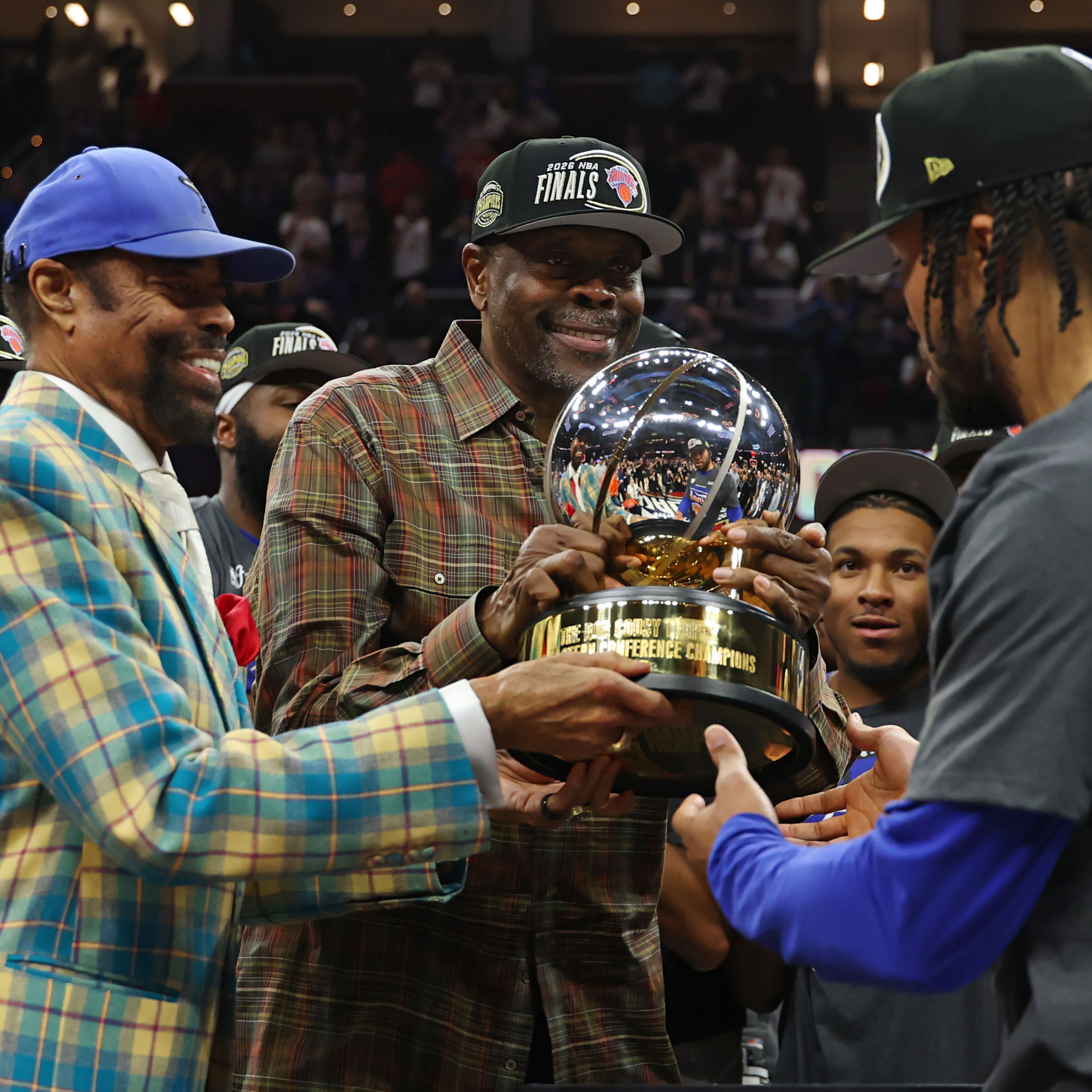
Loading summary
Transcript139 lines
- [00:00]
Odoo Sponsor
WNYC Studios is supported by Odoo. When you buy business software from lots of vendors, the costs add up and it gets complicated and confusing. Odoo solves this. It's a single company that sells a suite of enterprise apps that handles everything from accounting to inventory to sales. Odoo is all connected on a single platform in a simple and affordable way. You can save money without missing out on the features you need. Check out Odoo at O D O o dot com. That's O D O o dot com.
- [00:40]
Alison Stewart
This is all of it on wnyc. I'm Alison Stewart. Even after last night's tough loss, the Knicks are still just two wins away from winning an NBA championship. And fans today know the lore of 1973. The last time the Knicks won it all in 1973. Imagine this star Jalen Brunson, still 23 years away from being born. A subway token costs 35 cents. Matthew Schnipper is our WNYC Gothamist culture editor. He wrote a new article about what New York looked like 53 years ago, in 1973, the last time the Knicks were champs. And it turns out a lot was happening that continues to influence our city today. Welcome back to the show, Matt.
- [01:23]
Matthew Schnipper
Thank you so much. Thanks for having me.
- [01:24]
Alison Stewart
Before we get into the specific 73 details, what is interesting to you about this Knicks final run from a New York cultural perspective?
- [01:34]
Matthew Schnipper
We need it. Yeah, New York needs this. You know, I think, look in your mind. What do you think would unify, you know, Mariska Hargitay, John Turturro, Fat Joe, Michael Bloomberg, Timothee Chalamet? What other type of, what is, you know, nothing event.
- [01:55]
Alison Stewart
Yeah.
- [01:56]
Matthew Schnipper
Who are they? How are we gonna come together? You know, we need Carl Anthony Townes to sit here and, you know, he got asked about Trump and he should
- [02:04]
Co-host/Commentator
be a politician, this guy.
- [02:06]
Matthew Schnipper
The way he talked about, the way he deferred and talked about just, we are here so that people can have something to root for and to believe in.
- [02:15]
Co-host/Commentator
You know, I was like, oh, my
- [02:16]
Matthew Schnipper
God, just come into my dreams at night, you know, help me get ready for the day. I think, you know, what I discovered in the story, which we'll talk about. New York City was a much cheaper City in 1973. It's hard. It's a hard city. It's a hard city to live in
- [02:32]
Co-host/Commentator
in a lot of ways.
- [02:33]
Matthew Schnipper
And I think this is a thing
- [02:34]
Co-host/Commentator
that reminds you why you pay that price.
- [02:36]
Producer/Host
It's kind of interesting.
- [02:37]
Alison Stewart
I was on the subway and the conductor was A little bit amped up and someone got on the guy by the door, a real tall black guy, was like, this city's ready. And these two little like sort of demure ladies, like, yeah. And all of us at the same time, we're like, yeah. What has it done to the mood of the city?
- [02:54]
Matthew Schnipper
I mean, it's elevated. Last night, I'm not sure, you know, not that many people got arrested last night. I was actually surprised. I think it was like 20 and
- [03:02]
Co-host/Commentator
maybe eight are gonna be charged, which
- [03:04]
Matthew Schnipper
is, you know, I mean, for a loss. These are not Philadelphia numbers. So I would say, you know, we're even losing with grace, I guess. But I think, you know, it's elevated, people. You know, I have a very close friend who is a lifelong Knicks fan and he said, I can't even imagine what my life would be like if they won. You know, like, he's got several Knicks tattoos. He's just like, this changes us, you know. You know, if you're the underdog forever, that's how you imagine yourself as a Knicks fan. And then maybe, maybe just one day, you aren't listeners.
- [03:37]
Alison Stewart
As we look back at The Knicks and 1973, were you living in the city at that time? What do you remember most about New York? What it was like in 1973? What was going on in our life? Our number is 212-433-212-4433, WNYC. What was New York like in 73 as compared to today? What was the culture like? What were important issues and events? Our phone number is 212-433-WNYC. Let's talk to Karen on line two. Calling in from New Jersey. Hey Karen, thanks for calling, all of it. You're on the air.
- [04:14]
Caller Karen
Thank you, Alison.
- [04:15]
Caller from New Jersey
I missed you last night at the party in the green space. But I have to say it was quite the vibe. Walking up through Soho and 7th Avenue back to New York PE, take my train back to New York, New Jersey to see the vibe and bars all
- [04:27]
Caller Chuck
along the way while the Knicks game was happening.
- [04:30]
Caller from New Jersey
So it was terrific. But to test to your point, I moved to New York City in The summer of 1972, six months before I passed the bar exam in New York State in 1973. And I was living in Xavier Hollander's apartment building. Xavier Hollander in the 1970s was a well known madam. So I had many interesting in the elevator in that building.
- [04:56]
Alison Stewart
I am sure you did. What made you interested, Matt, in revisiting 1973?
- [05:04]
Co-host/Commentator
You know I am.
- [05:08]
Matthew Schnipper
I would Say I'm older than some
- [05:09]
Co-host/Commentator
of my colleagues, but I was not born in 1973.
- [05:12]
Matthew Schnipper
I was respect, you know, to our Gen X friends. And I think just the absolute. It's a long time to not win, you know. And I said, how can we illustrate that? How can we show the kind of. The different timiness of it?
- [05:33]
Co-host/Commentator
And it was.
- [05:35]
Matthew Schnipper
It's so different. You know, we can talk. Some of the social issues were similar, but the way you moved around the city, what it represented, who was living,
- [05:43]
Co-host/Commentator
it was a very different place.
- [05:45]
Alison Stewart
What was the average rent in 1973?
- [05:48]
Matthew Schnipper
Oh, it was like in the four hundreds, I believe. Was that even that?
- [05:51]
Co-host/Commentator
You know, it was very low.
- [05:53]
Alison Stewart
I know you looked into the cost of a two bedroom luxury apartment in Manhattan.
- [05:58]
Co-host/Commentator
I think it was like $400,000, I believe. You know, the luxury.
- [06:02]
Matthew Schnipper
Who knows what kind of amenities you were getting. But, you know, I saw some of the ads, I just went back into the paper and it was just like, oh God. And you know, for everything I was going through, you know, you said the subway token was, you know, 35 cents. I think in with adjusting for inflation, it's still just about $2 in today's money, which is still less than our current, you know, current $3 price. So the real estate is the thing
- [06:25]
Co-host/Commentator
that will make you want to barf, basically.
- [06:28]
Matthew Schnipper
Yeah, that's just like, don't look at it.
- [06:31]
Alison Stewart
You know, we got a really interesting text for this. Says in 1973 was a big year for community organizing. Founding year for many NYC groups. Green Gorillas, Transportation Alternatives, Park Slope Food Co Op, the fourth Street Food, Food Co Op. It was a big year for beginnings.
- [06:49]
Matthew Schnipper
What else started, you know, what CBGB opened. I was pretty excited about that, you know, which CBGB also at that point it opened and it was country, bluegrass
- [06:58]
Co-host/Commentator
and groot and blues and other music for what is it? Unappetizing Gourmandizer, cbgb. Omfug.
- [07:06]
Matthew Schnipper
I was excited about that. It was around the beginning of Co Op City opened in the Bronx. Just sort of seeing, you know, with cbg. I'm a music person and seeing OCBGB opened, it reminds you not just of what was happening in 1973, but how much happened since then. It was like, oh, this guy opened up a bluegrass club and then accidentally punk started there. You know, all of that happened and shut. You know, it wasn't just that it began, it was how much actually has has stopped since then. It felt like we were really reaching
- [07:37]
Co-host/Commentator
back into the beginning of the city's kind of Cultural history.
- [07:39]
Alison Stewart
You hear how bad the 70s were for New York. Sort of 75 and on. Was there something going on that made it to start new groups?
- [07:50]
Matthew Schnipper
Yeah, cheaper, definitely cheaper rent. I mean look there. This was the year of, you know, 73 was the year of the garbage strike, you know, was happening. This was the beginning. There, there was the year of the so called hard hat riot where construction workers were beating a bunch of anti Vietnam War protesters. It was a diff, there was just higher tension I think in the city. And I think, you know, you could move into the Lower east side, you could move into soho and get so much space. You know, there were, there were just empty buildings that had once been industrial, industrial spaces and now were just, you know, available. So if you had a weird idea, you could go get a, get a place and make it, you know, if you were a painter and you wanted a big spot, you can have it.
- [08:36]
Alison Stewart
The Knicks are just two wins away from winning. The NBA finals would be their first championship since 1973. My guest is WNYC Gothamist culture editor Matthew Schnipper. He wrote an article about what New York was like 53 years ago. We're also hearing from you if you're around. What do you remember most about New York in 73? What was the culture like? What were important issues or event? What was important to you? Give us a call or text us about your 1973 memories at 2124-3396-9221-2433. WNYC Mitchell is calling from the East Cy. Thank you so much for taking the time to call all of it. You're on the air.
- [09:18]
Caller Mitchell
Yeah, my pleasure. I remember a lot about 73. That was the year I graduated high school. I had grown up in far Okaway, played PAL basketball through the 70s and late 60s and early 70s. And of course the Knicks were our favorite team. You had Bill Bradley, you had Walt Clyde Frazier, you had Earl of Pearl Monroe, you had Dave DeBusscher, Willis Reed and so on and so on.
- [09:45]
Matthew Schnipper
Willis Reed was VP for that team.
- [09:47]
Alison Stewart
That and Bill Bradley was on Brian Lehrer this morning.
- [09:49]
Co-host/Commentator
It's very Nick's time.
- [09:51]
Matthew Schnipper
Sorry to interrupt.
- [09:51]
Caller Mitchell
You speak to Bill Bradley. I really like him, but what a gentleman and what a great senator he was for New Jersey. Sorry he didn't make the presidency. But as far as the way the city was, I had started coming into this city much earlier on. I was about 10 or 11 years old. We used to cut out a school and jump on the A train and come into the city and go to Chinatown and Little Italy and yada, yada, yada. But the city was kind of, it was sort of skeleton, like in certain neighborhoods where things were abandoned and there was a lot of prostitution in the streets. And it was, it wasn't what it is today. It wasn't as developed as it is today yet it was just a wonderful melting pot. We used to go to the Fillmore east and listen to band practices on Tuesday night and conjure up our two doll to go on Friday and Saturday nights to see the shows. And going to the Garden was sort of like if you didn't have, you know, the wherewithal to afford seats, you'd listen to the radio. And at that time, I remember listening to the championship game in 1973 on an AM Emerson radio in the school park with a bunch of my friends.
- [11:05]
Alison Stewart
Oh, what an awesome memory. Thank you so much for calling. Let's talk to Janet on line four. She's calling from Little Italy. Hey Janet, you're on the air.
- [11:14]
Caller Karen
Good morning. Yes, we live in Little Italy and we lived there in 1973 and still live there, although in a different building now. And we lived in a fifth floor tub and kitchen walk up for which we paid $52 a month. And it was really still Little Italy on Mott street in those days. You heard a lot of the old ladies. What I miss the most is the elderly ladies who used to bring their fol chairs out and just sit on, you know, open them up on the, on the sidewalk and sit and gossip and comment on everybody going by and including me. And when I found out what they were actually saying about me that I nodded and smiled to was in fact not complimentary because we were considered the invaders at the time. You know, we were the hippie invaders in their, in their community. And now it is transformed almost. I mean, obviously recognizable to me because I think still live there, but it has now become the fashion hub of, you know, sort of a kind of elitist group of wealthy 20 somethings. But we used to see John Gotti walking down the sidewalk with his four bodyguards on, either on all circling him like bedposts. And they were looking up and around and he was just chatting with whoever was with him or nodding at the folks he knew on the street. And I miss the, I miss the old ladies and the things they used to say to me in. In Sicilian dialect.
- [12:52]
Alison Stewart
I would have loved to know what they were saying. Thanks so much for calling. You know what's interesting though, about what she said, the Idea of the people bringing out their chairs and sitting in community, people are doing that.
- [13:02]
Co-host/Commentator
That's exactly what I was gonna say.
- [13:04]
Alison Stewart
Go for it. Yeah.
- [13:05]
Co-host/Commentator
There's a new version of this.
- [13:06]
Matthew Schnipper
I mean, it's the amount of people
- [13:08]
Co-host/Commentator
who are outside right now, you know, not to quote Mom Donnie quoting Jadakiss,
- [13:13]
Matthew Schnipper
like we outside, you know. You know, and the amount of. Even just on social media, I've seen people putting up videos and pictures of
- [13:20]
Co-host/Commentator
people projecting the game on walls.
- [13:23]
Matthew Schnipper
You know, just like watching outside, you
- [13:25]
Co-host/Commentator
know, in a bana outpost in my
- [13:26]
Matthew Schnipper
neighborhood, people watching after, I think the game one. I don't know if it was a
- [13:31]
Co-host/Commentator
game one or game two. When Spike Lee went up Lafayette Avenue in Fort Greene with his head out
- [13:36]
Matthew Schnipper
of a, out of the sunroof like
- [13:39]
Co-host/Commentator
he's the Pope, just like waving to
- [13:41]
Matthew Schnipper
people, you know, it's, it's really joyous, you know, and it happens to nice, be nice weather.
- [13:45]
Co-host/Commentator
So that doesn't hurt. But it's nice to be outside, not for a, not for a protest, you know.
- [13:51]
Alison Stewart
Do you remember what it was like in 1973 in New York? Were you around? Give us a call at 212-433-WNYC, 212-433-9692. We'll have more after a quick break.
- [14:14]
Producer/Host
You're listening to all of it on wnyc. I'm Alison Stewart. My guest is WNYC Gothamist culture editor Matthew Schnipper.
- [14:21]
Alison Stewart
He wrote an article about what New
- [14:23]
Producer/Host
York looked like 53 years ago. In 1973, that was the last time since the Knicks won the championship, their two wins away from winning the NBA Finals. This text, Matt says, I was a CUNY college student and my rent was $65 a month. For the three of us. We paid 195 for a three bedroom apartment on West 163 and Riverside. This one says I lived in a one bedroom with a rooftop terrace on West 84th street between Central Park west and Columbus. $150. I lived there for 19 years. Then I start a family and we moved to the more affordable, affordable Park Slope.
- [15:02]
Alison Stewart
Bigger bang for our buck.
- [15:04]
Co-host/Commentator
And I hope you cry yourself to bed with joy and wipe your tears with your money.
- [15:12]
Producer/Host
Let's talk about this convoluted. It's all right.
- [15:15]
Matthew Schnipper
Just jealous.
- [15:16]
Producer/Host
Let's talk about 1973. You found a New York Times story that featured an ad with Trump's first quote in the paper. Of course he attended the game last night. The story was called Major Landlord accused of Anti Black Bias in New York City. How'd you come upon it?
- [15:34]
Co-host/Commentator
Yeah, this story was about a lawsuit that was filed against Trump and his father, who was a huge landlord in the city, who over time was accused over and over and over of bias. All kinds of different types of bias. This was specifically anti black bias. Trump was in his 20s, and the story was about the suit being settled. They did not admit guilt in the suit, but I believe there was a payout. I mean, quote Trump here, who basically said, you know, we would not, we would never be biased against anyone. You know, we never have, we never will be, you know, and I just imagined what the hundreds and hundreds and hundreds of times since then, he said something similar to the New York Times. So it's sort of funny that this happened to be 53 years ago was the first time he was giving the sentiment out.
- [16:23]
Matthew Schnipper
There also is a photo of him
- [16:26]
Co-host/Commentator
in this story with his car with a DJT license plate.
- [16:32]
Producer/Host
This says, In 1973, I graduated from the High School of Art and Design. And remember my senior year walking on the Lower east side with my friends at night, going to parties. We had our head on a swivel.
- [16:42]
Co-host/Commentator
Oh, gosh.
- [16:43]
Producer/Host
Let's talk to Stuart, who's calling from Maplewood, New Jersey. Hi, Stuart, thank you for calling all of it.
- [16:49]
Caller Stuart
Hi, how are you doing? Good. I was just graduated from nyu and a good friend of mine was friends of Jerry Lucas who was the center for the Knicks. So he asked us if we wanted to go to the game. And we were sitting right behind the visiting players and was most exciting time I've ever felt in my whole life other than getting married.
- [17:09]
Alison Stewart
Oh, that's a swell memory. Thank you so much for calling in. Let's talk to Deborah and Chelsea. Hey, Deborah, thanks for calling all of it.
- [17:17]
Caller Deborah
Hey, Allison, thanks for taking my call. I was 13 years old and I was watching. I watched the games with my dad. And it was a way that we would talk to each other is watching the games on tv. We didn't go to the finals or anything. We did go to a couple of games, but we watched basketball and we watched tennis in the days of Billie Jean King and Chris Everett and McEnroe and all of that. And it's. And we, we lived in rental apartments. This is before co ops. Everybody rented. And there were the people who didn't have roaches and there was everybody else and everybody had roaches. There was just the people who died about, who lied about it.
- [17:56]
Alison Stewart
That's funny. Deborah, thanks for calling. And Mindy is calling from Bayside Hi, Mindy, thanks for calling, all of it.
- [18:02]
Caller Stuart
Hi.
- [18:03]
Caller from New Jersey
Thank you. How are you doing? Well, so I'm, so I was. I graduated high school in, in Bayside High in 1973. And I remember that they had just started the express bus because I used to take the train after my last semester of high school into the city, believe it or not, for literally three hours and schlepped back a two fair zone. So that was like a big deal. And I kept thinking, should I take the express? I think was like a $50 or something. And I used to go to the Knick games with my dad. I went to a lot of the Nick games, you know, Wolf, Frazier and oh, I love the Knicks. I'm still a big Knicks fan. Watching all the games, not happy with last night, but hoping tomorrow night will be great. And yeah, it's a big difference from then and now. I mean, prices, obviously, and, you know, just the neighborhoods they're building. My neighborhood in Bay Terrace was a very nice little like suburb. And now forget it, it's not a suburb anymore and they're taking up all the land. It's really sad.
- [19:09]
Alison Stewart
You know what? We had this interesting.
- [19:10]
Producer/Host
You talking about how things change, Matt. This, this text says we had a
- [19:13]
Alison Stewart
four room railroad flat in Yorkville. I rode my bike from East 92nd street to the East Village for work every day. No one was riding bicycles then.
- [19:22]
Co-host/Commentator
Oh, wow. Yeah, that's a really interesting point you made.
- [19:26]
Alison Stewart
The point in the article, or we've talked about this, we've talked about this as this group is that this was the year that hip hop was invented.
- [19:34]
Co-host/Commentator
Yes.
- [19:34]
Alison Stewart
What's the origin story? As you understand?
- [19:36]
Co-host/Commentator
Oh, the origin story of hip hop was DJ Kool Herc, who was a teenager, I want to say he was 17 years old, was set up in the Bronx at a party and he was playing DJs would play two with two turntables, as they, you know, still
- [19:51]
Alison Stewart
do, and a microphone.
- [19:52]
Co-host/Commentator
And a microphone. And he learned how to extend what they would call breakbeats. So you'd listen to kind of soul records and there would be a drum solo and he would play it on one record, play it on the other, you know, and you would have this sort of backing beat that would go on and on, and then he would be on the microphone sort of barking out encouragement like, keep dancing, keep dancing. You know, which was sort of a proto rap sound and it kind of kept going from there. So he is credited as the sort of originator of hip hop.
- [20:22]
Alison Stewart
And a few years later, rapper's delight came out. And the first. It was really the first, like, commercially successful rap.
- [20:28]
Co-host/Commentator
Absolutely. The first big kind of big rap song.
- [20:30]
Caller Mitchell
Yeah.
- [20:30]
Alison Stewart
And in the course of it, the Knicks get a shout out. Let's listen.
- [20:33]
Rap Artist (voice in song)
I got five, I got two big dogs I definitely ain't the wack I got a Lincoln Continental and some new Cadillac so after school I take a dip in the pool which is really on the wall I got a color TV so I can see the Knicks play basketball Hear me talking about checkbook, credit cards More money than a sucker could ever spend But I wouldn't give a sucker or a bong from the rocket Not a dive till I made it again Everybody go oh, tell Mo,
- [21:02]
Caller from New Jersey
tell what you gonna do today.
- [21:08]
Alison Stewart
Endlessly. Let's talk to Serena in Orlando. Hey, Serena, thanks for calling, all of it.
- [21:14]
Caller Stuart
Hi, thank you for having me. I was graduating from City College and we were the last class to graduate from Lewison Stadium in 1973. After that, they tore down the stadium and they built more buildings there. Our class speaker was Elie Wiesel. And both my parents were alive at the time, and I was tall and slender and the world was ahead of me. And the Knicks used to wear shorts so you could see their long, beautiful legs.
- [21:55]
Alison Stewart
All righty then. I like that call.
- [21:58]
Co-host/Commentator
All right.
- [21:58]
Alison Stewart
After doing all this digging about 1973, what impression did you get? Were the best qualities of the city at that time?
- [22:07]
Co-host/Commentator
I mean, is it hokey to say affordability?
- [22:09]
Matthew Schnipper
You know, I think, you know, it was a different city in that I think there was, for a lot of
- [22:14]
Co-host/Commentator
people, as much more self selecting. You know, it is not,
- [22:20]
Matthew Schnipper
obviously, a
- [22:21]
Co-host/Commentator
lot of people were born in the city, grew up there. A lot of people obviously moved to the city looking for cultural, cultural understanding, I think.
- [22:31]
Matthew Schnipper
But this was not a city. This was a city that was much
- [22:34]
Co-host/Commentator
more accessible to, you know, close to all if you wanted to be a part of it. And I think that that is no longer the case.
- [22:43]
Matthew Schnipper
You know, it was not as it
- [22:45]
Co-host/Commentator
was a city yet touched by Michael Bloomberg. I think in a lot of ways, by Giuliani. It was, it was just, it was cheaper. And I think that that really, as, you know, obviously Zoram Hamdani has talked about and everything he has said, the affordability kind of touches every issue. So that was the thing that sort of, that struck me. Yeah.
- [23:03]
Alison Stewart
Let's try to get Chuck in. One last caller. Chuck, you are our last caller today.
- [23:09]
Caller Chuck
Thank you. I'm from Brooklyn, went to high school. Two things for the Knicks. You'd see the seats for like $5, and then you'd wrap a dollar bill around the stub to give it to the usher to get to the expensive seats. And when we weren't seeing the Knicks, we were seeing the Shaffer Music Festival at Woolman skating rink. 150 and 250. And we're not talking hundreds, we're talking $1.50 and 250 for the chamber Brothers, Judy Collins, Quicksilver Messenger Service, David Bromberg, later, Patti Smith, the Ramones, Talking heads, all for $2.50. That was the last good thing Cheetohead ever did. He fixed up Walman Rink and we had all those great concerts.
- [23:43]
Co-host/Commentator
Oh, my gosh.
- [23:44]
Alison Stewart
And thanks for that call. Matthew, what is something from 1973 that you wish you had experienced, aside from the affordability?
- [23:52]
Co-host/Commentator
Oh, gosh, there are so many of so many things.
- [23:56]
Matthew Schnipper
I mean, obviously the music is the
- [23:58]
Co-host/Commentator
thing that like really stands out to me. You know, there's so much that I miss that. You know, I was about a decade from being born in the city uptown. Then, you know, I kind of think, ugh, if only I had been there.
- [24:08]
Alison Stewart
Lunchboxes need to come back.
- [24:10]
Co-host/Commentator
Lunchboxes need to come back.
- [24:11]
Alison Stewart
Lunchboxes need to come back.
- [24:12]
Matthew Schnipper
You know, the film, I think, you know, was amazing. You know, seeing Mean Streets came out that year.
- [24:17]
Co-host/Commentator
And I think being able to participate in the kind of, what was still a very, kind of burgeoning film scene in New York would have been very cool, you know, to be able to kind of go to some of, you know, I mean, you want to know what? I really wish to experience some of
- [24:28]
Matthew Schnipper
the parties, you know, like getting to meet all the people that were there. I bet there were some really, really fun parties and some really cool offs.
- [24:35]
Alison Stewart
All right, fingers crossed for the Knicks. They're two wins away from winning the NBA Finals. Matthew Schnipper. He wrote an article about what New York looked like in 1973, the last time they did it. Thanks for joining us.
- [24:47]
Co-host/Commentator
Thank you, Allison.
- [24:48]
Muscle Milk Sponsor
Everyone's talking about protein lately, but how do you actually get enough of it? Muscle Milk. Muscle Milk has a great tasting new formula with no artificial sweeteners, flavors or added colors. It's high quality, complete protein designed to support healthy muscles with fewer ingredients than the previous formula and 2642 grams of protein for when you're stuck in meetings or need a post workout recovery. Available in chocolate, vanilla, cream, cookies and cream, and strawberries and cream. Try the new great tasting Muscle Milk today available in stores nationwide. Muscle Milk protein for all.