← All Of It with Alison Stewart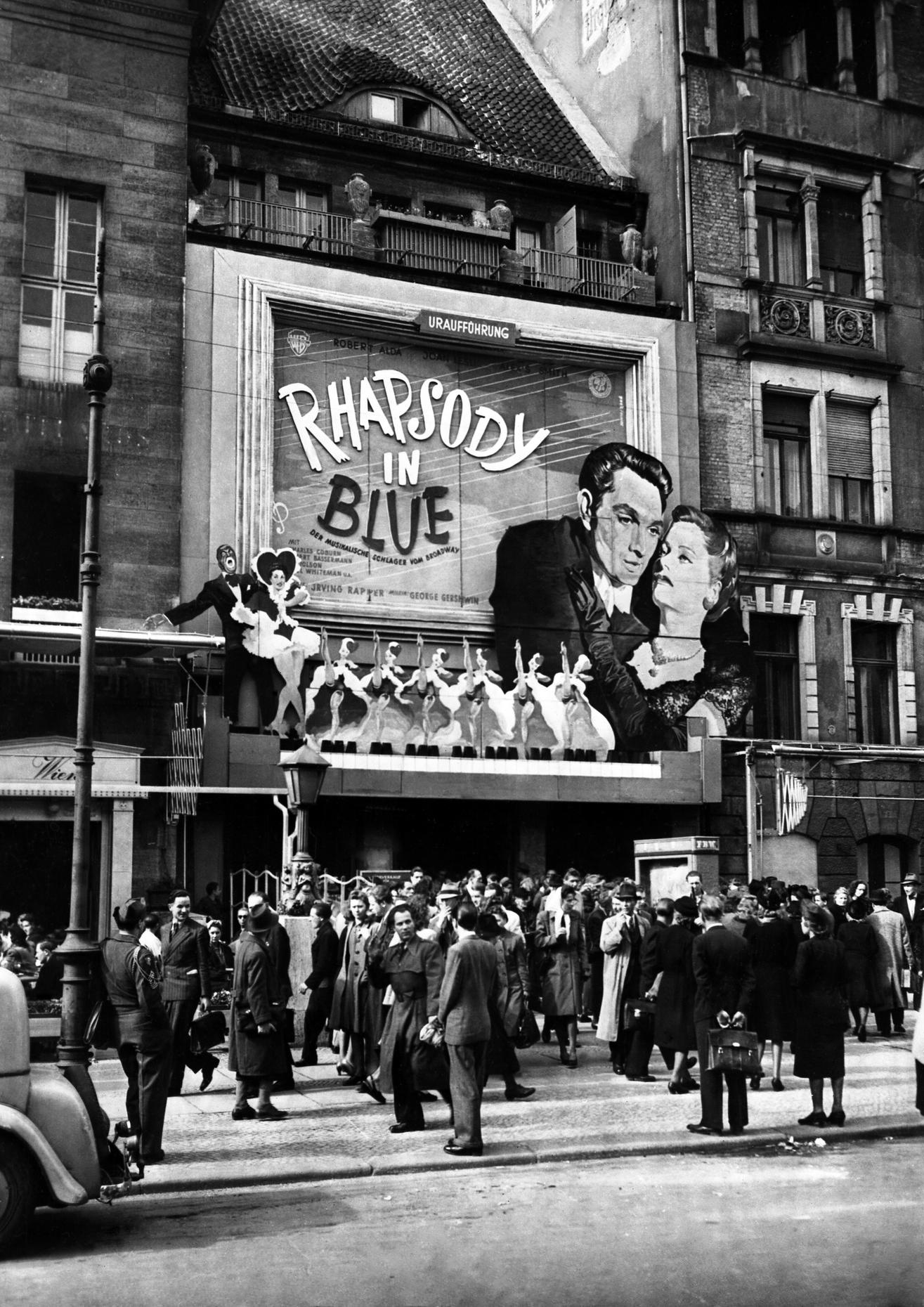
All Of It with Alison Stewart
'Rhapsody In Blue' Inspires at 100
00:18:04
Today marks 100 years to the day since George Gershwin's "Rhapsody In Blue" premiered at the Aeolian Hall in New York City.
Loading summary
Transcript44 lines
- [00:04]
A
Listener Support WNYC Studios.
- [00:18]
B
This is all of it from WNYC. I'm Alison Stewart. A hundred years ago today, on February 12th, 1924, this was played in public for the very first time.
- [00:42]
C
At the.
- [00:42]
B
Premiere performance of Rhapsody in Blue. The composer George Gershwin sat at the piano to play the piece, which he had reportedly only begun writing about a month beforehand. It debuted as part of an evening titled An Experiment in Modern Music, meant to showcase the latest developments in jazz with one of New York's venerated within one of New York's venerated concert halls, the Aeolian. Today, Rhapsodyne Blue is a staple of the American musical canon, an early fusion of jazz and classical that has inspired countless composers, as you heard in our last segment with Bela Fleck. Joining me now to get into the piece's history and legacy are three more musicians who have found ways to find meaning in the piece. Brothers Colin and Eric Jacobson are the artistic directors of the orchestral collective the Knights. They've launched a multi year series called the Rhapsody Project celebrating Ershwin's composition and exploring the Rhapsody. The next event for them will be at Carnegie hall on February 29th. Colin and Eric, welcome.
- [01:37]
A
Thank you. How are you? Thanks for having us.
- [01:40]
B
Our pal Lara Downs is a pianist and musical activist. She recently released Rhapsody and Blue reimagined a new arrangement by the Puerto Rican composer Edmar Colon. Laura is also one of our judges for the Public Song Project, so we're extra excited to have her on today as we launch the second edition focused on the 1920s. Laura, welcome back.
- [01:58]
D
Hi Alison, great to be here.
- [02:00]
B
Listeners, tell us about your relationship with Rhapsody in Blue. What does listening to it conjure for you? Have you played it? If you do, do you have a favorite recording? 212433. WNYC 212433, 969-221-24339692. Do you have a favorite recording of Rhapsody in Blue? Maybe you play it. What does that feel like? What does listening to it Conjure for you? 2124-3396-9212-4433 wnyc you conversation on air. You can always text us at that number as well. So Eric, I'll start with you. What is your favorite moment or section from Rhapsody in Blue?
- [02:40]
A
Oh, it's such a good question because like the music of Gershwin, so often you can't help but walking away kind of whistling one of his tunes and feeling emotionally satisfied and overwhelmed by the joy of what, what he has created. I would Say from performing the work, you know, a bunch in the last couple of years and maybe in the last 10 years. There's that epic moment after sort of, Gershwin has got our virtuosic pianist flying all over the keyboard, playing every note on the instrument so many times. The orchestra gets these wonderful licks, there's cadenzas, it's everything that it's supposed to be. And you get in about 15 minutes and there's that moment the piano leaves us with these questioning chords, chords of wonder, chords of what are. What's next. And all of a sudden comes in the strings and just a little triangle and then horn with. With the love melody. And it's just about as beautiful a moment in history. It's like the perfect. It's like the gymnast who raises her arm and then puts it down and it attempts this wild feat, but of the virtuosity, it feels completely natural and without any athleticism. And I think it's just love incarnate.
- [04:10]
B
Lara, is that also your favorite?
- [04:13]
D
Yeah. No fair. It is. And it feels so funny to say that because I think everybody loves that part. But I, you know, I love it because Gershwin goes to this place of intimacy and I think the rhapsody is so forward looking, right? That's his main objective. But with that theme, he's also looking back and he's embracing the other part of his history as a pianist, as a classical composer. You know, his love affair with the 19th century, with Rachmaninoff and Tchaikovsky and everybody else. And it just kind of for me illustrates the long line, the lineage that connects everybody.
- [04:44]
B
Let's listen to that portion. The Love theme. This is a version of Rhapsody in Blue recorded by the Knights. Let's take a listen.
- [04:52]
C
Sam.
- [05:39]
B
Colin, let me bring you into the conversation. When we talk about a rhapsody, what is exactly a rhapsody and how is it important in understanding this piece?
- [05:48]
D
It's great.
- [05:48]
A
Just quickly, I was just thinking Rachmaninoff after Lara said that was supposedly in the audience at that premiere. And I would love to, you know, imagined his face when that theme came in with a tip of the hat to him, you know. But yeah, rhapsody. Well, you know, the great thing is there's really a music definition which is an episodic yet integrated, free flowing piece and structure. Very improvisatory, often with virtuosic playing. But I love that it comes from an ancient Greek word, several definitions there, songs stitched together or an ecstatic expression of feeling. And apparently a rhapsode. I don't know if I'm pronouncing that right was sort of an itinerant bard going around reciting and singing Homeric epic. And I think that really speaks to what Gershwin was trying to do with that piece, which was stitch together many songs of America in that piece and part of why it has this lasting legacy.
- [06:50]
B
Let's talk to Barbara calling in from Brooklyn. Hi Barbara, thanks for calling all of it as we talk about Rhapsody in Blue.
- [06:58]
C
Hi. It's great to be with you. I listen to you every day. My edition of Rhapsody in Blue I inherited from my dad. It would have been his one, my dad's hundredth birthday last year. He left me his Oscar Levant recording of Rhapsody in Blue and I still enjoy it. You know, it's multiple, multiple, multiple 78, but it's an extraordinary yes, in every case. You can always hear the pianist's hand, but it's just, it's just a treat. And I listened to that along with his Ella Fitzgerald records.
- [07:34]
B
Barbara, thank you so much for calling in. You know, we had Sean Hayes on the show recently to talk about his role as Oscar Levant in Goodnight Oscar on Broadway. Levant, of course, pianist who starred in the 1945 biographical film about George Gushwin called Rhapsody in Blue. And as part of Goodnight Oscar Hayes himself plays a version of Rhapsody on stage every night. I want to play a clip of him talking about that experience on our show.
- [07:58]
C
Once I'm into it, it is kind of takes a toll on my arms and my hands every night from playing it. So I'm just trying to do as much self care as I can by icing, you know, ice bathing my arms right after the show every night. And then I take some vitamins that are hopefully anti inflammatory ish. And I wear these during the day and I'm showing you their compression sleeves.
- [08:23]
B
So Lara, as a pianist, someone you know, Sean Hayes is talking about wearing compression sleeve and icing his arms after having to play that on stage. He plays a very furious version of it. What is it like to play this piece?
- [08:36]
D
Well, for me that's become a complicated question because I play so many different versions of this piece. You know, tonight I'm playing the original jazz band version from 1924. So the version that was heard, you know, on this night in 1924. I also play the solo version that Sean is talking about. I play the 1942 version with big symphony orchestras and of course I play my own new version which has all kinds of new elements. So I think it's, it's a brain exercise for me more than anything. Else I, it's such well, well known terrain, but then with each of those versions, I go off in different directions. It's a very multi layered relationship at this point.
- [09:13]
C
Yeah. Eric.
- [09:15]
B
The story goes that Gershwin only found out he was meant to be premiering a new work about a month ahead of time. His brother Ira was reading the newspaper and found an article announcing a jazz concerto to be written by George and performed by Paul Whiteman in his orchestra. And apparently George Gershwin had forgotten about it as a composer. What does this story add to the mythology and the legacy of Rhapsody in Blue?
- [09:37]
A
You know, obviously legend is so important for music in general and maybe specifically of the music that comes from years and years ago, such as, you know, we have Beethoven 7, his second movement at the premiere, supposedly the audience wouldn't stop applauding unless they, you know, the orchestra and Beethoven agreed to play the second movement again because it was so good. And isn't that, isn't that just brings chills, you know, the idea, certainly it throws out the idea of applause between movements is not okay. And then you look at Rite of Spring by Stravinsky and you remember if we, if that piece, you know, that that was the piece that the audience erupted and there were riots and how could that possibly be? This music is, is, is terrible. Oh, this music is the greatest thing ever. And funny that, you know, we celebrate these hundred year anniversaries. You know, Beethoven's 250th was recently. The Stravinsky rite of spring was about a decade ago. And now today, 100 years ago on a snowy February 12th, this piece by Gershwin was premiered. And isn't it funny that Beethoven and Rite of Spring maybe are accepted as canon and these are pieces that are not questioned as wonderful and brilliant and historic. And Gershwin still has edge to it. People still look at as well, what is this piece? Is it classical music that dabbles in jazz? Is it jazz that dabbles in classical? Is it taking music that Gershwin was, you know, appropriating? Is it, is it classical music that has a new spirit? And either way, there's this edge of, of this edge effect of looking outside of itself, which is so beautiful. And that particular story about, you know, George being on the train from Boston to New York and hearing, oh gosh, I'm supposed to have this piece premiere in a month, which my brother, who's the composer, I have a feeling you've been in deadlines like that before. There is something about that story. There's something about the rush to finish something in the. I think it's Bernstein's words, to do something great, you need a great idea and not quite enough time. And I think by having this rush, this cram, you know, we've all felt it, whether it's like college, you know, year end finals, and we have to cram and three days later, we don't remember anything that we studied or we're getting ready for that promotion. Promotion. You gotta put yourself forward or studying for a concert, you know it exists. And I think this piece, when you listen to it, there's an. There's an essence that is urgent. And maybe that is part of the mysticism of this piece, that there's urgency and excitement and maybe it's because he didn't quite have enough time.
- [12:41]
B
Let's take a call. Let's talk to. I think it's Toyin Diaz. Hi, Toyin.
- [12:48]
C
That's right. Hi, Toyin Spellman Diaz. Hi. Hi, Lara and Colin and Eric. It's nice to hear you. I'm the oboist of Imani Wins and I've been fans of all of you guys forever.
- [13:02]
A
But I'm calling congrats on your recent Grammy. Yeah.
- [13:07]
C
Oh, thank you, thank you. We were in the same category and I was sure you guys were gonna win, but I'm honored to have been in the same category with you all at the Grammys. I'm calling because I just played at Carnegie Hall. I'm calling as a musician and the musician's perspective of being in the orchestra while that amazing piece is going on. I was playing second oboe. So I sit directly in front of the clarinetist as they're getting ready for that iconic solo. And I can tell you, David Stapitin really nailed it with the New York Pops this past weekend with Lee Musicer as the soloist. And I wanted to say that Lee took Gershwin's lead and made up his the cadenzas in Rhapsody in Blue. Because like you said, it was written so quickly that in three and a half weeks or so that he didn't have time to write down all the piano parts. So he kind of made it up. And Lee Musiker did the same thing in the wonderful New York Pops concert this past weekend. And I'll tell you, I've never seen such a standing O at the Carnegie hall, but it's really fun to be part of it on ensemble while all of that is rushing by. You.
- [14:20]
B
Thank you for calling in. What a great super caller. Let's talk to Benjamin from Staten Island. Hi, Benjamin.
- [14:27]
C
Hi. So what strikes me about Rhapsody in Blue. I wanted to talk about my favorite recording. It's by Andre Previn. And when I first came across Rhapsody in Blue in high school, classical music wasn't my thing, but I would drop a few dollars on the budget recordings. So I had a recording from, like, the. Some symphony orchestra from Europe. And it was very. It was very straightforward. It was very staged. There wasn't much change to it. And about 15 years later, I. I listened to the Andre Previn recording, and he was a jazz musician, and it kind of made. It kind of showed how much dynamics there are to the piece.
- [15:18]
B
Sure, sure, sure.
- [15:20]
C
He slows. He slows down a lot. He pauses a lot more than the Hungarian orchestra.
- [15:28]
B
Benjamin, I'm gonna dive in here because I want to. Before we run out of time, I want to make sure we get to Lara's version of Rhapsody in Blue Reimagined. Let me play a little bit of it and we can talk about it on the other side. It. Lara, it sounds like you had great fun reimagining this piece.
- [16:19]
D
Fun is a good word. Yes. It's that energy, you know, Eric was talking about the energy and the enthusiasm and the usefulness, I think, that we feel in this piece. Gershon was so young. All of this stuff was young. I mean, America was still kind of young, you know, and jazz was very young. And so when I've been thinking about this piece and the hundredth anniversary, there was a lot that I wanted to explore in terms of its origins and also the future of it. The vision that Gershwin had for this piece, he called it the musical kaleidoscope of America. And that. I mean, I just love that phrase so much and feeling everything that he was feeling about expressing new languages and listening to new things that were around him and creating this, you know, new blend, the melting pots that he talks about that he's. That he's celebrating in this piece. The melting pot in 1924 versus the melting pot today. So much changes so fast, and that's what we've tried to capture in this new version.
- [17:17]
B
I also want to remind people, on February 29, the Knights will host Chinese composer Ju Yan at Carnegie hall as part of their ongoing Rhapsody project. My guests have been Colin and Eric Jacobson's of the Nights, their artistic directors, conductor and concert master, as well as Lara Downs, pianist. Rhapsody in Blue, Reimagined is out now. Thanks to all of you for being with us.
- [17:40]
C
Thanks.
- [17:41]
D
So much fun and happy birthday.
- [17:46]
B
There's more. All of it on the way. You know, actor Josh Radner from How I Met yout Mother. He's also a musician. He's joining me for a listening party for his new solo album, Eulogy Volume 1, as well to discuss a new play he's about to open at the Public Theater this week. Stay with us.
- [18:13]
A
Sometimes an identity threat is a ring of professional hackers, and sometimes it's an overworked accountant who forgot to encrypt their connection while sending bank details.
- [18:22]
C
I need a coffee.
- [18:24]
A
And you need Lifelock. Because your info is in endless places. It only takes one mistake to expose you to identity theft. LifeLock monitors hundreds of millions of data points a second. If your identity is stolen, we'll fix it, guaranteed, or your money back. Save up to 40% your first year@lifelock.com specialoffer terms apply.
- [18:43]
B
This is Ira Flato, host of Science Friday.
- [18:46]
C
For over 30 years, the science Friday team has been reporting high quality science and technology news, making science fun for curious people by covering everything from the outer reaches of space to the rapidly changing world of AI to the tiniest microbes in our bodies. Audiences trust our show because they know we're driven by a mission to inform and serve listeners first and foremost with important news they won't get anywhere else. And our sponsors benefit from that halo effect. For more information on becoming a sponsor, visit sponsorship.wnyc.org.