Loading summary
Transcript52 lines
- [00:00]
A
Foreign.
- [00:07]
B
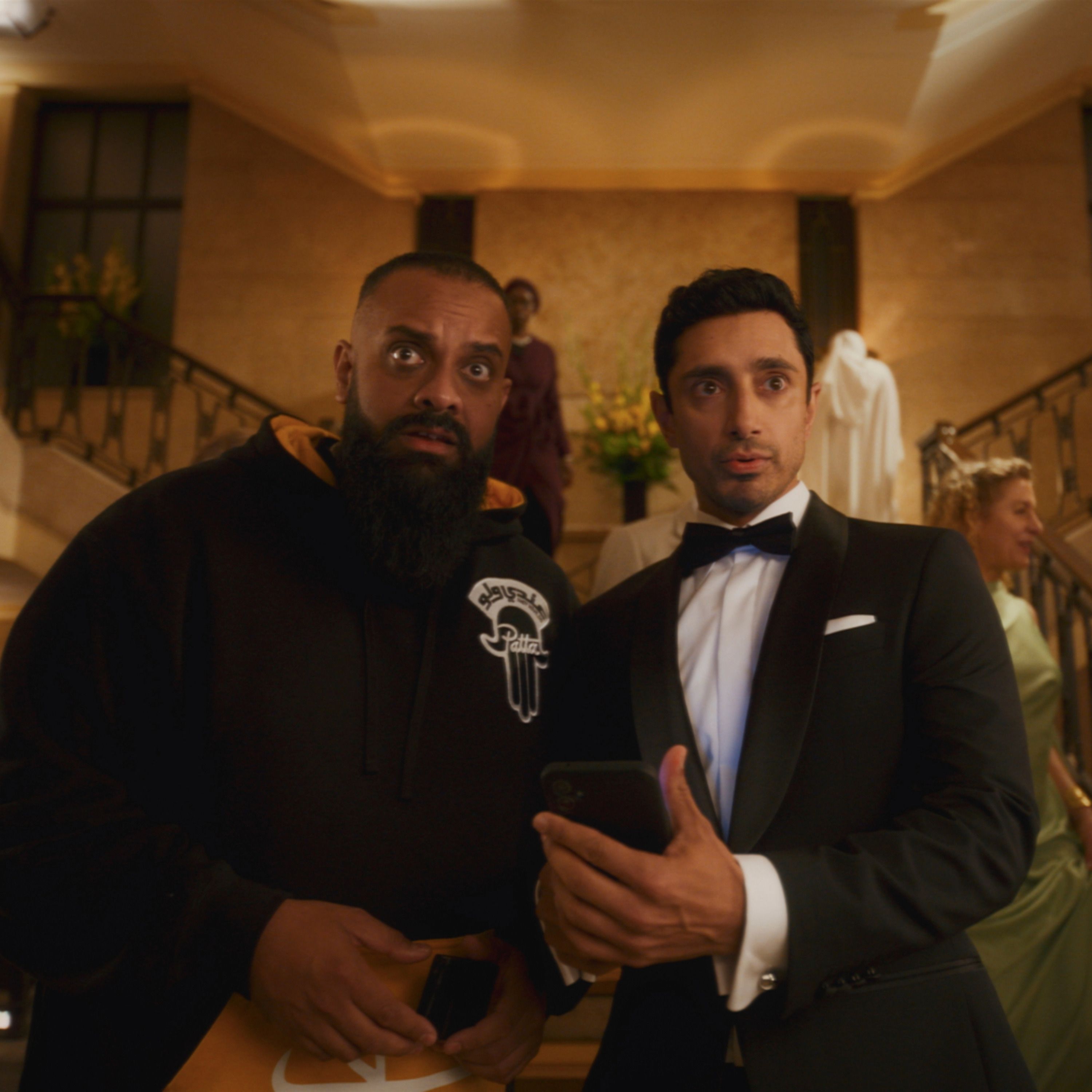
This is all of it on WNYC. I'm Alison Stewart. The Emmys recently announced their 2026 nominees, so this hour will be dedicated to several Emmy nominated shows featuring actors whose characters made their seasons so memorable. From the Bear, we'll hear from Lionel Boyce, who discusses playing his character Marcus Brooks from the apocalyptic sci fi thriller series Paradise. We'll be talking to Thomas Dougherty and Julianne Nicholson, who is also nominated for outstanding supporting actress in the show. But first, a show about a Pakistani actor facing racism and public backlash after auditioning to play the new James Bond. Bate was written by Riz Ahmed, who also stars and executive produced the series. It recently earned him an Emmy nomination for outstanding actor in a limited series. Critics have hailed the show's sharp social commentary, its unique approach to a spy thriller comedy, and of course, Riz Ahmed's performance. He plays a struggling actor named Shah, a Pakistani Brit who auditions to be the new James Bond and becomes the focus of an intense media firestorm over race car, class, belonging and identity. And as Shaw navigates this new position, well, he doesn't always make the best choices. Meanwhile, he's trying to find his place in his chaotic family and community, sort out and sometimes sabotage his love life and get his career on track without a panic attack. The show Bait is now available to stream on Amazon Prime. The title Bait comes from British slang. When Riz Ahmed joined us to talk about it, I started by asking him to explain what bait means in that context. Context. And why it made a good title.
- [02:03]
A
Yeah, it's one of my favorite British slang words. It means being really blatant or unsubtle in or in your face. And it's an adjective, but it's also a verb. You can bait someone up. It's like blowing up someone's spot. But it has more meanings than that. And each of the different meanings corresponds to one of the different elements to the show because our show has lots of different genres to it. So bait is also, literally speaking, something is used as part of a trap. And there's a spy thriller element to our show. In Urdu, it means loyalty or allegiance. It's about Shah trying to, you know, balance ambition and family. In Arabic and Hebrew, it means home. And there's a big family element to this. And online for Gen Z, you know, trolling someone is baiting them. So. And there's a very much a kind of psychological, kind of social media spiral element to our show as well. So, you know, the show, just like the show's title, has all these different flavors, all these different dimensions, and that's what life feels like. It feels messy and slightly chaotic in its tonal whiplash, and I wanted to kind of have that in the show.
- [03:04]
B
I'm gonna start a little bit with the show, and then we'll expand out a little bit. It begins with an audition, and your character's auditioning to be James Bond. Let's talk about that scene. What did it take to write that scene? A Bond like scene where. What elements did it have to have?
- [03:20]
A
Oh, that's a great question. Yeah. I think there's an amazing kind of cocktail, you know, no pun intended, for. Of Bond scenes. And it's kind of set such a template that, as a fan, it's not too challenging to inhabit. It's challenging and tricky to do it well. But I think there has to be a femme fatale. I think there has to be a difficult or impossible choice. And I think that that choice usually has to be about your professional loyalty and your emotional loyalties. And I think there's something interesting at the heart of a lot of the kind of, like, Bond stories that actually really corresponds to our own show as well. You know, so much of it's about being pulled between your professional ambition and your kind of personal relationships, you know, and do those two things have to be mutually exclusive? It's something I'm still trying to work out.
- [04:21]
B
It's interesting, and I'm not giving anything away. Shaw kind of bombs the audition, but he sort of seems surprised. He's like, hey, I'd like to take that again. And she's like, no, you're not taking this. You're not gonna do this again. What does this tell us about Shaw?
- [04:37]
A
I think he's hoping against hope and sometimes being delusional and being hopeful and being ambitious. It's a really blurred line between those things. You know, Shah is a dreamer, and he's running towards a dream. But I guess. And that can be a really positive thing, a really empower, power, empowering thing, you know, but sometimes you have to make sure you're not also just running from yourself. And I think that's the circle he has to square, you know, can you run towards a dream but take your community, your family, and even your sense of self with you, or do you have to leave that at the door when you're chasing dreams of a certain size and of a certain grandeur? So I think it shows that. That he's, you know, he's. He's. He's a dreamer, you know, where Is
- [05:22]
B
he in his career?
- [05:24]
A
So it's a great question. Shah is. He's an actor who's fallen on hard times. He's about to turn 40 and he had a small role in a Star wars esque franchise back in the day called Galactic Horizons. One of his prized possessions are those Funko Pop dolls. They make the in crates in his mother's garage. And he also did a rom com called under the Mango Tree. Didn't do as well as he'd hoped. About. A white woman eats mango and it's a magical mango. Allows her to time travel back to colonial India where she falls in love with an Indian servant boy played by Charlotte. Unfortunately, it wasn't the four quadrant smash he was hoping for. And he's fallen on hard times and, you know, he manages to get through to this audition to be the next James Bond. But as you say, when word gets out he might be playing the role, people have some pretty strong opinions and varied opinions, which is confusing for a people pleaser who's trying to please everybody.
- [06:23]
B
Yeah. Shaw hopes that it will lead to the press that he becomes or he's in the running for James Bond. We won't say how, but it does leak to the press. What does he hope will happen? Does he really think he's going to get James Bond?
- [06:38]
A
I think he wants the role badly. And here's a thing. I think those of us who aren't even actors want that role badly. And here's what I mean. James Bond is the archetypal, iconic symbol of success, decisiveness, desirability. Part of all of us want to be James Bond in a way. Right. And that's why I think that the show hopefully isn't really about acting, isn't even really about James Bond. It's about the gap between who we want to be and who we really are. Do we own that gap or do we try and hide it?
- [07:12]
B
Let's listen to a clip from Bait. This is at his home with Shah and his family. Take a listen, Shah. Bye. You're gonna be the next James Bond. What? Huh? Hunter. Wait, wait, wait, wait. It might be Cap. It might be Cap.
- [07:28]
A
Can I have a look at that?
- [07:29]
B
Oh, no, no, no. It's legit. It's legit. What the. Oh, my God.
- [07:35]
A
That's crazy.
- [07:36]
B
Wait, wait, wait, wait. Chuma, check the website.
- [07:38]
A
It's BBC. We can't trust you.
- [07:41]
B
Why didn't you tell me?
- [07:43]
A
It's just an audition. Listen, it's an audition. It's a photo from today's audition. That's all it is. James Bond is white. Do you know how much sex James Bond does? I thought, it's me, I'm the. Listen, it's okay to be a little bit excited, you know, it's nice even just to have the opportunity. It's a big deal, you know, Brown James Bond should be proud.
- [08:16]
B
You know, this guy's face is going to be blasted everywhere.
- [08:18]
A
Imagine imagining Daniel Craig Got paid 20M's for the last movie.
- [08:22]
B
My Shaju will get 21.
- [08:25]
A
Guys, just calm down. It's just an audition. Yeah, call me if you need a body double for the sex scenes.
- [08:30]
B
I love that scene because everyone in
- [08:33]
A
the family is talking over each other as family. Right?
- [08:35]
B
It's so good.
- [08:37]
A
Yeah, yeah, yeah. I mean, we really wanted to kind of throw people into this world, throw people into this experience. You know, the direction and the camera work from, you know, by Frank Lamb dop and our director Bassam Tariq, who also directed Mogul Mowgli, a film that we did together is just, is just really kind of. Yeah, it's just immersive in media and kind of visceral. You just feel like you're suddenly there, you're part of this chaotic family. And so that was really important to us. But it wouldn't have been possible without the incredible cast. We have Guz Khan, who's a kind of national treasure now in the uk we're very well known stand up comedian who's my cousin in that clip saying, it doesn't make sense though, bro. James Bond is white, kind of low key, hating on my success. Sajid Hassan, one of the most prominent actors in Pakistan, who wants to be the body double in sex scenes playing dad there. Sheba Chadha, one of the, well, most well known and beloved actresses in India over there, who thinks that I'll get 21 million compared to Daniel Craig's 20. And Asia Shah, who's a, who's a rising star in the uk, who's just such personality and such a kind of unique presence on camera. And so, yeah, we were just really blessed with an amazing team. And I think comedy is about chemistry. And so what you hear and what you see is, is the result of, I think, just that family vibe that actually existed between us on set.
- [10:02]
B
I'm speaking with Riz Ahmed, he's the creator and star of the new series Bade about a young actor trying to make it but managing to get in his own way. Is it true that you had to talk to Barbara Broccoli to be able to use the James Bond ness of
- [10:16]
A
this absolutely did, yeah. So when we came up with a, you know, this show kind of dates back 10 years for me, kind of scribbling down various anecdotes and stories about increasing increasingly ridiculous situations I found myself in. Again, there were situations that juxtaposed my public and private self and how gaping the chasm was between those two things. And it's thought about how do we kind of allow this to kind of cohere. What's the vessel through which we can talk about, you know, who we want to be versus who we are. We said, of course, it's the out of work actor who wants to be James Bond. That's it. That's the perfect analogy. But then everybody said, yeah, good luck. She's never going to let you use it, not in a million years, and rightly so. You know, Barbara Broccoli's kind of shepherded this franchise from strength to strength. She's inherited it. It's a family heirloom, it's a prized possession. But I thought, I have to try, man, I have to try. So we wrote her a letter, wrote her an email, sat with her, had a long lunch with her, brunch with her actually at a diner in LA and gave her the script for the first three episodes and said, this is what I'm trying to do. And I explained to her that honestly, it's, it's not really about James Bond.
- [11:25]
B
He's a symbol of other things.
- [11:26]
A
He's a symbol of success and aspiration. He's the archetypal mask that we want to wear when we're feeling vulnerable, you know. And so I showed it to her and to her credit, she totally got it, she totally understood it and she really loved it. And she said, you know, go ahead, go with God. Her one stipulation was, do not portray me in this show. And I was funny, I was like, no, I wouldn't dream of it. I've got utmost respect for her as a woman and as a producer. And, and, and so, yeah, she, she let us go with it. And it really is very. I don't think it's ever happened before. I don't think they're kind of, you know, the rights holders to the Bond franchise have ever allowed people to, to do something like this with it. And yeah, I think it really just kind of spoke to the strength of those scripts, honestly. We had an incredible writers room with people from the Bear in there, people from Yellowjackets, you know, people from the Colber Jon Stewart Show.
- [12:26]
B
That's a really interesting writers.
- [12:28]
A
Yeah, we had some amazing, amazing, amazing people with some stand up comedians. We had people who worked with Hassan Minaj. We had like, you know, a really amazing brain trust. And, and because we're trying to, we're trying to thread a really specific needle, we're trying to make it a comedy and also a family drama, but also a spy thriller and a love story and something that's a love letter to home. And we, we needed the best brains possible, much smarter than me, and we got them, luckily.
- [12:54]
B
So one thing about Shah and I was discussing this with my producer Andrea, who brought you in. We are both moms and we were like, he makes bad choices, man. We both have the same age. Like, this poor guy is making some bad choices regularly. Why does he do that?
- [13:11]
A
Because that's what humans do. Because that's who we are. Because we're messy and really, because we want to be loved and we look for love in all the wrong places and that's really the cardinal sin, but also the most human, relatable, forgivable thing about this character. He just wants to be loved and actually he needs to be loved. And that's, that's the real problem. He's has a deficit of self love. In many ways, I would describe the show as its mission impossible. If the impossible, impossible mission was self love.
- [13:40]
B
Yeah.
- [13:41]
A
You know, but he wants fame too.
- [13:42]
B
He doesn't just want the, like the heartfelt party, he wants a little bit of fame.
- [13:47]
A
Well, I think these days isn't the kind of currency of acceptance, validation and social affirmation, some level of notoriety, Right. Like we're living in Warhol's like, moment of like, everyone gets their 15 minutes, right? Well, I want mine. If everyone gets their 15 minutes, can I have an hour? Right. Actually, and so I think that they is actually, you know, in this, in this social media age, I think what Shah wants isn't that different to what most of us want. You know, we want to be publicly affirmed. We want to have our existence kind of like you care less celebrated in some way.
- [14:23]
B
You care less about that as you get older though.
- [14:25]
A
Yeah, possibly, I think so. And I feel that myself, massively, is probably why I'm able to make this show now and kind of like look back slightly, the kind of the validation seeker that I was. Now I'm just much more of a sleep seeker now that I've got a young kid. I just, I really want to catch the Z's whenever I can rather than
- [14:44]
B
the likes you've done comedy in the past. But you're also known for your intense roles. Sort of sound of metal. This feels like a mixture, a mixture of the intense and uncomfortable humor. What made you want to go for both?
- [15:03]
A
When I sit down to watch something with my wife in front of the tv, you know the thing we watch most often, we watch nothing. We scroll past every title, watch 15 different trailers and debate about whether we're watching a romance or a comedy or family drama or a spy thriller. So I said, I want to make all of it. It's really trying to solve a very personal problem. I want to give people a full meal. You know, honestly, the projects I love the most are things that walk a tonal line, are things that kind of stretch, bend or subvert genre. I think that's most exciting to audiences who are so film and television literate now. You got to subvert their expectations. Just for me, as a fan and as a creative, it's exciting to me. So I just honestly wanted to kind of be as honest and messy as life is. Like, I don't know, I'm here like, you know, trying to be like, I know what I'm talking about on wnyc. I'm going to walk outside and like slip on a banana skin, you know, I mean, suddenly I'm in a slapstick comedy. Like life takes place in this kind of myriad of genres. I wanted this show too. And honestly, it's a real point of pride for me that that's a big piece of feed we're getting, that it's like, it's quite unique in its multiplicity of genre and it's. And it's the different kind of tones that the show is inhabiting. So honestly, it's just the kind of stuff I love making and love watching.
- [16:21]
B
That was writer and actor Riz Ahmed on his limited series Bait, which is now streaming on Amazon Prime Video. Up next, Lionel Boyce reflects on the final season of the Emmy nominated television series the Bear as well as the evolution of his character, Marcus. This is all of it.
- [16:42]
A
Now is your time to get into a new Dr. Horton home by taking advantage of its national red tag sales event going on right now through Sunday, August 2nd. Stop by any of its participating communities and find select red tag homes at incredible pricing. So whether you're buying your first home
- [16:59]
B
or looking for an upgrade, you don't
- [17:00]
A
want to miss the red tag sales
- [17:02]
B
event going on right now.
- [17:04]
A
Discover the Dr. Horton Difference at drhorton.com Dr. Horton America's Builder and equal housing
- [17:11]
B
opportunity builder flowing ad budget on metrics that look great till the CFO sees them. That's bullspend, and marketers are calling it out. In Dashboard Confessions. I remember telling my boss, it'll be good for the brand when leads were slow.
- [17:27]
A
Yeah, it wasn't.
- [17:29]
B
Cut the bull. Spend LinkedIn lets you target by company, job title and More. Advertise on LinkedIn. Spend $250 on your first campaign and get a $250 credit. Go to LinkedIn.com campaign terms and conditions apply.