Loading summary
Transcript67 lines
- [00:00]
Alison Stewart
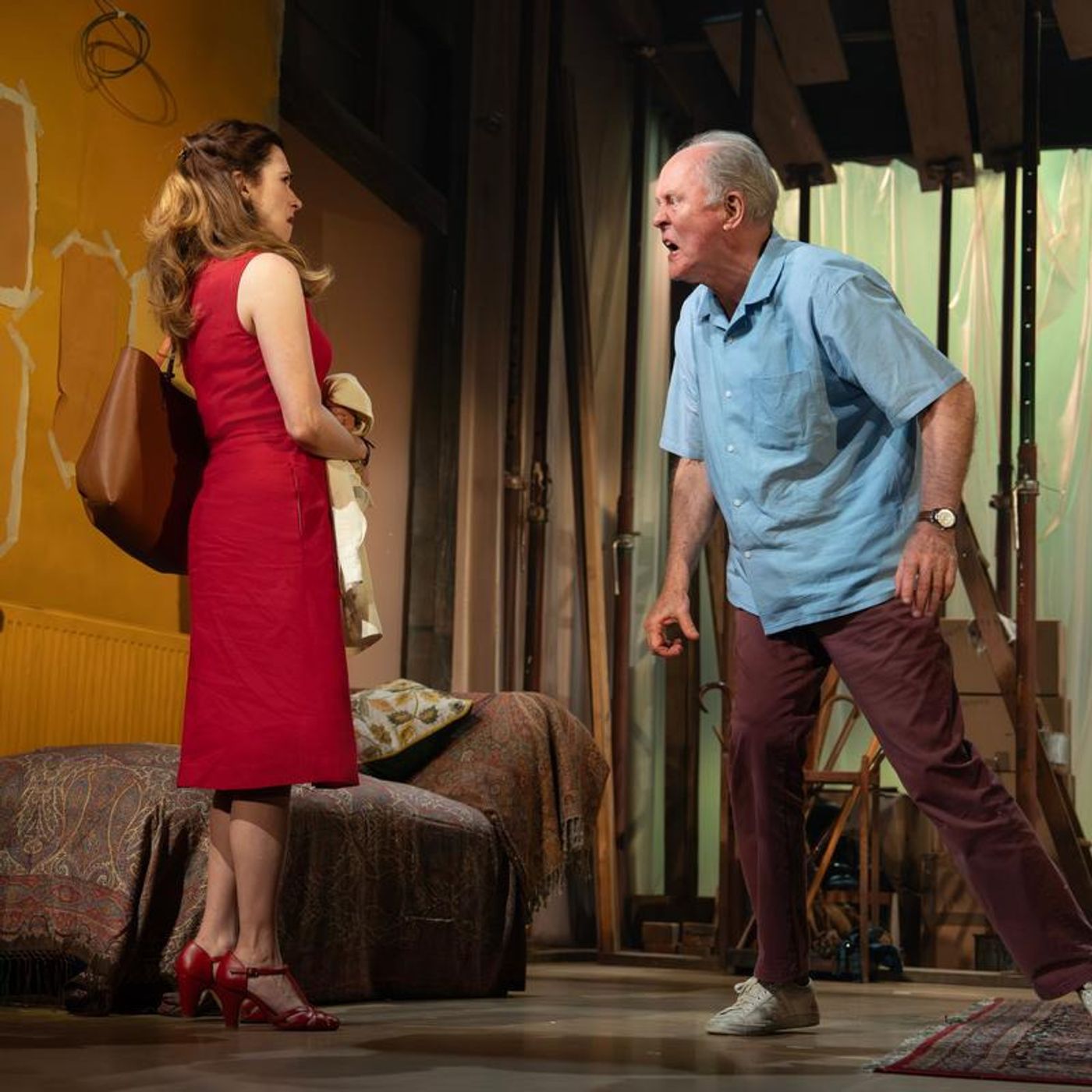
This is all of it on WNYC. I'm Alison Stewart. The 2026 Tony Awards are set to broadcast live this Sunday, June 7th from Radio City Music Hall. And one of the shows up for best play stars John Lithgow and Aya Cash. And it comes from a first time playwright. Set in 1983, the four time Tony nominated play Giant opens with beloved children's book author Roald Dahl staying at his home in the English countryside which is under renovation. While Dahl himself is under fire, he's caused an uproar with a book review he wrote about Israel's siege of Lebanon. Within his critique of Israel were anti Semitic statements. Now Dahl's New York and London publishers are begging the best selling author to apologize and make amends so that bookstores will continue to carry his books. Jesse Stone is a young woman who works for Dahl's publisher in America. She's sure that if Dahl just admits he phrased his dissent carelessly, all the controversy will die down. Instead, over the course of one hot afternoon, Dahl doubles down, triples down, and Jesse, a Jewish woman, becomes the center of Dahl's anger. Giant was written by first time playwright Mark Rosenblatt. He is normally a director, but gave that role up to Nicholas Heitner for this project. It's nominated for four Tony Awards, including best Play and a Best Supporting Actress nomination for Aya Cash, who plays Jesse. It has been announced that a film version of the production will hit movie theaters later this year. But for now you can see it at the Music Box Theater on Broadway until Sunday, June 28. And the Drama Bookshop on West 39th street is now offering free copies of the play to those with a valid student id. A few weeks ago, playwright Mark Rosenblatt and actor Aya Cash joined me to discuss. I began our conversation by asking Mark, a longtime theater director, what made him write Giant, his very first play.
- [02:00]
Mark Rosenblatt
I was, I was totally unexpected and completely startling to find myself writing a play at all. I yeah, as you said, I was right. I was a free, a kind of freelance theatre director. Sometimes freelance theater directors need to come up with their own ideas for projects, maybe find a writer. I had this at this idea and I mentioned it to Nick Heitner, Nicholas Lightner, our director and back in 2018, and he seemed to like the idea. And eventually about a year later, I did some work on it. He said, you know, why don't you write it? And I don't know, it lit something up in me and he felt that I was sort of had spoken so persuasively about it and had such a sort of clear sense of it that giving it to another writer, an actual writer to do, might kind of take it off in a direction that I hadn't envisaged. So, I don't know. I was so steeped in it, I just thought, I'll have a go.
- [02:52]
Alison Stewart
Aya, what did you see in your
- [02:54]
Interviewer/Host
character that made you want to pursue it?
- [02:56]
Aya Cash
I mean, I think first and foremost, I saw the play because when I read the play, I was literally sort of unable to move once I started. So that was the first thing I was excited about, is just the entirety of the play and then just. Jesse is incredibly intelligent and is in many ways the antagonist of this play and getting to go head to head with ideas, let alone head to head with John Lithgow. Always appealing, I'm sure.
- [03:36]
Interviewer/Host
I'm sure.
- [03:36]
Alison Stewart
Do you think she's the antagonist?
- [03:39]
Aya Cash
In many ways, she is set up to be that she comes into a space that is completely not hers. And honestly, we started this. I started this journey on the West End where being the American coming in was the stranger, was the sort of rip in the fabric. And there is. It starts with basically 15 minutes of these Brits being very British and funny, and then this American comes in and is just wrong in a certain way. And.
- [04:13]
Interviewer/Host
Yeah, it's so funny you should say that.
- [04:15]
Alison Stewart
I was gonna ask you because your
- [04:16]
Interviewer/Host
American ness does come through.
- [04:19]
Alison Stewart
How did you think about that, Mark,
- [04:21]
Interviewer/Host
when you were writing the play about making Jesse an American?
- [04:24]
Mark Rosenblatt
Well, right at the beginning, the idea was always to have a British and American publisher come to town to kind of work him over, to try and get him to make some kind of conciliatory statement. In my research at the very beginning, I got it wrong in my plan, which was that Robert Gottlieb had been Dahl's publisher. And I just got the dates wrong when I was just kind of outlining. He had already sacked Dahl from Knopf two years before. So in my original plan, it was these two guys, you know, Robert Gottlieb and Tom Mashler. Tom Mashler is the British publisher, creator of a real person, the inventor of the founder of the Booker Prize, like, and a sort of wunderkind of British publishing. And. And so I had these two guys in the room, and then I realized I was just wrong. And he was. He couldn't have been in the room. And I had a vacancy. And I just thought, it's. So this is a real opportunity now. It's much more interesting to Me to maybe find someone who is. I don't know. Quick calculation was like, lower ranking, less of an obvious alpha, less the guy in editorial with all the power. Someone who's sort of busking, someone who's been sent to do a job. And maybe it's more interesting if it's also not a man. And that allows a space for misogyny and power dynamics that suddenly became much more exciting to write.
- [05:50]
Interviewer/Host
It's interesting. What are three characteristics that you would describe Jessie Stone as? As somebody who's never met her.
- [05:59]
Aya Cash
Smart, patient, and steely.
- [06:04]
Alison Stewart
Until.
- [06:04]
Interviewer/Host
Well, she's patient till that particular moment.
- [06:06]
Aya Cash
Yeah, but, I mean, that's a lot of patience. Patience is not perfection. Patience is not Saint Dom. So, yeah, I would say that she's all of those things, but unexpectedly so I don't think. And she is a woman in Publishing in 1983, and there is a certain amount of deference that she comes in with and playing the role of woman, which I think a lot of women have had to play in spaces with men.
- [06:36]
Interviewer/Host
What is Jesse's mission when she heads over to Roald Dahl's house?
- [06:41]
Aya Cash
So she's not quite sure because she has not been totally briefed, but she knows that. She's come to talk about his review, which she's maybe on the tube, started making her notes about what he said wrong. We discussed this a little bit in rehearsal in the UK about just how. How she's gotten to this moment, and she's late. She has not talked to Mashler about what she's supposed to do, and she's coming in with a lot of feelings, but also a lot of. I don't think she expects what she gets. I think she comes in thinking it's gonna be a bit of a civil discussion and instead gets something quite different. I mean, Mashler says at one point, you were. You were brought in to make a show. And I don't even think she understands that she was supposed to. That she thinks she's being brought in for her intelligence and for her ability to talk to him. And then he says, no, you were brought in to make a show, to make him feel fond, over and flattered.
- [07:48]
Interviewer/Host
Well, let's listen to a little bit of Jesse's first interaction with Roald Dahl. This is from Giant.
- [07:55]
Jesse Stone (character)
And is this your first job?
- [07:57]
Roald Dahl (character)
Dearest darling.
- [07:58]
Jesse Stone (character)
Is that such a terrible thing to say? You seem terribly young, terribly nervous. How do I. I thought there might be congratulations in order. I don't want to be rude.
- [08:10]
Roald Dahl (character)
His manners are widely celebrated.
- [08:16]
Aya Cash
Well, it is My third second at fsg. I came in as an associate. Now I'm a director. Before that I was with an agency.
- [08:23]
Mark Rosenblatt
Roger tells me she's a rising star.
- [08:25]
Aya Cash
Oh, I don't know about that.
- [08:26]
Jesse Stone (character)
And are you Jewish?
- [08:28]
Roald Dahl (character)
Ro, I'm so sorry.
- [08:31]
Jesse Stone (character)
Tom and I were discussing.
- [08:32]
Home Depot Advertiser
Your name, please.
- [08:34]
Jesse Stone (character)
Couldn't quite work it out. Stone. Was that Stein?
- [08:39]
Roald Dahl (character)
No, no. Well, I'm no Mrs. Stone. You really don't have to answer.
- [08:44]
Jesse Stone (character)
Hey, Tom is. You wouldn't mind my asking Tom, I
- [08:48]
Roald Dahl (character)
just want to know fit's personal role. People don't just ask you if you believe in God.
- [08:54]
Jesse Stone (character)
I don't.
- [08:56]
Interviewer/Host
That's from the Broadway play Giant. My guests are Tony nominated playwright Mark Rosenblatt and Tony nominated actor Aya Cash. Mark, why, what do you think about Jesse just brings out this, this, this, this ah, this person in doll, his ability to just like keep going at her.
- [09:17]
Mark Rosenblatt
Well, he's a very controlling person and he has a sort of animal like he's like a wounded animal and he know is very quick to at least think that he can work out who's against him, who's managing him. What just happened before that clip is that she has accidentally dropped in his lap the art, the. Her copy of the book review. And on that copy of the book review scribbles are her scribbles. Her responses that seem to be negative seem to be questioning the validity of what he said. And so immediately he's putting stuff together to him. Is she Jewish? Where does she stand on the, on, on Israel, Palestine? Is the wool being pulled over his eyes? And as someone who has, who believes he has a sense of how they, they. Those people that support the causes that he doesn't support might operate, he starts to kind of work her over. It's a, it's an animal instinct that starts to happen.
- [10:22]
Interviewer/Host
What does Jesse learn from Roald Dahl in those moments?
- [10:27]
Aya Cash
You know, it's interesting. There's so many moments on stage. In the moments where he's talking to Tom Mashler. I find that Jesse agrees with him over Tom most of the time, which is so interesting because you'd think that would not be the case. But there's so much of the time that she's sort of chum in the water with these sharks. Like, I mean they're all, you know, there's seven plays happening on stage during any play, right. If you watch people who are not speaking, there's always something else going on. And there's so many times I look around and I see Elliot and Rachel Plotting while like I'm just there going, how am I surviving in these shark infested waters? And listening to Rol talk about, you know, that you should speak up, you should say what you think. Like, don't be craven. Say, say what you believe. Stand up. And I think in some ways Jesse agrees. She doesn't agree with what Rolle is saying to say, but she does agree that we should be speaking up and to say your position. So, yeah, I would say there's lots of moments where weirdly she agrees with Doll.
- [11:45]
Mark Rosenblatt
They're weirdly like each other, which is why they, why they, they kind of are drawn to each other. And also I think it's worth saying that she's a fan of his writing. That's the big tear for her, I think, is that she comes to this house in a way like I came to writing the play as a huge Roald Dahl fan. I loved his, I love his work. I still read it to my son and, and you're dealing with, she's dealing with two truths at once when she enters that house to the man of her that shaped her childhood, her own son's childhood and the politics that she's reading in that review.
- [12:23]
Interviewer/Host
It's interesting and I thought this as I was watching the play and my producer Jordan, I had the same thought, was like, why didn't Jesse leave sooner?
- [12:30]
Alison Stewart
Why doesn't she just walk out?
- [12:32]
Aya Cash
You know, it's so funny. People talk a lot about the speech in Act 1 and I, I am like, it's so interesting. The more people don't ask why she comes back. I mean, it's a very interesting. That entrance is one of the more complicated entrances back into the play for when I come back for Act 2 because it feels like she has just done it. She's given it all away and there is no coming back. But the truth is she's again, she is a woman with a job and a child with special needs. And that is, there is no discounting how much she needs this job and needs to be. So when she does eventually say, I don't know if it's a spoiler, but when she says that maybe she doesn't want to work for the publishing company anymore because of him, that is a huge deal to get to that place. And so every time I come on stage and no matter what he's saying to me, that is always in the back of my mind is that I have a family to take care of and that this is, it's not an option to leave.
- [13:41]
Interviewer/Host
Let's Listen to you. At this point in the, in the play. This is from Giant.
- [13:46]
Aya Cash
You saved the Jews of Europe only to discover the Jews weren't worth saving, and now you want their devil state brought to its knees.
- [13:53]
Jesse Stone (character)
What do you want?
- [13:55]
Aya Cash
I'm asking you to apologize.
- [13:57]
Mark Rosenblatt
To who?
- [13:58]
Aya Cash
To them?
- [13:58]
Jesse Stone (character)
To you.
- [14:00]
Roald Dahl (character)
To you, Stein.
- [14:05]
Aya Cash
Just apologize.
- [14:08]
Roald Dahl (character)
You understand the power of language more than anyone. How it can twist things out of shape and how it can make things whole again. And this, this kind of language, when the world comes for us again, when people like you won't protect us anymore, it sends me and my son somewhere Mr. Taff knows only too well. So, yes, yes, you do owe me an apology. Yes, yes. Yes, sir. Yes, you do.
- [14:42]
Interviewer/Host
Oh, I love that John Liskow. What does he bring to the role that you didn't expect?
- [14:50]
Mark Rosenblatt
Oh, nothing at all. He's, he's, he's. Well, I, we've been working with. He's the only person I've ever worked with on it. So it's like his voice has been in the room since the beginning of the process. But he has, I mean, just as a performer, he is, he is, he's like a Rolls Royce, you know, and he just, just nudges the pedal and it just start. The engine starts to roar. He's got incredible, incredible levels of charm and incredible. And in a relationship with the audience that is sort of charming and beloved, but also has this instinctive ability to reach into the darker and very controlling and calculated side of many characters he's played, and especially this one. His ability to play truthfully in both of those zones and to find the compassion of the character, the heartfelt compassion of the character as he does have. And the, the defensive, wounded cruelty of the character is, is, is not something I. Certainly not something I take for granted. I mean, he, he's, it's, it's a masterclass.
- [16:02]
Interviewer/Host
Giant is going to be coming to movie theaters, I believe, this fall.
- [16:06]
Alison Stewart
Aya, what do you, how do you think it'll appear on. On screen?
- [16:11]
Interviewer/Host
How do you think viewers will experience it on screen versus on stage?
- [16:16]
Aya Cash
You know, I don't know. And it's not a movie, so it's a screen version of the play which takes a different eye. Right. You want to come to it with the understanding that you are not watching a movie. So it's not the extreme close ups. It's not necessarily, it's not shot that way. But, you know, for me, when I used to watch a play that had been filmed, it was like a little portal into a world that either I couldn't afford or I couldn't get to, you know, and that feels really special to get sort of a hint from what we did in London and that that is very special to be able to have access to that if you couldn't have, you know, flown to the West End. And that's exciting because hopefully it brings people to live theater.
- [17:07]
Alison Stewart
That was my conversation with playwright Mark Rosenblatt and actor Aya cash about the four time Tony nominated play Giant. The show closes on June 28th.
- [17:17]
Home Depot Advertiser
Kick off memorial Day savings with up to an extra thousand dollars off select top brand appliances like Frigidaire plus Get free delivery at the Home Depot. Stack your appliance lineup with a fridge with an extra large ice capacity and an oven with over 15 cooking modes. Then let the real MVP handle cleanup with a dishwasher's 50 minute wash.
- [17:38]
Roald Dahl (character)
Cycle.
- [17:38]
Home Depot Advertiser
Shop appliances at the Home Depot offer valid May 14 through June 3, US only, free delivery on appliance purchases of $998 or more. See Store Online for details.
- [17:47]
Icebreaker Gum Advertiser
Need a boost? Sometimes all it takes is tapping into your inner cool. Icebreaker's gum helps you unleash the confidence within. Each chew releases a rush of icy flavor powered by cooling flavor crystals, sending a wave of refreshment to reinvigorate all your senses. Icebreaker's convenient pack fits everywhere from car cup holders to backpack pockets, so you can find your cool wherever you go. Grab Icebreaker's gum online or at a store near you.