Loading summary
Transcript119 lines
- [00:00]
Narrator/Announcer
All of it is supported by Memorial Sloan Kettering Cancer Center. In a small groundbreaking clinical trial, 100% of participants with a specific type of rectal cancer saw their tumors disappear using immunotherapy alone. Researchers at MSK are now studying this approach in cancers of the stomach, liver and more. And a majority of tumors are disappearing. For MSK Giving Day, all gifts will be tripled. Learn more@msk.org all of it. Choose to lean into it. Every Mazda is engineered to give you effortless control.
- [00:41]
Robin Byrd
Awake up.
- [00:51]
Alison Stewart
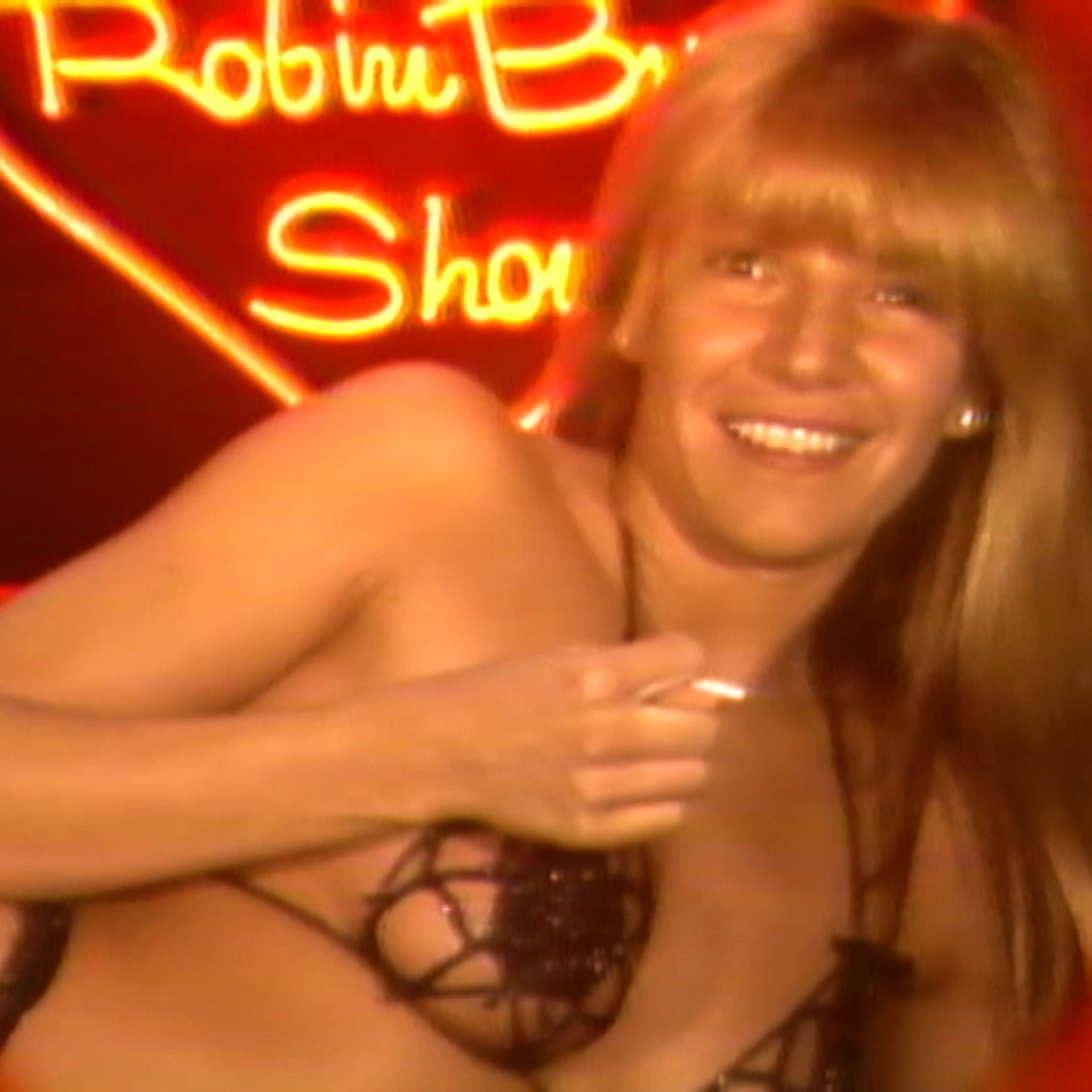
This is All OF it. I'm Alison Stewart. Hey, a reminder for you. You just have a few more days to sign up for our Summer Reading Challenge. We want you to read books in six different categories by Labor Day week. And if you finish, you get a prize. You've got until this Saturday, July 4th, to sign up. Head to wnyc.org summer readingchallenge to find out how and to learn about all the categories. Again, that's wnyc.org summer reading challenge. Now let's get this hour started with a new documentary about Manhattan cable legend Robin Byrd. In the 80s and 90s, if you turned on public access television in New York late on a Wednesday night, you would find the Robin Byrd Show. Robin Byrd used her platform to encourage sex, positivity and entertain her viewers. She reduced the stigma surrounding sexuality during the AIDS epidemic. She became a key source of sex education, encouraging her viewers to practice safe sex and use protection, all with a big grin, a great laugh and a barely there bikini. Clothes were often optional for guests. A new HBO documentary dives into the archive of the Robin Byrd show and follows Robin as she begins to engage with her own legacy. The film is titled Bang My the Robin Bird Story. It premieres tomorrow night. In just a bit, we're going to speak with Robyn Bird herself. But first, I'm joined by filmmakers Gillian Gunther. Hi, Jillian.
- [02:21]
Robin Byrd
Hi.
- [02:21]
Alison Stewart
And Stephanie Schwam. Hi, Stephanie.
- [02:24]
Stephanie Schwam
Hello.
- [02:25]
Alison Stewart
And listeners, we're taking your calls. What memories do you have of the Robyn Bird Show? What did Robyn and her program mean to you? Did you ever call in? Give us a call at 212-433-WNYC 212-4339. Gillian, people have wanted to tell Robin Byrd's story for a long time. What did you present to her that made a difference?
- [02:49]
Gillian Gunther
I think that we were two women. We sat down with her in the East Village. She'd been speaking to many people prior to us. We were two women. We were very simpatico. That was very important to her. Just the Fact that we were women. I'm a New Yorker. Stephanie spent a lot of time in New York. We really could relate to her story, and she had really impacted us, you know, growing up and having seen her. So I think that she felt, as Robyn will say, she felt loved by us immediately, which was true. And that's such an important part of what she was looking for in making the show and what she wanted to give to people. So we came in with open hearts and vulnerability, and she gave it back to us.
- [03:36]
Alison Stewart
Yeah. Stephanie, what did you tell Robyn that put her in the mind that she
- [03:40]
Interviewer/Host
was in good hands?
- [03:42]
Stephanie Schwam
Well, first of all, I think what was really important to Robyn was we were fans and we were bird watchers. And I think, you know, when you meet her, one of the first things she asks you is, did you watch my show? Was I part of your life? That's really important to her. So the fact that we both had these sort of hilarious and very typical stories of people who, you know, watched the show when we were young and, you know, it was such a massive part of forming, you know, our. Our experience and our sex education, I think that she loved that. And then on top of it, I think, as Gillian said, you know, the fact that we. I think she could feel our goodwill towards her, and, you know, we went in really asking a lot of questions rather than sort of telling her what our agenda was.
- [04:31]
Interviewer/Host
So when did you first see the show, Gillian?
- [04:34]
Gillian Gunther
I was probably 10. I grew up in downtown New York. I had a little black and white TV with a UHF dial and rabbit ears. And it was. I didn't even have to hide it because it was the 70s and I had it on my lap and I would find it, and it was like a. It was a free thrill, and it was very exciting, and it didn't feel dirty or yucky. It felt like a kind of, you know, she's really celebrated burlesque, and she really appreciated people's talents. And you really felt that the way she spoke with people, you know, in our film, Annie Sprinkle, who is a downtown New York performer, you know, she was celebrated. She came on and she said that everyone loved to go through the show and see, you know, and present their work. And so she really treated it like work. And as everyone was an artist and human, so that took away the feeling of a scary voyeurism.
- [05:39]
Interviewer/Host
How about for you, Stephanie? When did you first encounter Robin Byrd?
- [05:43]
Stephanie Schwam
For me, it was probably around the age of 12, and I would travel with my mom to New York when she had business here, and she would have business at night and leave me in the hotel alone with the remote control. So I found Robin, and it was just like. It was the most fantastic thing ever. I mean, the story that I always tell is the first time when I was little and I snuck porn, I was so scared, and I was like, oh, my God, what is that man doing to that woman? And then when I saw Robin, it was like, wait a minute. This is so joyful. And everyone's naked, and this is what that looks like. Oh, my gosh. And I think I was really struck by the joy of seeing the bodies move. And there was just no shame at all. And I think, you know, when we talk about Robyn, we talk about this idea that, you know, shame was just, like, off the table, you know, in what she did. She wanted people to feel loved and no one should be harmed. And that was her entire ethical framework. You know, there was no moralizing. There was no agenda. It was just beauty and joy.
- [06:51]
Interviewer/Host
We're talking about a new documentary, Bang My Box, the Robin Bird Story, with directors Gillian Gunther and Stephanie Schwam. It premieres tomorrow night on hbo. One thing you get about Robin is how much tape of her there is, and she has it going through that tape. Gillian, what did you find that surprised you?
- [07:15]
Gillian Gunther
I think primarily we were quite surprised that she had all 600 tapes in her New York apartment and in three storage spaces, and she had not taken it out at all. So she. In order to look at these tapes, they had to be baked in a process so that the humidity was taken out of them before they could play, because they're old. So we actually had to choose very carefully because we couldn't afford to bake all of the tapes. We chose about 40 tapes, and we had to do that by talk. Look, talking to her about who had appeared, what coincided with what history we wanted to tell. So it was a very specific sort of paper cut before we went in and handled the actual archives. I think it was surprising that she had been so political without meaning to be political when we saw the material. We call her an accidental activist, and she wouldn't call herself political either, but she was a body, positive sex, positive pro free speech, pro safe sex, before any of that language even existed.
- [08:34]
Alison Stewart
It's interesting because the documentary talks about her childhood quite a bit.
- [08:38]
Interviewer/Host
Stephanie.
- [08:38]
Alison Stewart
She was born and raised in Manhattan, but she was adopted. What did she tell you about her childhood that was revealing? And you saw later on in the
- [08:48]
Caller Barbara
show,
- [08:51]
Stephanie Schwam
I think the thing about. I think we were careful in the way we wanted to treat Robyn's childhood. Because we also, you know, really wanted to make sure, I think, that a lot of times the stories of people who become adult entertainers, that becomes part of this sort of narrative about, well, you know, they didn't have a great relationship at home. And we wanted to sort of downplay that because I think ultimately that wasn't necessarily the motivator for Robyn. It wasn't about having this life because of this sort of intense childhood. I mean, she chose her life because she loved sex and she loved joy. And I think, you know, for us, what was so compelling was how Robyn sort of turned what she didn't get when she was younger and turned it into instead of just looking for love, it was about how can I give love to get love? And so I think that was such a revelation for us.
- [09:57]
Gillian Gunther
Can I add, Alison, that, you know, we had no idea she had gone to the School of Visual Arts. We didn't know she went to Baruch College to study business. She used. She wanted to be a director, she wanted to be an artist. And she says she was a pinball in a pinball machine, going from one thing to another. But she really did build a career. We don't think of her as a student in that way, but she was studied and trained and had a point of view. And really, as the director of her show, she really implemented a lot of that as well. So she really was a fellow maker and artist. And that was something we had no idea, which came from her childhood.
- [10:37]
Interviewer/Host
Gillian, what was New York about? Robin Byrd and the Robin Bird Show?
- [10:44]
Gillian Gunther
God, I would say that, you know, she's pre Giuliani, pre algorithm, pre platform. She was local public access. You know, she really made that show for her local community, but that was the so called capital of the world, New York City. So that became something that was spread, you know, all over. But I think I can't imagine a childhood without her in it. You know, she was, you know, doing her own drum. I know somebody just wrote an article and said she was the something about millennials, but we really think of her as a Gen X darling, you know, and I think she really. She's iconically part of our childhood. And growing up because of the lack of rules, it was, you know, there wasn't a lot of money in New York. Then there was, you know, and it was the Wild west. And the, you know, public access was the Wild West. So she was a precursor to all this kind of structure that ended up coming down on us Stephanie, Gillian kind
- [11:54]
Interviewer/Host
of answered this, but I want to ask you this. In what ways was the Robin Byrd Show a product of its time? And what ways was it ahead of its time?
- [12:03]
Stephanie Schwam
Oh, gosh, that's a good one. I mean, just going back to the New York of it all, I want to say, though, that something that really struck us was this idea that, you know, when we found out that Julius Bar, which is this iconic gay bar in downtown New York, used to put her on television on sort of the way straights would watch sports in their bars, we just thought that could only happen in New York, you know, and then I think, yeah, I mean, I think public access was at the time. I think it's. It was the open Internet before the Internet existed. Channel J was New York City's only ungoverned adult public access channel. And so I think Robin just stepped into a void that was there that could only happen at that time.
- [12:55]
Alison Stewart
Gillian, do you consider the Robin Byrd Show a feminist show?
- [12:59]
Gillian Gunther
Well, that's such an interesting question. I think it is a feminist show, but not because Robyn labels herself a feminist. And I think that's what's wonderful about her, is that she acts on instinct and that her instincts coincided with movements in history. And that was something that we really thought about in making the film, because she was, you know, she didn't speak about issues. She just did what she felt was right. So she's certainly a feminist. She's certainly, you know, in retrospect, she's certainly impacted. You know, she, you know, they went to the Supreme Court fighting for free speech. That was something she did out of her own will, not thinking of it as a political action, but it was, you know, she found out, you know, she. She was a First Amendment fighter. And we always like to mention, Alison, that the case she won in her First Amendment fight was against Time Warner, who now owns hbo, and just paid for this film about her.
- [14:08]
Stephanie Schwam
Well, then we love that part. I mean, the other thing we like to talk about, too is this idea of language and how the language sort of is meeting Robin, where she was at, where, you know, the terms body, positive, sex positive, queer, safe spaces. These were ideas that weren't yet articulated in language. So we always think it's so interesting that the Lloyd sort of met Robyn where she was naturally.
- [14:34]
Interviewer/Host
We got a good text that says, as a native New Yorker, I adored her in my mid-20s. I live with my senior citizen father at the time, remember him loving her, too, and describing her as so girl next door, ish and innocent.
- [14:46]
Alison Stewart
He loved her approachability. She was loved by.
- [14:49]
Interviewer/Host
Let's talk to Christy, calling from Middlesex, New Jersey.
- [14:52]
Alison Stewart
Hey, Christy, thank you so much for
- [14:53]
Interviewer/Host
taking the time to call.
- [14:54]
Alison Stewart
All of it. You're on the air.
- [14:57]
Caller Christy
Hey, how are you doing?
- [14:58]
Caller Barbara
Great.
- [14:58]
Caller Christy
Just wanted to call in. Hearing you guys talk about it sparked so much joy. I actually moved up here from All Girls Catholic school in Louisiana and come up from Louisiana. She, my best friend, had a cousin who lived in New York in SoHo, who was a gay man and introduced us to the show. And it was just such a different way of thinking. And you hear you guys talk about it sparks so much joy. Actually just texted my two best friends from high school saying, like, this is happening tomorrow. We all have to watch this together. So I was just so. It changed the way that, like, then made New York feel so special to me, moving up here and just sort of changed the way I looked at things.
- [15:32]
Interviewer/Host
For calling in, we're talking about a new documentary, Bang My Box, the Robin Bird Story, with its directors, Gillian Gunther and Stephanie Schwam. It premieres tomorrow night on hbo. A big part of the documentary is the love story between Robin and her husband, Shelly. They've been together 50 plus years at this point, and he's going through dementia. He's a happy person. Stephanie, what did you observe about them as a couple during your time filming them?
- [16:02]
Stephanie Schwam
Well, they were just magic. And we think about Shelley as being sort of the gift from the universe, you know, because I think when we thought about making the film about her, you know, we didn't know about Shelley the way nobody knew about Shelley. And I think the thing that was the most moving part of this is Robyn's character for him that is so profound and so intentional, and, you know, it. I don't think she looks at it this way, but it's wonderful payback for a lifetime of them together where he supported her and he made everything possible for her. So that story was just so unbelievable. And, you know, I think Gillian and I, both as lovers of romantic comedies and loving of that tradition, you know, the idea that we had this kind of Jewish New York rom com to sort of, you know, lace through the film was such a gift for us, and we feel like it really took things to the next level.
- [16:59]
Interviewer/Host
Robin really began to dedicate part of her show to safe sex education, but she made it sort of accessible. What was unique about her approach to sex education?
- [17:10]
Stephanie Schwam
Gillian, she.
- [17:13]
Gillian Gunther
She really spoke about it from, you know, from observation and from being within the community. She thought she was taking care of her community, that was her approach. It wasn't about being on a soapbox. You know, she talked about safe sex on TV when the government wasn't talking about it. And when we started to, you know, we actually set up a bird call hotline for people to call in and tell their stories like this. And we were overwhelmed with stories from people in the gay community who said that they felt she had saved their lives. That she, you know, she says in the film that she, she saw people and she thought and she wanted to remind everybody to use condoms. She showed demonstrations in a very happy go lucky way on how to make a dental dam out of a condom. Like, she really was very inclusive and no shame involved. And I think, you know, what she meant to the gay community was more profound than we could have even imagined. It was different as little kids watching TV and seeing a sexy, funny lad. But then to have this open up like an onion and see the impact she had was really, really profound for us to get to tell that part of the story and to learn about it.
- [18:32]
Alison Stewart
The name of the documentary is Bang My the Robin Byrd Story. I've been speaking with its directors, Gillian Gunther and Stephanie Schwam. It premieres tomorrow night, tomorrow night on hbo. Thank you so much for being with us.
- [18:44]
Stephanie Schwam
Oh, we're so thrilled. Thanks for having us.
- [18:46]
Gillian Gunther
Can't wait for you to talk to Robin.
- [18:47]
Caller Christy
Thank you.
- [18:48]
Alison Stewart
Yeah. Robyn Bird, she's up next. You're listening to all of it on wnyc. I'm Alison Stewart. We've been speaking with the directors of the new documentary Bang My Box, the Robin Byrd Story. It premieres tomorrow night on hbo. And now I'm thrilled to be joined by the woman herself, Robin Byrd. Hey, Robin.
- [19:15]
Robin Byrd
Hello, Allison. How are you? Hello, npr. I love npr. We need more public radio radio. We cannot fight enough to keep it public radio, the voice of the people.
- [19:29]
Alison Stewart
Love it. Thank you, Robin, for the shout out. We appreciate it.
- [19:33]
Robin Byrd
Hey, listeners, use it as a sound bite. It's fine.
- [19:38]
Alison Stewart
Listeners, we're taking your calls. What memories do you have of the Robin Byrd Show? What did Robin and her program mean to you? Did you ever call into the show? We want to hear your Robin bird stories. The PG13 version, please. Our number is 2124-339692-12433. WNYC. I love hearing you say that.
- [20:05]
Robin Byrd
Love it, love it, love it. How are you guys?
- [20:08]
Alison Stewart
We're doing great. You know, I was curious for you. What was it like to have filmmakers in your home asking you questions about this? This Time in your life.
- [20:18]
Robin Byrd
They weren't just any filmmakers to me. They were the filmmakers that I allowed in my home. I, as you can, will see in the film, I didn't let anybody in my home because my home became an office warehouse where I have my tapes and my equipment, where I did all my editing and transferring and uploading all the technology. And then one day I said, you know, know, I'm an analog girl, and I'm gonna stick to that. And all this digital stuff, I can't. Can't keep up with.
- [20:57]
Alison Stewart
Understood. Understood.
- [20:59]
Robin Byrd
But they were. They were my girls. They were the ones. And it was. I was reluctant, and it took a little breathtaking setback of my, you know, situation there, and I went, nope. The story has to be told.
- [21:17]
Alison Stewart
And your story is really interesting because you went to the School of Visual Arts here in the city. How do you think your arts education was helpful to you when you started producing. Producing your own show?
- [21:29]
Robin Byrd
Well, my art was acrylic and painting and video and film. But then the School of Visual Arts was in between my classes at Baruch, because at Baruch, I wasn't really getting art classes, and that's what I wanted. So it was amazing that we got to show it in the School of Visual Arts theater for the premiere. Full Circle. Everything about this movie has been magical. Really, truly. It was a Mercury retrograde when I decided that I was going to reconsider, which is part of Mercury Retrograde Rethink. And these. The two producing directors and the executive producer, Greg Scarnici, they were the right ones? They were the ones, yeah.
- [22:31]
Interviewer/Host
When you initially started this show, when.
- [22:35]
Alison Stewart
What were your goals?
- [22:35]
Interviewer/Host
What did you want to achieve with the Robin Byrd Show?
- [22:38]
Robin Byrd
Well, I didn't like what was on television late at night before you went to sleep, but have those. Those bad dreams of the news of the day. So I wanted to turn you on and tuck you in and give you fun and fantasy and relaxation after a day of hard work or. Or a day of some. I was like the entertainer's entertainer as well. So some people were coming back from their jobs as servers, bartenders, performers, Broadway shows, or at the cabarets. And I was there to turn you on and tuck you in.
- [23:21]
Interviewer/Host
And you did a great job, by the way. Let's talk to Mark from the Upper West.
- [23:25]
Alison Stewart
I used to come home from seeing
- [23:27]
Interviewer/Host
shows when I worked at mtv. Turn it on.
- [23:30]
Alison Stewart
It was great.
- [23:31]
Interviewer/Host
Let's talk to Mark from the Upper west side. Hey, Mark, thanks for calling, all of it.
- [23:36]
Caller Leonard
Hey, thanks.
- [23:37]
Caller Mark
So my story is in 1980. My wife and I got married. It was in. It was the end of May 1980, and we had a rehearsal dinner at the now defunct Chun Sha Fu on Broadway at 90th Street. And as was I Want, we went back to our friend John's house and we all were hungry. Thirty minutes later, we started watching Robin Byrd. We watched her for a half an hour. It was fantastic. We'd all knew about her in the theater. We were mostly theater people and mostly straight, but we loved her. And then we went to Elaine's for a late night supper. I don't know how we got in, but that night we were with Robin Byrd and Elaine Kaufman. And I couldn't imagine two more significant women back then in New York.
- [24:18]
Interviewer/Host
Love that. Thank you so much for sharing. Let's talk to Barbara, who's calling from the east side of Manhattan.
- [24:24]
Alison Stewart
Hey, Barbara, thank you so much for
- [24:25]
Interviewer/Host
calling, all of it. You're on with Robin Burke.
- [24:29]
Caller Barbara
Hello there, 2012. Hi, Robin. Big fan. And I met you under really interesting circumstances back in 2012 or 13. I was running for surrogate of New York county and I went to a party at Mark Green's house and you were there.
- [24:47]
Robin Byrd
Oh, yes.
- [24:49]
Caller Barbara
You kindly agreed to pose with me for pictures that were taken by my friend. In the middle of it, you put your hand on my breast and I'm thinking, boy, I'm running, you know, to be surrogate judge. But I thought it was hilarious. And I recently posted that photo. I'm now 74 years old. I posted that photo on Facebook and everybody thought it was hilarious. Thank you so much.
- [25:13]
Robin Byrd
Thank you. Are you a surrogate judge now?
- [25:18]
Caller Barbara
No, no. As somebody told me never to say I lost that race, but to say the other candidate won more votes than I did. But I still remained on the Supreme Court, State supreme Court. And now I'm happily retired.
- [25:31]
Caller Leonard
Wow.
- [25:32]
Robin Byrd
That's kind of an amazing, Absolutely, absolutely great story. Thank you, Barbara.
- [25:38]
Interviewer/Host
My guest is Robin Byrd. We're talking about the new documentary about her life, Bang My Box, the Robin Byrd Story. It premieres tomorrow night on hbo. Listeners, we want to hear from you. What memories do you have of the Robin Byrd Show? What did it mean to you? Did you ever call and get on the show? Please give us a call at 2124-3396-9221-2433. WNYC. Robyn, you are a producer on this show as well.
- [26:04]
Robin Byrd
I'm producer, director, in front of the camera. I'm a camera person when the guests are on in front of the camera dancing Yep, yep, yep. I'm the editor. I'm the babysitter. I'm. I'm a jack of all trade, a Jane of all trades.
- [26:25]
Interviewer/Host
When did you first realize that you had become a New York celebrity?
- [26:30]
Robin Byrd
Well, I'm a native New Yorker, so the minute I was born, I guess I was. You know, that's the old saying by Frank Sinatra. If you can make it here, you can make it anywhere, so why bother leaving? And I had such a great platform to the audience and the community. So, I mean, I'm ahead of my time. I just did what I wanted to do. I didn't do it for fame. I did it for love, for the love of people and for the love of myself. You know, you give love, you get love. And, And. And this movie is. Is almost like a love letter to me because they. They really. They really got the essence of everything that I've done. And I'm like, wow, I did all that.
- [27:32]
Interviewer/Host
This text says, as a burlesque performer in New York City, I performed for Robin when she hosted up her own show on years ago. Her own show years ago. I remember her being very kind backstage during. She licked my stomach and I apologize for the taste of latex lube left over on my body from my latex costume. She said, don't worry, honey. I've tasted a lot worse.
- [27:57]
Robin Byrd
That was probably when we did the show at the Cutting Room. I did a live show for a little while at the Cutting Room during the winter months. Years ago was different.
- [28:11]
Alison Stewart
Let's talk to Leonard from Hell's Kitchen. He's been holding. Hey, Leonard, thank you so much for holding. You're on the air.
- [28:18]
Caller Leonard
Hi, how are you, Robin?
- [28:20]
Robin Byrd
Hello, Leonard.
- [28:22]
Caller Leonard
Hi. Thank you so much for taking this call. I just had to get on. I rarely call in to npr. I am an avid listener, but I am also an avid watcher of the Robin Bird show way back in 1980. 1992 or 93. I can't remember the date exactly, but you performed with the Miss Saigon cast at a Broadway. Equity Fights Aids.
- [28:50]
Robin Byrd
Absolutely, yes. I love that.
- [28:55]
Caller Leonard
Do you remember the. The skit that we did? It was the takeoff of the Men on films, and we did Men on Broadway. I was one of the characters in it along with Matthew Peterson. And it was simply joy to have you with us. But personally speaking, I would go home and I would watch the show. Love the show. And I fell in love with one of your guests. And I told. I called in one day and I thanked you for performing with us. And I said, please Tell Heather Hunter.
- [29:27]
Caller Barbara
Hello.
- [29:28]
Caller Leonard
So I'm still giving you shout the of praise because you lifted our consciousness to a level that we didn't know we needed to be there until now. We're glad that we're there because of you.
- [29:42]
Robin Byrd
Thank you. Thank you so much. That's so sweet. Thank you so much.
- [29:47]
Alison Stewart
That's a really wonderful representation of what you meant to people at the time.
- [29:53]
Robin Byrd
I hear this all the time and I never get tired of hearing it. And it seems to be my payment for my show because I never did take a payment, although, you know, I. I did. I do own the shows.
- [30:09]
Alison Stewart
It must have been hard to let people watch the show into the show after so many years. Was that difficult?
- [30:18]
Robin Byrd
No, I see it all the time because it's. It's currently running on Spectrum Cable. If you have a cable box not streaming, but a cable box, it goes up to eight. I'm right now on channel 1820 at 10pm every night and at 5am every morning. So you can go to sleep with me or you can wake up to me, but it's still running in. I call them encore presentations.
- [30:50]
Alison Stewart
Briefly, I want to ask you about Shelley. What made your relationship work?
- [30:57]
Robin Byrd
He's a sensitive, beautiful, sexy man that I met, and we laugh all the time. We're always joking. He's always joking. And that's the best part of any relationship, is to always laugh. And if you laugh, you love and you live.
- [31:23]
Alison Stewart
What do you hope the legacy of
- [31:24]
Interviewer/Host
the Robin Bird show is?
- [31:28]
Robin Byrd
Well, there's so much safe sex, sex positivity, body consciousness of your. Your own, you know, be comfortable in your own skin. There's so much you to. Freedom of speech. Don't tell. Don't let anybody tell you you can't do anything as long as you're not hurting yourself or somebody else. You can do whatever you want as long as you're not breaking a law or hurting someone. And there's so much. There's just so much that. Be your own person. Don't care what other people think. I never cared what anybody thought because they had told me I couldn't do this, I couldn't do that. And because they told me I couldn't do this and couldn't do that, I went out of my way to do
- [32:17]
Caller Christy
it all
- [32:20]
Robin Byrd
in spite of them.
- [32:21]
Interviewer/Host
A perfect place to end. The name of the documentary is Bang My Box, the Robin Bird Story. It premieres tomorrow night on hbo.
- [32:28]
Alison Stewart
Robin Bird, it has been a pleasure
- [32:30]
Interviewer/Host
having you on the show.
- [32:31]
Robin Byrd
Allison, May I add one more thing?
- [32:34]
Caller Christy
Sure.
- [32:34]
Robin Byrd
On Instagram I have an account, the Robin Bird. Robin with an I, bird with a Y. The Robin bird. And there's all this merch that we have for my fans. You can get like nine, seven hotels or trucker hats, cats. Let's say the Robin Bird show. And just check it all out.
- [32:55]
Interviewer/Host
I'm going right now to that Instagram account.
- [33:01]
Robin Byrd
Thank you. I answer all my Instagram. So if anybody wants to communicate, here I am.
- [33:09]
Interviewer/Host
Thanks, Robin.
- [33:11]
Robin Byrd
Thank you so much, Allison. And. And public television lives, and it will always live on radio as well.
- [33:20]
KFC Advertiser
The Colonels cooked up a new $10 bucket of the day just for you. Monday, 24 nuggets for $10. Tuesday, eight piece fried chicken for $10. Wednesday, 10 wings for $10. Thursday, eight tenders for $10. Friday, 24 nuggets for. Oh, you guessed it, didn't you? $10. The $10 bucket of the day deal every weekday only at KFC. It's finger licking.
- [33:45]
Gillian Gunther
Good prices and participation variable supplies last not available on third party ordering platforms. Tax extra.