← All Of It with Alison Stewart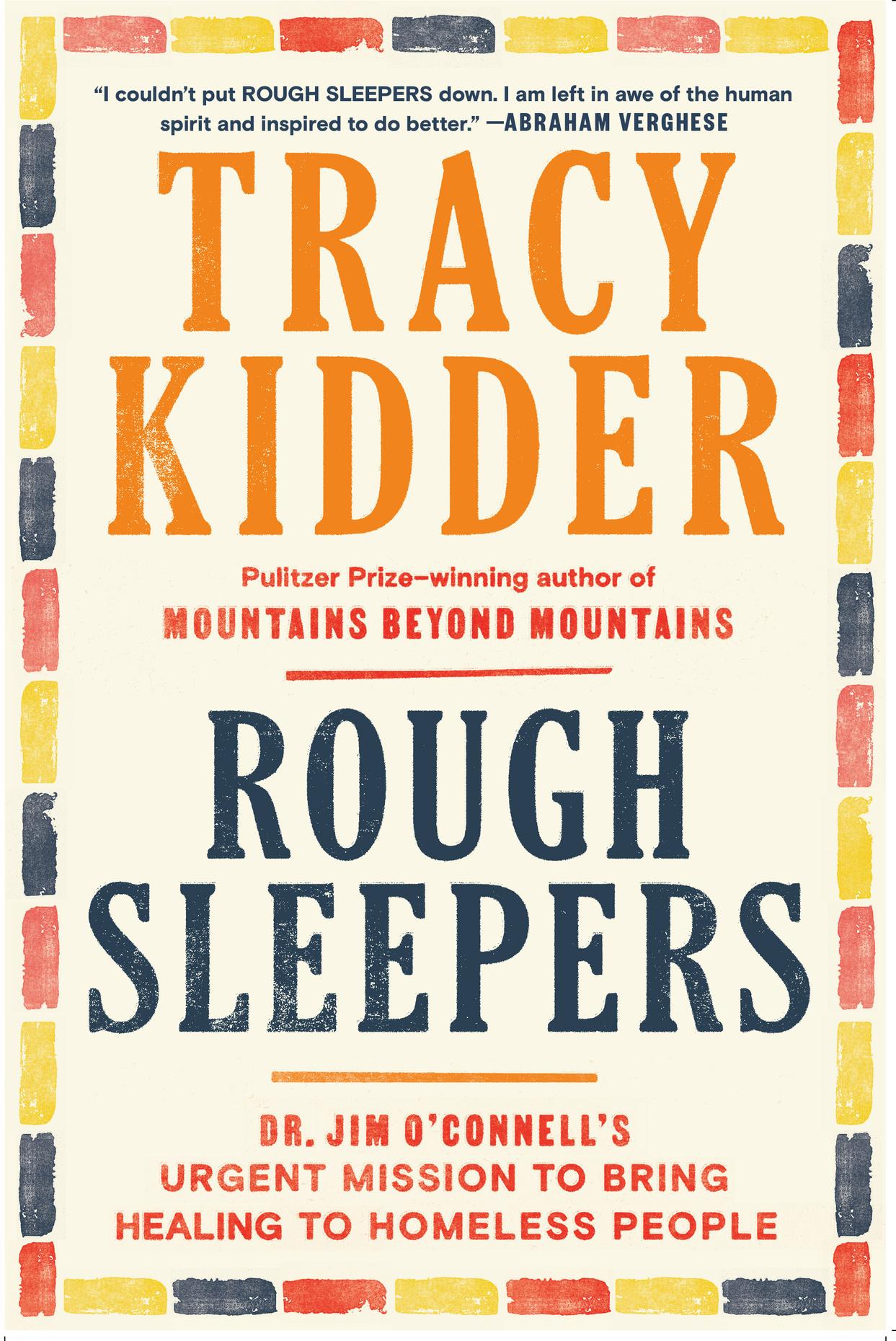
All Of It with Alison Stewart
'Rough Sleepers: Dr. Jim O'Connell's Urgent Mission to Bring Healing to Homeless People'
00:15:50
Author Tracy Kidder's new book Rough Sleepers: Dr. Jim O'Connell's Urgent Mission to Bring Healing to Homeless People.
Loading summary
Transcript23 lines
- [00:12]
A
This is all of it from wnyc. I'm Alison Stewart. Thank you for spending part of your day with us. However you are listening, I am grateful you are here. We've decided to do something a bit different with our end of year shows this time around instead of a best of list. Because really, when it comes to art and culture, who is to say what's best rather than rank things? Each day we're going to focus on a different word to describe big themes from 2023. Yesterday we heard about collaboration. Later in the week we'll hear shows about aspiration and joy. Today the word we're focusing on is justice. On the show you'll hear conversations that each approach the idea of justice from different angles. Many of our guests are people who have worked to right wrongs and bring injustices out into open Right now, in the few days before the New Year, it's a time of reflection, a time of setting intentions, and a time of hope. So in the spirit of helping you reflect on your hopes for us, for society, we wanted to revisit some of the conversations we've had about people who were inspired to stand up for others. So let's get into it with a Boston Doctor Bringing health care to Boston's so called rough sleepers. Dr. Jim O' Connell has been practicing the kind of empathetic medicine that shouldn't be radical but is. Through his work at the Boston Healthcare for the Homeless, he takes the time to get to know his unhoused patients, including when they are struggling with addiction or mental health issues. He meets them where they are, both literally and metaphorically. He has been known to help find some patients housing or just a warm bed for the night. And he slipped in some food and occasionally money, even though it's gotten him in a little bit of trouble. Pulitzer Prize winning author Tracy Kidder spent some time trailing Dr. Jim and met his patients and colleagues and Tracy tells their stories in the book Rough Dr. Jim OConnell's urgent mission to bring healing to homeless people. In a starred review, Kirkus calls the book a searching, troubling look at the terrible actualities of homelessness. You can of course get this book at your local indie bookseller. Tracy Kidder is also the author of Mountains Beyond Mountains, the best selling book about the late Dr. Paul Farmer, and he joined me earlier this year with Dr. Jim O', Connell, President of the Boston Healthcare for the Homeless Program, to talk about the book Rough Sleepers. I began by asking Dr. Jim to define what it means to be a rough sleeper and with all the work he's done with unhoused populations, particularly what it means to him.
- [02:58]
B
It's a term that we learned out on the streets. It's an old English term, as we learned later on. But a lot of the folks who live on the street like to think of themselves as rough sleepers, and they like it better than street people or street folks. So we tend to use that. We have been using that for a long time.
- [03:15]
A
When did you first know, Tracy, that you were going to write a book.
- [03:18]
C
About Dr. Jim well, it happened gradually. I went out on a ride on the, on this outreach van. There are two of them go out from Boston's largest homeless shelter every night, all year round, seven days a week. And I went out with this fellow who was looking to find out more about Boston homelessness in Boston. And I, and I was really quite astonished by what I saw and quite enchanted, actually. Well, I was impressed by the relations, but the apparent relations between this doctor and his and his patients. You know, there was a great warmth in that relationship. So I went back out again with him, alone this time without a bunch of other people. And just to see if this was true. And it just sat with me. I thought this more and more, I thought, I'd really like to write about this. You know, I don't know exactly, exactly how long that took. I, it tends to be the hardest thing I've done is that I have found the hardest thing in my life as a writer is to figure out what to do next. I'm always worried where lose a year or waste a year or six months. You know, if, if I choose wrong. The problem is sometimes I've spent two years, you know, trying to be sure that I don't choose wrong. So, but, but I mean, you know, frankly, if that's the hardest thing in your job, then you're being pretty, pretty lucky.
- [04:43]
A
Dr. Gin, we learn in the book about, a little, your biography that you tried a lot of things before being a doctor, philosopher, English teacher, bartender. And there's a suggestion that being a bartender has helped you in your current field and how. So is it about knowing how to listen?
- [05:03]
B
I think it is. I, you know, I, as I look back now on all those years of tending bar, if you think about it, I had to, you know, I was behind a bar. You were there for several hours and you were, you were captured. And people would sit there in front of you and talk to you. And if you didn't enjoy listening to him, it was a very long night. So I Think I honed some skills listening to people through various stages of sobriety and inebriation and learned that there was truth coming out of both ends. So it was really. I think it was the best preparation. Not that I was meaning it as preparation, but it turned out to be the best preparation I could find.
- [05:39]
A
How does listening help you in the work you do?
- [05:41]
B
Now, it's very clear to me that my first impressions of almost everyone I was taking care of were completely wrong. And as I got to know them, and as they. Or hopefully as we earned their trust, which often took a long time, they would start to tell you things about themselves that would kind of knock your socks off. And I started to realize that these are people whose stories, when they emerged, were. Were pretty courageous, and people who had lived through unspeakable trauma, unspeakable disabilities in a world that didn't pay much attention to them. So the listen allowed the stories to happen.
- [06:21]
A
Tracy, what is something that you wanted to make sure people understood about homelessness in Boston?
- [06:29]
C
Well, I think homelessness everywhere, it would be the really simple fact that these are human beings. I realized that, you know, sometimes there are real deficiencies in the. In the training they've had in their lives, and more often than not, just deficiencies in the. And the resources available to them. I mean, how, for instance, do you keep yourself clean in a city like Boston that has virtually no public bathrooms? And these kinds of deficits can make people seem primitive or hopelessly or even alien. But the fact is, of course, you get to know these people. You don't just look at them from the corner of your eyes. You realize that they're just like everybody else. They carry the most complex structure in the known universe on their shoulders, and they're just as human as you and I. And I think that seems simple, but it's really. It is the basis of everything that this organization does and to let these people into your life and to actually become friends with them.
- [07:33]
A
And you write about a point, a moment in the book, which I think is really interesting, and it just shows you how precarious life is for people who have. Who are unhoused and are living in the street that, you know, I've been through South Station a billion times, and the idea that it's one degree in, the change of the temperature can mean the difference between having a roof over your head for a night and not. Would you explain that to folks? Because I just think that is so important and interesting and speaks a lot to what people have to face South Station had.
- [08:09]
C
Jim understands this better than I think. But for some time, South Station had been a refuge for homeless people. And to be fair, I mean, not every homeless person is a good guest, you know, and the station would get dirty bathrooms, particularly. There were accusations that they would steal food and trouble the other people in the station. But all of that aside, there had been an understanding that there had to be someplace like this. And these are for people who will not go to the shelters. And they all have their reasons for that. Some of them are really good reasons, by the way. And then the city had decided, I guess the owners are. I forget how it all worked out, but they decided, no, we can't have people here anymore. Not just unregulated. They can only be in here if it gets really cold. And that was defined as below 32 degrees below freezing. So on this night that I wrote about the thing, the kind of mass eviction Jim witnessed at the temperature, as he put it, soared to 34 degrees. And in came the transit police and pulled everybody away.
- [09:21]
A
The name of the book is rough sleepers. Dr. Jim OConnell's urgent mission to bring healing to homeless People. I'm speaking with its author, Tracy Kidder, as well as Dr. Jim O'. Connell. Dr. Jim what are the common health conditions that your patients face?
- [09:38]
B
We were surprised to find that the common things that occur for all of us tend to occur equally in homeless people. So in many ways it's not very exotic. It's really bread and butter care for homeless people. Diabetes, heart disease, all the things that you and I know well, but in a group of people who had little access to continuity of care and to the regular preventive things. And I would also say the other thing about homelessness, I think looking at it as a doctor, is people are also living in large congregate settings. So infectious diseases can spread like wildfire. With COVID as you would know well from New York, at 30 to 40% of everybody living in a shelter got Covid. And it was really a nightmare. There are also the exotic problems that happen. We see a lot of license, scabies, infestations, things that I only had read about for the most part in my textbooks in medical school. And so it's. I'd like to, I always like to step back a little bit and realize if you just look at the, at the burden, the burden of co occurring medical and psychiatric and substance use disorders that homeless people have, the medicine is utterly fascinating, complicated and bewildering in how you should approach it. So it's for those of us who really love medicine, it's a. It's a great job.
- [11:04]
A
Was there anything that you learned in fancy medical school that you really had to not necessarily unlearn, but really rethink?
- [11:15]
B
Oh, just about everything. I. What I was, you know, my comeuppance when I went to the shelters, I was coming out of, you know, four years of medical school and three years of training, and I thought I was really good and wanted to show everybody that it was really good. But it turns out that when you just meet this. Meet a population of people who have been really sort of excluded from the system, and usually when they have had encounters with the system, we, the doctors in particular, have not been particularly kind to them. So they weren't ready to talk to me about anything when I got there. So I had all these, what I thought was finely honed skills which were utterly useless when I was facing a bunch of people who were paranoid about what I might be doing to them. So it took took months and months, with the guidance of the nurses, as you, I'm sure, Tracy, depicted really well, to earn trust. And once I earned trust, I realized that that time you spent, you know, sharing of your. Of your, you know, who you are, having a cup of coffee with people, taking time and not pushing them, was what was the ground that became the foundation on which you could then begin to do some primary care. That was totally anathema to what I had learned in a. In a system which required us to be efficient and fast and usually get to the bottom of things in 10 or 15 minutes.
- [12:30]
A
I do have to ask this, Tracy, and it's touched on the book that boundaries, that people have asked questions about Dr. Jim's boundaries, whether it be with money or with promises. What did you observe? What do you think about the idea of boundaries when we're dealing with people who are in distress?
- [12:53]
C
I think we all have.
- [12:54]
A
Dr. Jim sort of just laughed.
- [12:57]
C
Jim once told me, Jim explained it this way to me that in medical school they were told, be friendly, but not a friend. And then he said, but if we had taken that approach with this population, we would have gotten nowhere. And he also said to me once, you know, we're talking about this curious thing called joy, which is, you know, which isn't happiness. It's hard to define. And I. But he mentioned it a few times, and I asked him what he meant, and he said, speaking, I think of the practitioners and of the patients, all these people who are just sort of. He said, it's a system of friends. And that's where the joy comes from. I think so. I think the boundaries, you know, maybe the same kind that you keep with your friends. There was other pieces of wisdom. I think they're really genuine wisdom. I remember once Jim tried to explain to his team, the younger members of the team. You know, the real value of having a team was you had, you could, you could share all these patients. He said of one patient, he said, he's the kind of person I have to be unreasonably nice to because I basically can't stand him. So you're allowed to feel that way, right? Because you know there's going to be someone on the team who really likes this person. I found myself feeling that way, too, about some of the patients. Not that I was a member of the team, but my own boundaries kind of evaporated. I don't know that I have very many.
- [14:24]
A
Dr. Jim, I've got about one minute left. If you could leave people, if you could change one thing that might help the homeless population of Boston, what would it be?
- [14:36]
B
I think there's no question that if we could house everybody, that would be a great start. I don't have any illusions, though, that housing is going to be available in the next several years. Many people get housing, but we haven't figured out how to stop people from becoming homeless. So I think I would ask everybody, one, to just acknowledge that the people you see out on the street are real human beings. They exist, they have feelings, and that they are not there of their own will. Almost always you can get back and realize this was a structural failure somewhere along the way. So I would urge people to just be kind and look at people, and then we all as a society have to work on looking at the complex solutions.
- [15:18]
A
That was my conversation with Dr. Jim O', Connell, president of the Boston Healthcare for the Homeless program, and author Tracy Kidder. About Tracy's latest book, Rough Dr. Jim OConnells Urgent Mission to Bring Healing to Homeless People. Up next, we'll hear a story about the dark side of medicine. A Columbia University gynecologist who sexually assaulted his patients for years before finally being brought to justice, and the journalist who helped expose his misdeeds. Journalists Laura Beale and Bianca Fortas join me to discuss the case against Robert Hadden.