← All Of It with Alison Stewart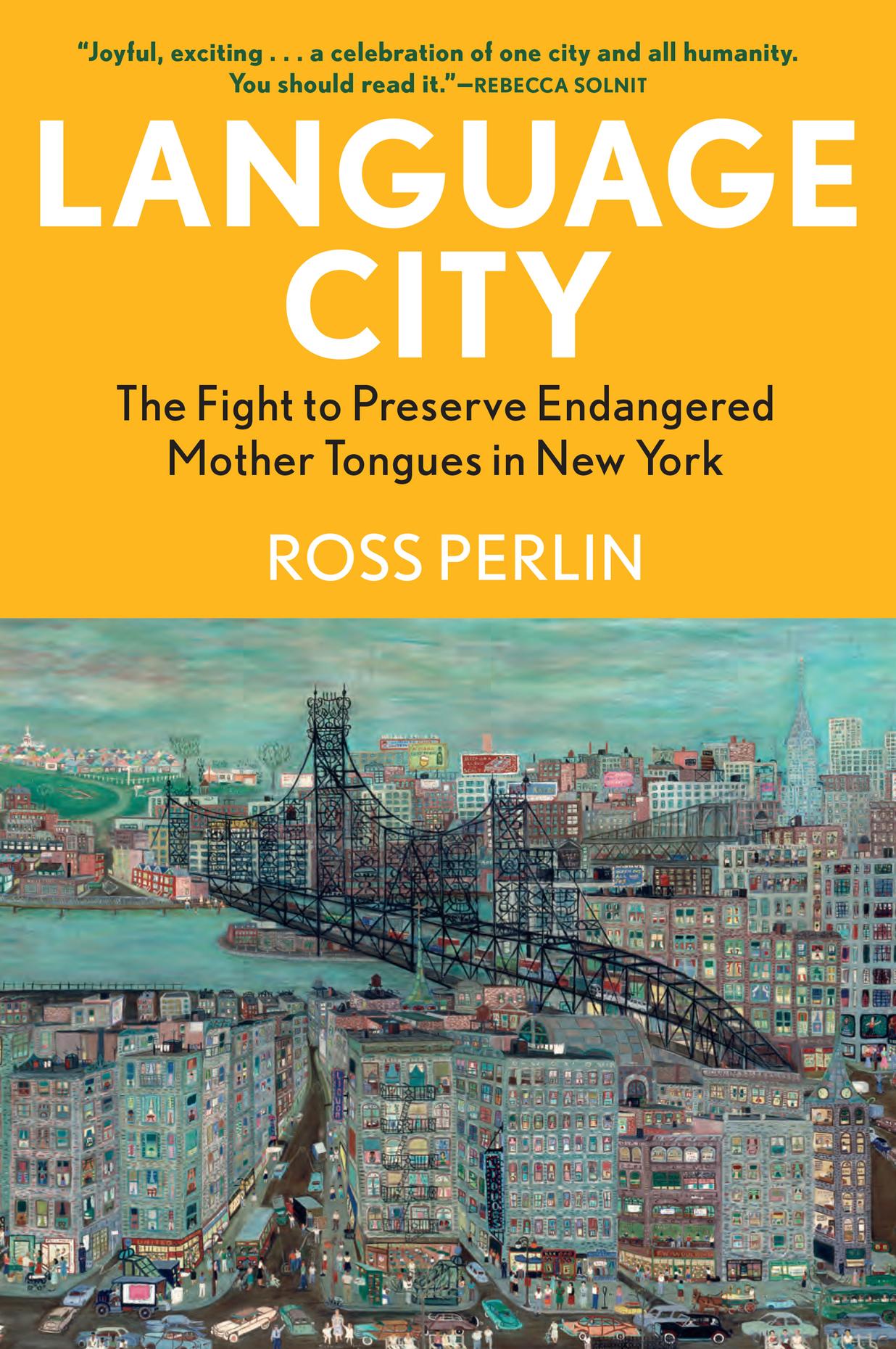
All Of It with Alison Stewart
Saving Endangered Languages In New York City
00:32:10
In his new book, Ross Perlin, author and co-director of the Endangered Language Alliance, follows six speakers of endangered languages.
Loading summary
Transcript77 lines
- [00:04]
A
Listener Support WNYC Studios.
- [00:16]
B
This is all of it. I'm Alison Stewart live from the WNYC Studios in soho. Thank you for spending part of your day with us. I'm really grateful you're here. On today's show, the Paco de La CF Legacy Festival, which honors the late iconic Spanish Flamenco guitar, kicks off at Carnegie hall tonight and then continues with a week long string of performances all around the city. We'll speak with the festival director and hear a special live flamenco performance. And we'll continue this month's full bio. Althea the Life of Tennis champion Althea Gibson. In this installment, we learn about the village it took to get her career off the ground. Plus, we continue our ongoing series the Big Picture with the Oscar nominated composer behind the unusual score for Poor Things, Jerkskin Fell. That is the plan. So let's get this started with language. According to a new book by my next guest, linguist Ross Perlin, New York City is the most linguistically diverse city in the history of the world. The Burrough of Queens alone counts more languages per square mile than anywhere else on Earth. According to the work of Perlin's organization, the Endangered Language alliance, one tenth of all languages on the planets is spoken by at least one person in New York City. Many of these languages and others around the world are in danger of disappearance as dominant languages take over and fewer people grow up speaking them or having access to other speakers. As Perlin explains in his book, hundreds of languages could disappear over the next few hundred years. In the book Language City, perlin takes account of New York's singular linguistic diversity and its history in an effort to celebrate and preserve for the future. Ross welcome to the studio and happy public day by the way.
- [02:06]
A
Thank you so much Alison.
- [02:08]
B
Listeners, we want to hear from you. We want your help reporting the story. What language did you grow up speaking? What language do you currently speak at home? How connected are you to your ancestors? Language Language. Call in, tell us about your languages and maybe you'll even get to speak them on air. 2124-3396-9221-2433 wnyc. We would love for you to speak them on air. 212-433/9692. You can call in, you can talk to us on air. You can also us at that number. Social media is available as WellNYC. Over 700 languages are represented in New York City. How can you break that number down?
- [02:50]
A
We've been mapping the languages of New York for the last ten years or so. At The Endangered Language alliance, which is the only organization in the world that's committed to supporting linguistic diversity, documenting endangered languages. That's five to six times the number that appears on the census. So most of these languages that we're talking about are indigenous, minority and endangered languages, primarily oral languages, not the sort of major national languages you've heard of. Everyone knows that New York is diverse, that cities are, of course, fundamentally, you know, diverse places where people come together from all over. But what's happened in New York, especially since the Immigration act of 1965, really, the last several decades, New York has just become a place that's receiving speakers of languages from the most linguistically diverse hotspots around the world. Places where indigenous languages of Mexico and Central America, of West Africa, of the Himalaya, you know, we have tried to map, and now in my book, Language City, really bring out the stories of these languages that few other New Yorkers know are spoken all around them.
- [03:50]
B
And, you know, it occurred to me, because there's this great map, this language map, where you can go to all different neighborhoods, you can go to this neighborhood anywhere and see where languages are spoken. And I just want a neighborhood nearby. And it had an East African language. I was like, wow, just by itself. And I realized there's a church there. And it made me think about community spaces. And this has got to be that. Community spaces have to be important in this.
- [04:15]
A
So our language map, which you can check out free interactive@ LanguageMap NYC, and there's a print version as well. It's based around these significant sites, Alice, and exactly what you're talking about. Churches, mosques, synagogues, restaurants, community centers, hometown associations, which I think are particularly fascinating. There are thousands of these hometown associations. They might just look like social clubs, they might be in people's apartments, but they're places that connect trans locally. People in particular neighborhoods or particular blocks or buildings here in New York with a town on the other side of the world. The true sister cities of New York, in a sense. And that's what we've tried to map through our language mapping. That's also. Those are the stories that I've tried to tell in the book. And that's really the bedrock of the city. This is really a city that's built around these ties to places on the other side of the world.
- [05:03]
B
When we think about the enclaves, whether it be Little Italy or Chinatown, Little Syria, how does that factor in to how we think about language? Does it stay within those confines? Does it ever bleed out?
- [05:19]
A
We think of these Enclaves, and we know their names and they obviously are iconic and historic. But actually the way people live, the true linguistic geography of the city that comes out through language shows actually much deeper levels of diversity and much more intricate patterns of settlement and interweaving. And 40 languages spoken in the same building around the same block. Vertical villages as well as un buildings essentially. Right. That populate the world of immigrant queens. But also not just queens. I mean, in every borough and actually even the greater metropolitan area, many towns and suburbs as well. So through the lens of language and what I try to bring out in the book, going beyond sort of signage that you might see or the sort of country names or the idea, oh, that there's a lot of people from a particular country. Actually, if you find out what people spe and the particular places they're from, the levels of diversity are much deeper and the stories are much richer.
- [06:14]
C
We've got a text says, my family in Queens spoke Maltese from Malta. I never learned to speak it well, but I'm studying it now at the age of 63.
- [06:23]
B
Wow, that's so exciting.
- [06:25]
C
Do you find that people who come to your lectures or come to see you speak want to share about family history?
- [06:31]
A
Maltese is such a fascinating example. I'm so glad to get that text. I was actually at the Maltese center in Astoria not too long ago. It's a great example of one of those community spaces right there by the tribe bridge in Astoria. They've had Maltese classes, they have Maltese celebrations. Maltese itself is such a fascinating case of linguistic mixture. This is a Semitic language in the middle of the Mediterranean, part of the European Union, with a significant community that came to Queens in particular. So, you know, this language map and the book Language City really came out of so many New Yorkers coming to us and now people from other cities as well. And there are similar efforts going on in Berlin and Nairobi and Los Angeles. People coming to us with their stories and saying, you know, oh, my grandfather speaks this, or I speak this language, or we had a community in this area. And that's really what it's come out of. It's a sort of people's census, a linguistic census of what people actually speak in their homes. And, you know, going well beyond any kind of official statistics.
- [07:31]
C
What are the most represented languages in New York City?
- [07:34]
A
So of course there are the large languages. Right. And New York has come a long way in terms of supporting what are called the 10 city wide languages, which actually have some official support from the city government. And those are all languages with probably over 100,000 speakers. Of course, New York is a major Spanish speaking metropolis with varieties of Spanish from all over the world. Right. A tremendous kind of Spanish speaking city unto itself, as well as the most number of speakers of varieties of Chinese, not just Mandarin, but Cantonese, Fujianese, Wenzhou, Nese. Then there's Bengali, Haitian Creole, Urdu, Polish, you know, Russian is huge. So these are all these major languages and we do, you know, I talk about those in the book and they're obviously, you know, hugely significant in terms of the life of the city and the history of the city. But the focus on the book, in the book really, and the focus of our work at the Endangered Language alliance is on these smaller languages that have perhaps not been recorded or documented at all in the past. Languages like Seke, a language I've been working on for several years with Rasmina Gurung, one of the youngest speakers anywhere. And you know, they're only at Most something like 700 speakers of this language, Seke in the world, coming from five villages in Nepal on the border with Tibet. But at this point now a significant percentage of them have moved to a couple of buildings in Brooklyn and some in Queens as well. And this language had really not been documented at all. You know, Rasmina has been. Now we've been working on this both here and in Nepal with trips there. And I have a chapter about it in the book, you know, for several years to find a way to write the language, to record stories, to record elders, to work on the grammar, to work on a dictionary potential. So that's the kind of thing that we're really focused on because these languages, there may not be any record, but New York actually presents the opportunity to do these great sustained kind of projects, working together as speakers, linguists and others to try to preserve them in some form, of course, depending on the situation and what the community wants.
- [09:29]
B
Ross Perlin is co founder of the Endangered Language Alliance. Today is pub day for his book Language the Fight to Preserve Endangered Mother Tongues in New York. Listeners were asking you to call in. What language did you speak growing up? Do you currently speak at home? How are you connected to your ancestors language? Maybe you'd like to speak some for us On Air. 2124-3396-9221-2433 wnyc. You may call in and join us on air or text to us. Okay, we've got a couple of interesting callers. Mamadou calling in from Queens. Hi, Mamadou.
- [10:02]
D
Hi, how you doing?
- [10:04]
B
Doing great.
- [10:06]
D
Yeah. I was calling about the Fulani Tribe from Guinea, Conakry. Yeah, we got a lot of Fulani in New York City over here. But there's one thing I'm observing. You know, most of the time, the parents, especially the mothers, they don't speak the Fulani language to the kids. So the kids are growing up without knowing the language. You can talk to them. They can understand some part, but they can't even speak it. So what can we do to encourage the families, like especially the mothers, to talk the native language to the kids more?
- [10:37]
A
Thank you so much, Mamadou. It's great to get your call. Thank you for this. This is a crucial question that we think about and talk about all the time. And I want to say that Fulani is a major, important language of New York also. It's mentioned in the book at several places. It's on the language map in several places. You know, there are efforts to write Fulani, as I understand that I mention in the book, with a new, relatively new writing system as well. And Fulani is also just for listeners. You know, it's almost a small language family. There's so much complexity within Fulani from, you know, Ginny, Conakry that Mambadou mentions. But there are also Fulani speakers here from Senegal, there are some from Mauritania, and there are Fulani speakers of different varieties of Fulani all the way to the Red Sea, as I understand it. So this is such an important language with so much complexity and so much that remains to be kind of known and understood. This question about transmission to children is central, and it's the paradox at the heart of the story of New York as this great linguistic capital, because so many languages come here. This is the most linguistically diverse place in the world, in the history of the world. But most of the languages are not being maintained here. There are so many pressures to shift to other languages, not just English, but it could be French for many West African New Yorkers will feel that pressure. Many Himalayan New Yorkers might feel the pressure to switch to Nepali or to Hindi. Indigenous Latin American New Yorkers may feel the pressure to switch to Spanish. You know, that pressure is intense. And there's not much support, really, from the city government, the schools and so on beyond, and the few biggest languages. And even for those, the support is weak. So, you know, there are communities which are teaching their own languages and, you know, at community centers, and that's huge. We have served as a space, our office near Union Square, the Endangered Language alliance, for language classes for many languages, you know, a free space. And Also a kind of hub for this kind of thing. Classes are certainly are helpful, but then you need materials. We've helped publish some materials, children's books these days. You all need videos, you know, cartoons. These things are very good. Obviously, in terms of bringing, you know, getting kids interested, you know, having sort of media, films. There's a lot of work and organizing that has to happen. But I think, you know, for Fulani, there are a lot of speakers, there are a lot of language activists doing good work. It really begins and ends in the home, though, I think, and the decisions of parents and parents have to stay committed to a kind of language policy of the home where they're saying, you know, yes, they will learn English in school, they'll learn it in the streets, they'll learn French, they'll learn Arabic in the mosque and so on. But they need to learn, you know, the mother tongue here in the home. The home is the most important place. So I would say, mama, do whatever you and others can do to even every day in your choices, just what you speak to people, even the young people, just to just use the language and to speak it in the home.
- [13:39]
B
Let's talk to Greg calling in from Middle Village, Queens. Hi, Greg, thanks for calling all of it.
- [13:44]
E
Yes, I did that. Scottish Gaelic.
- [13:51]
A
Oh, Scottish. Scottish Gaelic. Okay, good. Wow.
- [13:55]
E
Don't let me know. Goiling. Oh, Gaelica asked me if I wanted to speak it. Yeah, I'm not super fluent, but I'm fluent enough to say that.
- [14:06]
D
Anyways, thank you.
- [14:08]
E
This week is Gaelic Week. I was just reading it this morning. And the Caledonian Club of New York, which offers Scottish Gaelic lessons, is having an event tonight at 8pm so if you want to go to their website, you can find out about that to the author here. Have you ever heard of Nancy Dorian, the ethnolinguist?
- [14:28]
A
Yeah. Nancy Dorian, who has researched Scottish Gaelic, is a really important linguist in terms of documenting, you know, what happens as a language goes out of use. She meticulously documented it for some varieties of Scottish Gaelic. That's right. Thank you so much for the call. The mention of the Caledonian Club, which I believe is on the language map, LanguageMap, NYC for Scottish Gaelic. It's great to hear some Scottish Gaelic that is, you know, Irish. I thought it was Irish at first because I heard a few, you know, words that are obviously closely related languages. And Irish has been so important in the history of New York City. And I've met many language activists around Irish. But to hear Scottish Gaelic is wonderful. It's played a role in the linguistic history of the city. It's a language that I understand there are a lot of revitalization efforts around it. So it's wonderful to hear about that event. I'll be at my own book opening at the, at the Strand Bookstore, but otherwise I would love to be there and would love to come to another event.
- [15:22]
B
There is a text as a question for you. It says, hello, I'm a Spanish speaker in Washington Heights. I hear more and more indigenous languages from Central America. What am I hearing?
- [15:32]
A
Washington Heights is one of the places that speakers of indigenous Latin American languages are coming to. And they, they could be from a number of places. The, the perhaps most widely spoken indigenous language of Latin America here is Misteco or Mixtec from Mexico, especially the areas of Guerrero, some from Oaxaca and Puebla. And that actually is. There's a number of different varieties of Misteco that are quite different. It could also be Nahuat or Tlapaneco, those are other languages of Mexico. There's several others that it could be, could also be Mayan languages of Guatemala, which have become quite prominent here, including Kiche, Mam, Kakchikel and others. And another possibility would be from the Andes, speakers of varieties of Quechua, what's called Quichua in Ecuador, which is where many speakers here come from. So Washington Heights is definitely one of those places. It's wonderful that you're hearing it on the, on the streets and hopefully, you know, that's, people will feel open and free to speak their languages here because there is sometimes for speakers of these languages, a shame around speaking languages that they were often told were somehow broken or that they should speak Spanish or English. So it's a good sign if you're, if you're hearing people speaking them and if there's a way to, I don't know, support or smile about that, that would be wonderful. Thanks for the question we got in.
- [16:52]
B
Texas that I heard Nahuatl on the streets of the Upper east side. Having grown up in Mexico, it blew my mind since it's a language not often heard in Mexican cities and wanted to know if there are any initiatives to preserve.
- [17:03]
A
So Nahuatl is one of the languages that we have had taught at our center. It's a language that is featured in Language City. The book that I wrote that just came out focused on a wonderful guy named Irwin, who is also a very talented, award winning chef who cooks with Nahuat etymologies in mind. Because actually every Mexican food you've ever heard of, whether it's Guacamole or tacos and so on. Mole. The words are all from Nahuatl because Nahuat really was just the language of the Mexica or the Aztecs. This was the official language of that empire, essentially, and it's a bedrock of Mexican culture. There are hundreds of other indigenous languages as well. But Nahuat was a lingua franca spoken by many. The place names, the food names, as I said. So it is increasingly coming to New York. That's fantastic that you heard it and that you recognized it. And there are some initiatives here or there in the city around teaching or speaking. It's still a challenge to find spaces for indigenous languages here, but that's what we're trying to do.
- [18:02]
B
The name of the book is Language City. The Fight to Preserve Endangered Mother Tongues in New York. My guest is Ross Perlin. If you'd like to join our conversation. What language did you grow up speaking? What language do you currently speak at home? How are you connected to your ancestors? Language 212433 WNYC 212-433-9692. More of your calls and more with Ross Perlin after a quick break. This is all of it. You are listening to all of it on wnyc. I'm Alison Stewart joining me on Pub Day for his new book Language the Fight to Preserve Endangered Mother Tongues in New York, New York. The author's name is Ross Perlin. He's the co founder of the Endangered Language Alliance. We're getting so many great texts, Ross. I am from Kurakao, the Dutch Caribbean.
- [18:56]
A
And we speak Papamiento Papiamento. Wow. Yes.
- [19:00]
B
Yes. The texter asks. I'm not sure if that was one of the languages that was discovered in New York City.
- [19:06]
A
I think Papiamento is there on the map that we had met at some point, some speakers in Brooklyn, but would love to learn more. It's a fascinating and important Caribbean creole that it should be represented.
- [19:22]
B
The Sicilian dialect connects me to my cousins in Palermo. We came from Astoria, Queens. Now in Freehold. Even in Sicily, it's hard to find. I've got someone else. I'm originally from Kyrgyzstan, Central Asia. My first language is Russian, but I learned Kyrgyz. I hope I'm saying that right. Growing up, although I'm not fluent, I visit my home country every year to catch up.
- [19:41]
F
Wow.
- [19:42]
A
I love these. I love these calls. Yeah. These ties between places that those visitors, those connections, whether it's to Palermo or Kyrgyzstan, that's what makes New York what it is.
- [19:51]
B
So in your book, you Follow. We get to meet six people, and this is how you describe them in your acknowledgments to the six speakers. Rasmina, for your bravery and generosity. Husnaya, Husnia, thank you. Husnia, for your perseverance and dreams. Boris, for your spirit and ceaseless invention. Ibrahima, for your storytelling and hospitality. Erwin, for your maestro's touch. And Karen, for your teaching in language and life. You've told us about Erwin and Rasmina. Could you share a little bit about the other four folks?
- [20:19]
A
Sure. So the book is both a linguistic history of the city, starting with Lenape, the original language of the city, and actually one of the speakers who's featured is Karen, who passed away a little over a year ago, who brought Lenape back to the city, really, for the first time as a language being taught actively in several centuries. She came down from Ontario, which is one of the places where Lenape people live now. She had learned the language as a second language as part of the Lenape revival movements that are happening in both Ontario, Oklahoma and elsewhere. And really, you know, there's perhaps one native speaker left, but now there is this world of second language learners from the tribe like Karen, who are. Who are reviving it. And she brought the language back. And I talk about the classes that she taught at our center, driving down 10 hours from the reserve in Ontario to teach it on 18th street, which was such a special experience for everyone who was able to be there. The languages, the other languages and speakers represent, you know, different parts of the world, different challenges around language. There's Husnia, who comes from Tajikistan, the Pamiya region. This is one of the city's newest communities, speaking half a dozen different languages. Her native language is called Wahi. She, you know, just published with us a series of children's books in these six languages of this region in Tajikistan, this mountainous region, that people are, for various reasons, having to leave and is just kind of an extraordinary, brave, you know, person who, you know, came here on her own in her early 20s. Then there's Ibrahima, who is also. He's from. He's from guinea and is championing a relatively new writing system called unko, developed in the 1940s for the Manding languages. This is a very important group of languages spoken across West Africa, divided by colonial borders. And, you know, this movement to write the language in this completely kind of original script is something that Ibrahima has been tirelessly doing. The first person to teach it in the US at a mosque in the Bronx, running a blog, a podcast, and so on, and even just getting a script into Unicode, the digital world and making sure that it works in all the types of software and digital realms. Today we don't think about those challenges if we speak and write in a large language. But Ibrahima has been doing all of that, that. And so then, you know, we mentioned Irwin and we mentioned Rasmina and yeah, so it's a representative group. I guess the last person to really to mention here is Boris, who is a speaker of Yiddish, originally from Moldova, speaks a number of other languages and the editor of the Fovert the Yiddish Forward for many years, himself a novelist and a poet and just a jack of all trades of all arts and who is himself becoming the infrastructure of Yiddish. Of course, Yiddish is a complex story. It's the language, a language in my own family's history as well that I've explored. And it's having its own kind of interesting revival, especially through Hasidic speakers, especially in Brooklyn, which is a world center of the language. But it's also had trials and tribulations with many speakers sort of losing it, giving it up. The loss of so many Yiddish speakers in the Holocaust and other things that have happened. And you know, Boris is somebody who is, is keeping the language alive through, through his heart.
- [24:00]
B
Let's talk to. And I hope I pronounced this correctly, he from New York.
- [24:07]
G
Agim.
- [24:08]
B
Agim. Hi, Agim.
- [24:10]
G
In Albanian what you see you pronounce, so it's a G, I M meaning Agim. I don't know if you are familiar with Albanian, but it's Indo European language has nothing to do with our neighbor languages like Greeks and Serbs and Turks. Although we have a good portion of Turkish language because they stayed, they invaded my country for 500 years until 1912. So makes sense to have some, some. But if you see all over the Balkans there are similarities in words. Even in Romania we found, we were last year there traveling and there are many similarities in words. You can find stuff that you think, how can it be possible? Romania is not even close with Albania. But here you go.
- [25:04]
B
Achim, I'm going to ask you to, if you don't mind, could you tell me. Oh gosh, I don't know. Tell me your favorite thing about New York in your language. Language.
- [25:29]
A
Thank you.
- [25:31]
B
Do you want to tell us what you said?
- [25:34]
G
You want me to translate it?
- [25:36]
B
Yes, please.
- [25:39]
G
New York is beautiful, has many high rising buildings and the life in New York is like work and sleep.
- [25:50]
B
Thank you so much.
- [25:51]
A
Can I ask, is it. There's Gag and Tosk varieties Of Albanian. I understand that. You know, there are all kinds of Albanian speakers in New York. What variety of Albanian would you say you speak?
- [26:02]
G
I am from Albania. Albania. I'm from northeast of Albania. It's called Dubai.
- [26:07]
A
Okay.
- [26:08]
G
And I was raised in Tiran, capital.
- [26:12]
A
Okay.
- [26:12]
G
As you said, there are many versions of Albanians, and one of them is from Kosovo and the other one is from Montenegro, where there are lots of Albanians. And like you said, it's Tosk and Gig. Tosk, meaning it's from the south and Gig is from the north. These are two dialects, main dialect. Then you go through the cities and the areas and you find so many dialects that it's impossible to explain.
- [26:44]
B
Thank you so much for calling in. Let's talk to Jakob, calling in from Sunset Park. Hi.
- [26:51]
F
Hi. How are you? So one piece of advice I'd have for people who have children. If you want to teach your child your native language, this is what I do. So I speak Arabic, and I have a five year old. So every time he talks to me in English, you know, I'll just tell him, stop Arabic. And I'll just tell him Arabic. And then he'll ask me. So for example, if he asks me like, you know, I'm hungry, I'll just say Arabic. And then he'll ask me, how do I say that? Then I'll tell him, you know.
- [27:21]
A
Which.
- [27:21]
F
Basically means I'm hungry. So that's the best way to, like, preserve the language. And, you know, I'll tell my family members, do the same thing. Please do not touch my child in English. He gets that enough, you know, in school. Talk to him in Arabic. So that's one piece of advice I'd give to people.
- [27:38]
B
Thank you so much.
- [27:39]
A
Thank you, Jacob. That's powerful. Yeah.
- [27:41]
B
I want to speak to Silke in Brooklyn. Hi, Silke. Thanks for calling in.
- [27:46]
H
Hey. Hi. How are you? Can you. Okay.
- [27:48]
B
Yeah. You hear? You sound great.
- [27:51]
H
Perfect. So I was born in Brooklyn, New York. I come from. Or my parents are both from Germany and are German speakers. But because the time that they came to this country is right sort of after the World War II, in the early 60s. They were young. I think German at that time was. I guess we would use the word verboten. I mean, you just didn't want to inherit your. You didn't want to hold on to your sort of German past and wanted to shed it quickly. And speaking the language was again, verboten. It was sort of like a known.
- [28:22]
E
Know.
- [28:23]
H
And so, you know, I would hear them speak German, but maybe to Their families, you know, overseas on the phone. But that was it. It was just not spoken at all. And I grew up in the 70s. So you had this sort of concurrent issue, which was the melting pot, you know, melting into your Americanism. Becoming American and shedding your language was a really big thing pushed in the schools. So I didn't get the German language at home just a little bit. And also needing to just speak English. I mean, anybody who spoke a second language was looked at like a moron, you know, and we had words for them that were terrible. Speaking a second language was. You were an idiot. So I didn't speak German, and everybody else was shedding their language. And so. And especially because of the past that Germany is attached to, you know, it was just something that you just didn't do. But now I have this, you know, going back to what Brian Lehrer was talking about, about regret, you know, wanting to have been attached to a language and an identity and not having it. And now it's sort of. I hear it much more frequently. I have, you know, in the city, I hear more German, but not a lot of German restaurants, not a lot of German town, you know, that I grew up with, going to Charlen Weber. It was not really there so much. You know, I have a German Christmas, but it's what I've retained, you know. But I regret and long for a language that. That I just never heard. And, you know, I. Even when I tried to speak it, and my initials are, by the way, ss, I was really.
- [29:54]
C
Silke, I'm going to dive in only because we're going to run out of time. And you made such a really important point. Thank you so much for calling in. Someone else made the point that their grandparents didn't speak Italian because of discrimination. What are some of the lessons that we can learn from the past? That's what those two convert. Those two comments make me think about.
- [30:13]
A
Yeah, with both Italian and German around the time of World War II and World War I with German also, it was, you know, there was. Yeah, there was a real shame around speaking the language. There was a lot of pressure not to speak the language, both from external and internal sources. We have to not make that mistake again and sort of confuse whole identities and whole languages that happen to be associated with nation states somewhere else that, you know, there might be some kind of policy thing going on, but that languages are these, you know, carriers of culture. They're full of, you know, they're full of meaning for those who speak them. And under, you know, normal Good, healthy circumstances, people will be able to pass on their languages. Multilingualism is totally normal. In world history, it's been New York. Half of all New Yorkers speak a language other than English at home, and they're multilingual. We function with English as a lingua franca and with other lingua francas, but mother tongues. And that's why the subtitle of my book, Language City is the Fight to Preserve Endangered Mother Tongues in New York. Mother tongues. Tongues are so important for that sense of connectedness to an identity, to a family. There are people now who can't speak to their grandparents sometimes because they lack this connection, they lack a common language. So for that continuity, for the identity, for ways of being, this is what we need to do. As a city, we have this challenge, as this place that is unprecedented in its linguistic diversity. What can we do to make this a babble that grows? A real babble, not the one that's mentioned in the Book of Genesis, but one where languages grow and flourish and it will make us all the richer.
- [31:51]
B
Where's your event tonight?
- [31:52]
A
Strand Bookstore. I think it may be sold out, but there will be many other events coming up. Please check out Language the Fight to Preserve Endangered Mother Tongues in New York. There are going to be a bunch of events coming up as well on my website and the book's website. So please tell me your language stories. The Endangered Language Alliance. Find us. Check out our language map. LanguageMap, NYC.
- [32:15]
B
Yeah. Ross Perlin, thank you so much for coming in.
- [32:18]
A
Thank you so much, Alison.
- [32:19]
I
Our state has changed a lot in the last 140 years. We know because MultiCare has been here guided by a single purpose, making our communities healthier. That comes from making courageous decisions, partnering with local communities to grow programs and services, and expanding healthcare access to those who need it most. Together, we're building a healthier future.
- [32:46]
J
Learn more@mycare.org Since WNYC's first broadcast in 1924, we've been dedicated to creating the kind of content we know the world needs. Since then, New York Public Radio's rigorous journalism has gone on to win a Peabody award and a DuPont Columbia Award, among others. In addition to this award winning report, your sponsorship also supports inspiring storytelling and extraordinary music that is free and accessible to all. To get in touch and find out more, visit sponsorship wnyc. Org.