Loading summary
Transcript103 lines
- [00:00]
Alison Stewart
The new LinkedIn hiring pro can't undo your last hire, the lone wolf who you thought was a good collaborator because you didn't have the right candidate insights. But once you hired them, it was all hoarding info, declining meetings and howling at the full moon. But LinkedIn hiring pro can go deeper than just the resume to find you a perfect fit by using insights from the LinkedIn network to give you a short list of best fit candidates hire right the first time with LinkedIn Hiring Pro. Post a free job today at LinkedIn.com
- [00:29]
Commercial Announcer
Pandora from premieres April 19th on MGM in a small, inescapable town, understanding the monsters may be the only way out. Desperate hope may lead residents toward even darker truths. I think they're doing it to make us afraid.
- [00:48]
Alison Stewart
Well, then it worked.
- [00:49]
Commercial Announcer
Something ancient is feeding off of their suffering and it won't stop. Survival will demand impossible choices. From season four. Premieres April 19th on MGM. Liberty Mutual customizes your car and home insurance. And now we're customizing this rush hour ad to keep you calm, which could help your driving. And science says therapy is great for a healthy mindset. So enjoy this 14 second session on us. I think you've done everything right and absolutely nothing wrong. In fact, anything that hasn't gone your way could probably be blamed on your father not being emotionally available because his father wasn't emotionally available, and so on. And now that you're calm and healing, you're probably driving better too.
- [01:48]
Alison Stewart
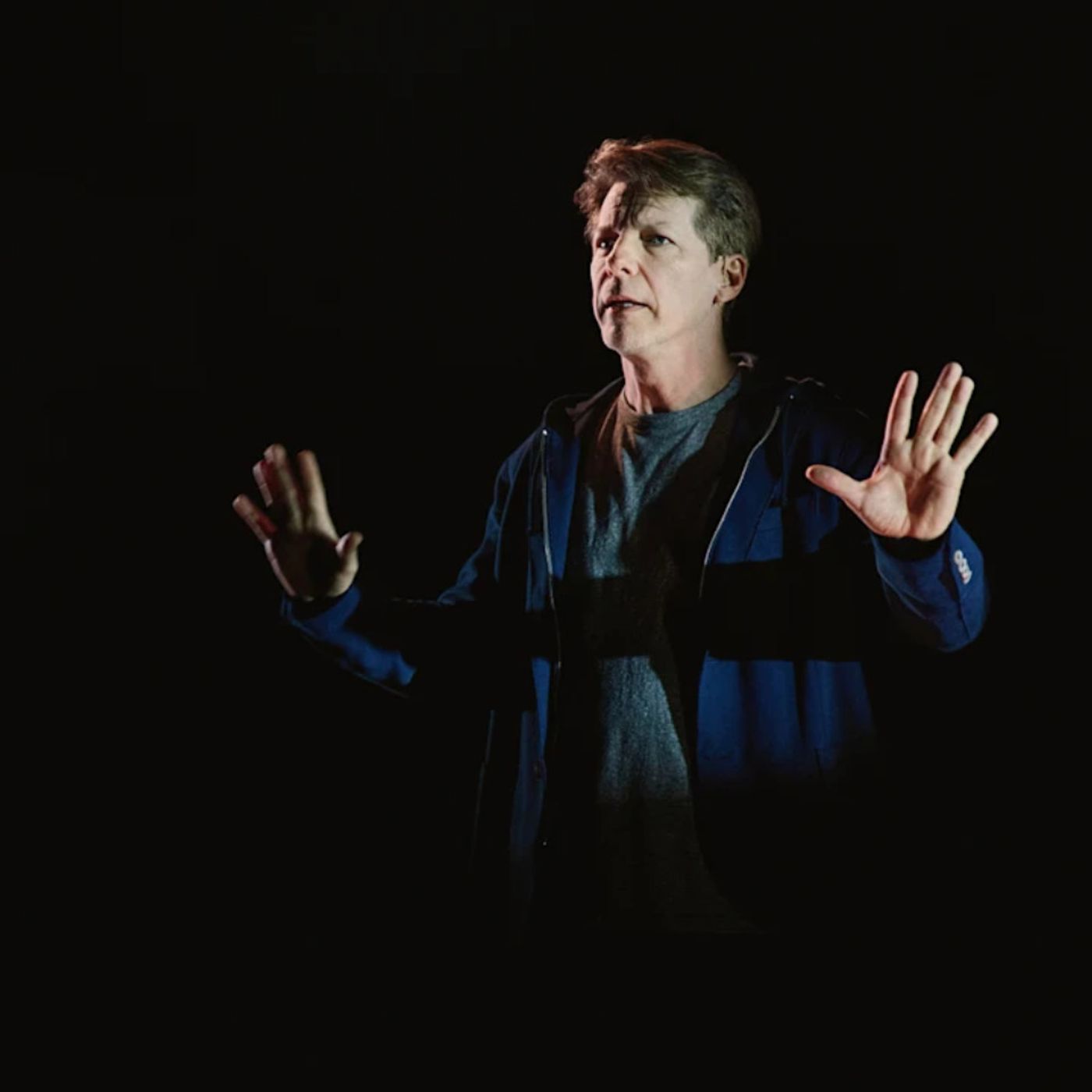
This is all of it on wnyc. I'm Alison Stewart. We want to make sure you don't miss your last chance to see one of your favorite plays this year, and you can do so without leaving your house. The Off Broadway hit the Unknown will be streaming Friday, April 10th at 8pm Saturday, April 11th at 2pm, Saturday, April 11th at 8pm and Sunday, April 12th at 3pm from the league of Live Stream Theater. Sean Hayes plays 11 different characters in a unique one man thriller. The main character is Elliot, a successful playwright and lyricist who is struggling with writer's block. But when a stalker turns up in his life, Eliot's fears quickly turn into curiosity. Maybe now I'll have something to write about, but at what cost? The Unknown was written by David Kael, who has been creating acclaimed solo shows for decades. It was directed by Lee Silverman. It was nominated for a Lucille Lortel Award for Outstanding Solo show. So ahead of its final run this weekend, we're revisiting my conversation with all three of them who joined me in studio last month to talk about the Play. I started by asking Sean Hayes what he learned about doing a solo show that he didn't know before doing it.
- [02:57]
Sean Hayes
I'll let you answer that, because you know what I'm gonna say?
- [03:00]
Alison Stewart
What,
- [03:02]
Sean Hayes
that I'll never do it again? No, that. What do I know now about doing a solo play? Well, what it takes to do it. My God. You know, the story goes, you know, when Lee and I have been friends for a long time and we've been looking for something to do together. And she says, I think I found something. And I said, if it's a solo play, I don't want to do it. And she said, well, it's a solo play. She sent me the first 11 pages of the script that David wrote, and I just thought it was incredible. And I was like, oh, I need to see. I want to read more. So it's almost one of those things where, like, well, I can't not do it. It's incredibly well written, obviously incredibly well directed, and the whole team that Lee put together is top notch. And I just. I thought I'd be a fool to pass this up.
- [03:49]
Alison Stewart
So you're persuasively, professionally.
- [03:52]
Lee Silverman
Professionally persuasive, yes.
- [03:54]
Alison Stewart
When you. You've directed solo shows before, and when you have one actor on stage, what are the biggest challenges working with one actor, especially one who plays 11 different characters?
- [04:05]
Lee Silverman
I think the thing about one person is that they have to hypnotize and entrance charm, surprise, delight. They have to earn the trust of the audience right away. They have to take them on a ride. And I think as I considered what was tricky about the unknown, I thought we really need someone who can hold multiple truths, who we can trust, who will make us laugh, and ultimately will take us just kind of on the ride of our life.
- [04:39]
Sean Hayes
And then when they couldn't find that personally.
- [04:42]
Lee Silverman
That's right. Then I called Sean. I was like, please. You know, I think one of the amazing things about David's writing is that he really puts the audience in a. In a kind of spell, like people leave their bodies. That's the experience that the audience is having. Certainly, that was my experience with Harry Clark that David and I first did together, and. And with Sandra. And when I've watched David perform his material himself, it's. It's just this incredible experience. And what I love about the solo in general is the way that it requires audience participation. It requires the audience to collaborate with the performer to go on that ride.
- [05:21]
Alison Stewart
David, you've been on our show, I think, since the earliest days of Our show?
- [05:25]
David Kael
Yes.
- [05:26]
Alison Stewart
What keeps you writing and performing solo work?
- [05:32]
David Kael
I don't know. I really don't know. I mean, I've thought about it recently because I have, I think, 13 solo shows. So I keep coming back to it. I don't know. And I'm not. Yes. So I'm really not sure. I mean, I do other things, but I keep coming back to the solo. I mean, they're very. They're very expressive for me, and they're. All of them have aspects that are very personal. So I. I used to think of myself as like a singer, songwriter, that is, who instead of making albums, I made shows. And they were often an assemblage of 10 or 12 monologues, almost like an album. And. But now they've. They've kind of shifted their form because they're driven by one character who. And then the actor plays everybody else around the lead character. So. But I'm not sure why I keep coming back to it, but I do.
- [06:38]
Sean Hayes
That's. That's interesting. That's interesting, David, that you say they're like albums. Because when people say, Sean, how did you. How do you go about memorizing an entire, you know, hour and. Or 70, 75 minute show, whatever it is? And I always say, David, I always say it's like everybody has a favorite album. Yeah. They memorize every word to every song on that album.
- [06:59]
David Kael
Yeah.
- [07:00]
Sean Hayes
Kind of the same thing.
- [07:02]
David Kael
And then also, because I'm so influenced by movies that they're pretty cinematic, all of them, I can see them. And I often will walk the script around town to make sure the locations are accurate. If they're in New York City or with my show Blue Cowboy, that took place in Idaho, in Ketchum, Idaho, I'll basically walk it. Same with Harry Clark, that every location has got to be accurate. So if the audience hopefully is also visualizing it as the narrator is telling it, that it's accurate. Like if people know that restaurant that we're talking about, or they know Julius is. That takes where two of the scenes take place in the unknown. It's not gonna throw them off by thinking, I've been to Julius's and that's not what Julius is like. So I go round, I check. So I don't want anything to throw it off.
- [08:11]
Alison Stewart
Lee, There's a really sort of exciting sound in this play. It's also adds to the thrillerness of this play. How did you experiment with how the sound and how the audience would experience the sound, especially in the beginning?
- [08:27]
Lee Silverman
Yeah, I had the great Fortune of working with Isabel Waller Bridge, who did the compositions for the show, and Carolyn Eng, who was our incredible sound designer. And I would say to Caroline, I just want to move the air in the room. I just want to move the. And not let people really know that it's happening. To sort of create a sense of like, just on the edge of what you can hear, that sense of unease in the room, that sense of tension, and then let something come into consciousness and then drop away. And she just really leaned into that thriller feeling. And I think there's just an ongoing soundscape throughout the show that I find just so incredible. Cause I think some of it you hear, some of it you don't. Some of it you just feel. There are speakers everywhere in that theater. So you really get a sense of sort of surround sound. And then really I had been using Isabel's. Some of her compositions that I had just heard before I even knew her, as a kind of like mood board for myself. And then out of just a kind of spontaneous impulse, I was like, maybe she'd want to work on this show. And then we reached out to her, she got totally excited about it and then ended up writing music for us, which was just such an incredible opportunity. New collaboration for me. And I just think her music captures the spirit. I mean, it just like goes right to your sternum. And so it just has been that amazing collaboration with her. And Caroline, I think, really solidifies kind of the foundation of this thriller vibe that we have going on there.
- [10:04]
Alison Stewart
And is she related to Phoebe Waller?
- [10:05]
Lee Silverman
Sister?
- [10:06]
Alison Stewart
There you go, Sean. It's kind of an intimate theater. Do you get a sense of when the audience is feeling a little scared or.
- [10:17]
Sean Hayes
Yeah, well, I think, yeah, for sure. You know, the. Again, it's so brilliantly written that David put the first scare on page one, which is there's someone singing outside of your house that happens on page one. And you're like, wait, what? Something? And that's when the audience, they kind of chuckle because. Just a little chuckles here and there because they're like, oh, wait, am I going on this ride already? You know? And so it, it's. It sucks you in immediately. It's just so smart.
- [10:49]
Alison Stewart
My guests are actor Sean Hayes, playwright David Kale, and director Lee Silverman. We're talking about their new show, the Unknown, which is a one man thriller about a playwright and his relationship with a stalker. It's running at Studio seaview now through April 12th. We first meet Elliot. Sean. He's got serious writer's block.
- [11:07]
David Kael
Yeah.
- [11:07]
Alison Stewart
Why is he struggling?
- [11:10]
Sean Hayes
The actor or the character?
- [11:11]
Alison Stewart
Ah, the character.
- [11:14]
Sean Hayes
The Elliot is struggling. Why is he struggling with writer's block? Well, he's a pretty well known writer, as his best friend Larry says. But he has hit this stump because. I don't know, David, why is he.
- [11:28]
David Kael
Why is he all dried up and he's become dependent upon his writing is how he makes a living.
- [11:35]
Sean Hayes
Living. Right.
- [11:36]
David Kael
And he's also. He doesn't really know how to do anything else or doesn't have qualifications. And he's not. He's not 19. That he can sort of work into another profession. It's like, you got to make this work, but the ideas have stopped.
- [11:52]
Sean Hayes
Right. Yeah. I was just going to say the same thing. Yeah. So it's just. It's one of those things that happens to any writer who makes their living from writing is they eventually reach a point where they actually do have a real thing called writer's block. And you're meeting Eliot in the moment that he has that.
- [12:10]
Alison Stewart
Have you ever had that happen to you, David?
- [12:12]
David Kael
Not yet.
- [12:13]
Alison Stewart
Okay.
- [12:14]
David Kael
I'm hoping this show.
- [12:15]
Lee Silverman
Not good.
- [12:15]
Alison Stewart
Not good.
- [12:16]
David Kael
Hoping this isn't gonna foreshadow my life.
- [12:19]
Lee Silverman
But I think also the problem of the play is that Eliot has writer's block. That is sort of where we meet Elliot, and that is the problem of the play. And I think actually part of what happens in the play is that we start to uncover and it becomes sort of the catalyzing force for why Elliot engages in this cat and mouse game with this other character. But I think that what the play is really about is what and why he's blocked. And that's also one of the twists, I think, that comes up over the course of the play.
- [12:53]
Alison Stewart
Well, it shows the challenges of being in a creative field and wanting to be on top in a creative field and what you have to go through to be on top in a creative field.
- [13:00]
Sean Hayes
Yes.
- [13:01]
David Kael
Yeah.
- [13:01]
Alison Stewart
Right.
- [13:01]
David Kael
And it's also because I think. I think if to maintain any kind of career in the arts, in whatever form, you have to be kind of obsessive about it, and. And then you get defined by it. But then when you can't, like he. Eliot can't write anymore. It's your whole who am I? Rears its head. If you take away my work and my obsessive relationship to my career, who am I?
- [13:30]
Sean Hayes
Yeah. What's your identity?
- [13:32]
David Kael
Yeah, yeah.
- [13:33]
Alison Stewart
My guests are actor Sean Hayes, playwright David Kale, and director Lee Silverman. We're talking about their Off Broadway show, the Unknown. We'll have More after a quick break. You are listening to all of it on wnyc. I'm Alison Stewart. We've been talking about the one man off Broadway thriller the Unknown, with actor Sean Hayes, playwright David Kael, and director Lee Silverman. The show follows a playwright and his relationship with a stalker. It closes this Sunday, but there are still limited numbers of tickets available, or you can get tickets to live stream the final four performances. I asked playwright David Kale whether he'd ever experienced anything similar to his main character being the object of a stranger's unwanted affection.
- [14:28]
David Kael
I did have somebody who was buzzing my door from the street at night, sometimes all night, who I caught in the end. And that. That definitely was. That's definitely stayed with me to the point of it's. It's kind of prompted some of the ideas in the play.
- [14:50]
Alison Stewart
Sean. When Elliot realizes that this person is kind of stalking him and it seems kind of obsessed with him, at one point, his fear kind of turns to intrigue. What is behind his intrigue in this person who might be bad for him?
- [15:09]
Lee Silverman
But.
- [15:09]
Sean Hayes
Well, yeah, no, well, he's the key to unlocking the writer's block. Right. He's the key to Elliot's drive to know more and to feel more and to experience more is to hopefully write better and write something. It's the whole. Like Lee was saying, it's the whole crux of the play is I've latched onto something that's going to cure my writer's block and I'll be damned if I let it go. And so that's enough to drive someone to do things they wouldn't normally do. And so when he becomes, you know, I wouldn't say obsessed, but maybe obsessed with this, with his, with his. With his subject.
- [15:51]
Lee Silverman
Yes.
- [15:51]
Sean Hayes
He doesn't know how to stop it.
- [15:54]
Alison Stewart
Lee Shawn plays 11 different characters. What advice or feedback did you give him to best approach the 11 different characters on a fairly small stage?
- [16:05]
Lee Silverman
Yeah, I mean, Sean is so versatile. He's so mercurial, he's so creative. He's so energetic. And really what we talked about was restraint. And what we talked about was how little could he do to differentiate between the characters and how still could he be. I think people know him as like a very exuberant performer and have seen him be very energetic on stage and on television. And I was really interested in showing this different side of him, both as a performer, but also to really, I think, encourage the audience to participate in the imagination piece of the show. And I think that that's less about, you know, the kind of like, I'm gonna do this funny voice and then this funny voice and then this crazy guy as opposed to that. You can almost see Sean switching between characters just in the eyes, just in the very subtle way that he changes his body weight, the gentle change in his vocal quality. And this show has so many different challenges. One of them is that he plays these different characters and then sometimes they're impersonating each other. And that is just like such a crazy mind twisty thing to work on, to perform, to direct. And, and, and just the appetite for that kind of nuance was something that Sean really brought into the process. And I think it, it, it's part of the delight for the audience is that you're, you're able to see it even though he's actually doing very little. So it's a, It's a real. To me, that's where the, that's where the virtuosity comes from. Not in how much, but in how little and in how specific he could be.
- [18:05]
Sean Hayes
Yeah.
- [18:05]
Alison Stewart
Was that difficult for you, Sean?
- [18:08]
Sean Hayes
It wasn't. It's all difficult. But it was actually fun, you know, it was actually fun. The rehearsal process was really fun and, And Lee got to witness, and still does every day, me being frustrated.
- [18:22]
Alison Stewart
What does that look like?
- [18:24]
Sean Hayes
You're looking at it. But, yeah, no, so. So it was, it was exhilarating and exciting and thrilling, but also frustrating when you know what. One of the best thing. Two things that are kind of interesting. One is Lee said at the beginning, she's like, imagine everything in a close up. Which made me understand that instantly. And then the other thing was, which I think is really great is I started, you know, you have pants with pockets in them. And so in the rehearsal process, I would. Putting my hand in my pockets because I didn't know what to do with them when I'm. And I would use them to play over the characters. So she had them sewn shut for the play, which was brilliant. Which is brilliant. So I can't even when I'm standing backstage ready for the curtain to open every night I go to put my hands in my pocket and I can't because they're sewn shut.
- [19:15]
Lee Silverman
There's real directing for you. Real directing.
- [19:20]
David Kael
Sew those pockets up. Yes, Ms. Silverman.
- [19:24]
Sean Hayes
But it really, really was smart. It was really. I've never experienced that before. It was like. Yeah, I mean, it's one of them, obviously, the funnier things that Lee's done. And we could, we could, I could bore you with the acting, directing process by, you know, talking your ear off. But that was just one of the kind of quirky things that I thought was really super smart of her to do, because we all want to do that. It's just a natural thing. And I thought, never having done a solo show, oh, I'll put my hands in my pockets for one person and take them out for another. It's like, no. You know,
- [19:58]
Alison Stewart
David, what impresses you most about Shawn in this performance when he's going through those 11 characters?
- [20:03]
David Kael
Oh, God, he's so dazzling. I mean, I've just. I stand at the back of the house. I've seen most of the performances.
- [20:09]
Lee Silverman
Oh, really?
- [20:10]
David Kael
And I just. I, you know, I think, oh, I'm not gonna go in tonight. I'm gonna take a night off. And then I'm like, no, I'm gonna go in and watch. I mean, it's just so. It's such a tour de force of a performance, and it's every. Every night. And that the audience is. There's so. Because it's full so much of the time. Well, all the times, actually. But that I'm standing at the back and people are so wrapped that I said to Sean the other day, it looks like from my perspective, like I'm looking at a photograph because people are so still, and then people are gasping at times, and it's just. It's just exhilarating to watch.
- [20:52]
Sean Hayes
Well, that's the thrill that I get, too. I get excited. People are like, you still excited to do the show? I said, I am, because I get so excited to share the story with people who are hearing it for the first time. Just like when I read it for the first time. And that's what gets me really excited, is like, can you believe this story? I mean, it's crazy. I mean, it's really so clever and thrilling and shocking and all of those things. And so I get excited for the audience to hear it.
- [21:22]
Alison Stewart
My guests are actor Sean Hayes, playwright David Kail and director Lee Silverman were talking about their new show, the Unknown, which is a one man thriller about a playwright and his relationship with a stalker. It's running at studio seaview through April 12th. There's a meta element in the show. We won't give it away, but how much were you thinking about that, Lee, as you had to direct this show?
- [21:46]
Lee Silverman
Oh, all the time. Yeah. I mean, it's one of the really unusual aspects. I'm trying to think about how to talk about it, because I don't want to give it away.
- [21:58]
Alison Stewart
Don't give it away.
- [21:59]
David Kael
Don't give it away.
- [22:00]
Lee Silverman
But there's. I think what I was the most interested in, sort of scenically and from a design point of view, was that you start off and you know exactly where you are, and then I kind of take you on a journey that has these little surprises here and there, and then there's a moment where you're like, wait, what is that on the stage? And then we land you at the end of the play, kind of back in a more familiar space again. And yet you have a totally different understanding of it. And so kind of coming in with that understanding of how I wanted to move through the production from a design point of view, I think was very. Was very helpful. And in some ways, what Sean is doing is separate from what the set is doing, so to speak, and what the lights are doing. And I just really have to shout out our incredible lighting design. Chausi, who.
- [22:54]
Alison Stewart
The lighting is amazing, isn't it?
- [22:55]
Lee Silverman
It's really good.
- [22:55]
David Kael
It's incredible.
- [22:56]
Sean Hayes
I mean, amazing.
- [22:57]
Lee Silverman
She's a genius. And what she is doing to change our relationship to Shawn all the time and to tell. Some of those cues are very long, some of them are very short. She is painting with light in a way that is so extraordinary. And it is. And yet Sean moves very little during the course of the show and in fact is almost completely still for like the first 18min. And so there's this way in which you feel, I think, transported through light and through sound in a way that. And listening. And that's where that, like, amazing collaboration that I'm talking about comes in. And the conversation comes from the gasping and the relationship that people have to what they're hearing and what they're seeing. And yet, if I were to ask you, like, when you saw the show, who were you picturing for that person or that person? It's probably wildly different than the people sitting on either side of you, but yet it's very, very clear. And that's like the specificity of the. And the incredible specificity of the performing.
- [23:59]
Sean Hayes
Yeah. One of the things that Lee did that was so funny, you know, you rehearse in chunks. You rehearse the first five pages of the first ten pages, then, you know, you move on. And so all I wanted to do is move when we first started, I wanted to move around the stage right when the curtain opens. I just want to start walking. I wanted pace. I wanted to talk to the audience. And she goes, nope, you gotta stand there. Right there. You sit. You stand right There, you don't move. And I was like, I don't know how to do that. She goes, you gotta stand the rat. And then one day, like after, like, I don't know, several days or maybe even a week, she goes, I have a special gift for you today. I go, what? She goes, you get to move for the very first time today. I was like, wow. I get to actually walk across the stage after 20 minutes.
- [24:39]
Alison Stewart
You whipped him into shape.
- [24:40]
David Kael
I know.
- [24:41]
Alison Stewart
That's impressive. David, as we finish up, I'm curious, what does it take to write a thriller? A thriller in 75 minutes?
- [24:51]
David Kael
You know, I don't. I love movie thrillers, so they're definitely a big influence on me. And I always wanted to see if I could, if one person on stage could create the tension of a thriller. So I just instinctively started this story and, and a large part of it was written very quickly because Sean had read like 11 pages or so, and then he wanted to know what happened next. So it was. But it was written with such intuition that, but it's really from. I've had such a diet of movie thrillers that I'm sure that fed completely into it.
- [25:34]
Alison Stewart
Sean, how do you create the tension of a thriller on stage?
- [25:39]
Sean Hayes
By not playing it as a thriller?
- [25:41]
Alison Stewart
Yeah, yeah, it's what's happening.
- [25:44]
Sean Hayes
Yeah, it's just every moment as real as possible. That's it, you know, and, and, and truly try to feel it. And that's the, that's the challenge of doing, you know, seven shows a week, 70 performances, is, is keeping it fresh for yourself. But again, it's the excitement of, of what we all built together as a team and the presentation of it, of, of the lighting, the directing, the sound, the. All of it. And so that's, that's, that's, that's how I approach it.
- [26:16]
Alison Stewart
That was my conversation with writer David Kail, director Lee Silverman, and actor Sean Hayes about the acclaimed Off Broadway play called the Unknown. You can catch the last few performances this weekend at Studio Seaview or live stream the final four performances through April 12th.
- [26:34]
Commercial Announcer
Liberty Mutual customizes your car and home insurance. And now we're customizing this rush hour ad to keep you calm, which could help your driving. And science says therapy is great for a healthy mindset. So enjoy this 14 second session on us. I think you've done everything right and absolutely nothing wrong. In fact, anything that hasn't gone your way could probably be blamed on your father not being emotionally available because his father wasn't emotionally available and so on. And now that you're calm and healing, you're probably driving better, too.
- [27:01]
Alison Stewart
Liberty. Liberty.
- [27:02]
Lee Silverman
Liberty.
- [27:03]
Alison Stewart
Liberty.
- [27:04]
Lee Silverman
Alright, Lee. When you've done the work, you want
- [27:06]
Alison Stewart
your hydration to do the same. Introducing new Gatorade.
- [27:09]
Lee Silverman
Lower sugar, now with no artificial flavors, sweeteners or colors.
- [27:13]
Alison Stewart
And 75% less sugar. And all the electrolytes of regular Gatorade, now available nationwide.