← All Of It with Alison Stewart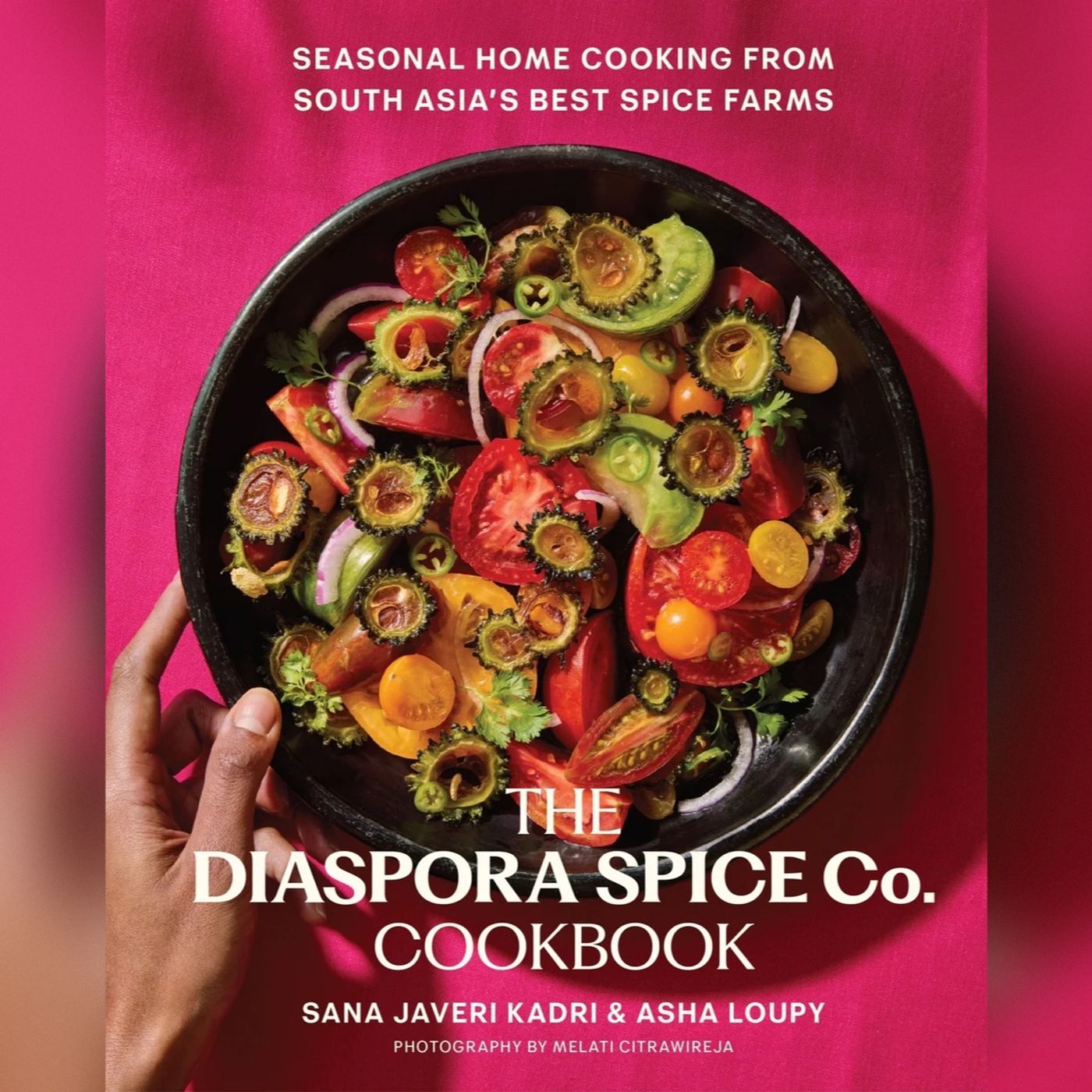
Loading summary
Transcript68 lines
- [00:00]
Asha Lupi
Foreign.
- [00:09]
Alison Stewart
You're listening to all of it on wnyc. I'm Alison Stewart. In a new cookbook, the reader can consider themselves well educated about spices, where they come from and what to do with them. It's titled the Diaspora Spice Company Cookbook. Seasonal home cooking from South Asia's best spice farms. It comes out on Tuesday, March 3. To share some more spice facts, recipes and cooking do's and don'ts are the co authors. Sana Javiri Kadri is the founder of Diaspora Spice Company. Sara, welcome.
- [00:39]
Sana Javiri Kadri
Thank you.
- [00:40]
Alison Stewart
Sana. Excuse me, Sana. And Asha Lupi is a food writer and recipe developer. Hi, Asha.
- [00:44]
Asha Lupi
Hi.
- [00:45]
Alison Stewart
We wanted to tell people that there is a talk on Thursday at Books are Magic at 122 Montague street in Brooklyn at 7pm so put that on your calendar. So, Sana, you founded Diaspora Spice Company back in August 2017.
- [00:59]
Sana Javiri Kadri
I was 23 years old.
- [01:01]
Alison Stewart
Wow. Good on you. You wrote to disrupt the with culture, equity and joy. That's a really good.
- [01:08]
Sana Javiri Kadri
I had a lot of. I was brimming with idolism.
- [01:11]
Alison Stewart
So what have you accomplished almost nine years later, if you had to look back and say, what have I accomplished with this project? What is it?
- [01:17]
Sana Javiri Kadri
I mean, we have paid over $3 million directly to 140 regenerative farmers across India and Sri Lanka. Nice. Big number. Yeah. And the average income for a South Asian farmer is about $2,000 a year. We pay our farmers on average, $26,000 a year.
- [01:35]
Alison Stewart
So.
- [01:35]
Sana Javiri Kadri
So, you know, it's a casual 16x the commodity or like what they would usually get.
- [01:39]
Alison Stewart
So why did you decide to put out a cookbook now?
- [01:42]
Sana Javiri Kadri
I think really it was about the culture. Right. It was saying that the people who have been putting out recipes and information about spices have for the past 500 years been the colonizers. And I really thought that it was time that the people who grow these ingredients and who have been growing these ingredients for generations, sometimes thousands of years, they should share what they do with it. So I want you to know, I want you to leave this book knowing what a pepper farmer who grows pepper in the hills of Kerala to where it is indigenous, what do him and his family cook with it? And the answer is very delicious food.
- [02:21]
Alison Stewart
Asha, what do you, why do you think spices, why are they underappreciated by some people? You just throw this in and that in and that's it.
- [02:29]
Interviewer/Host
And that's it.
- [02:31]
Asha Lupi
I mean, really, I think spices are underappreciated because people are using old spices, you know, like spices that have been sitting on the grocery shelf for years and years, and then sitting in someone's pantry for years and years. And so what people are tasting is dusty and not as potent as the spices that getting from these amazing farmers. And kind of cutting out those middle people and making sure that the spices are getting to people when they have those high oil contents that are making them as flavorful as possible. Yeah.
- [03:10]
Alison Stewart
That's one of the things that's interesting from the book. In your do's and don'ts, you say make sure your spices are fresh, but you also said that fat and heat unlock the flavor. Sauna.
- [03:19]
State Farm Advertiser
Yeah.
- [03:19]
Alison Stewart
What kind of fats are we talking about?
- [03:21]
Sana Javiri Kadri
I mean, I feel like in my home kitchen, I'm using everything from olive oil to ghee to cold pressed sesame oil to toasted sesame oil. Right. So it's really saying, think of the spice as something that needs to wake up and you need to kind of shake it up. And the way you wake it up is with heat and oil. And I say this over and over, that when it comes to spices, fat is flavor. So you're. The way that you taste it on your palate is you're tasting the volatile oil compounds. And so if you use heat to wake up those volatile oil compounds, they'll infuse whichever oil you have in your pantry. It doesn't have to be, you know, a South Asian only oil. Like, we're both Northern California olive oil girlies, and, yeah, our food is flavorful and delicious.
- [04:04]
Interviewer/Host
Asha, can you talk a little bit about how to properly layer spices to get the most out of them?
- [04:10]
Asha Lupi
Yeah. So, you know, when we were in India, it was really amazing how all of the women would layer spices throughout a dish. You know, sometimes adding things four or five times. For the book, we kind of had to pare that down because asking an American cook to do that is going to probably seem intimidating. And South Asian cooking is intimidating to a lot of entry level cooks, which we wanted to make it as friendly and accessible as possible. So it really starts with layering the first layer of spice where you're blooming the spices in a fat like butter, ghee, olive oil, untoasted sesame oil, coconut oil. And then, you know, you're gonna get that spice that's layered through the dish as it cooks. But then a lot of dishes are finished with spices that are, again, bloomed in a fat and poured over. And so you get a different layer of flavor that is brighter, and you're just getting kind of everything that spice is from the start to the beginning or the end.
- [05:24]
Interviewer/Host
We are talking about a new book which spotlights farms across South Asia and their spices. Its co authors are Sana Jivari Kadri. Did I get that right?
- [05:34]
Sana Javiri Kadri
Yeah.
- [05:35]
Alison Stewart
Okay.
- [05:36]
Sana Javiri Kadri
Yay.
- [05:36]
Interviewer/Host
And Achalupe. Did I get that correct?
- [05:38]
Asha Lupi
Asha Lupi.
- [05:39]
Interviewer/Host
Thank you so much, Asha Lupi. They are joining us to discuss their new cookbook, the Diaspora Spice Cookbook. Company cookbook. Seasonal Home Cooking from South Asia's book, Best Spice Farms. The harvest season must mean so much to you.
- [05:52]
Sana Javiri Kadri
I just got back.
- [05:53]
Interviewer/Host
Oh, tell us more.
- [05:55]
Sana Javiri Kadri
I mean, I would say that the highlight of my life for the past nine years is that from January through March, I get to visit South Asia's best regenerative farms. And, you know, that's really how this book came about, is I was sitting in their homes eating, like, this gorgeous seasonal farm to table food and just being like, wait, we need to share this with the world. Like, they don't know. Let's tell them. But the magic of harvest season is that it's so different every year, and it's so different region to region. Right? Like, I could be on a cardamom farm, which is like a rainforest in the hills of Kerala, where it's, like, humid and green and lush, and the next minute I'm in the dry, dusty hills of Manipur, which is on the Indian Burmese border, and it'll, like, yeah, it'll be pretty brown. But both are, like, still the season of abundance and the season of harvest. So, yeah, I just feel like this. This journey of, like, visiting these farms over the past nine years has been one of learning just how much nuance and variation exists across these two countries of India and Sri Lanka.
- [06:59]
Interviewer/Host
Asha, there are so many recipes in this cookbook. How did you decide which ones to select?
- [07:05]
Asha Lupi
Well, it was a harrowing process.
- [07:08]
Interviewer/Host
It was hard.
- [07:09]
Asha Lupi
It was. We learned, I think, over 170 recipes over almost four months of travel. And to nar that down to the 85 recipes that ended up in the book was, you know, we had to let a lot of recipes that we loved go. But what was left is such a good representation of everywhere that we traveled. And I, halfway through our traveling, made a list of all of the vegetables that I could get my hands on in the United States, and then kind of would look at that and say, oh, you know, we need an okra recipe that. And then this farmer seems like a good farmer to learn that from. And so there was a bit of culling throughout the process of travel to get to the final Recipe list when we started developing.
- [07:59]
Alison Stewart
Okay, son. I want to talk about this one recipe. It's for Sri Lankan fish puffs, which.
- [08:04]
Sana Javiri Kadri
Love it.
- [08:04]
Alison Stewart
Inspired by a restaurant chain that's been around since 1902.
- [08:08]
Sana Javiri Kadri
Yeah.
- [08:09]
Alison Stewart
What are some of their signature dishes? And why did you pick the fish puffs?
- [08:13]
Sana Javiri Kadri
I mean, I think we. I've been going to this bakery. It's a very, like, classic but regular bakery. It's not. It's nothing fancy, but it's what a lot of the country relies on across Sri Lanka. And the two bakes that I love the most, there are a sini sambol puff, which is sinisambol is like a caramelized onion chutney. And then there was a fish puff. And basically, you know, Sri Lanka's an island, which means they have really good tuna. And so their fish puff is like a fish, a tuna and potato spiced mixture with flaky pastry around it. And I think the genius of the recipe is that Asha was able to use, like, frozen puff pastry. So it's been something that now I can whip up for my kids whenever, because I have puff pastry in my freezer. I have the potato tuna mixture, which is made with canned tuna, also in my freezer. So on, like, a moment's notice, I'm busting them out, defrosting some puff pastry. And, you know, you have a very, like, elaborate, sexy dish with very little effort.
- [09:15]
Alison Stewart
Asha. I have to point this out, though. The recipe calls for 24 fresh curry leaves. For someone who thought, like, that's a lot of curry leaves, why do you need so many curry leaves?
- [09:26]
Asha Lupi
In my mind, you can never have too many curry leaves. It's like, you know when people say, measure your heart or measure garlic with your heart. I measure curry leaves with my heart for sure. But the curry leaves, it's hard to describe their flavor. They're earthy and floral, and they just add this kind of je ne sais quoi to whatever you're adding them to. And, you know, when you start blooming them in oil, anyone who is near you will know that you're cooking curry leaves. And it really does add this layer of, like, beautiful, earthy, floral flavor that goes well with the burst tomatoes and the potatoes and the tuna in that.
- [10:11]
Alison Stewart
If someone is cooking with curry leaves for the very first time, what advice would you give them?
- [10:16]
Sana Javiri Kadri
Stand back.
- [10:17]
Alison Stewart
Yeah, stand back.
- [10:18]
Asha Lupi
Step back from the pan.
- [10:20]
Sana Javiri Kadri
Stand back really well. Yeah, because, you know, they have a pretty high water content. So when you put them in hot oil, because they're a Leaf. They're a fresh leaf. They'll start to sputter, and they can sputter quite angrily. So they are delicious, and they're worth the effort.
- [10:35]
Interviewer/Host
They.
- [10:35]
Sana Javiri Kadri
But they are angry to start.
- [10:37]
Alison Stewart
Asha, you created a recipe for country curry chicken.
- [10:41]
Sana Javiri Kadri
This recipe was a fight.
- [10:42]
Asha Lupi
I'm just gonna say it was.
- [10:44]
Alison Stewart
Oh, I can't wait to hear about that. All right, tell me your side of the story.
- [10:48]
Asha Lupi
My side of the story is that every cookbook needs a chicken recipe, and Sana does not like chicken. Okay.
- [10:56]
Alison Stewart
Asha says yes to chicken. Sanne says no.
- [10:58]
Asha Lupi
And we tasted so many delicious, beautiful country chicken curries in every single region that we went to. So it was hard to say, like, this is the be all, end all of country chicken curry. So we, like a family does, came up with our own country chicken curry. And I took different techniques that I learned from multiple families and built it into the Diaspora Spice Company country chicken curry. So it is my favorite chicken dish.
- [11:34]
Sana Javiri Kadri
I would also say she won the duel because, like, I ate it all, you know, True. I loved it. It was iconic.
- [11:41]
Alison Stewart
Well, so you get to pick the last recipe. Pick one from the book that you think is really spectacular that you want people to know about. Sanne.
- [11:48]
Sana Javiri Kadri
I think it's one of Asha's greatest hits. It's the Dud Al dip, which is a pumpkin dip. And basically in Kashmir, they make this traditional autumnal chutney, which is pumpkin, yogurt, and walnuts. And we zhuzhed it up with like a sizzled chili oil, spiced oil on top. I've made it maybe five times in the past six months. Like, I just can't stop. And it's so party ready and sexy and seasonal. It's excellent.
- [12:13]
Alison Stewart
The book is titled the Diaspora Spice Company Cookbook. Seasonal Home Cooking from South Asia's Best Spice Farms. I've been speaking with his co author, Sana Javir Kadri and Asha Loopy reminder. They have a book event at Books are Magic next Thursday on Montague street in Brooklyn. It starts at 7pm thank you so much for joining us.
- [12:35]
Asha Lupi
Thank you for having us.
- [12:36]
Sana Javiri Kadri
Thank you so much.
- [12:38]
State Farm Advertiser
Finding ways to be financially savvy is a smart move. And knowing you could be saving money for the things you really want, like that dream home or new ride is a great feeling. That's why the State Farm personal price plan can help you save when you choose to bundle home and auto bundling. Just another way to save with the personal price plan. Prices are based on rating plans that vary by state. Coverage options are selected by the customer availability, amount of discounts and savings and eligibility vary by State.
- [13:07]
WNYC Announcer
Since WNYC's first broadcast in 1924, we've been dedicated to creating the kind of content we know the world needs. In addition to this award winning reporting, your sponsorship also supports inspiring storytelling and extraordinary music that is free and accessible to all. To get in touch and find out more, visit Sponsorship wnyc. Org.