Loading summary
Transcript59 lines
- [00:00]
A
All of it is supported by Memorial Sloan Kettering Cancer Center. In a small groundbreaking clinical trial, 100% of participants with a specific type of rectal cancer saw their tumors disappear using immunotherapy alone. Researchers at MSK are now studying this approach in cancers of the stomach, liver and more. And a majority of tumors are disappearing. For MSK Giving day, all gifts will be tripled. Learn more@msk.org all of it.
- [00:30]
B
We've been the trusted experts since 1960 because nobody knows tires better than we do. And with over 90 tire brands, we have an abundance of options in stock for your vehicle. Buy and Drive today@discounttire.com Let's get you taken care of.
- [00:52]
C
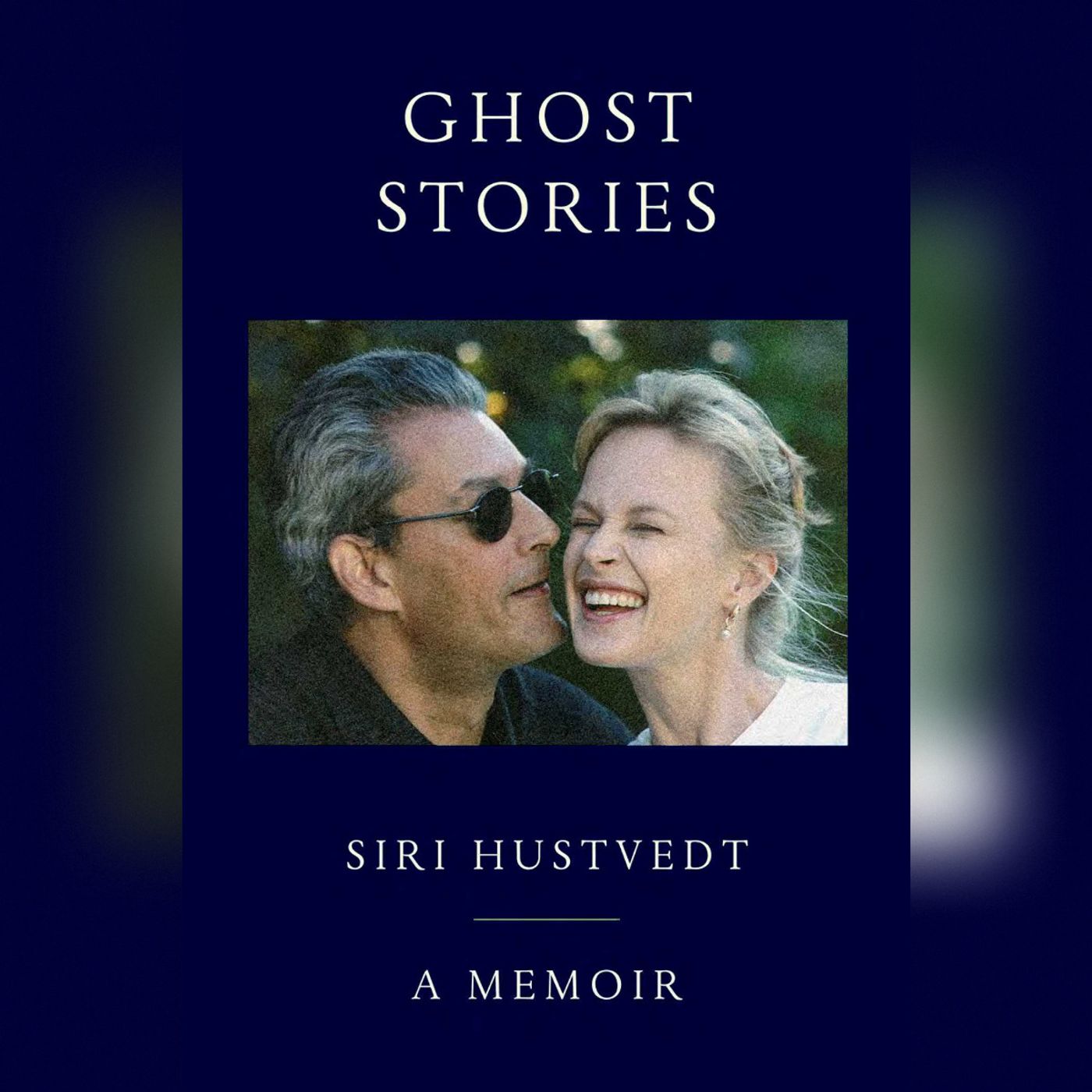
This is ALL of it. I'm Alison Stewart live from the WNYC studios in soho. Thank you for sharing part of your day with us. I'm really grateful that you're here. On today's show, we'll remember the late artist David Hockney with writer Lawrence Weschler, who wrote a biography of Hockney back in 2008 and was also his longtime friend. And we'll hear a live performance from jazz pianist Emmett Cohen. That's the plan. So let's get things started with Ghost Stories, a memoir. Writer Siri Husved and Paul Auster were together for 43 years. He was well known for his books like the Invention of Solitude and New York Trilogy. She was well known for her the Blazing World and the Blindfold. They were a literary couple to be admired who had a successful marriage and were good friends. But the 2000s were hard. In 2022, Oster's first son, an addict, died after being arrested for the overdose death of his daughter. In 2023, Paul Oster was diagnosed with lung cancer, and in 2024, he died. Through all of it was Siri Husved. She was there bearing witness. She used her gift for writing to lay out her thoughts in her new book that is part memoir, part letters, even a few calendar schedules. It lets us know what it was like for the two of them to go through this marriage together. It's titled Ghost Stories A Memoir. And Siri Husved joins me in studio. It is nice to meet you.
- [02:16]
A
Well, and it's nice to meet you, Alison.
- [02:19]
C
So before Paul was sick, in the before times, how would you describe your marriage to Paul?
- [02:26]
A
I would describe it as a dynamic evolution of betweenness. I emphasize this in the book, that what I miss most about our marriage is, of course, Paul the person. But I miss Siri and Paul. Paul and Siri, I miss the. And the shared. And that did not remain the same, but continued to change over time.
- [02:54]
C
What would be an average day for the two of you?
- [02:57]
A
Yes, it's a bit boring. It was, you know, waking up in the morning, having breakfast, as most people do, and then separating to a study. I worked at the very top of our house in Brooklyn and he worked on the garden floor so I could often hear his typewriter. He had a manual typewriter. I work on a computer. But we really didn't interact much during the day. At the end of the day, which ended at different times for each of us, we would always have dinner together and then in the evening often watch a movie.
- [03:43]
C
We learn a lot about both of you in this book. And I was struck by something that you wrote that Paul didn't really know fame until he was about 40 years old. And he kept a distance from the adulation. How did this help him navigate life?
- [04:00]
A
I think that when fame comes to the very young, it can be much more difficult to navigate than if it comes later or in middle age. But Paul never forgot the hardships he had both earning enough money to live and getting published. The New York trilogy that became a famous book. The first volume, City of Glass, was rejected by 18 New York publishers. I lived through that. And I think those, well, wounds, if you will, allowed him to keep a distance from rejection, but also from fame and adulation.
- [04:47]
C
Siri, I'm going to ask you to read a little bit from the very beginning of your book, Ghost Stories.
- [04:53]
A
Yes, here it is. Nothing to explain. The first section is called Lost Time. I am alive. My husband, Paul Auster is dead. He died on April 30, 2024 at 6:58pm Here in the Brooklyn house where I'm now writing these words. He was diagnosed with non small cell lung cancer in January 2023. But before that, in early November 2022, Paul had a CT scan in the emergency room at Mount Sinai West High Hospital. The radiologist spotted a mass in his right lung and noted it might be cancer. We all die, but only some of us know our lives could end soon. Although I had often thought about what it would mean to live without Paul, I began to imagine it more often. I imagined walking around the house alone. I imagined grieving. If your father dies, I said to our daughter Sophie, I will lose my everyday. What I didn't imagine is that after Paul's death, time would be deranged beyond recognition. I remember and then forget what day it is. I remember it's the month of May and then forget. The hours skip ahead, but minutes often move slowly. I want to root my body in calendar and clock those reliable, if ultimately fictional, markers of time. But I'm not making sense of their regular beats. I'm afraid if I don't keep checking date, day and hour, I will lose my orientation, stumble on the stairs and fall, or float away ungrounded. I make lists and calendars. Lists and calendars lie on various tables and surfaces around the house. I worry I will forget chores, appointments, bills that must be paid. I worry my thoughts will scatter into more pieces than I can recollect. I am now in the business of recollecting myself. I have trouble breathing. My heart beats too fast, not all the time in bursts. I have pains between my ribs, sometimes intense, my neck and headache. My nerves buzz and hum and electric shoots up and down my limbs. My gut rumbles and my bowel rhythms are off. Some of these are old ailments that have worsened. I imagine I've grown a tumor that mirrors the one found in Paul's lung, and I will die soon. I take the fantasy further. Maybe mirror cancer is a rare medical phenomenon outside the purview of mainstream science, one of those outliers that has been jettisoned from from cleaned data. I'm glad I can still laugh at myself. Then again, hypochondriacs die from illness, too. I sleep by pill. I pick up a paper or an object that needs attention and then see another that calls to me. I put down the first thing, only to spot it hours later, an inanimate victim of the unfinished gesture. A pile of unopened condolence letters and cards lie on the red table in the dining room. I cannot bear to open them, not today. I will wait tomorrow.
- [08:48]
C
That was Siri Husved reading from her book Ghost Stories, A Memoir. When did you know you were going to be okay sitting down and writing how you felt and knowing that it would go into the world for people to read?
- [09:02]
A
Yes, you know, I started thinking about writing the book only days after Paul died. And I believe I started writing. I wish I had recorded the date about two weeks after. So it was written in the earliest flush of grief. And I had actually, my publisher in Spain said, oh my gosh, you know, isn't this too early? Don't you want things to settle? And I realized that I had no choice, in a way, but to write this book. I needed to write. I felt it was a steadying reality, that everyday discipline of writing. And this is all I Could do. So I did it.
- [09:50]
C
The book is an interesting mix of styles. There are letters, there's your writing. There's details from calendars. How did you decide on the form? How did you decide on the form of the book?
- [09:59]
A
Yes. That began to grow inside me, and I have to say, it was a subliminal reality. At first, I had a strong feeling of what I wanted the book to be. And then the idea for using documents that I hadn't looked at since they were written letters I'd written to Paul, but also notes he had written to me, and 35 pages of an unfinished manuscript that Paul wrote in the penultimate month of his life called Letters to Miles To Our. Then Paul died. Our grandson Miles was only four months old, so he wrote letters to a far more mature Miles, an imaginary Miles in the future.
- [10:52]
C
What did you learn about Paul by reading those letters to Miles?
- [10:56]
A
Well, actually, those letters represent very much the intimate Paul, the family Paul, that I have known for a very long time. So I can't say I was surprised, but I was certainly moved.
- [11:18]
C
He's still too little to read them.
- [11:21]
A
Yes. Yes. Not yet. We have to wait.
- [11:25]
C
I wonder, did you have conversations about whether or not you should put these in the book?
- [11:30]
A
No. Paul believed, I think fervently, and I, too, that I would return to a novel that I've been working on for a couple of years after his death. It became very clear to me that although I am now returning to that book, it would have been impossible to do it then. So he had no idea. But I have a strong feeling that rather than a small, aborted chapbook, he would have been very glad to have these letters woven into my text.
- [12:09]
C
It's interesting. There are letters written by you before you were married. How did the letters play into your relationship?
- [12:17]
A
Well, those letters that I reproduced in the book, exactly as they were, comma, errors and all I wrote to Paul in 1981. We met on February 23rd that same year and fell for each other very quickly. And we're having a passionate love affair. I was 26 years old, a graduate student at Columbia. Paul had another life. He was married before and had a son. And one morning we were together in my apartment, and he got up and informed me that he was going back to his old life and left. I walked him to the subway, and when I return to my apartment, I checked to see if I was still whole and not cracking to bits. And I found myself surprisingly okay. Looked at my typewriter, a manual typewriter at the time, and thought, what the heck, sit down and write. And that is exactly what I did. And I was quite conscious of not writing morose or self pitying letters, but letters that actually might have a seductive force and get that man back. And they did.
- [13:39]
C
It's interesting, in the book you write about automatic writing.
- [13:42]
A
Yes.
- [13:43]
C
Why does that work for you?
- [13:45]
A
Well, my history of automatic writing began before I met Paul. I was a graduate student, but also writing poems. And I had published a couple of poems in literary magazines at the time. Then I began to feel that I was writing badly. I had a case of writing constipation. I spoke to David Shapiro, now the late David Shapiro, a poet and professor at Columbia, about my troubles. And he said, siri, when I get stuck, I do automatic writing as the surrealist did. And and so I tried it out, which is you put your pen on a piece of paper and you let whatever comes come. And I wrote a text in a single night and then spent the next three months editing that same text. And I discovered that I liked that better than anything I had done. So this using this unconscious force, if you will, to turned out to be a way to unclog myself. And I used in the letters, I just let whatever come, come. So they're a bit wild.
- [15:09]
C
We're talking to Siri Husvett about her book Ghost Stories A Memoir. We'll have more after a quick break. This is all. This is all of it on wnyc. I'm Alison Stewart, writer. Siri Husved and Paul Oster were together for 43 years. Both well known, both respected. Paul died in 2024 and Siri takes us through their romance, his illness and what remains. Her new book is called Ghost Stories A Memoir. Aside from the obvious, what have you noticed is the difference between being a wife and. And a widow?
- [15:53]
A
It's a very interesting question. I think in a world that is still determined by many sexist ideas, that a wife is still thought of as a human being, a woman under patriarchal control. And widowhood is an opening, a way of out of that control, which is why many cultures, and I think including our own, have ways of disciplining that state. And so being a widower and being a widow remain different. And even after Paul died, there were moments when I felt in social situations, not with beloved friends or family, that I was carrying the scent or the odor of death with me. And I think that is related to the fact that we still think of women as being closer to bodily and corporeal reality than men.
- [17:05]
C
As Paul got closer to his death. What were his. Did he have any rituals around death? Did he develop them?
- [17:14]
A
Well, Paul and I did actually talk about death a lot throughout the many years we were together. We were both, I think, very conscious of mortality and the fact that it can happen at any time. He was particularly, I think, brave and courageous about his own death. When we knew he was dying, and well before that, he had plans. We had already bought a grave in Greenwood cemetery in Brooklyn, and he knew exactly what he wanted, which was, of course, a help to the people who would survive him. So he was clear, lucid. In the last days of his life, he said goodbye to friends who came to the house. And he said several times to me, I would like to die telling a joke. And I said, paul, I don't think that's going to happen. It did not. But the spirit of the wish remains with me.
- [18:24]
C
You write about his treatment for lung cancer. What would you tell someone going through treatment for a cancer like Paul's that you know now that you didn't know at the time?
- [18:35]
A
Well, it was something I came to and is reproduced in the book because the letters I wrote to friends about Paul's treatment are there. There was a moment when his treatment was going very well. The tumor had shrunk almost to nothing. And people sent jubilant responses to me. Very understandable. But I felt that I needed to sound a note of caution. And I said, there is a difference between optimism and hope. Optimism is faith in a good outcome in cancer treatment. I think this is quite dangerous, and hope is something else. Hope is what human beings need to live to the next day. So we must hold on to hope and at times tamp down optimism.
- [19:34]
C
You said you only broke down in tears once during this period when the doctor said that his cancer was inoperable. Why was that the moment?
- [19:45]
A
Well, I think both Paul and I, we were sitting in the surgeon's office. We both knew that the best hope for a cure was surgery. And actually, neither of us really wept. What happened was we turned to each other after we had gotten the news, and I saw tears well up in Paul's eyes. I felt them welling up in mine. And as I wrote, it was as if we were looking in a mirror. But then the tears were suppressed and they didn't run.
- [20:28]
C
Why didn't you think they ran?
- [20:30]
A
Because we still had to brave the future of treatment.
- [20:38]
C
In my mind, I thought that you teared up and that it was really an emotional moment for you.
- [20:44]
A
Oh, it was an emotional moment, but it happened to Both of us, at exactly the same time. And then the tears finally didn't come out.
- [20:54]
C
It was 16 months between Paul's diagnosis and his death in 2024. What changed about your relationship in that period, if anything?
- [21:04]
A
Well, I think the most dramatic change, which is also reported in the book, was the immunotherapy that began to attack Paul's healthy tissues, landed him in the hospital several times. And there was a period when he became delirious. It's not uncommon. Sometimes just being in the hospital can create delirium in people. It's called hospital delirium. But he also was raging with infection. And having this interlocutor of mine, our daughter, called us sparring partners, intellectual sparring partners, be confused, changed our relations at that moment. And I found it deeply sad. Fortunately, before Paul died, he recovered his lucidity entirely and died that way. And for the people who survived him, that was a wonderful thing.
- [22:17]
C
You wrote that you read a lot of books during this time, looking for guidance. Did they help? Did anything help? Did any book particularly help?
- [22:27]
A
Well, yes, I think that reading for me is my approach to trouble. One might say it's an obsession. So I always read about the subject that is giving me trouble. And I did in this case too. I read a lot of bereavement literature, scholarly bereavement literature, and grief memoirs. And what it does, I believe, is that reading can be a form of de centering. Grief is an ordinary business. If you have the capacity for love and you live long enough, you will grieve. And so when you read about either other people's experience of grief or about what grief does to. To people in various ways, including physiological changes that take place, that helps to place yourself inside a broader human story. And I think that was good for me.
- [23:29]
C
Siri, in the book you write, now that my Paul is dead, I've been thinking about all the grieving characters in his work. I'm going to count them. But right now it's hard for me to open his books. The words hurt too much. Have you done it yet?
- [23:43]
A
Yes. I have been able to look back at some of Paul's books and to read him and actually even listen to him recorded his voice recorded. And now it gives me pleasure rather than pain. That is, I think, an evolution of grief. It's been over two years now, and it continues to change. It doesn't go away, but it changes.
- [24:14]
C
Someone told me that when my father died, that you'll be just sad every day, and then one day you'll wake up and you'll feel a sense of warmth when you think about him, rather than sadness. And it could take two years, it could take five years, but it happens. And it does.
- [24:28]
A
It does. It does.
- [24:31]
C
You've written about grief before. When you write about it again, I'm sure you will. Are you going to write about it differently?
- [24:41]
A
Oh, my goodness. I am sure. I do think, despite the commonalities, people experience grief in idiosyncratic ways as well. And it's dependent on the relation. Right. That and that I talked about. What you lose is different depending on the relation that came before.
- [25:06]
C
Part of the story, and it's in the introduction, is about you recollecting yourself, right?
- [25:12]
A
Yes, yes.
- [25:14]
C
What was something that led you to know you were on your way to recollecting yourself?
- [25:19]
A
Well, I think symptoms of memory holes, of feeling ungrounded, of feeling as if I was living outside of time rather than in it. Slowly, even by the end of writing the book, I talk about changes that have happened inside me. And I think it's changes of pacing that the, you know, the embodied person becomes more adjusted to change circumstances. Getting up in a bed alone, going to bed in a bed alone, making a meal for a single person and not the two people, all of that becomes embedded in new habits. And I think that's why grief begins to reconfigure itself, even if you miss the person tremendously.
- [26:20]
C
Paul said that he wanted to come back as a ghost. Has he?
- [26:24]
A
He did. On the day we buried Paul and May 3rd, I had left the company at a funeral ceremony. It was a very small funeral, but family and a rabbi and a couple of friends and I went upstairs to get away. And while I was lying on our bed, I felt Paul's presence. I didn't see anything, smell anything, hear anything. No one touched me. I knew it was Paul. I felt him walk into the room. I was flooded with joy. He looked at me. I had a sense he was checking. And then he left. It was a kind of grief apparition. A very powerful feeling that I am grateful I had some people have them over and over again. But you don't will this. I think it is a way that the nervous system has of filling in what's missing.
- [27:38]
C
The name of the book is Ghost Stories, A Memoir. It's written by Siri Husveth. Thank you so much for joining us, Alison.
- [27:45]
A
Thank you for having me.
- [27:49]
B
Lamine Yamal steps into McDonald's, looks left, sees Pulisic, looks right, sees Jimenez, gives a nod to Ronaldinho in the corner with a FIFA World cup meal. Ronaldinho sees son in the booth. Son finds Beckham going for extra Big Mac sauce. He's got Davies at the table just behind him. Davey's going for his collectible cup, a steal by Henry, who pulls his own collectible cup. Collect one of nine legendary cups with a FIFA World cup meal. Participating McDonald's for a limited time while supplies last. All rights reserved. 2026 McDonald's at FIFA World Cup 2026 OnDeck is built to back small businesses like yours. Whether you're buying equipment, expanding your team or bridging cash flow gaps, Ondeck's loans up to $400,000 make it happen fast. Rated A by the Better Business Bureau and earning thousands of five star Trustpilot reviews, OnDeck delivers funding you can count on. Apply in minutes@ondeck.com depending on certain loan attributes, your business loan may be issued by Ondeck or Celtic Bank. Ondeck does not lend in North Dakota. All loans and amounts subject to lender approval.