Loading summary
Transcript27 lines
- [00:10]
A
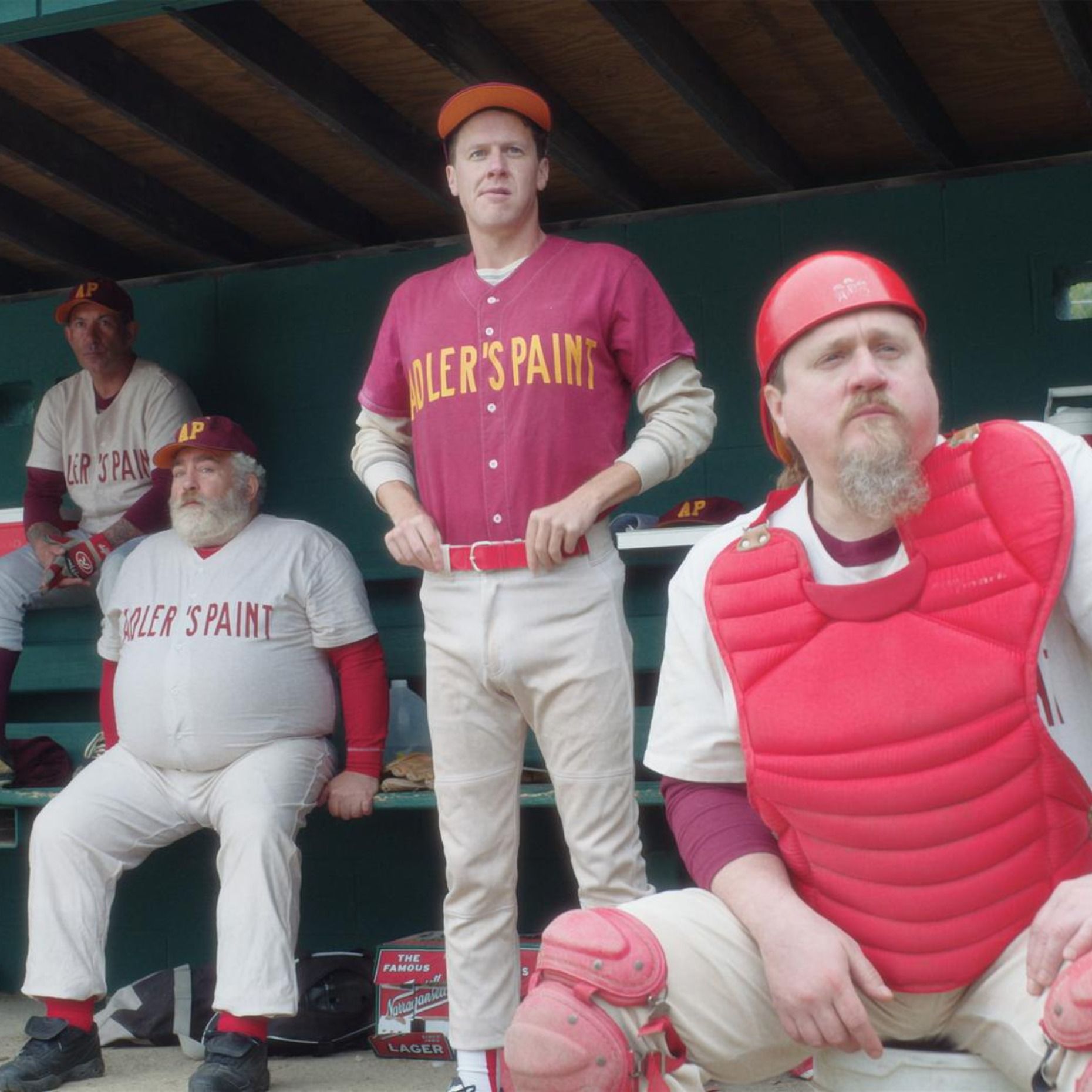
This is all of it. I'm Alison Stewart. Throughout the show, we've been talking about some of this year's nominees from the Independent Spirit Awards. The awards ceremony was yesterday and you can see the winners by going to our instagram @oliveit wnyc. Now let's talk about the movie Efis. It follows a men's recreational baseball league that has gathered to play one final game. Their small town baseball field is being destroyed in order to make room for a new school. And while these New England men are far from professionals, in fact some of them are drunk the whole game. Baseball is one of the ways they can feel like they are part of something bigger. EFIS follows the players and a few dedicated spectators as they take the field together one last time. The film was nominated for best editing at this year's Independent Spirit Awards. It is also recognized in a category for lower budget productions. When I sat down with writer, director and editor Carson Lund to talk about the film, I started by asking him to explain the film's namesake, the EFIS pitch.
- [01:17]
B
EFIS pitch is a pretty rare pitch. It's not thrown very often anymore. It was invented in the early 1900s by this guy, Rip Sewell, and then kind of popularized by Bill lee in the 1970s. Bill Lee, known as Spaceman because he's quite an outsider within the history of baseball. Played for years for the Red Sox and also the Montreal Expos. And he's in the film as well. The EFA's pitch is a slow, lobbed pitch that is so, so much, so radically slow relative to the other pitches that are thrown that it catches the batter off guard and reorients their sense of time. And they swing too early or way too late and they're just thrown off completely by this pitch. The term actually derives from Hebrew E, F, E, S, which means nothing or avoid, because it's sort of like a. It's a nothing pitch, you know.
- [02:09]
A
Well, why was it the right name for the film?
- [02:11]
B
Well, first of all, the film is a comedy, and I think the word is funny. That's the simplest answer. But I also think within the canon of baseball films, this one's a little peculiar in terms of really, I think being faithful to the rhythm of the game, which many describe as slow. For me, it's in all that slowness or those mundane periods between the action, there's so much going on, there's so much richness. And especially if you play it, you feel that with your teammates there's all these opportunities for socializing So I think that the film is, in its own way, a slow, lobbed pitch that helps you kind of rethink your relationship to the passing moment and makes you more present.
- [02:56]
A
There are no real protagonists of the film. It's truly an ensemble piece. There might be some people who might be considered bad eggs because they pitched for the school. They wanted the school, or maybe they drank a little bit too much. But why did you want to have this story be the story of many?
- [03:16]
B
It is the story of many. That's why. Because everyone's kind of having the same realization. They're coming to the same conclusion, and they have to say goodbye to this ritual and with it, a version of themselves that they all share on that field. You know, it's different from what happens in the rest of their lives, that the field is a refuge, it's an escape for them. So they're all having to come to terms with that in a similar way. And I think it allows you a lot of freedom as an editor and as a storyteller to float between these different characters and not necessarily lose the audience along the way, because everyone's kind of going through the same thing and dealing with it in their own very distinctly New England ways. Sort of avoidance and cracking jokes and trash talk and all this stuff.
- [04:00]
A
What was the casting process like?
- [04:03]
B
It was mostly conducted remotely because I live in California now, but I am from New England. So a number of players or cast members were people I'd worked with prior from the Boston area when I went to school at Emerson there. And then a number of them were new to me, and I found them on casting websites in the Boston area. And I conducted it all, like, over Zoom and had to kind of ask them to throw a pitch on a Zoom call. So I had a sense of their experience with the game.
- [04:35]
A
But you did look like. It does look like you went to a bar and went to say, like, hey, who wants to be in my movie?
- [04:39]
B
Yeah, yeah, yeah. That's what I want. I want that feeling for sure. I think that the. You know, I did talk to hundreds of people for this movie, and a lot of people were right for the role in certain ways, but they didn't have that look. And for me, I really want that look. A sense that someone has lived. Lived a life, you know, And I think those faces, we've kind of lost them from the screen.
- [05:05]
A
Yeah. The film takes place in New England. Glad to hear you're from New England. The little details about New England in there, like that the manhole covers Were triangle shaped versus circular. What did you want to add? Why did you want those little details for the film?
- [05:22]
B
Well, I think baseball obsessives will tell you that some of what they love about the game is dwelling in these little details, dwelling in the stats and categorizing players and all this stuff. I think for us as filmmakers, we're also interested in those details, the regional details, the things that are very specific to the New Hampshire town where I grew up. And also my co writer, Mike Bosta grew up. I also had another co writer, Nate Fisher, who grew up in Rhode island. And he brings some of his details into that, including the name. Adler's paint is derived from Adler's hardware in Providence, Rhode Island.
- [05:58]
A
I'm aware.
- [05:59]
B
Okay. Yeah. And I like this, like this kind of profusion of details in the movie that just sort of washes over you and gives you a real sense of space and time that. Another thing I think we're losing for movies is a real sense of space and time because everyone seems to shoot in these, the same locations because they're tax hubs, you know, so, so everything's in Atlanta. So you don't know where. Yeah, exactly. You don't know where any movies are set anymore. So as a, I guess as like an over, over correction for that, I try to load the film up with all these details that I remember from the 90s in New Hampshire.
- [06:32]
A
A school is going to take over. Soldiers feel it could have been anything. Why did you pick a school?
- [06:38]
B
Yeah, the easy thing to do would have been a mini mall or some sort of high rise development, you know, and that, that, that does happen, you know, in the modern world for sure. But I think it would have let the, let the characters off the hook too much. They're all frustrated and they're bitter about the fact that this is all coming to an end for them. But I think that by making it something that's positive for society, at least at face value, you know, a school for children, it makes them have to wrestle with the fact that we're always dealing with change in our lives. You know, time passes and things change and that's something we have to deal with even if it's ultimately for the betterment of society. And so I think we can relate to these characters who, you know, you know, have to, have to deal with that. And I didn't want it to be a didactic film about one specific evil that you can point to or, you know, gentrifying force because that would have, I think, narrowed the film In a lot of ways, almost made it.
- [07:40]
A
It would have made it too easy.
- [07:41]
B
Yeah.
- [07:42]
A
I want to read you this quote from the Indiewire review of youf Movie. It says, a lot of ink has been spilled over the loneliness epidemic that plagues American men in the 21st century. But few films crystallize the problem as efficiently as EFIs. Was this something you were thinking about?
- [08:00]
B
Certainly. I think so, yeah. I think we've lost a lot of opportunities for this kind of leisure activity in this country, whether it's because we're all too busy and we all have money to make, to sustain our lives in this increasingly hyperspeed, late capitalist society. You know, that's kind of just. We've lost a lot of places where people can just hang out and pursue a passion that they love and just connect with some sort of childhood joy. And I think with the loss of this space in the film, these characters may not be able to find a new outlet for their friendship. Because maintaining group friendships, it takes effort. And that effort sometimes falls down the pecking order when you have many other things going on in your life. So I think it's. It's definitely a reflection of where we're at and what we call these. What we call third spaces. You know, it's not your home, it's not your work. It's somewhere else where you can create a kind of family, surrogate family or something. I've certainly watched over the course of my life as people have found less and less time for this. I have found less and less time for this. This is why I joined a rec league. And I think it's been really healthy to get out there once a week and just do something with kind of reckless enjoyment, you know, what's your relationship to baseball? I've played my whole life. I was very, very competitive about it when I was younger and I was in traveling leagues. And there was maybe a chance that if I had really pushed myself and got into the weight room more, that I could have actually gotten to the next level. But I just got. I grew a little bit tired of the whole culture around it and the stress and the pressure. And I didn't like being in the weight room at all. So I just got more into films at the same time, and I left the sport for a while. But I did come back when I went to California, and the weather was so nice. The baseball just felt like it was in the air. So that's when I joined the rec league, and I found that there was a very different tone to the gamesmanship, you know, it was more about the passion for the game and about sharing that passion with others rather than trying to ascend to some next level.
- [10:15]
A
This is your feature directorial debut. Congratulations. First of all, what did you learn on this film that you will, that you'll take to future projects?
- [10:25]
B
Man, I learned that you always need more money and more time, but I've learned that many times over because I've been a cinematographer for years. I've shot three features and I've shot many shorts as well. So it doesn't really feel like a debut.
- [10:40]
A
Okay.
- [10:41]
B
I've always been working on low budgets as a filmmaker ever since I was a kid. And the role of cinematographer and director have always felt very fluid to me. And I've edited my own films in this case, you know, I gave myself the director title because this was my story. But yeah, I've made other films before, so I'm always learning, you know, and I think one of the things that was maybe reinforced, solidified by this film was to just keep working with, you know, the friends and the group of people that I've grown to love working with. And I think we made an incredible, incredible chemistry on this film that I want to sustain going forward and work with these same people. So I think that that's one of the less that maybe I already had it in the back of my mind, but it was really, really confirmed by this production.
- [11:30]
A
That was my conversation with filmmaker Carson Lund. The film is called EFIS and it earned two nominations at this year's Independent Spirit Awards. The ceremony was held yesterday and to see winners head to our Instagram llofitnyc. And that's all of it for today. I'm Alison Stewart. I appreciate you listening and I appreciate you. I, I will meet you back here next time.
- [11:56]
C
It's tax season and at Lifelock. We know you're tired of numbers, but here's a big one you need to hear. Billions. That's the amount of money and refunds the IRS has flagged for possible identity fraud. Now here's another big number. 100 million. That's how many data points Lifelock monitors every second. If your identity is stolen, we'll fix it. Guaranteed. One last big number. Save up to 40% your first year. Visit lifelock.com specialoffer for the threats you can't control. Terms apply.
- [12:26]
A
Since WNYC's first broadcast in 1924, we've been dedicated to creating the kind of content we know the world needs. In addition to this award winning reporting, your Sponsorship also supports inspiring storytelling and extraordinary music that is free and accessible to all. To get in touch and find out more, visit sponsorship.wnyc.org.