← All Of It with Alison Stewart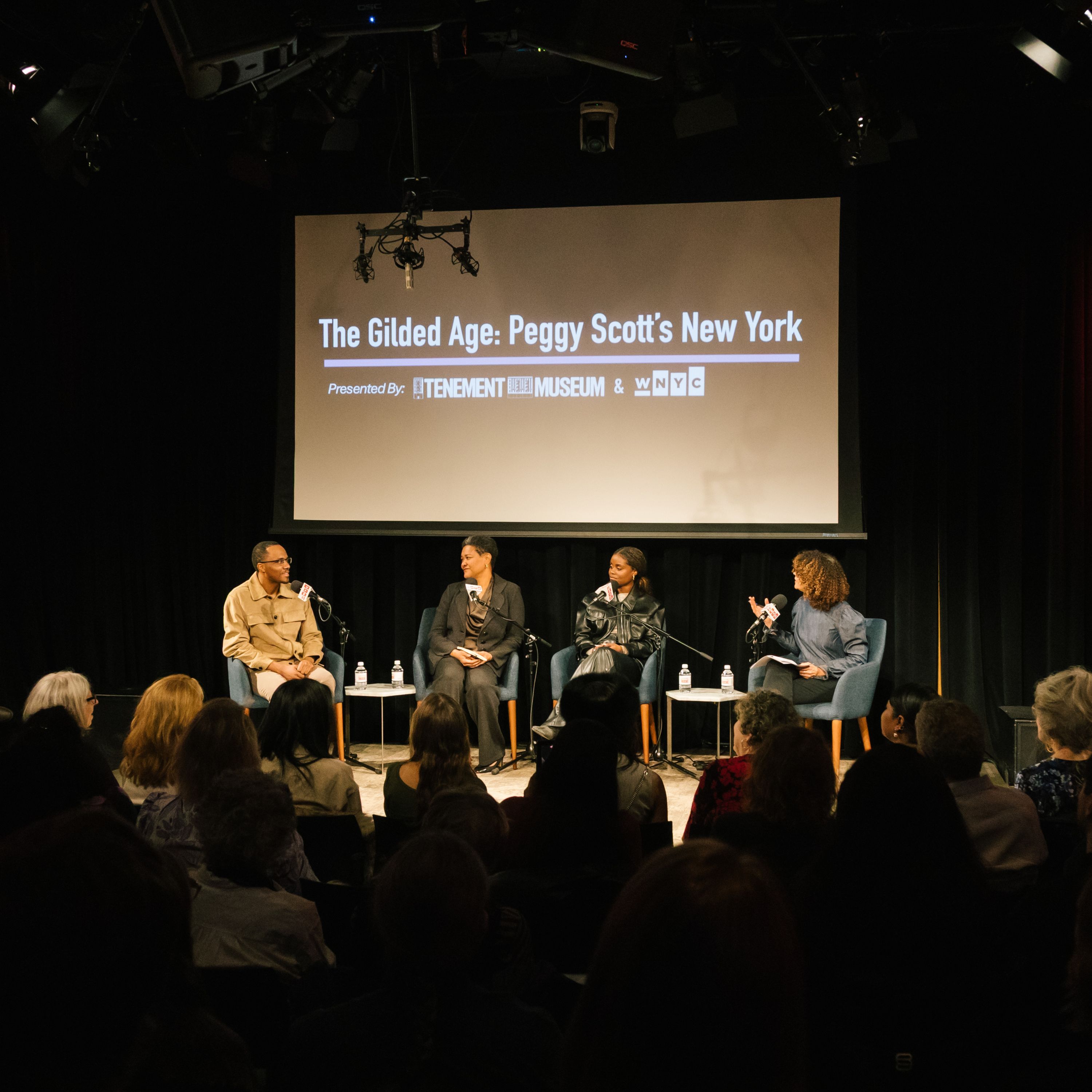
Loading summary
Transcript128 lines
- [00:00]
Danae Benton
All of it is supported by Progressive Insurance. Do you ever find yourself playing the budgeting game? Well, with the Name youe Price tool from Progressive, you can find options that fit your budget and potentially lower your bills. Try it@progressive.com Progressive Casualty Insurance Company and affiliates Price and coverage match Limited by state law not available in all states. WNYC Studios is supported by Odoo. When you buy business software from lots of vendors, the costs add up and it gets complicated and confusing. Odoo solves this. It's a single company that sells a suite of enterprise apps that handles everything from accounting to inventory to sales. Odoo is all connected on a single platform in a simple and affordable way. You can save money without missing out on the features you need. Check out Odoo at o d o o.com that's o d o o.com Few
- [00:52]
Leslie Harris
things are as uplifting as the greatest moments in sports, and nothing brings us
- [00:56]
Danae Benton
together quite like Team USA at the Olympic Winter Games.
- [00:59]
Leslie Harris
From NBCUniversal's iconic storytelling to the innovative
- [01:03]
Marquise Taylor
technology across Xfinity and Peacock, Comcast brings
- [01:06]
Leslie Harris
the Olympic Games home to America, sharing
- [01:09]
Marquise Taylor
every moment with millions.
- [01:10]
Leslie Harris
When Team USA steps onto the world stage, we're not just watching, we're cheering together. This winter, we're all on the same Team Comcast, proud partner of Team usa.
- [01:26]
Alison Stewart
This is all of it on wnyc. I'm Alison Stewart. We've got a very special presentation, especially if you're a fan of the hit show the Gilded Age. Last month, WNYC partnered with the Tenement Museum on the Lower east side to take a deep look at some of the real New York City history in which the Gilded Age is set. And we wanted to look in particular at a character named Peggy Scott, an aspiring writer educated at the Institute for Colored Youth in Philadelphia, who came to New York City to pursue her ambitions. And since so much of the public's consciousness about the Gilded Age is about wealthy white families the Rockefellers, the Carnegies, the Vanderbilts, the Morgans we wanted to explore what the era of New York City would have been like for someone like Peggy. We gathered a live audience in the green space for this event with the Tenement Museum's Marquise Taylor. We were also joined by historian Leslie Harris and actor Dene Benton, who plays Peggy Scott in the Gilded Age. So without further ado, here's Tenement Museum President Annie Pollard to introduce the event.
- [02:35]
Annie Pollard
This program tonight is called Peggy Scott's New York, and it's an homage to the amazing character on HBO's hit the Gilded Age. Peggy Scott's character, played by the remarkable Danae Benton, is an interruption in the way that we typically think about the Gilded Age. So often when we think about the Gilded Age, we think about a character like Christine Baranski's AG Van Rhine or Bertha. You guys all know her name. Bertha. Bertha Russell. Thank you. Played by. See, I know this audience. Played by the amazing Carrie Coon. We think about the parvenu and the aristocrat, but we don't usually think about the Gilded Age from the perspective of a journalist from the elite black population of New York City. And so this Peggy Scott character has interrupted our understanding of the Gilded Age. And in doing so, much broadened and enlightened and enlivened expanded our idea of New York City. And tonight we want to build on that. We want to keep interrupting and we want to keep expanding our view of New York City because we want to get a sense of what Peggy Scott would think of the tenement districts. Again with the Gilded Age, we think a lot about the mansions. We think a lot about the brownstones. Tonight we want to think about it also in relation to the tenements. In other words, what would have been the ties that would have boundaries, a black woman like Peggy Scott to the tenement dwellers, the working class of this very neighborhood. Because this neighborhood that we're in right now, we think of it as Soho or we think of it as Lower Village, South Village, but it used to be known as the 8th Ward in the 19th century. And the 8th Ward was home to one of the largest free black populations in the country and certainly in the city. And most of the free black people that lived in this neighborhood lived in tenements. And at the tenement museum, we tell the story of one of those families, Joseph and Rachel Moore, who lived at 17 Laurens, now West Broadway. And we tell that story in our tenement. And you might be wondering, why is that story told at the tenement museum? Why isn't it told here in this neighborhood in their tenement? But their tenement was torn down. It was part of a kind of the broader the expansion of the city. And their tenement was torn down, and they had to relocate like so many black people that lived in this neighborhood, kind of victim to the growth of the city. And so when we went back to the area where Joseph and Rachel lived, as we were researching their story, we found that there was the Soho Grand Hotel there. And so I guess the Gilded Age has come back towndown. And so we were so Enamored of the story that we thought we had to tell this at the tenement museum. And so now what we're going to do tonight is we're going to bring kind of the story of Peggy to life and to even more life and expand our story to try to imagine what it would have been like for Peggy to come in contact with the tenement district. And so we're going to learn Peggy's backstory tonight. And we're gonna be joined, too, not just by Danae Benton, the actress who plays Peggy, but also Leslie Harris, the extraordinary historian who wrote a book called in the Shadow of slavery that documents the history of black New York. So she'll be here tonight, as well as her student, her graduate student, Marquise Taylor. And is Caprice Taylor here tonight? Oh, my goodness. So wonderful to meet you. Caprice Taylor is the mother of Marquise T. And Marquis has made the life of the tenement museum so much better by doing amazing research on the Joseph and Rachel Moore story and continuing to work with us to keep expanding that story. So he'll be here tonight to share the research he's done in the black newspapers. And, of course, we also have with us tonight the amazing Alison Stewart, the host of WNYC's morning program, all of It. And we're so excited that she's here to help us connect all the dots.
- [06:32]
Alison Stewart
Thank you so much for joining us here in the green space. Hello to everybody in the audience. Hello to people at home, people in the audience. Can you turn off your cell phones? You don't have to put them away. You can take pictures. Put us on Instagram, wherever you want to put them. Hashtag us and we'll rehash. Tag them as well. People at home, you can leave your phones on. I do want to tell you that we are going to go through the program. We'll also have time for questions at the end. So get ready to ask your questions. Because we were like, questions and people, what are we going to ask? Questions. Let's talk about Peggy Scott. Danae Betton has played Peggy since season one on the Gilded age. Broadway lovers. Some of you in the house know her as Eliza and Hamilton or as Natasha and Nantasha and Pierre in the great Comet of 1812, for which she was nominated for a Tony. I saw it twice. Unfortunately, the Gilded age hasn't had her sing yet. Maybe you can join my personal hashtag. Letpeggysing might happen. Please welcome Danae Benton.
- [07:48]
Danae Benton
Hi, everyone. Thank you for coming.
- [07:51]
Alison Stewart
We're so happy to have you yes.
- [07:53]
Danae Benton
Happy to be here.
- [07:54]
Alison Stewart
So the Gilded Age was co founded by Julian Fellowes and Sonja Warfield. When they first presented Peggy to you, what was she presented like in the script?
- [08:05]
Danae Benton
You know, when I auditioned in 2019, which is crazy to think how long ago that was. Sonya wasn't involved yet. It was a really big part of the push of me and Dr. Erica Dunbar, incredible cohort and Sally Richardson Woodfield to ask them to expand the writers room to include a black woman who could be more adept in really digging into the textures of our story. And so before that, Julian had read this book called Black Gotham, which was Carla Peterson, I believe is her name, was tracking the history of her own family in the 1880s in black Brooklyn. And she was connected to Philip White, who was a black pharmacist who owned. And so that's where Julian got the inspiration for this story. But at the time, Peggy still was sort of falling into some stereotypes around what we usually see of black women on television at that time. Written to be a domestic worker, which no shame in that work. It's work my grandmothers did. There's so much honor in it. And we were like, well, she comes from wealth. Is there room for her to maybe use some of her skills as an educated woman? Can she be a secretary? Can she be working for a newspaper? So we got to really expand from what was originally on the page.
- [09:21]
Alison Stewart
I was watching earlier the first season, and I realized Peggy's a bit of a mystery in the first season. Did you have a sense of what her arc would be over the three seasons or did you not know?
- [09:35]
Danae Benton
No, we've really gone one season at a time. Like at the beginning of season one, I knew what her secret would be, you know, that she. About her history and her situation with her family. But to be honest, it's because of all of you that we've kept getting more seasons. Cause season we've sort of thought maybe it was our last. And so every year we've kind of gotten to come back with a fresh, exciting start.
- [09:57]
Alison Stewart
You mentioned Erica Armstrong Dunbar. She's a great historian, a professor, and she co produced the show. And largely she is responsible for accuracy, especially around black characters. What questions did you have for her about how Peggy would move through the world?
- [10:15]
Danae Benton
You know, I think there are a lot of moments where we get to see the dignity that she moves with, but I think that Dr. Dunbar always does a really good job at reminding us just how life and death, every moment really was like to offend a white person in that Time, you know, and this time, unfortunately, with where we are now. But at that time, it really was every moment that you chose to speak up for yourself or you chose to challenge anything. So the spaces Peggy's moving through and the code switching she does, she always is walking this very specific tightrope. And that was really helpful. The history of black journalism at that time was really exciting. It was such a centering point for, like, every region around the country. And they would host read ins where they would teach different members of the community who had just been emancipated or were generation away how to read and different. There was like a real. There was obviously still classism, but there was a sense of responsibility for one another. And also still some of the same issues we face today around that type of separation. And so she was just such a. She is such a rich resource and was a big part. I don't know if I'm skipping ahead to any of your questions. It's good. Was a huge. Her vision for T. Thomas Fortune was a really big gift to our show. Cause originally, Peggy was gonna write under a white pen name for a white newspaper. And Dr. Dunbar was like, there was a black newspaper that existed. So what if we just have her write for the Globe? And so those moments were just priceless.
- [11:55]
Alison Stewart
I wanted to ask you about a relationship early in the season between Marian Brooke and Peggy. Marian's played by Louisa Jacobson, the niece of the wealthy widows who you live with. And it's interesting because how did you discuss about whether they would have a friendship or could they actually have a friendship?
- [12:18]
Danae Benton
Yeah, you know, originally, the infamous shoe scene that everyone talks about. Marian in the shoes.
- [12:27]
Alison Stewart
Do you know what this is about? The Marian in the shoes? Okay, so Marian shows up at her house in Brooklyn with a bag of shoes to give the family. Like, oh, you might need shoes. And she was wrong.
- [12:40]
Danae Benton
She was wrong. It's actually the scene that I still get stopped on the street about. Like, people are obsessed with it. And then she brought those shoes. They love it. And, you know, originally it was written for Peggy to be really understanding and not get. Or, you know, and Marianne to apologize and Peggy to forgive her really quickly. And Louisa and I really advocated. We were like, we're only gonna see a true friendship build between them if we allow this rupture to happen and, like, allow this trust to be. And allow Peggy to really put Louisa's character in her place, Marian in her place. And how Marian responds to that as a white woman in that time will tell Peggy everything. She needs to know about whether or not they can actually be friends or if this is just a nice acquaintance, you know? And so us really allowing that moment to be heated and how dangerous it was for Peggy to raise her voice at her was something we really advocated for. And it's exciting because I think the way Marian responds, in time, we as an audience believe that they could become friends as these sort of two. They get to be these, like, secret keepers for each other because all of their relationship really exists in the comfort of that home. And they get to build a true bond in time. But we really wanted to fight for that moment to be earned.
- [14:04]
Alison Stewart
I'd like to bring on our historians, if that's okay with you. Leslie Harris is a renowned scholar and history professor at Northwestern University, advisor to the Tennant Museum. Come on up. And Marquise Taylor, thank you for being with us.
- [14:17]
Leslie Harris
Thanks for having us.
- [14:18]
Alison Stewart
It's nice to see you again.
- [14:19]
Leslie Harris
Good to see you.
- [14:20]
Alison Stewart
I wanted you to comment on the area of Brooklyn that the Scotts would have lived in. Where do you think they would have lived? What was the.
- [14:27]
Leslie Harris
I think Weeksville. That's exactly what came to mind as well. Weeksville was an independent black community, black homeowners, businesses, and that fits very well. But the other thing about Brooklyn at this time, and blacks in New York at this time, we think a lot about residential segregation, but black people did not only live. Didn't live in isolated pockets. So Weeksville is kind of unique in that way. So it's very likely, as you said, that they lived among other people, immigrants, white people in Brooklyn Heights or in other places in Brooklyn. So it was actually, in a funny way, more integrated, because black people, when they lived in these places, they were not. They could not. The city did not contain them in that way. The other thing I want to say, though, about why there's so many black people in Brooklyn in this time and why they may have been there, is that they were pushed out of Manhattan by the 1863 draft riots. And so there are people who. There's a big drop in the population after the draft riots. And there are people who say, I crossed the river into Brooklyn and I swore I'd never go back to Manhattan after that horrible days of writing. It's a very. Yeah, yeah. So that's another. Before this time period. That's another big push into Brooklyn of African Americans.
- [15:46]
Alison Stewart
We've been listening to a special event with the Tenement Museum called the Gilded, Peggy Scott's New York with actor Dene Benton, historian Leslie Harris, and The Tenement Museum's Marquise Taylor. We'll have more after a quick break. This is all of it. Welcome back to all of it. I'm Alison Stewart. This hour, we're bringing you my live event from the green space called the Gilded Age. Peggy Scott's New York. We partnered with the Tenement Museum to explore some New York City history through the lens of Peggy Scott, a character in the hit show the Gilded Age. Peggy is an educated black woman who comes to New York City in pursuit of her ambition to be a writer. And since most of the Gilded Age that you'll read about in high school textbooks is about the rich white guys like Rockefellers and Carnegie's, we wanted to take a closer look at people like Peggy in the Gilded Age and how their stories helped shape New York City that we live in today. We were joined by Danae Benton, the actor who plays Peggy, as well as historian Leslie Harris and the Tenement Museum's Marquise Taylor. And we were talking about the different parts of New York City and particularly how African American neighborhoods developed in New York around the turn of the century. I asked Marquise Taylor to describe the 8th Ward, a neighborhood in what's now called Soho, where our event took place.
- [17:20]
Marquise Taylor
So between the 1850s and 1870s, for the black people who remained on the island of Manhattan, nearly 45% of them were living in this western corridor of Manhattan. So that is Lower Manhattan's 8th Ward, where we are currently standing today. But the neighborhood also just south of that, which we knew at this time as the Five Points, and a neighborhood directly north of the 8th Ward, which was known at the time as Little Africa, which we now know today as Greenwich Village. And in these neighborhoods at this time, black New Yorkers are routinely supporting black businesses in different forms of institutions such as churches. A lot of the storied black churches that now are in Harlem actually had their origins in the 8th Ward. And if not in the 8th Ward, right in Little Africa. So when we think about places like Abyssinian Baptist Church or St. Philip's Episcopal Church or Bethel AME Church, these institutions were actually born and created in the 8th Ward and the surrounding areas. And so this neighborhood was also not solely a neighborhood that was occupied by black people. Both black and Irish people lived in this community together. And so about 15% of Irish immigrants lived in this neighborhood alongside black New Yorkers.
- [18:34]
Alison Stewart
And that was actually in the show.
- [18:38]
Danae Benton
Yes, wasn't it? Go ahead.
- [18:40]
Alison Stewart
Yeah, go ahead.
- [18:41]
Danae Benton
Oh, yes. Season two. When they're saving the public schools, one of the ways that they are able to do it is by integrating them with Irish students. It's what the city allowed for them to keep the schools going. And Sarah Garnett's house is in the West Village?
- [18:55]
Marquise Taylor
Yes.
- [18:57]
Alison Stewart
What was life like, Marquis, daily life like?
- [19:00]
Marquise Taylor
Well, within the 8th Ward, a big part of what is ordering people's daily life is work and labor. So the neighborhood is mostly working class at this time. So at the Tenement Museum, we tell the story of both Joseph and Rachel Moore, who are a black couple who lived in New York City during this time period. And Joseph, his labor was very emblematic of the work that black men were performing at the time. He was both a. He was both a waiter, and he also was a coachman. And those are the two highest jobs that black men, working class black men, occupied at this time. His wife, Rachel, on the 1870 census, says that she was keeping home, which meant that she was ordering the home and the daily life there. But we also know from other records that she was also a washerwoman, which is a common profession for black women at this time. So people are working, but people are also coming together in community. And a lot of that is happening, like I said, within the churches, but then also, too, within the school system as well, which is a big part of life in the 8th Ward at this time.
- [20:01]
Alison Stewart
Leslie, what issues did black people face in the north, especially around this time? Sort of post Reconstruction, sort of during the redemption period.
- [20:12]
Leslie Harris
So it's mixed. So post Reconstruction, really, post Civil War, there's a strong movement migration from the south to places like New York to the north, where people think they can have more opportunity. There's some intraracial tension with older, the black knickerbockers, as they're called, who sort of look at this, many of these people who are newly out of enslavement, and they have questions about whether or not they can survive and thrive in New York. Are they going to be good laborers? Some of the assumptions that people have are black people have them, too, that people have about southern slaves. Northern blacks have them, too. And of course, we see that a little bit in this last season on the Gilded Age. There continues to be racism. There continues to be shift of movements of black people. And as immigration, European immigration increases, and as elites are trying to shape lower Manhattan, this is where you begin to get the movement north of black people out of the 8th Ward first into what we would now call, I think, the meatpacking district for a while, and then finally up into Harlem. So those kinds of Pressures are definitely there. This is why these churches move. And there's a moving photograph, I think it's of Abyssinian, like that final photograph in front of their building right before they're leaving. So that constant movement is definitely part of the experience. One more thing that happens, and this gets to someone like Peggy's family, is that some middle class black people do create these reform groups. Women especially are trying to protect what they see as young women coming from a rural area to an urban area. And they want them to be safe, quote, unquote, not to get into trouble in all the ways that they meant in the late 19th century, the things you were talking about to instill morality. And so that becomes a big part of the black community at this time.
- [22:18]
Alison Stewart
Can I ask you, when you say the elites, what do you mean when you keep saying the elites?
- [22:22]
Leslie Harris
Right. Educated, perhaps multi generational. I would say for me there are people now when I say elite, I'm not saying like they're super wealthy, although there are some property owners and we don't know enough about them. I was on a panel at the Schomburg several, several years ago and in Little Africa there are some quite, you'd be surprised, quite wealthy property owners, they own multiple apartment buildings, et cetera. Their names are not even to me coming to my mind, which tells you how buried they are in the history. But it's mostly thinking about people who started newspapers, who started churches, who saw themselves as having an experience and an understanding of uplift and that they really wanted to this community and they saw themselves as tied to whether or not this community could thrive and survive because racism, racist ideas were always waiting there to crush them as well. So elite in the sense that they took on a very conscious leadership role. Now that's us looking back, we can ask whether or not working class people always wanted that kind of imposition or reform and that's not always the case.
- [23:25]
Alison Stewart
What do you think, Mark Keith, did they?
- [23:26]
Marquise Taylor
Yeah, you find oftentimes that to Dr. Harris point that people are sort of working in tandem to advance certain goals within the black community at times, but then also that it can also be antagonistic as well. So there's definitely this sort of intra racial class distinction that is, that is taking shape at this time.
- [23:44]
Alison Stewart
Danae Peggy writes for the New York Globe, was a black paper at the time, as you mentioned. T. Thomas Fortune, a real person. How much did you get into studying the black press?
- [23:55]
Danae Benton
You know, I've gotten to read a lot of articles from the Globe, which was exciting, I think what is cool about Peggy's character is that her father was emancipated and T. Thomas Fortune was also born into slavery in Florida, and he learned about the press in Florida before migrating up north. And so I think between him, between, like, reading some of Ida B. Wells writing at that time, it was really the. Like, the black press was the center of all movement work between that and the church and how everyone really gathered any kind of information. And so, like, silencing the press would have real ramifications. And keeping it going was like how. How they got out the word about saving the three black public schools in New York City or in Brooklyn, you know, so it just. It was more than, this is what's happening today. It had such a huge, vital importance.
- [24:57]
Alison Stewart
Marquis, tell me how the black press helped you in your research.
- [25:01]
Marquise Taylor
The black press has been indispensable to the research that I've done. I mean, it's been super, super helpful for us to get a really good understanding of the aims and priorities of black New Yorkers at this time. So much of what is out there and sort of the dominant narrative about black New Yorkers in particular neighborhoods, even like the 8th Ward, is, you know, covered by newspapers like the New York Times or the New York Herald, which talks about this neighborhood as being filled with crime, vice and degeneracy. But the black newspapers instead provide a perspective that is black centered and allows us to see the different businesses and institutions that were in the community at this time. At the Tenement Museum, we talk a lot about the different businesses that were there. There were women like Ann Magnan, who was a black woman who worked at Colored School Number two, and she taught students Spanish guitar and piano from her tenement apartment at 154 Sullivan Street. We learned about women like Madam Johnson, who owned an ice cream parlor. And that was something that was really important as a community institution because there were people like William Butler, who was a black pastor at the African Methodist Episcopal Zion Church, who talked about the embarrassment that he experienced by some days being able to go to an ice cream parlor, a white one, a white owned ice cream parlor, and other days not being able to get serviced. Right. And so the black newspapers clearly talk about the institutions that are there, but then also they do the work of correcting what mainstream, non black newspapers are saying about black people at this time.
- [26:31]
Alison Stewart
Let's play a clip from the Gilded Age in this scene.
- [26:35]
Leslie Harris
This.
- [26:35]
Alison Stewart
This sets up sort of the black woman's role in the community and teaching with journalism and a larger point that there Are struggles to face in the north as there were in the South. This clip features Peggy, her mother, and activist Sarah Garnett.
- [26:54]
Danae Benton
In short, we must work together. Please join us in showing your support by signing the petition to stop the board. Thank you.
- [27:12]
Leslie Harris
Look who I brought.
- [27:13]
Danae Benton
Aren't you a psychosauri? It's so nice to see you again, but I'm sorry it's under these circumstances. I am as well.
- [27:21]
Leslie Harris
If you stay determined, they won't win.
- [27:24]
Danae Benton
It's an uphill battle.
- [27:25]
Marquise Taylor
Some of the teachers are already looking for new jobs.
- [27:28]
Danae Benton
I have the seamstress shop, but that
- [27:30]
Annie Pollard
won't be enough to make a living
- [27:31]
Leslie Harris
if the schools close.
- [27:32]
Danae Benton
Organizing this meeting is a good first step, but it's not enough.
- [27:36]
Leslie Harris
You know, Peggy has an important piece coming out on the globe about Booker T. Washington school in Tuskegee. Mother, I was just thinking this could be your next article. First she wrote about education in the south, but we face our own challenges
- [27:53]
Danae Benton
here in the North. That's exactly what we need. Public exposure. Some folks don't even know this is happening. We need parents and colored businesses and
- [28:04]
Alison Stewart
the press to fight this together.
- [28:07]
Leslie Harris
What do you say?
- [28:08]
Danae Benton
It does sound like something my editor would be interested in.
- [28:11]
Alison Stewart
Oh, that means.
- [28:12]
Danae Benton
But I have to speak with him first.
- [28:15]
Alison Stewart
Whatever you can do, Peggy.
- [28:16]
Danae Benton
We'd be most appreciative.
- [28:19]
Alison Stewart
Leslie, will you tell us who Sarah Garnett is?
- [28:21]
Leslie Harris
So Sarah Garnett is this fascinating woman who lives through so much change. She's born in 1831, she lives through the Civil War. When we see her there, she. Oh, I have to mention that her sister, Susan McKinney Stewart, is one of the first African American doctors. Women doctors as well. When we see her at that point. She's a teacher, principal of one of the color school number five, I think, anyway. She is also the wife of Henry Highland Garnett, who himself had escaped slavery with his family. And he's a very fiery anti slavery activist in the pre Civil War period. And in fact he and Douglass part ways. This is a second marriage for them both at this period of time. So she's a leader. She also is a suffragist and she is definitely a force in that community. And, and many of the women like her who are teachers, who are principals, who are educators, it's one of the, you know, it's a good job if you can keep the school open and fund it. So definitely a leader and just influences a lot of children. It's a very important thread in the black community here.
- [29:38]
Alison Stewart
Marquise, this is A place where we should mention Fannie Tompkins. She was related by marriage to Sarah Garnett. Could you explain a little bit about Fannie Tompkins?
- [29:46]
Leslie Harris
Yes.
- [29:47]
Marquise Taylor
And so Fannie Tompkins and Sarah Garnett are connected from Sarah Garnett's first marriage to Fannie Tompkins brother. So that's how the two of them are connected, their sister in laws and Fannie Tompkins. Like Sarah Tompkins, Garnett was also an educator. She spent nearly four decades laboring in New York City as a teacher, first with the African Free School system, which is a set of private schools for black students. And then she eventually makes her way into the Cullet school system, which is a public school set of institutions. And most notably, she works at colored school number two, which is situated right here in this neighborhood on what is now West Broadway. And she served as principal of that school. And I think in a lot of ways she's the embodiment of how education had profound implications for, of course, teaching students, but also teaching students about the real world. And so in 1859, just after John Brown has his insurrection on Harper, Harper's Ferry, what she actually does is that she has, under her direction, she has her students perform an oratorio of Joseph, which is a story that basically exposes this idea that how can Christians hold other Christians who are black, you know, in slavery? Right. And so she's having her students do this type of work and they raise money and they give the money to the widows of John Brown's insurrection. And so Fannie Tompkins, you know, just like her sister in law, Sarah Tompkins Garnett is someone who inspired, I'm sure, hundreds, if not thousands of students within New York City over the four decades in which she labored here. And she also was acutely aware of the limitations of her students in the sense of she was a part of a concert of black educators who petitioned the city to start a colored night school. Night school for black students, realizing that some students, families needed their labor during the day and wanted to create different opportunities for them. So, and in my eyes, you know, Sarah Tompkins and Fanny Garnett, you know, they're very influential women.
- [31:43]
Alison Stewart
Would you say is being a teacher was that the ultimate goal for a woman, a black woman at that time?
- [31:51]
Leslie Harris
I don't know if it was the ultimate. I mean, again, we have, you know, Peggy who wants to be a reporter, and Josephine St. Pierre Ruffin, who has her own magazine. It certainly is an acceptable role. So that's the, I think, you know, and Again, you know, it's a way to serve. But then her sister is a doctor. So, you know, we don't know what more dreams people would have had but just were limited. I mean, to be even a woman, much less black woman doctors. A huge achievement at that time.
- [32:24]
Alison Stewart
Marquis, most of the women who lived in the 8th Ward, in 8th Ward, what did they do with their time? Were they mothers? Were they wash women? Were they teachers? What did they do with their days?
- [32:35]
Marquise Taylor
And so most of the women living in the 8th Ward largely were washerwomen. You know, you also have some women who were teachers, like Sarah. I mean, Fannie Tompkins lived in the 8th Ward as well. So the neighborhood was, you know, you had a mix of people who were doing, in some ways, like professional work, but they were largely washerwomen. And that's the second highest, the second most occupied job for black women at this time, being a washerwoman.
- [32:58]
Alison Stewart
Danae, you have something you're gonna read for us?
- [33:02]
Danae Benton
Yes, it was on a stand right there. Okay, great.
- [33:06]
Alison Stewart
Right now, this was actually printed in Frederick Douglass paper. It was a series by James McCune Smith, and it was about working class jobs. And this was called the Washerwomen. Danae Benton,
- [33:34]
Danae Benton
The Washerwoman, by James McCune Smith. Heads of the Color People, number three. Saturday night. Dunk goes the smoothing iron, then a swift gliding sound as it passes smoothly over starched bosom and collar and wristbands of one of the many dozen shirts that hang round the room on horses, chairs, lines, and every other thing capable of being hanged on. Dunk, dunk goes the iron, sadly, wearily but steadily, as if the very heat of toil were throbbing in its penultimate beats. Dunk, dunk. And that small and delicately formed hand and wrist swell up with knotted muscles and bursting veins, and the eye and brow chiselled out for stern, resolved and high thought, the one now dull and haggard and the other seamed and blistered with deep furrows and great drops of sweat wrung out by over toil. The apartment is small, hot as an oven, the air in it thick and misty with the steam rising from the ironing tables. In the corners, under the tables, and in all out of the way places are stowed tubs of various sizes, some empty, some full of clothes soaking for next week's labor. On the walls hang pictures of old Pappy Thompson or brother Paul or Sammy Cornish. In one corner of the room, a newly varnished mahogany table is partly filled with books. Bunyan's Pilgrim's Progress, Watts hymns, the life of Christ, and a nice greasy novel just in from the circulating library. Between the windows stands an old bureau, the big drawer of which is the larder containing sundry slices of cold meat, secondhand toast with butter on it and the carcass of a turkey, the return cargo of a basket of clothes sent downtown that morning. But even this food is untasted, for the Sabbath approaches and the old Zion and the vivid doses of hellfire ready to be showered from the pulpit on all who do labor saving the parson who does pound the reading board in a style which to the unsanctioned looks like hard work on the day of rest. The washerwoman.
- [35:58]
Alison Stewart
We've been listening to a special event with the Tenement Museum called the Gilded Age. Peggy Scott's New York with actor Dene Benton, historian Leslie Harris, and the Tenement Museum's Marquise Taylor. We'll have more after a quick break. This is all of it. This is all of it on wnyc. I'm Alison Stewart. Let's get back into our special presentation. All this hour, we've been hearing parts of my conversation in the green space called the Gilded. Peggy Scott's New York WNYC collaborated with the Tenement Museum to explore the real history of New York City around the turn of the century through the lens of Peggy Scott, a black woman and an aspiring writer who came to New York to pursue her ambitions. Peggy and those like her were part of the story of the Gilded Age of New York, even though we tend to think about the wealthy white men, commonly called robber barons, who became icons of the era. We were joined in the green space by Denee Benton, the actor who plays Peggy, as well as historian Leslie Harris and the Tenement Museum's Marquise Taylor. We wrapped up the event with a Q and A with our audience, and that's where we'll pick things up.
- [37:17]
Danae Benton
This has been excellent. Thank you so much. My question's for Danae. So as professional black women, Even in the 21st century, there's many more of us, but we face certain challenges. And I was just wondering, drawing inspiration from Peggy, do you ever think, what would Peggy do as you go through your life? Oh, my gosh. That was like my mantra for the first season because I feel like we were going through our Saturn returns at the same time, if anyone knows what that is.
- [37:45]
Leslie Harris
Yes.
- [37:46]
Danae Benton
When you're, like emerging into adulthood and your life falls apart. And I was going through that personally while playing Peggy season one. And I would be like in my dressing room having some Breakdown and be like, if Peggy can do it, I can do it.
- [38:01]
Marquise Taylor
We got this.
- [38:02]
Danae Benton
So what would Peggy do? Definitely stays with me.
- [38:06]
Alison Stewart
Oh, that's a Gilded Age T shirt if I've ever seen one. Absolutely.
- [38:11]
Danae Benton
Make the merch people.
- [38:13]
Alison Stewart
Who else had a question? There's a lady right here and a gentleman back there.
- [38:23]
Annie Pollard
Hi.
- [38:23]
Danae Benton
How are you? First of all, it's such an honor to have you all three here. And my question is for the three of you, and thank you so much. It's a delight to speak with you. So it's a little bit different of the topic that we have talked in the last couple of minutes and hour. So I'm really interested in exploring basically the history of immigration, especially in New York, because we know that that is a huge topic, especially today. So I would like to know if you can tell me a little bit more about immigration in the Gilded Age and if basically, what was the role that they play in the Gilded Age, and especially for Denis, what role did they play in shaping the city? Sorry.
- [39:09]
Leslie Harris
I'm so sorry.
- [39:10]
Danae Benton
I'm going to say that again. So I have three questions specifically. First, can you tell me about the immigration population in New York during the Golden Age? The second is what role did they play in shaping the city? The third is if there is any connection between this era and what is happening in immigration policies today, and if there is going to be maybe an operation or maybe a little piece in the future in the Gilded Age in immigration policies and basically what is happening. Thank you.
- [39:45]
Leslie Harris
You want to start.
- [39:47]
Marquise Taylor
So to talk about and at least thinking about within the black community at this time during the Gilded Age, there is. We're going to see a surge of black immigrants coming to the United States, primarily from the Caribbean at this time. So between 1890 and about 1915, we're going to see the rates of black immigrants increase. And a lot of that has to do with the interests of the United States and a lot of these different Caribbean countries. So we know that the United States has recently annexed Puerto Rico. There's all this sort of migration that's happening across the Caribbean largely because I would say during the Gilded Age, it's a time of mass wealth, but for people who are not wealthy, they're suffering from economic exploitation. And so you see that in places like New York, there is an increase of people who are coming from places like Puerto Rico, places like St. Kitts and St. Croix. They're immigrating all across the Caribbean looking for work, and they ultimately make their way to New York. And this will even extend a little bit beyond the Gilded age until the 1930s. So much so that in a place like Harlem, about a third of its black community are people who are newly arrived to this country and a part of that sort of immigration trajectory.
- [41:01]
Leslie Harris
And I would say more generally, of course, we are in another moment of desperately needing the labor of immigrants and now demonizing. And so that was definitely not only for these immigrants, but for, of course, the massive European immigration that comes in in the same time period. And so, you know, it's shameful. We need more people to be aware, not just aware of the history, but to actually realize the contribution of all of these immigrants. And that's just an ongoing struggle. And then, well, we have people who were. Are the children, grandchildren, or great grandchildren of immigrants who are now calling to stop immigration or who are themselves immigrants. So I won't go any further, but I think you get my drift. So, you know, pendulum. And we. But I will say when I'm feeling hopeful that more people than ever before recognize the enormous contributions that immigrants have made. And I. Unfortunately, we had to get to the point. We did, but the events in Minneapolis, people are really exercised. And I think that we just have to keep pushing back against all of this ridiculousness. I mean, you can look at newspapers from this time. The same lies about Chinese immigrants, about Jewish people, about Germans, about Italians, you name it. You're not like us. You're different. You drink too much, you Irish, you do this, that. Da da da da. Constant. So we're back there. Boring.
- [42:50]
Danae Benton
Yeah. I'm even really interested in the language of immigrant and who we imagine when we say that word, because obviously the Van Rhijns, everyone that they descend from, were white immigrants who came here and took land from native people who we now call immigrants. It's all, you know, and it happened in every faction of this country of America and then South America, Central America. And so our language is really twisted. And I'm also interested in the fact that during this time, black people were still called Africans. It was the free African school. It was the free African Church. Like, we hadn't even been braced into the concept of what it meant to be American yet. And the regional fugitivity of coming from the south to coming to the north, and the relationship to the great migration that would happen later. Like, I do feel like black people within this nation have a relationship to being fugitives from different regions and having to run from terrorism. And obviously you're not an immigrant when you were brought here by force, but there was a migration across the Atlantic. And so I think it's really interesting. Like, I wonder when Peggy or Peggy's parents, like when they thought of themselves as Americans, like when that consciousness shifted or if you still thought of yourself as an African on this land. And so, yeah, it's all the language is all so screwed because this country is just hell bent on getting free labor. And it's like the way our economy's popped up. So anytime one group of people escapes its grips, the like Leviathan monster turns and, and tries to trap another group to try to get some more free labor. And, you know, there's enough for all of us. But these, I don't know, 10 scary billionaires are just really hell bent on not letting it change.
- [44:49]
Alison Stewart
There was a gentleman in the back who had a question.
- [44:53]
Leslie Harris
My question is for whoever thinks they have the best answer. But I remember watching the Gilded Age in the first season and I think
- [45:00]
Danae Benton
Marian and Peg were walking in what
- [45:02]
Marquise Taylor
was supposed to be Madison Square park and there was a lot of people around.
- [45:05]
Leslie Harris
And I just remember thinking, would people have thought this was normal? Would people have reacted to it? Would either Marian or Peggy have felt insecure about the situation?
- [45:15]
Marquise Taylor
Or was it at a point where people were just used to interracial friendships and general interactions?
- [45:24]
Leslie Harris
Well, that's a great question I have to think about a little bit. But I'll say this. In the antebellum period, if you were walking in that way, as they were as friends, you would almost certainly be called an abolitionist and you could be attacked. So Frederick Douglass is walking with. I think it's Julia Griffiths, who is a white British anti slavery activist who's visiting the city. They're there for the American Anti Slavery Society meetings and they're attacked physically. And many other white abolitionists walking with black people as colleagues and friends get attacked throughout the U.S. so that's why one history, I don't think that necessarily has ended by this time period, by the 1880s. I think the threat, because Peggy would look middle class, maybe not as well dressed, but very close to as well dressed as Marian. That would be seen as odd, perhaps threatening. I wouldn't be surprised if they got people talking to them or. So who are you or why are you with her? Maybe not physical attacks, but I would expect that they would hear some chatter. Actually, there's a scene where you're with
- [46:30]
Alison Stewart
your dad and you're discussing and you're walking and a white couple comes up to you and you and your father step back.
- [46:36]
Danae Benton
Yes, yes. And there's also a scene in season one where Marian's sort of oblivious and takes Peggy with her to this sort of Sax type story. And Peggy is like, girl, why are you working here? Like, you know, I can't. You're right. And so you see them kind of. Right. And so Dr. Dunbar was also a part of, like, Peggy would walk behind Marian in that circumstance and the frustration, I think, with Peggy of being put
- [47:05]
Leslie Harris
in that position because walking behind her would indicate she was her servant.
- [47:09]
Danae Benton
Exactly, exactly.
- [47:11]
Leslie Harris
That's another issue for that. Yeah. Oh, hi. Hello over there. Hi, how are you? Hi. Thanks again.
- [47:18]
Danae Benton
This is great.
- [47:19]
Leslie Harris
I'm curious about the kind of fractured
- [47:21]
Marquise Taylor
media environment you're describing with all of
- [47:23]
Leslie Harris
these newspapers springing up like regionally and
- [47:25]
Marquise Taylor
ethnically and racially and politically, all representing different causes. Sounds so familiar to kind of a media environment now.
- [47:32]
Leslie Harris
So I have kind of two questions. One which is how is like how
- [47:36]
Marquise Taylor
journalists think of themselves changed from a kind of advocate for a cause to a, you know, this kind of objectivity
- [47:43]
Leslie Harris
kind of thing that is hard to achieve. And also, do you feel as though, was there conspiracies being kind of thrown around more liberally back then and also
- [47:54]
Marquise Taylor
now do we maybe underrate the benefits of that fractured media so that it
- [47:57]
Leslie Harris
can kind of lift up voices that wouldn't be heard otherwise? Yes, all of that. You know, it is funny to be in the moment where the journalism moment we're in now, because when you look at the 19th century, I mean, newspapers are very politically tied to different causes. I haven't even mentioned the anti slavery press, which is very closely tied to the black press, but they're also very different. And objectivity in the way we think of it, that's really a 20th century thing. I recently read New York Times op ed by Lydia Polgreen, who's an excellent journalist, and she gives this thumbnail sketch of journalism and she says, I, you know, with the. She was responding to Jeff Bezos's whatever of the Washington Post, but she said, you know, we. With the way the Washington Post situated itself in opposition with Watergate, we entered this kind of golden age of journalists really being advocates for the truth, not for particular positions. And now we're seeing that crumble in the legacy media, but it's rising up in this other place, I think. And so I personally kind of find it exciting to have all of the fracturing. It doesn't feel like fracture, it feels like patchwork. It feels like pastiche. It is. And there's more space. And I think even though it was a struggle for blacks to find the money to do their newspapers. It did mean that they could in a way that's different. That. So I don't know. It's exciting. It is scary, though, because we are so used. But, you know, I grew up with abc, NBC, cbs, and maybe a little pbs. And that was pretty narrow, you know, as in terms of journalism. The one piece that we are missing, though, is local journalism. And that is really. But there are some non profits that are trying to pick that up. So I. I would say support local nonprofits for your, you know, state and city stuff. Well, just saying. Oh. Oh.
- [50:07]
Danae Benton
What was the decision like to portray T. Thomas Fortune and his relationship with Peggy? Ah, yes, yes. You know, it was tricky. I think originally they were hoping for a big love story arc, and then Dr. Dunbar was like, wait, he was married? You know, she kind of, like, was able to flag that. And so instead we got to play with this kind of intellectual tension between them and the spark that goes. And, yeah, you know, T. Thomas Fortune sort of had a tragic ending. He, I think, dealing with a lot of the PTSD from his life, had a pretty severe drinking addiction by the end. But, yeah, we could only take it so far. But I was, you know, people have their different opinions. I was kind of happy. We got to see Peggy's, like, you know, passionate bad girl side. Definitely in Tuskegee, you know. That's great. It was great.
- [51:04]
Alison Stewart
That was the Gilded Peggy Scott's New York with Danae Benton, the actor who plays Peggy in the HBO series, as well as historian Leslie Harris and the Tenement Museum's Marquise Taylor. The event was held in front of a live audience in the green space and was the result of a collaboration between WNYC and the Tenement Museum. That's all of it for today. I appreciate you listening and I appreciate you. I will meet you back here next time.
- [51:30]
Danae Benton
With its two juicy beef patties, three slices of melted cheese, and tangy Big Arch sauce.
- [51:36]
Leslie Harris
The Big Arch is what happens when
- [51:38]
Danae Benton
you start making a McDonald's burger and never stop. The Big Arch, the most McDonald's McDonald's burger yet. For a limited time, WNYC's journalism and storytelling is heard by millions of passionate listeners. Sponsors of our programming gain our listeners attention and their respect. Learn about how your organization can support WNYC and wnyc studios@sporship.wnyc.org.