← All Of It with Alison Stewart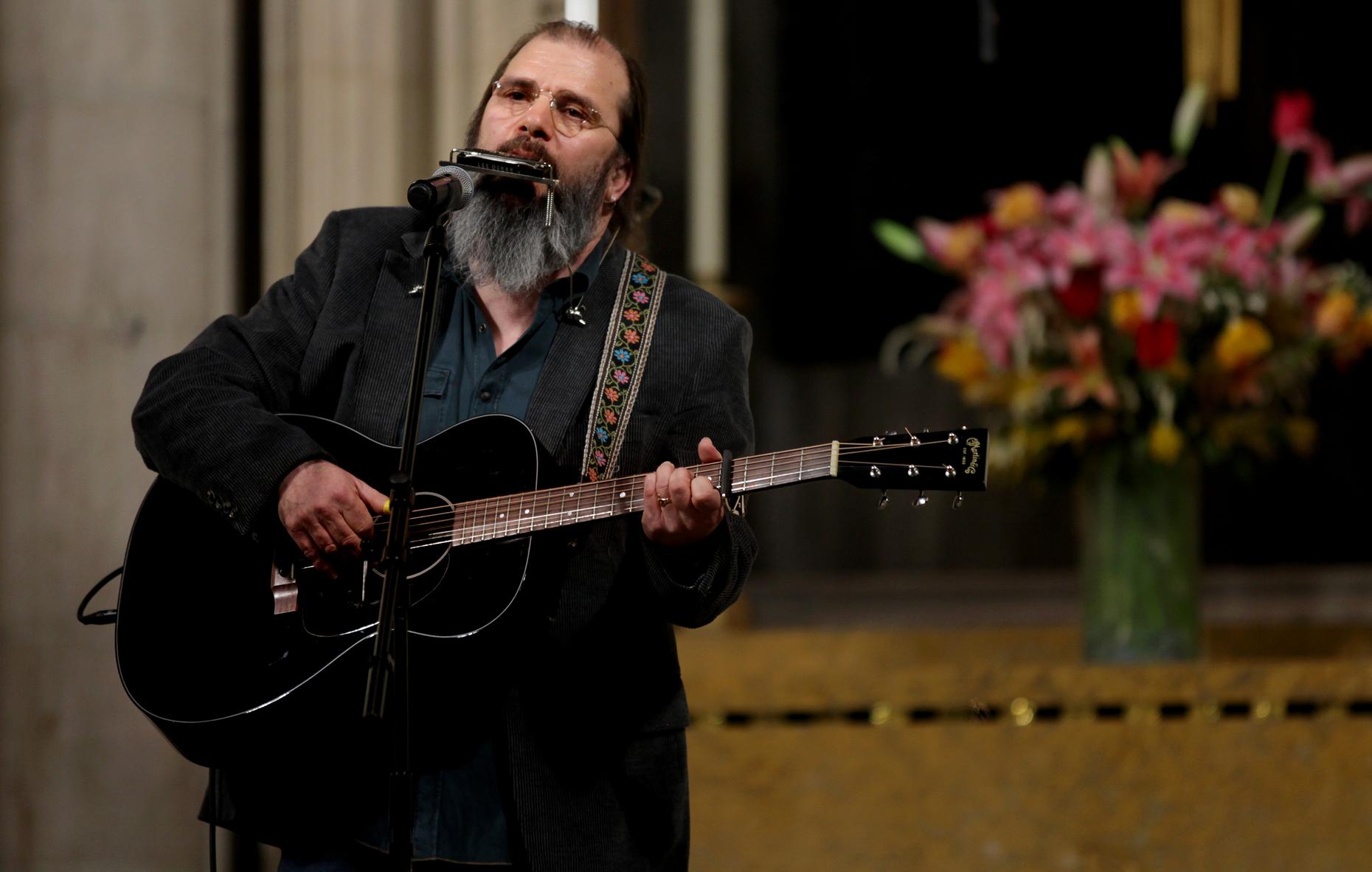
All Of It with Alison Stewart
Steve Earle and John Henry's Friends Benefit
00:10:15
Steve Earle discusses an upcoming benefit concert for The Kesswell School, which educates children with autism.
Loading summary
Transcript31 lines
- [00:02]
Bix Soleil Advertiser
Surprise Beach Day. No excuses. I'm in. Gimme five. With Bix Soleil Glide Razor, you'll have hydrated, smooth skin that's ready to go on the fly. No shave cream needed. You can prep, shave and hydrate all in one step thanks to moisture bars that hydrate your skin during and after shaving. 5 flexible blades hug your skin for a close shave. Glide into smooth. It's your time to shine with bixsolil. Buy now at Amazon and Walmart. Ready? Your skin looks amazing. So smooth and beach ready.
- [00:29]
Steve Earle
Let's go.
- [00:32]
Marshall's Advertiser
Hey Fidelity what's it cost to invest with the Fidelity app?
- [00:37]
Interviewer
Start with as little as $1 with no account fees or trade commissions on US stocks and ETFs.
- [00:44]
Marshall's Advertiser
That's music to my ears.
- [00:46]
Interviewer
I can only talk.
- [00:49]
Fidelity Advertiser
Investing involves risk, including risk of loss. Zero Account fees apply to retail brokerage accounts only. Sell order assessment fee not included. A limited number of ETFs are subject to a transaction based service fee of $100. See full list at fidelity. Com Commissions Fidelity Brokerage Services llc Member NYSE SIPC.
- [01:03]
McDonald's Advertiser
I' ma put you on nephew.
- [01:04]
Steve Earle
All right unc.
- [01:05]
Interviewer
Welcome to McDonald's. Can I take your order miss?
- [01:07]
McDonald's Advertiser
I've been hitting up McDonald's for years. Now it's back. We need snack wraps. What's a snack wrap? It's the return of something great. Snack wrap is back.
- [01:19]
Marshall's Advertiser
Oh my gosh. Have you been to Marshall's lately? They have all the brand name and designer pieces you love, but without the jaw dropping price tags. Alright, so here's the truth. You should never have to compromise between quality and price. And at Marshalls, you don't have to. Marshall's believes everyone deserves access to the good stuff and that's why their buyers hustle around the clock to make it happen for you. Visit a Marshalls store near you or shop online@marshalls.com.
- [01:50]
Steve Earle
Listener supported WNYC studios.
- [02:04]
Fidelity Advertiser
This.
- [02:04]
Alison Stewart
Is all of it from WNYC. I'm Alison Stewart. For the rest of this hour we're going to talk about ways to give back on this eve of giving. Tuesday, we're starting with Steve Earle in a benefit concert for a Lower east side school for kids with Autism Spectrum disorder. Earl is hosting the show at Town hall on Sunday, December 3rd with special guest performer John Mellencar Camp and some other folks. It's called the John Henry Friends Benefit Concert. John Henry is Earl's son who attends the Keswell School on Stanton Street. Earl's been hosting this benefit for nine years and as one person tweeted I have my tickets. Looking forward to it. This is my third year in a row. Always a great show. Earl is a playwright, actor, musician, former get lit musical guest and as the Guardian wrote, quote, one of the great singer songwriters of the past four decades. He joins me now. Nice to see you, Steve.
- [02:58]
Steve Earle
How are you?
- [02:58]
Alison Stewart
I'm good. So the Keswell school opened in 2002. It's now on Stanton Street. For someone who's never heard of it, how do you describe this school?
- [03:09]
Steve Earle
It's, it originally was the McCarten School. The name changed for several reasons several years back. We were originally in Chelsea and it is the, as far as I know, the only school that, that offers an ABA based, you know, Applied Behavioral Analysis. That, that which is, it's the oldest, most proven statistically way of treating folks with autism. Now there are other ways to approach it, other schools that do that. I think it's, I think for some kids it's probably appropriate at some point in their life for some, some other way of teaching them to be applied. But for my son it was, I was sort of against it. I wanted something a little freer and a little less regimented. But it proved to be the best. What, what worked the best for him. He's been at Caswell since he was three, as long as he's been old enough. He's now 13 and he'll be there probably until he turns 22, which is when he ages out unless something occurs that, that we think there's a better place for them and the better way to approach it. But the difference between Kessel and everybody else. There are other ABA based schools. I think it's the only one in the United States and it might be the only one in the world which, which, which offers what, what is recommended by all of the experts or most of the experts about treating kids with profound autism. In other words, especially kids that are non verbal. There are kids on every, you know, bit of the spectrum at Caswell and the school adjusts itself to, to them because it's able to do that because the ratio of teacher to student is one to one. Wow. Now that is what's recommended. And it's not a luxury, it's not a gold standard. I go through that with the city sometimes when we're trying to get this funded because it's a lot of money. I don't have as much money as a lot of people probably think I do. I've been married too many times to have accumulated very much. But John Henry was born in New York City. So basically there's a federal law that says if your public school system cannot provide what is recommended for your child for their special need, then the school system is obligated to provide the funds for that. Now the rub is, most of the places in the country, the funds simply do not exist because everything's going away to everything from charter schools to private schools. People that have any money at all can figure out how to do it or taking their kids out of the public school system. And it's been starving the public school system and across the country to death for years. New York has one of the very best public school systems, you know, in the country. And that's. And that's still true compared to everything else. But for special needs, it takes a lot of money. And I'm not talking about one to one, like a teacher and three teachers, assistants who are making minimum wage. And that's no, no offense to the people that do that, because a lot of them, people in John Henry's lives, people that I use for childcare, come from that description from other schools around you, just to redefine people that are qualified to take care of a child with autism. It's not that easy to do, as anybody that's been down this road knows. But the ratio is one to one. That's what's recommended. And that's because of the fundamental difference in the way that children and older people with autism learn. It's just a completely different deal for people with sensory processing disorders.
- [06:40]
Interviewer
What's a moment you knew when this school had made a huge difference in your son's education life? I'm sure there's many, but just one small example for people, they happen all the time.
- [06:51]
Steve Earle
And it's such small moves, you know, with kids with autism because of the way that they learn. But I think just when he started picking up some signs to communicate with and he doesn't have one language, for him, that's been the hardest part is his outward, you know, him, him speaking to us. I think he understands a lot of what we say. But I think when he started developing a few signs and using them independently to get the most of the points he learned early had to do with eating. And that's what he figured that out. We've been really fortunate with him that he'll eat almost anything, which a lot of kids with autism have problems with that and that I feel bad for those folks. And he's just, you know, there's been, there's been moments when he did. It's little Bitty things. Like, he's dressing himself pretty much independently. He still can't tie shoes. He's. He just. He's just started zipping zippers up on his own. Now, this kid doesn't have any language at all, but he also knows over a hundred melodies that he. That he hums all these different melodies. And he had classical, baby, like everybody else did, and he's like, you know. But when I figured out that he was happy where he is and, you know, and that we were on the right track, I think as I was cooking dinner one night and he had. Sitting there on his iPad, and all of a sudden I hear, dun, dun, dun, dun, dun, dun, dun, dun, dun, dun. And that was the first time I heard him sing one of those melodies that I knew came from, you know, a classical music app that's on his bed that he found himself navigating the iPad. He also finds things that I'd probably rather he didn't watch, like YouTube videos of cars running over things that other kids. But he's found those things independently, just like other kids have. And so I think we're definitely getting somewhere.
- [08:45]
Interviewer
My guest is Steve Earle. We're going to talk about the John Henry Friends benefit concert for the Keswell school. It's happening December 3rd at Town Hall. The Keswell School helps autistic children. So, you know, someone described leaving this concert feeling warm and hopeful. That's what people feel. What happens at these concerts that people leave with those feelings?
- [09:05]
Steve Earle
Oh, I mean, we try to let them know, you know, introduce them to this whole idea. Ivy Feldman, who's the. The. The director at the school, she speaks. And we don't spend a lot of time. We basically direct people to material about the school as much as we can and spend as much time on music. People bought a ticket. We. We appreciate it. You know, we've had. We've been really lucky the first year, you know, we had like, you know, Graham Nash suited up and showed up the first year, and Teacher, Teacher Children's been, you know, our. Our finale ever since. And I. I did ask him directly if. If it was okay with him if I did that, but Emmy Lou Harris, Lucinda Williams, at the same time, they're friends and friends of mine. And so that was a good Derek Trucks and Susan Tedeschi and, you know, and Warren Haynes, Allman Brothers ended. And so a lot of people showed up for that. And I asked every year, and then we finally got him. Year before Lastbury Springsteen suited up and showed up, and it was. It was the first performance that he had done with in front of a band in, like, over four years. And he. He got very excited about it. And the next thing we knew was out on the road and. And he had a blast. And my band, you know, rose to the occasion. And last year, David Byrne and Terry Allen. It's been. It's been really. We've been really lucky. People have turned up for this. And. And Roseanne was on the year that Bruce was on. Rose and John were. And. And it's. She's known John Henry, you know, all of his life. So it's, you know, people, we. We try to make it, you know, we try to put up a good show for folks and. And we. We talk about autism. We also have Matt Savage, who's been on most of the shows. He's here this year. Matt, the other guests, the other folks that you mentioned are Amy Helm, who's also known John Henry all of his life. And we have a house in Woodstock. When John Henry was born, Allison and I did, and he. So she was. There's a lot of people in Woodstock that know John Henry as long as he's been on the planet. So Amy. Amy's on this year. And Matt Savage, who is an incredible jazz pianist who also happens to have autism, and he's taught, you know, like, workshops at the KE School off and on over the years. And he's. He's pretty amazing. And I think people feel pretty good when, you know, knowing Matt's story and hearing him play the way that he does.
- [11:33]
Interviewer
It's all happening on Sunday, December 3, at the town Hall. John Henry Friends benefit concert for the Keswell School. You can see all those folks and Steve Earl perform for a good cause. Steve, thank you for being with us.
- [11:47]
Steve Earle
I gotta thank City Winery because they help us put these shows together every year. And from the beginning, they produce the shows and they, you know, those folks have, you know, they do a lot of good with a lot of music and a lot of events around New York City and have for a long time. And so. So I have to thank Michael Dorf and everybody at City Winery.
- [12:06]
Interviewer
Good luck with the concert. Have a great show. Raise a lot of money.
- [12:10]
Steve Earle
Right?
- [12:11]
McDonald's Advertiser
I'm gonna put you on, nephew.
- [12:12]
Steve Earle
All right.
- [12:13]
Interviewer
Welcome to McDonald's. Can I take your order, miss?
- [12:15]
McDonald's Advertiser
I've been hitting up McDonald's for years. Now it's back. We need snack wraps. What's a snack wrap? It's the return of something great. Snackwrap is back.
- [12:27]
Marshall's Advertiser
Oh, my gosh. Have you been to Marshall's lately. They have all the brand name and designer pieces you love, but without the jaw dropping price tags. Alright, so here's the truth. You should never have to compromise between quality and price. And at Marshall's, you don't have to. Marshall's believes everyone deserves access to the good stuff and that's why their buyers hustle around the clock to make it happen for you. Visit a Marshalls store near you or shop online at marshalls. Com.