← All Of It with Alison Stewart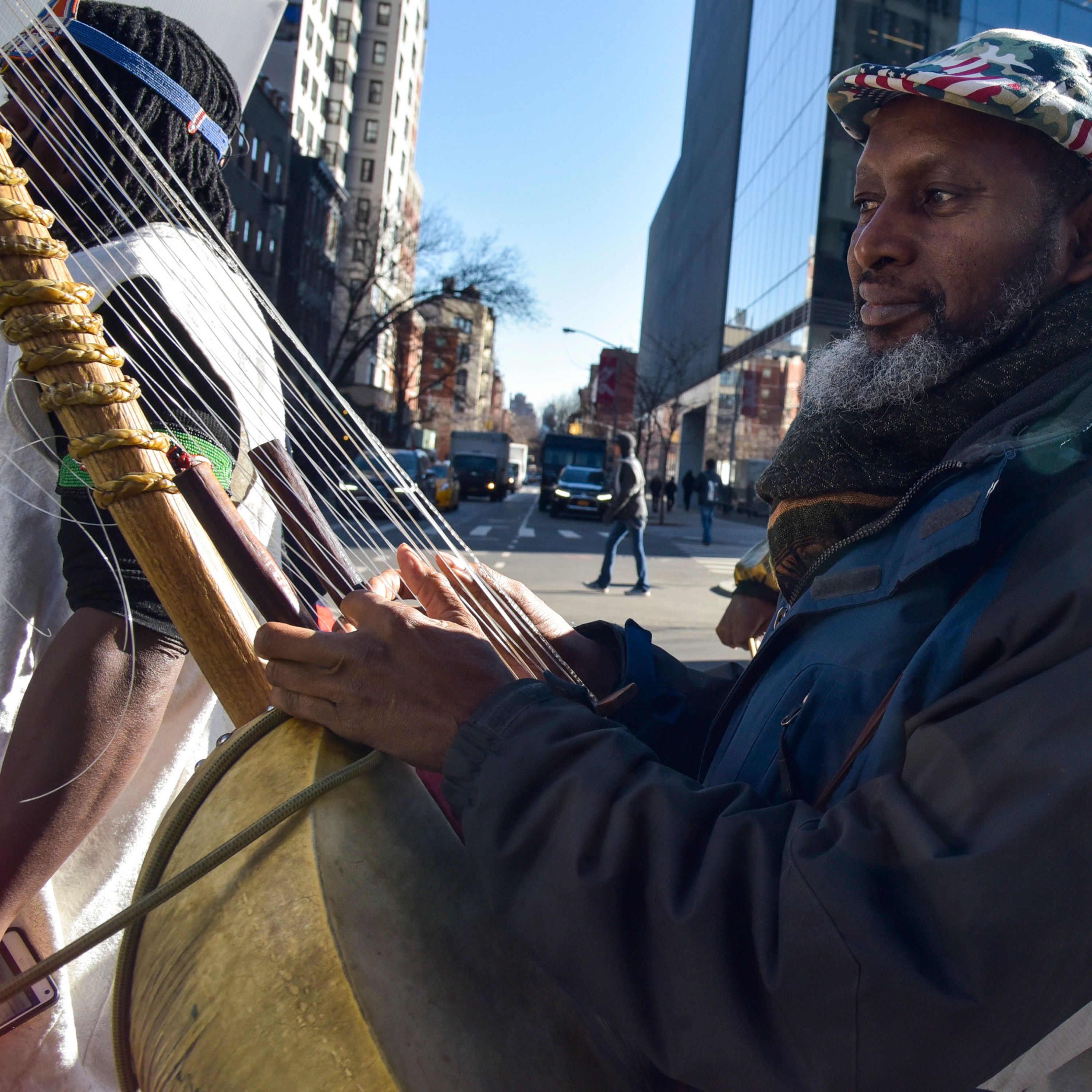
All Of It with Alison Stewart
Subway Series: Salieu Suso and Jaliya Kafo Ensemble Play Live in Studio 5
00:33:47
Loading summary
Transcript74 lines
- [00:06]
A
This is all of it. I'm Alison Stewart live from the WNYC studios in soho. Thank you for sharing part of your day with us. I'm grateful you're here. On today's show, we'll talk about summer movies with friend of the show, Kyle Buchanan. Director Paul Wagner will join us to talk about his new documentary about the great artist Georgia o'. Keeffe. And we'll hear from actor Michaela Cole about her role as a fictional artist and in the film the Christophers. That's the plan. So let's get this started with some live music and we're taking a trip into the subway. This year we've been showcasing musicians who are part of the MTA music program. In the past, we were joined by trumpet player Ego Sibefia, who got to start busking in Grand Central. We heard from the West 4th Jazz Trio. And for today's installment, we've got Celia Susso and the Jayla Kafu Ensemble in studio. They're going to play some traditional Gambian music. SA is playing the chora. We'll also hear the West African drum called the djembe and the bellophon, which is a little bit like the xylophone. We'll hear more about the instruments from them in just a bit. You can catch them performing in the subway, usually at 34th street or at museums and libraries all over the city. But right now, we get to hear them live in the WNYC studios. Welcome, everyone.
- [01:21]
B
Thank you. Thank you.
- [01:23]
A
Sergio, what are you going to play first?
- [01:26]
B
Thank you very much to be here and this wonderful day. And yesterday was Father's Day. Happy Father's Day to all fathers. Before we start, so we're going to be playing some traditional music. As you said, the beginning song will be Good Morning America.
- [01:48]
A
Let's hear it.
- [01:49]
B
Yes.
- [02:52]
C
Good morning. America. Good morning. America. Good morning, America. Good morning. Good morning. Good morning. Good morning. Broke morning. Good morning,
- [04:02]
B
Quincy.
- [04:03]
C
Good morning, Long island. Good morning,
- [06:00]
B
Sa.
- [06:28]
C
Barga. America.
- [07:30]
A
That was Seiya Susso and the Jaya Kafu. They're playing in studio with us. Will you introduce us to the rest of the band?
- [07:39]
B
Yes. Yes. Okay. Today we are here at the NPR studio in New York City, nyc.
- [07:56]
A
Yes, nyc, nyc. Who is the gentleman right there on
- [08:01]
B
my right side here? That's Ibrahima Jassy. Ibrahima Jassy on the ballot phone. And next to that, that's myself, Saleh Suso on the Cora. And next to me is Bailo Ba on the flower flute.
- [08:22]
A
Welcome.
- [08:22]
B
And next to Bailo is Kevin Nathaniel on Mbira and kissisi. And next to that is Mamadou Konate simbong on jimbe and talking drum.
- [08:36]
A
Thank you so much for joining us.
- [08:38]
C
Thank you.
- [08:38]
B
Thank you.
- [08:38]
A
I love the kora. I read that it has. Does it have 21 strings?
- [08:42]
B
Yes.
- [08:43]
A
Oh, that's amazing. Tell me the history of the kora.
- [08:47]
B
The kora is a long time history. You know, kora was invented by the gentleman called jellymadewuling, you know, back in the days. And you know, kora was, you know, performed the first time to the king by the name of the Kelefa Ba. You know, that's why a lot of kora players, they started when they started. Primary song is kelefaba. So they, you know, the kora, you know, the first song named after kelefaba. So but to make a story short, it's made out of gold. A gourd, a big gourd. Some people call calabash or calabasha with a cow skin. So cow skin. Rosewood. And the strings are nylon, the fishing line. But back in the days, our forefathers used an animal skin, this animal called antelope. They used antelope skin to make strings out of it. But due to the low, by killing animals, you can spend some time behind boys. So we had to figure out the easiest way to get these strings, which is nylon shrink fishing line can get in local stores without no problem with the law.
- [10:06]
A
And the balophone, I said it was a little bit like a xylophone. Is it like a xylophone or what's different about it?
- [10:13]
B
Yeah, Balophone is like a xylophone too. This is older than the xylophone, of course. Yeah. So the xylophone also. All these instruments here, they are connected in the spirit. They are connected because balafon also have a small keys, you know, small gods underneath.
- [10:31]
A
Oh, wow. Oh, that's interesting.
- [10:33]
B
Yeah. These are the amplification for the balafon, for the wood. Yeah, yeah. And the chorus is 21 strings and the balafon is also 21 keys. Oh, yeah.
- [10:46]
A
There's a symmetry there.
- [10:47]
B
It's a family, you know. And then, you know, the wood is called rosewood. It's a rosewood. Yeah.
- [10:57]
A
Now I'm familiar with the djembe. What kind of sounds can the djembe make? Maybe Mahmoud could show us a little bit the different ways of the djembe. The different ways you play the djembe.
- [11:08]
B
Yeah, Mahmoud can do that. That's a djembe.
- [11:25]
A
That's interesting. You play it on the side, it's got one Tone, and you play in the middle, and it's a richer tone when you play it right. We're talking to Sae Suso and the Jaya Kafu Ensemble. They're in our studio. They're part of the MTA music program. When did you start playing publicly in City Transit?
- [11:44]
B
Oh, that's back in the 90s. Back in the 90s. Because when I get here, first time, you know, I used to play with the Kevin. Kevin. Kevin has a group called Spirit Ensemble. So I joined with them. So one of their cats play Cora. He's the one that introduced me to the Subway. And he's like, oh, you know, Sally, you know, we can do Subway, you know, performance. I say, but I don't know anything about Subway. You know, that time I just make a record, newly recording. And that's why he persuade me that he said, you know what? You can sell your CDs in the subway. So I'm like, oh, okay, that's a good deal. Let's do it. So I started working with him, and then every time I go, my cd go. Sell every CD I bring, you know, all gone. I was like, wow, this is. Now I'm gonna get my own self in the system. His name is Zaleka. Yeah, Zaleka Jenkins.
- [12:52]
A
What do you like about playing for people in the subway?
- [12:55]
B
Well, you know, I like playing. You know, sometimes I like playing slow songs, because the slow songs, you know, give the people, you know, some kind of spiritual, you know, beings. Because, you know, one time I was playing at the 42nd street in times Square, and there's a huge guy, you know, he's a psychiatric guy. So he was. He heard music, and he was coming toward to me so fast. I was little bit scared. I was like, wait a minute, what this guy, you know, want to do? And he come all of a sudden, he stopped right, you know, in front of me. He stopped for, you know, he quiet for a little bit. And then I see, you know, the sweat. He's sweating. He's sweating. And then I stopped. When I. When I stopped, I said, are you okay? He said. He said to me, you heal me. I said, what? He said, you healed me. I said, oh, my God, I heal you. He said, you know, he said when I was coming, I was, you know, some kind of trouble. But when I hear your music, that's why I stopped. I was healed.
- [14:19]
A
I said, wow, you made a difference in somebody's life that day.
- [14:23]
B
Yes. So since then, I was like, okay, so this is not only, you know, box I get Here. But I, you know, also help people to, you know, to be healed. So I'm going to continue doing it.
- [14:35]
A
Yeah. We actually just got a text from somebody that says, this music is so calming, kind and loving. So simple and pure. Makes me smile. If I heard this in the subway, I would feel that the world is a good place.
- [14:47]
B
Oh, wow. Yeah. Yes.
- [14:49]
A
We're talking to say. Am I pronouncing your name right? Can you say it for me?
- [14:53]
B
Salio. Suso.
- [14:54]
A
Salso and the Jalia Kafu.
- [14:57]
B
Yeah.
- [14:58]
A
Ensemble. They're playing in studio. Will you play another song for us?
- [15:01]
B
Sure.
- [15:01]
A
What are we going to hear?
- [15:03]
B
We're going to hear a very, very traditional piece called Cheddo. Cheddo means uplifted. You know, Cheddo is a history song that, you know, play back in the days when the soldiers went to the war or before. Even though they go to war, they come to the king. Everybody make a pledge. Everybody says something. And then when they go, whoever get wounded, they come and they play the cedo. And it healed the people.
- [15:36]
A
Let's listen.
- [15:37]
B
Yes. Randamba.
- [22:12]
A
That is Salia Susso and Jalea Kafu Ensemble here with us in studio playing traditional Gambian music. We're spotlighting musicians in our subway system that are part of the MTA music program. By the way, you can hear them. On Wednesday, June 24th, they'll be playing at the MTA Music Station series at the Parkchester 6 train station in the Bronx from 12 to 3pm Saili, you say that storytelling is a big part of Gambian music. Yes, the griots telling stories. Why is that? Why is that such a big part of the music?
- [22:47]
B
Because, you know, every situation has a stories. Yeah, basically, because these instruments here. These instruments here, back in the days, they called it court griot. They spent time in court. So those days, before the king or whoever is taking care of the court, before they make any decision, so they have to listen to this, you know, to get a sense of, you know, ideas. So that's why it's. It becomes storytelling. Because sometimes you see that the bridge between the defendant and the plaintiff. So someone has to be in the middle to say something in the background for the defendant or something like that. So that's what the. Sometimes they do. They play politics in there. So defendant or the plaintiff, they will say, okay, he's in trouble today. But back in the days, his father used to be a chief, or his father used to be king, or his grandfather used to be.
- [24:05]
A
You need to tell his story, his life story.
- [24:07]
B
Life story.
- [24:08]
A
Yes.
- [24:09]
B
So people, people learn something from him and in that moment they would know, oh, maybe today he's in trouble today, but before he's a good person or stuff like that. So that's why it become story, become part of the music.
- [24:26]
A
It's interesting because you played a traditional song we just heard, but you do your own compositions. What's the mix for you?
- [24:33]
B
Yeah, the mix for me is very important because mix for me sometimes the. You make young people get into that thing, the system, you know, Because I remember one time I was in Dominican Republic, I was invited to play opening of the African studies department of the University of Dominican Republic. So they were interested in instrument because a lot of people don't know about the instrument. They took me to high school and middle schools, you know. So I one, one time I was performing at high school students and after, after performing they asked me to play something so that they can dance, you know. So that's, that's, that's, that's what happened. And I play, I just make make up song that, you know, I call it Baila Baila because you know, when I start singing that I see all the young, young people get up and start dancing. So that's the kind of, you know, bridge the musicians. Sometimes you gotta get the feeling of the, you know, people.
- [25:50]
A
We got another text. Sayu played for our outdoor gathering at Marsha P. Johnson Park. As Covid was fading and we craved connection. His music at sunset was a true blessing. We also got another text that says, wow, what a great segment with beautiful African instruments all around. Thank you again. More please. So we're gonna hear our last song from you. More please.
- [26:10]
B
What are we gonn now we're going to hear my composition. Call this one Simaya and Jada Kendea Shimaya means long life and Jada Kendia means good health. So I used to play with this, my friend here, Kevin, Kevin has a spot in downtown every Wednesday. It's called Middle church, right? Yes, middle church.
- [26:38]
A
Middle church.
- [26:38]
B
Middle church. So we play there. So me and Kevin, you know, I, when I played that, my song, I call it, and Kevin said that's a healing song, you know. So when we take it there, you know, as a healing song. No, but you know, you know, including health. Good health. Yeah, and you know, prosperity with all that in the song.
- [27:08]
C
So
- [27:10]
B
that's what we're going to play now. It's like a prayer for healing.
- [27:13]
A
A prayer for healing, yes. Thank you so much for joining us. Let's hear the song.
- [27:17]
B
All right? Yeah, that's true. That's what my brother was saying. Salsuso. That's true. Music is just live library and the music is part of life.
- [27:25]
A
Yes, very important, Very important.
- [27:28]
B
Now, since I could not remember the ear but long time. It's. Samaya. See?
- [30:29]
C
Maya,
- [30:33]
B
Everybody, everybody. Sisters, brothers, mothers, grandmothers, grandfather, great grandfather, great grandmother. Everybody, Everybody, everybody.
- [32:02]
C
Australia. It.
- [32:39]
B
Sam.
- [33:07]
C
Yeah,
- [33:30]
B
It.