Loading summary
Transcript52 lines
- [00:00]
WNYC Host
All of it is supported by Memorial Sloan Kettering Cancer Center. In a small groundbreaking clinical trial, 100% of participants with a specific type of rectal cancer saw their tumors disappear using immunotherapy alone. Researchers at MSK are now studying this approach in cancers of the stomach, liver and more. And a majority of tumors are disappearing. For MSK giving day, all gifts will be tripled. Learn more@msk.org all of it.
- [00:36]
Alison Stewart
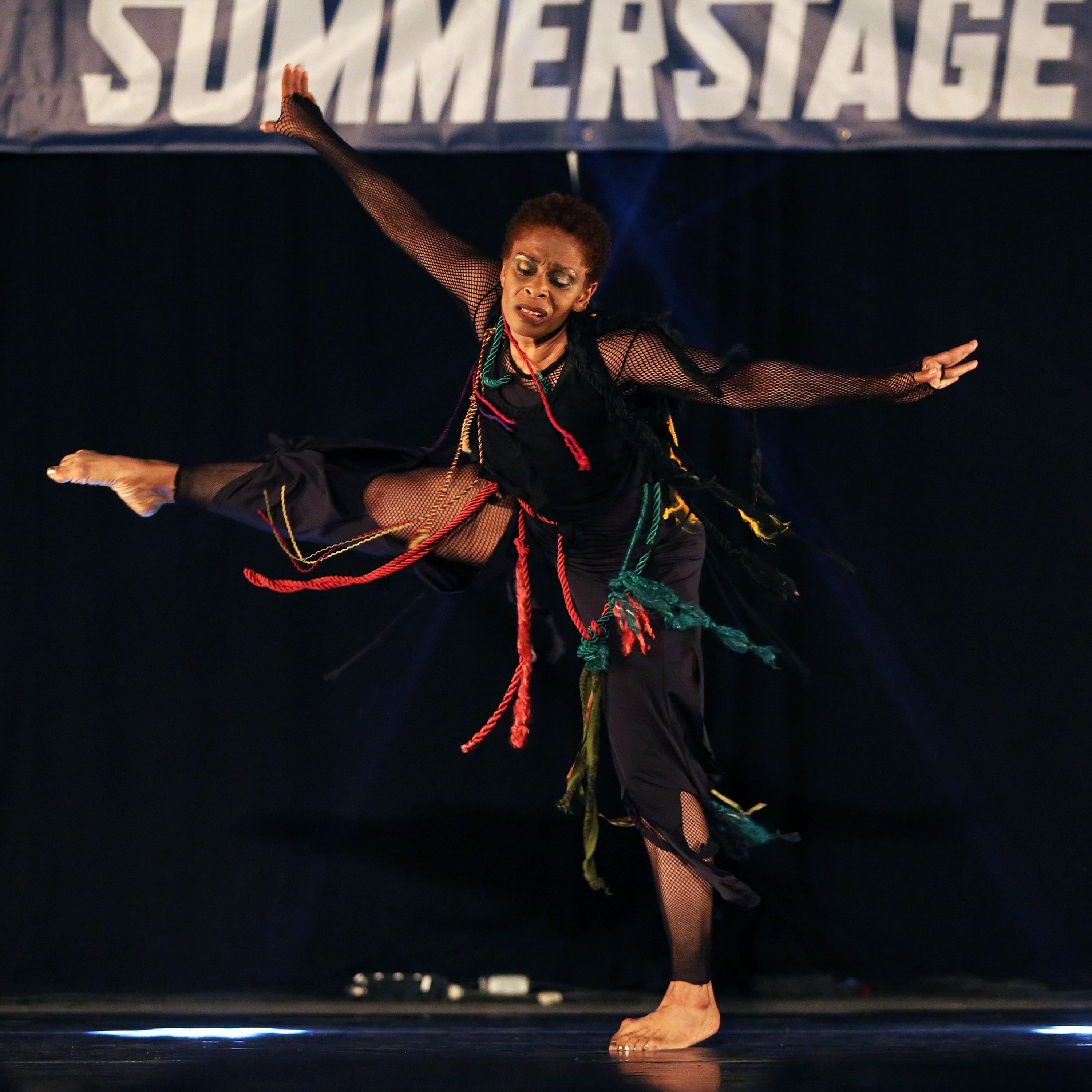
This is all of it on wnyc. I'm Alison Stewart and Summer Stage New York City is back. This year returns for its 40th anniversary. The festival brings together a summer long lineup of artists showcasing music, dance and theater in Central park and a few other parks across the boroughs. From circus to opera, hip hop to indie rock to African dance, Summer Stage has offered a diverse range of programming for the various various tastes and interests of New Yorkers. There's something for everyone. And the best part about it, most of the concerts are free. Summer Stage is celebrating performing arts with a mission to reclaim public spaces and bring music from all over the world to this city. New York Times reporter Ben Cicero wrote a recent piece on the history of the summer stage. It's called like all of New York was there 40 years of summer Stage, which collects oral histories from some of its performers and producers throughout the years. And he joins us to talk about it. Hey, Ben. Hello, listeners. We want to hear from you. What's your best summer stage memory? What's the best show you've seen there? What performances are you looking forward to this year? Give us a call with your summer stage memories. 2124-339692-21243. WNYC. Okay, take us back to 1986. How did this concert series begin?
- [01:52]
Ben Cesario
There was a producer named Joe Killian who was also an actor and I think in sort of circuses. And he had the idea of putting on a free show, a free concert series, performance series in Central Park. And that was accepted. And part of the reason it was accepted was that the parks department and the city at the time were very interested in figuring out how to kind of clean up Central park, which was still in sort of a rough state and there was a lot of crime in the park at that time. They were still sort of replanting parts of the Great Lawn and other parts that had kind of just turned into dust bowls. And they had the idea that to help reclaim the park, to sort of get rid of like what they called negative uses of the park, crime, chasing people around, bad stuff like that, you sort of put in positive things. And so you have an arts series. And this was a. It was a free series from the start. That was a big part of its mission. So if they could bring in. They could bring in families, they could bring people of all ages, it would help sort of tame the park in
- [03:10]
Alison Stewart
your 40 years of summer. Stage musician and pianist John Batiste described how, quote, the connection of gathering outdoors is in song is one of the oldest traditions in humanity. How does summer stage live up to that?
- [03:25]
Ben Cesario
Well, location, location. It's a wonderful place. It's right in the middle of Central Park. When it started, it was at the band shell. Now it's right around the corner from there in Rumsey Playfield. And, you know, it's just. It's a beautiful bucolic space. And I think when you go there, you just have a different feeling from being around in the canyons of the city. And so I think, especially when you go to a free show, they do have more and more paid ones now to pay for the whole thing, which is something that people complain about. But it is part of how they balance that budget. I think you see all kinds of people there. You see people who brought their picnic with them. They're there with their kids, they've got their blanket. They're big fans of whoever is performing. But then you also just get, like, random New Yorkers coming in. You know, you get somebody who was in the park and they're like, what's going on over there? And a lot of musicians that I interviewed for this piece talked about that. They talked about how it was nice to see not only fans, but just sort of random New Yorkers there, maybe tourists who pop in and they get a sort of range of reactions.
- [04:44]
WNYC Host or Caller Moderator
Sun Ra became the first performer for summer Stage. How did that happen?
- [04:49]
Ben Cesario
I'm not sure specifically about him, but I do think that Joe Killian, the producer, one of the earlier goals, I think, was to sort of bring downtown uptown. And at that point in the 80s, like, that was the big thing, the distinction between downtown culture and uptown culture, especially in music. And so there was a lot of jazz, there was a lot of avant garde music, there were poetry readings, things like that. And I'm not sure specifically why they chose him, but he, especially at that time, was just an iconic out there New Yorker who made wild music and had built this long career doing it.
- [05:38]
WNYC Host or Caller Moderator
Let's talk to Andrew, who's calling in from Brooklyn. Hey, Andrew, thank you for taking the time to call all of it. Who did you See, on summer stage,
- [05:46]
Andrew (Caller)
of course, I saw a Broken Social scene before the Pandemic, I think. And I just want to reiterate the point of people who are massive fans see them, but also random New Yorkers, because personally, I was a massive Broken Social Scene fan. And during the show, I would call it singing along. Maybe I was singing along loudly, but the person in front of me wasn't as familiar with Broken Social scene and turns around to me and said, wow, you really like these guys, huh?
- [06:24]
WNYC Host or Caller Moderator
That's awesome. Thank you so much for. Oh, what'd you say? I'm sorry.
- [06:27]
Andrew (Caller)
No, I was just saying all types of fans there.
- [06:29]
WNYC Host or Caller Moderator
Thanks for calling in. Let's talk to Rick from Rockland County. Hey, Rick, thanks for taking the time to call, all of it. You're on the air.
- [06:37]
Rick (Caller)
Hi, Alicia. Yeah, it's summer 2004, and my son is 13 years old, and he had already been showing signs of being very passionate about modern music, but his main scene was hip hop. At that time, he did have. He did keep up with indie rock. He loved at the Drive in and Linkin park, those bands. And I saw that Devo was going to be playing summer stage. I had been a fan since the 70s of Devo, and I thought this might be a good way to introduce him to a live music show, because it was his first. So I took him the yeah, yeah, yeah. Warmed up for Devo. He was pretty interested in them. Devo hit the stage and he looked at me and his eyes were as big as saucers, and he said, dad, I gotta make my way to the front. And I said, you go. So he did. He got right up to the very edge of the stage. I couldn't see him because I couldn't see over the crowd. But halfway through Devo's performance, I saw his little fist go up and start pumping the air to Devo. By the way, this. This was a performance that is now legendary because Devo pulled out all the stops, all the costume changes, all the video everywhere. It was an amazing show.
- [08:03]
Ben Cesario
Spoken like a proud parent for him.
- [08:05]
Rick (Caller)
He.
- [08:06]
WNYC Host or Caller Moderator
Thank you so much for calling, Rick. He spoke like a proud parent.
- [08:09]
Ben Cesario
That was a great show. I was there. And one of the other things that was really magical about it was the weather. I quote Jerry Cassell in the story, you know, all day long, it was like sort of the skies were dark and it was like drizzling a little bit. And it just felt like, man, any moment now, we're gonna get clobbered by rain. But it held off until like the very last note when they finished their encore and said, thank you, good night. And at that moment, like, the heavens opened and it just poured rain and everybody ran to get out of there. But it was just incredible that God allowed Devo to play the full set that day.
- [08:57]
Alison Stewart
We are Talking about the 40th anniversary of summer Stage. My guest is Ben Cesario. Did I say your last name correctly?
- [09:04]
Ben Cesario
Yeah.
- [09:04]
Alison Stewart
Cesario, author of the New York Times piece like all of New York was there 40 years of summer Stage. We want to hear from you. What is your best Summer Stage memory? What's the best show you've seen there? What performances are you looking forward to this year? Our Phone number is 2124-3396-9221-2433. WNYC. You can text that number as well. You had an interview with Rufus Wainwright and he said Summer Stage for him was a mixture of fun and, and horror. What did the Summer Stage experience mean for a young up and coming singer songwriter for the first time he played there?
- [09:41]
Ben Cesario
I think it, you know, it can be a frightening thing. I think Central Park, Summer Stage, and just Central park in general is just one of the handful of places that an artist could play that they genuinely would be excited about. It would really mean something to them. It would be on the level of playing at Madison Square Garden or Carnegie hall or something. So to be performing at Central park in the center of the city is very meaningful. Most of the musicians that I talked to described it as pretty joyful. Like they didn't say that they were afraid. And, and I think one of the nice things about it is that, you know, this isn't. This isn't where Simon and Garfunkel played. This isn't where Diana Ross played, where there's hundreds of thousands of people on the great lawn in front of them. It's a contained venue. It has a fence around it. It has room for, I think, around a few thousand people. And there's trees there. And so you can sort of in the distance, even if you're on the stage, you can see the buildings, but you're not really confronted with the entirety of New York City there. So I like to think that it's a welcoming place for artists to play. But I think, I'm sure a lot of artists could understand what Rufus is talking about there.
- [11:03]
Alison Stewart
Well, let's listen to Rufus Wainwright from 2004 playing at Summer Stage.
- [11:26]
Rufus Wainwright (Clip)
Woke up this morning at 1111 11. Wasn't important and I wasn't in heaven. Could have been either. By the way, I was,
- [11:59]
WNYC Host or Caller Moderator
Ah, Rufus from 2004. Now a big star. This says, seeing the Blind Boys of Alabama at Summer Stage is an experience I'll never forget. I think it was 2005. Let's talk to Andrew calling in from Brooklyn. Hi, Andrew, thank you for taking the time to call. All of it. You're on the air.
- [12:17]
James (Caller)
Hi.
- [12:18]
Rick (Caller)
Thank you.
- [12:18]
James (Caller)
This is so cool.
- [12:20]
WNYC Host or Caller Moderator
Go for it. I want to hear who you saw.
- [12:23]
Night Spins Band Member (Caller)
Yeah, well, it was definitely pre Pandemic. My friend was traveling in from out of town and I guess she had formed a relationship with Michael Kiwanaku. And so he was playing at Summer Stage. And so she invited me and our band from Brooklyn. We're called Night Spins. And we ended up going backstage meeting Michael Kiwanaku. And then he wanted something to do in New York City that was like, cool. You know, he's from the uk And I was like, well, let's go to the oldest bar in New York. And we went to mcstorley Dale House, and we ended up taking over the back room and we had a whole jam fest with him. And it was kind of one of the most magical nights of my life in New York. And it all started at Summer Stage.
- [13:14]
Alison Stewart
Awesome. Thank you so much for sharing that memory. Let's talk to James on line one, calling in from Astoria. Hey, James, thanks for calling, all of it.
- [13:23]
James (Caller)
Yeah, of course. Allison, happy to join you.
- [13:26]
Alison Stewart
I want to hear your story. It sounds like a good one.
- [13:29]
James (Caller)
Yeah. So I'm so glad you have been on. I worked at summer stage for 15 years, from 2001 through 15, and I was the executive producer for the last seven of those years. So I have a ton of awesome memories. But my favorite show was when we had Vampire Weekend playing a free gig, and David Bowie swung by to make a special appearance during the encore. And, you know, they persevered through some pretty crazy weather that day too. And yeah, you know, that one just really stands out.
- [14:04]
Alison Stewart
All right. Did you mean Arcade Fire?
- [14:06]
Ben Cesario
Yeah, I think you might be thinking of Arcade Fire.
- [14:09]
James (Caller)
Oh, did I say a different name?
- [14:11]
Ben Cesario
Yeah, you said Vampire Weekend.
- [14:12]
Alison Stewart
You said Vampire Weekend, but it's Arcade Fire is who you meant.
- [14:15]
James (Caller)
Yeah, yeah. But Vampire Weekend was another great one.
- [14:18]
Alison Stewart
They all go together in your brain.
- [14:21]
Ben Cesario
Yeah, that was the thank you for calling. And I was at that show, too. I've been to Summer Stage a lot, and that was absolutely wild that they brought Bowie onstage. They played. I don't know if I can say it. It's Bowie's song that starts with the word Queen.
- [14:44]
Alison Stewart
That's enough.
- [14:45]
Ben Cesario
Okay, that's enough. All right. And then they did wake up. And this was sort of like right when Arcade Fire was exploding. And they did from sort of 2004, 2005. And really, like, it blew people's minds that he was there. It was sort of like, oh, my God, the. You know, the angel of rock and roll just landed on the stage for a moment and then disappeared. So that was really great. The Vampire Weekend show was fun, too, because that was another example of then a pretty new artist. Like, they had just released their album. And I interviewed Ezra from the band who talked about. He felt like this was. Even though they had played all over New York City, released an album, been on snl, playing in Central park was like, a big achievement for them. And he said it was the first gig where we felt like we were a real band with a real career ahead of us.
- [15:46]
Alison Stewart
Well, wouldn't you know, we have a clip of David Bowie and Arcade Fire performing Wake up from Central Park Summer Stage. Ben, I have a question for you.
- [16:19]
Ben Cesario
How have you.
- [16:20]
Alison Stewart
The folks at Central park navigated being a good neighbor? Because sometimes there were complaints about noise?
- [16:26]
Ben Cesario
Yeah, this is a long story that goes back to the 80s. There was actually a Supreme Court case, United States Supreme Court, because there used to be a lot of noise that happened in the park, really, before Summer Stage came along, that they tried to control and had difficulty. And so that case allowed the city to impose noise restrictions. And then over the years, Fifth Avenue and the mansions of Fifth Avenue are really just a few hundred yards away. I think maybe even less than that. And they would get complaints repeatedly. And over the years, they did various things with their amplification system and with the sort of baffling that they had to try to contain it. And there was, at one point, I was working on this. Like, we could track the number of times that they reduced the decibel level. Like, it went from 105 to 102 to 100. And I think that at some point, pretty recently, I think it was around 2019 or 2018, they put in a state of the art sound system, and it has been quite successful in containing the sound. But there was, you know, at one point in, I think it was the 90s, the Upper east side community board tried to force the series out of Central park because they were. Because of the noise, and they failed.
- [18:03]
Alison Stewart
This says my favorite summer Stage was a 2019 season opener, Emily King, opened by Duran Jones. And the indications. It was my first concert with my wife, and we have the frame poster hanging in our daughter's nursery. I did want to ask you about the evolution of Summer Stage because it goes outside of Central park. Now. How does event series go beyond Central park to other parks in the city?
- [18:29]
Ben Cesario
I think around 20 years ago, they started to put on kind of satellite events outside of Manhattan, and then it became a more organized thing, and now it's in all five boroughs. Every concert that is in other parks is free, and part of that is paid for by the benefit concerts that you have to pay for in Central park to go to those. And I think it's something that built up gradually and they made it kind of officially a part of their series.
- [19:03]
Alison Stewart
We have been Talking about the 40th anniversary of summer Stage. My guest has been Ben Cesario, author of the New York Times piece Light like all of New York was there 40 years of summer Stage. Thank you for joining us.
- [19:15]
Ben Cesario
Thanks for having me.
- [19:16]
Sustain Pro Advertiser
Suffering from dry, tired, irritated eyes. Don't let dry eyes win. Use Sustain Pro. It hydrates, restores and protects dry eyes for up to 12 hours. Sustain Pro Triple Action Dry Eye Relief.