Loading summary
Transcript50 lines
- [00:00]
WNYC Studios Announcer
WNYC Studios is supported by Progressive Insurance. Did you ever think about switching insurance companies to see if you could save some cash? Progressive makes it easy to see if you could save when you bundle your home and auto policies. Try it@progressive.com Progressive Casualty Insurance Company and affiliates. Potential savings will vary. Not available in all states. All of it is supported by Memorial Sloan Kettering Cancer center in a small, groundbreaking clinical trial where 100% of participants with a specific type of rectal cancer saw their tumors disappear using immunotherapy alone. Researchers at MSK are now studying this approach in cancers of the stomach, liver and more, and a majority of tumors are disappearing. For MSK Giving Day, all gifts will be tripled. Learn more@msk.org all of it.
- [01:01]
Bridget Bergen
This is all of It. I'm Bridget Bergen in for Alison Stewart. Thanks for spending part of your day with us. I'm grateful you're here. On today's show, singer songwriter Yendry joins us in studio to preview her new album and perform live. Author Carol Clare Burke talks about her best selling novel, Yesteryear. It's about a trad wife influencer who wakes up one day in the 1850s. And it's the last weekend to catch a great exhibit at El Museo del Barrio about the work of photographer Sophie Rivera. We'll hear about it from its curator, but first we'll talk about a groundbreaking album from one of New York's greatest bands. Last week, New York rock heroes the Strokes released their seventh studio album, Reality Awaits. Two mixed reviews, but let's rewind exactly 25 years to another album from the band and a moment that changed the landscape of rock music. The Strokes debut album Is this It was first released on this very day, July 30, 2001 in Australia. A few months later, it hit the shelves on the band's home turf. And when it did, the excitement was inescapable. Rolling Stone called it the stuff of which legends are made. As my guest journalist Stephen Haydn writes in his forthcoming book, Is this It? The was the most hyped record by a rock band since Nirvana's Nevermind, and that hype has stuck around. The album is now considered one of the most influential releases of the 21st century. The strokes helped create a template that many bands have followed since, even as they themselves have grappled and struggled to measure up against the magic of that debut album. Stephen Haydn's book Is this the Never Ending Rise and Fall of the Strokes and Rock and Roll, will be published on September 8, and he joins Me now for an installment of our series Silver liner notes celebrating album's 25th anniversaries. Steve, welcome to all of it.
- [03:23]
Stephen Haydn
Ah, thanks for having me.
- [03:25]
Bridget Bergen
And listeners, we want to hear from you. This is New York. I know we've got some Stroke fans in the audience. Where were you when is this it was released? Did you come to the album later or what are your favorite tracks? Have you ever seen the band perform live? And do you think the Strokes deserved all the hype they got? Have you listened to their al. Their new album? And what are your thoughts on that? Call in or text. The number is 212-433-9692. That's 212-433-WNYC. And Stephen, let's get into your book. I mean, the Strokes were heralded as rock saviors. Why did rock need saving in 2001?
- [04:11]
Stephen Haydn
Well, it really depended on your perspective, I guess, because there were still a lot of big rock bands at the time, but they were of like the nu metal variety or. Or post grunge bands like Creed and Nickelback and Linkin Park. I mean, those were some of the biggest rock bands of the time. And there were a lot of people who felt that the Strokes really heralded the return of a more classic form of rock music, certainly for New York City, hearkening back to like the late 70s bands like the Ramones and Television. And they looked like a band like that. And in many ways they sounded like a band like that. And there was this belief in cycles, I think, that just like Nirvana came in at the beginning of the 90s, and they swept out a lot of the hair metal bands that were popular in the 80s. I think people really were banking on the Strokes doing something similar in the 2000s.
- [05:03]
Bridget Bergen
Let's hear a little bit of that title song from the album,
- [05:16]
Stephen Haydn
Can't you see I'm trying.
- [05:19]
Bridget Bergen
I don't even like it.
- [05:22]
Stephen Haydn
I just love to get to your apartment now.
- [05:28]
Bridget Bergen
I'm staying there just for a while
- [05:32]
Stephen Haydn
I can't think Cause I'm just way too tired. Yes, this is. Is this it?
- [05:50]
Peter
Is this it?
- [05:59]
Bridget Bergen
And that, of course, is the title track from the Strokes album, Is this it? Stephen, you know, you hear in that first song there he some of the key players, the Strokes bandmates themselves, lead singer, of course, Julian Casablancas, Nick Valenci, Fabrizio Moretti, Nicolai Frature, and Albert Hammond Jr. What do each of these guys bring to the band?
- [06:23]
Stephen Haydn
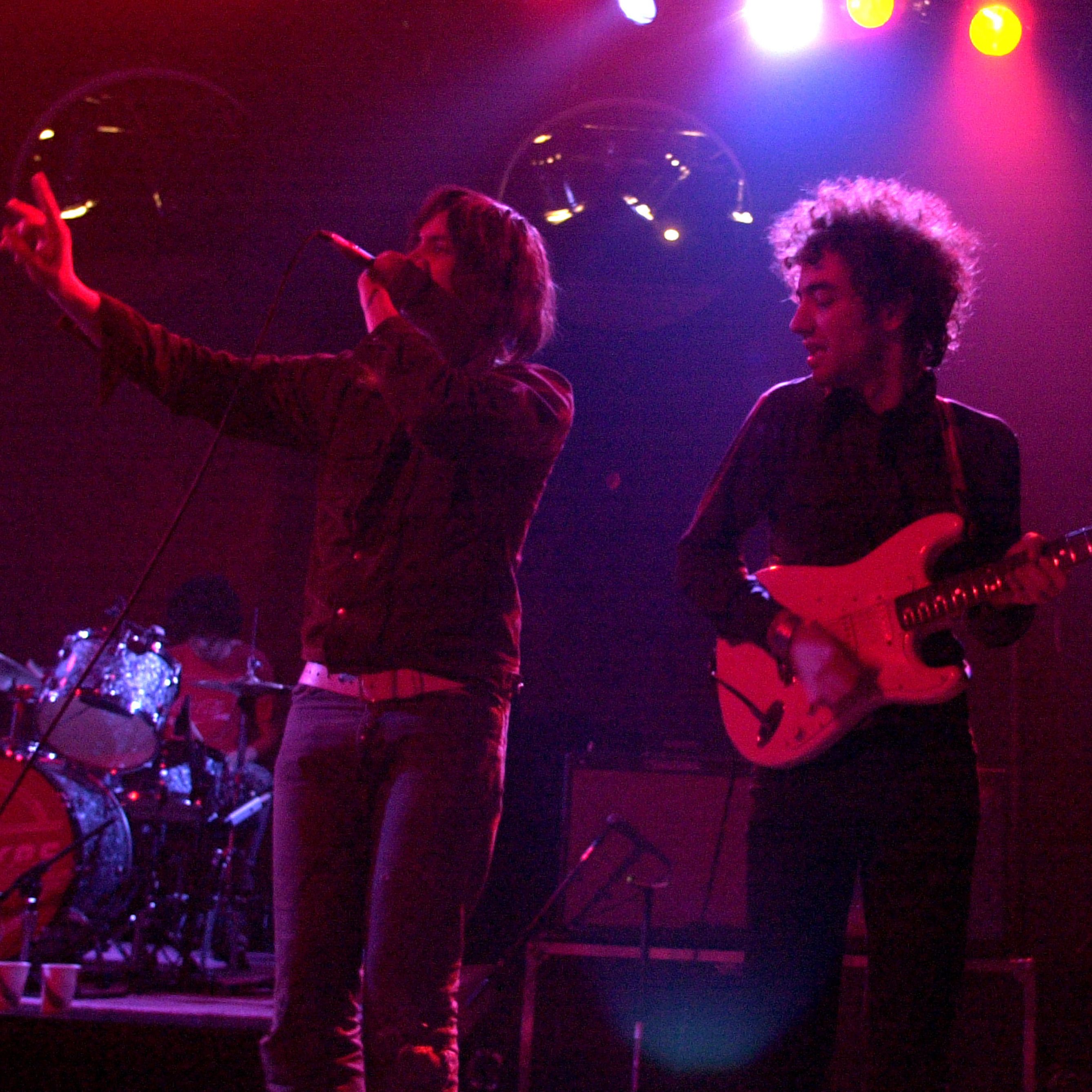
Well, I think you can talk about what they bring instrumentally, which is this very precise Mix of guitars and drums, all orchestrated by Julian Casablancas, who's the lead singer and also the songwriter. Not just writing songs, but writing individual parts, down to the hi hat parts or the guitar solos. But I also think with the Strokes, the visual element can't be understated. I think this is true for any iconic music act. But when you looked at the Strokes for the first time on stage, they looked like a band that you had already loved for 20 years. In my book, I write a lot about this idea of cultural transference. You know, the idea that you can look at a. At an actor you've never seen before on screen, or you can look at a band and you can see the shadows of movie stars or popular rock bands that you've already loved in the past and how that transfers to this new thing. And it makes it feel like a bigger deal than it might otherwise feel. And I think the Strokes, they just looked like a band that was five guys on stage. Lead singer, guitarist, to the left, a stoic bass player. They kind of felt like the Rolling Stones or Guns N Roses or Oasis, like these other great five piece sort of bad boy rock bands. An archetype that already seemed like it was going out, I think at the beginning of the 2000s. But the strokes brought it back. And I think that idea was very powerful for people, even if they couldn't quite articulate it in those. In those terms.
- [07:58]
Bridget Bergen
Well, let's go to Peter in Fresh Meadows in Queens, who I think may be able to talk about having the effect of seeing a band on stage. Peter, you're on wnyc.
- [08:10]
Peter
Hi, how you doing? I just want to say I love the Strokes. I bought way too many tickets because everyone, or a thousand dollars, went for like 15 years ago. And the opening act was a no name act, but it turned out to be Elvis Costello. And I'm outside scalping the tickets I can't get. My friends won't pay me. I missed. But he was amazing. He sent the security away and he just dove into the audience and let people grab him and Manhattan him. I used to go to CBGB's and see like, you know, serious like Suicidal Tendencies and I've seen the who. I seen Dylan dead and Petty, but this is a rock show. This guy's got serious courage to just let people just grab him. He doesn't crowd surf, he lets the manhandle him. He also throws down the mic and lets his instrumentals do the work. He walks off the stage and lets him just jam out. He's so Giving man. He still gives tickets to his doorman on E4 Street.
- [09:00]
Bridget Bergen
Peter, thanks so much. I got confused because I couldn't tell if you were talking about Elvis Costello throwing himself into stage or Julian.
- [09:07]
Peter
No, no, no. Julian Ju.
- [09:08]
Stephen Haydn
Casabra stationary.
- [09:11]
Bridget Bergen
Yeah, that's a great story, Peter. Thanks so much for sharing it. Let's take one more caller. We have Gio in Brooklyn. Gio, you're on wnyc.
- [09:22]
Gio / Monk / Apoorva
I was at that show in Madison Square Garden when Elvis Costello played. It was, it was April Fool's Day and they did the duet together. Taken for full. What a great, great performance. The Strokes, one of the best bands live that I've seen at Madison Square Garden. And my first concert was there was in 1972. So I'm not. I've been to some, some concerts. What a great live band. The album, I was laying in bed and I fell asleep and I just heard last night coming out of the tv. It was Saturday Night Live. That was the first time I ever heard it and been a fan ever since. Just really loved the show. Seen them many times.
- [10:09]
Bridget Bergen
Gio, thank you so much for that call. So Stephen, there, you know, we have some reflections on seeing them live. You know, one of the things as you were talking about, you see this image of this, you know, five piece band, they feel like, you know, a real rock band, but there were also, I mean they're really good looking and that's, you know, kind of a part of their identity as a band. Right?
- [10:33]
Stephen Haydn
Yeah. And yeah, I think that ends up being a double edged sword with the Strokes. You know, there is this element to their career where I don't think they ever really had a honeymoon period in terms of people hearing them without baggage. It feels like as, as soon as that they were on the scene, they were always being talked about. As you know, like you said with Rolling Stone, this is the stuff that of. This is the, this is the stuff of what legends are made. And I think it says in that same, this is the best young rock band in America, you know, and this is the first time people are hearing about it. So not only are they being really hyped, they're really good looking. Some of the members come from privilege and it becomes this thing where the songs I think are great on their own, but all this other stuff around the band ends up informing how people hear the music. And it's fascinating how that is still true today. I mean, you talked about Reality Awaits coming out last week and you look at some of the online reactions and a lot of the mixed reactions that that album has gotten reminds me of what people were saying about Strokes albums that came out in the 2000s. There's always been this weight of expectation with the Strokes that I think makes it difficult to just kind of take them on their own terms as, as a band. But that's been true, I think, from the beginning of their career.
- [11:57]
Bridget Bergen
Listeners, if you're just joining us, I'm speaking to Stephen Haydn about the Strokes album Is this it? Which turns 25 this year, and his forthcoming book, which is titled Is this It The Never Ending Rise and Fall of the Strokes and Rock and Roll. And listeners were taking your calls. Where were you when Is this It was released? Did you come to the album later in life? You know, what do you think about all the hype they got and maybe some of the high standards they set for themselves in subsequent releases? We want to hear your thoughts and your memories. You can call or text at 212-433-9692. That's 212-433-9692. Stephen the hype around the Strokes began with their EP the Modern Age. The title track would appear on Is this It? I want to listen to a little of that EP version of the Modern Age.
- [12:53]
WNYC Studios Announcer
It.
- [13:32]
Bridget Bergen
Stephen that sound, that, that distinctive drum sound, you know, talk a little bit about what make the Strokes sound so distinct and how they kind of fit into the landscape of the early 2000s.
- [13:47]
Stephen Haydn
Yeah, I mean, I think when a lot of people heard the Strokes, they immediately thought again of a lot of the great bands that came out of New York in the 70s. You know, a lot of the CBGB's bands, the Ramones, Television, groups like that. And you can certainly hear echoes of that in their music. Although the Strokes themselves weren't really influenced by either the Ramones or Television, they were fans of the Velvet Underground, who are the sort of the original underground New York band. I think what makes the Strokes different musically is that unlike a lot of, like, say, garage rock bands, there's not really a looseness to the Strokes. There's a real sense of precision. You know, the drummer, fab from the very beginning in their rehearsals, was playing to a click track. You know, there was this idea of the Strokes being a real visually kind of classic looking rock band, but musically they in many ways were almost this mechanized type band, which I think makes them feel more modern than they would have if they had just been sort of a traditional punk rock or garage rock band. In many ways, I think that they. They sort of pre sage A lot of things that happened in music in the 21st century, where you have a lot of people who record albums by themselves using drum machines or, you know, using sequencers. The Strokes were able to do that, but in the guise of. Of a band. And I think it makes them seem less old fashioned, especially to younger listeners than maybe other bands of that ilk that would have come out around the same time.
- [15:18]
Bridget Bergen
So interesting. Let's go to Monk in Flatbush. Monk, you're on wnyc.
- [15:24]
Gio / Monk / Apoorva
Hi.
- [15:24]
Monk
Thanks for having me. Yeah, I just wanted to mention, you know, I've been. I'm. I'm in a, you know, indie rock band, I guess you could call it. I've been playing in New York City for, you know, the last 10, 15 years. And the influence that the Strokes had, just as far as, you know, playing local gigs, I would show up and almost every band, you know, for better or for worse, really were trying to sound like the Strokes. Like, they just had this immense impact on what, you know, indie rock or, you know, even though, you know, even though they weren't particularly indie rock, but they just had this immense impact on what the sound of the. The newcomers should be. And you just hear it every. I would just hear it every time I would go play a show and the. The other bands and, you know, my band included, definitely took a lot of influence, but, you know, you would just hear it. You know, every. Every band, every other band was. Was just trying to do a replica of the Strokes. And a lot of them nailed it and did their own thing with it, but some of them just sounded exactly like the Strokes, which is also cool, because I love the Strokes. I love to hear anything that sounds like that.
- [16:36]
Bridget Bergen
So, Monk, thanks so much for. You know, Stephen, that raises a really interesting question. There are people who've said that, you know, the sound of the Strokes is something that has been emulated by so many of the bands in the 21st century. Music writer Eric Ducker said, quote, to reduce it to the most basic level, Kings of Leon were the Southern Strokes. The Killers were the Las Vegas Strokes. Vampire Weekend were the Ivy League Strokes. Phoenix became the sophisticated French Strokes and so on. What did these bands have in common with the Strokes?
- [17:10]
Stephen Haydn
Yeah, I mean, that's something I write about in my book quite a bit, you know, because I write about the Strokes, but I'm also writing about that generation that was around them and not just in New York, but like that quote you were reading. It really was international, where it was almost like in the book, I make a Joke. It's like Jamba Juice franchises like each, each region would have their own version of the Strokes. And, and it was in some cases sounding like the Strokes. Sometimes it was the idea of the Strokes, this idea again of like a classic rock band playing classic sounding rock music, but in a modern context. And what's fascinating to me about that is not just the influence, but how a lot of those other bands ended up having more success than the Strokes, at least on the pop charts. You know, a band like the Killers, for instance, you know, there's no Stroke song that is as big as Mr. Bright side. Sure, but that is like a. That's one of the most streamed rock songs of the 21st century. And I think if you look at the Strokes career, they made a lot of deliberate choices to not have a song like that in the way that they produced their records, the way that they acted, the way that they toured. And it's a fascinating, I think, story where it's a mix of like self defeating behavior, but also mystique, preserving behavior. Because while they don't have as big of a song as Mr. Brightside, I think that the Strokes as a band has a mystique that no other band of their time can, can touch. And a lot of that has to do with some of the mistakes that they made, but also some of the stubborn, I would say, integrity that they've had as a band in the past 25 years. That's kind of like what my title is referencing, this never ending Rise and Fall. They've had a very up and down career in many respects, and yet there's always this desire to welcome the Strokes back and see what they're up to now. And then they put out a record like a reality awaits, for instance, and people aren't sure how to take it. But then in five years that ends up being a record that they love, you know, so it. There's a lot of that, I think, in the Strokes of Story. I mean, I write about that in my book.
- [19:18]
Bridget Bergen
Yeah, you make an interesting argument that the most important artist to come out of the odds wasn't the Strokes, it was Taylor Swift and that.
- [19:28]
Stephen Haydn
Well, certainly the most famous in last year.
- [19:30]
Bridget Bergen
But why is that a meaningful comparison from your perspective? How does it, how does that comparison help us understand the Strokes?
- [19:37]
Stephen Haydn
Well, I think it gets, you know, a lot of my book is talking about this idea of cycles, which I think in music in the history that I grew up with was a big deal. This idea that every 10 to 15 years there's a new band that comes along that ushers in a revolution in culture. And you saw that in the 70s with punk. You saw that in the 90s with Nirvana. The Strokes were being talked about. Like, that was the idea with the Strokes. And in some respects that happened. There were a lot of bands that followed after the Strokes that became successful. The White Stripes, the Killers, Interpol. But it wasn't quite the same thing as what happened in the previous time. And there's a lot of reasons for that that I get to in the book. But I think Taylor Swift, to me, signifies what we have now, which I think is a much more monolithic culture. This idea that someone like Taylor Swift is essentially on top of the music world for decades at a time is really unusual. I mean, that wasn't true of the Beatles. It wasn't true of Elvis Presley. It wasn't true of, like, a lot of the biggest artists that we have. It seems like now in the media culture, there's so many options, and yet it seems like the focus is on fewer people.
- [20:49]
Monk
And
- [20:51]
Stephen Haydn
so that's something I write about in the book as well. Sort of like a larger cultural thing that's happened and using the Strokes as a way to talk about that.
- [20:59]
Bridget Bergen
Well, Steven, we have a lot of response from our listeners who are eager to share their memories of the Strokes. One listener texted, in my opinion, every woman is allowed to love the work of one man who probably sucks as a human being, but is a damn good artist. I have two, and one of them is Julian Casablanca. Blancas. He seems insufferable personally, but he can write a melody so crisp you can't help but get down to it. His side project, the Voids, is especially grungy and experimental and sounds new. The music is just as catchy as when Julian wrote 25 years ago. Is this it? But more sonically and lyrically interesting. No other indie, rock or alternative bands are doing it like him, unfortunately. And another, another listener writes, can't. Can't count them the number of times I've seen them play in New York City with my daughter, who is now 41. Another listener saw the Strokes at Radio City in 2002. The White Stripes opened. What a bill. So lots of texts and a few more callers that we're going to try to sneak in. Let's start with Catherine in Joshua Tree, California. Catherine, thanks for listening. Thanks for calling in.
- [22:10]
Catherine
Oh, thanks for having me. Yeah, I was. I'm a dancer and choreographer, but I was working, living in New York City at that time, and Dating the Strokes photographer who became a famous chef. And so I got to hang out with the Strokes a lot before they signed their record deal. And there was one night at the Mercury Lounge. I saw their show, and afterwards was, like, walking the streets of the Lower east side with Julian, who is actually a lovely person, in my opinion. But I was like, oh, my God, I think you guys are gonna get signed. Because there was energy in the room that I had never experienced before. I mean, people were just kind of, like, insane. Like, it was a group hysteria. And he was like, I don't know if it's gonna happen. I don't know if it's gonna happen. And I was like, it's gonna happen. So it was such a meteoric rise that they had and such a pleasure to see. We used to go out dancing at Bar 13 at this party called Shout, where everyone would wear, like, mod outfits. And it was just such a time, such a scene, and such a cool, cool thing to be a part of.
- [23:10]
Bridget Bergen
Katherine, thanks so much for that memory. That's a great one. Stephen, any reactions to that?
- [23:16]
Stephen Haydn
Yeah, I mean, I would just say, you know, quick, about the comment about. He's my favorite artist who's maybe not a great person. You know, I think the idea that artists have to be relatable or that we're going to judge them on how they seem in their personal life is a relatively new phenomenon, especially in music. I mean, Julian Casablancis, to me, is an artist. You know, he's very influenced by Lou Reed. He's in that he's cut from that cloth, like a Lou Reed, Bob Dylan type cloth, where there's something inscrutable about them, where they don't really seem always. Like, when you see him on stage, it doesn't seem like he's excited to be there. Might seem like he doesn't care sometimes, but is also, like, a true artist who's always going to follow their own muse, regardless of how the public feels about it. That's kind of like a classic idea of an artist, and we don't see that as much in pop culture now. And I think that, in one way, is a big reason why Casablancas, in particular, continues to resonate with people. Like, if you're gravitated toward that more complicated type of artist who is going to go against the grain and not just try to court the public's favor all the time, I think there's something very appealing about that to a lot of people.
- [24:33]
Bridget Bergen
Let's sneak in one more caller. Apoorva in Brooklyn, you're on WNYC. You've got about 30 seconds.
- [24:41]
Gio / Monk / Apoorva
Hi. Yeah, I just wanted to say I'm a bit of a younger listener, so the Strokes have been part of my life, basically my whole life. I agree with everything that Steven's saying just about their influence and I think like Julian's ability to be self deprecating in his lyrics and seem a bit disaffected while also clearly caring a lot about what he's saying and about the way that he lives his life is something that, you know, me and my friends have actually always related to. And in an era where, you know, it's, it's deemed to be cool to not care, I think that they strike a wonderful balance of caring, but doing it in a very cool, calm, chill way.
- [25:21]
Bridget Bergen
Prabhu, thanks so much for that. I want to thank my guest, Steven Haydn, whose new book about the Strokes album Is this it? Which turns 25 this year, is titled Is this It? The Never Ending Rise and Fall of the Strokes and Rock and Roll. Stephen, thanks so much for joining me.
- [25:41]
Stephen Haydn
Thank you so much. Great to be here. The Colonels cooked up a new $10 bucket of the day just for you. Monday, 24 nuggets for $10. Tuesday, eight piece fried chicken for $10. Wednesday, 10 wings for $10. Thursday, eight tenders for $10. Friday, 24 nuggets for. Oh, you guessed it, didn't you?
- [26:02]
Peter
$10.
- [26:04]
Stephen Haydn
The $10 bucket of the day deal every weekday only at KFC. It's finger licking goo. Prices and participation. Variable supplies last not available on third party ordering platforms.
- [26:12]
Catherine
Tax extra.
- [26:14]
Peter
Nothing beats tradition like weekly game nights at Mom's house and Tostitos crafted with masa made the traditional way, starting with whole corn kernels with flavors worth gathering around like a hint of lime and Mexican street corn. And no artificial colors, flavors or preservatives. That's the Tostitos way. Bring Tostitos to your next game night and you'll be winning either way. Tostitos tradition matters.