← All Of It with Alison Stewart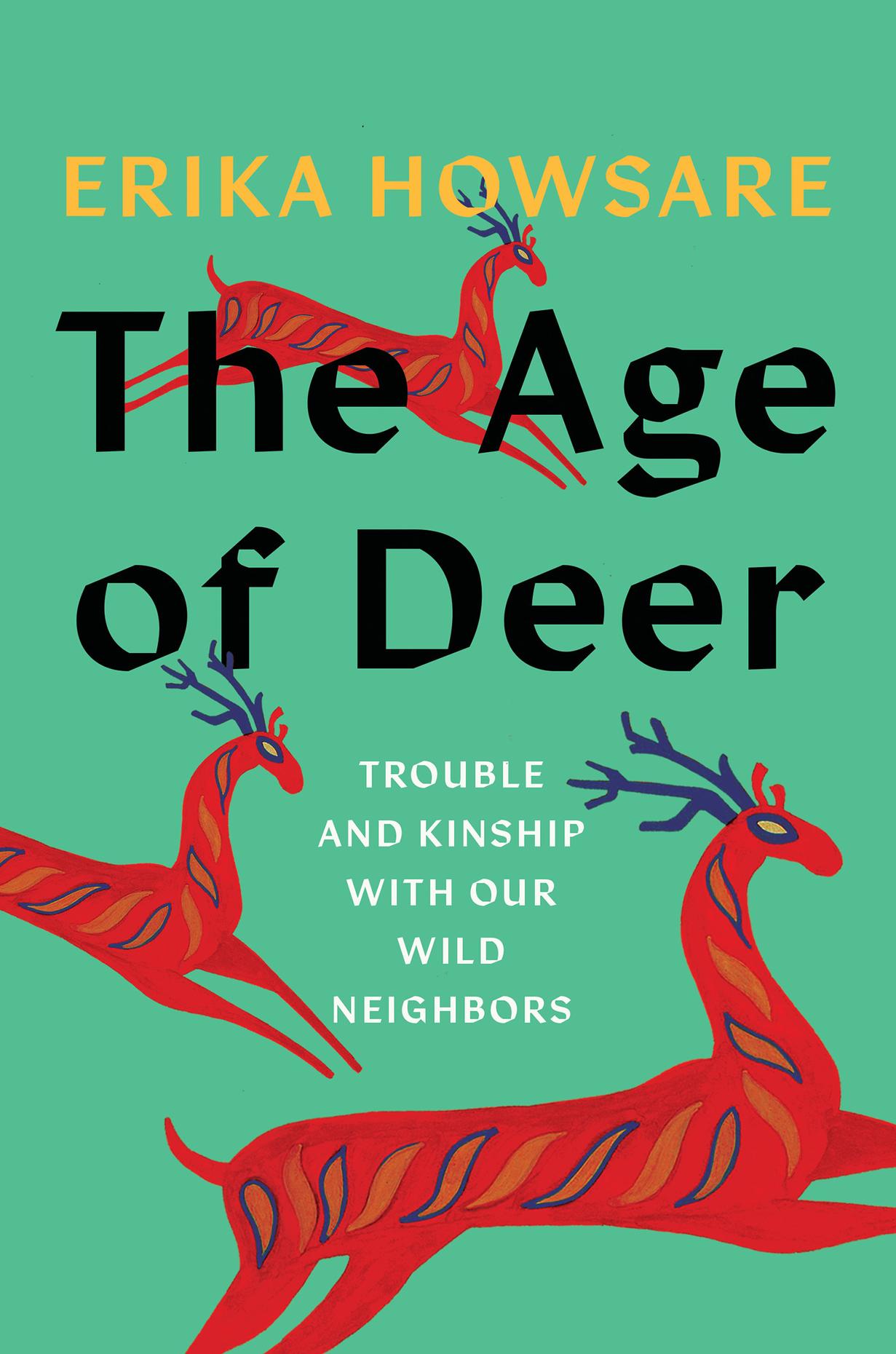
All Of It with Alison Stewart
The Age of Deer: Trouble and Kinship with our Wildest Neighbors
00:50:23
Writer Erika Howsare talks about her new book, The Age of Deer: Trouble and Kinship with our Wildest Neighbors
Loading summary
Transcript65 lines
- [00:00]
McDonald's Advertiser
I' ma put you on, nephew.
- [00:01]
Erica Hauser
All right, unc. Welcome to McDonald's.
- [00:03]
Radio Host Alison Stewart
Can I take your order, miss?
- [00:04]
McDonald's Advertiser
I've been hitting up McDonald's for years. Now it's back. We need snack wraps. What's a snack wrap? It's the return of something great. Snack wrap is back.
- [00:15]
State Farm Advertiser
Our state has changed a lot in the last 140 years. We know because MultiCare has been here guided by a single making our communities healthier. That comes from making courageous decisions, partnering with local communities to grow programs and services, and expanding healthcare access to those who need it most. Together, we're building a healthier future. Learn more@mycare.org.
- [00:48]
Let'S say your small business has a problem. Like maybe one of your doggie daycare customers had an accident. You might say something like, doggone it.
- [00:59]
Erica Hauser
Hey Chihuahua.
- [01:01]
Caller Carol
Holy schnauzers.
- [01:02]
State Farm Advertiser
But if you need someone who can actually help, just say like a good.
- [01:06]
Caller Dawn
Neighbor, State Farm is there.
- [01:07]
State Farm Advertiser
And get help filing a claim from your local state farm agent for your small business insurance needs. Like a good neighbor, State Farm is there.
- [01:17]
Sustain Pro Advertiser
Suffering from dry, tired, irritated eyes. Don't let dry eyes win. Use Sustain Pro. It hydrates, restores and protects dry eyes for up to 12 hours. Sustain Pro Triple Action Dry Eye Relief.
- [01:34]
McDonald's Advertiser
Listener Supported WNYC Studios.
- [01:46]
Radio Host Alison Stewart
This is all of it. I'm Alison Stewart live from the WNYC studios in soho. Thank you for sharing part of your day with us. Deer are an animal that inspires all kinds of different feelings from the gardener, whose lovingly planted flowers become a buffet, deer are a problem. Same for anyone who's exposed to Lyme disease. In some indigenous cultures, deer are an important element of mythology or spiritual practice. Earliest humans painted and carved their images on caves for modern hunters. Sometimes they are seen as trophies, but for many families, sustenance. In her new book, the Age of Deer Trouble and Kinship with Our Wild Neighbors, author Erica Hauser immerses herself in the world of deer to better understand our complex and contradictory relationship with these creatures. She spent time on a deer farm with researchers combating wasting disease and learns how to make tools from deer bones. Erica writes in her introduction, deer are the largest wild animals we still live with in any widespread way, one of the signal species of our time, as firmly as established in our cities as in our national parks. The prey status of deer makes them good by default, and perhaps that appeals to a certain side of the human self image. We like to think we're innocent, just doing our best to get along. Watching deer, we can see a picture of what we might be like if We Were wild. Kirkus calls the book outstanding natural history writing in their starred review, Erica Hauser joins me now to discuss the Age of Deer. Erica, nice to meet you.
- [03:19]
Erica Hauser
Thank you so much for having me, Allison. I'm really delighted to be here.
- [03:23]
Radio Host Alison Stewart
Listeners, we want to invite you into the conversation. What has your relationship with deer been throughout your life? Have you ever had a special or frightening encounter with the deer or maybe you're a hunter? We want to hear your experience with deer as well. 2124-3396-9221-2433, WNYC. You can call in with your thoughts and stories about deer. 2124-3396-9221-2433, WNYC. You can join us on air or you can text us at that number. Our social media is available as well at all of it. Wnyc. Just remember, if you decide to make the call, you can't do so while you're driving, just for safety of everybody involved. Erica, what's your earliest memory of deer?
- [04:11]
Erica Hauser
Well, I I write in the book about that. So I grew up outside of Pittsburgh, Pennsylvania, in a fairly rural place, and deer hunting was a big part of the culture there. My parents did not hunt, but I did know a lot of other folks who were hunters, you know, family friends and some of my relatives. So I was used to seeing, you know, trophy heads on the walls in people's houses and so forth. And I, I write about this memory in which I was, you know, pretty little, probably eight or nine years old, and I was over at a friend's house, and her father was returning from the woods with a deer that he had just shot. And, you know, that's a pretty vivid sight. We were seeing him from far off, and we did not stick around for him to get nearby with this deer. But it is something I can still see in my mind's eye.
- [05:19]
Radio Host Alison Stewart
When did you first decide you wanted to write a book about the subject? Was there a particular catalyst? Was or was this just something that you've been living with and, and it came to fruition?
- [05:30]
Erica Hauser
Yeah, it kind of came to me gradually. There wasn't a big epiphany. But I I think it's been about five years or so. I started to realize that, you know, I did have all these memories of being around deer and deer hunters as a kid. And then as an adult and a writer, I had gotten really interested in the question of what is nature? And what do we mean when we say that something is Natural. And where are those places where the human world and what we call the natural world kind of overlap or interlace or blend into each other, and those lines get really blurry in an interesting way. And at some point, you know, in the last few years, I realized deer would be a really good way to ask those questions and look at those overlaps and blendings of the human and the natural, because we do have such intimate ties to them and these really entangled connections to them. So that's where the idea came from. I kind of wanted to you use them as a lens to look at. At our connection to the natural world.
- [06:43]
Radio Host Alison Stewart
In your research, where was a place that you found yourself that you couldn't have imagined finding yourself at the beginning of this book?
- [06:55]
Erica Hauser
Oh, there were a lot. I did do a lot of traveling for the book. I think one thing that's. That was a really just awesome opportunity that came out of this project was that I traveled to England to observe a. A very ancient folk dance. It's called the Abbotts Bromley Horn Dance. And I actually learned about it because there's a little school, private school where I live, that performs this folk dance every year as part of their kind of midwinter. So that's where I first saw it. And I decided to go to England and see it in its native place, its original place. And that was just a fantastic time. I've never seen anything like that. It's a tradition that's been upheld there by these folks for close to 800 years. And I think that, you know, for Americans, it's a little bit hard to grasp what. What that really means to be, you know, to steward a tradition so carefully for that long. And it's a dance in which the. The dancers wear reindeer antlers on their head, and they're dancing to ask for a successful hunt.
- [08:22]
Radio Host Alison Stewart
Let's take a few calls. Sally is calling in from the Upper west side. Sally, thank you so much for calling in.
- [08:29]
Caller Sally
Well, my affiliation with Dear go way back to when I was about three years old, my mother took me to see Bambi at the movie theater. It was the first movie I'd ever gone to. She didn't pay attention to when it started. So we came in after the beginning, and we. Shortly after we sat down, the fire in the forest broke out. And you know what happened then? I went hysterical because Bambi was going to be burned. We left the theater. I've never seen the movie since, but that was my original contact with deer. And I've sort of always been fond of Them. And now that you know, I live in New York and I have for quite some time, but I travel around. I've gone to the University of Colorado. Didn't see deer while I was. But when I went back to visit some friends in the 60s, the deer or the late 60s, early 70s, the deer were walking down the sidewalk paying no attention to humans. I've seen deer in the Missouri Ozarks where my brother and sister in law live. They come, they get very comfortable right on their yard and then if you get too close, they get up and leave. And then out in Port Townsend, Washington, I was there visiting friends this fall or it was late summer, end of July. The deer were everywhere and the people in Port Townsend just pay no attention to them. They let them sit in their yard. I swear there was a deer with two little ones behind her crossing the street. And I swear she looked both ways before she and her fawn crossed the street.
- [10:22]
Radio Host Alison Stewart
You know, you may be right. We'll talk about adaptation in a minute. Sally, thank you so much for calling in. Sally brought up a lot of different topics that are covered in your book the Age of Deer. My guest is Erika Hauser. I wanted to get to Bambi sooner rather than later. And our caller brought this up in your book. You don't get to Bambi till page 206. When you write, it's hard to overstate the cultural fallout from Bambi, conceived way back when FDR was president and no one left the house without a hat, but still holding an iron grip on the American way of imagining deer. When you think about the impact of Bambi on us, on the way we think about deer, even if we haven't seen Bambi in 50 years, even if we haven't seen Bambi, period.
- [11:05]
Erica Hauser
Yeah, I love that story because it's just a perfect illustration of how that film hits so many people when they're really young in childhood and stays with them forever. And it's just amazing how many people have similar stories. Even if you sat down and watched the whole movie from beginning to end, which that caller didn't get to do, you know, the impact is the same. It's, it's, it's a trauma. And the film, apparently as soon as it came out, the kind of community of sportsmen and, you know, hunter conservationists saw it as a real PR problem for them, for hunters. And they were right because, you know, ever since then there's been a, a sense in American culture that hunters are, you know, evil and cruel. And that really has, you know, it's still a common, common thing that if somebody is opposed to hunting, their epithet for hunters is Bambi killer. So, which is interesting because Bambi doesn't die in the film.
- [12:19]
Caller Dawn
Right.
- [12:20]
Erica Hauser
But this is the baggage, you know, that we carry from that movie.
- [12:23]
Radio Host Alison Stewart
The name of the book is the Age of Deer Trouble and Kinship with our Wild Neighbors. You note that some of the earliest art made by humans are cave paintings and carvings that depict deer. What do experts think our earliest ancestors were moved to depict deer in art? And how early are we talking about?
- [12:43]
Erica Hauser
Well, this goes back tens of thousands of years. You know, the big cave art galleries in Europe like Lascaux and Altamira in France and Spain, Deer are one of the four most commonly depicted subjects. And of course, it's animals across the board. You know, those works of art really express just such a profound and ancient connection between humans and animals. And it seems that deer were a very, very important species, which really makes sense to me, having thought about how much deer can provide to humans who are living, you know, a hunter gatherer lifestyle. They're large animals, so they have a lot of meat. Their hides are large. So you can really, you know, use those to make many useful things, from clothing to shelter to containers and bags. And their bones can be used to make tools. And really, all their body parts have some use for humans. So there's just this really ancient relationship that we have with them that has to do with receiving their gifts, you know, which happens through hunting. You have to hunt them or at least scavenge them. But hunting is. Is kind of the psychological thing that gets humans. Really, it. It's a psychological point for us where we. We need to kind of find mythologies and stories to contain that experience of killing a large animal. It's a. It's a really intense, you know, part of the need to survive, that we have made all these myths around that in order to kind of psychologically deal with it.
- [14:41]
Radio Host Alison Stewart
Let's talk to Carol from City island on line four. Hi, Carol. Thank you so much for calling in.
- [14:47]
Caller Carol
Thank you so much. I'm so glad to be able to tell my story. I'll try to make it brief. I live on City island, which possibly people might know. A small island in the Bronx, Northeast Bronx. And so one day I'm going to my car in the parking lot, and I see this deer, a very young deer, and someone had. It's wandering around, like, totally lost. So as I said, living on City Island, I said, how did this deer get here? Well, deer swim. So it swims from the mainland, which is a big Pelham Bay park, which is very large park in New York City. And so here's the deer trapped. And so in the meantime, somebody must have called the animal rescue. So the truck comes and they're trying to trap this poor creature. And he's. The creature is frantic. He's so out of sync with reality and he's. He started to climb a slanted wall. He was panic struck. So the agents come out with this anesthetizing gun and they shoot the deer. They hit the mark, but the deer did not stop, he did not drop. He was so frantic and so worked up. So they shot him again and this time he passed out. So then they have this cloth sling and they put the deer on the sling and they put it on the truck. So my question is, what are they going to do with this little creature?
- [16:39]
Radio Host Alison Stewart
Did they let. They released him?
- [16:40]
Is that the case, Carol?
- [16:42]
Caller Carol
Pardon me?
- [16:43]
Radio Host Alison Stewart
Did they release him?
- [16:45]
Caller Carol
Well, I followed the truck and the men in the truck kept flagging me away like, lady, back off, back off, back off. And I followed them in spite of it because I was very curious. Well, they headed towards Penn Helen Bay Park. They got into the park area and I said, ah, they're going to release the little deer. So I'm assuming they did.
- [17:07]
Radio Host Alison Stewart
Carol, thank you for calling in. I wanted to ask you about urban relationships between deer and urban populations. What was something that you found that surprised you? We've got a couple of calls of people in New York saying they've seen deer, whether it's been in Fort Tryon park or it's been in Washington Heights.
- [17:26]
Erica Hauser
Yeah, well, deer are becoming a more urban species on balance because they are in a lot of places where you would think would be perfect deer habitat. You know, the more wilderness places, the public lands, they're actually declining a bit while their populations in suburbs and cities are. They're. They're thriving in those places. So the balance of deer populations is sort of shifting to human spaces. And there are all these, you know, really interesting and sometimes surreal encounters in cities between humans and deer and, and it leads to conflict. You know, it sounds like that caller was concerned about the fate of the deer. And there are, you know, hopefully that that deer was just released and, and did okay. But there certainly it's a very common and frequent thing that deer are culled from urban places. And that, you know, really comes out of human frustration with some of the conflicts that deer can bring with them, like, you know, vehicle collisions and so forth.
- [18:47]
Radio Host Alison Stewart
Yeah, we're getting a lot of. A lot of commentary about that. I did. Before we go to break, I did want to ask you this. Someone texted this to us, and I think you have an informed opinion about this. The person texted, you should tell your listeners if they ever see a deer foal alone, it's okay. You should leave them alone. The mother will come back for it. It's common for the mother to leave the babies alone. Is that accurate?
- [19:07]
Erica Hauser
Yep, that is. And every spring, you'll see if you're following deer in the news, as I've been doing, you will see this flurry of kind of PSAs about that exact. Wildlife agencies all around the country will be trying to let people know, please don't pick up fawns if you see them alone. This is just how it works with deer. They don't. They don't. When the babies are quite young, there's a period of time when they're too young to follow their mothers around. So the survival strategy is just to. The mother will kind of get the baby tucked away in a nice, safe place, and she'll go away and feed and do what she needs to do and come back now and then to nurse the baby and check on the baby. But. So humans, you know, we see this, and I write about this in the book. I actually had an encounter with a fawn that. That kind of surprised me with how. How it made me feel. I felt the urge to help or rescue this fawn. Even though I knew better. I knew that I didn't need to do that. And in fact, I would not be doing it any favors if I touched it or went near it or picked it up. But there is just something about them that kind of fires up the. The parental instinct. So that happens with a lot of folks. You know, they see the little fawn and they think, oh, no, the mother must be. You know, must have abandoned it or gotten killed. And so we need to do something. And fawns end up more often in trouble because of that than. Than otherwise.
- [20:43]
Radio Host Alison Stewart
I wonder if that's part of the Bambi imprint.
- [20:47]
Erica Hauser
Yeah. I mean, it must be. Yeah.
- [20:49]
Radio Host Alison Stewart
And they're.
- [20:50]
And they're cute and they're very sweet.
- [20:54]
We're discussing.
- [20:54]
Erica Hauser
There's no denying it.
- [20:56]
Radio Host Alison Stewart
We're discussing the book the Age of Trouble and Kinship with Our Wild neighbors. My guest is author Erica Hauser. We'll have more with Erica, and we'll take more of your calls and your texts and comments after a very quick break. This is all of it. This is all of it on wnyc. I'm Alison Stewart. My guest is author Erica Hauser. Name of her book is the Age of Deer Trouble and Kinship with Our Wild Neighbors. Folks have been calling in about their relationship with deer. Let's talk to dawn, calling in from Montclair, New Jersey. Hi, Dawn. Thanks for calling in.
- [21:37]
Caller Dawn
Hi. I'm so glad you took my call. I explained to the person picking up the calls that I've learned years ago that I've had a very unusual experience and relationship with deer to the point where neighbors. I teach in my town where neighbors and even some of my students during my lunch break have noticed it. And what happens to me, I've always loved deer since I was very young. And the Bambi stories that, you know, I have all of that connection also. But I'm from a very big camping family from Long Island. We'd go up into Canada, the Northwest Territories, every year a different province. So I am someone very connected to wildlife and to animals, but especially the deer. Well, for the past 10 years, what I've noticed is whether I'm in the car and I stop the car at a red light or if I'm leaving a park on foot with my golden retriever who never barks at them, they come closer when I'm talking to them. It's really amazing, to the point where I feel very proud that I have some connection with them. Where they list, they start to run. But as soon as I start to talk to them, they come closer, even when they have little ones with them. And the golden retriever, my dog, never, he never barks at them. He sits down and he watches them, very cat like. So I was wondering, I just thought, wow, this is a great topic. I'm wondering if they, like, I believe the dogs and the cats have radar. I believe that they see something in all of us. And I think they know that I love them.
- [23:14]
Radio Host Alison Stewart
Dawn, thank you for calling in. Did you run across Dear Whisperers in your research, Erica?
- [23:21]
Erica Hauser
Well, not, not as such. I mean, I, I think that's fascinating. That's a, that's a fascinating story. I, I did speak with some people who are excellent deer trackers and are, you know, really knowledgeable about these tiny, tiny signs that can be seen in the vegetation or on the ground that tell you, you know, a deer has passed recently. And I write about a really nice experience I had discovering a deer bed, a place where two deer had recently, you know, within the last few hours had, had been sleeping. And just how, you know, what a, what a sense of Awe that I had in that experience. And I think, you know, I think that caller is speaking to a. A kinship, a connection, and to a sense that there's intelligence in animals just like there is in us. And I think that, you know, it seems that science is kind of coming. Coming upon that idea these days as well, and people are thinking about that idea that, you know, there's a less hierarchical relationship maybe between humans and other species, and there's maybe more of a growing sense that we are, you know, sharing the planet with them, and we all have our own kinds of intelligence that allow us to do what we need to do to survive.
- [24:57]
Radio Host Alison Stewart
Someone has texted. A deer jumped through the window of my church lobby when I was a kid, and then they put up a deer crossing sign in the lobby shortly thereafter. That's a love of a Funny Story. There's a point in the book when you discuss how deer nearly went extinct, which seems really difficult to think about given how many times, how many deer we see these days, what contributed to the near extinction, and how were the numbers able to bounce back.
- [25:23]
Erica Hauser
Yeah, it's a surprising story that I think, you know, in our country, we. It's. It's sort of common knowledge that, you know, bison, for example, nearly became extinct, or let's say the passenger pigeon did become extinct. I think people generally know those things, but they're not as aware of the fact that deer populations really did have this very sharp decline. And the low point was around the turn of the 20th century, so the early 1900s. And that was really mostly a result of overhunting, but also habitat loss. When Europeans first came to North America, there was kind of an initial wave of overhunting that had to do with trade in deer skins, a transatlantic trade. Then they recovered somewhat and after. After the American Revolution, but by, you know, during this sort of pioneering Manifest Destiny years in America, there was just a kind of slaughter of deer. And it's really a sad episode in our history that we've largely forgotten. But it did turn around in the early 1900s. There was kind of the birth of the conservation movement, and it was actually led by hunters, which is interesting. Teddy Roosevelt was a New Yorker who was very much involved in that. And so in terms of deer, there were. Deer hunting was outlawed in many places. Deer were actually restocked, moved around from state to state in order to rebuild populations in places where they had been completely extirpated or greatly decreased. And that allowed them to really bounce back to the point where, you know, by the end of the 20th century, in a lot of places, people were feeling like there were too many.
- [27:27]
Radio Host Alison Stewart
How do you know when they're. When too many deer are in an environment, I have to imagine, and I think you do write about this in the book about vegetation. Is one sign issues with vegetation?
- [27:40]
Erica Hauser
Well, yeah, I mean, just to back up a little bit there, there are actually there are two measures of what's called carrying capacity for deer populations. One is biological, and that's what you were referring to. Okay. How are they affecting their environment? What's happening in the ecosystem where they are? But then there's also something called cultural carrying capacity, which really is a different measurement. And that one refers to how many dear people can tolerate. And these are two really different numbers. And actually the cultural carrying capacity tends to be lower than the biological carrying capacity. So the habitat might be doing just fine. But if people are having, you know, too many car accidents or dealing with Lyme disease at a rate that they consider to be unacceptable, or their gardens or their crops are getting eaten, then you've exceeded that cultural carrying capacity. And that's usually where you get into conversations about, we need to reduce the population. What are we going to do about this? But in terms of the biological, it's very difficult to measure. It's hard to even count deer scientifically. That's a tricky thing to do. Most ecologists and conservation biologists do consider deer to be in some areas overpopulated, and they're concerned about how they affect, especially forest regeneration, but really a whole host of ecological factors. But there is disagreement about that also in the scientific community. So it's a. It's a pretty tricky question. It's not something you can just look up. Yeah. In a book. I, you know, was hoping I could just look it up when I was researching, but no, it was. It was very complex.
- [29:41]
Radio Host Alison Stewart
I wish we could get to more of our callers. You touched on many of the issues in that last answer that many of our callers had about accidents and Lyme disease and coexisting. You get into it in much more detail as well as some of the very interesting history. The name of the book is the Age of Trouble and Kinship with Our Wild Neighbors. My guest has been Erica Hauser. Erica, thank you so much for taking listeners calls and sharing your research.
- [30:05]
Erica Hauser
Well, thank you so much for having me. I really enjoyed it.
- [52:02]
McDonald's Advertiser
I'mma put you on, nephew.
- [52:03]
Radio Host Alison Stewart
All right, unc, welcome to McDonald's.
- [52:05]
Can I take your order, miss?
- [52:06]
McDonald's Advertiser
I've been hitting up McDonald's for years now. It's back. We need snack wraps. What's a snack wrap? It's the return of something great. Snack wrap is back.
- [52:18]
State Farm Advertiser
If your small business has a problem.
- [52:21]
Radio Host Alison Stewart
You could say, just my luck.
- [52:23]
State Farm Advertiser
But you should say, like a good.
- [52:25]
Neighbor, State Farm is there.
- [52:27]
And we'll help get you back in business. Like a good neighbor, State Farm is there.