Loading summary
Transcript52 lines
- [00:00]
Commercial Narrator
When you take a sip of an ice cold Coke, zero sugar, you know you're getting real Coca Cola tastes you love. And with zero sugar. It's so delicious you can almost taste it with your ears. Hear those bubbles, imagine them tingling on your tongue. Fizzy deliciousness. Listen to that cascading liquid. It's unmistakably tasty. All with zero sugar. Crisp, refreshing and ice cold. Ah, Coke, zero sugar. Real Coca Cola taste, zero sugar.
- [00:39]
Alison Stewart
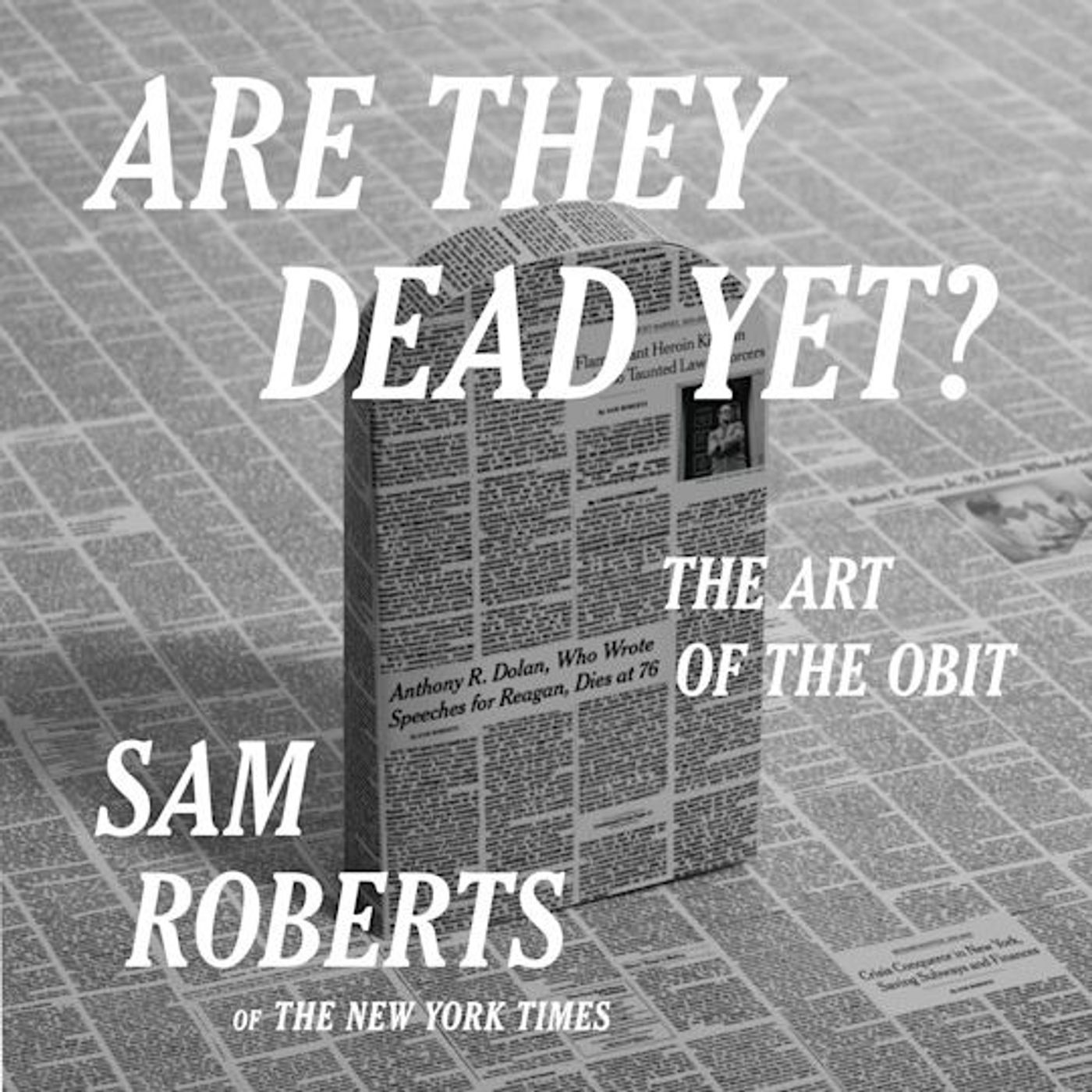
This is all of it on wnyc. I'm Alison Stewart. New York Times writer Sam Roberts has written nearly 1500 obituaries in his career. He wrote them for the famous. He wrote them for the infamous. He wrote them for people who ended up not dying yet, as he writes in his new book, are they Dead Yet? The Art of the Obit Quote. If journalism in general is the first draft of history, the obituary is the clincher. In the book. Sam answers questions like how does someone get an obit? What details are included? What's left out? What happens if the family is unhappy with what's written? And who had the longest New York Times obit ever? Are they dead yet? The Art of the Obit will be published tomorrow. And I'm joined now by author and New York Times obituary writer Sarah Sam Roberts. It's nice to see you again, Allison.
- [01:26]
Sam Roberts
Thank you, listeners.
- [01:27]
Alison Stewart
We're taking your calls. What questions do you have about writing obituaries? Any part of the process? Call or text us now at 2124-3396-9221-2433. WNYC, have you read any obits that stuck with you? Our phone number again, 212-433-9692. What do you see as your number one job as an obituary writer?
- [01:52]
Sam Roberts
The number one job is to capture someone's life. Writing obituaries, as I explain in the book, is not about death, which is a good thing because I come from a culture where death was denied by my family no matter what happened. So these are really mini biographies and they're not chronological, they're not stenographic. What you really want to do, and this is something that Ann Rowe, the Economist, pointed out, is you want to capture people's soul, the, the essence of them, who they were, what their view of the world was, what influenced them. And then you look for something transformative. Alison, as I say, the Rosebud moment, to me, that's the biggest challenge. Not everyone has one, of course, but that term from Citizen Kane, when he is on his deathbed and says Rosebud, his last Word. What does that mean? What does it talk about in terms of his soul and what shaped his life?
- [02:53]
Alison Stewart
You write that it is not a job for the faint of heart, nor the heartless. What writing skills do you need to
- [03:01]
Caller Host/Interviewer
be good at writing obituaries?
- [03:03]
Sam Roberts
Good question. I've written for the Times before that for the Daily News for a long time. And I found obituary writing generates the most response of any category of writing, in part because there's so many facts in it, it is biographical, but also because it's the last word and people are, you know, you get one obituary and that's it. So you want to be empathetic, but you also want to be accurate. They're not eulogies, they're not encomia, they're not paid death notices. Something that you've got to explain to families and survivors on occasion. They are an attempt to capture someone's life. And why do we pick that person? Obviously, if they're a celebrity, they're on the list, but someone who made a difference, someone who was interesting, someone who changed lives, someone who had an impact on their society.
- [04:05]
Caller Host/Interviewer
Can you give us an example of someone who maybe wasn't famous, that got
- [04:10]
Alison Stewart
a good obit in the New York Times?
- [04:11]
Sam Roberts
Yeah, Alison, that to me is the most fascinating thing because most of these people are names that were not familiar to me. We have something now at the Times, as I point out in the book called Enhanced Bylines, to explain why this person who wrote the story you're reading is such an expert on so and so, I always wanted to say Sam Roberts. Never heard of this person until, you know, a couple of hours before this open appeared online or in print. But, you know, one that always captured my attention was a scientist in his 20s. He had just graduated from college, in fact, and worked with the Jet Propulsion Laboratory. And the moon landing was taking place, and a red alert light went off on all the equipment saying, uh, oh, you know, something's wrong here. Panic button. And the scientists were ready to abort the. The mission. And he said, no, wait a minute. I've studied this, and I know this is a false positive. There's nothing wrong. You know, keep your hats on. Don't hold your breath. Yeah, don't panic. And the mission went off perfectly. Now, the guy, as I recall, was about 24 at the time, never did another big thing in his life that would have made him eligible for an obituary. No one ever heard of him. Anonymous. And yet he saved the landing on the moon. And to me, that's just fascinating. In the impact someone can have, the anonymity that they have in life and the fact that they that might have been one point early in their life where they never did anything since, but that was enough to make them worthy of a Times obituary.
- [06:04]
Caller Host/Interviewer
My guess is New York Times obituary writer Sam Roberts. We're discussing his new book, Are They Dead Yet? The Art of the Obit Listener. Sam is taking your calls. What questions do you have about writing obituaries or the process of who gets one? Have you written an obituary yourself or have you seen one that stuck with you? Our phone number is 2124-3396-9221-2433. WNYC Nick is calling in from Rosalind Heights. Hi, Nick, thanks so much for calling on all of it here on the air.
- [06:35]
Caller Nick
Oh, thank you so much for taking my call, sir. I wanted to ask you. I'm calling it dual obituaries. For instance, Aldous Huxley died the same day as President Kennedy. Groucho Marx and Elvis Presley died within a couple of days of each other. Have you ever had a situation, do you have any anecdotes where you had to scrap an obituary because someone more famous passed away?
- [06:57]
Sam Roberts
Well, we've never scrapped an obituary, Nick, but we have put postponed them, obviously. And some people get preempted when famous people die on the same day. They're not all going to make the front page. In fact, they may not even make the obituary page. One of the things that fascinated me about the process of deciding who gets one, it's so subjective. About 150,000 people die every day on average. We have room for three or four obituaries at the Times. And, you know, you could look at a list of 50 candidates, and I defy you to pick which three or four are the ones that are actually going to make it as a Times obituary. It's one of the toughest decisions that you make as a obituary writer and editor. And there are often people who are left by the wayside. And how do you explain to someone, well, this mass murderer got an obituary, but, hey, your father, who was a country doctor and saved so many lives, didn't get one. Tough calls.
- [08:03]
Alison Stewart
Sort of interesting. In your book, you write Michael Jackson and Farrah Fawcett died on the same day. And people don't realize that because Michael Jackson was so huge.
- [08:14]
Sam Roberts
Exactly. And people, you know, talk about the last bit of bad luck to be preempted in your own obituary, but eventually they do get into print or online.
- [08:27]
Alison Stewart
This is a question. It says, how do you approach writing an obituary for someone who's impactful, miserable.
- [08:34]
Sam Roberts
Miserable. A miserable person? That is the second hardest decision as an obituary writer. As I point out in the book, Charlie Rangel, who was the first black chairman of the Ways and Means Committee in the House Harlem congressman, he got censured in the end of his career as a congressman. Now, where do you put that in the obituary? Do you call him a disgraced former congressman? I decided not. And that decision, where an aberration, where a misdeed is placed in perspective, in context, in the arc of someone's life, is to me, one of the most difficult decisions we have to make because, you know, everybody makes mistakes at one point or another. How significant are they? Does that define the person's life? That that's a real challenge and a real responsibility as an obituary writer.
- [09:38]
Caller Host/Interviewer
What happens when someone dies during a spectacular fashion? Maybe somebody was on the submarine that did not that crashed Oceangate. They died in a plane crash.
- [09:52]
Alison Stewart
Does journalism and obituaries, do they do they combine for that, or does the journalism take over?
- [09:58]
Sam Roberts
Alison Good question. I point out in the book that, you know, obituaries aren't a sense news stories because they are reporting the death of someone. But in a case like that, we would probably have a separate news story on a plane crash or, you know, a helicopter landing in the Hudson river or whatever it might be, a fire, and then have obituaries separately of the people who were actually victims of that disaster.
- [10:25]
Alison Stewart
This says, I learned about Mary Wells Lawrence, one of the first women in advertising, from a New York Times obit. I read her book because of it. And that brings us to the overlooked section there.
- [10:39]
Sam Roberts
Thanks to Amy Padnani at the New York Times, one of our editors. We started overlooked because we realized so many people since the Times began Publishing in 1851 got overlooked for one reason or another. The majority of them probably women, probably members of minority groups. Some of that was neglect. Some of that could well have been racism or sexism. But we decided to catch up on that. And, you know, when you think Diane Arbus, Sylvia Plath, Alan Turing, Ida Wells, Scott Joplin, among the people that never got obituaries in the New York Times and should have, I have an entire chapter in the book about that. People who were left out and who shouldn't have been and were, you know, trying to catch up. One of the reasons, of course, is that women in particular didn't have as many prominent positions back in those generations. Part that's an excuse, frankly, but in part, you know the role of women in society has changed greatly, and now we don't have to look for people as candidates for obituaries who happen to be women or people of color. There they are.
- [11:56]
Alison Stewart
Let's talk to Natalie from Manhattan. Hey, Natalie, thanks for calling, all of it.
- [12:02]
Caller Natalie
Oh, thank you so much for having me. Listen, I want to thank you. I love your obituaries. I just love them. I find them fascinating, and it's one of the first things that I read. And I want to thank you so much because they're so well written and they're so interesting, and I. You know, you put a whole biography of a life into one page. Especially. You wrote a beautiful obituary for my friend George Borchardt, the agent, the famous agent. They're very. I've known them for 50 years, that family. And I just. I think you're the greatest, Alison.
- [12:37]
Sam Roberts
I'm sorry, Natalie. Thank you so much for that. The biggest compliment I can get as an obituary writer is someone saying, boy, you brought that person to life. Or it sounded like you knew that person for years. And of course, as I mentioned to Alison earlier, these are some people who I never even heard of, much less. And, you know, I welcome your compliment. We get a lot of snarky criticism, as you can imagine. Some of it, I have to say, deserved. We're only human. We do make mistakes. But compliments are always welcome. And thank you.
- [13:17]
Alison Stewart
My guest is New York Times writer Sam Roberts. We're discussing his new book, Are They Dead? The Art of the Obit. Listeners, Sam is taking your calls. What questions do you have about writing obituaries? Our Phone number is 212-433-962-2433. WNYC. We'll be right back. You're listening to all of it on wnyc. I'm Alison Stewart. My guest is New York Times writer Sam Roberts. We're discussing his new book, Are They Dead Yet? The Art of the Obit. It is out tomorrow. How has the Internet changed the obituary?
- [14:01]
Sam Roberts
Enormously. When I started at the Daily News decades ago, if you wanted to find the phone number of someone out of town, you had to schlep to the New York Public Library and look it up in a phone book. Now I feel like I'm almost cheating. As I point out in the book, so much is available that allows you to enrich the obituaries that we write. There are video interviews online. There are oral histories. There are books and autobiographies, memoirs by the people themselves. So I think that has changed It a great deal. Another thing that has changed it, of course, is the spontaneity of it. As I say, if you make a mistake, you get a chance to correct it very quickly because some assistant professor in the Midwest is sitting by his or her computer waiting to pounce and gotcha. Because you made some sort of mistake. On the other hand, you, you know, and that's good when you could correct it because again, we do make mistakes sometimes. But it also means that you've got the entire world looking over your shoulder when you're writing these obituaries. And that could be a little off putting at times.
- [15:18]
Alison Stewart
Let's talk to dawn from Wayne, New Jersey. Hi, dawn, thanks for taking the time to call, all of it. You're on the air.
- [15:26]
Caller Nick
Hi, Alison. Love your show.
- [15:27]
Alison Stewart
Thank you.
- [15:28]
Caller Nick
I'm calling to ask Mr. Roberts if he's always been able to remain objective throughout his career or if there was, you know, one obituary but personally affected him as he was writing it, or maybe one from which he had to recuse himself.
- [15:45]
Sam Roberts
Good question. I don't think we're really objective. You know, we say we are, we try to be, but obviously all of us come with opinions or predispositions. As I point out in the book, too, the Economist got a lot of criticism for an obituary. It wrote about Osama bin Laden for saying that he enjoyed taking his children to the beach and also eating yogurt with honey. And people said, wait a minute, you're almost making the guy sound human. Well, in fact, he was a human being. And what we try to do in obituary is present a well rounded picture of the person we're writing about, why they are important enough to merit an obituary, but also who they were, why they were transformative, what impact they had on people's lives. And, you know, sometimes you include details like that that people may find offensive. I wrote an obituary about a New York philanthropist for inst. Who gave a great deal of money to good causes, a lot of health related causes, cancer curing and prevention causes. And I pointed out in the obituary that most of the family money came from its ownership of tobacco companies. And I got a lot of flack for that, certainly from the family. But I thought it was relevant not to kind of rub it in their faces, but just to point out for perspective's sake, you know, a lot of people may have made money from causes and professions that you might not have been supportive of, but they also didn't donate it to cure cancer. So it says something about the person you might decide that's guilt that might decide. It's altruism, whatever you want. But I thought it was certainly worthy of mention in the story and part of being objective about the subject.
- [17:47]
Caller Host/Interviewer
Talk to Jennifer calling from the Upper east side. Hi, Jennifer, you're on the air.
- [17:52]
Caller Natalie
Hi, how are you? I will make this very short. I worked in television with Bill Moyers and I loved the short film Obit. And I've also worked on a deaf literacy project. So for all these reasons, I am very curious about what kind of source material you are obtaining with the note that I'm sure the lack of time presents its own unique challenge.
- [18:16]
Sam Roberts
The lack of time presents a challenge. Again, the Internet makes it a lot easier to get background material on people, biographical material, things they said, to look at videos of them being interviewed so you can sort of capture a lot more of their personality and their substance. Also, of course, we contact the family. Every obituary in the second paragraph has a member of the family confirming the death and giving the cause of death. Because, you know, once in a while, very rarely we get scammed by people who, you know, say they died and didn't. So we have to confirm that. We have to take it on face value. This is indeed a member of the family and the person is actually dead. And, you know, these sources, I just find it so much easier now and richer to write an obituary because we have so many sources available.
- [19:18]
Alison Stewart
I'm sort of interested in this one quote. You said, taken separately, obits constitute an individual's legacy in aggregate. They capture the social and cultural currency of an era. And I'm curious about language. This is a question for me. The word committed suicide isn't really used in public radio anymore. We say died by suicide. Many places people say committed suicide. Patrick Radden Keefe in his latest book says committed suicide. You say committed suicide in the book.
- [19:47]
Sam Roberts
How.
- [19:48]
Alison Stewart
How do language changes, social changes, get worked into obituaries?
- [19:52]
Sam Roberts
Very good question. We never say people passed. We leave that for quarterbacks. People die in the New York Times and as I point out in the book, obituaries collectively reflect our culture. They reflect what we value in people. Why are we writing an obituary about that person? Because the person either contributed something to society or had an adverse effect on society, was transformative, was emblematic of something transformative. And that's what, you know, makes them. Again, I hate to use the word worthy because it makes us sound more self important than we already are, but you know, what qualifies someone to get an obituary in the New York Times and part of it is a reflection of what we value in people, of society. We did those great obits on after 9, 11, on portraits of grief, and then again, Covid those we've lost about ordinary people. And the lesson of that, that taught me, as an obituary writer, is there really are no ordinary lives. Everyone has contributed something. Everyone has affected people. Thomas Carlyle was the author of the great man theory of history. But even he said, well, who's greater? Hannibal, who marched his elephants across the Alps, or some anonymous character who invented the spade? Well, you know, you can argue the spade has been a lot more useful for people over thousands of years than anything Hannibal did. And another obituarist said, who would you miss more, your mayor or your mailman? And again, we take a lot of people for granted, but we value them in society. And obituaries are one way of reflecting that.
- [21:54]
Alison Stewart
Does the Times have rules about obituaries? I know they have rules about everything, about other things. Do they have it about obituaries? I was thinking, if we had a trans person, do you use their former
- [22:07]
Caller Host/Interviewer
name, their dead name, or not?
- [22:08]
Sam Roberts
Well, very good question. I once referred to a trans person as surviving as a daughter. And she was furious with me. And, you know, she contacted us quickly enough, so we were able to change it. But, you know, we do have rules. We have stylistic rules. They do change over time. Hopefully, they change for the better. We do mention people who commit suicide. One mother confirmed to me that her son committed suicide, but begged not to say that he had hanged himself. Now, exactly why? She wouldn't elaborate. But I figured, you know, okay, I'll give her the benefit of the doubt. People are grieving. It's bad enough someone has died. We will say the cause of death, but we don't have to be that clinical or that specific about it. But we, you know, AIDS is another thing. We would never mention anyone dying of AIDS until Jeremy Girard at the Times did an article on an actor, and the family would not confirm that he had died of aids. And Jeremy was intent on demonstrating that, not as a matter of shame or anything else, but to say, hey, you know, people do die of aids. It should not be a matter of embarrassment whether they're gay or intravenous drug users or anything else. And he finally persuaded the family to say, yes, indeed, our son died of AIDS or complications of aids. And that wound up on the front page of the New York Times. It was the first obituary we ran that attributed someone's death to aids.
- [23:56]
Caller Host/Interviewer
One thing I wanted to ask you before we run out of time. People are asking about pre written obits.
- [24:01]
Sam Roberts
Ah yes, advance obits.
- [24:03]
Caller Host/Interviewer
How do you feel about them?
- [24:04]
Sam Roberts
The Nearly Departed, as we call them. They're great to write and I've never had a problem interviewing someone for an advance obituary. In the book I talk about interviewing John Sexton, the former president of NYU who was in a death mode, given a couple of months to live. And not only did I interview him for the obituary, but I took my CUNY Graduate center class down to interview him to write advance obituaries. And it was a fascinating experience both for the students and for John himself.
- [24:39]
Caller Host/Interviewer
We're talking about the book Are They Dead? The Art of the Obit. It is out tomorrow. It's really a great book. Sam Roberts, thank you so much for joining us.
- [24:48]
Sam Roberts
Alison thank you.
- [24:50]
Commercial Narrator
It's like math. McDonald's is now introducing all new Caesar sauce plus an even crispier McCrispy strip. This all equals a creamier creamy snack wrap. Try the new caesar sauce at McDonald's. You're great at protecting your data, but lots of places could still expose you to identity theft.
- [25:09]
Caller Host/Interviewer
I thought it was safe.
- [25:11]
Commercial Narrator
If that happens, LifeLock gives you a US based restoration agent who will stick by your side from start to finish. Phone calls, filing documentation, preparing insurance claims. Your agent handles it all. In fact, we're so confident restoration is guaranteed. Pour your money back. Isn't it nice to have someone like that on your side? Save up to 30% your first year at lifelock.com. podcast terms apply.