Loading summary
Transcript56 lines
- [00:00]
WNYC Studios Announcer
WNYC Studios is brought to you by Progressive Insurance. Here's a helpful fact you might not know yet. Drivers who switch and save with Progressive save over $900 on average. Pop over to progressive.com, answer some questions and you'll get a quick quote with discounts that are easy to come by. In fact, 99% of their auto customers earn at least one discount. Visit progressive.com and see if you can enjoy a little cash back. Progressive Casualty Insurance Company and affiliates national average 12 month savings of $946 by new customers surveyed who saved with Progress Aggressive between June 2024 and May 2025. Potential savings will vary. All of it is supported by Memorial Sloan Kettering Cancer Center. In a small, groundbreaking clinical trial, 100% of participants with a specific type of rectal cancer saw their tumors disappear using immunotherapy alone. Researchers at MSK are now studying this approach in cancers of the stomach, liver and more, and a majority of tumors are disappearing. For MSK Giving Day, all gifts will be tripled. Learn more@msk.org all of it.
- [01:13]
Alison Stewart
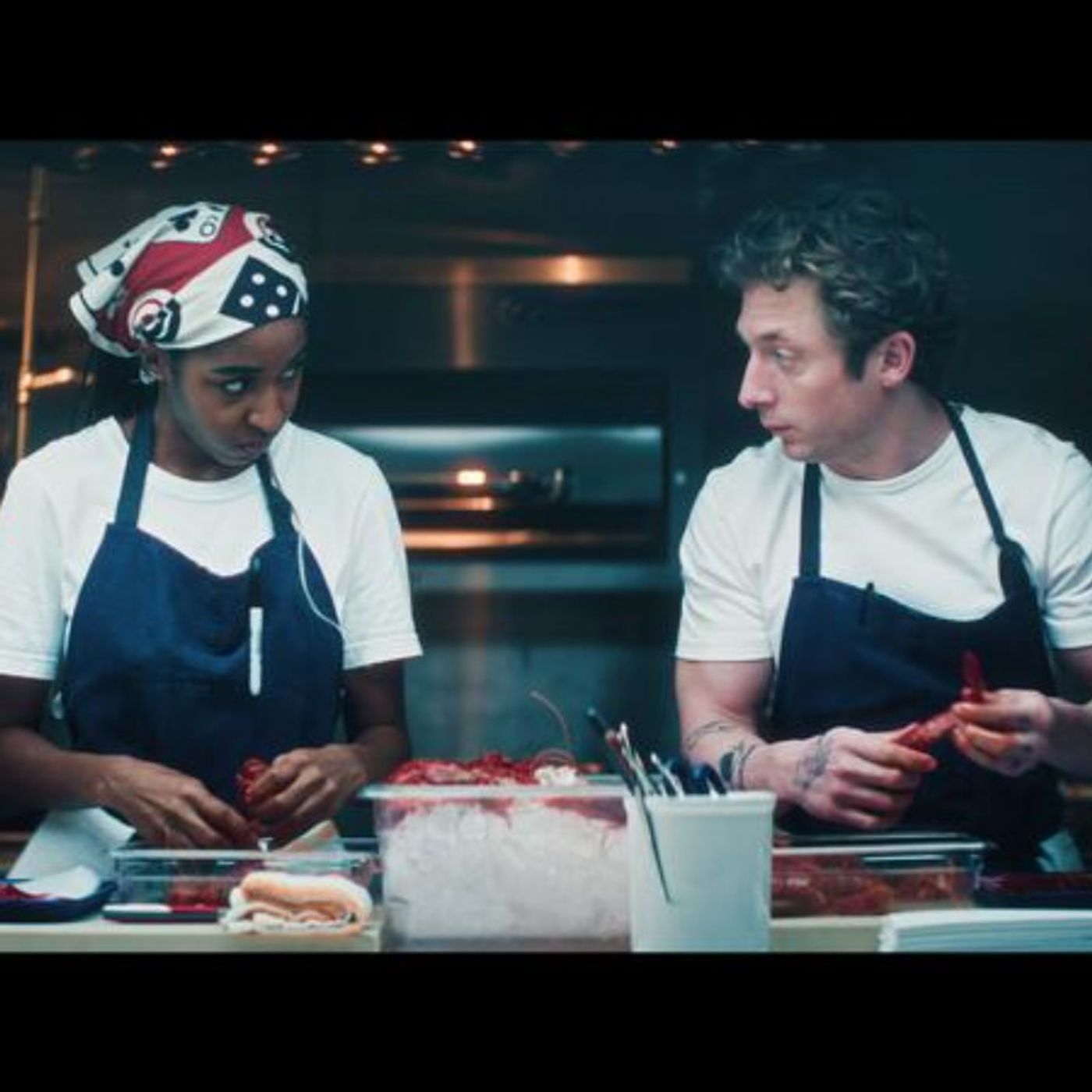
This is all of It. I'm Alison Stewart live from the WNYC studios in soho. Thank you for sharing part of your day with us. I'm grateful that you're here. I hope you're listening to us. Somewhere cool and shady. It's hot out there. Make sure you check on your friends and neighbors who have difficulty getting around. Make sure they're okay too. On today's show, we'll hear live music in studio from the band Lord Huron and musician August Pontier. We'll learn about a very special tree who went into outer space and now it's here in Manhattan. And we'll talk about the highs and lows of the World cup and preview Sunday's Big Game. That's the plan. So let's get this started with behind the scenes on the show the Bear. The series the Bear is returned for its fifth and final season. If you're a viewer whose mouth has watered at one of Marcus pastries or found your stomach growling while watching Sydney prepare a French omelet, you have culinary producer Courtney Storr to thank. Storr, who's also a co executive producer, is a chef from Chicago whose background includes experience as acclaimed restaurants in Paris and Los Angeles. She also happens to be the sister of showrunner Christopher Storer. So this show about a family run restaurant is also family operated. Courtney Storer joins me now to talk about the food on the Bear. Hey Courtney.
- [02:42]
Courtney Storer
Hello. I'm so Excited to be here.
- [02:43]
Alison Stewart
We're glad to have you. Listeners, do you have a question for the culinary producer of the Bear? Do you have questions about how things are run in a restaurant kitchen, or do you work in a kitchen and you want to shout out something that you saw on the Bear? Call or text us now. Our number is 212-433-9692, to speak with Courtney Storer, culinary producer of the Bear. 212-433-WNYC. Is that number food is your job, but when you were growing up, what was food like around your house?
- [03:15]
Courtney Storer
Oh, my goodness. Well, you know, food always represented excitement, celebration. You know, it's very sensory. For me, it started by smelling, you know, garlic bread. I always say, like, it started for me with garlic bread and red sauce. And that wasn't just in my house, but in an area where we grew up. You know, in, in Chicago, there was so many family owned Italian delis and restaurants and very young, you know, our weekends were spent, you know, doing like a family activity and going to a deli and bringing home cold cuts and sandwiches or meatballs for dinner the next day. And so it was ingrained in me very early on the power of food and the power of love within that.
- [03:59]
Alison Stewart
You worked in one of those Italian delis, right?
- [04:02]
Courtney Storer
I did. I did. I worked in numerous, mainly on the family owned Italian restaurant spectrum. I worked in a place called Sunny's that was more of a deli concept during the day and switched to, you know, a white tablecloth restaurant at night. And so, you know, at the age of 15, until now, I've. I've been in the restaurant world in some, some way, shape or form.
- [04:24]
Alison Stewart
What did you learn in those experiences working in those delis?
- [04:29]
Courtney Storer
That it takes such a team, that the collective is what makes these spaces really, really special. No one can do it on their own. And there's a lot of legacy in some of these restaurants that are, in fact, family owned. But then you have the legacy of people that have worked there for 20 years. Every great restaurant that I've been a part of, I've learned from cooks or dishwashers or porters that have been there way longer than I have. That took me under their wing to teach me. And I think one thing rem true in every restaurant that I've been in is it's only as incredible as the people that work it and the people that are on the line and show up, you know, and do the grunt work to the finesse work, to closing the doors at night. It takes Such a team of people to. To make restaurants come to life.
- [05:18]
Alison Stewart
Where were you in your career when
- [05:20]
Interviewer/Host
you realized, yes, I am a chef? I'm definitely a chef?
- [05:25]
Courtney Storer
That's. That's a really great question, because I think so many chefs have little glimpses of that as you come up through the ranks. But for me, truthfully, it happened for me. On the Bear. I had been working tirelessly. You know, I was a head chef. I've been a sous chef, a chef de cuisine, a culinary director for restaurant groups. And, you know, it was the first time that I got to really spread my wings and be like, these are the menus. This is what we're doing. And trusting myself has been a process, I think, that a lot of chefs go through. And my team on the Bear gave me so much support. And, you know, I have a culinary team that works with me. Just like I would run a restaurant or a kitchen, I have a team, especially for season three, four, and five, where there were other chefs helping, helping me out and training the cast and participating in this way where it felt very collaborative. But I definitely felt like I came into my own and really began to trust my instincts and my intuition.
- [06:28]
Interviewer/Host
I'm speaking with Courtney Storr, culinary producer of the Bear. The fifth and final season premiered on FX and Hulu in late June, and the show's fourth season was recently nominated for eight Emmys. Listeners, are you a fan of the Bear? Do you want to know more about the food on the Bear? Give us a call or text to us at 2124-3396-9221-2433. WNYC. You can talk to Courtney Storer, culinary of the Bear. Tell me about when Christopher first started talking to you about this show. He was asking you all kinds of questions. What did he want to know? Sure.
- [07:04]
Courtney Storer
Well, you know, what's really interesting is I lived with Chris. I had been living in Paris, and I moved in with him and his girlfriend into their home or their apartment in Los Angeles. And at that point, you know, I was a very broke cook and started working for Animal Restaurant in Los Angeles, which was a pretty tough kitchen to jump into at the time. And, you know, I think he learned a lot from that experience of me coming home late night, you know, waking up in the morning, doing it all again. And when he was sort of writing the Bear, he had it for many, many years before we got to see it on fx. And so it kind of took on a different life when he. He started working with fx, which was like the Right. Partnership, you know, to get it going. And. And that's really when he started to bring me into the writers room and talk to the whole team at large. Was a really fun process. You know, we went through journals and went through playlists of music and talked about the time and the heart and the pace of what it feels like coming up at different points in your career. So started pretty early.
- [08:12]
Alison Stewart
If you had to explain to someone what a culinary producer does, how do you explain it?
- [08:19]
Courtney Storer
I would say it's anything from sweeping the floors to getting to train the incredible cast and actors, to choreographing a lot of the movement in the kitchen to the food development to menus. I would say it's the big details and the very, very small details and everything in between. So at any point, I'm a resource to the cast directly. You know, oftentimes, before we do a scene, we practice a lot, and we make sure that they feel very confident in the task at hand, because, remember, they're also acting and giving these incredible monologues or dialogues or however many people are in the scene. So we try to prepare them as much as we can. I think a big responsibility of mine is to work with all of the departments, whether it's props to set decoration to the crew, the camera department, the sound. It's such a team, and everyone has to be aligned. So it's not just that I'm only focused on the food. There's a storytelling element that has to remain constant. The food is a character throughout the story. So making sure it connects with what we're trying to say and working very closely with Chris, Joanna, the directors, to make sure that they feel supported, you know, and set up for success is a huge part of my job.
- [09:39]
Alison Stewart
We had Lionel Boyce on the show, who plays Marcus in the Bear. He goes on to become an expert pastry chef. I want to play a little bit of him talking about working with you and your team.
- [09:52]
Lionel Boyce
Courtney Store and Maddie were really instrumental, especially in the beginning, where we leaned on them a lot because they had so many stories, so many specifics, where if you had any insecurity about, like, how do I hold this? Or what's, like, the physicality of this? They're like, yeah, this, or they just give you a story. And it was just a way to keep our us out of our heads with and, like, focus on, like, the character and the story as opposed to, like, can I do this? But it also helped us because it was just a place to train and, like, I want to work on Specifically, like, understanding this. How do you do this? Cutting or xyz?
- [10:28]
Interviewer/Host
All right, you don't have to name names, but.
- [10:30]
Alison Stewart
But when did you find an actor
- [10:35]
Interviewer/Host
really, just really looking like an actor, pretending to be a cook?
- [10:41]
Courtney Storer
Truthfully, I would never let them do that. I. That was part of my job and I took that so seriously that if, if I felt like someone needed a little bit more attention, we definitely spent time together. There was never a time when we would set foot on set where I didn't believe in them or feel confident in their abilities. That was part of the preparation that was so important is, you know, I always said, any time I'm available. But also, I want you to feel so confident that you're not thinking about what you're doing as you're acting. You know that it feels natural. So that takes practice. It takes a chef to. So many hours. People have no idea. Knife skills take forever. I'm still working on my knife skills. I've been in restaurants for so long, long. And these skills take time. So you gotta practice.
- [11:30]
Interviewer/Host
We've got a couple of questions coming to us via text that says the food always looks amazing. What happens to it after the filming ends?
- [11:40]
Courtney Storer
Great question. We eat it. It doesn't go to waste. We also have a sustainability program. We work with the city of Chicago to make sure that nothing is wasted. But in terms of the things that are edible, remember, like if, if. If there's a scene where there's a dining room, the extras cannot eat some of the food. We make sure when they are actually eating that it's up to temperature and all that stuff. But generally we are a snacking cast and crew. They love to eat and people get hungry. And we are a very well fed show. We work with so many incredible restaurants that we constantly order from to get little snacks and surprises for the crew and the cast. But additionally to that, if I'm making bolognese, you better believe I'm sending home the crew with it. If I'm making focaccia, everyone's getting a bite. You just have to consider that there's hundreds of people that are going to be expecting food. So we scaled up throughout the production.
- [12:33]
Interviewer/Host
We got a text here that says most back of the house Kitchen Insider details from the show. For example, I love that they drink water out of a quart container. What other details did you include? The. That we might not think about?
- [12:47]
Courtney Storer
Endless. I mean, that was a big one. I remember Jeremy brought out a coffee cup and I was like, nope, stop.
- [12:52]
Lionel Boyce
Revert.
- [12:53]
Courtney Storer
No you know, delis, delis, delis. But it's anything from, you know, oftentimes I'm looking at how clean their uniforms are at what time in the day. You know, in some Michelin level kitchens, of course, you are in pristine shape, but you're also, you know, prepping things throughout the day. And there's a different, there's a different, like, level of organization, cleanliness. You know, a space can feel really cluttered. That's, that's something that I was always talking to the crew and, and my brother about is like, hey, it's, it's 10:00am there's going to be a lot of production happening or a lot of deliveries at, at noon. It's going to look a little different at 2 o'.
- [13:30]
Alison Stewart
Clock.
- [13:30]
Courtney Storer
The pace is up. The adrenaline is starting to kick in. You've got three or four hours till service. So I really tried to look at the time of the day and also utilize the space as a tool to show what time it was beside just looking at the clock throughout the, the, the prep day or whatever.
- [13:48]
Alison Stewart
I'm speaking to Courtney Storer, culinary producer of the Bear. The fifth and final season premiered on FX and Hulu. Of course, you can watch it on streaming. Are you a fan of the Bear? You want to know more about the food on the show? Call or text us now at 2124-3396-9221-2433. WNYC. Courtney, when you get a script, when and how does the food enter that conversation?
- [14:14]
Courtney Storer
Pretty early on, Sometimes it's before, you know, the final scripts are sent out. We, we troubleshoot and we kind of talk about the conceptual idea of the food and then we make tweaks when the scripts are sent out. So usually I'll receive the script and I'll say, hey, I love this omelette, but let's talk about Sydney. And maybe she's using like, chips that are on the family meal shelf. And like, if anything sparks my creativity, I'll go directly to Chris and, and troubleshoot or just kind of say, hey, what about this? Have you thought about this? Which is great because we're siblings and I, I think he really trusts, trust me, and I trust him. So I think we usually reach a middle ground there always. But I usually will look at it and if I flag anything, I try to catch it right away. And then there's things on set that I notice that I'm like, hey, in Chicago, we can't get this ingredient, or we need to pay attention to the seasonality. Of the time of year that we're doing this dinner service, and would we be able to have that kind of fish? Could we get that kind of cheese? Just paying attention to those really important details that chefs think about.
- [15:24]
Interviewer/Host
What was a dish that you felt was. Was kind of risky to put into the show?
- [15:29]
Courtney Storer
Oh, well, the omelette was tricky because I knew we were going to film it from start to finish, but I had full confidence in IO. She's incredible, and I wish I had the. The confidence that she does when I was her age. I think it's taught me so much. But that's a. That's technique wise, a tougher one to do, you know, on one take, and she just nailed it. I think there's other dishes where I always want to show the procedural. Like, when I think about having pasta on a menu, I'm like, wow. Factoring in pasta making on your prep list for the day and the technique it takes to do that or breaking down a fish, there's always the procedural parts where I'm like, are we showing that enough so people really get how hard being a chef can be sometimes? So I try to get that stuff in there as much as I can. When I think about a dish, we show a lot of the final dishes. I'm always like, how can we incorporate the prep that goes into it?
- [16:27]
Interviewer/Host
We got a text here that says there's a level of PTSD for service industry folks watching the show. When someone says behind when they move through a doorway, I feel that in my bones.
- [16:38]
Courtney Storer
So do I. So do I.
- [16:42]
Interviewer/Host
The Bear is a show about a restaurant, but it's also clearly about family. Found family, and your brother is showrunning the show. What do you think the Bear gets right about family?
- [16:55]
Courtney Storer
Just that family can be chosen. Family that you can find community, you can find legacy. You can make corrective memories in a place of work, such as, for example, a restaurant. I think people underestimate that sometimes, that there's a lot of healing. I mean, for me, especially in my experience working in restaurants, I always say there's so much of us that are part of the broken hearts club. There's so much, much experience that kind of comes to the table when you're doing something that's very passionate. When I think about working with food and flavor and smell, there's a lot of passion coming. It's very artistic. But I feel like the strongest artists that I've ever worked with have also been through some heavy stuff. So there is this sort of rigor and passion, dedication And a little bit of surprise. I feel like I felt when I've been in any restaurant where I'm discovering my colleagues. Colleagues as we're doing this experience of a service, it's almost like being in a soccer team or a basketball team, where you're only as strong as your bench. So there's a sense of rooting for each other that you would feel in a family. You want each other to succeed. I know that being a chef in restaurants, I always wanted to make my cooks as strong as they could be and bring out the best within themselves. And I really feel like in restaurants, and especially the healthier ones, you really see that. You see each other grow, rise to the occasion, learn new tasks, and that does something really good for your heart and your brain. I think we got a question that
- [18:36]
Alison Stewart
says, how important is dishware on the show?
- [18:41]
Courtney Storer
So important. And there was a lot of debates about what we used, for sure, because it's truly how a lot of chefs, Guests are communicating with their guests. Coming in is sometimes you're seeing that dishware, you're seeing the plate where the way it lands on the table, how heavy it is, the elegance, is it light, is it weighted? All of those factors are also the medium where the art is expressed. Right? So you think about a plate as your canvas for whatever the dish is that you're creating. So there can be a lot of details like that we got to play with, especially on the pastry station. You'll see in season five, Marcus is really like, hey, these are the ways. These are the ways I'm going to plate my dishes. And you see him kind of think outside of the box and, you know, do a candy box and a really elevated dish for raspberries. And there's just sort of this art that he's sorting, sort of molding his. His station and his dishes around. There was also a fun, playful example that we did where we served the focaccia in the bread basket that Ibrah, you know, hated. He hates these baskets. And Marcus's character sort of says, hey, here's an example of how these baskets are incredible and beautiful, and we're going to use them because we're low on plates. So there's these little things that make the plating also a character.
- [20:06]
Alison Stewart
What have you learned about restaurants from working on a TV show about restaurants?
- [20:12]
Courtney Storer
Oh, my goodness. That it is so interesting to me watching the kind of, like, how the teams are formed in production, that there is so many people involved in executing a television show. The same way that I feel A restaurant is executed. You need each other. That's a very big similarity. I think working in close spaces is always very. Is also very similar to a restaurant where in some restaurants, you're literally elbow to elbow with each other. And in a television production, it's the same way. You know, silence, you can hear a pin drop, there's tension. You're filming something. It can feel the same way when we're cooking on a line, when there's stress or there's a big service ahead of us. I noticed that there's a lot of parallels there. And again, everybody's talent is so needed to execute the envision.
- [21:03]
Interviewer/Host
This text says, I love the Bear so much. Just got back from Chicago, and I insisted my family go to Mr. Beef, Margie's Candies and Loaf Lounge from Marcus's Chicken Chocolate Cake.
- [21:14]
Alison Stewart
You know, food and wine named Chicago
- [21:16]
Interviewer/Host
the second best food city in America. What makes Chicago such a good food city?
- [21:21]
Courtney Storer
I think it starts with the hospitality that Chicago offers. It's got that Midwest charm. There is a kindness to it that I think growing up within those restaurants in Chicago, it changed how I approach hospitality. Especially coming to Los Angeles, it's a little bit more hands on. Open the door, you know, make sure that the guest is having a good time and that they come back that you treat. You know, Joe Zucchero, who owns. Who originally owned Mr. Beef and now Chris, his son, owns it. I originally worked for Joe, and he taught me very young, like, you know, running a host stand at one of his restaurants, that you treat everybody like family, like a distant cousin or a distant relative. And I think Chicago is pretty good at that.
- [22:09]
Interviewer/Host
I understand you have a cookbook coming out.
- [22:11]
Courtney Storer
Yes, I do.
- [22:12]
Interviewer/Host
Tell us a little more about that.
- [22:15]
Courtney Storer
So I just finished it. I'm shooting the photos soon. And, you know, after doing the Bear, I really wanted to not only put the Italian American recipes that I know so well out into the world, but so many of the recipes we did on the Bear really brought our cast and crew together. And I wanted to write a book about how I've really learned to face a lot of my own trauma and heartache and coped with it in restaurants. I've learned how to overcome some really tough stuff because I was needed by my team in a kitchen, truthfully, and how much that has helped turn my life around. So the book will have incredible recipes, but it will also have some parts of my stories that hopefully inspire other women in food, that inspire other men looking to do food.
- [23:04]
Interviewer/Host
Anybody?
- [23:04]
Courtney Storer
It inspires everybody. To kind of think about food and. And how much the profession can offer.
- [23:11]
Interviewer/Host
We got this great text, a little bit long, but I'm going to read it. It says, big fan of the show, worked in food service for about 15 years and also am working in another industry that likes to organize around a lone genius, usually a white male, and ignores the absolute necessity and collaborative efforts of the collective. I love that the Bear uplifts passion, craft and audacity while deconstructing the lone genius myth by distributing the genius, talent and curiosity among the collective. Any great work of art and an exquisite meal is indeed. This is a manifestation of a collective. Thanks for bringing this up in the conversation.
- [23:50]
Courtney Storer
Absolutely. I love, love, love that note and thank you because that's so important to me. Yes, it's so true about the collaborative nature that we get to when we see Sydney's kitchen and how much she is listening and paying attention and also using that as such a strength, as a leader instead of a weakness. She's not threatened by her people. Rather, she's like, my people are incredible and we can do amazing things together as a collective. And that's my ethos. It's so important to me. I definitely have experienced the other reality that we feel in kitchens, and I'm trying to change that with the way that I work, and I'm happy that people took that away from the show.
- [24:35]
Interviewer/Host
My guest has been Courtney Storer, our culinary producer of the Bear. Its fifth and final season has premiered on FX and Hulu. Thank you for joining us.
- [24:46]
Courtney Storer
Thank you so much. Thank you to everyone watching and for supporting us. The past five years, it's been a dream.