Loading summary
Transcript43 lines
- [00:00]
Alison Stewart
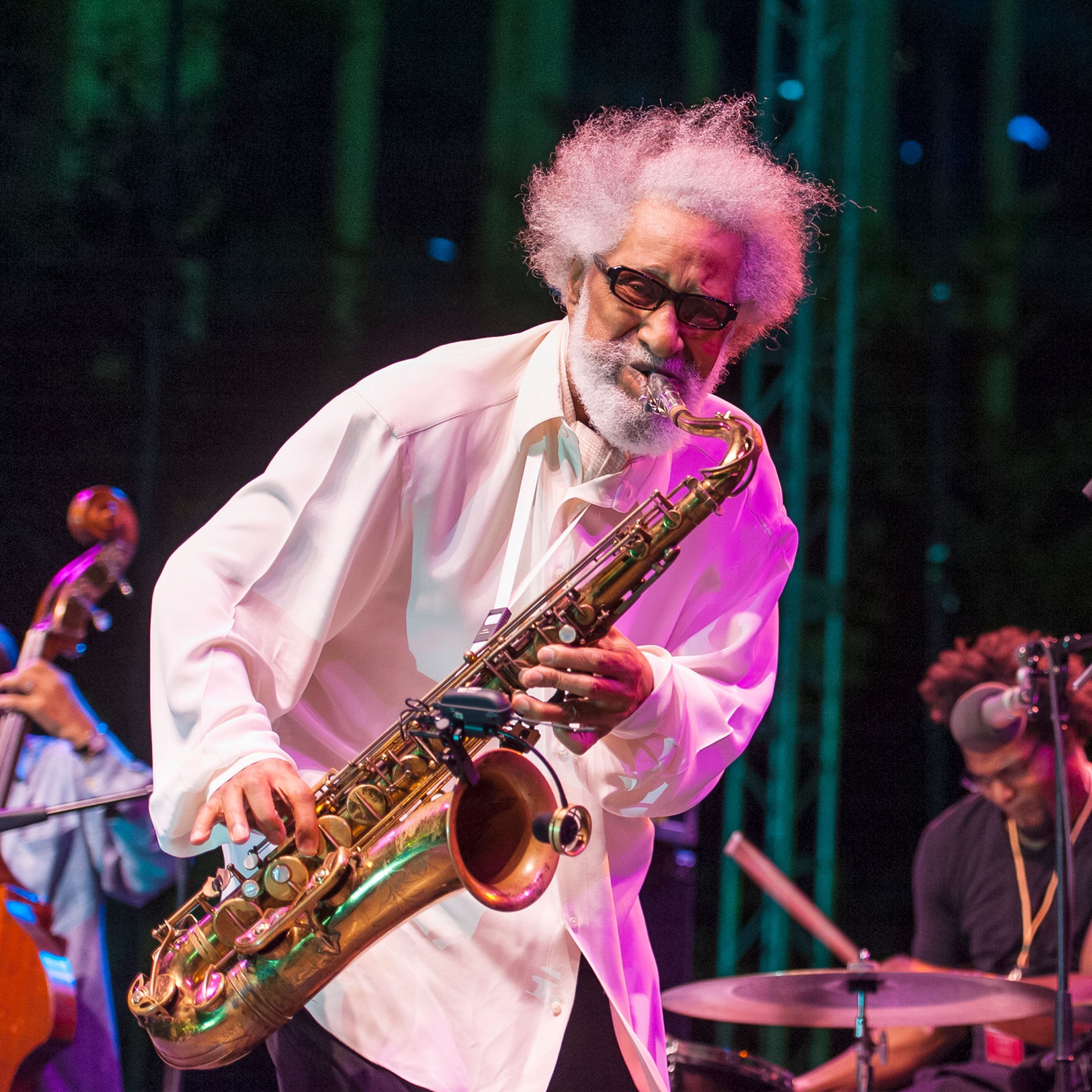
All of it is supported by Progressive Insurance. Do you ever think about switching insurance companies to see if you could save some cash? Progressive makes it easy to see if you could save when you bundle your home and auto policies. Try it@progressive.com Progressive Casualty Insurance Company and affiliates. Potential savings will vary. Not available in all states. This is all of it on wnyc. I'm Alison Stewart. Saxophone Is Sonny Rollins, a jazz giant and master improviser, died earlier this week at his home in Woodstock, New York. He was 95 years old. Born in Harlem in 1930, Sonny Rollins rose to prominence in the 1950s with his unique style and his willingness to try new things. At the height of his career in 1959, he took two years off from performing and recording to practice and perfect his craft. Over the course of his decades long career, Rollins won Grammys, was awarded the National Medal of the Arts and received a Kennedy Center's honor. Albums like Saxophone Colossus and Freedom Suite became jazz classics and his ability to adapt and experiment allowed his music to stay relevant into the 21st century. In a 2020 interview with the New York Times, Sonny Rollins said, we're here for 80 something years. One lifetime is not enough to get it right. I I'll be back in another body. According to a piece in the Atlantic, until his death, Rollins was the last living member of musicians pictured in the famous photograph. A great day in Harlem. You know the photo. Joining me now to discuss the life, music and legacy of Sonny Rollins is Peter Keepnews, a music journalist who wrote the obituary for the New York Times. He's also the husband to our beloved WNYC music engineer Irene Trudell. It is so nice to meet you.
- [01:52]
Peter Keepnews
Thank you. It's nice to be here. And it's nice to be married to Irene Trudeau.
- [01:57]
Alison Stewart
I bet it is. Listeners, we'd like to hear from you. What do Sonny what does Sonny Rollins and his music mean to you? Do you have a favorite album or song? Do you have memories of seeing him play? We are taking your calls about Sonny Rollins. Our number is 2124-3396-9221-2433 wnyc. Call in and share your experience. A lot of was written about him when he passed away and the word genius came up a lot. Do you agree with that genius distinction?
- [02:33]
Peter Keepnews
Genius is a tricky word, but I think if any jazz musician deserves to be called a genius, it's Sonny Rollins. Actually, I think there's quite a few jazz musicians who deserve to be called geniuses, but Sonny Rollins is who we're here to talk about. He was absolutely. He was absolutely a genius. And he was absolutely his own. His own man. More so than, you know, even a lot of the great musicians, and I'm not saying this to put anybody else down, he was. He was so distinctively himself that there aren't a lot of saxophonists, and there never happen who sound like Sonny Rollins. That differentiates him from, for example, John Coltrane, his contemporary. You hear Coltrane acolytes everywhere. You don't really hear a lot of people who play like Sonny Rollins because it can't be done. And he was, as you say, willing to try new things. He changed his whole musical outlook several times over the course of his career.
- [03:41]
Katya Boltner
And.
- [03:41]
Peter Keepnews
And he was, you know, absolutely one of a kind.
- [03:47]
Alison Stewart
One of the adjectives you used to describe Sonny Rollins in your piece was his music was imaginative. What was imaginative about his music?
- [03:56]
Peter Keepnews
Well, I mean, jazz by its nature is a music of the imagination because it's being created in the moment. But if I may be so bold as to also quote from my own piece.
- [04:11]
Alison Stewart
Sure.
- [04:13]
Peter Keepnews
Even by the standards of a music that prizes individuality, Mr. Rollins stood out. And you know what I mean by that and what I mean by imaginative is that he was always creating. He was always in the moment. And that's not always true of even the great jazz musicians. A lot of them have their standard phrases, their standard licks and riffs, and Sonny had a few of those. But for the most part, he really was in the moment. I mean, he said this many times in many different ways. When he was improvising, he tried to step out of himself and just go where the music took him, rather than relying on things he had played before. And that makes him not. Not unique necessarily, but certainly distinctive among jazz musicians.
- [05:05]
Alison Stewart
Let's play a little bit of Sonny Rollins. We're going to play St. Thomas. What should we know about this?
- [05:10]
Peter Keepnews
What we should know about this is that this was the first of many Calypso. Excuse me, first of many calypsos that he played. And he was not jumping on any bandwagon because this was a little bit before calypso was a trend. His parents were from the Virgin Islands, so he came by that heritage quite naturally. He used to listen to calypso music in Harlem when he was. When he was young, and he just had the idea one day to take. This is actually, he's credited as the composer, but in fact, it's a very traditional West Indian melody that he adapted, and it was the first of Numerous Calypsos and probably his best known. His best. I'll call it his best known composition, even though technically it really wasn't. But he made it his own.
- [06:05]
Alison Stewart
Here's Sonny Rollins, St. Thom.
- [06:31]
Peter Keepnews
Sam.
- [07:07]
Alison Stewart
We're discussing the life and music of Jack saxophonist Sonny Rollins, who died this week at the age of 95. My guest is Peter Keep News, a music writer who wrote the New York Times obituary of Rollins. And listeners, we are taking your calls. What does the music of Sonny Rollins mean to you? Have you ever seen him play? We are taking your Sonny Rollins memories and comments. Our number is 2124-3396-9221-2433. WNYC Nick is calling us in front. Calling in from Rosalind Heights, Long Island. Hi, Nick, thanks for calling, all of it. You're on the air.
- [07:41]
Nick (Caller)
Oh, thank you for taking my call. I'm old, dude, man. I served sonny Rollins in 1978 at Carnegie hall, and he was just divine. He comes out, he wasn't even introduced. He walks out on stage, he's bebopping along just like he did on the Williamsburg Bridge there for a couple of years. And then he went into calypso, and it was just a smooth, beautiful show, culminating in his version of Isn't She Lovely by Stevie Wonder. Now, I don't want to exaggerate. The entire place wasn't up on its feet, but a lot of people were and big beaming smiles. It was just a wonderful show. You know, I grew up in rock and roll and I made that move from the dead and olden brothers into Charlie Parker. And Sonny Rollins was there to help me out. He was just a great figure.
- [08:31]
Alison Stewart
Thanks so much for calling in. This says favorite Sonny Rollins memory, seeing him several summers when he was the last tape performer at the free outdoor summer concerts at Lincoln Center's Bandshell. I'm so glad I went. Always a great show for people who don't know. Your dad produced some of Sonny's albums.
- [08:51]
Peter Keepnews
Yes, he did. In addition to being an unofficial member of the WNYC family, I'm also kind of a member of the Sonny Rollins family. I'm very proud to. To say this. I did not discuss this in the obituary I wrote because it wasn't relevant. But my father, Orrin Keepnews, was a very prominent jazz producer, and he worked with Sonny Rollins at the Riverside label and a little bit later at the Milestone label. They had a very productive working relationship. And I was lucky enough to meet Sonny Rollins through my father. He was. He was a presence. Let's put it this way, and I want to mention since you just took a call from someone who saw him live, as great as he was on record, there's no substitute for seeing Sonny Rollins in person. He filled the room not just with his sound, which was enormous, but with his presence. I mean, it's not an accident that one of his first albums was called Saxophone Colossus because he really was. I mean, first of all, he was a big guy. And second of all, he took over a room. He was charismatic in addition to being a great musician. And nobody who ever saw him live has ever forgotten the experience, let's put it that way.
- [10:16]
Alison Stewart
Yeah, we had Dave Daveed Sanchez on the show and he said the same thing that, that he wouldn't have a career if it weren't for Sonny Rollins. And like how he was such a presence in the room. But he didn't think he was better than other people.
- [10:30]
Peter Keepnews
No, he didn't. And in fact he was very, very self critical. Many is the time that he would give what any normal person would think was an extraordinary performance and afterwards he would say, oh, I really wasn't at my best, you know, or that, you know, I wish I could do it over again. His standards for himself were ridiculously high because anybody, any objective observer would say he was simply one of the greatest living jazz musicians. But he always felt he could do better. And he said in more than one interview that he was still searching, he was still searching for the perfect sound. And I guess, sad to say, in his mind he never achieved it. But as far as the listeners are concerned, he was the man.
- [11:20]
Alison Stewart
We're gonna play Skylark now. What should we listen to on this track?
- [11:23]
Peter Keepnews
Well, this was from the album that he, that my father produced after he came, after he returned from the second of his three long sabbaticals. The first one was in 1959 when he was famously would practice on the Williamsburg Ridge. And the second one was in 1967 when he went to India in search of spiritual enlightenment. And he did not resume recording until 1972. The interesting thing about this track is you will hear Sonny Rollins playing unaccompanied, which he was. That's one of the many things he was famous for. He on at least one occasion gave a complete concert unaccompanied. And you know, he proved that he didn't, you know, he worked well with other musicians, but he didn't need other musicians. So that's what you're going to hear.
- [12:16]
Alison Stewart
Here's Skylark.
- [12:28]
Michael (Caller)
Sa.
- [13:19]
Alison Stewart
That's the Great. Sonny Rollins. Let's talk to Ryan, who's calling in from Brooklyn. Hey, Ryan, thanks for taking the time to call, all of it, and to talk. Sonny Rollins, of course.
- [13:30]
Ryan (Caller)
Thank you so much. I currently work at the National Jazz Museum in Harlem on 129th Street. But in 2007, I just finished grad school, and I was working in the home office of the bassist Christian McBride, who received a call from Mr. Rollins about joining him at Carnegie hall for the 50th anniversary show of. When Sonny performed originally on his debut at Carnegie hall, he was doing a 50th anniversary show along with drummer Roy Haynes. And very exciting for me as a young person interested in jazz. And the show came along and we were there. Backstage, I had a chance to meet Mr. Rollins, who was so gracious and a pleasure to speak with. And during the sound check, I noticed that there was nobody else in all of Carnegie hall except myself and Sonny's personal photographer, John Abbott. So I took it upon myself to go sit in the 15th row of Carnegie hall and listen to that soundcheck. My own private show of Sonny Rollins, Christian McBride, and Roy Haynes, arguably one of the greatest jazz trios of all time. It was quite. Quite a memory.
- [14:43]
Alison Stewart
That is an amazing memory.
- [14:45]
Peter Keepnews
That. That's extraordinary. You were very, very lucky. But I think anybody who ever went to see Sonny Rollins sort of felt like he was playing just for them, even if there were 2,000 other people in the audience, because his connection was that emotionally direct. But that's a fantastic story. And what a rhythm section.
- [15:04]
Alison Stewart
Let's talk to Katya. Hey, Katya. Thank you so much for. Is Katya there?
- [15:11]
Katya Boltner
It's my pleasure. Yep. I'm sorry. It's my pleasure to be here. So I am the daughter of Sunny Stitt, and I am actually currently program director at Pacifica Radio, WPFW in Washington, DC. I spoke to Mr. Rollins, I was listening to Peter earlier when he said he felt like family. I knew Mr. Rollins and Lucille very well over these years, grew up knowing them. But I spoke to him about a year ago because I'm currently writing a book on my father, Sonny Stitt. They recorded together on Sunny side Up with Dizzy Gillespie. But the story he imparted was about how he found the bridge. So my father was instrumental in helping him find an apartment downtown. He had some acclaim, but at that time, they did not rent to black people. And so it was an old Jewish tenement. And these were Sunny's words. And so my father knew the owner through his father, Edward Boltner. So he took him down, he got the apartment. And then Sonny's drummer at the time moved in next to him. And the drummer's wife was pregnant. And so he started. He felt bad that he was practicing, the horn was loud. He started going out and walking to find places to practice. And that's how he came upon the Williamsburg Bridge. And he told me he took Steve Lacy there and a bunch of other folks there over the time that he practiced there. But it was just extraordinary to hear. And the other thing to Peter's point about him never feeling like he was ever finish, because he would always say that he wasn't finished. He would say that people will remember, you know, the important thing is not how you play. He was talking to me in the context of my father. But he did say that what they will remember will be the content of your character, the kind of person you were. And he said that over and over again to me, that that's what I want them to remember me for.
- [17:00]
Alison Stewart
Thank you so much for calling. You know, Peter, did Sonny Rollins ever record, quote, music with a message?
- [17:09]
Peter Keepnews
He did. And in fact, this makes a very nice segue from the reference to him not being able to rent an apartment because he had, as all black people did in that era. He had a lot of experiences with racism. And that is what inspired him to write the Freedom Suite. He didn't produce a lot of overtly socially conscious music, but this was. This was an exception. And it was. It was exceptional in musical terms, too, because as the name suggests, it was a suite. It was in several movements. It was 20 minutes long. And when he. When the album was released, there was a little message from him on the liner notes, which I wrote down so I wouldn't forget it. He said, in part, america is deeply rooted in black culture. How ironic that the black man, who, more than any other people, can claim America's culture as its own is being persecuted and repressed. So this was his very personal statement about. And this was 1956, by the way. It was just two years after Brown versus Board of Education. It was really. It was in the early days of the civil rights movement. It was not. It was not a safe statement for a black artist of any kind to make. And he was always very proud of that. He didn't do a lot of other socially conscious music. He did write some songs that were inspired by the environmental movement. Much later, he had a piece called Global Warning. Not warming, but warning. And he was certainly, you know, attuned to what was happening in the World,
- [19:00]
Alison Stewart
let's listen to one of the suites from Freedom Suite. This is about a minute long.
- [19:23]
Michael (Caller)
Sam,
- [20:11]
Alison Stewart
Let's try to get one more call in. Michael is calling from Kensington. Hey, Michael, thanks for calling, all of it. You have about a minute.
- [20:18]
Michael (Caller)
Wow. Well, I'll try to make it short because it was just such an incredible experience. I first saw him when I was getting into jazz with a friend in Boston in 1978 at Paul's Mall, which was a small club. And we were a few feet from the stage and stayed for both sets. And it was just his ability, you know, to jump from one idea to the other. The way he put himself out there to do all these incredible acrobatics, but at the same time had this emotional intensity that just covered the gamut from frustration to humor to anger to. It was just, it was just amazing. And I felt like I had experienced the infinite, you know, infinite change, infinite possibility. It was just amazing. Even to this day, I don't think I've had many experiences that come close to that.
- [21:15]
Alison Stewart
Michael, thank you so much for calling in. We've about 45 seconds left. What do you want to get in for our listeners to understand about Sonny Rollins?
- [21:23]
Peter Keepnews
PETER One thing I want to mention is that Sonny Stitt's daughter, I apologize, I can't remember her first name. She mentioned Lucille. And I want to make sure everyone knows Lucille was Sonny Rollins wife. She was also his manager. She was also his co producer on many of his records. She was extraordinarily important to him. But all I can say to your listeners is, I assume if you're listening, you're familiar with Sonny Rollins. But whether you are or not, keep listening to those records. You know, he left a remarkable legacy and it's all there. There's a ton of it.
- [22:02]
Alison Stewart
PETER Keep news. Thanks for your time.
- [22:05]
Peter Keepnews
Thank you very much. ALISON Bring on the fun and bring
- [22:10]
Michael (Caller)
home a new Honda with a great
- [22:13]
Peter Keepnews
deal on your favorite Honda vehicles. And finally, take that road trip you've been dreaming of. Now's the time to check out the Honda Civic and HR V from Honda. The 2025 Kelley Blue Books kbb.com Best.
- [22:32]
State Farm Announcer
Based on 2025 Consumer Choice Awards from Kelley Blue Book. Visit kbb.com for more information. Having the right people in your corner for life's biggest milestones makes all the difference. Like a friend who's there when you're house hunting or checking out a new ride, State Farm is there too, helping you choose the coverage you need with a State Farm agent, you know, someone is there to help you along the way. And with so many coverage options, it's nice knowing you have help choosing a plan that fits your needs so you can continue celebrating all of life's milestones. Head to statefarm.com to get a quote like a good neighbor. State Farm is there.