← All Of It with Alison Stewart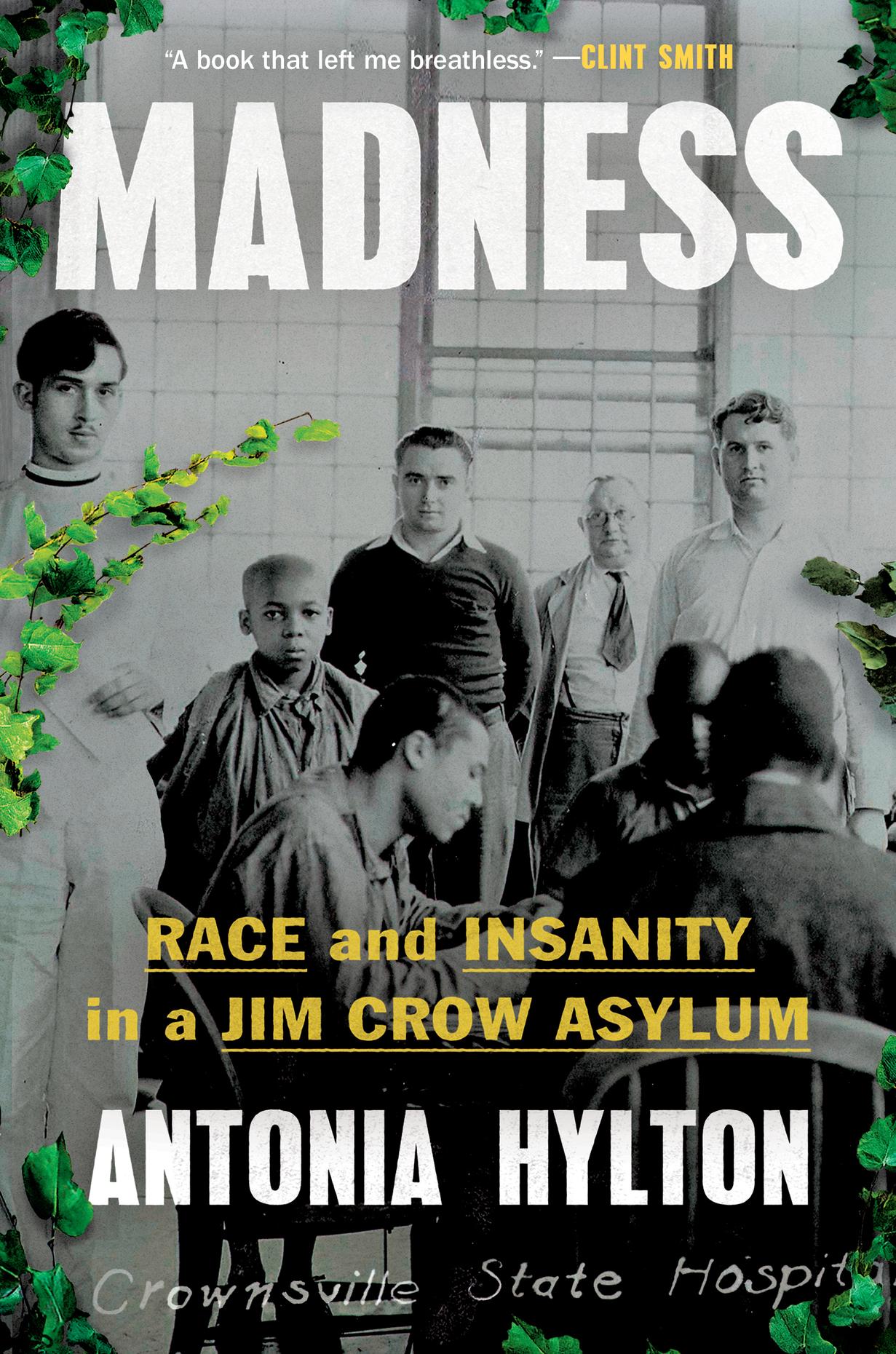
All Of It with Alison Stewart
The History of a Segregated Mental Health Asylum (Mental Health Mondays)
00:23:10
A new book tells the story of one infamous segregated hospital in Maryland, where Black patients struggling with mental illness were abused.
Loading summary
Transcript21 lines
- [00:04]
A
Listener support WNYC Studios.
- [00:18]
B
You're listening to all of it on wnyc. I'm Alison Stewart. We continue our ongoing series Mental Health Mondays with a new book about the history of a segregated mental health hospital in Maryland with a difficult past. Construction began on Crownsville State Hospital in March 1911. The workers who built the asylum from the ground up were also the hospital's very first patients put to work by those in charge. In the book Madness, Race and Insanity in a Jim Crow Asylum by Antonia Hilton, she writes, the hospital was home to a variety of patients, from people with serious mental health challenges to someone who might be charged with vagrancy, even some kids whose parents weren't able to care for them. These patients were packed together in overcrowded and often filthy buildings. There's one story about a building so poorly kept the floor was covered in years of matted down human feces. Many patients weren't receiving much, if any treatment. Altercations and violence were common. And before integration, the patient population was black while the staff members were white. The book Madness, Race and Insanity in a Jim Crow Asylum uses Crownsville to investigate larger connections between the legacy of slavery and racist violence and the treatment of mentally ill black Americans. Americans. Antonia writes in the introduction, quote, my wish is that madness will help us understand both our current broken mental health care system and our carceral one. At the heart of Crownsville's lie a couple at the heart of Crownsville lie a couple of questions. What is the difference between calling a black patient incurable and deeming a black population certain of criminal recidivism? To what extent could this legacy be at fault for a current reality in which many communities of color feel alienated by psychiatric services and our prisons and jails are full of people suffering from mental illness? And along the way I asked doctors, patients and family what we can do about it. Antonia Hilton, welcome to all of it.
- [02:13]
A
Thank you so much for having me.
- [02:15]
B
I do want to note that Antonia will be at the NYU Institute for Public Knowledge at 20 Cooper Square this Wednesday at 5:30 talking about the book and signing copies. That event is free and open to the public. What were the initial stated intentions of Crownsville?
- [02:32]
A
The initial stated intentions of Crownsville, going back to the early 20th century, from the politicians and the white doctors who dreamed of it, who decided that it needed to be constructed, was that this would be a place for immense amounts of suffering that they were observing in black communities in Maryland at the time. And they were writing about their concerns, their theories about why black people Might have been suffering in large numbers in those years. And what you see going back, even decades prior to crownsville's creation Is a lot of these white doctors and politicians sort of going back and forth in medical journals or letters about this belief that in some way, essentially, emancipation had been a mistake, and that one of the reasons that so many black people were suffering Is because they weren't able to handle the rigors and the responsibility of being free. And so crownsville is one of several institutions created in the decades after slavery where there will be a black only population, or in some cases, there were segregated wards of hospitals that had white populations and that their care would be different. And in crownsville's case, it becomes the only hospital in the state of Maryland and quite possibly in the country that is so against paying for their patients health care that they force the patients to go into the woods and build it from the ground up. Then to run a highly modern and productive farm for decades, to run their own kitchen, morgue, laundry. And while all asylums had a history of work programs, what you see in the story of crownsville and the treatment of black patients Is something unlike what any other group of patients have really been subjected to in American history. And for me personally, I come from a family with a history of mental trauma. The discovery of this story, it was an academic and a journalistic journey, but also one that for me, has helped me have so much more empathy and compassion for communities in the country that still have such a gap, such a lack of trust for this field. When you see a lot of the stories, and just even that origin story right there up close, you can see how painful all of this is for generations, for stories that aren't even that far gone, that far away from us. Now, this institution didn't close until 2004.
- [05:05]
B
Who could become a patient at crownsville?
- [05:10]
A
Well, there were a whole lot of categories and types of patients at this institution. At first, it started just for adults, but very quickly, that changes. Even during construction, There are patients as young as 10 years old involved in the creation of buildings that still stand to this day in Anne arundel county, maryland. And many of the children there had no real mental health diagnoses at all. Many of them were orphaned or abandoned. Some of them had physical disabilities that their families couldn't afford to take care of in the early 20th century. Then there was a large population of patients who did have actual mental health diagnoses. So there were people who had come back from wars and fought on behalf of the United States and who are described as having what we would know today as ptsd. There were people experiencing psychosis or deep depression at Crownsville, but there were also people living with substance abuse challenges or who were arrested and brought to Crownsville for what some would call crimes of poverty. So being homeless in the city of Baltimore or Annapolis, I tell the story, really unbelievable story at one point about a patient who ends up stuck at Crownsville for years. And one of the first ever black nurses gets the chance to get to know him a bit. And she finds out that he was brought to the institution because her white supervisor had overheard him using a British accent and thought that he must be crazy. It turns out after she gets to know him that this man was actually born in London, had been born in London and had been a jockey, came to the US and fell on some hard times, but, you know, was one of these patients of which there were many who didn't have an actual diagnosis or anything that Crownsville certainly at that time could treat. And so it's really not until the 50s and 60s when this new generation of employees arrive and start to ask more questions about what has been happening here all along, that there starts to be this recognition that there's a population of patients they could, if they had the resources and the dedication to, they could actually get out of Crownsville.
- [07:18]
B
Yeah, you tell a very. There's a very sad story, but it also gets to distrust of African Americans, of medical institutions, of Henrietta Lacks child. Yeah, Henrietta lacks of the HeLa cells. Her cells were taken, she didn't know, used obviously to create incredible breakthroughs in medical field. But she had a child who had a disability and wound up at the hospital. How did that happen?
- [07:47]
A
Right. And I tell this story because I think often people, they hear about stories like Henrietta Lacks story and her immortal cell line, or they think about big scandals like the Tuskegee syphilis study, and they think about just sort of these single incidents and these sort of big blow ups, and they don't see the larger system or patterns at play here. And so one of the things, one of the reasons why I highlight at one point in the book, the fact that Henrietta's daughter ends up at Crownsville. She is diagnosed with epilepsy and also labeled as an idiot by doctors at the time. And that's because she couldn't speak and couldn't communicate. So she ends up at Crownsville. And while her mother's health is declining and doctors at Johns Hopkins are harvesting her cells for their use in science, her daughter ends up being Used by science in a different way. Elsie is just a young girl. She is just in her early teens at Crownsville, and she's subjected to a horrible brain study in which doctors at Crownsville, without her consent, without contacting the family, drill into her skull, pump all kinds of air and helium into her skull to try to get a number of photographs of children like her. And this leaves her permanently disfigured and in immense pain toward the end of her life. And she passes away at Crownsville at just 15 years old. And, you know, people in Maryland have known about Elsie's story, but much of the country is a bit new to it. And I think when you understand that a story like Henrietta's is so much bigger than what just happened to this one woman, that even her daughter was subjected to something like this, and that it was happening in all kinds of institutions around Maryland and around our country, you start to see why there would be these gaps still, you know, why in many black communities in the United States, in my own family, I still have family members who will say, oh, psychiatry isn't for black people. Therapy isn't for black people. You come to realize they knew some of these stories. They heard these whispers. And I write about that in the book. The way in which Crownsville actually comes to operate this or take up this very interesting space in the imagination and the social fabric of the community around it, both white and black communities, that they start to see Crownsville as this bogeyman, as almost a mystical place. There begin to be these rumors that at night, doctors will roam the streets of Annapolis and Baltimore and scoop up black people. And while that might sound like a nighttime, you know, children's tale around or around a campfire kind of thing, you then see in the records actual evidence that things like this that did happen, that there were people picked up or who were lost to Crownsville and whose families were never contacted. And when you see that, you see sort of where do these legends, these stories begin? And, you know, the line between fact and fiction actually becomes very, very blurry there.
- [10:54]
B
My guest, Antonia Hilton. The name of the book is Madness, Race, and Insanity in a Jim Crow Asylum. I want to switch lanes a little bit and talk about your reporting on this story. You had a fair number of obstacles getting to the records and getting to the information. Would you share with our audience some of the things you had to go through just to get to basic information? It's a little wild.
- [11:19]
A
Oh, boy. Yes. I could definitely share. This is a 10, 11 year journey. I started this book and the work around Crownsville at just 18, 19 years old. And I'm very glad I had that much time, because first thing, the first thing I had to do was go through something that's called an institutional review board process. And so if you're a researcher and you're working with a university and you want to access any kind of historical documents that may have patient files or information about people and families that are still living in the area, you basically need to go through sort of a series of ethics exams, you need letters of recommendation. I needed to get support and permission from Harvard University at the time and from the state of Maryland. And, you know, I thought at first that was going to be all good and fine and I fill out some paperwork and take some quizzes, but each, at each stage, you're waiting months for someone to process a piece of paperwork. And I felt at times like I was getting the run around from officials in Maryland who were reminding me that they had allowed very few people to ever access these kinds of documents and who were very concerned about sort of the scope of, and where the project was going at the time. And so I get to, I finally get through that process. I get access to the Maryland State Archives. And I think I'm going to be able to see everything there is to see about Crownsville. And what I discover is that all of the records prior to about the 1960s have either been systematically and purposely destroyed, destroyed by asbestos or bug infestations. And that the state made the decision when those challenges came up to simply throw away the records, the stories, the evidence, and anything you could possibly find out about the interior lives of patients had, prior to those dates, basically disappeared. What did survive were the writings and beliefs and arguments and meeting minutes and notes of officials who often had very openly bigoted views of the patient population that they were supposed to serve. And so what I realized very quickly was that what I found in the archives would need to be supplemented by a massive oral history project. And that was also very slow. I mean, there are people you'll meet in this book who waited five to seven years to talk to me, you know, and building trust. It was really one person, one new door opening at a time. But, you know, you really couldn't tell the story without both of those. Those sides, those pieces there. Because without the testimony from black Marylanders, from health care workers, from the families and patients themselves, the truth is, the records that had been preserved would have told a very one sided and very biased story about the patients for so many of those Critical decades. So I don't think I could have finished this book in anything less than 10 years. And it required a lot of patience, a couple funny moments in which I had been told certain documents didn't exist or that I couldn't access. And then I would go to a former employee's home and go into their attic, and they would happen to have it all in a box right there. And so there are these amazing heroes who worked at the institution, like a man named Paul Lurz, who worked there for 40 years, who just happened in the final days to shove all this stuff into boxes and save it. Yeah.
- [14:43]
B
He thought, like, there was going to be a bug infestation. I mean, it's amazing. It makes you wonder if someone. Like, when I was reading about him, I thought, he knows this is someone who knows that this story is bigger and someday someone will come looking.
- [14:56]
A
Yeah. And when you. And he's still in his 90s, he's still alive and lives in Annapolis to this day. And when you talk to him, it's just this instinct, this feeling he had that he had been part of something very big, very complicated, very messy, very important. And that if he didn't walk around in the final days in 2003 and 2004, and grab papers and poems that were written by patients and just rescue. And put it. He put it into a fireproof cabinet in his own office. I mean, there was no real, like, there was no organization around this from the top down of the government, a plan to build a museum or to remember what happened here. It's just a couple of these individuals who did everything they could on behalf of patients and on behalf of the broader story that made this work possible. I really couldn't have done this without all them.
- [15:46]
B
Antonia, who is someone you spoke to or a conversation you had that really either changed the trajectory of the project or sent you down a road you hadn't expected.
- [16:02]
A
There are a number of people who. Who changed this. I think the first two that come to mind are two women named one Faye Belt and the other Sonia King. They both grew up right around the hospital for basically all of their lives. Fay Belt, her mother, is one of the first ever black nurses there. She grows up as a kid who's hanging out with all the employees, and then she becomes a nurse there herself. And one of the first challenges that she meets in the early part of her career is that she gets a phone call that one of her own childhood friends is now a patient here, and she rushes over to the other end of the campus to go find this young girl. And it's Sonya King, a childhood friend of hers. She spent her whole life going to church with. She went to school with all her siblings. And Sonya has come to Crownsville and is extremely afraid. And she is experiencing the depths of a really terrible depression and also going through psychosis. And one of the things that I show in telling their story, through a couple different chapters and one of the things that changed me about reporting on them, I came to this realization that so much of good mental health care and so much of what ended up saving patients at a place like Crownsville was this. It was not medication. It was not actually a new technology that was arriving, although there was a lot of that going on in the 50s, 60s, 70s. What changed everything for Sonia King is that Fay Belt, along with a bunch of other nurses who knew her, know her, know her entire family, and they wrap their arms around the King family and come up sort of with this community plan to get Sonia out. And that. That plan and the message that they send Sonia as a patient every day, that she is worthy, that this is not the end of her story, that she is. This doesn't. What happened to her here, the depression she's experiencing now, isn't a comment on the. Her quality as a person or her worth going forward, that those kinds of. That kind of support and those messages save lives. And you also get this really fascinating glimpse at an institution that comes out of this period of intense segregation for the first time, starts to have black nurses and doctors and starts to really look like a community mental health hospital for the first time. And so Sonia's story represents both the power of community and love and recovery, but also, to me, almost this. What could have been for the mental health care system in America? We, at one point in the 20th century, were told that there were going to be all these community mental health care clinics, and people would get care right at home with people that they know. Most Americans, I think, are aware that that system was really never built up. But you get a glimpse for a few decades of what that could do, what that could be, especially in a community of color at Crownsville. And it is those relationships, it's that love and commitment to your neighbor, to seeing a patient as a human being, that begins to really change health outcomes. And so that story changed my entire view of what good mental health care treatment looks like. That the reporting that I learned along the way of meeting women like them, I think it also helped me see very early on in the reporting that institutions like Crownsville were not these one note stereotypical goosebumps like tales that there is this richness and complexity that there are for as many villains as there can be in an asylum like this one. There are also the heroes who show up every day just doing what they can for the patients in front of them that they can save. And so, you know, I think when you first hear a story about a place like this, you can imagine the horror and the heartbreak. But you should know that there are these unbelievable healthcare heroes in this book who frankly, just haven't received the sort of public recognition and the flowers that I think that they deserve. And so I'm just grateful that I met these women and could give them their story. A day in the Sun.
- [20:19]
B
How did Crownsville eventually shut down?
- [20:23]
A
Well, Crownsville comes to a close, comes to an end in 2004, but for years leading up to the 2000s, there are these rumors and there are all of these cutbacks that are being made. And, you know, people disagree about when deinstitutionalization begins or when the community mental health care movement falls apart. But I think Crownsville helps us point toward a very critical moment all the way in the 60s where there are a couple key cultural transformations all happening at one time. New drugs have arrived, we have JFK and others saying that we're going to build a community mental health care system. And there's all this sympathy for patients. But also there's a civil rights movement going on. And in many black communities in the United States, black people who are angry, who are hurt, who are paranoid and fearful of their treatment in the country are being criminalized to a new extent. Police officers are showing up in classrooms, in public schools for, in some cases for the first time. And so there's this movement for sympathy, and patients are about to start leaving. But there's also a whole new population that is being criminalized. And if you look at all those changes, black people play a very important role, like at the intersection of all of them. And so the writing on the wall for Crownsville, I would argue it comes in the 1960s and during the black power and protest movement. And one of the stories that blows my mind and really changed me when I first came across it is a story I tell about three civil rights protest who get committed to Crownsville after attempting to eat at a white only restaurant. That story helps you really see the way in which all of our societal changes, all the conversations that black Americans were begging this country to have about how it would live up to its promises that those things got pathologized, that the medical field was responding to and often sort of in the form of backlash, responding to black Americans concerns. And so you see this sort of beginning unraveling, the threads coming apart in the 60s. But the hospital sort of pushes along and tries all the way until 2004 when the state decides that Crownsville needs to go.
- [22:41]
B
You can read so much more in the book Madness, Race and Insanity in a Jim Crow Asylum. And Tony Hilton will be at the NYU Institute for Public Knowledge. That's at 20 Crew Square this Wednesday at 5:30 talking more about the book signing copies. It is free and open to the public. Antonia, thank you so much for being with us and sharing your reporting with us.
- [23:03]
A
Thank you for having me.
- [23:05]
B
There's more. All of it on the way. Pulitzer Prize winner Michael Cunningham joins us to discuss his novel Day it was our get lit with all of it book club pick. We also have live music performances from Josh Ritter that's happening right after the news.
- [23:20]
C
Since WNYC's first broadcast in 1924, we've been dedicated to creating the kind of content we know the world needs. Since then, New York Public Radio's rigorous journalism has gone on to win a Peabody award and a DuPont Columbia Award, among others. In addition to this award winning reporting, your sponsorship also supports inspiring storytelling and extraordinary music that is free and accessible to all. To get in touch and find out more, visit sponsorship.wnyc.org.