← All Of It with Alison Stewart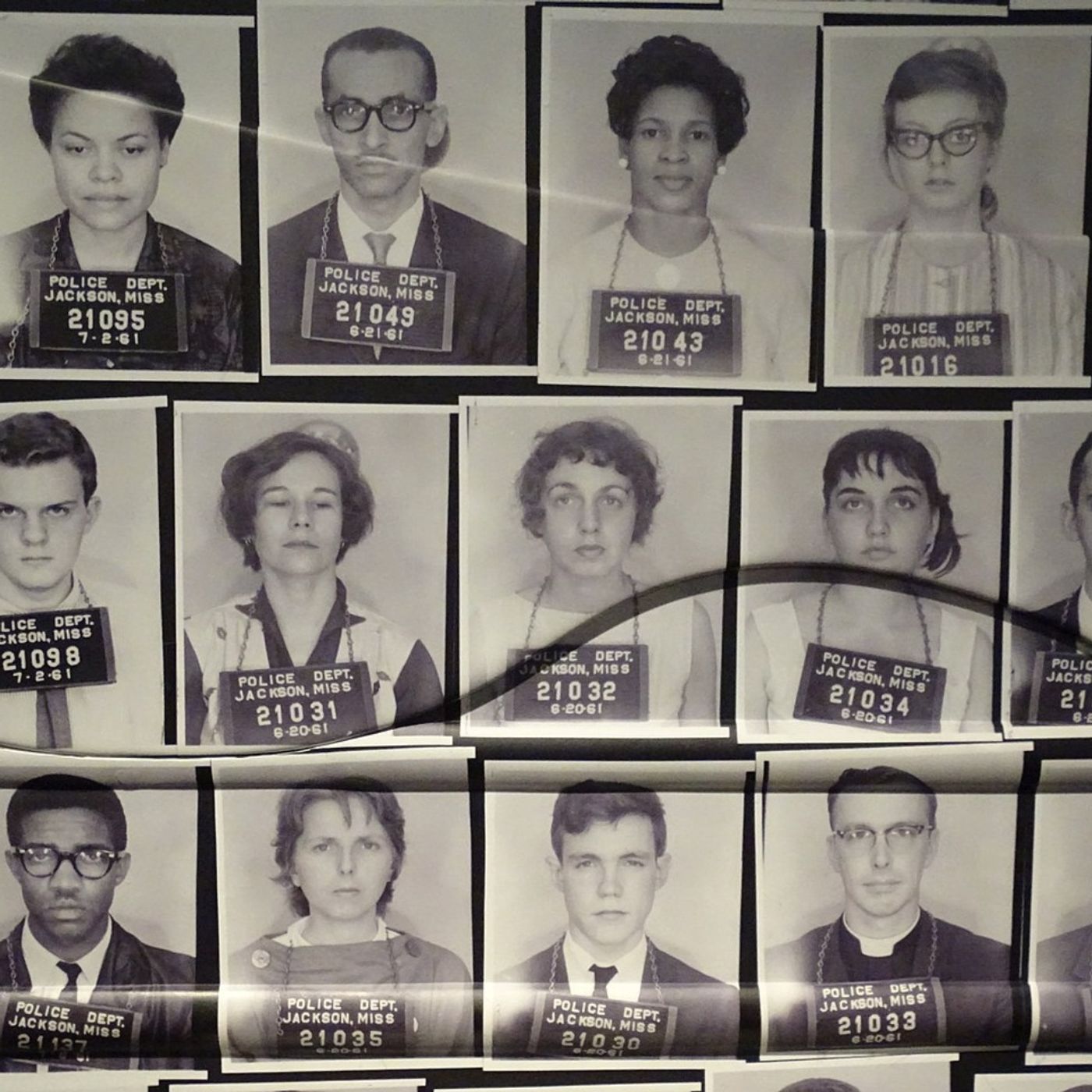
Loading summary
Transcript91 lines
- [00:00]
A
Your new home is now ready. Dr. Horton, America's builder has new homes that are ready today. With new construction communities throughout the Puget Sound and Central Washington areas And more coming, Dr. Horton has the right home for you at Dr. Horton. We're still building. With more construction, more communities and more homes available every day. Tap your screen now or visit drhorton.com to find your new home now ready. Dr. Horton, America's builder and equal housing opportunity builder.
- [00:39]
B
This is all of it on wnyc. I'm Alison Stewart. Now we'll wrap up today's show with another black history conversation, particularly about the parallels and intersections between black history and Jewish history in the U.S. these two communities have been described at different points in history as being in alliance with one another. In 1909, Black People and Jewish People Co founded the NAACP, Yiddish newspapers calling for abolition and later desegregation. They worked together during the civil rights movement. But there have also been points of tension. Jewish music producers making money off the back of black jazz artists, Black tenants becoming resentful of their Jewish landlords and tension over Israel after the Six Day War. A new four hour PBS documentary series hosted by Henry Louis Gates Jr. Covers all of it. It's called Black and Jewish An Interwoven History. It premieres tonight at 9pm I'm joined now to talk talk about it with its co directors, Phil Bern. Oh, how do you say your last name? Bertlestein.
- [01:42]
C
Bertelsen.
- [01:42]
B
Bertelsen. Phil Bertelsen.
- [01:44]
C
Yeah. There you go.
- [01:45]
B
Thank you, Phil. And I'll try for you, Sarah Wolitzky.
- [01:48]
D
Perfect.
- [01:49]
B
Yes. Thank you so much. Thank you for being here. By the way.
- [01:51]
E
Thank you so much for having us, Phil.
- [01:53]
B
You start the series with a modern day Passover Seder and a title card that says Let my people go. Why was this a good image to launch the series with?
- [02:05]
C
Well, that story from the Old Testament, that story of exodus and liberation is really at the foundation of our community stories. And it seemed like a righteous place to begin the conversation that we would be having over the next four hours. And that Seder gave us an opportunity to assemble some of the most interesting and intellectual people to have a conversation about this exodus story in the context of this, this Passover tradition.
- [02:40]
B
That table was full of heavy hitters.
- [02:42]
C
It really was.
- [02:43]
B
Tell us who's at the table?
- [02:44]
C
Well, Michael Twitty was at the head of the table and he prepared the meal. The kosher chef himself.
- [02:52]
E
Yeah, Kosher soul.
- [02:53]
C
Yeah, he calls himself the chocolate Chosen.
- [02:55]
E
Michael Twitty was there. David Remnick from the New Yorkers there, Jamaica Kincaid, Skip was there two rabbis, Angela Bukdal and Sheis Rajon, who also goes by Manish Chanah and some other fabulous people. And it was also important to us to set that table with a diverse group of Jewish folks. And as much as so much of this history is influenced by the fact that a majority of American Jews have been defined as white or have had access to sort of whiteness for a lot of the history, these are not mutually exclusive categories. Right. So a lot of the folks at that seder. And as we hope to make clear throughout the show, there are folks who identify with both identities, black and Jewish.
- [03:50]
C
Everyone at that table was actually Jewish, except for Dr. Gates.
- [03:54]
E
Yeah.
- [03:57]
C
It was a great event.
- [03:58]
B
And let's start back in European history.
- [04:01]
D
And in history in general. How did Jewish colonists come to this new world, and how did they manage in this new world, given that religious freedom was such a rallying cry for America?
- [04:15]
E
Yeah, well, I mean, compared to largely the places they were fleeing, this was a promised land in many ways from them. I mean, in the early colonies and then even persisting into some state laws, there was definitely some state by state restrictions, civil rights restrictions about being able to vote or hold public office. But the point of the revolution and the Constitution and the Bill of Rights, the fact that this country, you know, the religious liberty was foundational to those documents. So much so that, you know, George Washington visited and, you know, exchanges correspondence with the synagogue in Newport, Rhode island, which is still there, the Torah synagogue, you know, underscoring that, you know, again, as I said, you know, this country was so Was really built on religious liberty, and its caste system was really developed around color and race. And so for Jews who had spent centuries in Europe and elsewhere being the other and being even considered a racial other, this really was a promised land in many ways.
- [05:21]
B
What did they do when they arrived? How did they live their lives?
- [05:27]
E
Well, you know, the film doesn't go as much into that, but from what, you know, we know from the research, you know, a lot of it, a lot of it is the same sort of either merchant businesses that they were maybe doing overseas. And because they were, you know, coming and had these international connections, that was a big part of what they could do, certainly in later centuries, you know, peddling and money lending and stuff. Yeah, yeah.
- [05:57]
B
In this series, you go pretty deeply into how enslaved people came to use the narratives of the Old Testament, particularly the figure of Moses and liberation from bondage in Egypt. How important was that Bible story for black culture on the plantations.
- [06:17]
C
You know, that Bible story became the beacon of hope, really. Now, enslaved people weren't allowed to read or write, but they learned to read the Bible. And that story really spoke to them in their quest for liberation. And what they saw in that story that the ancient Hebrews had already achieved was this kind of liberation from an enslaved existence. And so black folk held onto that, and it became the foundation and the bedrock of their faith, their faith in Christianity, but also their faith in their own freedom that it would one day come. And so that song let My People Go, becomes really an anthem in some ways for that period.
- [07:04]
B
We're talking about the new PBS series, Black and Jewish An Interwoven History. I'm speaking with its co directors, Phil Hope. I get this from Berthelsen.
- [07:13]
C
Well done.
- [07:13]
B
And Sara Wielitsky, their co directors. So in the Jim Crow era and during the Great Migration, you see sort of a resonance between the black press, black newspapers, and Yiddish publications talking about these very important social issues. So, Sarah, can you give us some example of the editorial angles of these newspapers, how they overlapped?
- [07:35]
E
Yeah, this was actually one of the most exciting things to discover and sort of surprises. But so There are these two migrations going on that are not 100% parallel, but very closely overlap, which is between 1881 and 1924, about 2.5 million Jews come to the US mostly from Eastern Europe. And in around the same time period, you have the Great Migration, as it's known, of African Americans from the south to the north and west in cities. So these groups really meet in these cities. And the black press at the time, and the Yiddish and Jewish press are big organs of these communities, and each are noticing and writing about the plight of the other and specifically a lot of the racial terror that's going on. So you'll see in African American papers them reporting on the pogroms in Europe with a lot of sympathy and directly saying, this is, you know, we haven't seen anything like this since the, you.
- [08:34]
C
Know, Jim Crow South. I mean, both groups are escaping ethnic hatred and violence, and that's the real common thread.
- [08:41]
E
And Yiddish press will write about rape riots, like whether In Atlanta in 1906, Lynchings, Springfield and lynchings, and use the word pogrom to describe them. And it's really, you know, I think the first and main time that this sort of upwell, this, you know, wellspring of sense of identification and mutual sympathy really comes to the forefront.
- [09:03]
C
There's a shared understanding of the experience of racial violence and oppression that These two groups share.
- [09:09]
E
And State.
- [09:11]
C
State sanctioned violence.
- [09:12]
E
Yeah, state sanctioned violence.
- [09:14]
D
I'm going to ask you.
- [09:15]
B
There's a long answer and a short answer.
- [09:16]
D
I'm going to ask you for the medium length answer.
- [09:19]
B
How was the NAACP formed? Jill or Sarah, who wants to go for it?
- [09:23]
C
Well, right along the same lines, I mean, these two groups saw, you know, a shared experience that, you know, needed to be addressed. And it really grew out of the Springfield riots. Yeah.
- [09:34]
E
1908, there's a horrible riot in Springfield, Illinois, anti black race riot. And a lot of the national press covers it, including this incredible couple, William Ingis Walling and Anna Strunsky, who's a Russian immigrant and they had just been in Russia and she was reporting on pogroms and they were on the ground in Springfield. And again, this connection was so vivid. There's other pieces of this, but, you know, they come back to New York and Walling, you know, rallies white and black allies, folks like W.E.B. du Bois, spring Arn Brothers. I think the Spring Gardens come a little later. Well, one of them, but yeah. So at the beginning, it's basically founded by white and black leaders. A lot of, you know, it's not exclusively Jews by any sense, disproportionately for their, you know, population numbers, a disproportionate number of Jewish founders and board members and supporters in those early years.
- [10:33]
D
In the third installment, it focuses on the role of Jewish people in the civil rights movement.
- [10:38]
E
And.
- [10:38]
D
And one of your subjects notes that it was Brown versus Board of Education desegregation case that set sort of the paradigm for the black Jewish Alliance. What did this paradigm look like, Phil?
- [10:50]
C
Well, this was, you know, an army of legal eagles actually that banded together to piece by piece dismantle this notion of separate but equal. And they did so in the area of education. And so what in that particular instance, you know, there were black attorneys like Thurgood Marshall and a Jewish attorney, Jack Greenberg, who, you know, stayed in the background and let the black leaders lead and go into the communities and generate these cases so that they could bring them before the Supreme Court. So Brown v. Board of Ed. Was actually a collective of cases. It wasn't just one or many precedents. Yeah. Leading up to it, you seem to know the history as well. So that's how that came to be. And in the series, we actually look at a woman by the name of Brown, but who is not black and who is not the Brown in Brown v. Board of Ed, but Esther Brown, who was a Jewish housewife that was.
- [11:48]
D
A really important part of the series. Could you explain why Esther Brown was so important and why you wanted to spend so much time in her?
- [11:56]
E
Yeah, well, I mean, I think one of the key takeaways from the series is that, you know, we're talking on the grand level of a relationship between these groups, but that it's really on the level of individuals that these relationships take place. And it's not just the big names, you know, about like King and Heschel or the organizations like the naacp, but small, you know, everyday people. And so we discovered the story of a Jewish housewife in the suburbs of Kansas City who really united with the black families and parents in her community to bring this important desegregation case and school boycott in the late 40s. And it wasn't motivated, you know, out of being a card carrying member of any organization. It was just seeing injustice, you know, in her own community and banding together.
- [12:47]
C
And understanding that she could respond to it in a way that her black neighbors couldn't. And she took. Took the leadership role in that situation.
- [12:55]
E
Right. As a white person, she could at least try to talk to the white school board, you know, and was so taken aback by their threats that she went forward.
- [13:06]
C
No, it's a great example of allyship, which I think the series overall is, you know, promoting the idea of it and the importance of it, particularly in these times.
- [13:15]
E
And we also spoke to an older Dolores Lockgraves, who at the time was one of the student plaintiffs. And her mother Lucille, who's not with us anymore, was one of the parents that was working hard with Esther. And so, yeah, we wanted to get as local as possible, so to speak.
- [13:31]
D
We're talking about the new PBS series, Black and Jewish in an Interwoven History. I'm speaking with its co directors Phil Bertel, Phil Bertelsten and Sara Wolitzky, its co directors. I'm gonna get that. Let's talk pop culture and we'll start with jazz. As the genre develops under sort of the creativity of black musicians, how is it that Jewish communities began to first take interest in it and then to join as participants?
- [14:01]
C
Well, this is a period in the 20s. You know, they call them the roaring 20s or the jazz Age, where, you know, as we said, these communities were profounding themselves in major urban cities. And, you know, as outsiders, they. They found a safe haven in the area of the creative arts. And, you know, so they kind of found each other in this space where this music was being made. You know, jazz is a distinctly African American art form, but Jews As Ben Sindrin says in the series, provided the lattice on which, you know, the ivy was allowed to flourish. And what he means by that is that Jews would be involved as musicians, but also composers. And they also had access to, you know, means and resources that their black cohort did not because it was a severely racially segregated society at the time. So they were able to use their access to kind of leverage the talent of musicians, jazz musicians in particular. Louis Armstrong is someone who we talk about in the series and his relationship with his. His manager, Joe Glaser. Long time relationship. They were like brothers attached at the hip. So this is the story that we tell. And then Jewish composers become very important piece of what comes to be known as the Great American Songbook with their words and lyrics. Artists like Ira and George Gershwin and Irving Berlin. So the list is long influenced by. Influenced by. By their African American musicians and cohort.
- [15:41]
D
There's so much to talk about in this series, and I'm not sure where to go next, but one thing I did want to talk about were the points of friction as well. And it was so interesting because during the Civil Rights movement, you heard so many people saying, this happened to us in World War II. Just 17 years, 20 years ago, this happened to us. But then there was sort of a division that came. What was the earliest sign of division? What would you say?
- [16:13]
E
Well, I mean, I think probably it is there all along to some degree, because I think, yeah, you both have the sense that, you know, the Holocaust was not so long ago and just a general, you know, history of persecution is a fact of Jewish identity. But on the other hand, it's in this postword World War II period where Jews in America have access to the GI Bill. They have. They more strongly than ever perhaps have access to sort of a white Jew, white American middle class. That white flight, in many ways, yeah.
- [16:49]
C
Yeah, absolutely, at the time.
- [16:51]
E
And their proximity, you know, their geographic proximity to the black community in a lot of cities is dissipating. And so, you know, at the same time that you have the heights of what we see today as this grand alliance, you also have sort of a growing physical separation, socioeconomic separation and racial separation in a way. And there are definitely cracks earlier. I mean, in the film, we really look at sort of the period in the later 60s, starting with things like SNCC expelling, you know, white volunteers, or at least suggesting that they organize in white communities. The Six Day War in 1967 is certainly flashpoint. The Ocean Hill Brownsville teacher strike in New York in 68. It just one after another starts to become these points of tension and challenge. What had been this solidarity?
- [17:45]
D
Did you want to add to that?
- [17:46]
C
Yeah, well, yeah. I mean, I think what ends up happening, interestingly enough, at that period is, you know, black identity becomes emboldened by the black power movement. And so this idea of wanting to do for yourself and not needing this allyship, wanting community control, these are all things that start to speak to the body politic of black America and, you know, creates a division between them and their allies during the civil rights movement. And it deepens as we move ahead into the 70s and black leaders from the civil rights movement gain political power and take positions of leadership in the country.
- [18:28]
B
So.
- [18:28]
C
But all is not lost.
- [18:31]
B
No, no, no. It's interesting, though, because the tension comes.
- [18:33]
D
About like, who has power and who doesn't?
- [18:36]
B
Who has power in the music industry with jazz musicians?
- [18:39]
D
Who doesn't? Who has power? Who doesn't?
- [18:41]
B
In terms of Landlord, it's a. The push and pull is really. It's really interesting, and it's really worth the conversation, I think.
- [18:47]
E
And I think a sense of that the sort of liberal, traditional, liberal ideas about integration and this and that have not worked. You know, the failures of the civil rights move movement to move the needle in some way. And, yes, who should be the spokespeople for the black community?
- [19:07]
D
What are some of the issues that working on this project raised for you? Questions you had as you were working through this series?
- [19:16]
C
A big question I had and why I was so motivated to be a part of this series, was, what happened? How did we get here? I grew up with the kind of fantastical notion that the civil Rights movement was this beacon of hope and allyship, and yet found myself living in a more divided country than ever and thought, you know, we were able to overcome before with this allyship that we shared, what happened to it? And I think the series goes a long way in helping to understand that question, you know, the reasons behind it, but also recognizing that, you know, that allyship ended up combating really malevolent forces and the same forces that were at work today in many ways. And so I think my hope for the series is that it is a, you know, a tale of hope, you know, a cautionary one at worst, but one that suggests that we, you know, are better together than divided. And I don't mean to sound so kumbaya about it, but.
- [20:25]
B
Sounds good, though.
- [20:25]
C
You know, we do talk about having difficult conversations and. Yes, and that's what the series ends on. Is this notion of dialoguing but understanding difference.
- [20:35]
D
That's what's so great about this series is you can have a conversation after.
- [20:39]
C
Yes, that's what we're definitely a conversation starter.
- [20:42]
D
We are talking about the new PBS series, Black and Jewish in an Interwoven History. It debuts tonight on pbs. I've been speaking with its co directors Phil Berthelsen and Sarah Wolitzky. Thanks for coming in.
- [20:56]
E
Thank you so much, Alison.
- [20:57]
C
Thanks for having us.
- [20:59]
A
Lifelock, how can I help?
- [21:00]
D
The IRS said I filed my return, but I haven't.
- [21:03]
F
One in four tax paying Americans has paid the price of identity fraud.
- [21:07]
D
What do I do?
- [21:07]
B
My refund though.
- [21:08]
D
I'm freaking out.
- [21:09]
B
Don't worry, I can fix this.
- [21:11]
F
LifeLock fixes identity theft, guaranteed and gets your money back with up to $3 million in coverage.
- [21:16]
D
I'm so relieved.
- [21:17]
A
No problem. I'll be with you every step of the way.
- [21:19]
F
One in four was a fraud paying American. Not anymore. Save up to 40% your first year. Visit lifelock.com Specialoffer terms apply.
- [21:28]
G
I'm Ira Flato, host of Science Friday. For over 30 years, our team has been reporting high quality news about science, technology and medicine. News you won't get anywhere else. And now that political news is 24 7, our audience is turning to us to know about the really important stuff in their lives. Cancer, Climate change. Genetic engineering, childhood diseases. Our sponsors know the value of science and health news. For more sponsorship information, visit sponsorship.wnyc.org.