← All Of It with Alison Stewart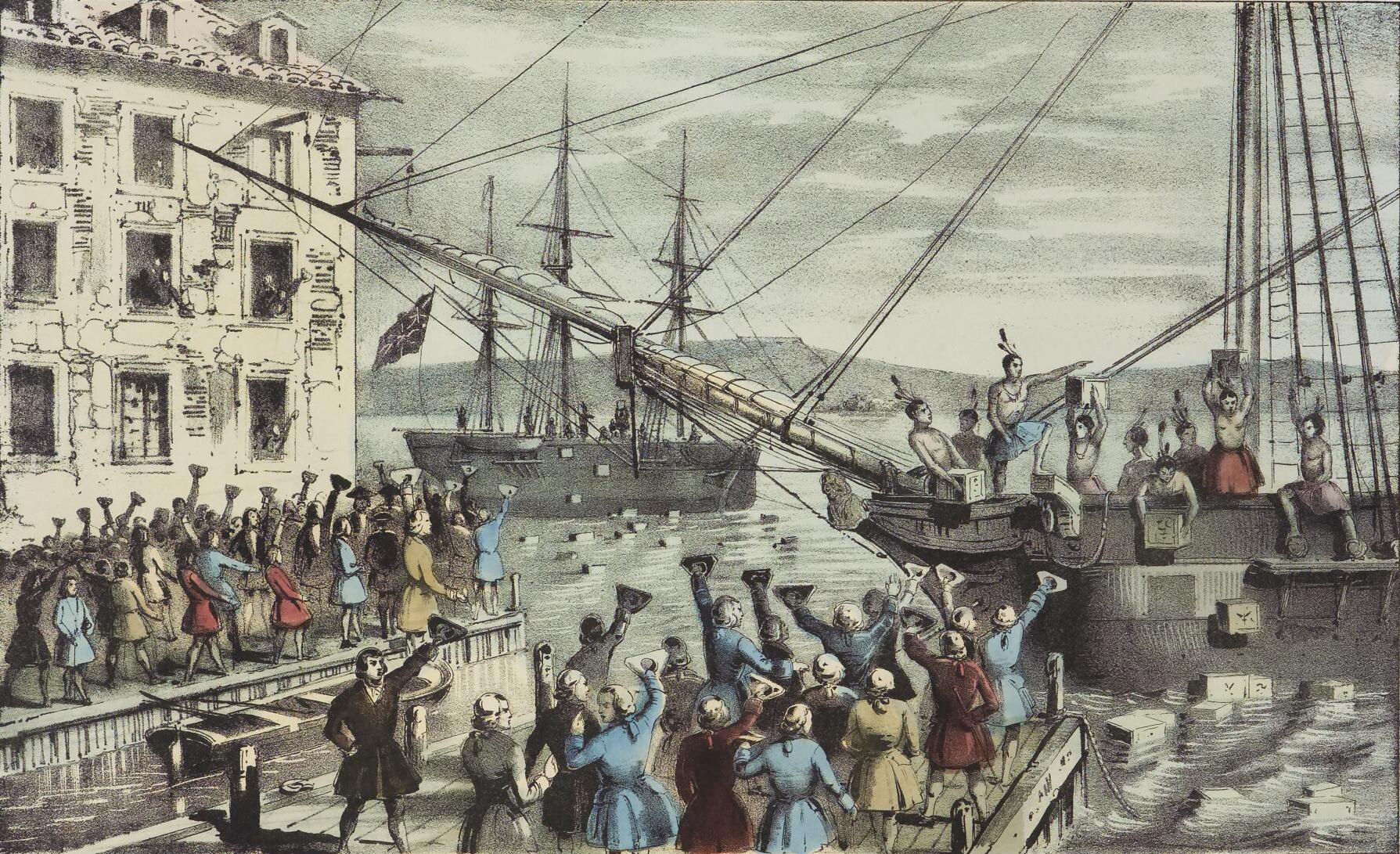
All Of It with Alison Stewart
The Long Global History of Tea
00:34:01
We learn more about the history of tea, from its roots in China, to India, to the West.
Loading summary
Transcript107 lines
- [00:00]
Wix Advertiser
Your business is one of a kind, so your website should be too. With wix, it's easy, almost too easy to create a website that's perfectly yours. Just tell AI what kind of site you want to build or choose from thousands of templates, change whatever you want whenever you want and get everything you need to start running your business your way. No matter what you sell or what you aspire to be, you can do it all yourself on Wix. Go to wix.com.
- [00:30]
Bic Soleil Glide Razor Advertiser
Surprise beach day. No excuses. I'm in. Gimme five. With Bic Soleil Glide Razor, you'll have hydrated, smooth skin that's ready to go on the fly. No shave cream needed. You can prep, shave and hydrate all in one step thanks to moisture bars that hydrate your skin during and after shaving. 5 flexible blades hug your skin for a close shave. Glide into smooth. It's your time to shine with bixsolil. Buy now at Amazon and Walmart. Ready? Your skin looks amazing. So smooth and beach ready.
- [00:57]
Charlene Wang Deshane
Let's go. Okay, right leg. Are you with me?
- [01:03]
Ocrevus Sunovo Advertiser
Hey, hand we doing this? Sometimes life can feel like a constant roll call.
- [01:09]
Charlene Wang Deshane
All right, vision looking good today.
- [01:11]
Ocrevus Sunovo Advertiser
And that's why people choose Ocrevis Sunovo, Ocrelizumab and Hayala Ranadae's OCSQ for their treatment. See how ocrevus de novo can fit in with your life. Ask your doctor about starting or switching to OcrevusUnovo and learn more@ocrevus.com today.
- [01:27]
Charlene Wang Deshane
Ocrevus Unovo.
- [01:30]
McDonald's Customer
I'mma put you on, nephew.
- [01:31]
Exercise Instructor
All right, unk.
- [01:32]
Charlene Wang Deshane
Welcome to McDonald's.
- [01:32]
Host/Interviewer
Can I take your order, miss?
- [01:34]
McDonald's Customer
I've been hitting up McDonald's for years now. It's back. We need snack wraps. What's a snack wrap? It's the return of something great. Snack wrap is back. Listener supported WNYC Studios.
- [02:02]
Alison Stewart
It is tea time here on all of it. And as we are focusing this hour on tea, how to prepare it, where to buy it, and a little bit of history. That's where we're going to start today. And no, we're not going to talk all about the Boston Tea Party, except to Note that the 342 chests of tea dumped into the harbor were imported from China. This is important because the historical roots of tea lie in Asia, where the drink has been a significant part of Chinese and Japanese culture for centuries as medicine and ceremonially, Europeans were introduced to tea through the British and Dutch East India trading companies and quickly became enamored with the product. Their tea addiction led to Conflict, War, and the creation of a new colonial product, black tea. Joining me now to walk us through some of the history of tea is Charlene Wang Deshane, the founder of Tranquil Tuesdays, an online resource to help people connect with tea culture. She also wrote the piece about the history of tea for Smithsonian magazine. Charlene, welcome to the show.
- [02:58]
Charlene Wang Deshane
Thank you. Thank you for having me here.
- [03:00]
Alison Stewart
I want to ask about a piece you wrote called It's Time to Decolonize Tea. What do you mean by that?
- [03:06]
Charlene Wang Deshane
Thank you for asking about that. Well, I think that one of the interesting things about tea is that the way most people drink tea in North America and Europe is still tea. That's very much a product of a colonial history. Tea, in the way that tea is produced and drunk in the west, is very much a product of making these plantations that were built for colonial wealth in European countries.
- [03:33]
Alison Stewart
Let's go all the way back. As far as we can tell, what are some of the first cultures to drink tea?
- [03:39]
Charlene Wang Deshane
Well, the tea plant is indigenous to the culture or the countries that are now China, Myanmar, and India. There's that region that kind of overlaps that area. And tea history as recorded is first recorded in Chinese records as early back as the third century bce. So China had a long history of tea culture. And then Japan, when there were some Japanese monks who were coming to China to learn about Zen Buddhism, they discovered tea in the tea culture in China in the 12th century.
- [04:17]
Alison Stewart
I thought it was so interesting in sort of digging into why certain teas are certain ways. The way tea is produced is part of what gives it its distinction. For example, explain to people how green tea is grown and what makes green tea leaves unique.
- [04:31]
Charlene Wang Deshane
Okay. So the thing is that for all different types of tea like green tea, black tea, oolong tea, white tea, they're all from the same plant. So you could have a green tea or a black tea from the same plant. It's really about how you process it. It's about levels of oxidation. So green tea is a tea that's not really oxidized. They used heat to seal off the oxidation process very early on, and that's why it's green. And a black tea or a darker oolong is a tea leaf that has been allowed to oxidize longer. So it's a similar process of when you cut an apple and you let it out and you see how the color changes.
- [05:02]
Alison Stewart
What about when we get into things like white tea?
- [05:04]
Charlene Wang Deshane
Yeah. So white tea is, again, could be the same plant a lot of times now, these different producers are specializing their cultivar and type of leaf to optimize for the type of tea they're trying to finish with. But in theory, you could make a white tea with the same leaf. Also, white tea is withered slightly, gently, and then it's also. It's minimally oxidized. Also.
- [05:30]
Host/Interviewer
When we think about tea culturally, did drinking tea signify anything about stature or position?
- [05:37]
Charlene Wang Deshane
Yeah, in the beginning of the recorded history of tea in Chinese culture, it was a medicine, and then it became an elite pastime starting in the 8th century. There are already many records of this elite culture, like tea competitions, literary traditions, songs. I mean, there was a whole culture around it. And then it did become also an everyday thing in the 16th and 17th century. Well, more like 17th and 18th century in Europe. It was like the ultimate flex. Having tea was such a status symbol.
- [06:13]
Host/Interviewer
Matcha.
- [06:13]
Alison Stewart
We hear people talk about matcha tea quite a bit.
- [06:16]
Host/Interviewer
How is matcha tea used in Japanese culture?
- [06:20]
Charlene Wang Deshane
Matcha tea is. So matcha tea is the green tea leaf that is produced. Produced like a green tea, but then it's grounded up like a powder. So you're basically ingesting the whole leaf as opposed to just an infusion when you're doing other teas. Right. You're just getting the liquid from the. But you're ingesting the whole leaf. So macha tea was first used as a way to help people meditate for monks when they were. And that's how that was discovered. Right. A Japanese monk named Isai went to China as a Zen Buddhist monastery, and he noticed these people were drinking a special tea to help them stay alert for meditation. And that's what he brought back. And that tradition has been encoded in Japan. So it was started as a. Together with the spiritual tradition of Buddhism, and it has that spiritual element. There's also, you know, very elaborately codified ritual called chadao in Japan. That's not necessarily about Buddhism per se, but it does have a spiritual, very mindful element to it.
- [07:27]
Host/Interviewer
I'm fascinated by the spiritual part of this. Is the preparation of it part of the spiritual practice, or. I heard you say about the idea of drinking tea to remain alert so that you can be engaged with your meditation. So is it a practical function or is it about ritual or some combination?
- [07:47]
Charlene Wang Deshane
I think it's a little bit of both. I'm not exactly an expert on 12th centuries and Buddhism and tea, so I'm gonna say that upfront, but I know with the contemporary Japanese cha dao, the whole ceremony from the. Where you pick you're going to have in the tea hut what flowers you're gonna have at this. I mean, the preparation, the boiling of the water, it's the whole element from beginning to end, the whole sensory and who you're inviting. You know, it's a social element too. So it's all those elements of enjoyment and sensual and sort of stillness that help you enjoy the tea and I think bring you to a more elevated state of sensory awareness.
- [08:25]
Host/Interviewer
My guest is Charlene Wang Dashen. She is the founder of Tranquil Tuesdays, it's a tea resource site. She's also a journalist who writes about food and te. What was the role of tea in your life?
- [08:37]
Charlene Wang Deshane
Yeah, I'm fourth generation Chinese American and interestingly, tea was not a huge part of my family's drinking and food culture. One of my grandmas did always have a thermos of kind of weak Southern Chinese oolong tea on her kitchen counter. But it was kind of a background drink. It was. No one was having like a special moment with tea on a regular basis in our family. It was something that's on the dim sum. Lazy Susan. I mean, one of my grandmas who grew up in Shanghai offered me Lipton teabag once. I mean, you know, so it was, that was, it was pretty casual in my family life. But my parents did take us to an afternoon tea, a British style afternoon tea when I was around 11. And that made a huge impression on me. At that age I was super into Victorian culture and history. So for me, that was a part of that whole sort of romantic aesthetic. And that really made me curious. But I would say the moment that. And I was always kind of interested in tea since then. But I would say the moment that really made me sort of more obsessed with tea was when I was living in China and I was at a meeting and they served this tea and it was so like unlike anything I've ever had before. It was so fresh, so soft. The flavor was just, it really just woke me up. I have no idea what that meeting was about anymore. I can't tell you. But I can tell you all about that cup of tea. I. And after that I was wondering why, as someone who already liked tea, how come I had not had a tea like that before? And I really just focused my time and energy to learn as much as I could about tea.
- [10:12]
Alison Stewart
Why do you think tea is having a little bit of a moment right now?
- [10:16]
Charlene Wang Deshane
Well, I mean, tea's been having a moment for a couple centuries, you know, I mean, tea has been an integral Part of many cultures for over a thousand years. Why it's having a particular moment in America right now? I think it's, you know, I think everything just goes in cycles. You know, I would say someone was telling me how green tea was really trendy, and I was like, actually, green tea was really popular in america in the 18th century, you know, so everything was old, has come back, I think, you know, with digital life and the kind of rush, more disconnected lifestyle that is common in America right now. That tea does provide a kind of moment of sensual awareness. It's a moment where you kind of slow down, I think. I've talked to many people who. Their own personal rituals of making tea. They describe it as a moment for themselves. And then the other element is tea has always been a very social activity. It's always been a way to connect with others in sort of a gentle and soft way that is often quieter and just more relaxing. And I think every day now, everyone's always seeking for those moments of sort of quiet, you can exhale, spend some time meaningfully with real people in real life.
- [11:27]
Host/Interviewer
So maybe that is what's actually having the moment. Maybe that idea of human connection, maybe.
- [11:32]
Charlene Wang Deshane
I think everyone's quite hungry for that right now.
- [11:35]
Alison Stewart
You mentioned high tea. As a young person being introduced to high tea, how did that come about?
- [11:44]
Host/Interviewer
What is the background of British high tea? I always found it to be like.
- [11:49]
Alison Stewart
A dessert delivery system.
- [11:51]
Charlene Wang Deshane
I think it is now. I think it is now. Well, I mean, the history of tea in Britain is very much a history of their colonial empire. And when you think about that era, which was the 18th and 19th century, you know, Britain. I mean, the taxes for tea in the 19th century of Britain financed, I think, over 100% of the royal Navy. Like, it was an essential part of their military and political systems. But not just that. It also was part of their bigger transnational trading systems. You know, they gave silver to China for tea. They also were, you know, trading sugar, cotton, enslaved people. Those are all entwined trading systems, systems of exploitation. And so that also informs how tea culture developed in Britain, that this tea was also with sugar, while their sugar was a huge crop for them.
- [12:55]
Exercise Instructor
Right.
- [12:56]
Charlene Wang Deshane
So that is a part of how. Why they're always kind of connected. If you think of British tea culture, people in Britain take their tea with sugar, but also a lot of sugary pastries.
- [13:08]
Host/Interviewer
And when we talk about tea as a form of trade, a form of money, also a sort of form of power in many ways, yes. Would you explain to our audience how the Tea trade helped lead to the Opium wars between China and Britain.
- [13:24]
Charlene Wang Deshane
Yeah. And so, yeah, tea, ever since, tea kind of evolved from a medicinal piece or item to a structured commodity or something that was cultivated at scale. It's always been a source of taxes, power, and political systems. Even in China, ancient China, there is an ancient Chinese trade of Chinese tea for Tibetan horses, and that was the horses for the military. So that is. You know, that's been part of the story of tea from the beginning. I know we like to think of beautiful moments of quiet and relaxation, but there's this other side also. So with Britain, Britain wanted tea. It was so popular in its, you know, in its empire. And so they wanted tea from China. China, very closely guarded how to make tea. So they were the only ones who could really make it. For up until the mid 19th century, no one really knew how to make tea. So China, I mean, so the UK was buying and. Sorry, let me just go back one more step. When the UK first approached the Imperial Chinese government, they were like, we'd like to trade with you. And the Chinese government was like, not really, but they did want silver. So they're like, okay, give us silver, we'll give you some tea. So that's how that started. And then it was such a quantity that Britain was running out of silver, so they needed to figure out how to get more silver. And they started an illicit trade of opium, where they grew opium in India, which was their colonial possession at that time, and they smuggled opium into China, and China was not thrilled about that. And I would kind of describe the Opium War almost as if, okay, so in China, the imperial forces, they seized a shipment of opium, British opium, and they destroyed it. And Britain took that as the act of war. Yeah, as a. Yeah. And so I kind of almost analogize that to if the DEA seized a drug cartel's drug stash and then the drug cartel declared war on America. That's pretty much. I mean, historians. That's not a perfect analogy, but it's a very similar sort of dynamic to think about how the Opium War started. So there were two opium Warrens, one in 1839, one in 1842. And because China lost the Opium War, Britain was able to open up the ports and sort of, like, force these trading ports with China. And that really scaled the Chinese tea trade. And then around that same time, Britain figured out how to try to make tea in India, a place they already owned. There's a whole story about how they committed sort of trade espionage, I guess, but they didn't really know what they were doing. So. So that's a first part is they didn't really know what they were doing. They were trying to make green tea or oolong teas like they had been importing from China. They tried to bring lots of different Chinese people over to help them. It wasn't really working. And the other thing is they couldn't get the labor they needed. So they started kidnapping and forcing forced exploitation of labor in India. So they created these very brutal plantation systems. And they were very clearly plantations. They were modeled after the sugar plantation system in the Caribbean and the southern cotton plantation in the American South. So that's how the tea industry in the uk, the British tea industry started in the UK I mean, sorry, in India and later in Eastern Africa.
- [16:43]
Alison Stewart
We're going to start to take some calls about how to make tea and have some questions for you as well. But I did, before we break, want to shout out that black tea wasn't a thing in Chinese tea culture. How was black tea created?
- [16:57]
Charlene Wang Deshane
Okay, so I think it's important to note that there are many people throughout history have been calling tea from different things, from tea, from China, black tea. A lot of traders did not know what they just. They didn't know the difference of green oolong black teas. If you look at colonial records, most of those tea names are outdated names we don't use anymore. They were like kind of clumsy transliterations of local dialects or Chinese. So a lot of times traders didn't know the difference of green or black. A lot of oolong teas can look sort of black. So there's that. So when they were making, they were trying to make oolong tea in India when the British started, they didn't have quite the craftsmanship and centuries of know how, and they were making these really fully oxidized teas that were very bitter and hard to drink. But then it turns out that the new. That the market for that was okay. I mean, they created a market for that. There's a long campaign of. They use a lot of racial propaganda and white supremacy to try to convert drinkers. I mean, British drinkers really did like the Chinese green teas and oolongs teas. But they created a demand for it, first of all. And second of all, this really bitter, strong black tea was actually well suited for the style of drinking tea with milk and sugar. But yeah, it was something that they were not necessarily trying to make, but they did. And then later they realized there was a market for it. And so they asked China, can you make more of this? And China's like, yeah, sure. So it's a really heavily new invention, black tea. It's almost a late 19th century, early 20th century invention.
- [18:37]
Host/Interviewer
We're discussing the history of tea listeners. We want to invite you to be part of the conversation. What questions do you have about the best ways to brew and drink tea? Maybe you're a loose leaf, curious and want some tips on how to get started. Or maybe you have a tea brand particularly like, or you're a tea aficionado and you'd like to share some of your thoughts about tea drinking and tea preparation. 2124-3396-9221-2433. WNYC. Our phone lines are now open to take your calls. You can also text to us at that number at this number, 212-433-9692, our social media at all of it. WNYC is available as well. We'll have more tea talk after a quick break.
- [19:28]
Alison Stewart
This is all of it on wnyc. I'm Alison Stewart. We're talking tea with Charlaine Wong Deschane, founder of Tranquil Tuesdays, an online resource to help people connect with tea culture. We talked about the history of tea and now it is time to get practical. All right, you've got a list, Charlene?
- [19:45]
Charlene Wang Deshane
Yeah.
- [19:46]
Alison Stewart
Five ways to up your tea game.
- [19:47]
Charlene Wang Deshane
Yeah, I have some basic ways that this ascend in difficulty. So the first one, you don't have to buy any new tea. You can just pay attention to your water temperature and your steeping time. I think the number one sort of mistake people make when they're making green tea is they're doing it at boiling water. You definitely don't want to do that. That's what makes your tea taste like burnt bitter astringent. For green tea, you want almost like 175 degrees water. So that's significantly less than boiling, which is 212 degrees. So I would say that's the first thing you want to think about temperature. For green tea, especially oolong, you want a little bit less than boiling. And black tea, you can even do like even a little bit under boiling. Also the other thing is steep time. I know kind of the common way is you throw a bag in, you put on boiling water, you leave and then a couple minutes later you're like, oh yeah, that cup of tea you need to be a little, I want you to be there present with your tea. And with green tea you want maybe like a Minute tops. Less sometimes, depending on the proportion you're using. And same for black and oolong. That when you leave it for a long time and it's really hot water, that's when you get that really astringent feeling in your mouth. So that's the first easy way. Temperature and steep time. You can look that up online. Yeah.
- [20:59]
Alison Stewart
Question from the class. If you have one of those automatic tea kettles, that's time where it pops, is it popping at boiling or is it popping at. What's a better temperature? Slightly below boiling?
- [21:11]
Charlene Wang Deshane
I don't. I guess it depends on each one. Like I have a kettle that tells you each that you can print it, you can program it. Yeah, program it for type of tea. And also each manufacturer will tell you based on their type of tea.
- [21:22]
Alison Stewart
So maybe check that when you get to buy an electric kettle.
- [21:24]
Charlene Wang Deshane
But I guess the main thing is you're going to start thinking about this. I'm sure most people have never thought about temperature or time. So that's the first easy way to upgrade your tea experience without buying anything new. The second thing is looking for whole leaves. And this is going to be a huge difference for you. If you're drinking not whole leaves to whole leaves, it's going to be like black and white to color. You want it to look like an actual leaf, like a cartoon picture of a leaf. You know, the most common industrial way of producing tea is ctc, which is cut to your curl, which is as violent as it sounds. And so what that produces are little tiny tea pellets. But, but you want something that's a whole leaf and that could be in a pyramid tea bag, that could be however, loose leaf. But I think if you go from cut up tea dust to whole leaf, you're gonna have a huge difference in your tea experience.
- [22:10]
Alison Stewart
Okay.
- [22:11]
Charlene Wang Deshane
The third way to really upgrade is to then if you're already at whole leaf, why don't you just go to loose leaf? That's really. You wanna give your tea a lot of room to expand, to infuse the water with a lot of ease, relaxation. You want your leaves to be as happy as possible. And so that's why sometimes tea balls are not great. They're kind of constricting those leaves and not letting them expand and open and really release their flavor. And then the next two is what I would love every person to do is and this is where it gets a little more complicated. If people could try to explore an unflavored fresh tea as opposed to flavored teas. I know flavored teas are very popular in America and Europe, and that is actually a colonial legacy, I'm sorry to say to everyone, because that's an easy way to mask lower tea qualities. I think that's another thing that's important to know is throughout history and up until today, the best teas don't live, leave Asia. The best market for the most high quality teas is China and Japan, Korea, these, these countries have. That's where, you know, the teas don't really leave there. So a lot of times it's a lower quality off harvests that get exported. And the way that people sort of mask that is these different flavorings and blends. But if you can try an unflavored tea, it will totally transform your relationship to tea because you will be tasting the actual flavor of the tea leaf.
- [23:36]
Alison Stewart
Where would I go? Would I go to Chinatown?
- [23:39]
Charlene Wang Deshane
You go to Chinatown. There's a lot of different places. I would say the number one thing is you want to find someone who has a direct relationship with the grower. And there are places here in New York City, there's, I mean, right near here is Tay company. She's a woman who works directly with Taiwanese oolong growers. There's Tea shop, she works directly with some Chinese growers. There's kettle tea, which works directly with some Japanese growers. So there are definitely lots of places. And that's what kind of the Internet's made for. And I think the last thing is looking, if you're wanted, if you're ready to go full tea nerd, then it's waiting for seasonal crops from specific, specific regions. So like, specific regions, seasonal crops. So, you know, for me, if I want green tea, I gotta wait till the spring harvest drops. Like this is spring harvest is around April, May, and that comes usually into America by like end of May, early June. That's when the best green teas are hitting the market.
- [24:30]
Alison Stewart
Yeah, our phone lines are full.
- [24:31]
Charlene Wang Deshane
Okay, let's do it.
- [24:32]
Alison Stewart
Let's roll some calls. Let's talk to Nicole from Pelham. Hi, Nicole, thanks for calling in.
- [24:38]
Charlene Wang Deshane
Oh, hi, how are you?
- [24:39]
Exercise Instructor
I have just a comment and then kind of a funny story. The comment is that I love tea. And so very dear friend, for a housewarming gift, bought me this electric kettle with this long spout and it, it makes you pour more slowly and it's really beautiful, but it makes the tea taste different than when you just, you know, dump a bunch of hot water on top of the tea and let it sit so that Was that's my first one. And then the second one is a funny story. I have a friend who's Turkish and he made me. He knows I love tea, so he made me Turkish tea and it was delicious. And I poured some milk and sugar in it and I said, oh, you know, I love Turkish tea. It's so good. And he said, that's not Turkish tea. And I said, what are you talking about? You just made it for me. And he said, you put milk and sugar in it. It's not Turkish tea.
- [25:33]
Alison Stewart
Thank you for calling in. Let's talk to Ann from Peekskill. Hi, Ann.
- [25:37]
Charlene Wang Deshane
Hi.
- [25:38]
Ann from Peekskill
Good morning, Alison. Good morning, Charlene. Actually, it's afternoon, isn't it? I'm sorry, the day's moving away too fast. As you can tell from my accent, I'm. I'm an ex Brit. And so I grew up with a family who made tea all the time. And it was always made in a teapot, of course. But now, since I've been living here for so many years, I got turned on to coffee and then decided a couple of years ago that I could no longer drink coffee. I was feeling too high from the caffeine and getting a few heart palpitations. So I went back to tea and I discovered, and I don't even remember how I discovered it, but I discovered this wonderful tea from South Africa. It's called Rooibos. It's pronounced, you know, it's spelled Ruibos, but it's from the red bush tree. And they make this amazing tea that has a lovely sort of reddish orange color when you make it, and it's just delicious. I have it every morning and I still feel like I'm starting the day off well without all the caffeine. So I just wanted to mention that tea. I don't know whether Charlene knows of it. I'm sure you do since you've done all the research. It really, really is a wonderful tea.
- [27:04]
Host/Interviewer
And let me take Charlene on the conversation. Charlene, are you aware of that?
- [27:09]
Charlene Wang Deshane
I'm glad you found the right beverage for you. That's uncaffeinated. Yeah. Reubus is a very, very popular non caffeinated tea. But I say that with an asterisk because technically it's not tea. So technically to be tea you have to be. It has to have leaves from the Camellia sinensis plant. And Ruibus is, as you mentioned, is a red bush that's native or indigenous to South Africa. So that's technically not tea. But drinking in the manner of yeah.
- [27:35]
Host/Interviewer
We have a text in India, actually the best quality are exported to the US and the west because they can fetch high prices. My family in India has a harder time finding top quality Darjeeling teas than I can find here in the U.S. another text. Hi, Alison, I'm from Pakistan where we drink tea with milk and sugar. My preference is honey. I know this is sacrilege, but it's what I grew up with and has lots of nice associations for me. I find it to be very soothing in the evening and it reminds me of family and home, which is probably the most important thing.
- [28:04]
Charlene Wang Deshane
One thing about the dark. I'm sorry to hear that, but I think that's completely indicative of how Darjeeling was set up. It's. It was set up as a colonial industry that was meant for export. So it was meant to export the best quality teas. Unfortunately, that was how the tea industry was started in India was for exporting. So. But hopefully, I think things will hopefully change and then the best quality Darjeelings can also be available in India.
- [28:27]
Host/Interviewer
We have a lot of texts about teapots. What is the best metal for your pot or kettle to heat the water for tea? Iron, aluminum, stainless steel. And someone else wanted specific know the tea kettle you have, the one that you can program.
- [28:40]
Charlene Wang Deshane
I think I should be getting a cut from Cuisinart if that's true. But yeah, I just use a Cuisinart one. But, you know, the best is probably not an electric metal kettle, to be honest. I think the people who are really, really hardcore, the people who are infusing their own water with charcoal are really impartial to using gas to heat your water, maybe using a clay vessel or a stone vessel. So it depends how, how nerdy and how far you want to go for optimizing your tea. But I me personally, I just use an electric kettle because it's simple.
- [29:17]
Alison Stewart
Let's talk to, I'm going to say Jeremy, who's calling in from Fort Lee on line seven. Hi Jeremy, thank you for calling all of it.
- [29:26]
Jeremy from Fort Lee
Hello, thank you very much for having me on. I absolutely love tea and this is such a great to be on. I do have a quick question is if you are going to add a sweetener to your tea, is there any one that you would prefer over the other? And I did want to also shout out my favorite tea place in New York. It's McNulty's Tea and Coffee down in Greenwich Village. They've been there since 1895.
- [29:50]
Charlene Wang Deshane
That's great. In terms of sweeteners. I mean, I'm used to drinking tea without sweetener. Personally. That's sort of the tradition of Asian teas is not usually taken with sweetener. So I think. But when I drink herbal teas, which are technically not teas, tisans, when I drink herbal tisans, I usually just use honey. But I think whatever works for you.
- [30:11]
Alison Stewart
Claudia is calling in from Brooklyn. Hi Claudia, thank you so much for calling in.
- [30:17]
Exercise Instructor
Hi, my call is about store bought teas, tea bags. Are those even acceptable to drink and are all the same.
- [30:26]
Charlene Wang Deshane
I think if it brings you pleasure, if it brings you pleasure, it is acceptable. When I have been put in a position where I have to choose between tea bags, I would always choose an herbal tea bag just because, like I said, they're not technically tea and herbs can be cut up and it doesn't seem to compromise it in the same way. But yeah, there's whole leaf tea bags out there and there's, you know, teabag technology has improved significantly. So I think, you know, whatever is working for you is fine. But I would say try to seek out whole leaf and try to seek out an unscented tea.
- [31:01]
Host/Interviewer
We're getting a lot of questions about decaffeinated tea.
- [31:04]
Charlene Wang Deshane
Okay, right, let's talk about that.
- [31:06]
Alison Stewart
What is it? And can you recommend one that's good?
- [31:09]
Charlene Wang Deshane
Okay. So all tea has caffeine in it. It's in the tea leaf. I want just to quickly say there's a myth out there that certain types of tea has less or more caffeine. That's just not true. The caffeine level is not affected by the type of tea. What determines caffeine in the tea leaf is the cultivar, the growing conditions, like when there's nitrogen and fertilizer, sometimes it has higher caffeine when the season was picked. Plucking standard. I mean, there's so many things. You could have a black tea and a green tea manufacture from the same leaf, the same bush on the same day and it will have the same caffeine levels. So that's one thing I want to put out there. So you're going to always have some caffeine when you're drinking true tea herbals. No tea, I mean, no caffeine. Sorry, no tea and no caffeine. But in terms of decaffeinated tea, I would be a little careful about that because when the process of decaffeination, you're basically stripping all the nutrients on the flavor away too to get true decaffeination. So I would say if you're seeking to have no caffeine. I would drink herbal blends. Herbal, you know, tisanes, maybe not tea tea. But then the other thing to note is the caffeine in tea has an other element in the tea leaf called L phelanine, which is an amino acid. And that sort of. It has an alpha frequency band that sort of relaxes the mind and sort of produces a different sort of caffeine high. I'm sure everyone's noticed when you drink tea, even matcha, which has tons of caffeine, I mean, if you want that jolt of caffeine, just drink that whole leaf down. You know, green tea, spring, high nitrogen shaded, tea leaf grown, you're going to get your caffeine. But it feels different, right. When you drink a matcha versus drinking an espresso.
- [32:52]
Host/Interviewer
We have a question from Glenn from Plymouth. A lot of people have this question. How long is the shelf life? Does a closed bag or open bag or is it different for loose tea? I have tins of tea I brought back from China and wondered if there's an expiration date.
- [33:06]
Charlene Wang Deshane
Yeah. So it is a natural product. And like most natural products, it's best within six months to a year. That's when it's optimal. I mean, I would say. I'm gonna tell you, I bet most 99% of tea on a supermarket shelf is over a year old, so. But you want to also store it. Well, yeah. You want to keep it away from dark. Sorry, you want to keep it dark. You want to keep it away from light, away from moisture. You want to store it in the ways that you would store any good olive oil or, you know, nice spices.
- [33:38]
Alison Stewart
Someone says they got a. What they called a proper teapot for Christmas and have big plans for becoming more of a tea nerd. But they wondered what the standard water to tea ratio is it. 8 ounces of water to 1 teaspoon of tea leaves. Does it vary depending on tea?
- [33:54]
Charlene Wang Deshane
Yeah, it varies depending on tea leaf and tea size. I think the general rule of thumb is 3 grams of tea for 8 ounces of water. I know, I just used two different metric systems there. I'm sorry about that. But really, just experiment with what works for you. Some people like it stronger, some people like it weaker. I do it kind of by sight and color, but that's sort of the general proportion.
- [34:20]
Alison Stewart
And we do have a question from Instagram about your thoughts on boba tea.
- [34:24]
Charlene Wang Deshane
Oh, I mean, yeah, great. I mean, boba tea is this total whole other sort of tea culture. I think of it as a late 20th century Tea culture that is its own sort of offshoot. I mean like if you look at a tea emoji, if you put in tea in your emoji keyboard, you get kind of an Asian style green tea. You get the hot beverage, you know, with the black tea which is interchangeable with coffee and you get a boba and you get a teapot. So yeah, I love this text.
- [34:51]
Alison Stewart
I'm from Kenya, former British colony and we brew our tea. Tea is so entrenched in the culture and is offered when you walk into any Kenyan house. We call it chai. Growing up my grandma had a kettle brewing throughout the day. We add sugar and milk to it along with lemongrass.
- [35:05]
Charlene Wang Deshane
Oh, lemongrass.
- [35:06]
Host/Interviewer
Delicious.
- [35:06]
Charlene Wang Deshane
That sounds great.
- [35:07]
Alison Stewart
I mean I love all the memories.
- [35:08]
Charlene Wang Deshane
This is bringing up for people. And I think also tea is such a huge part of hospitality. Right? That's a huge cornerstone of hospitality in many cultures throughout the world is is offering tea to guests.
- [35:21]
Alison Stewart
Want to say big thanks to Charlene Wang De Chen for sharing her expertise. She's the founder of Tranquil Tuesdays, a tea resource. Thank you so much for being with us. Really appreciate it. Thanks to everybody who called in.
- [35:34]
Charlene Wang Deshane
Thank you.
- [35:36]
Alison Stewart
We're going to continue our tea talk.
- [35:38]
Host/Interviewer
Food and culture journalist Caroline Shinn wrote.
- [35:40]
Alison Stewart
About a few of her favorite tea shops across New York City. She wrote it for Eater and she joins us to share why they made the list. And we'll take your call shouting out your favorite tea shops. 212-433-969.
- [35:55]
Wix Advertiser
Say what you want about AI, but it's here and it's helping businesses get more done in a day. Wix's website builder is infused with AI so you can stay ahead. Create a beautiful, functional website just by describing your idea. Track how your site appears in AI search results, create custom images on demand or launch an entire campaign in a matter of minutes. WIX gives you AI wherever you need it. Try it out for yourself@wix.com okay.
- [36:24]
Exercise Instructor
Right leg.
- [36:25]
Charlene Wang Deshane
Are you with me?
- [36:26]
Ocrevus Sunovo Advertiser
Hey hand we doing this? Sometimes life can feel like a constant roll call.
- [36:32]
Charlene Wang Deshane
Alright, vision looking good today.
- [36:34]
Ocrevus Sunovo Advertiser
And that's why people choose Ocrevus Sunovo, ocrelizumab and Hyaluronidase OCSQ for their treatment. See how ocrevus Sunovo can fit in with your life. Ask your doctor about starting or switching to Ocrevus Sunovo and learn more@ocrevus.com today.
- [36:51]
Charlene Wang Deshane
Ocrevus Sun Novo.