Loading summary
Transcript92 lines
- [00:00]
Progressive Insurance Announcer
All of it is supported by Progressive Insurance. Do you ever find yourself playing the budgeting game? Well, with the Name youe Price Tool from Progressive, you can find options that fit your budget and potentially lower your bills. Try it@progressive.com progressive casualty insurance company and affiliates price and coverage match limited by state law. Not available in all states.
- [00:30]
Alison Stewart
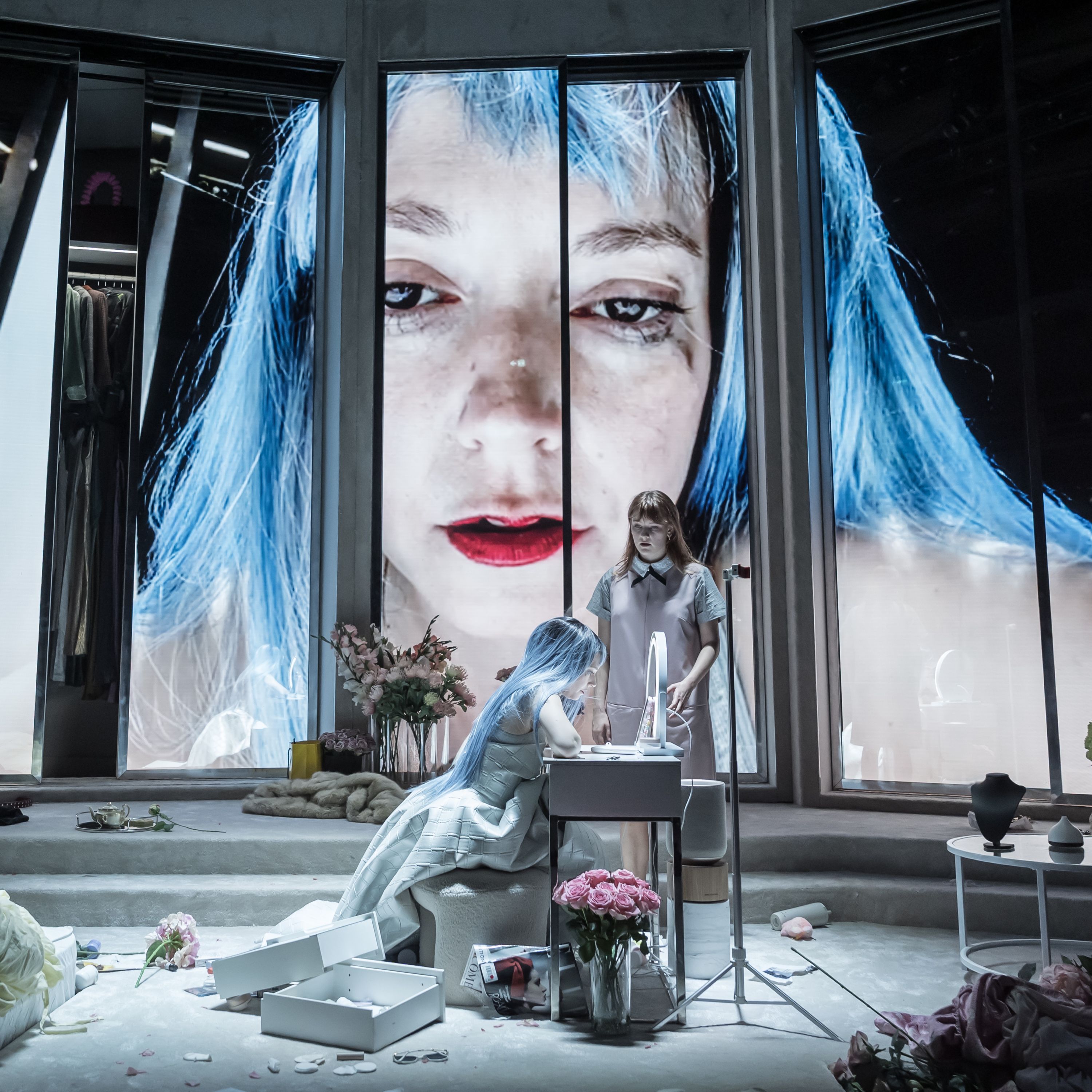
You're listening to all of it on WNYC. Hi, I'm Alison Stewart. The production of the 1947 play The Maids updates the story to Mer of murderous maids for the 21st century. The story follows two sisters, Claire and Solange. They are mage for an ultra wealthy influencer who we only know as Madame. For a while now, Solange and Claire have been fantasizing about killing their seemingly vapid but secretly cunning employer. They even go so far as to act it out when she's not at home. They put on her clothes. They wear her jewels. They pretend to be her and pretend to kill her. Claire thinks she has planned everything perfectly. She secretly turned in Madame's criminal boyfriend to the police, so he's locked away. And now all Claire and Solange have to do is poison Madame's tea. But when the Madam returns home, it's time for fantasy to become reality. Claire and Solange might not be able to finish what they've started. This production of the Maids was directed and adapted by Kip Williams, who also created Sarah Schnook's production of the Picture of Dorian Gray. And much like that production, screens and cameras tell an important part of this story. The show features three actors who are in the UK staging. And now they are bringing it to St Anne's Warehouse. In Dumbo, actor Yaron Ha stars as Madame. It's nice to meet you.
- [01:47]
Yaron Ha
Hello.
- [01:47]
Lydia Wilson
Hi.
- [01:48]
Alison Stewart
As well as Fia Saban. Did I get it right?
- [01:50]
Fia Saban
That's great. That's good.
- [01:52]
Alison Stewart
She stars as Salon. It's nice to meet you. And Lydia Wilson is Claire. Thank you so much for being here. So this play was originally by Jean Genet. It's been produced many, many times before. Fia, why did you want to be part of this production?
- [02:07]
Fia Saban
I was offered the job.
- [02:08]
Alison Stewart
That's a good place to start,
- [02:11]
Fia Saban
no? Well, I'd never read the play before and it just overwhelmed me so much. It's one of those ones where you finish reading it and you're like, why is my heart racing? And that was just from reading this play that I'd never even heard of before. So to feel that. And then with Kit, who's such an exciting director, his. His version, I was just so excited
- [02:35]
Alison Stewart
Yerin, why do you think this is such a sought after piece by actors and directors?
- [02:40]
Yaron Ha
Oh, I mean, I think it's like a very intimate three hander, you know, all done by women. And also I think what Genae is speaking about in terms of like this idolization of this love hate relationship between women, I think. Yeah. And his obsession with materialism and then Kip's new adaptation about it, I think extends it even further, I think. Yeah, it's kind of like an actor's play. It's like a playground and you get to just kind of fill it with yourself. And that's an actor's dream, isn't it, to be kind of on a playground stage? Yeah.
- [03:20]
Alison Stewart
Lydia, Director Kip Williams, he adapted the play, he put it in modern times. And how do you think his version of the story speaks to a 2026 audience?
- [03:29]
Lydia Wilson
I was thinking about that thing, vertical comparison, where because of the, because of social media, you can now compare your hair to someone who has, you know, a blowout every morning. And that like the despair, the compare and despair factor is really like, I think turns up the sort of pain in, that's in the original text about like being so close to wealth and power, but completely, completely and impossibly never going to reach it.
- [03:56]
Alison Stewart
So when the play starts, we see you behind a curtain, sort of this gauzy like curtain, and you are role playing A day in the life of Madame Pia. What aspect of Madame's life does Solange, what is she most envious of?
- [04:09]
Fia Saban
Oh, that's a good question. I think that it's actually much like with family, you're sort of, you're sort of defining who you are, you know, compared to them. And with Madame, Solange sees somebody who probably never has smelly armpits or unrealistic things, you know, like Solange stinks and she makes people feel uncomfortable and she brings a weird vibe to the party. And, you know, there's this person that she perceives as having ease. And I think that's also in her relationship with her sister, which, you know, it's not. Which is a really interesting dynamic.
- [04:51]
Alison Stewart
That's a word, Interesting?
- [04:52]
Fia Saban
Yeah, totally. I think that, yeah, you just project all of the, you know, the holes you perceive in yourself onto this other person, which isn't really fair on them either. But yeah, I think she thinks that's an easy life and that's not fair because life isn't easy for me.
- [05:11]
Alison Stewart
What is Claire jealous of?
- [05:13]
Lydia Wilson
I think she's jealous of her sister in a way, for having there's a sense that maybe Claire, like, is so far into this fantasy life that she can't really breathe outside of it. And she knows that her sister's kind of growing out of it and there's a kind of envy of that capacity. And then with Madame, it's like almost like she over identifies with her. Like, she probably is deeply jealous, but she is too proud to admit that. So it feels more like possession and obsession. And what's it like where you identify? Yeah, like, I think Madame's big feelings, Claire sort of kind of takes them on herself. So when she's pretending to be Madame, she feels the crisis and she feels the glamour. She hasn't got enough separation.
- [05:57]
Alison Stewart
Euron, what does Madame think her maids do at the house all day?
- [06:02]
Yaron Ha
Better be cleaning, making her bed tidy? I don't know. I think she's, you know, they're obviously running the errands that she has listed for them. But more importantly, I think the maids for Madame is her community. It's like her only friends and confidants. And I do think Madame is someone who is quite lonely. So outside of the task that she's given them, they are like her sisters, as cruelly as she treats them. So I think that's why she keeps her very close to her chest. Yeah.
- [06:38]
Alison Stewart
She also calls them by different names. Is that on purpose or are they just the help?
- [06:46]
Yaron Ha
I think it's not on purpose by any means. And I think Hip has written it like that, so it shows the kind of disposable nature. I think that the. In terms of Madame is so obsessed in her own reality and her own fantasy that nothing else is real and she doesn't even have the time to correctly say the names for the correct people. And that she's so, I think, egotistical. And I think that is more the thing that Kip is trying to portray rather than like it's an intentional kind of dig at these two girls. Yeah.
- [07:24]
Alison Stewart
So as you are fantasizing about being her, in the beginning of the show, I kept wondering, like, why do they keep doing this? Why do these two sisters keep up this fantasy?
- [07:38]
Fia Saban
That's a big question.
- [07:40]
Alison Stewart
What do you think?
- [07:42]
Lydia Wilson
I guess it's like they don't have, like, much else in their lives to explore the full range of their feelings. And because they are in this hierarchical kind of submissive position, like, their bandwidth is quite narrow in front of Madame, so maybe it's a chance for them. And we wondered whether, since they were kids, this was always their escape.
- [08:01]
Fia Saban
Totally.
- [08:01]
Lydia Wilson
And so it's something that, since we started working for Madame, has gotten a little out of hand, but has always been our way of just feeling the big stuff, because we don't really have big life.
- [08:10]
Fia Saban
Exactly. And that there's a feeling that they're working towards something, some satisfaction, some sort of to, you know, not literally, but some, like, orgasm of experience that will suddenly shoot them out of their lives and into something else. And that is kind of wearing off for them in different ways. And they're doubting each other's desire to really get out of the situation they've been in because it's really the only way they know how to love each other, which is sad.
- [08:40]
Alison Stewart
My guests are Lydia Williams, FIA Saban and Yaron. Ha. They are starring in a new adaptation of the Maids, about two sisters who plot to murder their influencer employer. It's running now at St. Ann's Warehouse. So you were in the play before Bridgerton hit Yaron?
- [08:56]
Fia Saban
Yeah.
- [08:57]
Alison Stewart
Right. So in the uk, and you told Vogue that you had sort of a. A new insight into Madam after Bridgerton premiered, and all the attention that comes with that. What aspects of Madame do you understand differently now?
- [09:11]
Yaron Ha
I mean, I think I always understood that social media, you know, when you see influences and stuff and these nice photos, that it's always quite a performative, curated version of self, but I think to then actually be on the other side of it a bit more unintentionally being a bit more careful about what I put out there, I think I am more aware of the performative nature of identity and image that you do put out into the world and know that it's there forever. And sometimes that, you know, the fans are so incredible and lovely, but how quickly people can really love you and attach to you and feel really close to someone, I think is quite special, but also it can be quite confronting at the same time. And so to really understand those depths and layers that I think logically I understood, but then to actually emotionally feel it on another level, I think just brought a whole nother dimension to Madame. And, yeah, I think Cancel Culture is really big now as well. And feeling like if I do something wrong, like, you know, people abandoning you, and I think Madame talks about that a lot in the show. And, yeah, I think just a lot of those thematics have, I think, just seeped in deeper into my veins playing it this time around.
- [10:33]
Alison Stewart
Throughout the show, all the characters are using their phones, they're using various Snapchat filters on the editing their appearance, and they're projected onto A giant screen behind you. And that's an interesting acting exercise. I have to imagine being able to play for the room and also to play for the phone. Lydia, tell us a little bit more about how you balance those two.
- [10:55]
Lydia Wilson
Yeah, there's a bit where the first camera first goes live onto the big screens, and my instinct is always to go smaller and kind of play into the camera. But actually, I've been reminded that actually, you need to go kind of bigger. Like, we have to play the space that we're in rather than being drawn in, like the characters are, to the smallness of screen life. But it's funny how. I don't know if you guys know. I don't notice the screams. We're so busy drinking the bed and running around that actually they kind of become.
- [11:25]
Yaron Ha
Yeah, I forget what's projected sometimes. Yeah.
- [11:28]
Alison Stewart
Oh, that's so interesting.
- [11:29]
Fia Saban
Sort of for the audience.
- [11:31]
Yaron Ha
Yeah.
- [11:31]
Alison Stewart
So you're just really, for lack of a better word, you're just acting. You're on stage being your character, and whatever happens on screen happens behind you. You don't pay attention to it. Oh, that's so interesting. You should watch it someday. I know.
- [11:44]
Yaron Ha
Yeah.
- [11:44]
Fia Saban
We keep saying that. We're like this. Apparently, this is pretty good.
- [11:51]
Alison Stewart
All right, so the big question becomes in the play, why Solange and Claire decide that murder is their best path forward, why they should murder Madame Mirren. You're not here. Why do they decide that murder is the way they should go?
- [12:06]
Lydia Wilson
Oh, yeah, yeah. I always think about they're like the anti Macbeths. They like the murderers who just don't do it. And almost like it's more of a meme for them than a reality. Whereas I feel like in Macbeth, the murder, they're, like, coming to terms with the fact that they did kill somebody. Whereas we can. We can riff on it, but we can't actually do it.
- [12:28]
Fia Saban
But then I think also that that's. That's also a Claire paradigm as well, because I think. I think that Solange really does want to do it. I think this is true, the tension of the play. I think that she really sees eradicating this woman who has this total control over her sister almost in this sort of, like, cult like way, as the only way that they can ever be free together in the real world. And Solange is obsessed with reality. If we can only get through this, if we can get through this, if I can take you outside, if we can do blah, blah, blah, then we can live a real life, and it will be real, blah, blah, blah, and sadly, their coping mechanisms with life has been to escape from reality. So they've sort of got a phobia of it. Even though they're obsessed with it, they're in this codependence together. Yeah. So, yeah, I think she becomes almost a romantic concept and an obsession to kill Madame, but it's just whether they can actually do it. Because as Yerin said, I was gonna call you Madame then, as Yaron said, they love each other and it's complicated as well. Yeah.
- [13:41]
Alison Stewart
Yaron, you don't come on stage until about halfway through the play. And at the point, the audience has only heard about Madame until that point. What is that? What challenge does that present to you as an actor to come on so late after being spoken about endlessly?
- [13:57]
Yaron Ha
I know it's kind of pressure. There's a lot of pressure. But it's funny because I kind of just am backstage, like, listening to music and trying not to focus so much about this buildup that they've so amazingly generated. But I think Kip was so clear on making sure that the image that I bring to Madame is that she is a cyclone of solipsism. And so I think we just really focused and honed in on that and tried to make her as chaotic and as like a whirlwind of a person as possible. And I do think she does. She. Madame, to me, is more like a symbol and of, I think, like the rich, rather than like specific, like individual character, per se. So it kind of maybe in a way feels a bit not stereotypy. But, yeah, I do think she is, like a symbol for multiple people. So she does have to kind of breathe in this, like, big natured energy.
- [14:58]
Alison Stewart
But what do you think she does explore about class distinction in the 21st century?
- [15:02]
Yaron Ha
Oh, boy. I mean, it's interesting because we talked about, like, where is she based? Like, what accent is she using? And I think in the Genet, perhaps it is more about, like, inherited class. But in this one, we wanted to talk about class in a more global, international level and I think bringing, like, the socialite aspect of potentially how for some people in this generation, with social media and influencing, like, money can be so easily accessible and potentially made for certain people and how quick that disparity can be, especially in this economic crisis that we're in. And so, yeah, it's. It's exploring a lot of different things and this idolization of the people who do make money off of just creating content. But, yeah, I don't know, it's. It's a Lot of layered stuff.
- [15:57]
Alison Stewart
Did you want to add something?
- [15:58]
Fia Saban
No, I thought that was a good answer.
- [16:02]
Alison Stewart
How does salons change when Madame finally enters the room?
- [16:08]
Fia Saban
Yeah, that's. That's one of the really fun things to play is this watching these sisters sort of hype themselves up and, and paint her in this way. And then obviously, Yerin. It's in the writing, but also obviously, Yerin is because she's so talented, like, she's being horrendous in all these ways, but you also love her and she. She brings the audience in to her and. And you understand through Yaron's performance why these maids love her too, in. In this strange, twisted way, much like family, you know, it's not. It's not straightforward. So, yes, I think it's really fun to play the moments in which Solange kind of melts into. In the sunlight of Madame's attention, and then when she sort of regains power, and it's like, no, no, no, we're going to kill this person. Right. So that kind of to and fro is really fun to play.
- [17:04]
Alison Stewart
How does Claire react when Madame enters?
- [17:07]
Lydia Wilson
I think it's. It's. It's catastrophic for Claire to be in the same space as Madame. What's that line where you say, watching her rotting, watching you rot in her sickly sweetness? And I feel like that. I feel so putrid and rotten, like, and like the dissonance of when I feel like I can alone and I can, you know, have my fantasy audience. And then went, she's the reality is impossible for Claire to.
- [17:34]
Alison Stewart
We're talking to Lydia Williams, Fia Saban and Yaron.
- [17:38]
Yaron Ha
Ha.
- [17:38]
Alison Stewart
They are the stars of an adaptation of the Maids, a play about two sisters who plot to murder their influencer employer. It's running now at the St. Anne's warehouse. Let's talk a little about the set and the props. You have so much to keep track of. Makeup, cell phones, clothes, flowers. Lydia, what was the process for learning how to work with the props?
- [18:01]
Lydia Wilson
For me, the biggest thing was how to do the Snapchat stuff.
- [18:04]
Fia Saban
Okay.
- [18:05]
Lydia Wilson
And there's like. And how to double tap the screen so it flips the camera around the other way, turn the flash on, hold the thing. Da, da, da. And now it is a bit like driving, but the first time around, it was like learning how to drive. Yeah. And sometimes under the duvet, I would, like, get it wrong and just shove the phone in Fia's hand and be
- [18:21]
Yaron Ha
like, fix it like a sister. Fix it.
- [18:25]
Alison Stewart
What was the hardest thing for you
- [18:26]
Fia Saban
to get A grasp on goodness. Yeah, I think. Well, sort of. Actually, what, what you were saying before about are we aware of the screens? I think that with a play like this, it's. It achieves such a level of intensity that I was always. I was feeling insecure about we're being too big, we're being so intense, we're going to alienate them and then actually have a memory of us all crowded around a video of Meryl Streep talking about doing big acting in our dressing room. Like, okay, okay, I think we can. Whatever. Just like trying to like, hypnotize ourselves. No, but I think realizing that the technology is such a big part of the play that actually it's quite hard to be too big next to a 10 foot labubu. Do you know what I mean? And kind of just letting ourselves go with that and be brave, that was the biggest challenge. Just because it achieves such a fever pitch. And it's not realism, it's. It's intense. So I think that's. That was the biggest challenge for me, but now I'm kind of enjoying them all.
- [19:26]
Alison Stewart
Yaron Madam comes on and she must change clothes four or five times.
- [19:30]
Yaron Ha
Yeah.
- [19:31]
Alison Stewart
Like in just meeting her. Yeah. Why do you think it makes sense to have her change constantly changing her clothes and her boots?
- [19:38]
Yaron Ha
Because, yeah, it was funny because a lot of that got found ex, like in tech rehearsal because we didn't have the exact costumes to work with and implement. So I had to learn how to do all that within like a couple days before actually showing to an audience. Wow. But I think it's just that idea and concept of, like, she's never satisfied and she has to constantly change this sense of self to, like, be more presentable or be more likable or have more validation or, like, constantly. The grass is always greener on the other side. And like, how is she going to make herself prettier and like, you know, presentable? And so I think that is the idea that Kip and Mark wanted to create in terms of like the constant changes. Costume. Costume changes for Madame, which is just very stressful for me. But we're getting there. And it is like more driving now. But at first it was just like, I don't even know where the gas and the brake pedal is and. Yeah, but it's. We're getting there now.
- [20:38]
Alison Stewart
Well, at one point, Madame claims that she's going to leave everything to Solange and Claire in her will. And she starts to try to give them clothes, but then she takes them back.
- [20:47]
Yaron Ha
She quickly Takes them back. I know.
- [20:49]
Alison Stewart
Why does she keep dangling these financial rewards in front of them?
- [20:55]
Yaron Ha
I think because she knows that that's. That's what they secretly desire. Like, that's the only currency that I think she knows how to reward them with. And I think this obsession with materialism or youth or. Yeah, those things, I think are just so easy to give versus an actual, like an emotional connection and channel and being vulnerable is not something that I think Madame does. So to be able to dangle these, like, Bottega Veneta dress and Gucci jackets, I think is like the only way that she knows of how to express love, which I think is quite. She's quite sad, I think. And to know that, like, that's her only. That's her currency of portraying love, I think is It's. Yeah, it's a little bit upsetting.
- [21:47]
Alison Stewart
Can we talk about sexual tension in the play? Thea, where is there sexual tension in this play? Between whom?
- [21:55]
Fia Saban
I think, you know, us and the audience. The guy in row three, line four. Row four?
- [22:05]
Lydia Wilson
Yeah.
- [22:05]
Fia Saban
I think. I mean, is there tension between each other?
- [22:07]
Lydia Wilson
It's taboo.
- [22:08]
Fia Saban
Yeah. I mean, come on, you said it. I think it's complicated. I think they struggle with boundaries, let's say, and they only have each other and they are deeply frustrated physically, emotionally, spiritually. And they're looking for highs and intensity and to be as close as humanly possible, like back in the womb kind of level stuff. And yeah, I think that if that indicates there's a kind of BDSM element, whether, you know, they like being punished and there's all of that and it tips into sexual or erotic, definitely. But, yeah, I'm always intrigued as to what. I mean, you saw the plate. Is that. Did you pick up on that? Yeah, yeah. I think it's really interesting and I think it's really there in the original Genet. And it's something that we've sort of introduced more and warmed up more as we've been doing the run.
- [23:04]
Lydia Wilson
What do you think that's so well articulated? Totally. Yeah, it's true. It's actually. It's been layering up as we go, and that permission also with each other as we've gotten to know each other. And like, on stage, a lot of this stuff, like, none of it's choreographed or planned, but, like the sort of weird chest bumping stuff that started to happen is now, like, so intense. Yeah.
- [23:28]
Alison Stewart
Yerin, what about between. What about between Madame and her maids? Is there erotic tension there?
- [23:33]
Yaron Ha
I mean, I think she. Madame is so comfortable with expressing her own sexual pleasure. But I think the maids misinterpret that as, like, her want to get with them. Hey, I know bless Claire at the end, but I think she is. Yeah, she's very comfortable in her sexuality, but I think it's just completely misinterpreted and miscommunicated by the girls. And they just read that as, like, Madame wanting it with them as well, in a way. So then the final exit, I think, just makes it all that much more sad for Claire and his obsession with her and the love that she has for her. Yeah. So it's sad.
- [24:15]
Alison Stewart
With the staging, the audience can see itself from time to time in the mirrors. What do you. Can you see the audience from the stage or no?
- [24:24]
Lydia Wilson
Yeah, yeah, we can. The stage is so bright that we're kind of. Our focus is quite close to us. But you can if you choose to look out and see people. Yeah.
- [24:33]
Fia Saban
Depending on how you feel. When we were at the Dormar in London, we could see basically them molars of every single person in the audience. Like, it was really intense. Everyone was lit. It's only a few rows. And now at St. Anne's there's this amazing kind of depth. So there's more of a feeling of an expansive audience. But still we. We can check in and see how they're feeling.
- [24:53]
Alison Stewart
I got a text here from one of our listeners. It said, saw the Maids this past Sunday. So thought provoking and brilliant. From writing adaptation to direction to staging to acting. My brain and emotions are still buzzing from so much to unpack and. And chew on.
- [25:08]
Lydia Wilson
Thank you.
- [25:10]
Yaron Ha
That's really nice.
- [25:11]
Alison Stewart
We have been talking about the play the Maids. My guests have been Lydia Williams, Phiya Saban and Yerin Ha. Thanks for coming to the studio.
- [25:19]
Lydia Wilson
Thanks for having us. Thank you.
- [25:21]
Progressive Insurance Announcer
WNYC's journalism and storytelling is heard by millions of passionate listeners. Sponsors of our programming gain our listeners attention and their respect. Learn about how your organization can support WNYC and WNYC studios@sporship wyc unyc.org.