← All Of It with Alison Stewart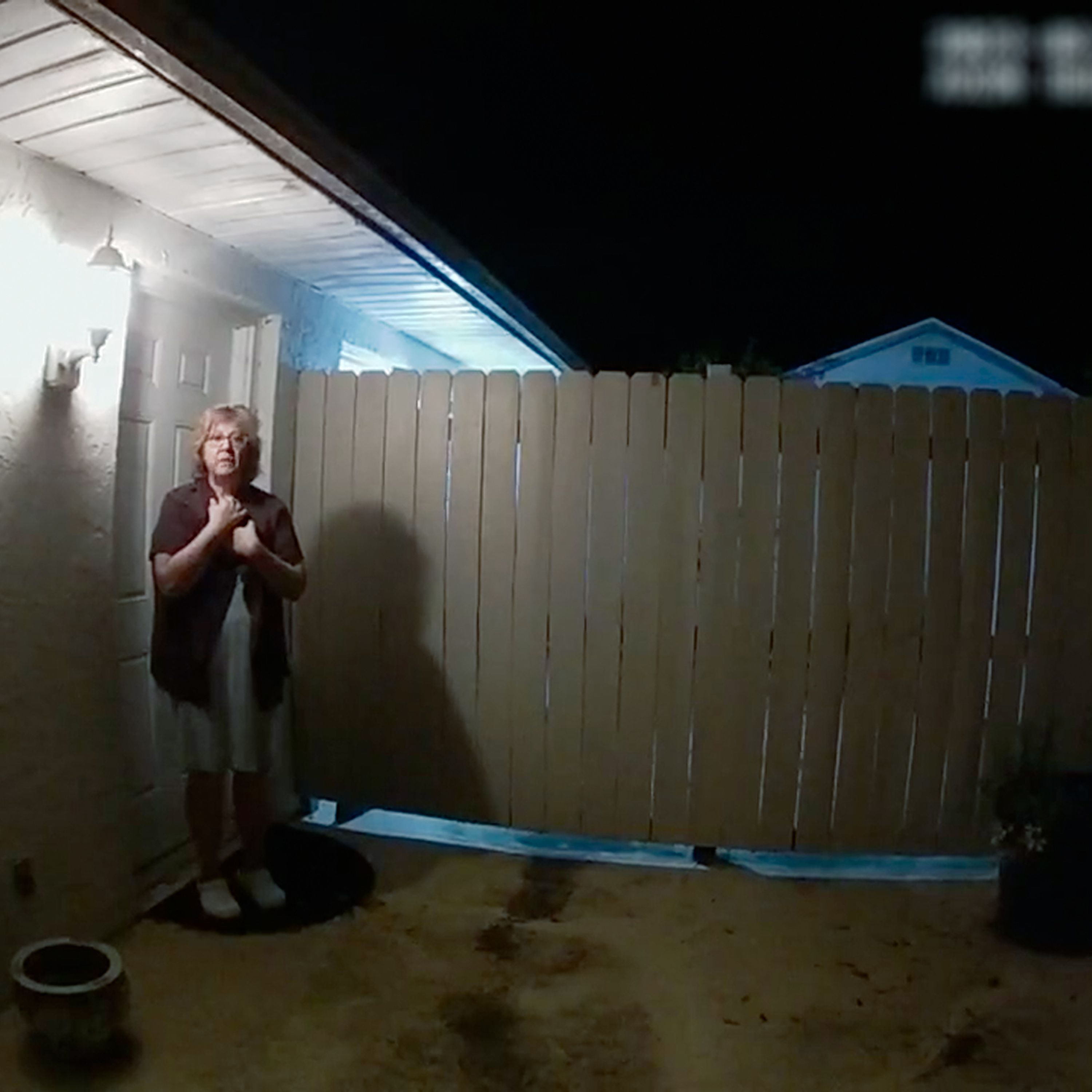
Loading summary
Transcript27 lines
- [00:00]
Progressive Insurance Announcer
All of it is supported by Progressive Insurance. Do you ever find yourself playing the budgeting game? Well, with the Name youe Price Tool from Progressive, you can find options that fit your budget and potentially lower your bills. Try it@progressive.com Progressive Casualty Insurance Company and affiliates Price and coverage match Limited by state law not available in all states.
- [00:21]
Dr. Horton Homes Announcer
Your new home is now ready Dr. Horton, America's Builder has new homes that are ready today. With new construction communities throughout the Puget Sound and Central Washington areas And more coming, Dr. Horton has the right home for you at Dr. Horton. We're still building with more construction, more communities and more homes available every day. Tap your screen now or visit drhorton.com to find your new home now Ready Dr. Horton, America's builder, an equal housing Opportunity builder.
- [00:51]
Nissan/Gatorade Commercial Announcer
You won't see the engineer that slams the Nissan Rogue's door 13,920 times or the corrosive chamber that simulates 15 years of life in five months, or the Rogue heat baked for over 300 combined hours. What you will see is a vehicle that can take punch after punch and keep rolling. Nissan number one in new vehicle Quality among mainstream brands by JD Power. We put it through the worst so you get its Best for J.D. power 2025 U.S. initial Quality Study Award information visit jdpower.com awards awards based on 2025 model year, newer models may be shown.
- [01:30]
Alison Stewart
This is all of it on wnyc. I'm Alison Stewart. Thank you for joining us for part of your day. We'll continue now with another conversation about an Oscar nominated film. In the documentary film the Perfect Neighbor, the story of a fatal shooting is told entirely through police body camera footage. Ajika Owens was a mother living with her kids in a tight knit community in Ocala, Florida. Also living nearby was a woman named Susan Lawrence. Lawrence really did not like the sounds of kids playing in an empty lot near her home or really anything else the kids did. Lawrence made multiple complaints to the police and the police told her there was nothing they could do if the kids weren't trespassing. Lawrence kept calling and calling the police and sometimes lying. The kids were mostly black and Lawrence was a white woman. It all changed one night in 2023. Owens went to Lawrence's house. After an altercation with the kids, Lawrence shot her through a locked door. Owens died. Lawrence claims she felt her life was
- [02:38]
Interviewer
in danger using the stand your ground defense. The story of how a neighborhood's tensions boiled over to violence is told by director Geeta Gandbier. She won a directing award for the film at Sundance and now it's nominated for the best documentary feature at this year's Academy Awards. When she joined us to talk about the film, I started by asking Gita about the personal connection she had with the family at the center of the film, the Owens family.
- [03:06]
Geeta Gandbier
Ajika Owens was a dear friend of two relatives of mine, Takima Robinson, who is an executive producer on the film, and Kimberly Robinson Jones. Kimberly lived in the community where Adjika lived and she was actually the person who directed Ajika to that street. Kimberly used to live in the house that Adjuka was living in when the confrontations with Susan started. And she believed that community was perfect for Ajica and her young children. Again, an idyllic street with close knit neighbors and children again playing freely and watched over by the whole community.
- [03:46]
Interviewer
When you put on your documentary filmmaker hat, how did you think about navigating your own position with the point of view while making a documentary?
- [03:56]
Geeta Gandbier
So what's really interesting is that we initially didn't start out thinking that we were going to make a documentary. As soon as Ajika was murdered, we sprang into action to support the family and to really activate around the media because we were not sure if Susan Lawrence would walk from what she had done. She was not arrested for four days and we wanted to help get the news out into the media, being that we ourselves work in the media and to try to keep the case alive even after Susan's arrest. But basically, two months after we, after the incident, we got our hands on the police body camera footage along with a lot of other files. There was cell phone footage, there was ring camera footage, dash cam footage, detective interview that happened after the incident, as well as 911 calls. And all of that came to us through the family lawyers. Basically they had used the Freedom of Information act and gotten the police department, the Marin County Sheriff's Department, I should say, to release any of the files that pertain to the case. So that material was sent to us and we were asked to look through it to see if there was anything that would be useful for the news. But when we it came to us in a jumble. And I used to be an editor, so I spent a couple weeks stringing it out into a timeline. It was really challenging to do because there was no true organization to it and sort of figuring out the chronology. But it was both detective work and grief work for me. It was a way to process. And once I had it out strung out in a timeline, we realized that the material went back two years and this Is something we never see when there is a crime. We often only see the direct aftermath. We particularly with gun violence you might see, which happens unfortunately every week. We see the grieving family, we see the funeral, but you don't get to see the lead up. And for us, that's when we realized there might be a bigger story here and possibly a film.
- [06:06]
Alison Stewart
When you looked at all of this footage, what was something that surprised you when you saw it?
- [06:12]
Geeta Gandbier
I think what was incredible to me about the footage was how immersive it was. Again, this is footage that was never meant to be used for the purpose we are using it for. But what was so astonishing was how we got to see the community as they were before. Again, the police came into the community multiple times and some of the calls that they were on lasted for an hour, some two hours, some longer. And we got to see this beautiful community living together, taking care of each other, a really tight social network. And again, it's a diverse community that we got to see the children playing freely in the streets, street just being themselves. We were. Because we were not on the ground, right? With a camera being intrusive, directing anything. Again, they are of course talking to. They're interacting with the police. But they feel in a way, because the camera is so innocuous, the body camera for the police, they often are being themselves fully. And we really wanted to paint a picture with this footage of this community. Again, oftentimes when crimes happen to us as people of color, we are criminalized or somehow there is a question of how. How was this our fault, Right? And so with this footage, we wanted to be able to paint a picture of this community as they were. And the children, again, you cannot adultify them in this footage. They are definitely children. And how that was all disrupted ultimately by one person and their access to a gun.
- [07:47]
Alison Stewart
My guest is director Geeta Gandabeer. We're discussing her new documentary, the Perfect
- [07:51]
Interviewer
Neighbor, about a neighborhood dispute turned fatal.
- [07:55]
Alison Stewart
What do we know about Susan Lawrence
- [07:57]
Geeta Gandbier
and her life before the shooting? So honestly, not much. Susan told many stories about her life, but as far as being able to fact check them, there were certain things we could. She was a member of church of her church. There were again, perhaps the places she lived. But the rest of it was not something that honestly we. That. That the. The material got into that we were given that much. Nor was it something, to be honest, that we thought was that relevant to the. To the. The situation. Because ultimately it was about her behavior in the current situation and what it led up to.
- [08:43]
Interviewer
It was very interesting just to. Like you said, you get to watch her before this all happens.
- [08:48]
Alison Stewart
And she's.
- [08:48]
Interviewer
She's sort of just obsessed with. About the kids in the neighborhood and playing on the lot and what they do with their dogs and just everything to do with the kids. She goes down to the police station to report something she has no evidence for. What do you make of her determination to keep filing these reports?
- [09:09]
Geeta Gandbier
I think Susan tried to weaponize her race and privilege against the community. I think she was absolutely irritated by the noise that the children make. And I'm not going to say that children are not noisy. I used to to live next to a high school and I will say, and I love loved them, but they were noisy. But I think that's just a factor that you have to take into consideration when you move into the neighborhood. It's. What's interesting is there's the police eventually tire of her.
- [09:39]
Interviewer
It is interesting. They truly get tired of getting calls from her.
- [09:43]
Geeta Gandbier
They do, because there is no criminal justification for her calls. And I think one of them says to the other in one of the conversations, there's a certain point where you have to just, you know, come to terms with the fact that you live around a bunch of kids, you know, And I want to point out that the yard they were playing in, which was next door to Susan's house, belonged to Susan's neighbor, and they had permission to be there. So there was actually a father who lived in that house whose child is one of the children who ran around the neighborhood playing, you know, playing football, playing games with the other kids, and he would coach football games with them on his own lawn. So really, Susan taking up issue with the children seems very misguided, if anything. Maybe you talk to the adult next door, right, who's hosting these kids. But her sort of rage at children who, as you can see in the footage, are mostly under 12, seems incredibly misplaced and frankly, strange.
- [10:45]
Interviewer
It's interesting. It's a diverse community. Many of the kids street are black. There's white families as well. Susan is white. And it's interesting. Well, it's expected, frankly. Susan admits calling her neighborhoods the N word. Were you surprised to just see her like, say, yeah, I said it on tape.
- [11:06]
Geeta Gandbier
By the time she admitted to it, and she was. It was during her interrogation that that comes up with the two detectives who had again, she had been at least brought in. And then she was being questioned, I believe, for a second time at that point, frankly, she had already shot Ajika through a Locked door. So nothing surprised me. And we also hear, heard from the neighbors about the ways that she would abuse the children. Hate speech against them. The children said it themselves. But the children are so polite. They don't say the words they say. She calls us the R word, the P word. To this day, I don't know what the P word is. Is. But they, you know, the children, the children spell out the curses. She called me a J, a Jack, a S.S. you know, they are incredibly polite to anyone who questions them. And again, and respectful in that way. So I would say that, no, at that point, I feel like we'd already seen who Susan was. So it didn't surprise me that much.
- [12:12]
Interviewer
Final question. In one of the most devastating moments of the film, we see the children being told that their mother is not going to come home from the hospital. Why did you decide to show it? Yeah, why did you decide to show that?
- [12:31]
Geeta Gandbier
Sure. So when we went to Pamela Dias, who's Ajika's mother, at the beginning of this, when I realized there was a film, I first asked her, did she want me to make a film? I have no other skills between us, I had nothing else to offer. So that is, you know, that's what I knew how to do. And I believed we could do with the material we had. I asked her if she wanted me to do this or if it was too painful and if she wanted to move on. And she said, no, I want you to do it. And she takes a lot of strength from Mamie Till, Emmett Till's mother, who had an open casket funeral for her son, who was lynch, because she wanted the world to know what happened to her baby. And she invited reporters in and had them take pictures which were shared again around the world. She believed that bearing witness was critical to making change. And Pamela is of the same mindset. And we talked about the fact that there are really painful things in the footage. There were this terrible, heartbreaking imagery. And she said, no, keep it in. The world needs to know that's the only way that we can maybe motivate change. And I would say we also talk about the video of George Floyd that circulated around the world and created a groundswell and a movement. Her hope is that Ajika's death can mean something, that it won't be in vain, and that by asking the audiences to bear witness with us and share the grief, that they will also be called to take action.
- [14:13]
Alison Stewart
That was my conversation with director Geeta Ganbier. Her film the Perfect Neighbor has been nominated for best documentary feature at this year's Academy Awards. Coming up, Ethan Hawke will talk about his role as Lauren's Hart in the film Blue Moon, which turns a magnifying glass onto the songwriter's professional and artistic breakup with Richard Rodgers. The role landed Hawke a best actor nomination at this year's Oscars. Stay tuned to hear him talk about it. This is all of it.
- [14:53]
Progressive Insurance Announcer
There's a difference between liking a house and actually getting it. Redfin is built to close that gap. Redfin agents close twice as many deals as other agents, so when you find a home you love, you're not a step behind when it's time to make an offer. That means less watching great homes disappear and more zeroing in on the one you'll actually end up calling home. Redfin helps turn saved listings into real addresses. Get started@redfin.com own the dream.
- [15:27]
Nissan/Gatorade Commercial Announcer
You do it all. So why not get all the electrolytes? Hydrate better than water with new Gatorade Lower sugar now with no artificial flavors, sweeteners or colors and 75% less sugar than regular Gatorade. New to the fridge all the Gatorade electrolytes you love. Gatorade lowers sugar. Is it in you? Now available nationwide.