← All Of It with Alison Stewart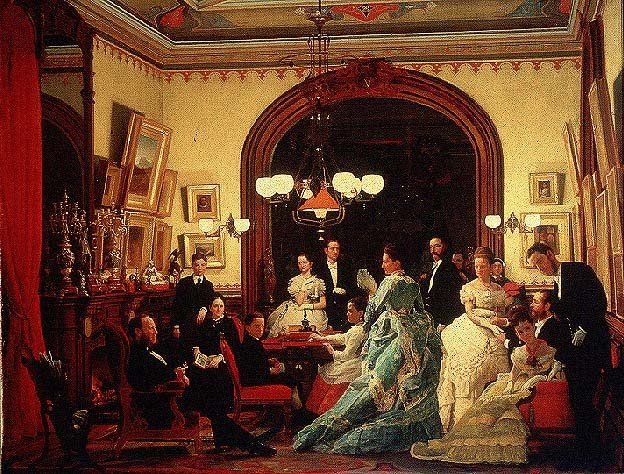
All Of It with Alison Stewart
The Real History Behind The Gilded Age
00:22:40
Like 'The Gilded Age' on HBO? There's real history behind it.
Loading summary
Transcript69 lines
- [00:00]
McDonald's Customer
I'm gonna put you on, nephew.
- [00:01]
McDonald's Employee
All right, unk.
- [00:02]
WNYC Host
Welcome to McDonald's.
- [00:03]
McDonald's Employee
Can I take your order, miss?
- [00:04]
McDonald's Customer
I've been hitting up McDonald's for years. Now it's back. We need snack wraps. What's a snack wrap? It's the return of something great. Snack wrap is back with a variety of options. US Cellular Prepaid makes finding the right wireless plan for you easy. That means you can get what you need at a price you can afford, all while staying connected. Like two lines of unlimited data for just $60 a month and a free device like the Samsung Galaxy A16.5G. US Cellular Prepaid Terms apply. See uscellular.com for details.
- [00:35]
Old Navy Advertiser
Some days call for sleek and straight, others for slouchy and relaxed. Whatever your vibe, Old Navy has the denim fits to match from extra high rise to barrel. It's not just a mood, it's a whole style range. And with jeans Starting at just $22, you can collect them all. Snatched waist go extra high rise straight lived in staple vintage slim, low slung and laid back slouchy wide. You've got range. Your denim drawer should too. Premium Fabric Deluxe details your perfect pair or weights Shop or online@oldnavy.com oh my gosh.
- [01:07]
Marshalls Advertiser
Have you been to Marshalls lately? They have all the brand name and designer pieces you love, but without the jaw dropping price tags. Alright, so here's the you should never have to compromise between quality and price. And at Marshalls you don't have to. Marshalls believes everyone deserves access to the good stuff and that's why their buyers hustle around the clock to make it happen for you. Visit a Marshalls store near you or shop online@marshalls.com.
- [01:43]
Alison Stewart
This is all of It on WNYC. I'm Alison Stewart. When you think about the actual Gilded Age in the late 1800s of American history, it's easy to romanticize lavish parties thrown by high society, nights at the opera, summering in Newport, or maybe that Edith Wharton book you read in school English majors.
- [02:00]
WNYC Host
Am I right?
- [02:01]
Alison Stewart
This sophisticated culture is the world of the popular HBO series, but only associating the Gilded Age with wealth and prominence. It really doesn't capture the whole picture of that era. America was changing and changing fast. The Gilded Age is also known for vast economic inequality, structural racism and segregation, and intense labor disputes. Brutally oppressed industrial Brutally oppressed by industrial tycoons. The latter became a storyline in the HBO show, as did the very real opera war between the Met and the Academy of Music. And there was a push to close Colored schools as depicted in the series as well, much of the history occurred right here in our city. So with me now for a history lesson on the Gilded Age and its presence in New York are two local history Greg Young, co host of the Bowery Boys podcast, welcome back to the show.
- [02:45]
McDonald's Employee
Yes, thank you.
- [02:46]
Alison Stewart
And Carl Raymond is the host of the Gilded Gentleman Podcast. Nice to meet you, Carl.
- [02:50]
Carl Raymond
So happy to be here, listeners.
- [02:52]
Alison Stewart
We want to hear from you. What do you want to know about the Gilded Age and the history of that era in our city? Is there a certain figure or historical event or place you're interested in or most associate with the era? You can call in and join us. 212-433-WNYC 212-433-9692. You can call in, join us on air. You can also text to us at that number or you can reach out on social media at Olivet, wnyc. Maybe you've been watching the Gilded Age on TV and you have a question about the actual history of a character or a scene or a moment in the show. 212-433-WNYC 212-433-9692. Let's do a little reaction to the show and then we'll get into the actual history. Greg, what do you think about the series, how the Gilded Age represents this historical era?
- [03:38]
McDonald's Employee
Oh, I think it's such a ball to watch. And I thought this second season was like was even greater than the first season. And it threads a needle. You know, as someone who does this for a living, like so many of the events that are depicted, like I've talked about or I've read about and, you know, they're not 100% accurately depicted, but where they take away from or fictionalize things, they do it to, like, heighten the drama. And so to me, it feels feels true. So not only are there true things, but in the way that they're telling the stories, I think it says larger things about American history. So and also just makes for good television. I mean, that like last the whole opera war scene from the last episode was just so delicious. Like, did it happen exactly like that? Well, no, of course not. Like, most TV shows that are based on historical things have to fudge a little bit because, you know, history is not, you know, it's not like a beautiful narrative and it has never been.
- [04:35]
WNYC Host
Carl, when you watch the Gilded Age, what did the series get right about the time?
- [04:40]
Carl Raymond
All the different layers of the society at the time. And that's what I love the most about it is, yes. You had the Van Rhijns, which is old New York. You had the Russells, which is new money. But the Peggy Scott story. And not only the Peggy Scott story, but also the story below stairs. One of the moments in season one, when we see Armstrong go to the lower EAS to visit her mother, that's an enormously important part of what was going on during the Gilded Age. Again, this. This economic inequality, but we get to see that. And that's what I think was really the extraordinary achievement of this. You have multiple layers of society, and you have to show a truth about them. And the best part of all is it intrigued audiences to learn more and to learn and discover stories that we really didn't know.
- [05:34]
WNYC Host
Greg, I'm going to ask you the obvious question. Why is it called the Gilded Age?
- [05:37]
McDonald's Employee
Well, interestingly, the term was actually coined by Mark Twain. He wrote a novel with another author called the Gilded Age, written, I think, 150 years ago this year. What's interesting is, obviously, he's not writing about, like, we associate it with this time period, but he wrote it in 1873, so he was sort of kind of parroting, mocking people from an earlier period. Right. And the other funny thing about the name Gilded Age is it's actually not a complimentary phrase or not meant to be. It's the idea of, like, oh, you're painting gold paint over wood or whatever, to, like, have a look of being regal or whatever. But in fact, you know, that's not the case. And it's also been seen as, like, painting gold over gold, like, being too excessive. And it's interesting because over the decades, those meanings have kind of softened, because I think a lot of people will kind of use Gilded Age and Golden Age interchangeably. But I think it's important to keep that in mind when you watch the show and you watch the excesses of these characters as they develop and realize what that is saying in the plot line.
- [06:50]
Alison Stewart
Carl, what are some of the names that we encounter today, like walking down the street or we hear on the.
- [06:57]
WNYC Host
Regular, that can be traced back to the Gilded Age?
- [07:00]
Carl Raymond
Well, one of the most important is Aster. You know, when you hang out downtown in NoHo, there's Aster Place. Well, one of the important things is to understand the history of that. That was Aster Land. The first John Jacob Astor, the patriarch, really, of the entire fortune, from whom Mrs. Astor, that we see in the Gilded Age series actually married into that family. That was Astor Land. That was how they began the fortune. John Jacob Astor started as a fur trader, and then he as really New York's great first real estate mogul. So there's a lot of history just in that name, and you're actually walking on that land that then, of course, became a fortune years later in the Gilded Age.
- [07:43]
Alison Stewart
If I want to see a mansion in New York City that's like the.
- [07:47]
WNYC Host
Mansion that the Russells live in, where would I go?
- [07:51]
McDonald's Employee
So many options, actually. I'm sure you can throw some in here, Carl, but honestly, go to the old Carnegie. Andrew. Would you say the Andrew Carnegie Mansion.
- [08:01]
Carl Raymond
Maybe north of the Metropolitan Museum of Art?
- [08:04]
McDonald's Employee
The Andrew Carnegie Mansion, Smithsonian Design Museum. Yeah, because it's been refitted to be a great museum, but also, like, they left it to look luxurious. Right. And it's the one that you get to, like, pay admission and go into and walk around in. There's many, many other examples, though, of houses like that.
- [08:22]
Carl Raymond
Well, you know, it's really interesting. If you go to the Metropolitan Museum of Art and sort of go to the block south of that, just 79th street, and walk around that entire block, it's actually famously called the Cook Block. You're going to see a number of mansions that really still exist from that period. Some of them are private entities. Most of them are not private homes anymore. Right on the corner there is that very sort of Renaissance Revival mansion that was a Gilded Age mansion. It's now the Ukrainian Institute, and very, very little has been done to it. So when you go inside, you're actually seeing the interior of a Gilded Age mansion as it was.
- [09:01]
Alison Stewart
We have a question. Want to know more about the Flatiron District and Maidens Row, Madison Square park area? I heard it was a crossroads of the Gilded Age. Tell us about the physical New York locations that exist today. What about that area?
- [09:13]
McDonald's Employee
Yeah, no, it was. Right. It was one of the centers, I would say, also like Union Square. Right. And then up to maybe Herald Square. You know, during the Gilded Age, like, it had, like, prominent hotels, even prominent theaters of the time. I mean, obviously, most of those buildings were not there. Of course, there was no Flatiron Building at that time. But so it was sort of a. Like a centerpiece. But also because it's as an intersection of Fifth Avenue, you know, that's really key.
- [09:44]
Carl Raymond
You know, what is so interesting about that neighborhood is I do a tremendous amount of work on the life and work of Edith Wharton, the great novelist, who was really the great chronicler of the Gilded Age in many, many ways. Well, she was born on 23rd street, just steps away from Madison Square park today. And so she grew up as a child. She spent a lot of her childhood in Europe, but she spent early years of her life right there in Madison Park. Right on the corner was the Fifth Avenue Hotel. Delmonico's was right there across the park. You had Madison Square Garden in its early incarnations. So, so much of that world, Gilded Age, certainly in the 1870s, really took place right there in that Flatiron area. The interesting thing is Edith Wharton would never have known the Flatiron building because that was. No, that was built in 1902. And she had long, long gone since.
- [10:35]
McDonald's Employee
I mean, you had skyscrapers at like, a little later, like near the end of the 19th century. But yeah, she would have, like, she wouldn't have not understood what that building was.
- [10:43]
Carl Raymond
Yeah.
- [10:45]
WNYC Host
After the break, we'll talk about those opera wars, the Brooklyn Bridge, and some of the rules and guidelines of living in the Gilded Age. And we'll take more of your questions after a quick break. This is all of it.
- [11:06]
Alison Stewart
This is all of it on wnyc. I'm Alison Stewart. My guests are Greg Young, co host of the Bowery Boys podcast, and Carl Raymond, host of the Gilded Gentleman podcast. We are talking about the real history and nuance of the Gilded Age. The Brooklyn Bridge is a symbol of the Gilded Age. Big storyline in the show as well. Why? First of all, let's talk about how so. And from the show and in real life, there was the suggestion that Roebling's wife had a great deal to do.
- [11:36]
WNYC Host
With building of the bridge.
- [11:38]
McDonald's Employee
So to start with the first part of the question, it was the longest suspension bridge in the world at the time, and also this immense engineering feat. And it represented something that was, I mean, like, other than like maybe the transatlantic railroad. It was this, like America was creating its own monuments, just like Europe was creating it. Right. So, and then for New Yorkers, although it opened in 1883, for New Yorkers, they lived with it for like, you know, like 15 years because they slowly saw it crawling up out of the water. And the important thing to remember is it was bridging two independent cities and two major cities, New York and Brooklyn. And so there was also a kind of symbolism there. And it really was the starting chapter of what basically became the consolidation of New York and Brooklyn as a borough of New York. And then as for Emily's story, so fascinating. I'm so happy that they talked about this because, you know, it really like, underscores the sort of the behind the scenes abilities of women to do the same things that men did at that time, but never really receiving the credit. The bridge is essentially a story of a family like John Roebling, who designed it and then died right before construction began. Washington Roebling, who was his son, who was the chief engineer, but then he got sick with compression sickness or the bends, and so Emily basically stepped in. So they were basically a partnership. Like, they traveled the world together, studying bridges, but it was a world of men like the engineers and the construction crews. All men. Right. And so. But Emily knew the job just like her husband. And so when he became seriously ill, she was able to go out and have these meetings and visit the construction site and everything. And she basically, you know, was a field engineer here in the process. And we would not have a bridge without the three of them. And it's a remarkable story. And luckily, like, we're. We are celebrating her now, and streets have been renamed after her. There's a part underneath the Brooklyn Bridge that's named after her. And we have a podcast that we did this year just to mark the anniversary of the bridge, which was from 1883. And we have. I'm sorry, Chris, the great, great, great grandson of the Roeblings, and he's a tour guide, and he gives tours of the bridge. And he has all of these, like, remarkable little, like, things from the family. And to think of it as a family project, to me is just, like, extraordinary, especially as the show the Gilded Age seems to be a story of families, like dueling families, competing families. So the Bridge is also, in another way, a story about a family in.
- [14:31]
WNYC Host
The season of the Gilded Age. The opera wars, the conflict between the Met and the Academy of Music. This is based on a real controversy. What was the original controversy in the opera wars, Carl?
- [14:47]
Carl Raymond
Well, it was certainly who was going to prevail. What's interesting about opera in the 19th century, and particularly the academy versus the Met, is we have to understand what opera going in the 19th century meant. It was actually not about going to the opera. I mean, it was really nice if you liked your Mozart or whatever you liked, but it was about marrying off your daughter. It was really about a social venue to show off your wealth and position in society. And New York at the time was really trying to copy Europe. Opera was a relatively new thing in America at the time. It had gone on for centuries in Europe. And so the idea of going to the opera was a little bit of snobism, for sure. And the Academy of Music had opened in the very early 1850s, and it had 18 boxes, now, that's not very many. And the boxes, that's what counted. Because the box holders were the stakeholders. It was kind of like a co op. And they raised the money, and they were responsible for the building, and they helped pick the repertoire and what was. What was performed that was okay for the old money. But then when you had new money, like the Russells, of course, and in real time, when you had Vanderbilts and Morgans and other families coming in, they couldn't fit. And they decided, well, we're just going to build our own house. Which is exactly the genesis of the Metropolitan Opera. And there was a tension. The empresario, Colonel Mapleson of the Academy of Music, wanted to hang on to that old money. And then the impresario's name was Henry Abbey of the Met, wanted to steal them all away. And you had these great stories of singers jumping ship and getting better deals at the Academy. So that's the point of that. There was one story that I loved. They actually changed the color of the walls at the new Metropolitan Opera three times because they wanted to better show off ladies jewelry.
- [16:42]
WNYC Host
Oh, my goodness.
- [16:43]
Carl Raymond
But that's such an example of. Yes, there were, of course, music lovers in the audience, but it was really about seeing. Being seen and seeing each other.
- [16:54]
WNYC Host
And on the other end of the spectrum, and I think you touched on this at the top of this conversation, is there were people living in poverty in New York City. That's the flip side of the Gilded Age. Doesn't get discussed a lot.
- [17:05]
McDonald's Employee
I mean, we. You could look at our own society and say, oh, we're in a second Gilded Age, because there's a lot of disparity as well. But back then, it was so right next to each other. In fact, the Academy of music was on 14th Street. Okay, what else was on 14th Street? That was sort of the northern border of what became known as the Lower east side, or as Agnes Van Ruyn derisively says in the finale, the Jewish District. But it was the. Basically, like, the landing spot for newly arriving immigrants. In the most cases. It was the most densely populated place in the world in the 1880s and 1890s. And, you know, it was. There were so many people, there were so many problems, of course, because, like, the housing was really inadequate, the health care was really inadequate for these people. And it's just absurd to think that, like, wait, there's this opera house also on 14th Street. Like, the rich and the poor lived so close to each other, and you're just like, well, why can't we help. Why didn't they do a better job at helping? I mean, this is where the Progressive era basically comes, because people did have that thought at the time and, like, how ridiculous this is.
- [18:21]
WNYC Host
Carl, do you want to add something?
- [18:23]
Carl Raymond
I do. Because one of the things is so important to both Barry Boyce and the Gilded Gentleman is we have to talk about both. You cannot talk about these stories. You cannot talk about this era without talking about both. And I did an episode a number of months ago about a completely forgotten journalist. Her name was Zoe Anderson Norris. And the scholar, Eve Kahn, is now writing her biography. This is a woman that felt so strongly about writing about the poor, writing about the immigrant community, she couldn't get a job with one of the regular papers because she was a woman. So she started her own paper. This is, like, 1901, 1902, very early. And she raised the visibility and she raised the reality and the consciousness of what was really going on there and really flew in the face of so many of the, you know, the other side of the coin. So those are the people that we have to really celebrate in telling the story.
- [19:15]
Alison Stewart
Let's talk to Carol on line three. Hi, Carol. Thanks for calling, all of it.
- [19:20]
Caller Carol
Hi. Thank you. Enjoy the show. Very, very much.
- [19:23]
Carl Raymond
Thank you.
- [19:24]
Caller Carol
And a shout out to both of your guests who kept a lot of us entertained and alive during zoom calls. Thank you particularly. The Edith Wharton dinner was fabulous.
- [19:38]
Alison Stewart
And your question.
- [19:39]
Caller Carol
So my question is, how can you please talk to us about how New York was affected by the blizzard? I forget the year. It was the late 1800s, but how did that affect both ends of the economic spectrum? Weather doesn't get discussed much in history.
- [19:57]
McDonald's Employee
Well, 1888, and hopefully maybe it'll be on the show in a future season, because it is a major, major event in New York. So it was just a horrible blizzard that hit a city that was not prepared for this amount of snow. And one of the big problems was that a lot of, like, telegraph lines, electricity lines, everything was sort of above the ground. And so when this blizzard came, basically all of that was knocked down. So it was impossible to communicate. And then, you know, like, imagine being in the Lower east side, like, being in that poorer district, having nothing, no electricity, nothing to eat, no water, right during this, like, very fraught period. Like, those in the Gilded Age, mansions were also affected. But, like, they were able to survive. And so it, like, underscored every, like, sinister problem that New York was dealing with at that time. Like, it was like. It was like. It just brought it out Right out in front.
- [21:01]
WNYC Host
Sounds vaguely familiar.
- [21:03]
McDonald's Employee
Well, that's just like. So this is what I, why I love talking about history is that like I'll be talking and then I'll have that deja vu moment of like wait a minute, didn't I just read about this last week?
- [21:15]
WNYC Host
Right before we go, I also wanted to ask about. This was another story about labor unions at this time.
- [21:20]
McDonald's Employee
Yeah. Okay. So what I love about the Gilded Age TV show is that they're actually addressing this, to be quite honest. Cause it's kind of important. Labor unions in the United States became prominent actually like in the period before the Gilded Age, like during the Industrial Revolution, which was the like thousands and thousands of people were going into, you know, into these factories mass producing things, but there were no regulations. So and then with the like addition of newly arriving waves of immigration, like the moguls, robber barons who ran things could basically just like continue to hire the people for the lowest rates and working conditions were terrible. So you needed like the format of unions. And then by the Gilded Age is actually when a lot of the modern ideas of sort of union building, in fact like Labor Day, I think it's 1882. Anyway, it's the 1880s. And that basically was centered in New York City. And it was a way to check the rampant power of the robber barons and the moguls of the period because there was like a weak federal government. So there was not a lot of regulation, there was not antitrust. You know, so there was a lot of like unions had to step in or else, you know, it would have been a disaster.
- [22:46]
WNYC Host
Carl, before we, I just meet Greg. Carl, I asked you before we wrap up, what are the short term consequences of that time in American history and maybe one long term consequence that we feel today.
- [22:57]
Carl Raymond
Well, I think a long term consequence is that history repeats itself. Right. And we've all, well, all of us that deal with history talk about we're in of not dissimilar Gilded Age of our own today.
- [23:10]
WNYC Host
Huge economic disparity.
- [23:12]
Carl Raymond
Correct. And so the question, I think what is so important in all of this, and this is actually another real benefit of even seeing a historical drama, is it makes you aware and you start to see these things and you start to be aware of how we judge what's going on today by looking at what happened 150 years ago. So I think that's a very long term consequence of it, the short term one. You know, things did begin to change, you know, once we got into the Progressive Era and the Gilded age sort of, you know, evaporated, which was a good thing in many, many ways. But I think the most important thing is context.
- [23:54]
WNYC Host
Carl Raymond is host of the Gilded Gentlemen podcast. And Greg Young, co host of the Bowery Boys podcast. Thank you so much for coming to us. Thank you.
- [24:00]
Carl Raymond
Thank you so much for having us. It's a pleasure.
- [24:03]
WNYC Host
There's more, all of it on the way. Our full bio choice this month. Lou Reed, the king of New York. We'll talk about it right after the news.
- [24:14]
McDonald's Customer
I'm gonna put you on, nephew.
- [24:16]
McDonald's Employee
All right, unc.
- [24:17]
WNYC Host
Welcome to McDonald's.
- [24:18]
McDonald's Employee
Can I take your order, miss?
- [24:19]
McDonald's Customer
I've been hitting up McDonald's for years. Now it's back. We need snack wraps. What's a snack wrap? It's the return of something great. Snack wrap is back.
- [24:31]
Marshalls Advertiser
Oh my gosh. Have you been to Marshall's lately? They have all the brand name and designer pieces you love, but without the jaw dropping price tags. Alright, so here's the you should never have to compromise between quality and price. And at Marshall's, you don't have to. Marshall's believes everyone deserves access to the good stuff and that's why their buyers hustle around the clock to make it happen for you. Visit a Marshalls store near you or shop online@marshalls.com.