Loading summary
Transcript32 lines
- [00:00]
A
All of it is supported by Progressive Insurance. You chose to hit play on this podcast today. Smart Choice. Make another smart choice with Auto Quote Explorer to compare rates for multiple car insurance companies all at once. Try it@progressive.com Progressive Casualty Insurance Company and affiliates not available in all states or situations. Prices vary based on how you buy.
- [00:31]
B
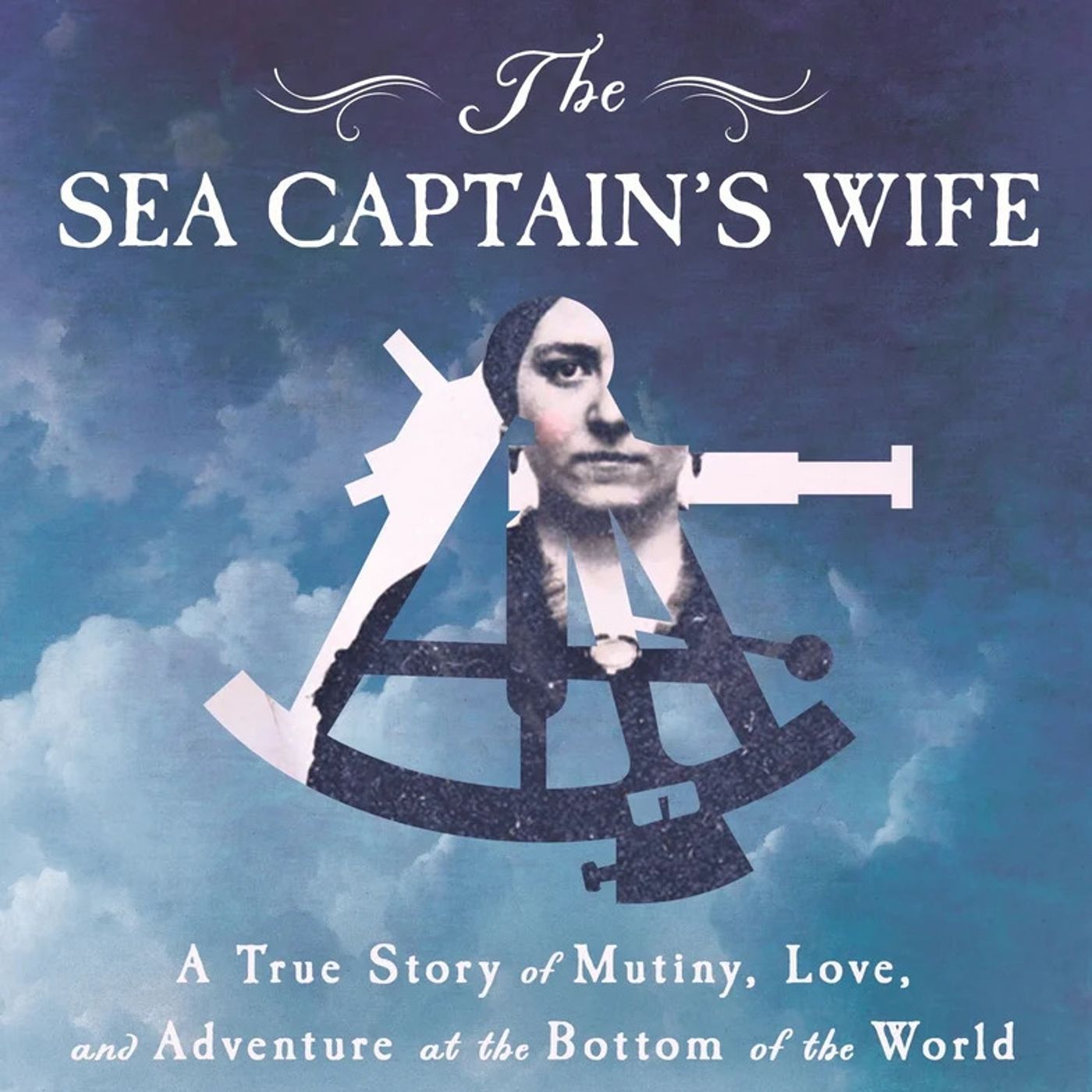
You're listening to all of it on wnyc. I'm Alison Stewart. A woman made history during one of the most intense moments of her life. She was pregnant, her husband was dying, and she had to make a choice. In 1856, aboard a merchant ship heading into the dangerous waters around Cape Horn, Mary Ann Patton addressed the crew. Her husband, Joshua, the captain of the ship, was too ill to lead. The first mate was in shackles for insubordination and attempted mutiny. And the second mate was capable but illiterate. This woman, still a teenager, asked her husband's crew to accept her leadership and they agreed in doing shows. In doing so, she became the first woman to ever captain a merchant ship. Mary Ann Patton steered the ship safely through treacherous waves and storms. Although the average person may not know this unusual story, she's known among maritime folks. The U.S. merchant Marine Academy in Kings Point opened a hospital in her name. Author Tilar Mazzeo tells Marianne's remarkable story in her new book, the Sea Captain's A True Story of Mutiny, Love and Adventure at the Bottom of the World. And she joins me now to discuss. It is nice to speak with you, Tulare.
- [01:47]
C
Thank you very much. It's great to be here.
- [01:49]
B
I loved your book. I loved it from beginning to end. I wanna say that up front. And you grew up with relatives who were sailors from around the same area that Mary Ann and Joseph Patton lived. And you write about how you became a good mariner yourself. My dad went to the Mer Marine Academy. That's why I'm familiar. When did you first become aware of Marianne's story?
- [02:10]
C
Yeah, I didn't become aware of Marianne's story until pretty recently. I did. As you say, I grew up on the coast of Maine. My dad was also in the merchant marines. Yeah, he went to Maine Maritime and worked for a long time in the shipping trades. And I come from a long line of mariners, so I grew up sailing and no maritime history from a long, long time back. But my exposure to Marianne's story was pretty recent. My husband and I sail a Vancouver 42, which is a blue water boat here. And I'm on Vancouver island in British Columbia these days. And we were out sailing remote in an Area called Desolation Sound, where there wasn't any cell phone coverage or WI fi, and you end up reading the random things in your ship's library more carefully than you otherwise might. And there was a paragraph in one of those books about, basically, Cape Horn, and I came across it and I thought, oh, I wonder, you know, that sounds like a really great story. I wonder if anything's been written. So that was how it started just a few years ago, my knowledge of her.
- [03:10]
B
So what kind of sources survived from this story and from this period?
- [03:15]
C
Yeah, unfortunately, the ship's log of their second voyage, of the one that I primarily write about, did not survive. But she became, when the story got out and when they made it to San Francisco, an international heroine. So there were lots and lots of newspaper articles. Members of the crew gave interviews to the newspapers later. I mean, it's really, really difficult to sort of underestimate how much of a celebrity she was in the. In the 1850s, 1860s. So that was the primary source material. I also triangulated it with. I mean, she didn't leave a journal where she talks about her experience, but there were many other people who did make that same transit in that same year who talked about those conditions in that same place. So I also used some of those.
- [04:00]
B
Materials to give us a little bit of a sense of where they were from. How did the sea captains of coastal Maine, how did they acquire their wealth?
- [04:10]
C
Yeah, I mean, partly it was hereditary. Right. If your father or your uncle were a sea captain, you were pretty much raised to do it. So there was a kind of intergenerational connection there, because you were sent to sea as a young man, quite young, usually 13 or 14. Partly you grew up doing it, but the way that they made their money economically was a captain got a share of the cargo. So not only did the captain get a salary, which was a pretty generous salary, because it was very dangerous work, especially on the clippers, but they got a share of the cargo and they got a right to sell cargo. And if you were in the clipper trade, the profit margins were huge. So after three or four voyages, you could make enough, if you survived, to retire by the time you were 30.
- [04:55]
B
It's interesting that you said a clipper, because you devote quite a bit of the book to describing what clippers were about for the average listener. Explain what a clipper is and how they advanced.
- [05:08]
C
Yeah, so clippers, really, they were incredibly beautiful, incredibly fast boats. They were really huge sailing ships, built for speed, and they really come to the fore during the period of the gold rush, because suddenly everybody wants to get material and men as quickly as you can to California to cash in on the gold rush. So the problem with clippers is that they're built for speed, but they're not built for safety because they tend to be very, very overpowered and top heavy. And they were incredibly beautiful. I mean, just, you know, lavishly designed interiors. And they were painted. And I talk in the beginning of the book about they're painted this coffin black. I mean, they're very, very gothic, kind of elegant boats, but incredibly dangerous vessels to be on.
- [05:52]
B
Yeah. What was life like on a clipper?
- [05:54]
C
Well, it depends on who you were. If you were the sea captain or his wife. You had a stateroom and you had a steward. And I mean, space was very, very cramped, but incredibly luxurious. I mean, we know that clippers, for example, had mahogany panels and, you know, fancy carpets and, you know, just incredibly lavish interiors. And that was in part to make sure that the crew understood that the captain was of an entirely different godlike rank from them. And they lived. The crew lived what was known as before the mast, in other words, at the front of the boat. And the conditions there were extremely spartan. I mean, it was a tiny, tiny little cot and often quite wet and cold.
- [06:38]
B
Part of the story involves competitions between these clippers, which would race to get to a certain destination. How did these competitions work and what were the reward for winning?
- [06:49]
C
Yeah, so, I mean, it's hard to. You have to kind of remember that clipper captains in this era were the rock stars of their moment in time. Everybody knew who the best clipper captains were. They were. They were just incredibly famous, and they were mostly quite young men. So what you had is a situation in which ships owners wanted to encourage a bunch of young men, most of whom were in their twenties, to take these fabulous risks, to be the first one to get their cargo to San Francisco or the China tea trade to London. And in order to incentivize this, they essentially created a kind of equivalent of fantasy football, where newspapers talked about, you know, races between them. Captains had gentlemen's bets between them, often for staggering amounts of money, and the general public bet on their favorite sea captain.
- [07:39]
B
My guest is Talar Matthew. Am I pronouncing your last name correctly?
- [07:44]
C
Yeah, Matseo. You got it right.
- [07:45]
B
Talara Mazzeo, she's the author of the new book, the Sea Captain's A True Story of Mutiny, Love, and Adventure at the Bottom of the World. So Joshua, he is a captain of one of these Clippers and Marianne, his wife, they decide that she would come with him on ships. How unusual was that?
- [08:05]
C
It was unusual, but not unheard of. I mean, they were really young, right? He's in his mid to late 20s, she's not yet 16. When they get married, there's quite a profound love story really, behind kind of all the adventure. So they get married and they can't bear to be parted because they're young and in love. And so she decides to travel with him. And she does both the first and then the second circumnavigation. And it was unusual for a sea captain's wife to do it, but there were other sea captains wives who had done it. One of them, quite famously was a woman named Eleanor Creasy, who had also learned how to do celestial navigation. And that was part of what later saved Marianne in Joshua's life, was that Marianne also learned that, I think inspired in part by other sea captains wives.
- [08:53]
B
Yeah, it seemed like she was a very capable navigator. How did Marianne begin to pick up those skills that she would ultimately need to captain a ship?
- [09:03]
C
So, yeah, Marianne was obviously extremely intelligent. I mean, I think the crew recognized that. And she was a brilliant sailor. She was afterwards said by sailors in her own time to have been one of the finest sea captains of the 19th century. But she was entirely untrained in, you know, in any of the formal ways. She happened to be literate, although she was from a very working class immigrant background in Boston, because she had gone to the Sunday school at Old North Church. So she happened to be able to do math and to read. That was the second mate's problem, is that because he couldn't read, he couldn't do celestial navigation. And so on the first circumnavigation, she decides to learn how to navigate in part, I think, because there's nothing else for a sea captain's wife to do. She's really not allowed to talk to any members of the crew. I mean, you know, that would be a breach of the sort of class protocol and life aboard those clippers. The captain was the master in a way that's not entirely different from the position of a master on a plantation. Right. I mean, the amount of power a sea captain had was really just absolute. So she learned on the first circumnavigation, became a very fine sailor, and then the tragedy struck on the second circumnavigation.
- [10:17]
B
Yeah, this journey required going around the Cape Horn and going through the Drake Passage. Why is the passage around Cape Horn so particularly fraught with danger.
- [10:28]
C
Yeah. Partly it's just because at the bottom of the world there's no landmass to stop the wind and the waves. So the wind and the waves run around the bottom of the world just in this ferocious circuit and the winds blow in. If you're going from, from New York to San Francisco, the winds are against you the entire way and the weather is just known. It's still probably the most dangerous sailing in the world. Drake's Passage. The weather patterns there lead to storms that anywhere else would be considered just terrible, terrible gales. And that's a normal day in Drake's Passage.
- [11:06]
B
Pretty soon after they leave, Joshua becomes very sick from tuberculosis. Was there ever a point where Joshua could have abandoned the journey and turned back once he realized he was ill?
- [11:18]
C
They could have turned back and you know, I think probably some of the crew would have wanted that. If they turned back though, they would have lost everything. So they're a young couple who have now made one circumnavigation and there may be, and they did really well. There may be a third to half of the way there towards what was known as a competence, which was enough to money to retire on. And they had bought a piece of land in Maine where they wanted to build a farm and have a family. And so for them this was this, and they had a lot of money invested in this, in this voyage personally, as well as the cargo that was owned by the ship's owners. If they had turned back, they would have lost all of that to port fees. So they would have been bankrupted by turning back. And that was part of just the cruel economics of how the clipper trade worked for young captains. So a young captain would not turn back.
- [12:12]
B
Usually if the captain fell sick, things would be taken over by the first mate. But in this case the first mate was not really an option. What was going on with him?
- [12:22]
C
Yeah, the first mate. So what had happened is they were getting ready to leave New York with their trusted first mate. And in the days before departure, in a race, because it was a four way race, their trusted first mate fell through an open hold and broke his leg. And Joshua Head at that moment tried to persuade the ship's captain to delay the ship's owner to delay the departure. But the ship's owner said no and found him a new first mate. And part of it is that, you know, any first mate you're going to find on the docks, you know, at the last minute probably is going to be exactly what you expect. And he ended up Being an absolute, just a criminal. And long before they reached the tip of South America, Joshua had already at gunpoint, had to have put him in. In the hold in shackles because of attempted insubordination and dereliction of duty. So effectively, the first mate wanted to take over. I mean, he absolutely was trying, after Joshua got ill, to incite a mutiny. And Marianne was pretty sure, and I think correctly, that she and Joshua were not going to survive that mutiny, likely, and he was in the hold. But the problem, again, the second mate was not equipped to take the helm. So really, there was nobody other than Marianne, unless they were going to turn back and she was going to accept that she and Joshua were going to lose everything.
- [13:42]
B
What do we know about what she said during her speech, a speech that convinced all of these men to follow her lead?
- [13:52]
C
That speech is an amazing moment, right? We don't know exactly the words, right? So, you know, none of the contemporary news reporters reports afterwards ever gave the dialogue, but we have lots of good source material about the gist of what that speech was from the. From the seamen and the sailors who were with her on that boat because they told this story. I mean, they got free drinks and bars for the rest of their life, right? So what we know is it went something like this, where she said, you know, look, I'm asking you not to mutiny. I'm asking you to trust me, and I'm asking you not to put the first mate in charge. The first mate is trying to argue that he should be the rightful master of the ship. And she turns to the crew and she says, I'll let you make your decision. And we know that she turns around and goes back down below and she's going to lock herself in the stateroom in case they mutiny with her husband. And as she turns suddenly and the crew says later that nobody planned it, suddenly the crew began applauding her and calling out captain Patton. And there's this moment where it takes her a few minutes, a second or so, to realize that they're talking about her and not Joshua. And later, some of the younger seamen talk about how they saw the old salts with tears in their eyes. I mean, they all understood what a completely exceptional moment this was for a group of men to be saying that a very young woman was going to be their master. Because it wasn't just that she was going to be their equal, right? In making them her captain. She was the master of men, right? So it was this incredibly profound moment. And they told that story, you know, very, very zealously when they got to San Francisco. And it was always thought the most interesting part of it to me is the other reports that we have is that when the ship came in in San Francisco, everybody noticed that it was incredibly well kept and, like, polished. And what that the unspoken message that everybody understood was that was the sign of a crew that deeply respected their captain. Right. That only a really great captain would have motivated a crew to bring in a ship after many months at sea in that kind of condition. So she was very well loved by that crew in the end.
- [16:12]
B
The name of the book is the Sea Captain's A True Story of Mutiny, Love and Adventure at the Bottom of the World. My guest has been Talar Mazzeo. Thank you so much for sharing this story. We really appreciate it.
- [16:27]
C
Thank you very much. Have a great day out there.
- [16:30]
D
This is Ira Flato, host of Science Friday. For over 30 years, the science Friday team has been reporting high quality science and technology news, making science fun for curious people by covering everything from the outer reaches of space to the rapidly changing world of AI to the tiniest microbes in our bodies. Audiences trust our show because they know we're driven by a mission to inform and serve listeners first and foremost with important news they won't get anywhere else. And our sponsors benefit from that halo effect. For more information on becoming a sponsor, visit sponsorship.wnyc.org.