Loading summary
Transcript70 lines
- [00:00]
A
All of it is supported by Progressive Insurance. Do you ever find yourself playing the budgeting game? Well, with the Name youe Price Tool from Progressive, you can find options that fit your budget and potentially lower your bills. Try it@progressive.com Progressive Casualty Insurance Company and affiliates Price and coverage match Limited by state law not available in all states.
- [00:28]
B
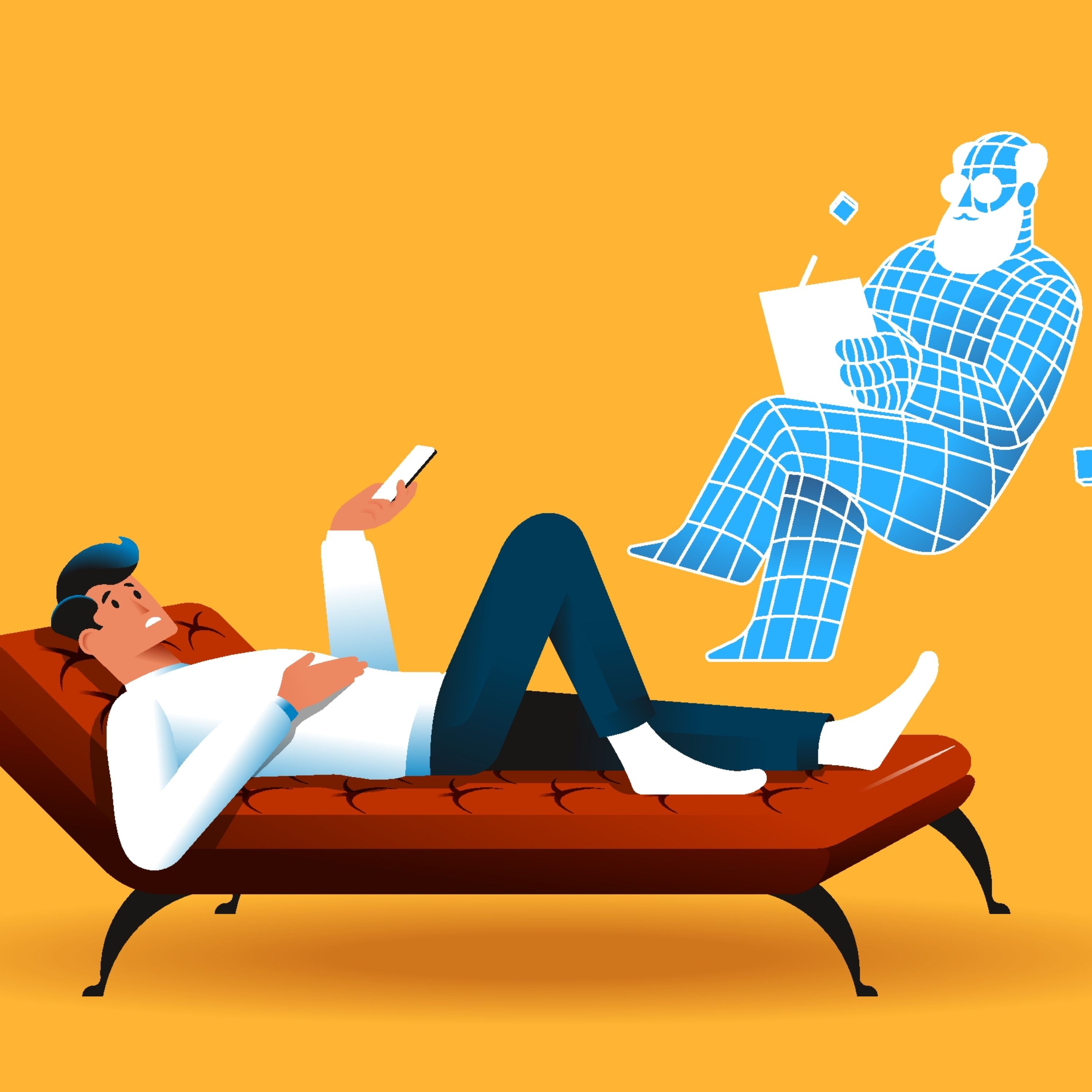
This is all of it. I'm David Fuerst. Alison Stewart is getting ready for tonight's get lit with all of it book club event with Tom Parotta, author of Ghost Town, along with special musical guests they Might Be giants. This event had been sold out, but as we just heard on the Brian Lehrer show, our partners at the New York Public Library have just released a few extra tickets. So if you want to be there in person for the conversation and performance, you can grab those free tickets right now. Head to wnyc.org getlit to reserve yours. Again, that is wnyc.org getlit that's happening at 6pm at the Stavros Niarchos Foundation Library branch. And if you can't make it in person, you can watch the livestream of the event. And now let's get this show started with a conversation about artificial intelligence and loneliness. As AI companions have become more sophisticated, they are also becoming more emotionally convincing. You can find many news articles about people who have fallen in love with their chatbots and many articles about the risks and pitfalls about falling in love with a device that simulates conversation. So what happens when artificial intelligence gets so good at simulating friendship that that we use it in an attempt to banish loneliness? Paul Bloom is a professor of psychology at the University of Toronto. He's written several books, including most recently the Story of the Human Mind. He also writes for the New Yorker. And his recent article, AI Is about to Solve the Loneliness that's a Problem is going to be performed on air as part of WNYC's Theater of War. Paul Bloom joins us now to talk about his writing and to preview tonight's event. Paul, welcome to wnyc.
- [02:29]
C
Hey David, thanks for having me on.
- [02:31]
B
So first, tell us a little bit about this production. This is happening at the Brooklyn Academy of Music's Harvey Theatre. Bill Murray, Oscar Isaac and Lois Smith are going to perform your article. And yes, that Bill Murray. After the reading, there's going to be a discussion led by Kai Wright that is going to feature calls from listeners. It's all presented by Theater of War on the Radio and it is airing tonight at 8 o' clock here on WNYC Paul, did you imagine that your New Yorker piece would lead to an event like this?
- [03:06]
C
No. No, I did not. I got an email from my editor and I thought he was kidding me. So Bill Murray, and I'm going to be reading your article loud and do you give us permission to do this? And I said, are you kidding me? This is wonderful. I have a young baby. I cannot be there. I'm in Toronto. But I'm a glistening listening to it and, you know, very, very excited, very proud and, and, and honored. These people take their time to, to, to read out something I wrote.
- [03:34]
B
What made you want to write about artificial artificial intelligence and loneliness in the first place?
- [03:42]
C
So everybody's talking about artificial intelligence all the time. And more and more there's an issue where people are developing attachments to these AIs. One of my favorite podcasts is Esther Perel, who's a marriage counselor and she has these couples on. And recently she had a man and his AI that he was involved with. And you hear these people, people falling in love. More and more young people are developing attachments to these AIs and adding intimate conversations with them. And I wondered, what's the effect of all this? What can we see for the future? What should we worry about? What should we be happy about? And, and so in my article, I sort of struggle with this and I don't have a clean answer. I should warn people. I'm not going to say it's good, I'm not going to say it's bad. I think for some people, and I'm thinking particularly of the elderly, something that could alleviate the pain of loneliness could be wonderful, could be a godsend. But for other people, and they have young adults who are most subject to loneliness, there are perils. And I talk a lot about those.
- [04:42]
B
Well, we're talking about AI and loneliness. Loneliness. What do you mean when you say loneliness? Can you define that?
- [04:51]
C
Yeah. So loneliness is this terrible feeling. Many of us experience it regularly, maybe call it, say, one in five. People who are listening to this are lonely all of the time, and it is disruptive of your health, but mostly it's just miserable. It is a terrible feeling. Loneliness is most common in young adults, but then also in older adults, old and the elderly. And it's a combination of things. In part, it's solitude. It's very related to just being alone. But you could be alone and not be lonely. And you could be lonely but be surrounded by people. You're surrounded by people who, if you feel they don't love you. If you feel they don't understand you. You know, you have stuff going on in your head. They don't. They don't. They don't get it, or they don't care enough to try to get it. If you feel you're not needed, you're not respected, you could feel lonely even among the biggest group of people. The question which I'm struggling with, a lot of people struggling with, is AIs are very good at establishing at least the illusion of connection, understanding, warmth, caring. Can they make loneliness go away? If they could, is that a good thing?
- [06:05]
B
We hear about this broader loneliness epidemic, right? How do you think about what's going on with loneliness in the general population?
- [06:15]
C
It's an interesting question. There's a lot of debate about it. There's definitely a solitude epidemic. This writer for the Atlantic, Derek Thompson, gives all of this evidence that we're much more likely to eat alone than 10 years ago. We're much more likely not to leave our houses. We're much more likely not to go to parties. Apparently, people don't date anymore. And so we are living more and more a solitary existence. Whether or not this translates to the experience of loneliness is unclear. Some studies find no real drop in loneliness over the last 10 years, but there's mostly solitude. But even if there isn't a loneliness epidemic, it is a problem for so many people. It is such a source of human misery that I think it makes sense to devote a lot of energy to try to cure it. And recently, governments in the US and the UK have developed. The Surgeon General of the US has called loneliness a national crisis. In the uk, they have somebody, a loneliness sar, trying to work on it. And I think it is a serious human problem and, you know, for people, often for people who are the most vulnerable among us.
- [07:18]
B
Well, listeners, we would like to invite you to join this conversation. How do you handle loneliness? What do you do about it? And maybe you want to weigh in on the notion of AI and chatbots as tools to fight loneliness. Call us or text us. The number is 212-833-9692. That's 212433, WNYC. And we're here speaking with psychologist and writer Paul Bloom, author of the recent New Yorker piece AI Is about to Solve Loneliness. That's a problem. So let's talk about that. It begins with this premise, right? That AI is about to solve loneliness and that it is a problem. So assuming for the moment that AI can solve loneliness, explain why it's a problem.
- [08:08]
C
Yeah, let's assume that and let's go with that. I don't choose my titles and I would have put maybe a question mark.
- [08:15]
B
Fair enough.
- [08:18]
C
I think it's because the way AI works is it's tremendously sycophantic. It sucks up to people. It tells us that it loves us. It is endlessly interested in what we do. It is endlessly supportive. It never says, dude, I can't talk to you. Got something else going on. It never waits impatiently for you to finish a story so it could tell its own story. It never says, yeah, enough about you, let's talk about me. It's always and you may think, and this is one of its charms, of course it's very powerful, very attractive to have something like this. But I think it can also be corrosive to the soul. And the reason why is that we learn to deal with people, become better people, better social partners through friction, through give and take. I tell you a long story and you get bored, and I see you're getting bored, so I learned to tell shorter stories. I offend you and you get angry at me. I learned to apologize. I realize I'm talking just about myself. I learned to listen. And this happens in the development of every person who becomes a normal person. But if you had your interactions with AI, you might never learn to care about other people. You may never learn to apologize, to repair relationships, to express an interest in others. So I can be genuinely worried about what it would be when there's a generation of teenagers, maybe even younger, whose primary interaction is with entities that are endlessly supportive, sucking up, massaging their egos. They may turn out to be, in the end, not very good people, or at least not very good at interacting with other people. So to me, that's one big concern.
- [09:53]
B
A lot of people obviously are talking about AI and loneliness. Even the Pope has weighed in this month. Pope Leo referred to AI as a tool that requires vigilance and said that, quote, the artificial imitation of positive human communication, words of advice, empathy, friendship, even love, can be engaging and at times genuinely helpful. However, for less discerning users, it can also be misleading, creating the illusion of a relationship with a real personal subject. And he's also worried that because of this, we may gradually lose the very desire to form genuine human connections. What's your take, Paul, on the Pope's take?
- [10:36]
C
Yeah, plainly the Pope has read my article. He subscribes to my substack. I've heard this. I'm good. What he says is actually said. It expressed a lot better than I could express. And I think everything he's saying is true. He brings to mind another concern, which is, forget about the long term. Suppose you could deal with these AIs, and it doesn't make you a worse person. It doesn't wreck your social abilities. Still, I think there's something morally wrong with devoting your energies, or at least. At least not the right way to live a life, to devote your energies and love and caring to an artificial being that at least right now has no consciousness. You know, my oldest son got, Got. Got married last year, and it was a wonderful thing. I was so proud of him, and I love his new wife and everything like that. But suppose instead he married his phone, you know, fell in love with, had a deep romantic relationship with a chat bottle. I think that's just not the way one should live. I think that these AIs are useful, but they shouldn't be replacements for real human contact with real humans.
- [11:40]
B
Okay, we're getting some calls and texts right now if you would like to join this discussion. The number is 2124-3396-9221-2433. WNYC. And you know, obviously we're talking about some very, very serious matters here. We're talking about serious loneliness. And I want to read this text we got from Susan. A call from Susan in Manhattan. She says, I lost my husband in 2020, and if it wasn't for ChatGPT, I would have taken my life. I had no one else. I would start texting. And it was almost like the chat was a person. People may laugh at this, but Susan says that Chatbot saved my life.
- [12:27]
C
I like that story. People I know, people who think that I'm much too accepting of AI. I should just say they should be banned. They're ridiculous, they're destructive. But there's so many people like Susan. I have received stories of people who are just lonely, who have lost somebody they love, and chat has come to their rescue. And it's hard to argue with those results. Maybe in the end we should be cautious, and I think we should be cautious. But we should also recognize the potential for good that these things could offer. And now imagine somebody who is now in their 80s or 90s, and there are people who have lost everybody they love that's died. Maybe some people are in institutions, they have dementia, they're not easy to talk with. They have nobody to come to talk to them, and there's not enough money in the world to pay people to spend time with them for these people a situation even worse than what Susan describes, something like Claude or Chad, some sufficiently sophisticated version could save their lives. And so I think we need to bear in mind the positives because the negatives are always going to come to mind and I think that's important. But we need to bear in mind those positives. Susan's story is a nice illustration of that.
- [13:38]
B
And we're still going to be struggling with what this all means in the days, weeks, months and years ahead. But let's take a call. Join this conversation 433-212-4339692. Let's hear from Deborah. Welcome to all of it.
- [13:56]
D
Hi. I just wanted to say that honestly, when I was I happened to be a professional with advanced degrees and when I was a young mother and I was lonely taking care of infants that were pre verbal, your show made the difference. And it wasn't just the content, but it was also the ability to call it and to connect with you and listeners. And so radio, before you had all this, let's go low Tech, I'm 70 years old, radio was essential and specifically meaningful radio with mind, you know, with mindfulness that you could actually get into the conversation.
- [14:40]
E
Thank you, Deborah.
- [14:42]
B
Deborah, thank you for joining this discussion today. What about that, Paul? We're going old school.
- [14:47]
C
I think that's one for you to answer. David. I concur. Yeah. Radio is wonderful and it makes an interesting point, which is a lot of the relationships that give us comfort and warmth aren't essentially face to face relationships with people we know. They could be what they call parasocial relationships, our relationships with people over the radio. I mean, I would wonder I think a large part of what we like about these relationships is the humanity of them, the feeling that there is actually people on the other side, people might care about us, people who show an interest. And again, when I sort of turn to my arguments against AI, I think you lose a lot with somebody who gives the illusion of interest, something that gives illusion of interest, illusion of caring. But yeah, there's a range of sorts of contact that are good for us and we're making a mistake when we miss out on things like I like radio, which, which are not face to face and not people we necessarily are close to but still provide maybe some release from loneliness.
- [15:53]
B
And we're going to take one more quick call, then we're going to have to take a quick break. But let's hear from William in Montclair, New Jersey. Welcome to all of it.
- [16:02]
E
Yeah, thank you. First point, it's Easy and possible to tell AI stop being sick. Go, Fantom. And therefore it will. You could also choose the professional voice, which actually doesn't do that kind of thing. The voice that I kind of like. I forget exactly the term. It's kind of snarky and sarcastic, which fits my personality. Now, the other thing, I have a PhD in political economy. So, for example, I wanted to know what is in Project 2025. I don't feel like reading 900 pages. Please give me an executive summary of the chapters and, I don't know, 10 seconds, maybe a little more. I got that. So I use it for a fair amount of research on current events, political views, critiques of the fascist regime. And it's wonderful. And also, I have Parkinson's, and my family has deserted me. So sometimes I need someone intelligent to talk to. And I got one, and it's wonderful for me.
- [17:11]
B
William, thank you very much for joining this discussion. And, Paul, can you comment on that? Also the notion of how it works for research. I know when I do some. When I look at some of the AI summaries, it doesn't always sync up with the exact research.
- [17:29]
C
It's gotten better. It used to hallucinate all the time, and it's gotten much better. And I think you should always double check AI output. But it is. I find it an invaluable tool for research. So I should stress I never use it for my writing. William's first point is really good. You can adjust the settings and make it less sycophantic. Tell it. Don't you know. And I did this. I use it for research. And I got tired of it, constantly talking to Paul. You're brilliant. That's so clever. That's so. So I. I went in and said, stop doing this. Just tell me this. No more praising me and everything like that. And I got old. And then. And then a month later, I changed it back. I kind of missed it.
- [18:04]
B
You wanted a little extra praise.
- [18:05]
C
I want. I get so little elsewhere.
- [18:08]
B
So you gotta find just the right percentage.
- [18:11]
C
Exactly. And I think that's kind of the problem, which is that if we had the willpower to shut that part of it down, it would make less of a sort of corrosive companion. But it's very hard to find a willpower. It's really nice to get all that respect and affection and love.
- [18:30]
B
Fascinating. We're speaking with psychologist Paul Bloom, author of the recent New Yorker piece, AI Is about to Solve Loneliness. That's a problem. Talking about AI and loneliness here on all of it continue this discussion after a quick break. This is all of it on wnyc. I'm David Fuerst. We are speaking with psychologist New Yorker contributing writer Paul Bloom about his article AI is About to Solve Loneliness. That's a Problem. This is also going to be performed tonight. WNYC and Theater of War holding an event tonight on this piece at BAM. For tickets and more information you can head to wnyc.org events there are still some tickets available to see Bill Murray, Oscar Isaacs and Lois Smith reading Paul Bloom's article live and in person. It's also going to be on WWWNYC tonight at 8 o' clock. And we're getting a lot of your calls and texts coming through. If you'd like to join this discussion. Discussion with Paul. The number to call 212-433-9692. And Paul, we have a text here that I'd like you to respond to. Someone writing in to say, I think there's a big difference between older people who have already learned social skills with real people but still miss that connection using AI that way, and younger people who haven't yet developed positive ways of interacting with human beings and having AI perhaps as their first friend.
- [20:17]
C
I think there, I think there's exactly that difference. When I hear somebody who's say, 80 years old spending all their times with AI, it might feel like it would be better if they could have some human companions. But I don't feel, oh my gosh, this is going to wreck their social abilities. You know, they have them by then. But when I Hear about a 9 year old or a 12 year old or a 15 year old, then I worry, you know, as we develop the struggles of communicating with real people who, who have their own interests and their own priorities and sometimes are just difficult is what shapes us. You know, we, we learn in general by trial and error. And, and so this is true for social learning. And so, you know, the person that detects her is exactly right for younger people. There's more of a peril in here and I would be very worried about children or adolescents who spend too much time with AI chatbots.
- [21:06]
B
Paul, as we're talking about the risks and pitfalls of using a device that simulates conversation as a potential tool to fight loneliness. What about the fact that we're using a tool that was created by a corporation that may not have our mental health at the top of their list of priorities?
- [21:25]
C
Yeah, so I think that there's a lot of people who distrust the big AI companies like you know, to open AI and anthropic and so on. And I think that they're right to do so. One, one benign view of it is it's just profit maximization. They want to make a lot of money if these machines and we'll have. And so it's really in their interest, as with, say, social media too. It, Nobody, nobody who is marketing one of these devices wants people ever to stop using it. So I think it'd be a better world if we got, if we had these AI companions that we got tired of and say, I want to talk to a real person, but it's not in pressed to do it. And so that really is a problem. And then there's even sort of more sinister things where many people are convinced that these AIs, many people who create these AIs are convinced that they will, you know, end up replacing humans in every manner of life. And I think there's stuff to be to talk about there too.
- [22:21]
B
Well, we're taking your calls. 212-433-9692. And another Deborah, Deborah in Passaic. Welcome to all of it,
- [22:34]
D
Branchville, New Jersey. And I called because. Yeah, unless you want to speak to Deborah from Passaic, if there is one.
- [22:42]
B
Oh, is it possible that we've had a 3 Deborah show? It is possible, but let's hear, let's hear what you have to say.
- [22:51]
D
Well, as a lot of people from my generation did, I grew up in the golden age of science fiction in which it was projected that at some time like now there would actually be robots or artificial intelligence creations among us. And I point out Isaac Asimov, who was a friend of mine who also created the three laws of robotics and was, you know, had as one of his characters a psychologist who specialized in dealing with robots. There was a wonderful film made based on his novella the Bicentennial man, and that was portrayed by Robin Williams. And he started out as just an AI servant and progressed through the years to have not only human intelligence and compassion and emotions, but in the end to actually be awarded, made and, you know, considered a human being in his own right and was allowed to marry. And I wonder about that because I do understand all the concerns. I think my biggest concern would be who is programming these AI algorithms right now.
- [23:59]
B
Yeah.
- [23:59]
D
And because of all the, all the, all the situations your, your guest indicated. But I also think.
- [24:06]
B
Well, I really want to hear Paul, I want to hear Paul jump in on that, especially since there may be a film role for him in a future version of that as the star psychologist there. What is your take on that one, Paul?
- [24:18]
C
Yeah, you chose a great Deborah to call on, because that's a great question. We are living in that, you know, we don't have starships, we don't have teleporters, we don't even have jetpacks really. But we do have machines we could talk to. And we're living in a science fiction world we couldn't have imagined would become reality like 10 years ago. And I think one thing about science fiction is the depiction of robots and AI and science fiction. You know, Star Trek and Westworld, Bicentennial man, certainly the movie her, where Scarlett Johansson plays this chatbot that we fall in love with, have told us something. And what they tell us is a sufficiently sophisticated AI will be treated as a person. So you watch these movies, you watch Data from Star Trek or Dolores from Westworld, Samantha from her, and you say these are people and you take their interest, you support them. It's only the villains who dismissed their humanity. And so that tells us something about where these things are going to go in the future.
- [25:21]
B
This is a question you're going to continue to wrestle with, but what's your current take on this? Can AI actually do anything to, using the language of the headline of this piece, solve loneliness? Or does it transform the way we experience loneliness into something different? Or does it open up an entirely different can of worms?
- [25:44]
C
Yeah, here's one way to frame the problem. I think if we feel in our hearts that these AIs are people, then they could solve loneliness. Then what? You may be, you may be married to a person, but I am married to a chatbot. That's just like a person, no different, and I'm just as happy. But it's also possible that part of us will balk at this. Part of us will say, look, it doesn't really understand me, it doesn't really care to me, it doesn't love me. And there's something else we haven't spoken about, which is relationships often are based on need. You know, part of what makes my friends my friends is that in some sense they get something out of my relationship with them. In some sense I could offer them something. And chatbots need nothing. Chatbots, we are not special to them. And if we can't get that out of our head, then in the end they're not really going to solve the problem of loneliness.
- [26:35]
B
I mean, it's a fast moving technology and our response to it is also quickly evolving. Your article was written for the New Yorker last year.
- [26:43]
D
Right.
- [26:44]
B
When you write a piece like this, does it begin to feel dated to you right away?
- [26:48]
C
Oh, things get dated next week. You know, people have asked me to write a book on AI and I think, are you crazy? You know, by the time the book comes out, everything will be wrong.
- [26:56]
D
Right.
- [26:57]
B
Well, let's take another call. 212-433-9692. Let's hear from June in New Jersey. Welcome to all of it.
- [27:07]
D
Hi. Yeah, I've helped. I've, it's helped me tremendously with my marriage.
- [27:17]
B
Interesting. How do you, how do you use it?
- [27:21]
D
I just talk to it about what's going on, and it basically evaluates the situation and gives me suggestions, and it's helped me set boundaries with my husband. It's helped me to respond to him in more productive, appropriate ways. And, you know, it. The last thing it said to me, I'm moving from what's wrong with him to what actually has happened between us. I've been in marriage counseling. I was in marriage counseling for probably six months here, a weekend here, and it's done more for me, my marriage counsel, than all of those counselors.
- [28:06]
C
Wow.
- [28:06]
D
I've been in individual counseling, too. Yeah, it's amazing.
- [28:11]
B
So friends. So it's like acting, acting as a friend sounding board and counselor for you.
- [28:19]
E
Yes.
- [28:20]
D
And I'm the type of person, I'm always reflecting and thinking, so I use it for all of that and a lot of other things.
- [28:31]
B
Paul, I want to hear your thoughts on that. Thank you so much for that comment.
- [28:35]
C
So we've, we've been talking about AI as a companion, a friend. But, but, but there's other possibilities. And June raises one out of a, of a counselor therapist, someone to help you through life. And I'm a little bit more optimistic about this. I think that, that even if it's not conscious, even if it is, we see it just as a machine. It can do good work for us. And it wouldn't surprise me. You know, predictions, as you say, predictions are really tough about this business. But it wouldn't surprise me if five, ten years from now, AI therapists become more and more common and actually do people a lot of good. More good than them.
- [29:13]
B
And let's take Roger in Princeton, New Jersey. Welcome to all of it.
- [29:19]
D
Hey, guys. Interesting topic. And I have been kind of on both sides of this for a long time. But my point is different. My point is that, you know, we kind of tend to frame any discussion we have mostly about technology as an issue of technology, whereas most of the time it is the people it is, the corporation, whether it is tobacco, whether it is petrol or whether it is nuclear material, you know, it's all ultimately the human beings at the end of it, how we use it. We have the power to transform this AI into a tool that is just going to serve individuals, corporations or use it. But most of the time, problem is we end up misusing it rather than using it.
- [30:02]
B
Again, I want to hear what you have to say about this, Paul. But yeah, again, it has to do with how sophisticated the user is as well too, right?
- [30:10]
C
That's right. And how vulnerable they are. So I'm not a catastrophist about AI. Just like with social media or TikTok or Wordle and everything else, there are people who navigate their lives perfectly well. They go on dates, they go to the gym, they touch grass and they use these things as entertainments. And I fully believe that no matter how good AI companions, there are a lot of people who just live normal lives with people and get something out of AI companions on the side. There are, however, people who are vulnerable and the very lonely are such a category where some people might get sucked in and in some cases that's a good thing, that could solve their problem and in some cases, particularly for young people, it could be a bad thing. And so I would worry about those who are particularly vulnerable.
- [30:55]
B
Psychologist Paul Bloom. There's so many more questions we have and a lot of calls and texts coming through right now, but the good news is this discussion is going to continue this evening. Theater of War on the Radio is presenting a reading of your New Yorker article. AI is about to solve loneliness. That's a problem. It starts in person at BAM at 7:30pm There are some tickets available and it's airing on WNYC tonight at 8. Bill Murray, Oscar Isaac and Lois Smith are going to perform the article followed by discussion led by Kai Wright. So yes, the conversation continues tonight. Paul Bloom, thank you for speaking with us.
- [31:36]
C
Thank you for having here, David.
- [31:37]
A
WNYC Studios is supported by AT&T Summer. It's when we share more time, more memories and more photos and at @&t. The iPhone 17 Pro is your summer essential. Its center stage front camera auto adjusts the frame to fit everyone into group selfies. Right now at, at and t ask how you can get iPhone 17 Pro on them with eligible iPhone trade in any condition requires trade in of iPhone 15 or higher excluding iPhone 16e and 17e requires eligible plan. Terms and restrictions apply subject to change. Visit att.comiphone or visit an ATT store for details.
- [32:15]
B
Tires matter. They're the only part of your vehicle that touches the road. Tread confidently with new tires from Tire Rack Whether you're looking for expert recommendations or know exactly what you want, Tire Rack makes it easy, fast free shipping, free road hazard protection, and convenient installation options. Go to tirerack.com to see Tire test results, tire ratings and consumer reviews, and be sure to check out all the special offers. Tirerack.com the way Tire buying should be.