Loading summary
Transcript93 lines
- [00:00]
A
Foreign.
- [00:08]
B
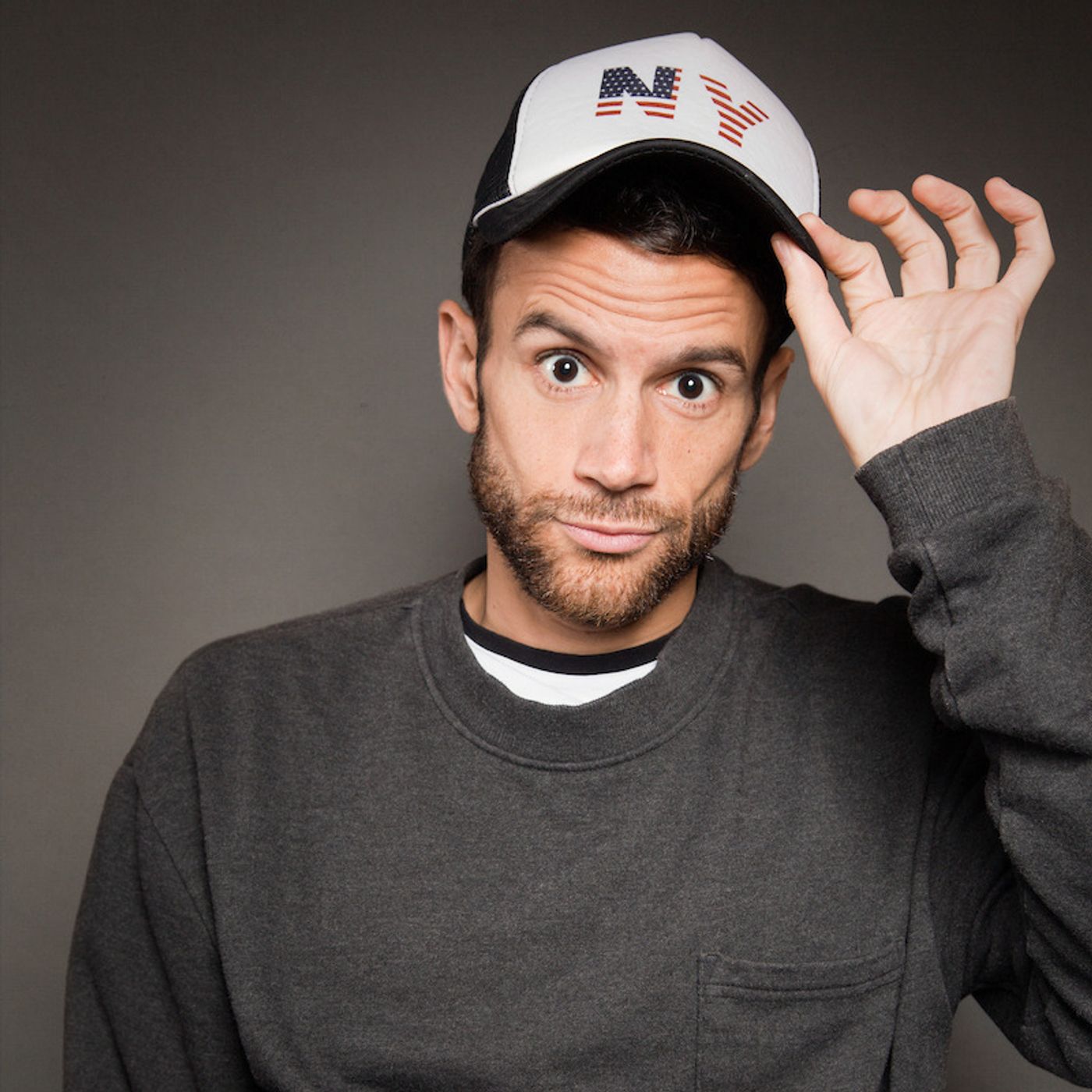
This is all of it on wnyc. I'm Tiffany Hansen in for Alison Stewart. Today, Tom Delgado finds the funny in history. Delgado is a local comedian and New York City tour guide. He also has a popular YouTube channel where he takes viewers on neighborhood historical walking tours. His most recent video, walking Broadway on the Upper west side from 72nd to 86th Street. Delgado also hosts history themed live shows that he calls a lecture at a comedy show. This Saturday the 6th, Delgado is hosting his next event in the series called Tom D's Big New York show at Caveat on the Lower east side. The show starts at 7. It's going to feature guests like Jonathan Mahler, a staff writer for the New York Times Magazine and author of the book the Gods of New York. Author on my list, that book, Tom. And the comedian Emmy Blotnick. That is the comedian Tom Delgado sitting across me right now. And welcome to wnyc.
- [01:07]
A
Hey, thank you for having me.
- [01:08]
B
All right, so let's just talk about this combination of history and comedy. You know, not a lot of people, I mean, maybe Tom Lehrer, I don't know, think about like combining the two. So how did that idea kind of come to you?
- [01:21]
A
Well, it just came to me from being a tour guide. Being a tour guide for many years, you know, your whole idea is just keep people captivated, you know, and, and, and just be yourself, you know, and if you like to joke around anyway and tell jokes, whatever, then that's what comes out. And you, you talk about something else that interests you in the, in the meantime, which is history. And the two just kind of naturally meld together. And, and it's just kind of a way to do both things, continue to do both things.
- [01:42]
B
For me, you were not, I mean, you were doing tour guides while you were, you know, tipping the hand here. You used to be a lawyer?
- [01:50]
A
Yeah, Yeah, I used to be a lawyer. I used to be a lawyer. That's right.
- [01:53]
B
Also known to be a funny occupation.
- [01:55]
A
Sure. No, the complete opposite, actually. No. So I, actually, what ended happening was I started doing a little stand up while I was a lawyer. And then I hated being a lawyer, so I was like, I got to get out of this. So I saved up money, quit my job eventually, and then I ran out of money shock. And then it was like, all right, well what I do now? So it was either go back to law or do something else. And a friend of mine was a tour guide and he's like, you should do this. And just studying for the licensing exam. I was like, this is amazing. My job is to learn about New York City. This is incredible. And I just fell in love with it, and then. Yeah. And I did it for. For many years. And. And, yeah, and it was. It was just great.
- [02:28]
B
So I want to talk a little bit about, like, what it takes to actually be, you know, go through the process of becoming a, like, certified tour guide. But I'm still, like. I'm kind of stuck on this Venn diagram between, like, the law.
- [02:43]
A
Don't overthink it. It's gonna make your head hurt. It's gonna make your head hurt.
- [02:46]
B
I feel like we should probably just keep moving. All right, so New York City tour guide. What does that entail to get certified? I mean, that's just. They don't just hand that out to anybody.
- [02:56]
A
Well, I will say just to. Not. Not gl. You know, go completely over your question that the only Venn diagram with. With law is research and reading.
- [03:03]
B
Oh, sure.
- [03:04]
A
No problem there. I. I love doing comedy. That's a little different. That's a little bit. A little bit more of a stretch.
- [03:09]
B
All three. Right. Like, I don't know what that sweet spot is.
- [03:12]
A
Well, I guess I have it now with doing the history and comedy.
- [03:15]
B
But you're the walking embodiment of it.
- [03:17]
A
Exactly. The one on the. The one on the planet. That's right. But no, I. I guess the tour guide thing is they do a test. The department Consumer affairs does a test you got to take, and, you know, you study for it. There's a book, and, you know, it's really. It's not that hard.
- [03:32]
B
Classes?
- [03:33]
A
No, you don't have to take classes. I mean, I remember I studied for it. I was like, I got a cram, and I. And I did really well, and I was like, I really overstudied. You know, let's just say it wasn't the bar exam. Yeah, right. And you take it, and you get it licensed, and then you just, you know, you. You're basically a freelancer. And I worked with so many different companies doing everything. I mean, I was on helicopters, doing tours. I did tours. You know, high schoolers. I did tours for the bands that came in for the Thanksgiving Day parade. I did private tours for, like, you know, billionaires from Europe or random things. So all kinds of tours in my years of doing it. So, yeah, you're just kind of a freelancer, really, when you talk about the.
- [04:07]
B
History of, you know, you're doing a walking tour of the history of New York. I mean, we're talking.
- [04:13]
A
Where do you start? Yeah, it's kind of tough.
- [04:15]
B
Okay, are you like, let's start at 16, 25.
- [04:18]
A
All right. All right. And this tour will last 10 days. You guys can buckle up. No, I guess it depends on what you can do a tour of a building and. And different people are going to have different things to say about it. It's the same thing. I mean, I guess every. Every tour guide has a different history. You know, it's rooted in facts, hopefully, but. But yeah, you can tell a different story. What you focus on, you know, and what. What stories you tell.
- [04:41]
B
Do you decide before, like, you've got the billionaire from whatever town.
- [04:47]
A
Yeah.
- [04:48]
B
Are you thinking in advance, like, okay, this is, you know, do you, like, research the person? I'm gonna do this thing and I'm probably gonna zone it, you know, zero in on this or.
- [04:57]
A
Not really. Okay. No, I kind of just do my own thing. You know, you can kind of tell, too, as you go, I guess, from doing stand up, too. You can kind of get a feel for the audience, you know, what they're. What they're responding to and what they're not responding to. So you can kind of pivot as well, but not really. I am always reading and learning about the city, so that. That helps, but. But no, as far as that, I don't.
- [05:16]
B
So I mentioned this YouTube channel that you have where it's basically like you and a camera person walking around the city, lots going on. Of course, it's New York City. First question is, how do you stay focused in all of that and, like, not get hit by a car?
- [05:34]
A
It's not even so much the getting hit by a car that makes me nervous as much as, like, people saying stuff and doing stuff, you know? But, yeah, I guess you just kind of like. I don't know. I'm just used to it because I usually talk to my cameraman. That helps. So I feel like I'm actually giving a tour for somebody as opposed to just this camera. And I also do different types of videos, too. I do the ones like you mentioned, this walking tour where I literally just walk from point A to point B and point out buildings and talk about the history of that area. But I also do neighborhood histories where I'll stop at different spots in the neighborhood and tell you about each of these spots and tell the story of the neighborhood. I'll do interviews with historians. There's all kinds of offerings, I guess, on the. On the channel. But yeah, I guess it's really just a matter of. I don't know when you're talking about something you like, and you're, you're in something you do that you like. I guess you're more present anyway, right? Yeah, that's what I was not when I was doing law, so I was not present doing that. So I was like, well, something's off here. I got to get out.
- [06:30]
B
So the other question I have as you're walking around the city is, any good heckling stories?
- [06:35]
A
Oh, man. Yeah.
- [06:37]
B
I mean, first of all, you're, you're, yeah. You're a comedian.
- [06:41]
A
You're used to it, right?
- [06:43]
B
But is there, like, do you get, do you get heckled on the street?
- [06:45]
A
Oh, yeah. You know what, though? The, the difference is, though, when you're in a comedy club, you're. You're given a little more free rein to deal with a heckler in a different way, as opposed to in a Street with 25 paying customers next to you. So I remember once. This is kind of funny. I was, I was ending a tour of Chinatown in Foley Square, which is where all the courthouses are, you know, like the law and order courthouse, all that. And I said to my group, I was like, okay, so we just walked through Chinatown. It was really cool. We're now in the, the. Where the courthouses are. This isn't as interesting as before. This is a little more boring. You know, kind of just loose, whatever. And there was a woman walking around the tour at the time, and she, she got upset. She goes, boring. She, like, peeked her head and she goes, boring. This isn't boring. I, I, I, I work around here. This is, this is where the law happens. I was like, yeah, whatever. I was trying to deal with it, Whatever. And eventually she goes, boring. This isn't boring. This is where law and order happens. I was like, oh, gosh, this is so annoying. And so then I go, look, ma', am, I didn't mean any offense by it. I used to be a lawyer. It's okay. And then she goes, she stopped. And she goes, you used to be a lawyer. Looks like things are going really well for you. She said this right in front of my group. And I was like, oh, man. I didn't. I just, like, stopped, you know? Cause in a comedy club, you deal with that in a different way than on the street. And before I could even say anything, someone in my group just let her have it. It was the funniest thing. And just like, what's wrong with you? What kind of life do you lead? A. And this woman left with her tail between her legs. All right, so yeah, there you go.
- [08:03]
B
It's rough out there.
- [08:03]
A
It is rough out there, man. People. People like to judge, that's for sure. And a perfect person to judge is a lawyer to judge you. So I got judged. Yeah.
- [08:12]
B
Any famous encounters when you're out and about?
- [08:14]
A
Yeah, this was kind of funny. I was talking. I was talking once in Dumbo. I was in Dumbo, and I was doing a tour and talk about the neighborhood and how much it's changed. And, you know, people talk about gentrification. I talk about that on my tour as well. And there was this older man just kind of hovering around the group. It's like 25 people. And I was talking about David Walentus, who owns Two Trees Management, who's built up a lot of Dumbo. He's built up Domino park, all that. And I was going off this whole thing. This older man was just kind of hovering. And eventually I go, yeah. And so the neighborhoods changed a lot. Blah, blah. And then this guy peeks his head and goes, but change can be good, right? And I go, yeah, I guess it depends on who you ask. And he goes, okay. And then he puts his hand out to shake mine, and he goes, I'm David Walentis. I own the neighborhood. In front of the entire group. And the group was like, is this a joke? Because I just talked about the guy, and sure enough, it was him. He was just in the neighborhood, and he wanted to make sure a tour guide wasn't badmouthing him, I guess.
- [09:10]
B
All right, then. There you go, listeners, you can chime in this conversation right now, talking about your favorite New York history, maybe a historical fact about the neighborhood that you live in. You can call us, you can text us. 212-433-9692. Is there a history to your apartment building, your specific block? Maybe a little specific tidbit about New York City history that you'd like to share. 212-433-9692. You can call us. You can text us at that number. We're talking with Tom Delgado, who is former lawyer, current tour guide, slash comedian giving tours of New York City neighborhoods. He also has an event coming up this Saturday. It's called Tom D's Big New York Show. That's a caveat on the Lower east side. Just getting back to these tours, these that you have on YouTube. How did you get the idea to start filming those and put things. I mean, is it just that everybody puts everything on YouTube now? Well, now they have a specific plan.
- [10:16]
A
Well, I did initially. It's Funny you say that because I started doing them and this is like 2017. I filmed the first one. I did it as like a pilot to pitch as a show. This is. This is before all these, you know, show. And. And, you know, I pitched it a couple places and they liked it, but they're like, you know, who are you? Why should we give you money? I was like, yeah, that's fair point. So I just basically went and got a camera and learned to edit and all that stuff. And I just started shooting these things on my own, but only like one every couple months. Every few months. I was doing some acting stuff at the time and comedy, everything. And it was only really when the pandemic hit that I was able to commit more time to it. So I really just went out and I made it as easy as possible. I went out and I just shot videos of me walking around talking about stuff. And they took off because people were in their house and they wanted to see it. And then after that, you know, it kept growing and I started doing different things with it and. And yeah, so it was kind of this little organic thing. And the pandemic kind of pushed. Pushed my hand a little bit too. Forced my hand.
- [11:07]
B
Yeah. Do you think it's hard for people on these tours specifically? I guess I'm thinking more about the tours than your live show. But like, to take the history part seriously, when you're also being funny, do they. Does it put a question in their mind, do you think?
- [11:25]
A
No, I don't think so at all. I mean, I think. I mean, it's not about. I think the difference is if your humor is serving the history, then that's good. I think that that only helps, I think when the alternative happens and you're just trying to make a, you know, just run amok and be.
- [11:40]
C
Hahaha.
- [11:40]
A
People are like, all right, dude, just get to the point. Yeah, you know, I think that's in any. In anything. You know, if you're giving us a toast at a wedding, you know, if you put the funny before what you're actually trying to say, people are going to be like, what are you doing? Or anything, really. So, yeah, if you're interested in what you're doing or what you're talking about, you can make, you know, law interesting and funny. You can make accounting interesting and funny if you really have something to say and are funny.
- [12:04]
B
I mean, there are parts of history that aren't so funny.
- [12:07]
A
Yeah, that's true. That's very true, I guess. But I guess there are ways to bring it. You know, there are history happens and there are things that happen in the world that are obviously not funny, but there are things connected to those things, like whether it's you personally, your life, how it relates, how other people's life relates to what's happening or whatever that you can kind of, I guess, steer the conversation towards and find some kind of laughter in.
- [12:31]
B
So obviously you cover the five boroughs. Are there specific neighborhoods that you tend to go to more often than others? Do you. How do you decide? Like, I'm going to research this new part of Kew Gardens or whatever?
- [12:44]
A
Yeah, well, it's. I mean, I think it's like with any. With anything. I mean, obviously the Manhattan is so popular, and it's also so concentrated. People forget that too. I mean, just. You go like the West Village or Greenwich Village. You have historical spots, you know, steps from each other. Whereas if you go to other neighborhoods, they're a little more residential. There are bigger streets of, you know, Queens and all that. Things are a little more se. That way. So it's easier in places in Manhattan and everything. But, you know, I've done. I've done tours in. In all neighborhoods. I think if people know what they're getting into when they go to Queens for a tour and they know it's not going to be stopping every two seconds at some, you know, some place that Bob Dylan hung out, then it's fine, you know, but if you. If you can tell the story and keep their interest with something else, then then it should be okay.
- [13:25]
B
We got a text here. Tom, have you ever given a Staten island tour? If you would like one, I'd love to practice by giving you one. Love this story. Definitely going to be cramming for the. Been to Staten Island?
- [13:37]
A
I have been to Staten Island. Yeah, I was. It's interesting. I. I've. I've done. I've done tours. We've gone on the ferry, got, you know, gone over to like, you know, obviously that area in St. George and walked around that area as well, the Snug harbor, all those kinds of cool spots there. And I think the history there. The problem with Staten island is it's humongous and it's not as easy to get around. You know, it's. It's gigantic. It doesn't have the subway. It doesn't have all these things that make it easier, more accessible. But there are tons of interesting things. I was just doing something recently on the conference house, which is super cool down at the south end of Staten island, which is Actually the southernmost point of New York State. And it's where, you know, after the Battle of Long island, they had, you know, Edward Rutledge, Ben Franklin, and John Adams went to meet with, you know, Admiral Howe to kind of try to hammer out a peace deal after getting, you know, after getting completely beat up at the Battle of Long island. And they refused because they wouldn't budge on independence. And. And it was all for naught, like, three hours. And. And it was. It ended.
- [14:32]
B
Maybe you need those. What are those things that people get on the scooters?
- [14:37]
A
What are those things with the wheels on them?
- [14:38]
B
I don't know.
- [14:39]
A
I see these kids running around with them.
- [14:41]
B
You know what I mean? White. What are those white things that you like? Mall cars.
- [14:47]
A
Automobiles. Tiffany.
- [14:50]
B
All right, I'm gonna put you on the spot and say, favorite neighborhood.
- [14:56]
A
Oh, man, that's tough. It depends on what you're looking for. I mean, people always do this. They'll email me and they'll say, hey, I'd love a tour. What's your favor? It depends on what they want, if they want. Chock full of history. I like walking around Greenwich Village. There's just so much history there, whether it's cultural, political, social, everything. But I tend to like Queens. I love Queens. I live in Queens. If people say, hey, I've been to New York a million times. Take me to something I haven't seen. I take them to, you know, I take them to Jackson Heights or Flushing or, you know, Flushing Meadows or those places, and they, you know, their heads explode.
- [15:29]
B
Right?
- [15:29]
A
Yeah.
- [15:30]
B
Let's bring a caller in the conversation here. Tom. Mark on the Upper east side. Hi, Mark.
- [15:36]
C
Hey, how are you?
- [15:37]
B
Good.
- [15:38]
C
Hey, love your show. And I was calling because the front of my building on East 77th street on the Upper east side was the initial scene for Ghostbusters 2. Sigourney Weaver was standing with her baby carriage, and then suddenly the ghosts took the baby carriage down the street, and she was running after it. And so that was my building's claim to fame. You can see it in the beginning of. Of the Ghostbusters 2 movie.
- [16:14]
B
Love it. All right, thanks, Mark. I bet you could do a whole tour of Ghostbusters spots.
- [16:19]
A
When you say that. I have a video that I did years ago of Ghostbusters spots. It's on my YouTube. It's from years ago. I don't even think it's monetized, because I like used pictures. Everything's from it. But, yeah, I did a. I did a video on. Yeah. Central Park West, 55 Central Park West. Spook Central, it was called. The building that's there. The church right next to it is the one the Marshmallow man stomped. You know, Tavern on the Green is where Rick Moranis ran and slammed on the glass. Over on Broadway in, like, the NoHo area is where Peter Venkman's apartment was. North Moore street and Tribeca.
- [16:49]
B
Columbia.
- [16:50]
A
Columbia. Yeah, yeah. And then North Moore street is where the. The firehouse is. The famous firehouse. Right, yeah, in Tribeca.
- [16:56]
B
All right, let's. Before. Before we run out of time here, let's talk about your live show. You have one coming up on. So this is different than the tour? Yes, different. Similar. Explain how. What's the.
- [17:06]
A
So it's basically like a variety show celebrating the city through history and. And culture or whatever you want to say. And I, I. It's basically, you know, I. I do, like, a little lecture about a neighborhood, like, a little tour. I have comedians, I do trivia, and then I interview an expert or a guest, you know, some historian, and it's great. And I, you know, promote their work and everything. And I actually really pride myself on having these, you know, intellectuals, these academics, and making it digestible, making it easier, more accessible. You know, I've had people talking about, you know, fascism. I have people talking about, you know, gentrification, and people are laughing through it. And like you were asking earlier, how do you make these things funny? I think if it's just natural and whatever, and so those are funny. And this week, I have Jonathan Mallory.
- [17:50]
B
Yeah, I was just gonna say, you have. Who's great, right? Gods of New York.
- [17:53]
A
Gods of New York. He wrote, ladies and gentlemen, the Bronx Is Burning, which was one of the first books I read as a tour guide, and it blew me away. And so I'm super excited to have him. And Gods of New York is great.
- [18:02]
B
Let's get one last call in here. Deidre in Ridgewood. Deidre, you got about 30 seconds.
- [18:08]
C
Okay. I'm calling because about halfway through this interview, I realized I've watched almost all of Tom Delgado's walking tour. I watched him before I moved to New York to get the lay of the land. And I didn't realize until he started talking about being a former lawyer, because he would joke in the tours or in the videos about, oh, I used to be a lawyer, and I can't get my tours anymore. And I would think to myself, I hope this works out for this guy. These videos are great. And then as I was listening, I go, wait, I think I know this. And it's sounds like it is working out.
- [18:44]
B
It sounds like it's. Thank you, Deirdre. I feel like it's working out.
- [18:48]
A
Thank you. Maybe we can. Maybe we can clip this and send it to my parents. It'd be a nice, nice gift for them for the holidays.
- [18:55]
B
You feel like it's working out?
- [18:56]
A
Yeah, I do. I feel like it's working out. Even. Even when it wasn't working out, it was working out because I definitely didn't like being. Being a lawyer. It was. I honestly, I was like, you know, I was 25, living in the city, and it was nice. I was making money and all that. But I remember looking at people who are now my age at that place. I was working and being like, I don't know if I could ever do that. I couldn't. My mind, my imagination wasn't strong enough to imagine myself at that place in 15 years. It just wasn't an option. So I'm glad I got out.
- [19:22]
B
Well, everybody's got an itch for history, I think, in this city, especially New Yorkers.
- [19:28]
A
Yeah. And there's plenty of it.
- [19:29]
B
Plenty of it. One last little text here. One time I was canvassing for Zoran Mamdani in Williamsburg and Antonio Reynoso stopped us to point out the Coming to America Building.
- [19:38]
A
Nice.
- [19:38]
B
So there's a New York story. All right, you can catch Tom and his New York stories and his New York history. This Saturday the 6th, he's hosting an event called Tom D's Big New York Show. It's at Caveat on the Lower east side. The show starts at 7. Tickets still available?
- [19:57]
A
Yes. Those tickets still available? Yeah. And it's monthly as well. It's the first Saturday of every month at Caveat, so we've been doing it for three years. So it's a monthly show and this is the December edition, I guess.
- [20:07]
B
All right. And your YouTube channel?
- [20:09]
A
The YouTube channel is TomDNYC. It's the same as my Instagram and. Yeah. And I also have a weekly show, a weekly standup show that I've been running for 10 years in the Lower east side. On Tuesdays at 7:30 at Lucky Jacks.
- [20:20]
B
That's Tom Delgado. Tom, thanks for being with us.
- [20:22]
A
Of course. Thank you for having me.
- [20:24]
B
Coming up, we're talking the best cocktails in New York. Don't go anywhere. I'm Tiffany Hansen in for Alison S. Stewart. Stay with us.
- [20:35]
Since WNYC's first broadcast in 1924, we've been dedicated to creating the kind of content we know the world needs. In addition to this award winning reporting, your sponsorship also supports inspiring storytelling and extraordinary music that is free and accessible to all. To get in touch and find out more, visit sponsorship.wnyc.org.