← All Of It with Alison Stewart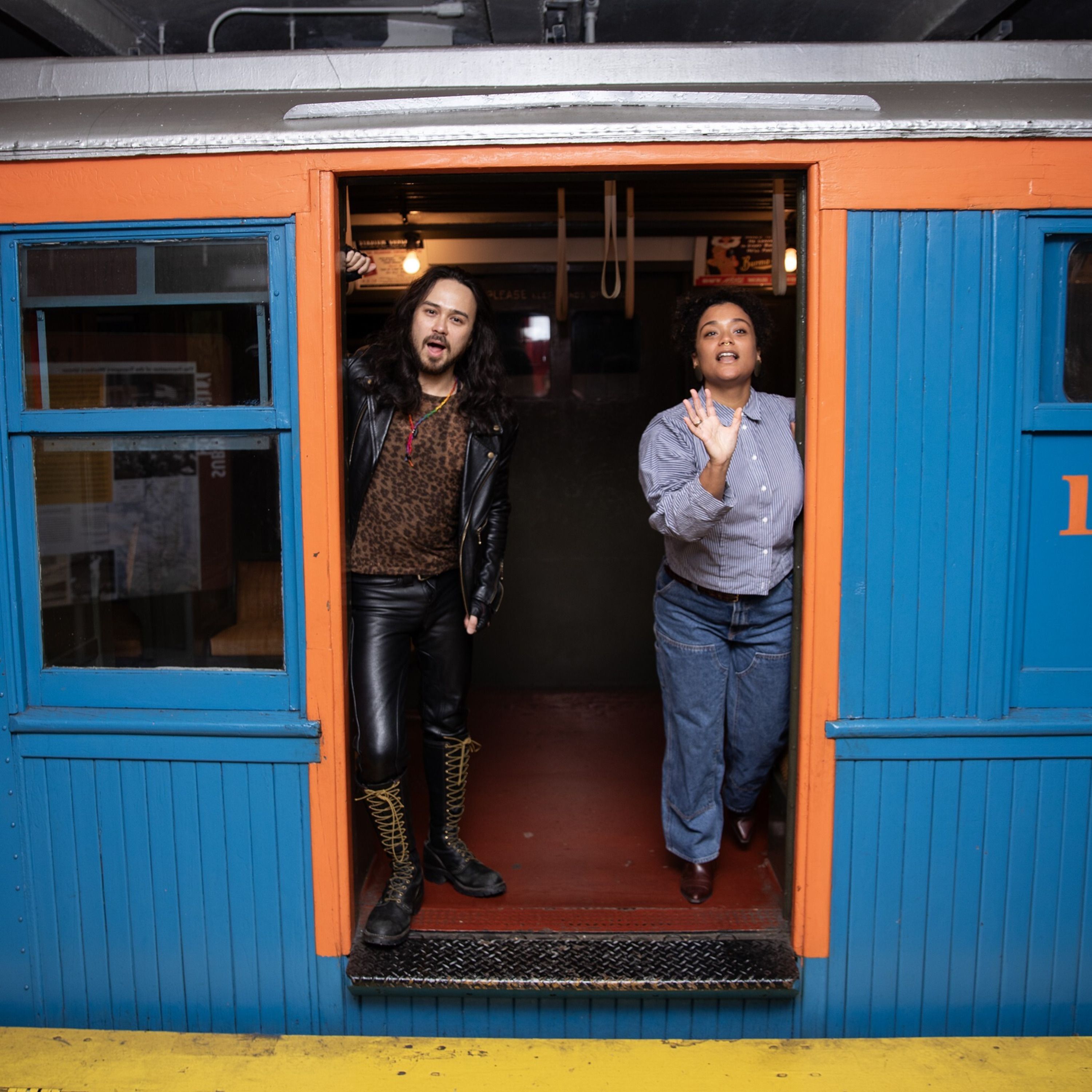
Loading summary
Transcript55 lines
- [00:00]
A
All of it is supported by Progressive Insurance. Do you ever think about switching insurance companies to see if you could save some cash? Progressive makes it easy to see if you could save when you bundle your home and auto policies. Try it@progressive.com Progressive Casualty Insurance Company and affiliates. Potential savings will vary. Not available in all states.
- [00:29]
B
You're listening to all of it on wnyc. I'm Alison. Next Wednesday and Thursday, the New York Transit Museum will be filled with song the annual NYU Tisch Opera Lab will feature 12 original short operas composed by students. All of them take place on the New York City subway in various decades of its history. One opera is the story of a meet cute. Another focuses on the experience of Greek immigrants working on the subway. Another tells the story of a train headed to the World's Fair. Another involves a singing rat. It wouldn't be the subway without rats. The Transit Operas will be performed next Wednesday and Thursday at the Transit Museum inside the actual vintage subway cars. Those performances are sold out, but this weekend you can catch them at African Grove Theater on Saturday and Sunday. Joining me now to discuss these new operas is Randall Ang, a professor with the Tisch Graduate Music Theater Writing Program who oversees the Opera Lab. It's nice to meet you.
- [01:25]
C
Pleasure to be here.
- [01:25]
B
And I'm also joined by two of the participant students, Dawson Atkins, a student composer, and Kenan Butler, a student libertist. Thank you so much for joining us.
- [01:34]
D
Thanks for having us.
- [01:35]
E
Thanks for having us.
- [01:35]
B
So Randall, how did you get the idea to have this spring series set in the subway?
- [01:40]
C
So the Opera Lab is an ongoing collaboration between my department Graduate Musical Theater Writing, which is a two year MFA for composers and librettists writing musicals and operas, and the Department of Design at Tisch, and the professional opera company American Opera Opera Projects. And each year we have the students write about on subjects dealing with an external partner organization. And it's a different partner organization every year. So we look for a place that can host performances that has interesting stories that could be connected to our real lives. And the Transit museums felt like a no brainer. So many kind of in terms of like variety of stories and the the variety of tones of stories. There are comic pieces and there are serious pieces and the subway itself as like a thing that we all experience. You know, I think opera has this real problem of being seen as elitist and not connected to real life. So when we had the idea of working with the museum for their 50th anniversary to have people write operas about a thing that we all know about
- [02:50]
B
Dawson, why did you want to pursue a career in musical theater and. Or opera?
- [02:55]
E
Sure, I'm definitely pursuing both. I studied contemporary composition in my undergrad, but I've always been a huge fan of musical theater and also really into songwriting. I started pursuing musical theater more seriously because it seemed like a medium in which I could combine all these different styles of music that I was really interested in and tell stories where I felt like I could really reach people and move people.
- [03:18]
B
Canon. Why did you choose musical theater and or opera?
- [03:22]
D
Opera is actually a new endeavor for me. I am also a vocalist, and I initially had felt sort of isolated from opera. I think that in Seasons and spaces past, there is sort of an elitism that can isolate certain groups and voices and things of that nature. But it wasn't until, you know, I have been a musical theater performer. I had been writing musical theater. I think it's such a wonderful space of expression and being able to pull from whatever genre or medium that you have at your disposal. And it wasn't something that I thought about opera until coming to this program and being exposed to everything under the sun at a lightning speed. And I think that I love that as a form. I think opera allows for a mode of expression that I don't often get to utilize in musical theater. I think in our current space of musical theater, we're a little conditioned to. Even if we're getting melodramatic, it is all very. I don't want to say grounded, but I think that it is all rooted in a style that we all recognize. And I think opera allows for so much more experimentation and expansion of palette that I find really exciting.
- [04:52]
B
Randall, you decided to assign each student
- [04:54]
F
a decade to work with.
- [04:55]
B
Why did you choose to do that? How does limitations help students be creative?
- [05:01]
C
Well, part of it was knowing that we were going to perform them on the actual cars at the museum, as well as the fully staged version at the African Grove Theater. So knowing that the subway dates from 1904ish, I think it kind of worked out perfectly with 12 operas to assign one day to each decade and see what would inspire the students to, you know, dig into the best and dig into the present and see how those things are connected.
- [05:30]
F
Dawson, what did you think when you got assigned, I believe the early 1900s.
- [05:34]
E
Yes. So our offer is set in the early 1900s, which was the first decade of the subway's existence. So it was really interesting to start thinking about, well, what would the experience have been like to go from a New York City where there was no subway to. All of a sudden, you live in a city where there is a subway. How does that change the way you see space? How does that change the way you think about time, where you can get to journeys that used to take hours suddenly took a matter of minutes. And so how does your world sort of grow in size where you can easily access in a day?
- [06:06]
F
Were you able to visit the Transit Museum to get inspiration?
- [06:09]
E
Yeah, I visited the Transit Museum a couple times. I'm a huge fan of theirs, so it was really a joy to go again with fresh eyes and really think, sort of sit in the cars and think about the experience of what a full ride in them might feel like.
- [06:23]
F
How were you sort of inspired by the Transit Museum when you went to Visit?
- [06:27]
D
Oh, overwhelmed 150,000%. Because I don't think that you. You know, I've lived in New York city for about 20 years, and I don't think that I even really processed how much history is there, how much history is associated with a single train in their collection, let alone, you know, the entire expanse of the museum. I think it gave myself and my collaborator, Felipe and I, like, just a wealth of seeds to begin planting our little garden.
- [06:58]
F
We're Talking about the NYU Tisch Opera Lab's new production, the Transit Operas, 12 new short operas composed by students, all taking place on the New York City subway. My guests are Professor Randall Ang, who oversees the project, and student librettist Kenan Butler and student composer Dawson Atkinson. The Transit Operas are running this weekend at the African Grove Theater and at the Transit Museum. For some of these students, it's their first time attempting to write an opera. Randall, what are some of the biggest challenges in creating an opera?
- [07:28]
C
So most of the students have been with the program writing from more of a musical theater background. Some of them have experience with opera, but the big shift is moving to the operatic voice, I think, which is just a different kind of instrument than a more vernacular theater voice. And that's. They're really loud is one thing. It's going to be really interesting to have them in the cars of the museum to see how, like, that kind of acoustically resonates. But I think a lot of the principles are the same for writing musical theater and for opera, and they've done an amazing job, I think, of making that shift.
- [08:12]
B
Dawson, you knew from the beginning who's going to perform your operas, Is that correct?
- [08:15]
E
Yes.
- [08:15]
B
How did that help you in writing the opera?
- [08:17]
E
Sure. The process for this was really unique and exciting in that we got to Bring in really early drafts and share them with the singers and edit them and specifically tailor them to match these singers voices. And that really helped me shape the piece. It helped me think about what's going to sound really great for these performers. How can I really showcase these beautiful instruments that they have to create a piece that's just like, as dynamic as they are.
- [08:42]
B
How did you collaborate with the performers?
- [08:44]
D
I think it really helped to have a class before we even started writing where we got to sit with the performers, hear their instruments and also hear what they're interested in, hear what they have explored in new works or repertoire that they have experienced, so that we weren't simply just writing whatever it is that we wanted to explore, but we were writing something that would be exciting for the three singers that we were given.
- [09:11]
B
All right, let's hear a little bit. Dawson, let's talk about the show that you worked on. What is the title of it?
- [09:17]
E
Sure. My piece is called Anabasis.
- [09:19]
F
All right, what did you want to capture with Anabasis?
- [09:22]
E
Yes, we were thinking. We learned that the first tunnel under the east river was built in 1908, which was within our decade. And so we thought it'd be really exciting to think about what would that first journey have been like? We found out that it was a 15 minute journey, which was the length of time that we had to explore. So we got to dramatize some of these emotions and think about some of those themes that we were really interested in, about how the world grows and shrinks at the same time with the creation of the subway.
- [09:46]
F
And Randall, tell us who we're going to hear performing in this clip.
- [09:49]
C
Okay, this is the mezzo soprano Aileen Pabon and the pianist Cherie Rowe. Anabasis, music by Dawson Atkin and libretto by Mel Horniak.
- [10:41]
F
Dawson, Your opera is 15 minutes long. How did the time constraint make your job easier or more difficult as a composer?
- [10:49]
E
It definitely felt like a very short amount of time. I really leaned on the structure that we had set up, which was each of our three singers gets an aria to explore how that character might have felt on the subway, as well as a short opening and closing part. The 15 minutes, I think, really inspired us to think more thematically and more meditatively, as opposed to taking a directly narrative, linear approach.
- [11:13]
F
All right, Kenan, you're up next. Your show is titled Make Room.
- [11:18]
B
What is this about?
- [11:20]
D
Yeah, make room follows Art33, specifically the World New World's Fair, Art33 as it is heading from Times Square out to Flushing Meadows. But it moves forward in time. So we start right before the fair goes up in 1963. We end in 1971. There are three stops, and as the train pulls into each stop, it gets older and older until it is decommissioned and replaced by the new, plucky new fleet.
- [11:54]
F
And Randall, who do we hear in this clip?
- [11:56]
C
This is the soprano Giardena Gertler, Jaffe, the counter tenor Jordan Rudder Cavado, the tenor Raquin Adorno, and the pianist Julius Abrahams make a room with music by Felipe Segovia Santuza and libretto by Ken Butler.
- [12:23]
B
We're excited. That's so exciting. Why did you want to make an opera about the World's Fair?
- [12:57]
D
Ooh. In doing research for our decade, Felipe and I really fell in love with the idea that there was a specific train that was, you know, commissioned to go out to the World's Fair. But the World's Fair, that is supposed to be this thing that shows the wonders of the future, that then by 71 was this skeletal sort of graveyard and replaced with other technologies. And the same things were sort of happening with different trains throughout, you know, the subway system's life. And we love anthropomorphizing inanimate objects because I think it really highlights different parallels that we experience as people that, you know, regardless to how we feel about it, as time goes on, we make room for the human beings that come in after us. And the same thing happens with technology. And so we wanted to lean into those parallels in this piece.
- [14:00]
B
Randall, what has impressed you about the work this year with your students?
- [14:04]
C
I think so it's actually a three year opera cycle, and this is the middle year. So they're writing 15 minute operas, and then next year they can move on to 30 minute operas. But the way that they have been able to maintain their voices within the short form, because I know them all from the work that they do in the regular musical theater grading program, but they're working with people that they have not worked with before, because I pair them together. And the way that they have managed both the new collaborations and this new form of writing specifically for opera voices within this rubric of opera, and kind of like purposely leave it up to them to figure out what does opera mean to you and. But to not just try, like, moving into somebody else's idea of opera, for them to be able to keep what their own sense of who they are as writers and take that into opera and create all these pieces about this thing that we all share with the subway has been really amazing.
- [15:08]
B
What does opera mean to you, Dawson? He brought it up.
- [15:15]
E
I think that opera is musical storytelling with operatic voices. I think it can sound so much, so many more ways than we have been taught to think.
- [15:25]
B
Cannon, what do you think? Ooh.
- [15:27]
D
I think opera is a new for me, specifically, a new paintbrush. I think opera is an untapped frontier of expression. I think it's a new medium by which anyone can enter and express themselves within its boundaries.
- [15:51]
B
We have been talking to Professor Randall Eng Kennen Butler and Dawson Atkins about The transit operas, 12 short operas composed by students at the NYU Tisch Opera Lab's new production of the Transit Operas. Thank you so much for joining us. We really appreciate you being here. Good luck to you.
- [16:07]
C
Thank you.
- [16:08]
E
Thank you.
- [16:08]
A
Every day, WNYC Studios is working to get closer to New York and to New Yorkers. The underwriting we get from businesses helps power our independence. Learn how your organization can join in at sponsorship wnyc. Org.