Loading summary
Transcript61 lines
- [00:08]
A
This is all of it. I'm Alison Stewart live from the WNYC studios in soho. Thank you for sharing part of your day with us. I'm really grateful you're here. Congrats to all the folks who woke up as Tony winners this year. If I sound a little bit hoarse, it's because I was one of the many people at Radio City Music hall cheering on. Well, everybody, you can check out our recent conversations with the now Tony Award winners. I'm talking about Ragtime, Cat's agelicle, Ball, Liberation, the Lost Boys, Oedipus, Becky Shaw, and Giant Head to our show page@wnyc.org to check them out. I'm going to drink tea.
- [00:43]
B
Hold on.
- [00:45]
A
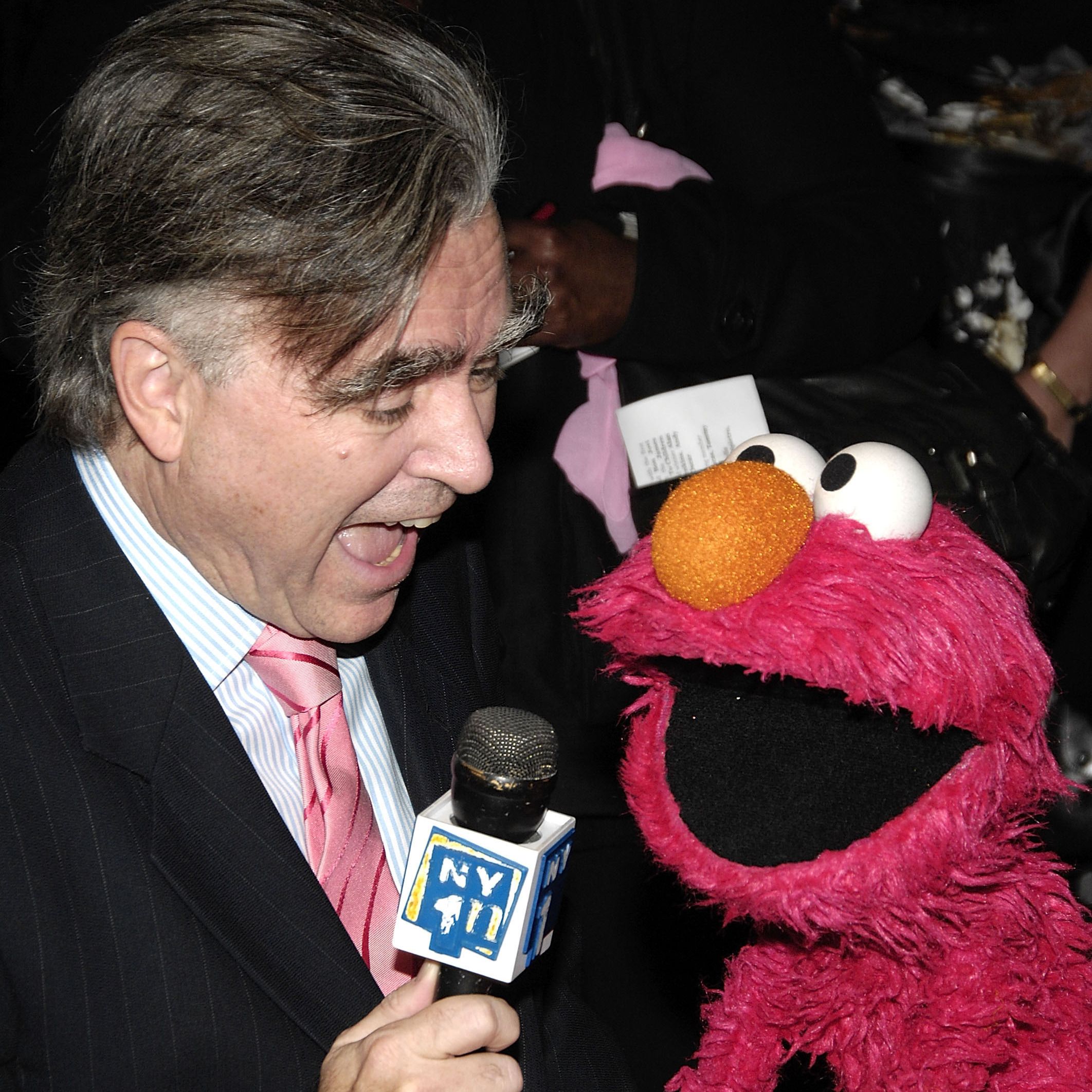
All right, here we go. Coming up on the show today, the Tribeca Festival is underway. And on the show today, we're going to speak with some of the creators behind some of the featured documentaries, including the Lorraine Hobby, Hollywood Does Abortion, and ixxi. So that's our plan. So let's get this started with Whipple's World. There's a new documentary called Whipple's World premiering at the Tribeca Festival this weekend, and it turns the camera on. One of New York's most recognizable interviewers, George Whipple iii, has spent more than three decades doing something that seems almost impossible, getting celebrities to stop on a crowded red carpet and actually talk to him. Along the way, he's become a New York institution in his own right. He's known for his easy rapport with a listers and yes, for his eyebrows. The New York Times actually dubbed him the Eyebrow man in a profile. But as the film reveals, there's a whole lot more to George. During the entire time he was Hosting at New York 1, he also held a full job as an attorney. He became a dad, and we learned the film. He's a scion of the signers of the Declaration of Independence. The film is called Whipple's World. With me now in studio are George Whipple himself. Hi, George.
- [02:07]
B
Hey, how are you? What an honor to be here and talk to you.
- [02:10]
A
We're so excited to have you, as well as the film's director, Adam Paul Veriti. Am I close? Kind of.
- [02:16]
C
Excellent. Thank you so much for having us. It's really exciting.
- [02:19]
A
George, take me to the beginning of your television career. You're a lawyer, you're on a good path, and you say, hey, I want to be on the tv. How did that happen?
- [02:27]
B
Well, the way it happened is I started, you know, when I got out of law school and went to work at Cravath. All of my friends were artists, but they weren't working 15 hours a day. And we were friends with a lot of New York City artists. And one of them, Andy Warhol, said to me, take pictures of your friends. So I became a photographer. So for a decade before, before I went on tv, I was a photographer for the New York Times and Harper's Bazaar, Town and Country. And so I spent a decade doing that. When photography went digital, I decided I wanted to make movies. Pretty damn ambitious. Went to NYU Film and television. Made the worst movie in the history of mankind. Unwatchable. It had Tama Janowitz in it. It had Academy Award winning actresses in it. It was so bad. So I decided, if you can't do it, report. And I was at the National Arts Club one day and I looked up and there was New York one. I said 24 hours a day, they might have a minute for me.
- [03:36]
A
That's what I tell graduates back when I started that you have to look for a place that need you, that wants you. And New York One was that place for you.
- [03:44]
B
It was definitely that place for me. I beat down their doors for a year and they said, you know nothing. And then the guy that ran the station, Steve Paulus, called Jill Brook at cnn. And Jill said, this guy knows more in his pinky about New York celebrity, society, nightlife than you could ever, ever train a reporter and give him a chance. And then for a year I made packages that were completely unerrable. Again. I would not go away. Stayed all night. Worked at the law office and stayed all night making news packages. And finally Paulus said to his second in command, make this guy arable. He will not go away. So we got to put him on the air. So make him do something that's arable.
- [04:37]
A
Adam, why did you think there was a film in George, in George's story?
- [04:41]
C
I mean, it's a great question, essentially all of what you've described there with this 30 year history. And he's so recognizable in New York, whilst I've been filming with him, he gets stopped on the street all the time. You have to imagine that I'm from England, right? I'm from the north of England and I came over here about 10 years ago and I had no idea who George Whipple was. But my first job here in America was actually what they would call a photojournalist at New York One. And we would cover all sorts of different things. I was on a team, sort of the documentary team. So one Day I'd be doing a drug bust with the NYPD in Staten island, and then the next day, I might be doing something with Frank Dilella on the theater show. So it was a little bit of everything. And one day I get this email, oh, tonight you're going to cover a red carpet with George Whipple. And I'd never covered a red carpet, never even been to a red carpet. And I certainly had never heard of George Whipple. So I had no idea what I was in for when later that evening, I turned up to film this thing. George come. George arrives customarily late. So I'm nervously awaiting his arrival. In he comes with the giant eyebrows and the amazing suit, you know, and that was it. I was kind of hooked in. I was like, who is this guy? I had no idea. And so back at the station, you know, I would hear these rumblings of all of these, well, you know, he's a lawyer, right? He's not just an entertainment journalist. He's a lawyer. How? What? What? And then I would hear, oh, you know, he's mentioned in a Beastie Boys record. Really? You know, he was played by Daryl Hammond on snl, right? No. You know, so I just kept hearing this. And as you mentioned, Declaration of Independence features just the history of the Whipple family in itself would have been an incredible documentary. But when you roll all of that into one, I sat there and I thought, what I would love to do right now is scroll through some streaming services and watch a documentary about this guy, because he seems really fascinating. But there wasn't one. So I guess that was, if you like, the genesis of me starting to explore the idea of making something with George.
- [06:50]
A
George, you have such good chemistry with people on the red carpet. What's your philosophy about interviewing people?
- [06:58]
B
Well, you know, It's tough to say. I don't think it's a philosophy. I think it's just the way I deal with the world. I've never felt less than anybody. And I think that served me well with celebrity journalism, and I think it served me well as a business guy. They say there's nobody that can talk to a board of directors or a CEO like I can. And I think it's because I look at all people as equal. And I think the fact that I'm not intimidated or fawning is refreshing to the celebrities. And also the sure knowledge that I cover film and I work like you, luckily, work for a reputable journalistic organization. Pretty rare, you know, hard to get a Peabody. You know, we work for reputable news organizations where they've never asked me to get gossip or personal stuff, none of which I'm interested in. I cover film and I love movies. My mother loves movies. I love actors. I love talking to them about it. So I think those two things have allowed me to develop good relationships with celebrities. But mostly it's the eyebrows.
- [08:25]
A
I think we'll talk about those in just a moment. We're talking to Adam Paul Verite and George Whipple about the film Whipple's World, about George's life as a red carpet interviewer, a white shoe lawyer, and his life as a family man as well. It's playing at the Tribeca Festival this weekend. Listeners, if you want to get in on this conversation, we'd love to have you have you watched George Whipple over the years on New York 1? Do you have a favorite Whipple interview or style or a moment with him? Our phone number is 2124-3396-9221-2433, WNYC. And now there's a documentary about the man himself. Do you have a question for George Whipple? Our phone number is 212-433-WNYC. What did you notice about George on the red carpet that you thought was interesting? That thought that people would be interested in knowing more about?
- [09:18]
C
I mean, just the simple fact that he's been doing this for 30 years is unusual. You know, the red carpet experience isn't something that usually a journalist will do for so long. And I think the reason he's been doing it and the reason why he always is, you know, getting those good sound bites from people is the fact that he's built this relationship over this period of time. So, you know, he always says to me, you know, I'm not famous, but like, George Clooney knows who I am, you know. So it's a, it's a, I think a really interesting place that he sort of holds in this entertainment journalism because, you know, when people see him, they make a beeline for him. You know, even, even the ones who don't stop, like in the film, you'll see Lin Manuel Miranda, he's not actually stopping for any press, but he yells back, hey, Mr. Whipple. Because he didn't want to pass by without acknowledging. So I mean, he just has this aura about him. And, you know, we joke about the eyebrows, but really it's one of his most recognizable features. Everybody does know him as the eyebrow man, you know, so people, even people who are walking the red carpet for the first time as you'll see in the movie, too, they get starstruck because they say, george, I've been watching you on TV for, you know, 20 years. And so he's, in their mind, kind of a celebrity as well. And so it becomes more of like a conversation with somebody who, you know, feels comfortable on tv. It's not just a microphone sticking into the shot. He's there with them. You know what I mean? He's a part of it. So, you know, filming the behind the scenes of that was really. Was really fun and fascinating to see him just instantly strike up a rapport with somebody. You know, you see Bryan Cranston at the beginning of the movie, and they're having a sword fight with their microphones. It just. These things just kind of happen. And it was just really a fun experience to be there to film the behind the scenes of the red carpet.
- [11:10]
A
George, did you ever have an image consultant say, we need to work on your look?
- [11:17]
B
I had probably the greatest television man in the world look at me and say, yeah, we could put you on, but we'd have to cut your eyebrows and do this and do that. So I've had an image consultant say, everything I'm doing is wrong. And Columbia Journalism apparently did a little class where they talked about me and the image of, you know, wearing a suit. I wore a suit as a photographer, I wear a suit as a lawyer. I wore a suit on television. And the image that we've created and the eyebrows, you know, when I started on tv, it was like, well, Andy had this white wig and Tom Wolf wore a white suit. And what am I gonna do to be recognizable? And it took us two or three years to figure out it was the eyebrows. But now my hairdresser, Julian Ferelli, cuts them off all the time. So they're half the size. They're half the size of what they would be. They'd literally be coming at you if they didn't chop them. So image consultants, I haven't done. This is just my upbringing. This is my genetics. This is who I am.
- [12:28]
A
It's authentically yourself.
- [12:29]
B
It's authentic, which is what I think picking up. That's what people always say to me, you're authentic. I am what I am. I'm not faking anything. I'm really what you see is what I am.
- [12:42]
A
Was there ever an actor or a filmmaker who you couldn't get, who you tried to get and you really wanted to get, but it just didn't happen?
- [12:58]
B
No.
- [12:59]
A
Really?
- [13:00]
B
Yeah. I can't think of, you know, I'VE been very, very lucky, very fortunate that people are extremely generous with me and extremely kind to me. And I don't think that, you know, we haven't gotten anything that we've gone for.
- [13:20]
A
Well, we're not gonna put it in the universe. It's gonna stay that way.
- [13:22]
B
Yeah.
- [13:23]
A
You open the film, Adam. It's very interesting because George is looking down, and then he. And it's showtime. He's ready to go. Why did you want to start the film that way?
- [13:34]
C
I mean, one of the great sort of joys of making a documentary like this, aside from getting to follow and do the behind the scenes and the interviews and all of that, it's actually the archive, which was one of the other big appeals for me at the beginning of the process. We talked to George about, you know, wanting to make the film, and he said, well, you know, I have 5,000 videotapes, right? And I said no. And so one of the reasons why it's taken us a little bit longer than perhaps normal to finish a documentary like this, a feature documentary, is because we also were involved in the digitizing and then the cataloging of those 5,000 tapes. And so for me, just looking through these tapes that nobody has ever seen because they would have been recorded, you know, these guys are doing three. Three packages a week for 30 years. So, you know, there was no time. There's no time to reflect back on these tapes. So I'm. I'm getting these tapes and I'm seeing them for the first time, and I'm scrubbing through, and I find all of these moments that I think are just really fascinating, kind of under the hood moments that most people perhaps would have skipped past. But when I saw him standing there, it just signified to me the fact that he has probably just been in courts all morning, and he's gone straight to the shoot. He's standing there with his eyes closed, recuperating for a second until his camera person is ready to hit record. And so he counts him down, his eyes open up, the eyebrows pop, and he says, I'm George Whipple, and he's ready to go on a dime. And so for me, when I found that clip, I just immediately bookmarked it and just put it into the folder of start of the show. You know, that's just felt like a great way of opening up.
- [15:17]
A
We're going to talk more about Whipple's world after a quick break. This is all of it. You're listening to all of it on wnyc. I'm Alison Stewart, I'm speaking with the interviewer George Whipple, along with director Adam Paul Verite. Their film is called Whipple's World. It's playing this weekend at the Tribeca Festival. George, for people who don't know you are an attorney, you're recently named one of the best employment lawyers in America. How did you become interested in law?
- [15:55]
B
Well, I think that I was very interested in going to public service as a young man and going into the political process. And the way to do that, the training for that was always considered the law law. And so I went to law school and then got seduced a little bit by Wall street and the greatest law firm in the world, Crabass Wayne and more. And I've been practicing ever since then.
- [16:24]
A
What is your the way you interview people as a celebrity journalist, does it have a lawyerly like aspect to it?
- [16:33]
B
Well, it's interesting. Lucia Swanson, who was the deputy general counsel at Donaldson Lufkin Generata Investment bank here in New York, once said to me, exactly what you do on television is what you do in the courtroom. You ask people questions and you tell compelling stories with the answers. And that was a very interesting, I thought, observation. So that made me realize that they are actually much more similar than I thought they were. I thought they were very much bifurcated. And then Brady Dugan, who was the first American CEO of a Swiss bank, said to me, can't you do for the bank what you do on tv? And we thought about that and we made a weekly television show for the bank. So it's interesting what you're saying. And then we do Employment Law this week, which is a weekly television show about employment law. And the idea is they are similar. You've hit something that some people have observed. You've hit something. They are similar, but I didn't realize it. They were bifurcated in my mind.
- [17:44]
A
Adam, you spend time with the team behind George. What did you learn from Cameron, Robin Sanders and producer Sharon Johnson that you didn't necessarily know before?
- [17:57]
C
Yeah, so, I mean, at the beginning of the process, we did think primarily the documentary was going to be focused on George and his entertainment career and then bringing in the fact that he's a lawyer just as kind of a, you know, a fascinating backdrop. But once we started the process, we kind of discovered that this family that he's created to produce television with was just such an important part of the story, too. And we were really lucky that everybody trusted us to allow us kind of access. So you'll see in the film Me kind of following Robin doing what he does, which I don't think anyone really appreciates, kind of the life of the red carpet film. You know, cameraman Robin also edits the packages. And so, as you'll see in the film, I follow Robin from the red carpet. He gets into his car and he edits the package in his car and gets it straight over to the station and just all of the kind of pressure and ins and outs that kind of come with that. And so you. You learn just how, you know, people's experience of dealing with these pressurized situations is just very interesting. And everybody is. Just keeps so calm and it's, you know, so friendly and nice along the road. It's kind of, you know, that was what started to become a part of the film as well. Yeah.
- [19:15]
A
How do you describe your relationship with Robin, your cameraman?
- [19:18]
B
Well, he's one of my closest friends. I mean, we've been together 30 years, probably, and, you know, we can kind of finish each other's sentences. It's a. I don't know if it's a bad marriage or a good marriage, you know, because we, you know, we can be very short with each other and a lot of sparring back and forth. But, you know, I mean, I love Robin. He's one of my closest friends. He's with me practically every day. He lives on a guest house on the property. You know, I couldn't function without him. We certainly couldn't have made 30 years of television without him.
- [19:58]
A
It's very interesting in the film because we get a little bit into your family background. I want to play a little bit from Whipple's world, and we can talk about it on the other side.
- [20:08]
B
Whipple's came from Europe in the very first wave of immigration. This pattern was the official flag of the United States, and it's called the Whipple Peace Flag. It was designed by Wayne Whipple. We're proud that we're related to three signers of the Declaration of Independence. Charles Carroll of Carrollton, Stephen Hopkins, and William Whipple, who signed from New Hampshire. Abraham Whipple, one of our cousins, was a captain, and he rose to be commodore in the American Navy. Well, that's the USS Whipple from the First World War. So Abraham Whipple inspired my direct ancestor, my great great great grandfather, Benjamin Whipple, to join him. And he was captured in a naval encounter and thrown into the prison ship Jersey in Brooklyn. My great great great grandfather's legs rotted off from gangrene. And his descendants, you know, included the Reverend George Whipple, a famed abolitionist minister. Henry Benjamin Whipple, the first Episcopal bishop of Minnesota, great fighter for Indian rights. Susan B. Anthony, the great advocate for women's rights.
- [21:25]
A
That's an amazing story about your family. You could have gone one of two ways. You could have been like just a man about town and enjoyed yourself, but you decided to go into a career in law and entertainment. Did you have a sense of. Is it noblesse oblige? Did you want to do something with what you had?
- [21:44]
B
The family has been radical for 400 years. Seriously? Yeah.
- [21:48]
A
No.
- [21:49]
B
I mean, we came literally as slaves to this country, indentured servants, seven years of servitude. We luckily had an escape at the end of those seven years, and frankly, we ran away to be in Rhode island where people were free. But we've been right in all aspects. I mean, I'm a descendant of a Native American 10 generations back, so we have that. We have so many people that have fought for the best of America for 400 years. And I've tried to do my part with philanthropy and political stuff to continue that tradition of, you know, doing good. And I think a lot of, certainly my family, but a lot of, quote, old families in America feel that tremendous obligation because we're very proud of what we've created here. A country of immigrants where everybody has a chance and everybody should be equal. It's. The goal has not been achieved, and we inch towards it, and then we get pushed a little bit back. But this is the country that we created. We died and fought for and bled for, and I love it, and I'm proud of it, and I want to do everything I can to make it live up to its promise, because it's only a goal. It's only a dream. We're not there yet, but it's a great dream.
- [23:16]
A
In the film. Adam, you get to. We get to observe George becoming a father. What did you observe about him as. As a father?
- [23:27]
C
Well, again, like, at the very beginning of the process, it was kind of a conversation about how much of his family life we were going to cover in the film. Initially, it was going to be more centered on the entertainment. And I think just the fact that, you know, we'd worked together previously, there was a level of trust there, both myself and also the producer, Cody Williams, you know, he. He had a sense of trust with us. And so as we make the film, he allowed us a little bit more access just organically and invited us one day to, hey, why don't you come up to the castle? Because again, one of the other things we may have glossed over is that
- [24:04]
A
you can go for it.
- [24:05]
C
This is somebody who lives in a castle up in Hudson Valley.
- [24:07]
B
Yes, he does.
- [24:08]
C
Which is another one of those checkboxes of like, what? Okay. But he invited us up to the castle and said, hey, why don't you come up and film the morning routine? Because it's chaos, it's fun, you can, you know, we can have breakfast with my daughter and it's great. Awesome. So it's one of the memorable moments in the, in the production of the documentary because we got up there to the castle at 3:30 in the morning, sat in the little parking area out the front. It's like a two mile driveway in the middle of the night, basically pitch black, looking out for bears. And we sat there and we called George. We called his first mobile, his second mobile, his third mobile. None of his mobiles were ringing. And we waited and waited. And bless him, he had forgotten that he had invited us. So we waited. The sun came up and then one of his colleagues walked in the front door and we realized the front door was open all along. So we went into the front door and we waited in the living room for somebody to emerge. And then we heard from the kitchen some clinking and clattering, opened the door and there is George in his fez hat, his kind of amazing gilded nightgown, if you will, making breakfast with his daughter. And so we just grabbed the camera and started filming. And we filmed for 14 hours continuously that day. So it's kind of like the experience of making the documentary was a bit like his life, which is kind of, you know, he describes this Whipple's world vortex that you kind of get pulled into. And it's the same as you were talking about with Sharon and Robin. Everybody is a part of this vortex. So once you step your foot in, you're pulled in. And I guess that was one of the things we were hoping to try to get across with the documentary is just how all of these disparate elements of his life kind of pull together in this fascinating way. I don't know how he has the energy to do half the things that he does, but he just keeps going, as you'll see in the film.
- [25:58]
A
George, one of the things I loved in the film is you have breakfast with your daughter on fine china.
- [26:05]
B
Yes.
- [26:05]
A
And you use your good glasses.
- [26:08]
B
Yes.
- [26:08]
A
What are you trying to teach your daughter?
- [26:10]
B
Well, I think a couple of things. One, that's her great grandmother's silver. It's her grandmother's China and her grandmother's glassware. But I believe in living and I don't keep things in cardboard boxes. I use them now. We broke a Waterford glass yesterday at lunch, so it's expensive to do that. But what are these things for? My sister says use it to lose it. And also I want to bring her up, and this is archaic. It may not be right. I want her to be a strong, independent woman. We come from a family that's fought for women's rights. You know, I've introduced her to every prominent woman I know, the governor, congresspeople, you know, everyone to inspire her. There's a portrait by Robert Indiana, one of my favorite artists, of Susan B. Anthony, who was a great crusader for women's rights. She's a green belt now in taekwondo, so she's developing strength physically and mentally because like it or not, it's still a sexist world and she is going to have to live in a sexist world. And I want her to be a strong woman. And so I'm trying to raise her, which may be a little bit contrary to that. Also, as a lady, I want her to understand how things are done properly and how a table is set properly and how you should live correctly. And, you know, there's no cell phones, there's no games, there's nothing. This is daddy and Elizabeth's time. And you know, her rule is you can't talk to anybody else because people would be coming in asking me questions all the time. This is our time. Our time is breakfast time. Our time alone. Our time is walking to school in the morning. That's our time alone. And I hope she gets something out of it. It means everything to me. I wouldn't miss it for the world.
- [28:31]
A
The name of the film is Whipple's World. It'll be playing this weekend at the Tribeca festival. I have been speaking with George Whipple as well as director Adam Paul Veritet. Thank you so much for coming to the studio.
- [28:42]
C
Thank you so much for having us.
- [28:44]
B
Honor to be here.
- [28:46]
A
WNYC Studios is supported by AT&T Summer. It's when we share more time, more memories and More photos and at ATT. The iPhone 17 Pro is your summer essential. Its center stage front camera auto adjusts the frame to fit everyone into group selfies. Right now at, at and t ask how you can get iPhone 17 Pro on them with eligible trade in requires. Eligible plan terms and restrictions apply. Subject to change. Visit att.comiphone or visit an ATT store for details.
- [29:18]
B
All new drinks are now at McDonald's. Like the strawberry Watermelon Refresher and the
- [29:23]
C
Sprite Berry Blast topped with cold foam. Who knew ice cold drinks could be so fire?
- [29:29]
B
Try them all now at McDonald's. Refreshers contain caffeine.