← All Of It with Alison Stewart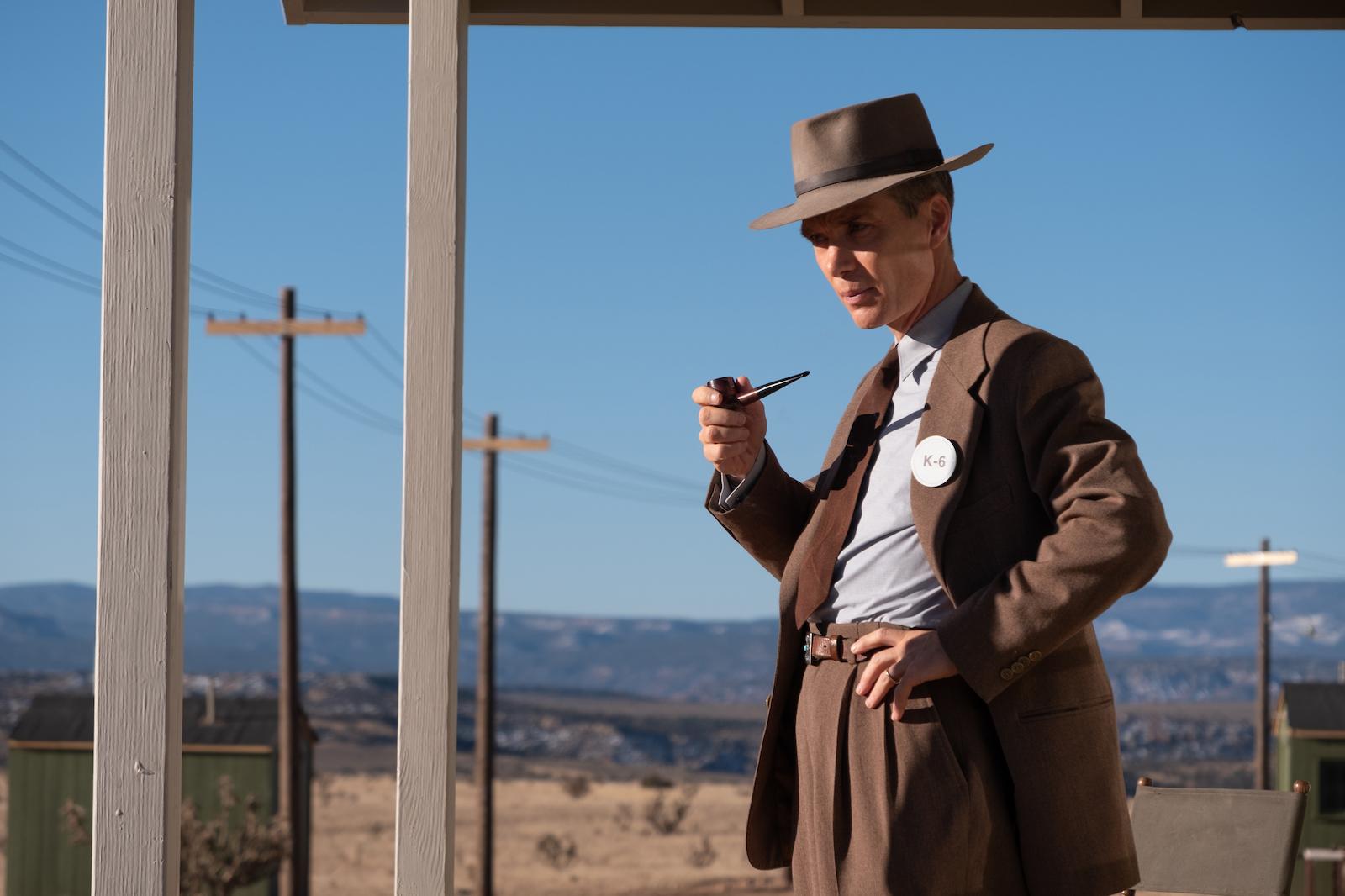
All Of It with Alison Stewart
Turning 'Oppenheimer' into a Blockbuster with Editor Jennifer Lame (The Big Picture)
00:21:09
We kick of our series of The Big Picture looking with the editor of 'Oppenheimer.'
Loading summary
Transcript42 lines
- [00:04]
A
Listener support, WNYC Studios.
- [00:18]
B
This is all of it on wnyc. I'm Alison Stewart. It's awards season, and in the weeks leading up to the Oscars, we will highlight the talented folks who work behind the camera. We call this annual series the Big Picture. And today we begin with an Oscar nominee who had the challenging job of editing Best picture nominee Oppenheimer. Our guest is editor Jennifer Lane. For this project, Jennifer works with an expansive cast of characters. Decades of time to condense into three hours and of course, an atomic bomb explosion. Jennifer's worked with director Christopher Nolan before she edited his film tenet and worked for many years with Noah Baumbach. Oppenheimer is up for 13 awards, including Jennifer, who is nominated for best editing. She joins us now to discuss the work she does. Jennifer, welcome to the show.
- [01:04]
A
Hi, Alison. Thank you. It's such an honor to be on wnyc. This is like a dream come true.
- [01:10]
B
So happy to have you. We love talking to the folks who are super creatives behind the scene. Before we discuss the details of Oppenheimer, how would you describe the responsibilities of a film editor?
- [01:23]
A
Ooh, that's a tough question. You'd think I'd gotten better at this point, but, yeah, I think my responsibility is just kind of putting the movie together and kind of preserving the initial kind of reaction I get from the script and talking to the director in the beginning. And then obviously, you know, I'm usually there the whole shoot, so I kind of see how things are evolving and, you know, issues that have come up. And then, you know, then we have the movie that's shot and, you know, we're trying to emulate as best as we can that script. And it's the feeling of the script as opposed to the exact scenes and lines. Because obviously my job is a lot of changing all of that and putting together the best film. Film that's been shot, if that makes sense.
- [02:06]
B
Well, what's the first thing you do when you get a script?
- [02:10]
A
It varies based on director. So you mentioned Noah Baumbach, who I worked with for a very long time, and he's incredible. And, you know, I would get a script, really. He would send me a script really early, and we would kind of workshop the script, and I would almost edit the script with him. With Chris Nolan, I go and read it at his house, and it's very close to shooting, and it's very kind of locked in. You know, the two times I've read his scripts, I never. There was not much editing to be done. And I just was like, shoot the script. He asked me, was there anything to be cut? And I. In the two times I've read his scripts, there was nothing. So it's always a different process based on what a kind of director needs from you on that level, the script.
- [02:48]
B
Level, which is why I thought it was so interesting. I mean, they both make great films, but a Noah Baumbach film is very different from a Christopher Nolan film.
- [02:56]
A
Yes.
- [02:57]
B
So how do you. I mean, that's. That speaks to your talent, your ability to be flexible and go in between and work with different kinds of people. Is that just something that you've. A skill you've acquired over time, or is that just who you are?
- [03:12]
A
I think getting. You know, my first film was Frances Howe with Noah Baumbach, which is an incredible movie. And I love that movie. I love that movie. And I just saw Greta last night and yeah, it's just. There was a. It was a great first film as an editor because Noah is so experimental in the editing room. And we got to do so much cool stuff on that film. And I think getting to work with a writer director. I've actually mostly worked with writer directors. And it's kind of a specific. It's a kind of specific thing that I think I've grown quite fond of and quite comfortable doing, working with writer directors. And that's kind of the through line. Even though the films are all quite different, it's kind of a specific personality and type that I really enjoy working with.
- [03:54]
B
How did you get into the field?
- [03:57]
A
I kind of fell in love with it in college. I made a documentary and just shot tons of footage. And then everyone went away for spring break senior year to party. And I just like locked myself in a room and cut like 30 different versions of this documentary. Went crazy. But then I was like, this is crazy editing. And then I just pursued it, you know, after college, I really want to just get to work and get a job. And I had a lot of hiccups along the way. But then this amazing woman, Jennifer Lilly, gave me my first apprentice editing job on a Sydney Lumet film. Which that to be that your first film. I mean, it was incredible. Before the devil knows you're dead. And yeah, Jen Lilly kind of became a mentor. And then I gained a lot of mentors in New York. I mean, the New York editing film community is unbelievable. And I have so many people I could list, but I won't waste the time that have helped me and opened doors for me and given me opportunities.
- [04:44]
B
My guest is Jennifer Lame. She is nominated for best editing for Oppenheimer. Once you have made your first rough cut of a film, you have the first rough cut, what are you hoping to accomplish? What are some of the aims for the very first pass through?
- [04:59]
A
I think for me, it's just getting to know the footage and working it and learning all the performances. And in this particular film, there was just an insane amount of amazing performances from all the way from, Obviously, Robert Downey Jr. Killian, Emily Blunt, Florence Pugh, Matt Damon. And then you have all the scientists, and they're all incredible actors. And it was. The ensemble in this cast was incredible. So for me, it's just really getting to know each character and each performer and all the takes and the different stuff they've given me and then just structurally start starting to put it together. But, yeah, it's kind of like baby steps. It's like, you know, you can't. You can't think about the big picture right away. You have to take baby steps and just, you know, get to know each character and slowly start piecing it together and learning all the footage. It's kind of my first step. So the assembly is really just getting to know the movie. I'm not trying to put together a great film. That's impossible. It's just. And Chris is really great with about that. Like, when I went to go, whenever I do my assemblies, he's like, you know, just know the footage and work it and experiment. But obviously it's going to take a while to edit the film.
- [05:56]
B
You know, is there a particular scene or a moment in the film that went. That looks very different from how it first was presented, how you first assembled it?
- [06:09]
A
Mm, that's interesting. Yeah, I mean, there was that. There was a scene when Killian and Emily are kind of having a confrontation after he finds out about Jean's death. And he kind of goes into the woods and she finds him. Really early on in my assembly, I had put this incredible performance by Killian where he's staring right at her and he's sobbing and it's. It's this beautiful performance. But as. As we kept refining the film, we kind of started to realize that it didn't make sense. And we found this another. I mean, Killian gave so many performances where he's kind of looking down and he's not even crying so hard. He's just in shock. And we played more of the scene on Emily Kitty's character, and it really made their relationship more interesting. And you really felt this kind of care they had for each other. So. And the scene always worked, but it didn't. It didn't. We. It didn't get to the next level till really late when we kind of replaced that take and played more of it on Kitty and messed with the gene cut. So that was a really fun scene to keep kind of tweaking because it's. It's a. It feels like a small scene, but it's such. Comes at such a huge turning point. And the two female characters in that scene are just so important to his journey.
- [07:15]
B
You know, when you're working on a film like this, how many different types of media were you working with?
- [07:23]
A
I just work on the computer in the Avid. But then I have an amazing team of people, a lot of them, New Yorkers, actually transplant New Yorkers that come and they. I have a editorial team that helps me with the, you know, the Avid material, not to get too in the weeds. And then there's a whole film department that's cutting film as I'm cutting. So that's something I'm very conscious of. You know, every cut I make, there's a person named Tom Foligno who's cutting the film. And we show the. The director's cut on film, on film with pieces of tape, so at any point it could break. And it's terrifying, but it's terrifying in a great way. You know, it's like this adrenaline rush of watching this. Like, you can see your cuts, you can see your splices. It's. It's very. It's incredible.
- [08:08]
B
We actually got someone who sent us a text or a call who is very into the segment right now and said he wanted to ask Jennifer her approach to using the music of Ludwig Goransson, the composer.
- [08:22]
A
Oh, my God, he's fantastic. I've been lucky enough to work with Ludwig now three times. And, yeah, him and Chris, they start working on the music really early on, like right before the shoot and during the shoot. And Ludwig is constantly doing stuff, so Chris doesn't use temp music. So I cut my assembly with no music. And then pretty early on, as Chris and I start working, he'll start playing me stuff that Ludwig has sent and we lay it in. So the Trinity sequence, we had that piece of music basically when we started cutting. And it's an incredible piece of music. And, yeah, I feel so lucky to work with Ludwig. And he's constantly experimenting. He's constantly popping over the edit room and watching scenes, and then he'll try something new. It's a really amazing process, working with Him.
- [09:08]
B
Let's talk about the Trinity scene since we're there. The Trinity test. When the team finally tests to see if the bomb works, there are so many different cuts to characters or building tensions. There's shaking hands and buttons. There's sound that goes on for a moment, you know, goes out. It's just quiet. Um, let's start with all the different perspectives. How does using all the different perspectives build tension?
- [09:33]
A
Yeah, I think, like I said about the ensemble cast, like, leading up to Trinity, I feel like all the scientists and their faces and kind of their slight, you know, like, they don't get too much screen time, but their personalities really shine. And I feel like when we leave, when we get to the Trinity sequence, their faces become so important and their nervousness and when they're in that room and they're doing the measurements and they kind of make jokes to each. And I think, for me, what's so amazing about that sequence is how young these guys are and how scared they are. And you kind of feel like you're there. So I really wanted to create that kind of environment, as did Chris, obviously, and. Yeah, just really showing all the little machinations to build to this moment that's terrifying for these guys. And so that was really important, playing it on these faces and showing these guys and. And how hard they worked and how nervous they are and. Yeah. And then obviously, all the amazing stuff that Ruth, the production designer, did with the bomb and the tent and all the little. And, you know, the mattress rolling under the. Like, crazy that they were just rolling mattresses in case it fell. And just. We wanted to just highlight all these details to really make. Show you how, you know, kind of rough it all was and experimental and. Yeah.
- [10:45]
B
What was a tough decision to make in that particular scene for you in the Trinity sequence? Yeah, because that's the one you gotta get, right.
- [10:56]
A
Yeah. It's so funny because that one, to me, was kind of the most fun to cut. Chris and I had that music. I think the hardest scene in that whole section was the part when Kistakowski comes in the tent and he says kind of that thing failed. And there's just a lot going on in that tent and it's raining, and the phone rings and the guys are making bets about whether they're going to ignite the atmosphere. And so that tent sequence, kind of. That sets it all off. Kind of the second half of the Trinity section, like, the night half when it starts raining. That particular scene we cut many, many different versions of. And there's just a Lot going on. But once we kind of lift off after that tent scene, I feel like the rest, it was kind of just putting in the pieces and tinkering around and it was more just fun, you know, it was a really. That sequence was really kind of like the machinations of it all and getting all the little pieces right. And we were constantly tweaking it, but it was really just. Yeah. Kind of just putting it together. Whereas other sections of the film I find, like, were more challenging, editorially speaking than that one. Like what? Yeah, I think like the first 20 minutes of the film and kind of after the bomb goes off. For me that, especially when I was reading the script, that section of the movie I find the most interesting, but kind of like as an editor, the most challenging of like, how do you keep an audience absorbed after the bomb goes off? Right. Because that's what everyone's waiting for. And then the bomb goes off. And how do you keep everyone. Keep everyone's attention all the way to the end? Because that's some of my favorite stuff. So I think that was, that was the challenge in a good way because I loved all this stuff. But, you know, it's a challenge. And the pacing of that last third of the film was con. Was a constant kind of stress and challenge of making sure everybody was locked in because it's a three hour film and you know, that's. As an editor, you got to keep people's attention.
- [12:47]
B
Yeah. I was going to ask about pacing. My guest, by the way, is Jennifer Lame. She's nominated for best editing for Oppenheimer. Nominated for an Oscar. Yeah. Pacing is so interesting because pacing doesn't necessarily mean quick. It's actually almost musical in that way. It's a flow. Right, Exactly. When you're thinking about pacing, everything about the flow of the film, the flow of the story. How can you tell when pacing isn't working? Like, what's your Jennifer test?
- [13:17]
A
Well, luckily Chris has this great thing he's always done where every Friday, very early on, we kind of have just what we invite like one or two people to the edit room and kind of sit with those people and watch the whole film, whatever kind of stage it's in, even if it's pretty rough. And that's the greatest test, right. Is sitting in a room with another person. You can. You can feel whether they're checked out, whether they're bored, whether something's confusing. And I swear, every time the lights go up, Chris and I both kind of know what the person's going to say before they even say it because you can kind of feel it. So that's a great test. And I think just my own gut instinct of when I'm watching something, I can tell if I feel something's too rushed or something doesn't feel natural or. And I think, particularly with the pacing of this film, it's kind of baked into it of when things need to be rushed and when you need to kind of feel the anxiety for Oppenheimer of things are out of control, or right after the bomb, when he's waiting for the call and he's wondering what's going on, things kind of slow down because things are slowing down for him and no one's giving him information. And I think, yeah, you're right when you say it's musical. It's kind of this gut instinct, musical kind of ebb and flow of. You have to take the audience on the highs and the lows with the character. So they never get off the train, you know, like, they never get off the ride. So you have to keep the ride kind of having the ups and downs. And it can't be up all the time, obviously, because that gets boring. So, yeah, it's incredibly difficult to talk about, but it is this constant calibration and tweaking it all the way till the end on the soundstage. I would notice things sitting on the stage with the mixers. You know, I'm like, oh, this isn't good. I can tell these guys are checked out. So, you know, you're just constantly tweaking and shaping it.
- [14:46]
B
You know, what's something that's important for an editor to keep in mind when you have a film that has a lot of dialogue, interrogation scenes? There's courtroom drama, there's planning in the labs. What's important to keep in mind with dialogue heavy moments in films?
- [15:05]
A
They're obviously my favorite stuff I loved, I think, because I came up under the great Noah Baumbach, who's so good at dialogue heavy scenes. And he also shoots a lot of takes, which is great because he. Cause actors kind of get lost in their characters in these performances. And I think for me, it's all about the footage, right? So if I feel like a scene isn't popping for me or doesn't have that moment, I just keep watching the dailies. And even if it's like one word or one sentence or one look or someone touching someone, like, it's just I never give up on making something better. And I always go back to the footage as if it's like I'M an archeologist and I'm excavating. Right. And I feel like I find new and interesting things all the way at the end. And. And I think as an editor, a big thing is to know that you're always gonna do so many passes. And again, you have to stay looking at the minutiae of it, not the big picture. Cause you'll get overwhelmed. Because I know that I can change something all the way till the end. So, you know, we do character passes. So this week we'll do this character, and next week we'll do this character. And if you see something bad with another character, you just have to put it out of mind and you'll get to it, you know, and you just have to kind of compartmentalize that stuff and know that you can always fix something and find something great.
- [16:14]
B
Someone texted to us. Was there a thought to not showing the Trinity test explosion directly, only the reactions? I appreciate not glorifying the weapon.
- [16:25]
A
Yeah. I think that was really important to Chris, and that was in the script. And it was something that he felt very important to the movie, especially since the movie's in first person. It's very much in Oppenheimer's experience and in his head. And that's. You know, we experience that on Oppenheimer's face. I'm assuming this person's talking about when they're watching kind of the aftermath of the bomb and the horrific we all have probably seen and heard about. And he really wanted to play that on Oppenheimer's face as that slideshow. And I really wanted that slideshow. And you hear everyone feel sick and on his face. To me, it's way more horrifying than all the images because, again, we've seen the images. But seeing the man who helped create the bomb's reaction to those images, to me is particularly disturbing and effective and devastating.
- [17:11]
B
Cillian Murphy has a great face. You look at a lot of faces. What is it something that he does as an actor just with his face? I mean, he's born with that face. That's genetics. But actors really use their bodies. What's something that he does that is unique to him? You've looked at him a lot.
- [17:30]
A
I have looked at him a lot. I mean, I don't know. Cause I don't know what he does. Cause I'm not. I don't know much about acting. I just know what I think is authentic to the characters that I'm creating. But he is brilliant. And the. The fact that he was able to make When I was going through the dailies and making my assembly, I couldn't look away from him. And he just brings you in. And even though he's playing this character that no one really knew what they felt or what they thought half the time. You just become so locked in and kind of obsessed with who this person is, and you don't want to leave a room with him. And he just did. I don't know how he did it, but he had that enigmatic kind of quality that I think Oppenheimer did where people were drawn to him. But you also couldn't totally figure him out. And he just nailed it. And I don't know, maybe that's a little bit part of his personality because he's a little bit like that, but I think he's just a brilliant actor. And he just nailed that performance. And I was nervous because obviously Oppenheimer, the person, as everyone says, you know, you can't really. No one really kind of knew who he was. So that's a tricky part to play. Right. But he really nailed it.
- [18:34]
B
As we mentioned earlier, you've worked with Christopher Nolan before on Tenet. What did you learn working with him on that film that was useful for a historical drama because that was a little bit more sci fi and action Y.
- [18:48]
A
Yeah. I think what was great about that film is it was such a huge change for me on so many levels. And I was so incredibly nervous and it was challenging. And I think the first time I kind of sat in a room and worked on a scene, it was actually during the shoot. And he wanted to see some of the car chase scene. And I'd done a really rough assembly of it and it wasn't great. And he made me show it to him and I was so nerv. But then he was like, let's go for a walk. And I was like, okay, I'm gonna get fired now. And he was just so lovely. And he just kind of told me a little bit about his life in London. And then we were in London at the time, but then he just was like, it's gonna be okay. Like, I know you can cut. And you can cut a car chase scene. We can cut the car chasing together. That's not why you're here. You're here. Cause I think you're a great editor and, you know, you can do. You can do this. And he was just. He was so kind and supportive, and I didn't know him at all. So it was just, I think, just learning kind of his personality and that you know that he trusts people and he trusted me and he allowed me to trust myself. And then I was really able to kind of flourish and lean into the material and just experiment, not be nervous that there's one specific way to cut a car chase scene and I don't know it because I had never cut a car chasing before. That's not a thing. And he really disabused me of that kind of mentality very quickly. And yeah, and I just realized, oh, he's just, he's just a great filmmaker and he just wants to make a great film and that's what I'm here to help him do. So just learning that and getting to know, getting to understand his process on tenet. I remember at the end of the film I was like, I hope I get to do another with one with him because now I really understand how he works and I know I can nail it. So I was so grateful that he allowed me to work on Oppenheimer.
- [20:22]
B
Can you tell us what you're editing next?
- [20:25]
A
I'm not sure yet. I just finished doing Postcards from Earth with Darren Aronofsky, which I had a fabulous time on. And that's the Sphere in Las Vegas. And now I'm kind of waiting just to see cause you know, the strikes and everything. I think everyone's just coming up for air. But I am really excited to get to work on another film. And I had a great time with Darren Aronofsky. He was amazing.
- [20:47]
B
Jennifer Lame is nominated for an Oscar for best editing for Oppenheimer. Jennifer, thank you so much for the work you do and for spending some time and explaining your process and work with us.
- [20:59]
A
Thank you so much, Alison. I had such a great time.
- [21:03]
B
There's more, all of it on the way. Coming up, we'll continue our public song project launch with a contribution from Philadelphia Rock and Roller Low Cut Connie. And for the history of the blues music in the 20s. That's right after the news headlines.
- [21:18]
A
Our state has changed a lot in the last 140 years. We know because MultiCare has been here guided by a single purpose, making our communities healthier. That comes from making courageous decisions, partnering with local communities to grow programs and services, and expanding healthcare access to those who need it most. Together, we're building a healthier future. Learn more@ multicare.org NYC now delivers breaking news, top headlines and in depth coverage.
- [21:53]
B
From WNYC and Gothamist every morning, midday and evening. By sponsoring our programming, you'll reach a community of passionate listeners in an uncluttered audio experience. Visit sponsorship.wnyc.org to learn more.