Loading summary
Transcript48 lines
- [00:00]
WNYC Announcer
WNYC Studios is supported by Progressive Insurance. Did you ever think about switching insurance companies to see if you could save some cash? Progressive makes it easy to see if you could save when you bundle your home and auto policies. Try it@progressive.com Progressive Casualty Insurance Company and affiliates. Potential savings will vary. Not available in all states. All of it is supported by Memorial Sloan Kettering Cancer center in a small groundbreaking clinical trial where 100% of participants with a specific type of rectal cancer saw their tumors disappear using immunotherapy alone. Researchers at MSK are now studying this approach in cancers of the stomach, liver and more, and a majority of tumors are disappearing. For MSK Giving day, all gifts will be tripled. Learn more@msk.org all of it.
- [00:58]
Alison Stewart
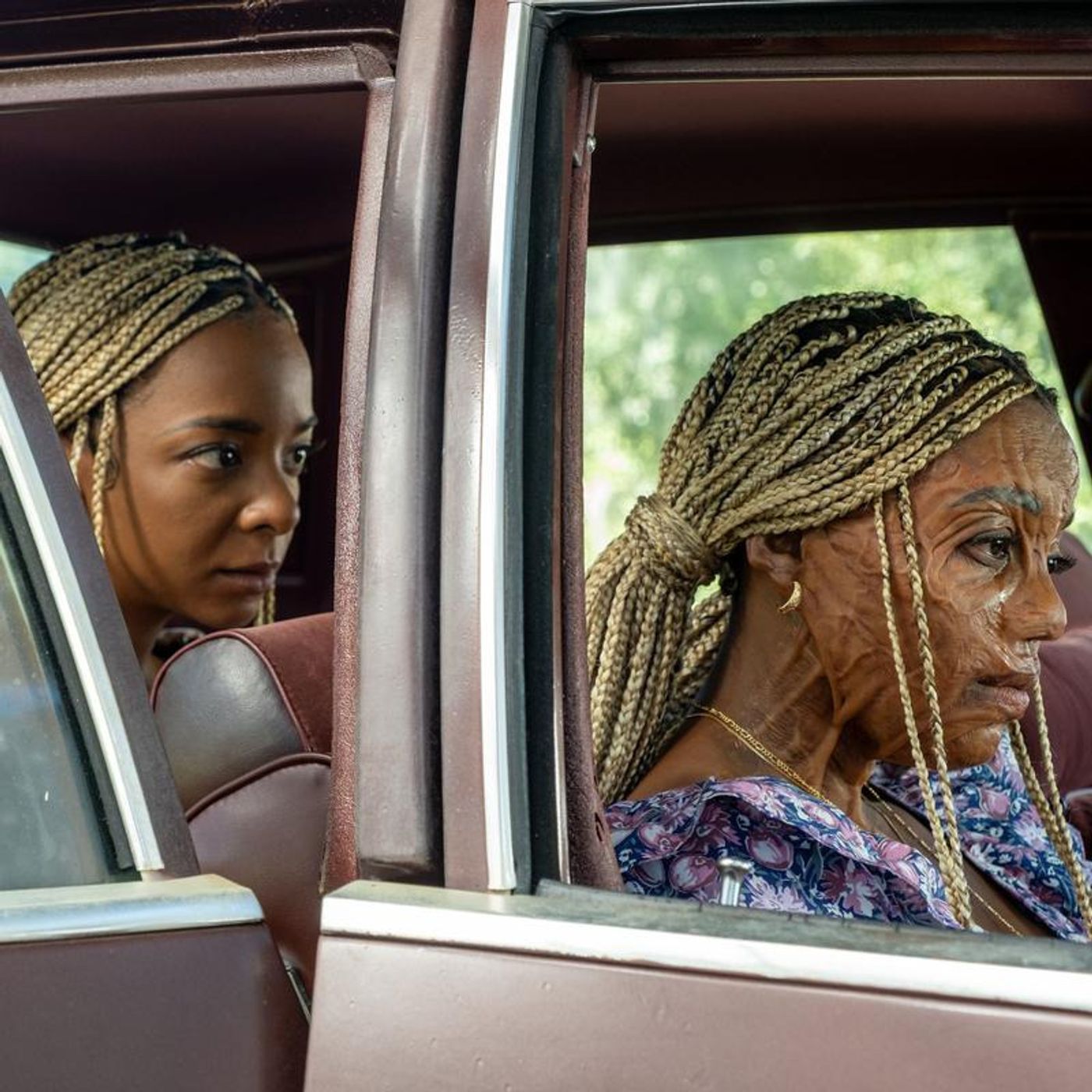
This is all of it on wnyc. I'm Alison Stewart. The thriller film Is God Is follows twins on a mission revenge on their father who set their mother on fire in front of them when they were just little girls. It left all three of them with life altering scars, both physical and emotional. Racine was spared mostly from the fire. Anaya was profoundly burned on her face at the request of their estranged dying mom to quote, make your daddy dead. The two road trip across the country looking for their father. Along the drive, they wonder how their lives would have been different if they hadn't ended up cycling through foster care homes and lived some semblance of a normal life. The twins encounter siblings they didn't know they had and ultimately their dad. But the path to vengeance isn't easy and and rage is sometimes hard to rein in. The film Is God is is based on Alicia Harris's 2018 Obie Award winning play. The movie is now playing in theaters. Actor Kara Young stars as Racine alongside Mallory Johnson as Anaya. The pair joined us when the film came out to discuss their roles. Kara had already been a fan of the original play, so I started by asking what about the play excited her.
- [02:21]
Kara Young
These two young women on a journey in a very small theater and the way that they went from place to place to place. I mean I remember, I remember specifically remember the scene with Jessica Francis Dukes who played Mama and then also Tego Bougierre who played man. And I remember the wall coming down in that Soho Rep theater. So this is like Soho Rep, you know, that small theater. Soho Rep is like there's always something, something that sort of changes the space. And I just remember being an audience member and being completely in awe of the story. And when that wall came down and I was like and, yeah, it was. There was just so many. There was so many, like, oh, snap. Oh, my God, what's going on? Oh, yeah, I just remember it so vividly.
- [03:09]
Alison Stewart
Mallory, what were some of the conversations that you had with Alicia about her visions for these characters in the film?
- [03:16]
Mallory Johnson
Yeah, I mean, there were so many conversations. What's so smart about what Alicia did is she treated this like we were working on an actual play. She brought us in early. We had actual rehearsals. I think we even had a zoom meeting. I forgot to say this. I've been. I've been forgetting to say this too, but we. We had a zoom meeting. Like, we, like almost like a couple months prior to shooting, where we talked. We read through. We had a read through. Oh, my God, I totally forgot this. We had a read through with just Kara and Alicia, and we talked about our intentions with the work. We talked about our characters. Alicia, I remember, specifically for my character, talked about how Anaya was to be represented and the thoughts about what she felt about her being, quote, unquote, ugly in the film and how that is really a representation of something that a lot of black women have to deal with in terms of desirability and having to be, you know, grow up in a world where we are considered the least desirable, even though we have. We're beautiful and we find this strength in ourselves. And that's actually a part of our growing pains, a lot of. A part of our experience of having growing pains, as in Black Womanhood. And so she talked about that and we. Yeah, we just. We had so many moments where Alicia would just pour into us her thoughts about the character. She was very, very clear about what she wanted this to be and who she wanted us to be. And, yeah, we were in constant conversation.
- [04:56]
Alison Stewart
How is it helpful having a film director who's got a foot in theater?
- [05:00]
Kara Young
Hmm. You know, well, so. So Alicia Harris is making her directorial debut as a filmmaker. As a director. And so. But when you think about someone who has created this story from its inception, like, she is the creator of Is God Is, and the journey that it's taken in all of these years and her adapting it into a screenplay, you. I mean, there's no choice but to put all of your trust in the creator. And so, you know, she's a visionary. And so you're getting the true vision of a visionary when this is their everything, you know, and this is their baby. So there was, like, a. An overwhelming amount of what it means to just, like, fall and go and fly and understand that you're a Part of something bigger than yourself. You know, it's the story itself, I believe, like, this. It's so. We were just talking about it in the waiting room. Like, the green room is just so Greek. It's so.
- [06:03]
Alison Stewart
It is.
- [06:03]
Kara Young
It's like, you know, these big questions that it's almost like you were talking about, like, why did Medea kill her children? You know, with, like, these really huge, huge questions that are sort of always kind of waited in the air when people leave the theater. You know, it's been quite beautiful, the responses that we've been getting. Mallory and I went on Friday night for the 11pm showing at the AMC on 42nd street with, like, Schubert. With, like, Schubert Security.
- [06:35]
Alison Stewart
After everything.
- [06:38]
Kara Young
Yeah, after the whole day. It was a long day, Alison. And we went after our shows and it was, you know, Schubert family, people from the Music Box, people from the Booth Theater, people from the Hays, and me and Mallory. And it was just like, whoa, this is sitting with people differently. You know, there's some of these lines where you talk about when, you know, the repetition of ugly or when somebody calls when one of the other black characters calls another black character stupid. And, like, what that activates and, like, what are these lines that hold so much history, not only in our America, but within each other, within our community. What is the history of our communities? And how do we heal from the histories and the violence that have been even inflicted upon us by the white patriarchy, by the patriarchy, by white supremacy, et cetera, et cetera? How do we heal within ourselves? I'm sorry, I went on.
- [07:40]
Alison Stewart
No, that was a beautiful tangent. That was beautifully said. We're talking about the film is God is. My guests are Carrie Young and Mallory Johnson. So how would you describe your characters? Shania. Got Shania written here, so I pronounce it right. Anaya and Racine, when we first meet them, how would you describe them, Mallory?
- [08:02]
Mallory Johnson
I. You know, that's a good question. I. Well, I think that what's really, really cool is that Alicia has attached these kind of titles to them. So when you first. When you see them in the trailer, you know, Racine is introduced as the rough one, Anaya is the quiet one. But then when you actually watch the movie, it becomes a lot more complex. I think that when you're introduced to them, the titles say it all. You know, Anaya is someone who is a lot more timid, less vocal, you know, because of the way that they're Ra. Racine kind of has to be the protector, the defender, the mouthpiece for Them. And I would say that Anaya has this kind of codependent relationship with Racine where she needs her. She needs her to be her protector, her defender. But she's also. When you see her, when you're introduced to her, you see that she has this quiet hope for more, for more out of her life. And that seed, I think you see that kind of. Kind of grow as the film goes on.
- [09:13]
Kara Young
Yeah. I feel like Racine is the protector, is the person who's navigating their world in the sense. Because, you know, there's a line that kind of. You kind of understand. It breaks my heart when I watch the film and I'm watching Mallory Johnson do her thing. It's like really just. It kind of cracks open their entire history, their world of having to create their life for themselves, not knowing who they are before they get that letter from their mom. They have gone through the foster care system. They, you know, they have. You know, they're resilient women, young women, obviously codependent to each other because they have survived so much together as sisters, as twins. Thank God they ended up together.
- [10:04]
WNYC Announcer
Right?
- [10:04]
Kara Young
There's like that thing. Thank God they ended up together. But because of Nya's scars and my less visible scars, I can communicate with the world. So there's an overwhelming responsibility that I have over us. And it's so interesting because that line that you have that I don't want to reveal, but there's a line that you have, and it's like, how much of my communication with everyone is. My eyes are her eyes, too. So it's like, how much am I holding? How much of our hearts are we holding? And how much is. Is a Nile holding of me? And the. There's a word for this, and there's a scientific word for. For this, but it's sort of like the infinity symbol where it's like that we're so connected.
- [10:49]
Alison Stewart
Symbiotic.
- [10:49]
Kara Young
Symbiotic. That's what I was looking for. This. The symbiotic relationship that we have. The symbiosis of us is so intertwined that we're holding very probably completely different spectrum of emotions, but perhaps maybe in the same weight of what it means to feel something. But I am holding it differently in the spectrum of where the way she might be holding it on the opposite end, it's just like.
- [11:22]
Mallory Johnson
Yeah.
- [11:23]
Alison Stewart
Let's listen to a clip from the film.
- [11:24]
Kara Young
Ooh.
- [11:25]
Alison Stewart
This is Racine and Anaya, and they're discussing how they are going to go about killing their father. This Is from. Is Gaz.
- [11:31]
Commercial Voiceover
It is.
- [11:33]
Kara Young
I know. We'll push him off a building.
- [11:36]
Mallory Johnson
What if he grabbed one of us on the way down?
- [11:39]
Kara Young
What if we knock him out, then push him off the building?
- [11:42]
Mallory Johnson
How hard you have to hit someone to knock him out?
- [11:46]
Kara Young
I don't like it. You don't like none of it.
- [11:48]
Mallory Johnson
See, we ain't killers.
- [11:51]
Kara Young
We come from a man who tried to kill our mama and a mama who wants to kill that man. Send the blood. Racine.
- [12:01]
Alison Stewart
What'd you discover was underneath her anger? What is underneath her anger in this film?
- [12:05]
Kara Young
What is underneath Racine's anger? So, I mean, when we really like so like our lives, we meet these young women and, you know, this is all in the trailer. So, you know. But we meet these young women and, you know, they get a letter from their mom. And so this whole. Their whole lives, they have been. They have made a world for themselves, you know, a world that looks. They're living in their joy. They're doing their thing. They know how to survive. They know how to fight for what they need because they have what they have, and they are okay together. And they get a letter and their mom says that she's dying. And so we have to go visit our mother. And so there's. To me, there's like this wild thing that happens. It's like, what happens when you don't know who you are? What happens when you don't know where you come from? Like, that question period, right? And then mom says, this is where your scars come from. And then all of a sudden, now I know. And now it's about the justification for God, our God, our creator, our mama. And that's how I refer to a God, our mama, as God. And I think that where it comes from is like, I didn't know. Now I know. And now I have to. How dare you? What's the word? Blank. God. How dare you defy God. How dare you try to harm God? How dare you try to harm the woman who carried your children for nine months. And, you know, I look at the history of Ruby, AKA God, in that and, like, meeting her for the first time and what that experience must have been like. What is it? What happens when you meet your mother for the first time? The people who. Your family for the first time? I mean, there's just like, where does it come from? It's like, I wonder what the opposite of that is of, like, the love. The love that I have for her that I didn't even know existed when I first meet her to Seeing what the story and the history is of us and the fact that we could have been, we could have been saved. We could this, we didn't have to go through this. Where is that violence coming from? Why did he do that? Why did he choose to do that? And I think it's all of that, of what sits underneath it. It's so fresh. It's such a fresh thing.
- [15:01]
Commercial Voiceover
Yeah.
- [15:01]
Alison Stewart
Mallory, what do you hope people talk about when they leave the theater?
- [15:06]
Mallory Johnson
Oh, God, I hope that the conversations actually are diverse. You know, I, I, I want people to talk about because it's so complex. Actually, my brother just called me last night. He saw it, and he was like, I got so many thoughts now.
- [15:25]
Alison Stewart
Like, I got so many thoughts, like,
- [15:28]
Kara Young
like, where do I even start? Like, it's a, it's a Greek tragedy.
- [15:31]
Mallory Johnson
It's biblical.
- [15:32]
Kara Young
Like. Cause it is, it's biblical.
- [15:35]
Commercial Voiceover
I heard that.
- [15:35]
Mallory Johnson
Biblical allegory, right. And so there's so many things that can be broken down about this. I mean, and I, and I want actually people to talk about all of it. I'm so excited for people to talk about all of it because I think it deserves it. And Alicia's work is so not one dimensional. It's like the type of art that deserves to be broken down for years and years and years. But, man, what do I hope?
- [16:03]
Commercial Voiceover
I,
- [16:06]
Mallory Johnson
I think, I hope that, you know, because this really is such a love letter to black women. This is such a, this is so for us. And I really hope that black women feel that and talk about how
- [16:24]
WNYC Announcer
they
- [16:24]
Mallory Johnson
could identify with these two girls who really just wanted redemption for themselves. They just wanted justification for why things were the way that they were in the world that they grew up in. And I think that we often are so burdened with that question in our lives as black women. We're so burdened by the question of why, why, why does the world have to exist in the way that it exists, where it doesn't protect us and we have to be the protectors of each other. And so I hope that that's at the. I hope that that can be at the forefront of a lot of these discussions.
- [17:02]
Alison Stewart
That was my conversation with actors Kara Young and Mallory Johnson. The film is called Is God Is. And that is all of it for Today. All of it is produced by Kate Hines, Jordan Loff, Simon Close, Zach Goderer Cohen, Elle Malik Anderson, Luke Green and Sacha Lindon Cohen. Our interns are Emma Lee and Joey Jerva. Megan Rine is the head of Live Radio. Our engineers are Juliana Fonda, Jason Isaac and Amber Bruce. Luscious Jackson does our music. If you missed any segments this week, catch up by listening to our podcast, available on your podcast platform of choice. If you like what you hear, please leave us a great rating. It helps the show. I'm Alison Stewart. I appreciate you listening and I appreciate you and I will meet you back here next time.
- [17:50]
Commercial Voiceover
Whether you're rushing out the door or eating on the way to work, conquer Morning Chaos with Belveda Baked with Whole Grains Belveda Breakfast Biscuits go great with coffee and are a part of a balanced breakfast when paired with low fat dairy and fruit. And when you're looking for a post breakfast snack to tide you over till lunchtime, try Belvita Energy Snack Bites. They're a good source of fiber and come in delicious flavors like Banana Dark Chocolate with Sunflower Seeds. Find Boveda at your local store today.
- [18:20]
Everyone's talking about protein lately, but how do you actually get enough of it? Muscle Milk Muscle Milk has a great tasting new formula with no artificial sweet sweeteners, flavors or added colors. It's high quality complete protein designed to support healthy muscles with fewer ingredients than the previous formula and 26 to 42 grams of protein for when you're stuck in meetings or need a post workout recovery. Available in chocolate, vanilla, cream, cookies and cream, and strawberries and cream. Try the new great tasting Muscle Milk today. Available in stores nationwide. Muscle Milk Protein for all.